Understanding the Global Reach of the Shein Business Model
Shein is a global online fashion retailer established in 2008 that has redefined the "fast fashion" sector through a high-velocity, data-driven business model. The underlying mechanism of its growth is rooted in a sophisticated digital infrastructure that leverages real-time social media sentiment and influencer-driven traffic to dictate production cycles.
By utilizing an ultra-low price point, Shein generates a high-volume transactional environment. While this facilitates rapid market penetration, the sheer scale of the operation often compromises consumer perception of safety. From a technical standpoint, the challenges of managing such a vast, distributed supply chain often result in inconsistencies that users must navigate through rigorous risk assessment.
Is Shein Safe for Modern Consumers?
From a formal business perspective, Shein is a legitimate, registered global entity. However, in the realm of e-commerce, "legitimacy" and "operational reliability" are distinct metrics. The Better Business Bureau (BBB) has historically assigned Shein an "F" rating. This grade is not necessarily indicative of fraudulent intent, but rather a reflection of systemic operational failures in the post-purchase phase.
Primary risk factors contributing to this assessment include:
- Shipping Latency: Significant deviations from stated delivery windows.
- Refund Friction: Technical and procedural barriers that complicate the return and credit process.
- Inconsistent Quality Control: A high variance in material standards and assembly, often failing to align with digital representations.
Pro-Tip: While the site is a legitimate business entity, "legitimacy" does not equate to "high-quality service" or "ethical compliance."

Technical and Ethical Risks in the Shein Supply Chain
The high-speed fashion model employed by Shein introduces specific vulnerabilities regarding intellectual property and labor transparency.
Analyzing Counterfeiting and Intellectual Property Risks
A persistent risk in the Shein ecosystem is the mass production of designs that frequently overlap with the protected works of independent creators. The mechanism involves rapid identification of trending designs and immediate manufacture of low-cost iterations. This practice creates significant legal and ethical exposure, as the platform’s high-velocity turnover often outpaces the traditional pace of intellectual property enforcement.
Labor Transparency and Supply Chain Accountability
Ethical concerns remain a critical point of analysis for risk-aware consumers. Investigations have indicated the presence of minors within the supply chain and highlighted unsafe working environments in certain manufacturing facilities. In a high-speed fashion model, verifying factory standards is technically difficult due to the lack of transparency in tiered subcontracting. These labor issues are commonly observed industry practices in high-volume, low-margin manufacturing environments where production quotas are aggressive.
How Professional Buyers Keep Their Data and Assets Safe
To mitigate risk on the platform, professional users adopt a methodology centered on data validation and secure infrastructure:
- Product Review Validation: Meticulous analysis of user-submitted photographs and text reviews to triangulate the actual dimensions, material density, and fit of a product.
- Secure Payment Infrastructure: The use of credit cards or established digital payment processors to ensure transaction encryption and maintain robust dispute rights in the event of fulfillment failure.
- Pre-purchase Sizing Analysis: Utilizing specific sizing charts for every individual SKU to mitigate the logistical risk of returns necessitated by inconsistent sizing standards.
Pro-Tip: It is recommended to wash all garments before use to remove manufacturing residues, chemical treatments, and dyes used during the production and high-volume shipping process.
For those moving from consumption to commerce, understanding these risks is the first step in building a scalable presence on the platform.
Transitioning to E-commerce: Opportunities for Sellers on the Platform
Entrepreneurs are increasingly migrating to the Shein marketplace due to its low entry barriers and the elimination of traditional inventory risks. The platform utilizes a hybrid drop-shipping model that allows sellers to focus on product sourcing or design while the platform manages much of the fulfillment logistics.
Comparison of Marketplace Dynamics: Shein vs. Amazon
| Feature |
Shein Marketplace |
Amazon Marketplace |
| Target Audience |
Fashion-specific / Niche trends |
General / Diverse global base |
| Cost Structure |
Commission-based (Performance-centric) |
Fee-heavy (Subscription and listing fees) |
| Inventory Model |
Platform-handled fulfillment |
Flexible (FBA, FBM, or Self-managed) |
| Marketing Mechanism |
Internal fashion-specific traffic |
Multi-category advertising tools |
Scaling Safely: Why Multi-Account Security is Vital for Operations
In professional e-commerce operations—specifically within traffic arbitrage, account farming, and affiliate marketing—scaling requires the management of multiple accounts. However, platforms like Shein utilize advanced detection systems to identify and terminate associated accounts to prevent marketplace manipulation.
Standard web browsers are not designed for privacy or account isolation. Platforms employ "browser fingerprinting" to collect a mathematically unique identifier from your device. This process utilizes Canvas fingerprinting (rendering hidden images to identify GPU/driver nuances), WebGL data, and Hardware IDs.
When a user accesses multiple accounts from a standard browser, the platform calculates the "entropy" of the browser’s configuration. Even if you change your IP address, the mathematical uniqueness of your browser profile remains constant. If the platform detects a recurring fingerprint across different accounts, it triggers a "chain-ban," resulting in the immediate termination of the entire business infrastructure.
The Importance of Network Isolation and Proxy Management
Network-level isolation is the second pillar of professional account security. Utilizing Proxy Management is mandatory to provide each account with a distinct digital point of origin. Professional sellers often distinguish between SOCKS5 and HTTP/HTTPS protocols. While HTTP is standard for web traffic, SOCKS5 provides a lower-level, more versatile protocol that handles various types of traffic more effectively, making it ideal for high-stakes account farming and avoiding detection during automated tasks.
Mitigating Risk through Profile Isolation
True security is achieved through total profile isolation. This methodology involves creating discrete digital environments where cookies, cache, local storage, and IndexedDB data are strictly confined to a single profile. This prevents "data leakage," where remnants of one session inform the detection algorithms of another. In professional e-commerce, this infrastructure is known as a "clean room" environment for digital assets.
Implementing Infrastructure with DICloak Technology
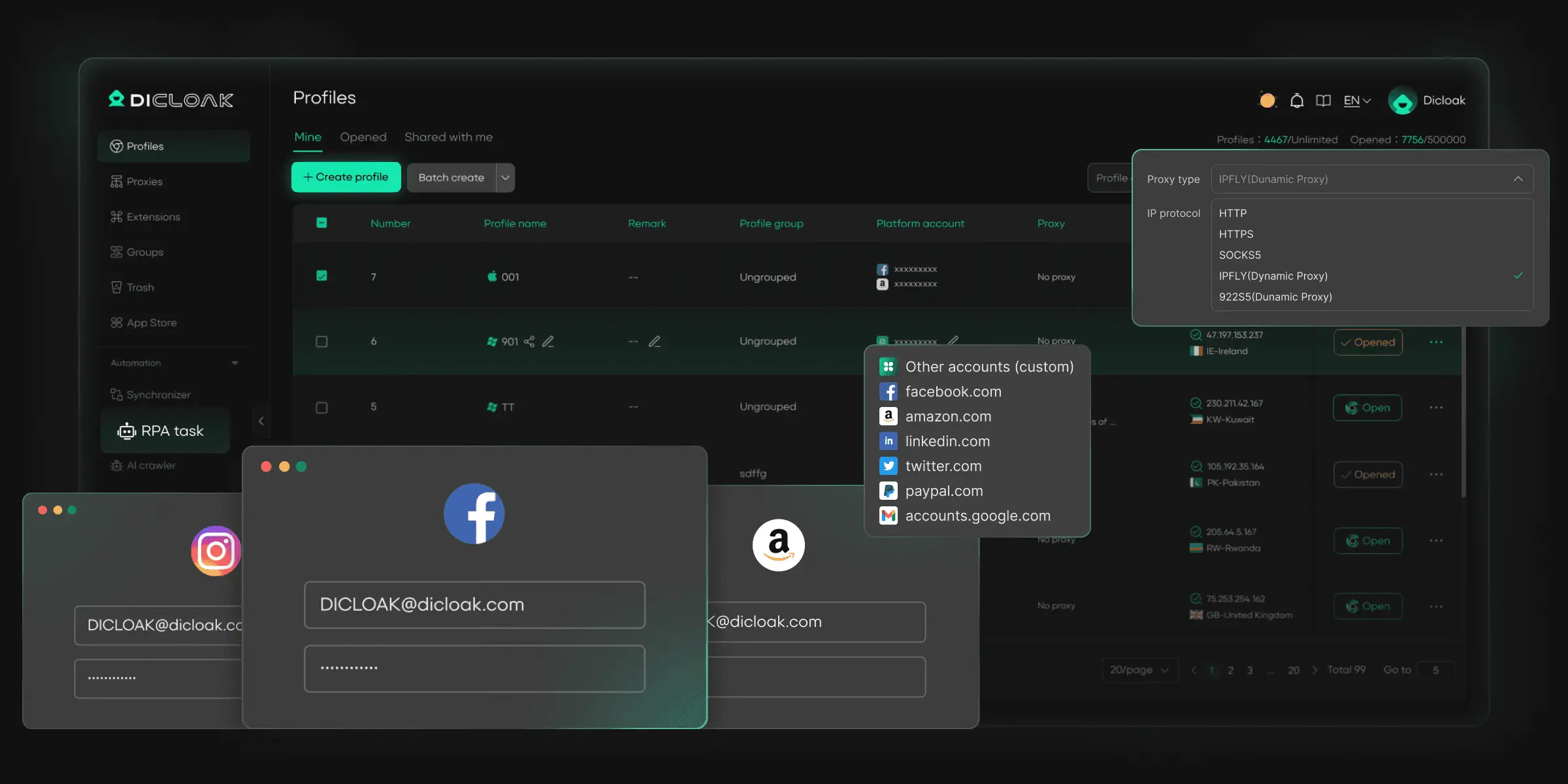
DICloak is an anti-detect solution engineered to facilitate the scalable management of 1,000+ accounts on a single hardware unit by solving the fingerprinting and isolation challenges mentioned above.
Customizing Fingerprints for OS Emulation
DICloak allows users to avoid detection by simulating the fingerprints of diverse operating systems, including Windows and Mac. By emulating a desktop system, a seller can blend into secure desktop-based automated traffic.
Automating Workflows with RPA and Bulk Operations
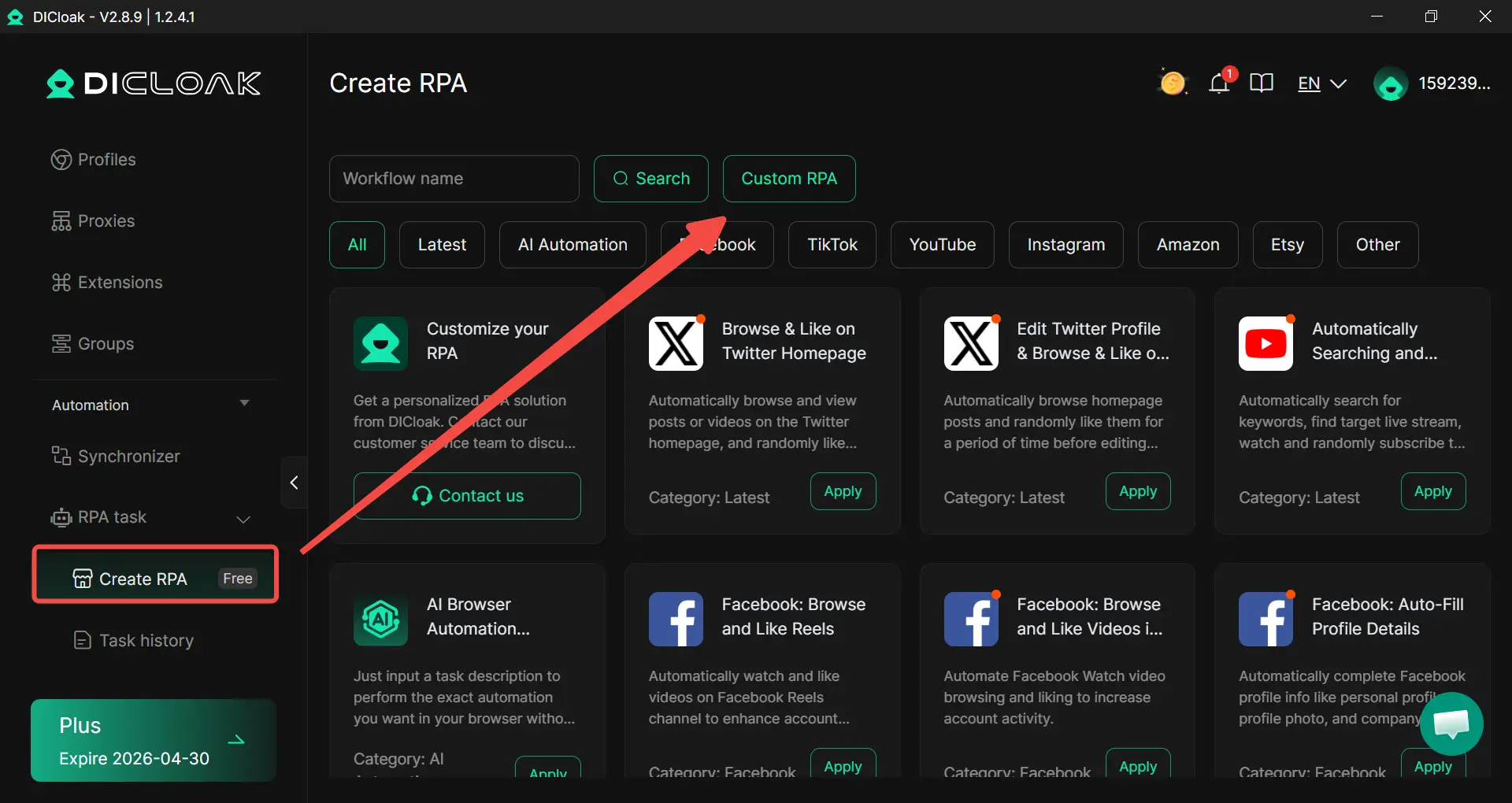
To scale operations such as traffic arbitrage without proportional increases in manual labor, DICloak provides built-in Robotic Process Automation (RPA). This allows for the automation of repetitive tasks—such as product browsing or account warm-up—across hundreds of profiles simultaneously using bulk operation tools.
Centralized Team Management and Data Isolation
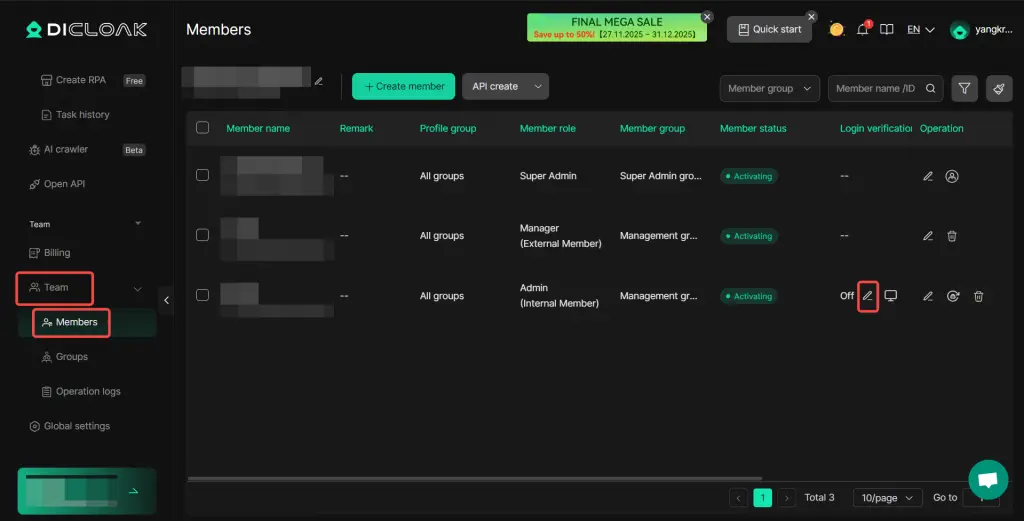
For professional teams, they can use DICloak to manage memebers accounts. Administrators can assign specific permission levels, share browser profiles securely without exposing login credentials, and audit operation logs. This ensures that the organization's digital assets remain protected even when multiple team members are accessing the infrastructure.
Comparison of Standard Browsing vs. DICloak Protected Environments
Professional Assessment of DICloak for E-commerce Growth
A technical evaluation of the software provides the following findings:
Pros:
- High-density account management (100+ profiles).
- Comprehensive OS simulation for desktop traffic blending.
- Advanced RPA for reducing manual operational overhead.
- Robust protocol support for global proxy pools.
Cons:
- Advanced fingerprint customization requires a technical understanding of browser entropy.
- System performance and security are contingent upon the quality of the external proxy provider.
Final Summary of Risk-Aware Scaling
Navigating the Shein ecosystem as either a consumer or a professional seller requires a balanced approach to risk. For consumers, safety is a product of diligent research and secure payment practices. For the professional seller, the opportunity for global growth is significant, but it necessitates a robust digital infrastructure. By implementing tools like DICloak to manage browser fingerprints and isolate network traffic, businesses can safely leverage Shein’s market reach while protecting their digital assets from the technical risks of account association and bans.
Frequently Asked Questions Regarding Shein Safety Standards
Is it safe to order from Shein?
From a security perspective, the transactional infrastructure is safe. However, users must distinguish between "transactional security" (payment encryption) and "fulfillment risk." The primary risk involves quality variance and shipping delays rather than financial fraud.
Can I trust the quality of Shein clothes?
Quality is highly variable. Professional risk mitigation relies on analyzing the consistency of reviews and sizing data. Without these validation steps, quality cannot be guaranteed.
What are the primary Shein controversies?
Controversies center on ethical labor practices (including reports of minors and unsafe environments), design plagiarism, and the environmental impact of high-speed manufacturing.
Is the platform 100% safe?
No e-commerce platform offers absolute safety. Professional success on Shein requires active risk mitigation, secure payment methods, and technical infrastructure to protect user data.
Should I wash the clothes before wearing?
Yes. From a technical and hygiene perspective, washing is necessary to remove residual manufacturing chemicals, dyes, and finishing agents used during the high-speed production process.
 Web Proxy Tools
 Free Tools
 Cookie Plugin
 UA Generator
 MAC Address Generator
 IP Generator
 IP Address List
 2FA Code Generator
 World Clock
 Anonymous Check
 WebRTC Leak Test
 UUID Generator
 Free Web Proxy Site
 Proxy Checker
 FB Ad Checker
 AI Web Scraping
 Free SMM Tools
 Twitter Shadowban Checker
 Instagram Name Checker
 UTM Generator
 Username Generator
 AI Hashtag Generator
 LinkedIn Headline Generator
 Social Media Image Resizer