Choosing between Alibaba and AliExpress isn’t just about finding a cheaper price, most buyers and sellers struggle to figure out which platform actually fits their workflow. The core problem is this: Alibaba looks like a wholesale marketplace, but its listings often include minimum order sizes, factory contacts, and custom requests. AliExpress, on the other hand, shows single-item pricing, quick shipping, and direct checkout, but the product range and business terms aren’t always clear for bulk buyers.
The risk is thinking these sites are interchangeable. If you search for “aliexpress vs alibaba,” you’ll see guides that gloss over the difference between Alibaba and AliExpress, but the real gap is in payment terms, order volume, and how disputes are handled. For sellers, deciding whether to list on Alibaba or AliExpress for ecommerce often comes down to how much control you need over shipping and customer communication.
What matters most isn’t just the headline price or the platform branding, it’s whether the platform matches the way you want to buy or sell. A buyer who needs custom packaging or factory rates will hit a wall on AliExpress; a drop shipper who needs fast, single-unit fulfillment will waste days negotiating with Alibaba suppliers.
The next section breaks down the core features and workflow differences step by step.
What Should You Check Before Choosing Between Alibaba and AliExpress?
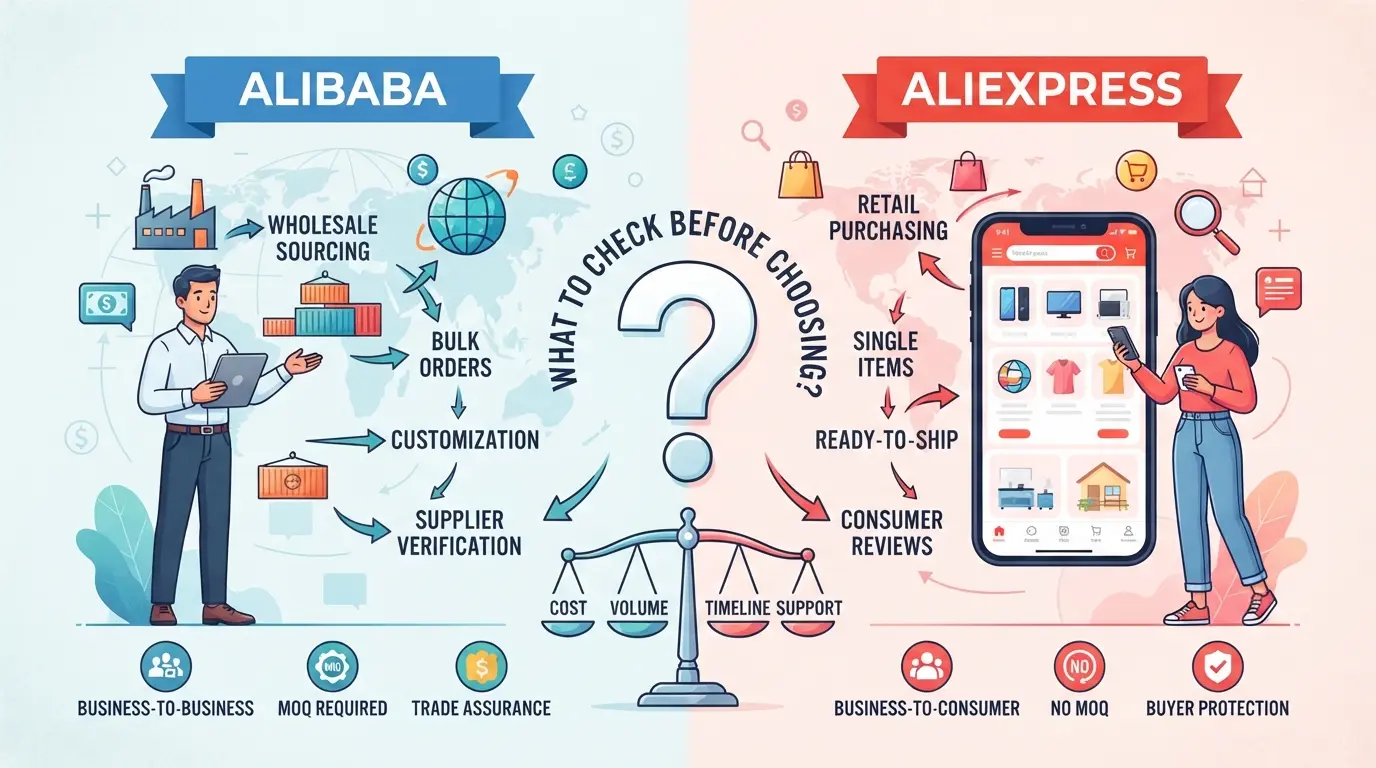
The difference between Alibaba and AliExpress isn’t just about price, it’s about how each platform handles order size, customization, payments, and buyer protection. Before you pick, you need to match their strengths to your buying or selling goals. Buyers who skip these checks often end up stuck with minimum order requirements, missing buyer protection, or slow dispute resolution.
Your Buying Purpose: Wholesale, Retail, or Dropshipping?
If you need bulk orders, factory pricing, or custom branding, Alibaba is built for you. Single-item buyers, dropshippers, and those who want fast, direct-to-customer shipping usually get better results on AliExpress. The main trap is trying to order small quantities or dropship from Alibaba; most suppliers won’t process these requests, and you’ll lose days negotiating. For retail buyers, AliExpress is straightforward, add to cart, pay, and track your parcel. For wholesale, Alibaba’s messaging and negotiation tools are the real difference, since you can request quotes and custom specs.
Product Type and Customization Needs
Check these before you choose:
- Need a logo, custom packaging, or unique specs? Only Alibaba sellers can quote and build to order.
- Buying standard, ready-to-ship goods in low quantity? AliExpress fits, no negotiation, instant checkout.
- If you want to order samples before bulk, Alibaba suppliers can usually provide them, but expect to pay extra and wait longer.
Payment, Shipping, and Buyer Protection
AliExpress supports instant card, PayPal, and local payment methods, with automatic buyer protection. Alibaba’s payment is built around bank transfer, escrow, and negotiation, so expect delays and manual confirmation.
- Confirm which payment methods fit your region and business, AliExpress is more flexible for small buyers.
- Check shipping speed and tracking: AliExpress offers standard shipping options with fixed rates, while Alibaba shipments require custom quotes and may take weeks.
- Look at buyer protection policies: AliExpress gives automatic refunds for non-delivery or items not as described; Alibaba’s protection depends on contract terms and supplier agreement.
If you skip these checks, you risk slow order processing, hidden fees, or getting stuck in a dispute with no clear resolution path.
This all comes down to whether you need speed and simplicity (AliExpress) or control and customization (Alibaba). The next section breaks down why these platforms handle buyers and sellers so differently in practice, and what that means for your workflow.
Why Do Alibaba and AliExpress Work So Differently for Buyers and Sellers?
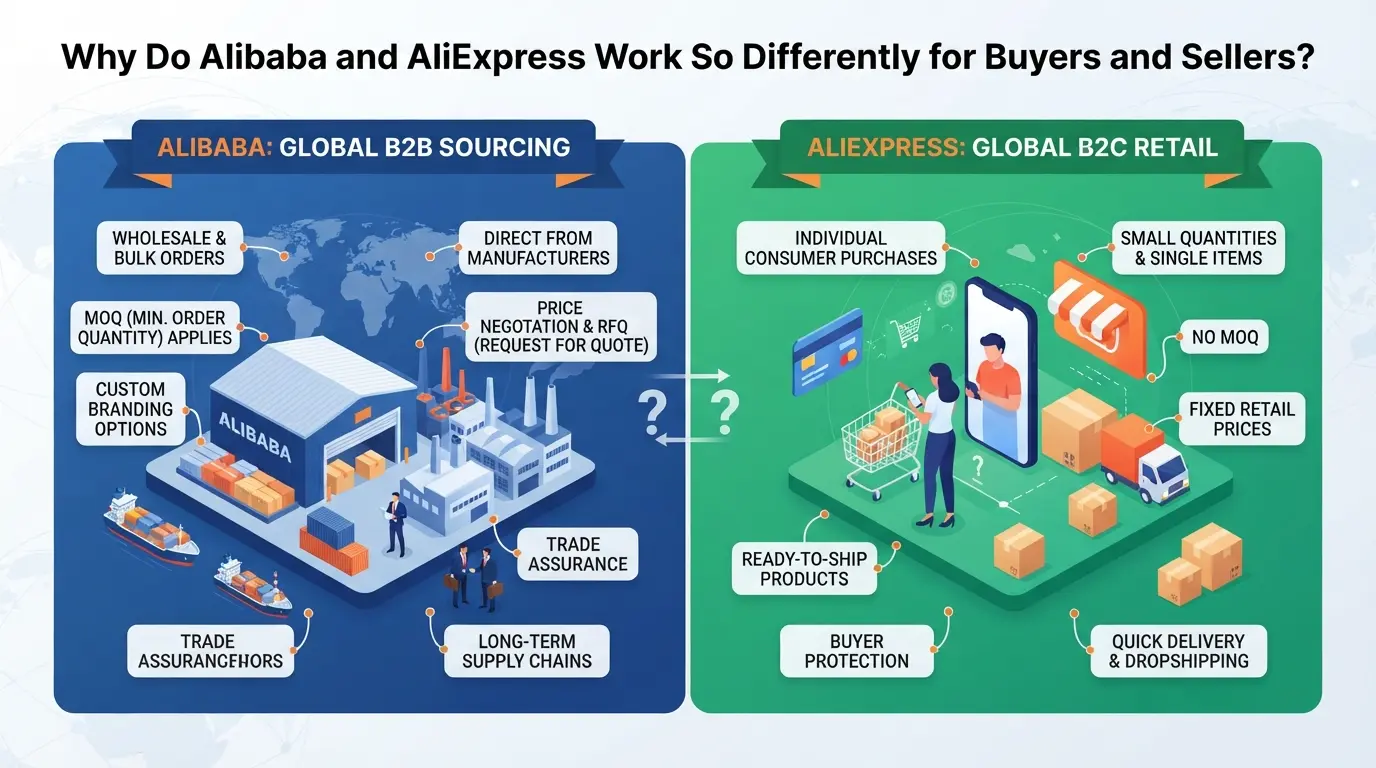
Suppliers and shoppers hit such different roadblocks on Alibaba vs AliExpress because these platforms weren’t built for the same kind of transaction. The differences in order flow, pricing, and how you talk to sellers all trace back to each site's core model, Alibaba runs as a B2B (business to business) marketplace, while AliExpress is designed for B2C (business to consumer) shopping.
How Alibaba’s B2B Model Shapes the Buying Process
Buyers on Alibaba reach out directly to factories or wholesalers. You can request custom quotes, negotiate prices, and discuss order details that fit your needs. Minimum order quantities (MOQs) are common, don’t expect to buy one unit.
How AliExpress’s B2C Model Changes the Experience
On AliExpress, the process is built for speed and small orders. You get fixed prices, product listings, and a checkout button, no negotiation needed. Many products ship worldwide in single units. The upside is that you can get started fast, even as a new drop shipper or casual buyer. But this convenience comes with limits. If you need a custom logo, packaging, or an unusual product spec, you’ll hit a wall: most AliExpress sellers won’t flex their offer for small orders. Even bulk discounts are rare unless you message sellers directly, and some ignore these requests. If you place a large order and discover the item quality isn’t what you expected, returns can get messy, the platform's buyer protection is designed for inexpensive parcels, not big-ticket shipments. That’s why the biggest operational gap between these sites is how much you can tailor the deal before paying.
What Sellers Need to Know About Platform Rules
- Account setup: Alibaba sellers face stricter business verification; AliExpress allows faster onboarding but limits new sellers’ features.
- Listing rules: Branding, product categories, and what you can list are more controlled on Alibaba. AliExpress has tighter rules on counterfeits and IP.
- Communication: Alibaba expects direct negotiation; AliExpress pushes for order-based, platform-moderated chat.
Understanding these structural differences explains why so many new buyers get tripped up on order size, payment methods, or slow responses from sellers. Each platform’s rules are set up to fit its main customer base, not to frustrate you on purpose.
The next step is knowing where users most often make mistakes or run into problems, especially when they try to use Alibaba like AliExpress, or vice versa.
What Risks and Mistakes Do New Users Usually Make on Alibaba and AliExpress?
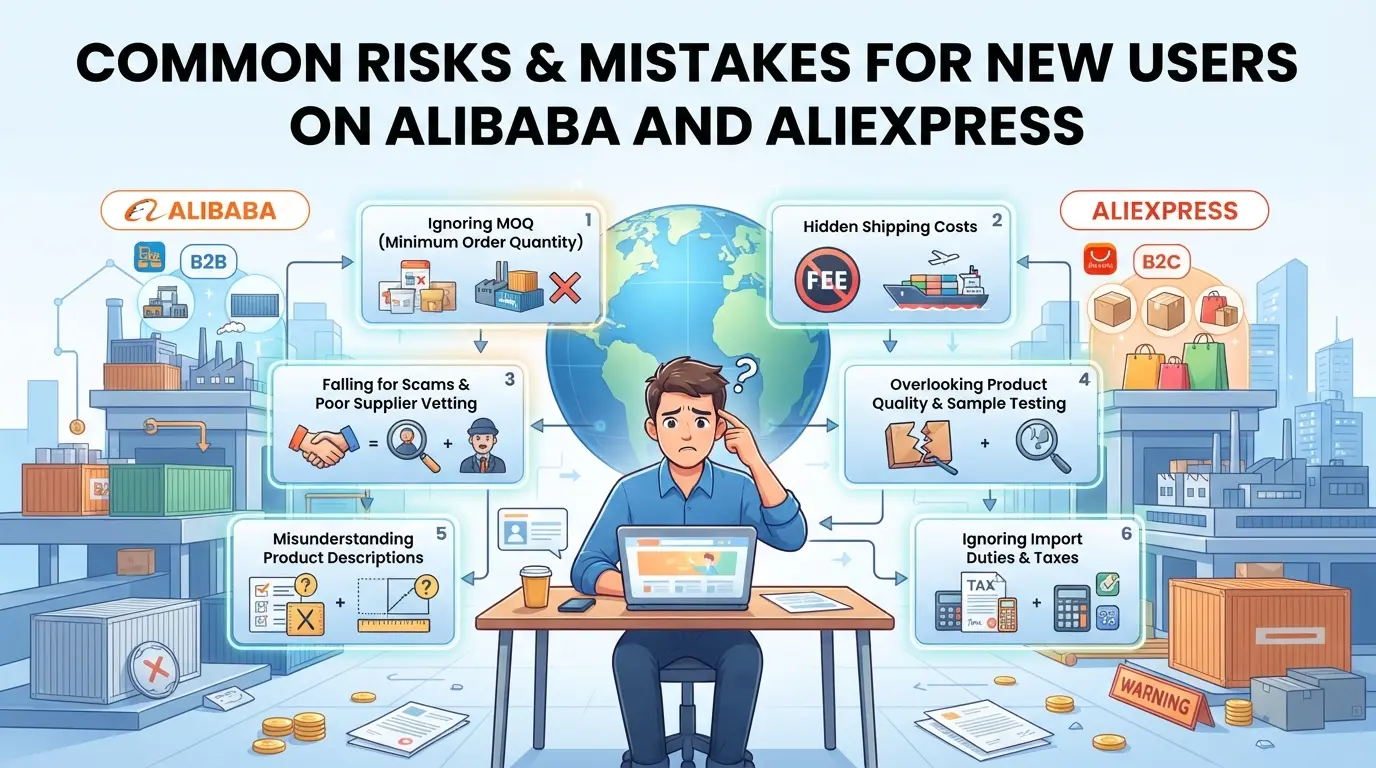
Plenty of first-timers on Alibaba or AliExpress run into the same traps, fake deals, confusing order rules, and missing buyer protection. Skipping these checks can cost you time, money, or even your whole shipment.
Falling for Unrealistic Prices or Fake Listings
If a price looks way below market, expect problems: either the supplier doesn't exist, or the listing is a bait-and-switch. Check for missing company details, zero transaction history, or only stock photos. The easiest way to avoid scams is to verify the supplier’s years active and real feedback before you message or pay.
Misunderstanding Minimum Order Quantities and Customization Terms
- Review the MOQ (minimum order quantity) before requesting samples, Alibaba sellers rarely accept single units.
- On AliExpress, check if bulk discounts actually apply; many listings cap orders at 5-10 units.
- Confirm custom or branded packaging isn’t included unless listed, most AliExpress offers are fixed SKUs.
Ignoring Buyer Protection and Payment Safety
Always check if your order includes buyer protection before you pay. Escrow is standard on Alibaba, but not every supplier supports it.
- Use platform payment methods, never wire money directly to a personal account.
- Read what the “buyer protection” covers; some refunds only apply if the item never ships.
- Screenshot all chats and order details in case you need to file a dispute.
Next up: how order size, pricing, and negotiation rules change between these two platforms.
How Do Pricing, Order Size, and Negotiation Work Differently on Alibaba vs AliExpress?
If you’re trying to decide between Alibaba and AliExpress, the real split is how you handle price, quantity, and negotiation. One platform is built for bulk deals and bargaining; the other is for single-item, fixed-price orders. Here’s where the differences matter.
Price Structure: Fixed vs Negotiable
| Feature |
Alibaba |
AliExpress |
| Price Model |
Negotiable (per order) |
Fixed (listed for all buyers) |
| Typical Discounting |
Yes, for large quantities |
Rarely, discounts are public |
| Custom Quotes |
Common (RFQ/negotiation) |
Not supported |
On Alibaba, you can message suppliers to negotiate lower prices, especially for large orders, on AliExpress, what you see is what you pay.
Minimum Order Quantities (MOQs)
Alibaba sellers usually set a minimum order quantity, often 50 units or more per item. On AliExpress, you can buy just one unit with no negotiation or extra paperwork. This means AliExpress is better for testing samples or small dropshipping runs.
Shipping Costs and Delivery Times
Bulk orders on Alibaba ship by freight or express, which can take several weeks and requires customs clearance. AliExpress sends small parcels straight to your address, with tracking and faster delivery for most countries. If you need goods quickly or in small batches, AliExpress will save you time and hassle.
The main difference: Alibaba works for buyers who want to negotiate bulk orders and handle import steps; AliExpress is for fast, fixed-price, single-unit shopping without back-and-forth. If you misjudge this fit, you’ll either waste time haggling for one item or lose volume discounts by sticking to single-piece orders.
How Can E-Commerce Sellers Manage Multiple AliExpress Accounts Safely with DICloak?
E-commerce sellers who need to run more than one AliExpress store face real risks, account linkage, inconsistent browser signals, or IP overlap can trigger platform checks. Instead of guessing whether “alibaba vs aliexpress” makes scaling easier, the practical hurdle is keeping each AliExpress account truly separate. Here’s how sellers and teams use DICloak to set up and manage multiple accounts without tripping over platform security flags.
Profile Isolation and Fingerprint Configuration for AliExpress Accounts
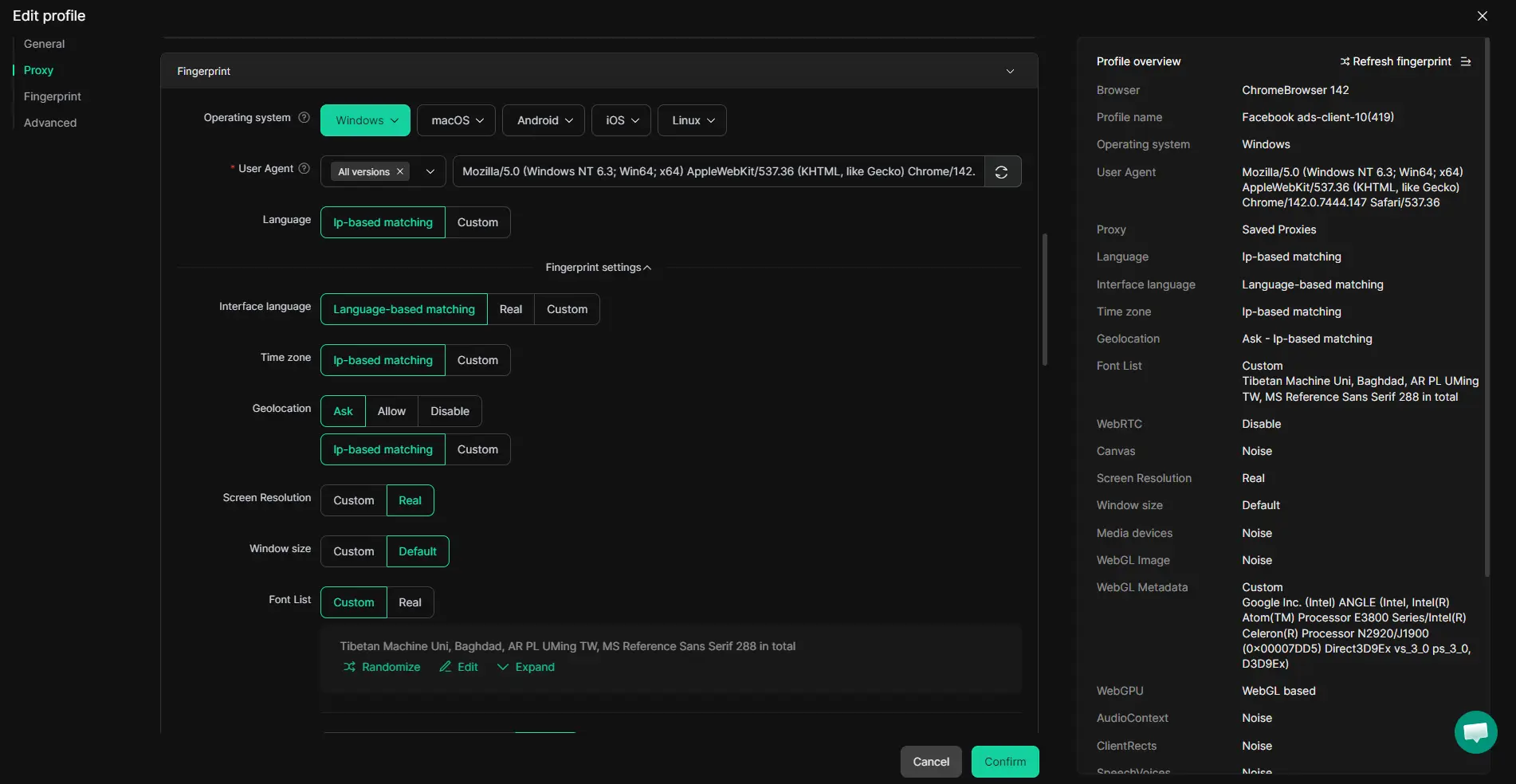
Operators can create a unique browser profile for each AliExpress account in DICloak, storing separate browser profiles and configuring fingerprint signals such as User Agent, time zone, screen resolution, and language. This setup means each store login stays isolated, no shared cookies or browser storage, no accidental overlap. For example, a seller running three AliExpress stores can build three independent profiles, each with its own fingerprint settings. The scope covers browser-level separation only; sellers manage their own accounts inside these profiles.
Proxy Configuration for Account Separation
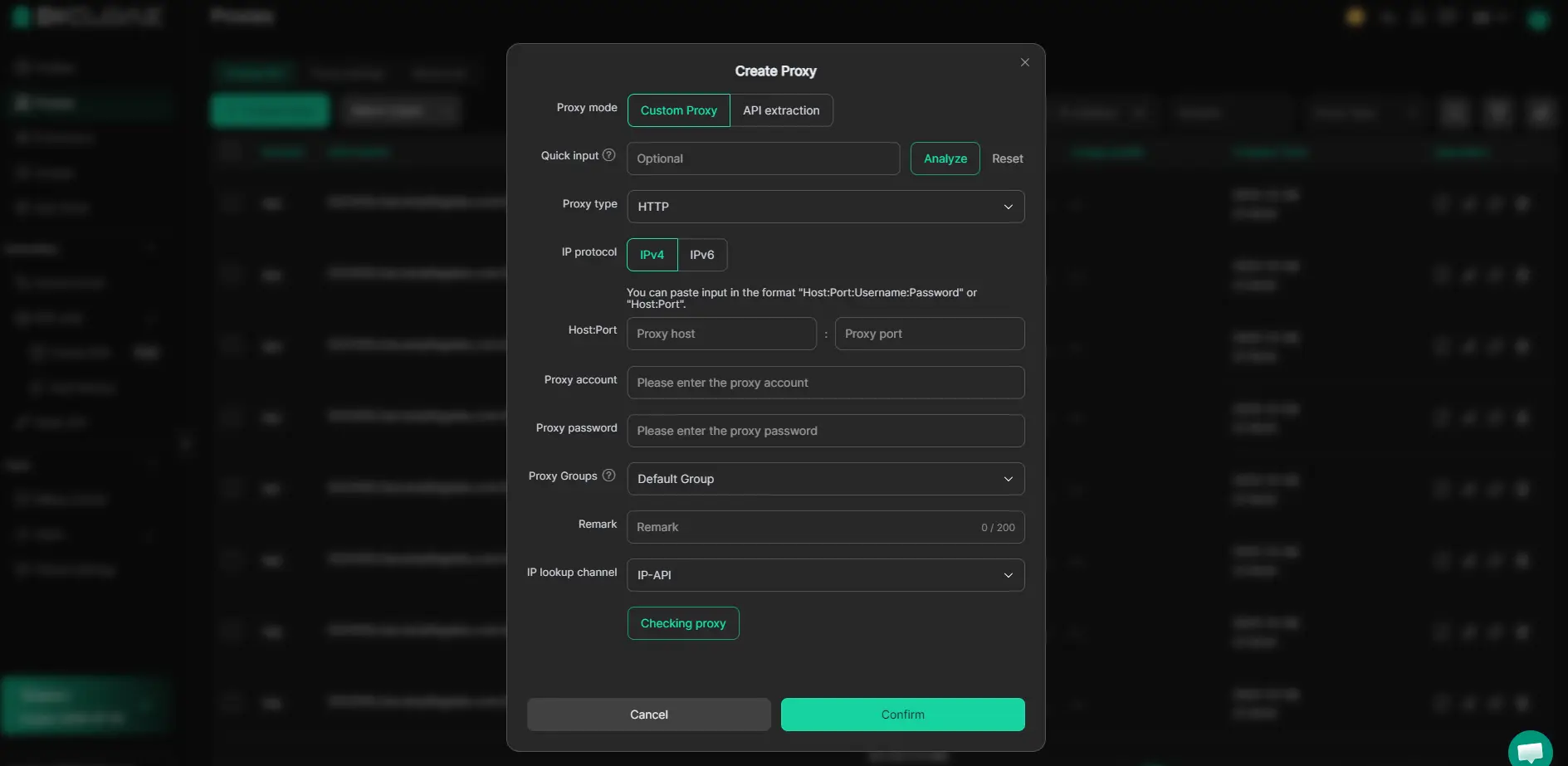
IP overlap or mismatched locations are classic triggers for AliExpress security checks. Operators can assign their own proxy to each DICloak profile, entering details manually, selecting a saved proxy, or using API extraction, to match store country or region settings. Before opening an account session, you can test proxy connectivity and check the detected exit IP and time zone. DICloak doesn’t sell proxies; sellers use their own, and proxy use does not guarantee safety.
Bulk Operations for Efficient Account Management
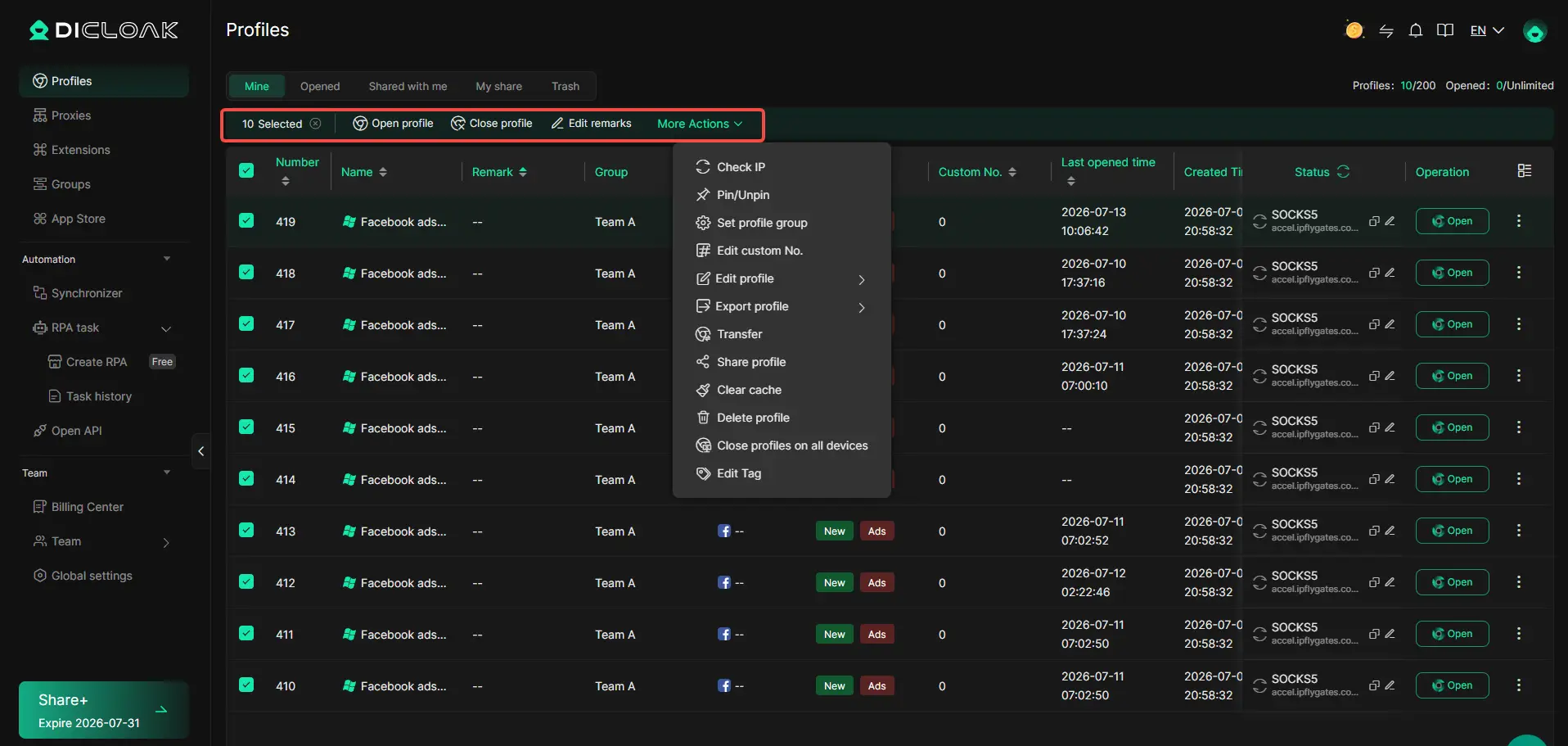
Handling dozens of AliExpress accounts one by one gets slow and messy. Teams can use Bulk Operations to create, edit, or update multiple browser profiles in one batch, saving hours and cutting manual errors. For example, onboarding 20 new accounts means creating and configuring all profiles at once, with shared or unique settings applied as needed. Bulk edits are fast, but a mistake affects every profile selected, so check settings before confirming.
Next, you’ll see which business cases call for Alibaba or AliExpress as the better fit.
When Is Alibaba a Better Fit Than AliExpress, and Vice Versa?
Most buyers and sellers get stuck choosing between Alibaba and AliExpress when their workflow doesn’t match the platform. The fastest way to decide: match your order type and business model to the way each site actually works, not just the price or product photo.
Best Scenarios for Alibaba
| Scenario |
Alibaba Fit |
AliExpress Fit |
| Custom branding needed |
Yes |
No |
| 100+ units per order |
Yes |
Rarely |
| Price negotiation |
Yes |
No |
If your business needs custom logos, unique packaging, or direct deals with factories, Alibaba covers those bases while AliExpress is built for off-the-shelf retail.
Best Scenarios for AliExpress
Picture a small Shopify seller testing a new phone case niche. They want to ship one unit to a US address, with tracking, and no conversation with the supplier. AliExpress is built for this: instant checkout, no minimums, clear shipping choices, and buyer protection that works like retail sites. Ordering a single unit on Alibaba, by contrast, triggers days of back-and-forth messaging, some suppliers won’t even reply unless you request 200 units. If the test order flops, you’re out a few dollars and a week, not stuck negotiating refunds on a pallet.
AliExpress is the go-to for dropshippers, retail buyers, or anyone who needs to ship small quantities quickly without custom deals or production cycles. Alibaba makes sense if you’re scaling up, need control over every detail, or want to move past retail markups.
Short test orders, fast fulfillment, and minimal setup all tilt toward AliExpress. Bulk buyers and brands should expect more work but get lower factory prices and full customization through Alibaba.
The next step is not just picking the right site, but knowing how to protect your account and orders whichever platform you choose.
What Steps Should You Take to Protect Your Account and Orders on Both Platforms?
Getting the platform fit right is only half the story. Even if you’ve figured out the difference between Alibaba and AliExpress for your orders, sloppy account security or risky payment choices can wreck the deal. Here’s how to avoid the usual traps.
Verifying Supplier and Seller Legitimacy
- Check reviews and ratings , scan for patterns in complaints, not just averages. A supplier with 4.9 stars but several recent “never shipped” warnings is a red flag.
- Confirm certifications , legit sellers often show badges for business licenses or trade assurance. If a supplier can’t prove basic credentials, skip them.
- Use the platform’s verification tools , both sites offer “Verified Supplier” or “Top Brand” marks. Ignore these, and you risk dealing with ghost sellers.
- Cross-check company details , if the business name changes across listings, that usually means trouble.
Using Secure Payment and Communication Channels
- Pay through platform escrow , this keeps your money safe until you confirm delivery. Off-platform payments (like direct wire transfers) make it almost impossible to get a refund if something goes wrong.
- Keep all messages and deals inside the platform chat , these records are your only real proof if a dispute comes up.
- Save screenshots and transaction emails , if you need to open a claim, you’ll want evidence beyond the chat log.
- Never share personal info outside official channels , scammers often push for email or phone contact to dodge platform monitoring.
Setting Up Account Recovery and Monitoring
- Turn on two-factor authentication , this step blocks most account takeover attacks. If you skip it, you risk losing access after a single phishing attempt.
- Set up backup recovery options , add a secondary email or phone, so you can restore access even if your main login fails.
- Check login history weekly , unusual locations or odd login times are your early warning for hacks.
- Get alerts for new devices or password changes , respond fast if you see anything unexpected.
Frequently Asked Questions About alibaba vs aliexpress
Is Alibaba or AliExpress better for dropshipping in 2026?
For dropshipping, AliExpress is usually better. It supports small orders, has faster shipping, and connects easily with ecommerce platforms like Shopify. Alibaba is designed for bulk buying, so minimum order quantities are common. If you need one item shipped directly to your customer, AliExpress is the easier choice in the alibaba vs aliexpress comparison.
Can I buy single items from Alibaba or is it only for bulk orders?
Alibaba sellers often set minimum order quantities (MOQs), so most products require bulk purchases. However, some suppliers offer "Ready to Ship" items or sample orders, which let you buy single units. Always check the listing or contact the supplier to confirm if single-item orders are possible.
How do I avoid scams on Alibaba and AliExpress?
To stay safe, look for verified suppliers, check customer reviews, and use the platform’s messaging system. Both Alibaba and AliExpress offer buyer protection programs. Avoid off-platform payments and always confirm supplier details. Use trade assurance on Alibaba and buyer protection on AliExpress for added security.
What payment methods are safest on Alibaba and AliExpress?
The safest payment methods are platform-supported options like credit cards, PayPal (on AliExpress), and escrow services. Alibaba offers Trade Assurance, which holds payments until you confirm delivery. Avoid direct bank transfers or payments outside the platform, as these lack buyer protection.
Can I use the same account for both Alibaba and AliExpress?
No, you need separate accounts for Alibaba and AliExpress. Each platform has its own registration and login system. User policies and account management are not shared, so you must sign up and manage your profile individually on both sites.
Consider your business size, order quantities, and sourcing needs before making your final selection. Taking the time to compare pricing, supplier communication, and buyer protections will help ensure a smooth purchasing experience. Try DICloak For Free
 Web Proxy Tools
 Free Tools
 Cookie Plugin
 UA Generator
 MAC Address Generator
 IP Generator
 IP Address List
 2FA Code Generator
 World Clock
 Anonymous Check
 WebRTC Leak Test
 UUID Generator
 Free Web Proxy Site
 Proxy Checker
 FB Ad Checker
 AI Web Scraping
 Free SMM Tools
 Twitter Shadowban Checker
 Instagram Name Checker
 UTM Generator
 Username Generator
 AI Hashtag Generator
 LinkedIn Headline Generator
 Social Media Image Resizer