When we hear about a brand losing customers, a fair and intuitive thing to assume is that their product didn’t deliver. But in fact, companies are just as likely to struggle because of subpar branding.
The tricky part is that, even if your brand is inconsistent or forgettable, it probably feels fine from the inside. There’s a sleek logo, some colors that complement each other nicely, and maybe even a clever little tagline. But on the outside, potential customers are wondering who you are and why they should care.
If your brand can’t answer those two crucial questions clearly and consistently, growth gets harder and more expensive over time, and it might be smart to contract expert branding services before things go too far south.
Before you take any major steps, though, let’s look at eight branding mistakes that might be quietly killing your growth, plus practical ways to fix each one.

Mistake 1: Thinking a Brand Is Just Colors and a Logo
A lot of companies throw on a new coat of paint and a new logo and call that a brand. But your brand is the full experience people have with you, including what you say and what it feels like to buy from you, not just the visuals.
How to fix it
Create a one-page brand foundation that covers who you are and your primary audience. Only then begin to think about how it looks. Good design is meant to amplify a clear branding idea, not replace it.
Mistake 2: Copying Competitors
It’s natural to look at what the market leader is doing, but if you look and sound exactly like them, you just make it easier for customers to forget you. Copycat branding relies on generic promises and stock photos of people in suits shaking hands. It’s really corny and gets you nowhere.
How to fix it
List your three closest competitors and write down their core promises in plain language. Then ask what you can credibly say that they can’t. These differences might come from serving a narrower niche or offering a unique process/technology, or even a specific outcome that you can deliver better than anyone else.
Your brand should lean hard into that difference, even if it feels slightly uncomfortable. If your positioning doesn’t repel some customers, it’s probably not compelling enough for the ones you actually want.
Mistake 3: Guessing What Customers Care About
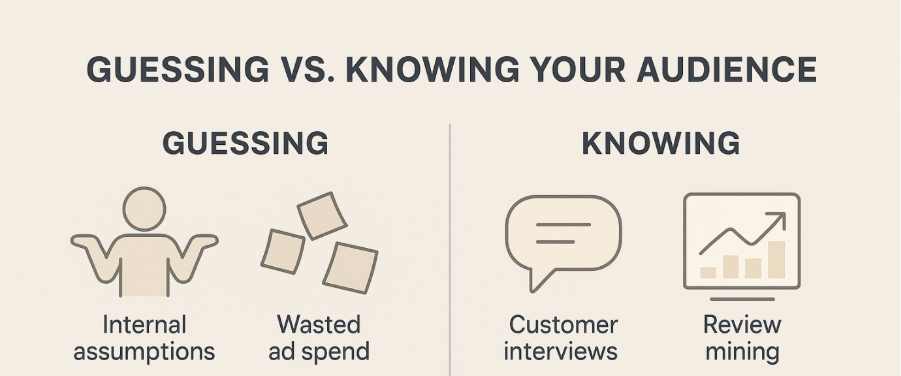
Many brands are built on internal assumptions, but when you dig into real customer conversations, reviews, or support tickets, you often find different themes like speed, reliability, ease, risk reduction, or status.
Organizations like the U.S. Small Business Administration stress that market research is essential to reducing risk and finding a true competitive edge. Branding without that insight is basically an expensive guess.
How to fix it
Start with a few short customer interviews focused on why they chose you and what could have stopped them. Then, look through your online reviews for repeated phrases. If customers keep saying “I don’t have time to…” then “we save you three hours a week” will land better than “we offer innovative solutions.”
Mistake 4: Inconsistent Branding
Inconsistencies in your branding read like instability. If your LinkedIn posts feel corporate, your emails sound casual, and your sales deck looks like it was built in a different decade, it’s harder for customers to trust you with their money.
Research on brand consistency has repeatedly found that always presenting your brand in a consistent way can materially increase revenue because it builds recognition and trust over time.
How to fix it
Create simple brand guidelines, outlining your voice in 3-5 adjectives that describe how you sound (e.g., “clear, direct, optimistic”). When it comes to visuals, stick to the same logo and color palette, obviously, but also the same typefaces and layouts wherever possible.
Stick to one core promise in your messaging, and bake all this into templates like email signatures, social media post formats, slide decks, and proposal docs.
Mistake 5: Telling a Story No One Can Repeat
Ask three people in your company to explain what you do and why you’re different in 20 seconds. If you get three wildly different answers, you don’t have a story. A fuzzy narrative leads to each salesperson selling a different version of the company, and customers struggling to explain you to their colleagues and friends.
How to fix it
Craft a short narrative you want people to repeat. Think about who you serve, the problem they face, what you do differently, and the outcome you create. For example:
“We help mid-sized manufacturers who are drowning in manual processes. Our platform automates their operations without forcing them to rebuild everything from scratch, so they free up 20–30% of their team’s time in a year.”
Refine this until it feels natural, then use it everywhere you can.
Mistake 6: Ignoring the Internal Brand
Your employees need to understand and believe in the brand; otherwise, customers will feel that disconnect in every interaction. You can’t claim to be “obsessed with customer success” and then make it painful to get help. Over time, that gap erodes trust faster than any design tweak can fix.
How to fix it
Treat employees as your first audience by onboarding new hires to what the brand stands for and how their role supports it. Also, share real customer stories regularly so people see the impact of living the brand well.
Mistake 7: Never Measuring Brand Performance
Because branding feels “soft,” many companies never define metrics for it, which makes it hard to defend budgets or make intelligent changes.
How to fix it
You don’t need a full-blown brand tracker to get started. But you do need to pay attention to how perception and preferences change over time. Set up a simple quarterly brand health check and look for trends. If the quality of inbound leads is improving and more people are repeating your key messages back to you, the brand is doing real work.
Mistake 8: Trying to DIY Everything
At the very beginning, doing your own logo, website, and messaging can be a smart, scrappy move. But there’s a point where DIY branding becomes a bottleneck. At that stage, outside perspective and specialized support can save you months (or years) of incremental tinkering.
How to fix it
Decide what must stay in-house and what can be elevated with external expertise. A strong partner can help you make disciplined choices about what your brand is and isn’t, so your team can execute confidently instead of reinventing everything with each campaign.
Turn Branding Mistakes into Momentum
Strong branding is about being the clearest, most consistent, and most relevant voice for the people you want to serve.
If some of these mistakes hit a little too close to home, that’s good news because it means there’s untapped value sitting in your existing business. Fix them, and watch your brand become one of your most reliable growth engines.
 Web Proxy Tools
 Free Tools
 Cookie Plugin
 UA Generator
 MAC Address Generator
 IP Generator
 IP Address List
 2FA Code Generator
 World Clock
 Anonymous Check
 WebRTC Leak Test
 UUID Generator
 Free Web Proxy Site
 Proxy Checker
 FB Ad Checker
 AI Web Scraping
 Free SMM Tools
 Twitter Shadowban Checker
 Instagram Name Checker
 UTM Generator
 Username Generator
 AI Hashtag Generator
 LinkedIn Headline Generator
 Social Media Image Resizer