The Evolution of nichescraper in the 2026 E-commerce Landscape
In the 2026 e-commerce environment, the threshold for sustainable scaling has moved beyond simple product discovery into the realm of infrastructure security. To reduce risk and ensure long-term viability, modern practitioners rely on research suites to identify market opportunities and validate demand before committing marketing capital.
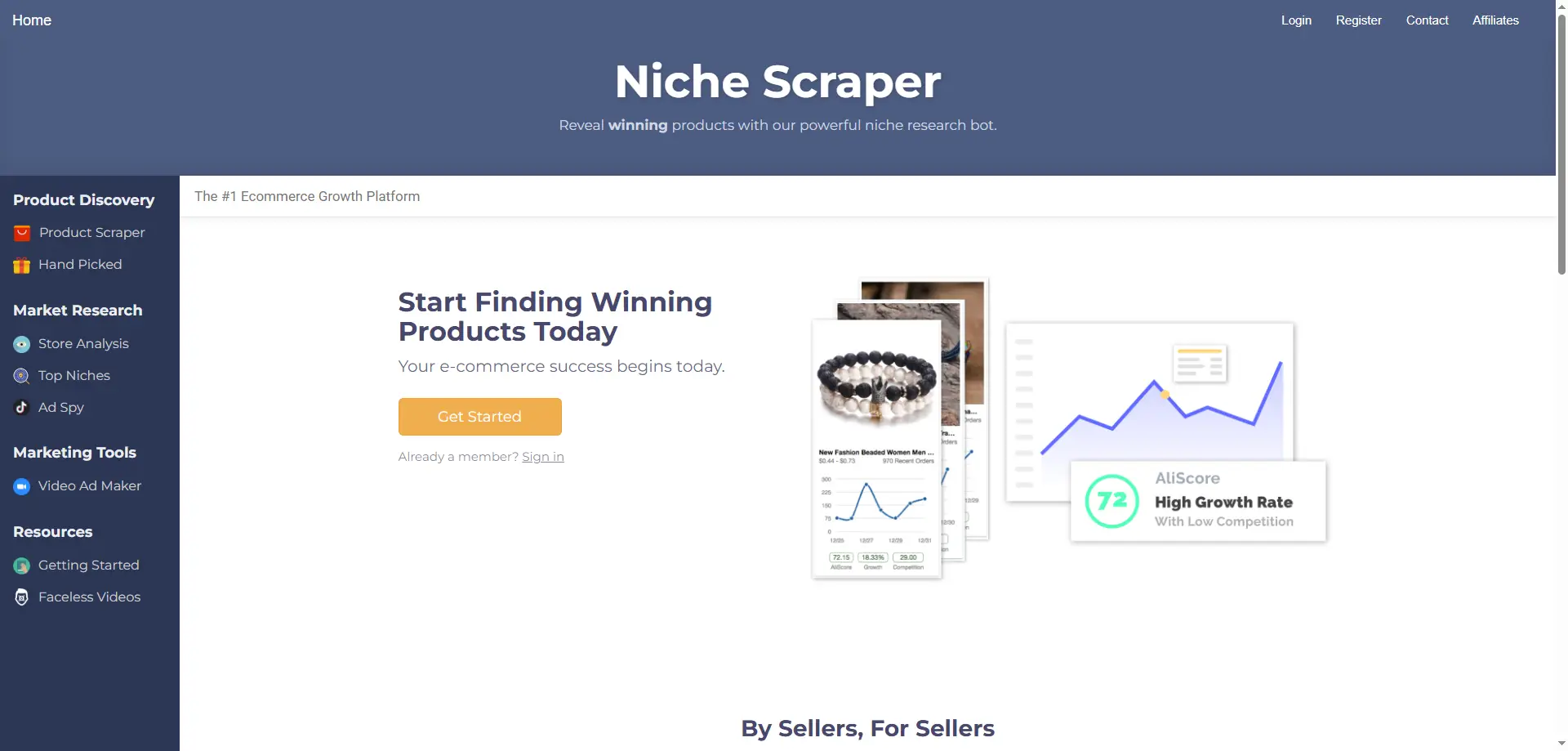
nichescraper serves as an essential research suite for this purpose. It functions as a data-driven hub designed to find trending products, analyze the performance of existing Shopify stores, and spy on active social media advertisements. By utilizing these tools, merchants can transition from speculative product selection to a methodology based on industry practices and verified data, ensuring that every launch is backed by empirical evidence.
Identifying Winning Products Using nichescraper Search Logic
Effective product research requires a systematic approach to filtering the vast amount of data available on global marketplaces. The "Product Scraper" feature within the platform acts as a logic-based search engine that scans AliExpress, Shopify, and Amazon. Successful utilization involves filtering by specific metrics such as order volume and growth rate to isolate items with upward momentum rather than those entering a saturation phase.
As a secondary layer of validation, the "Hand-picked" section provides products that have been manually reviewed by the platform's team. These listings include verified data such as suggested pricing, estimated profit margins, and sample ad copy, offering a human-verified alternative to the purely automated scraper results.
Technical Parameters of the Aliscore Mechanism
The Aliscore is a proprietary metric that represents a data-driven validation of a product's potential. It aggregates three specific data points: current market demand, the intensity of existing competition, and customer reviews. By analyzing the Aliscore, merchants can move away from guesswork and evaluate products based on their statistical likelihood of success.
Reverse-Engineering Competitor Success with Store Analysis
Operational efficiency is further enhanced by the Store Analysis tool. By entering a competitor’s Shopify URL, a user can extract vital business intelligence including estimated monthly revenue, traffic data, and a list of best-selling products. This allows merchants to understand the catalog structure and product add dates of high-performing competitors, providing a roadmap for niche entry.
The Strategic Importance of AdSpy for Creative Validation
The AdSpy tool for Facebook and TikTok is critical for validating a product’s viral potential. By analyzing live engagement data—specifically likes and comments—merchants can establish a condition for success before financial deployment. Once a creative angle is validated and a "winner" is identified, the transition to the scaling phase must be immediate. However, high-velocity scaling requires the simultaneous deployment of a secure browsing infrastructure to prevent a sudden surge in activity from flagging a single-profile browser.
Pro Tip: Use AdSpy for structural inspiration and angle validation; copying creatives directly can lead to DMCA takedowns and ad account restrictions.
Why Multi-Accounting is Critical for Power Users
As e-commerce operations mature, diversification becomes the primary strategy for risk hedging. Successful practitioners eventually manage multiple niche stores to protect overall revenue from the volatility of single-product categories. However, scaling across multiple stores triggers sophisticated detection systems.
Platforms like Shopify, Amazon, and Etsy employ heuristics-based detection used to identify sybil attacks and account linkage. These systems analyze device fingerprints and IP associations to determine if multiple accounts are operated by a single entity. If these accounts are linked to the same hardware signature or network identity, the risk of aggregate account bans—where one violation leads to the termination of all associated stores—increases significantly.
The Technical Risks of Fingerprint Association in Dropshipping
Browser fingerprinting is a high-level technique used by web platforms to collect specific hardware and software information to create a unique digital identity for every user.
Understanding Canvas and WebGL Fingerprinting
Modern browsers use hardware rendering, such as Canvas and WebGL, to process graphics. Because the rendering process varies based on the specific GPU and driver configuration, websites can use this data to create a persistent ID. If a user accesses multiple store accounts from the same browser, the platform identifies the identical hardware signature and may execute a policy-based ban on the entire account cluster.
The Role of WebRTC and Timezone Leaks
Even when basic masking is utilized, data points like WebRTC (which can expose a local IP address behind a proxy) and inconsistent timezone settings create "leaks." These discrepancies signal to platform security heuristics that the user is masking their true identity, often resulting in immediate account restrictions or payment holds.
Using DICloak to Isolate nichescraper Workflow Environments
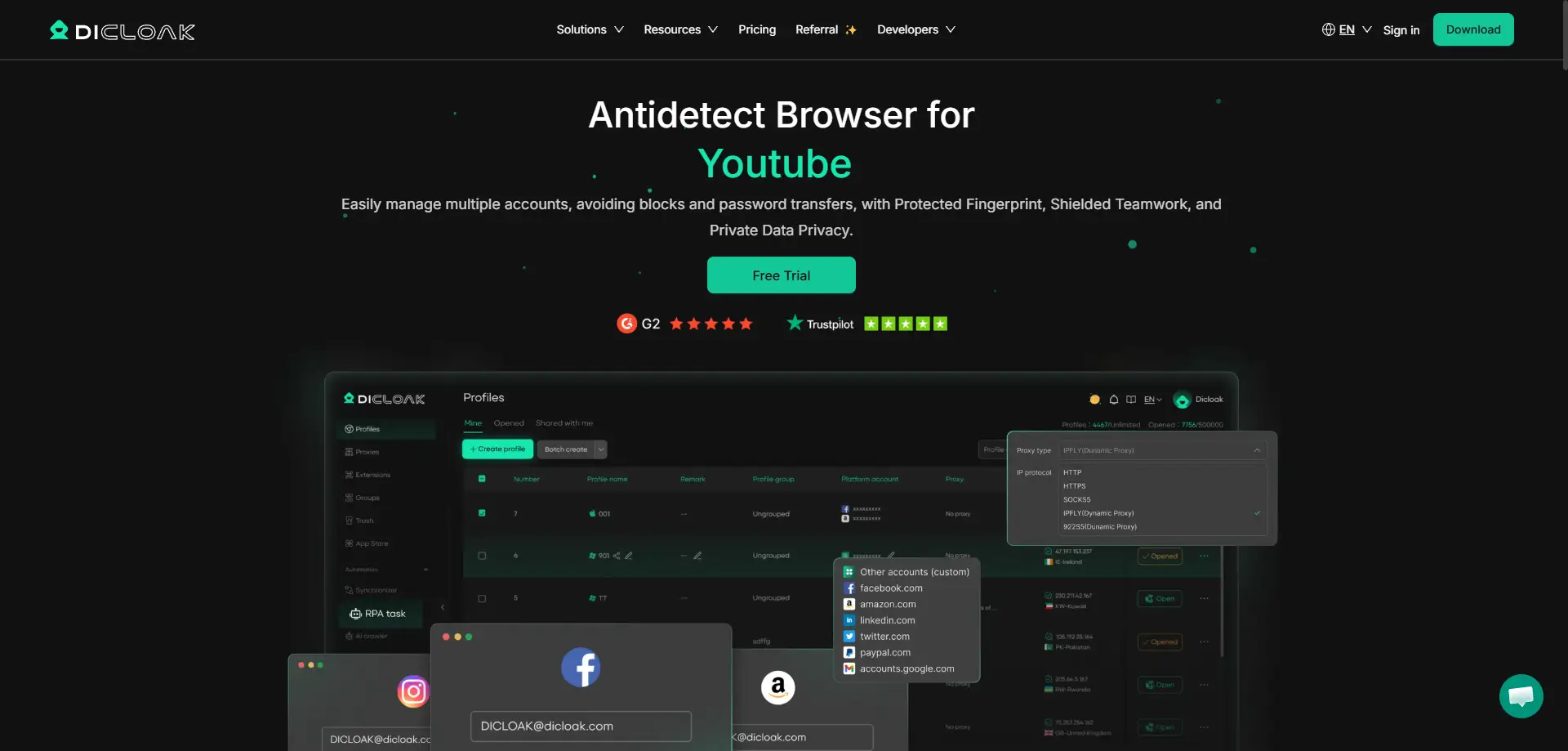
To implement the isolation strategy required for scaling, experts utilize DICloak. This antidetect browser provides the infrastructure to manage 1,000+ accounts on a single device by creating entirely isolated profiles. Each profile functions as a distinct hardware environment with its own unique fingerprint. For power users, DICloak features a "Synchronizer" and "Bulk Operations" capability, allowing a single action in one window to be replicated across hundreds of profiles, drastically increasing operational efficiency.
Simulating Diverse Operating Systems with Chrome Core
DICloak is built on the Chrome core and supports the simulation of diverse operating systems, including Windows, Mac, iOS, Android, and Linux. By varying the simulated OS across different store profiles, merchants further reduce the risk of account linkage and "farming" detection.
Streamlining Team-Based Digital Workflows
Scaling a multi-account empire often requires a team. DICloak provides the necessary infrastructure for secure collaboration through profile sharing, specific permission settings, and comprehensive operation logs. This ensures that sensitive store data remains isolated while allowing team members to execute research findings across different environments.
Implementing Advanced Proxy Management for Network Isolation
Network isolation is the second pillar of professional account security. Each isolated browser profile must be paired with a unique IP address to prevent "linked account" flags. DICloak supports major protocols, including HTTP, HTTPS, and SOCKS5, allowing for flexible and bulk proxy configuration.
Pro Tip: For high-value seller accounts, utilize high-quality residential proxies instead of datacenter IPs to reduce the risk of automated flags and improve account trust scores.
Automating nichescraper Implementation with RPA
A primary challenge in multi-account management is the manual labor required for repetitive tasks. DICloak’s built-in Robotic Process Automation (RPA) allows users to automate the "grind" of the daily workflow.
Operational Scenario: A user can create an RPA script to automate the transfer of product data discovered in nichescraper—such as titles, descriptions, and pricing—directly into multiple store environments simultaneously. Instead of manually logging into each profile to update listings, the RPA handles the execution across 1,000+ accounts, allowing the merchant to focus on the high-level research and creative validation provided by the scraper tool.
A Comparative Analysis of Infrastructure Strategies
| Feature |
Standard Browsing Methods |
DICloak Infrastructure |
| Account Isolation |
Shared cookies and local storage |
Individually isolated browser profiles |
| Browser Fingerprint |
Identical for all accounts |
Customizable and unique per profile |
| IP Management |
Single IP or manual switching |
Integrated Proxy Management (SOCKS5/HTTP) |
| Operating System |
Hardware-bound (Single Kernel/User-Agent) |
Simulated Windows, Mac, iOS, Android, Linux |
| Automation |
Manual execution |
Built-in RPA, Bulk Operations, & Synchronizer |
| Detection Risk |
High (Sybil Detection/Account Linkage) |
Low (Isolated Fingerprint Protection) |
Objective Pros and Cons of nichescraper Operations
While the platform is a robust resource for research, practitioners should maintain a balanced view of its operational impact:
Pros:
- Beginner-Friendly: Intuitive interface that requires no advanced technical skills.
- Real-Time Trends: Frequent updates on AliExpress and Shopify sales data provide current market insights.
- Validation Tools: AdSpy and Store Analysis provide empirical evidence before financial commitment.
- Accessibility: A free plan is available for testing core features.
Cons:
- Saturation Risk: Because many users access the same data, popular "winners" can quickly become saturated.
- Fulfillment Reliance: Heavy reliance on third-party fulfillment (AliExpress) can lead to extended shipping times.
- Creative Limits: The built-in video creator is basic compared to professional editing software.
Essential Security FAQs for nichescraper Practitioners
Can I manage multiple Shopify stores without getting banned?
Yes, but it requires strict environment isolation. By using DICloak, each store is assigned a unique browser fingerprint and isolated data environment. This prevents platforms from identifying account linkage through hardware signatures, effectively allowing you to manage multiple stores from one device safely.
What is the best way to handle IP management?
Integrate high-quality proxies (SOCKS5, HTTP, or HTTPS) directly into each DICloak profile. This ensures that each store account operates from a dedicated, consistent IP address, which is essential for bypassing sybil detection heuristics.
Does nichescraper have a browser extension?
No. nichescraper is a web-based platform. All features, including the Product Scraper, AdSpy, and Store Analysis, are accessed through their official web portal.
Conclusion: Scaling Safely in 2026
The e-commerce landscape in 2026 demands a combination of accurate data and secure infrastructure. nichescraper provides the critical intelligence necessary to identify winning products and analyze competitor movements, significantly reducing the risks inherent in product selection. However, data alone is insufficient for growth. Infrastructure tools like DICloak provide the necessary environment isolation and fingerprint protection to scale those findings into a multi-account empire without the threat of platform bans. By pairing professional research with secure digital infrastructure, merchants can build a scalable and resilient e-commerce business.
 Web Proxy Tools
 Free Tools
 Cookie Plugin
 UA Generator
 MAC Address Generator
 IP Generator
 IP Address List
 2FA Code Generator
 World Clock
 Anonymous Check
 WebRTC Leak Test
 UUID Generator
 Free Web Proxy Site
 Proxy Checker
 FB Ad Checker
 AI Web Scraping
 Free SMM Tools
 Twitter Shadowban Checker
 Instagram Name Checker
 UTM Generator
 Username Generator
 AI Hashtag Generator
 LinkedIn Headline Generator
 Social Media Image Resizer