In 2026, CAPTCHA is no longer just a simple checkbox or image puzzle. Google’s verification systems have evolved into a layered risk engine that judges traffic long before a user clicks, scrolls, or types. For teams working in automation, affiliate marketing, account operations, or large-scale data collection, this change has completely reshaped the rules.
This guide breaks down how automated verification systems work in 2026, why standard scripts get flagged, where Selenium now falls short, and how advanced tools such as Playwright and DICloak fit into a more scalable anti-detection strategy.
The Evolution of Automated Verification Systems in 2026
In 2026, the digital security landscape has moved beyond reactive puzzles toward proactive, telemetry-based risk assessment. Google’s security infrastructure now operates as a deep-learning ecosystem designed to categorize traffic before a single user interaction occurs. Understanding the hierarchy of these systems is mandatory for any high-scale digital growth operation:
- reCAPTCHA v2: The legacy "checkbox" and image-selection layer. While common, it is increasingly obsolete against modern agents; current AI models now solve these challenges with 85% to 100% accuracy, significantly outperforming the human success rate of 50% to 85%.
- reCAPTCHA v3: An invisible behavioral scoring system that assigns a risk value (0.0 to 1.0) based on background telemetry. Low scores result in silent blocks or escalation to more aggressive challenges.
- reCAPTCHA Enterprise: The apex of Google's security, utilizing AI-driven risk analysis and granular site-specific tuning to identify sophisticated automation patterns.
The strategic shift in 2026 is the reliance on "invisible challenges." Verification is no longer about solving a puzzle; it is about the background evaluation of user legitimacy. These systems do not seek absolute security but aim to increase the resource cost of automation. For practitioners, this necessitates a transition from "solving" to "strategic avoidance" via advanced environmental emulation.
Why Standard Automation Triggers a Captcha Challenge
Challenges are the result of heuristic triggers across five primary vectors. When a session fails to meet the "human" threshold in any of these categories, a verification event is mandated:
- IP Reputation: Datacenter IPs are immediate red flags. High-scale operations require Network Isolation and IP Protection—industry-standard requirements that utilize residential IPs to mask the automated nature of the traffic.
- Browser Fingerprinting: Detection scripts scan for inconsistent hardware signals, missing API hooks, or specific browser markers.
- Behavioral Patterns: Robotic interaction—such as linear mouse movements, lack of scrolling, or instantaneous navigation—triggers immediate "unusual traffic" flags.
- Rate Limiting: Sending excessive requests without session reuse or realistic intervals.
- Geographic Inconsistency: Mismatches between the proxy's IP location and the browser's internal settings (Timezone, WebGL, etc.).
Operational Reality: A basic script running on a datacenter IP with default headers will be flagged instantly. To survive in 2026, the infrastructure must achieve total "Network Isolation," ensuring each session is perceived as an independent, legitimate residential user.
The Technical Limitations of Selenium in Modern Workflows
As a Senior Analyst, I must state clearly: Selenium is no longer a viable tool for high-value Google targets. Its architecture is fundamentally transparent to modern telemetry.
Detection of WebDriver-Specific Properties
The navigator.webdriver = true property is merely the initial entry point for telemetry scans. Even when patched, Selenium-based tools leak subtle automation signals within the JavaScript environment. Modern detection scripts use these leaks to identify the "undetected-chromedriver" even when standard flags are hidden.
Selenium lacks the capability for deep hardware-level spoofing. Its static fingerprints make sessions predictable and easily linkable, leading to rapid account checkpoints. In 2026, cross-session consistency without variance is a primary detection signal.
How Playwright and Chromium Improve Success Rates
Modern growth infrastructure has shifted to Playwright due to its low-level access to browser internals. This allows for superior control over browser contexts and the ability to override detection vectors that Selenium cannot reach.
Strategic tool-to-target mapping is required for operational efficiency:
- Google News & Reviews: Playwright (for complex interaction).
- Google Scholar & Finance: Requests/Httpx (for high-speed data retrieval when behavioral interaction is minimal).
By combining Playwright with a Chromium core, practitioners can simulate high-value user environments with greater stealth.
Pro Tip: For high-stakes interactions, mandatory protocol requires using headful mode or advanced stealth plugins. The "headless" signal remains the most consistent trigger for aggressive verification challenges in 2026.
Core Strategies for Reliable Captcha Bypass Avoidance
Successful operations prioritize pre-emptive avoidance over reactive solving.
The foundation of avoidance is a clean residential IP pool. Mandatory protocol requires rotating IPs every 1–20 requests to stay below the behavioral threshold of Google’s rate-limiters. This ensures that no single IP address exhibits the high-volume signature of a bot.
Behavioral Pattern Mimicking and Human Emulation
Automation must simulate the physics of human interaction.
- Physics-Based Movements: Implement curved mouse paths with variable acceleration.
- Randomization Windows: Implement a randomized waiting time of 2–8 seconds between interactions.
- Session Persistence: Use cookies and local storage to establish a "trusted" history. A browser profile with a multi-day history is significantly less likely to be challenged than a fresh session.
In 2026, fingerprinting has moved to the hardware level. Google uses these signals to link seemingly disparate accounts to a single machine.
Canvas and WebGL Fingerprinting Mitigation
Graphics-based tracking renders unique hashes based on how a device processes images and 3D graphics. Isolating these hashes is essential; if two browser profiles share the same Canvas hash, they are linked.
Operating System and profile Simulation
Consistency is non-negotiable. If a User Agent claims the OS is macOS, the AudioContext, Font enumeration, and screen resolution must perfectly match that specific OS profile. Any mismatch between hardware signals and the claimed profileresults in an immediate high-risk score.
Implementing Scalable Operations with DICloak
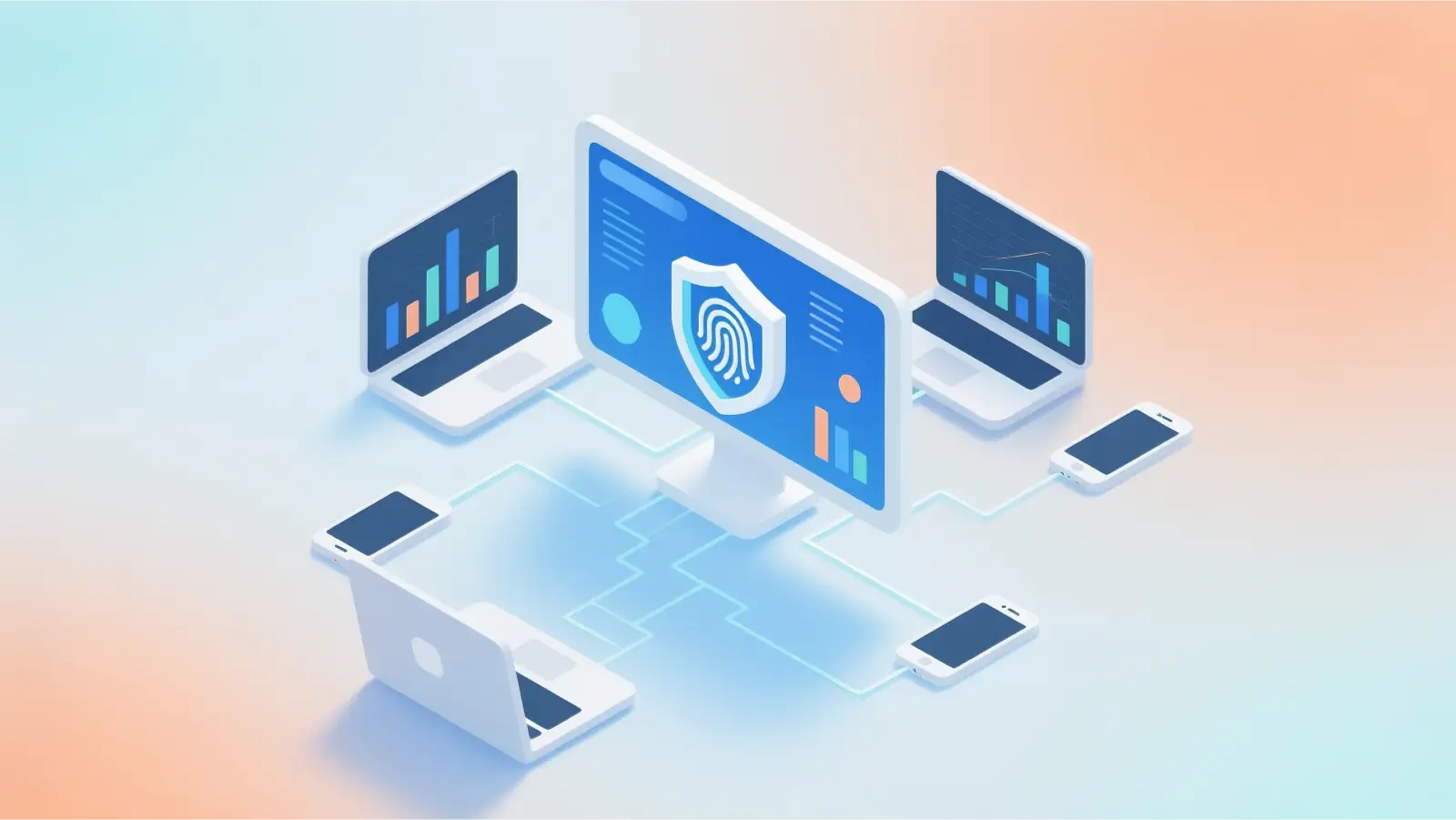
For operations exceeding 100+ accounts, manual scripting is unsustainable. DICloak serves as the critical management layer for scaling digital growth infrastructure.
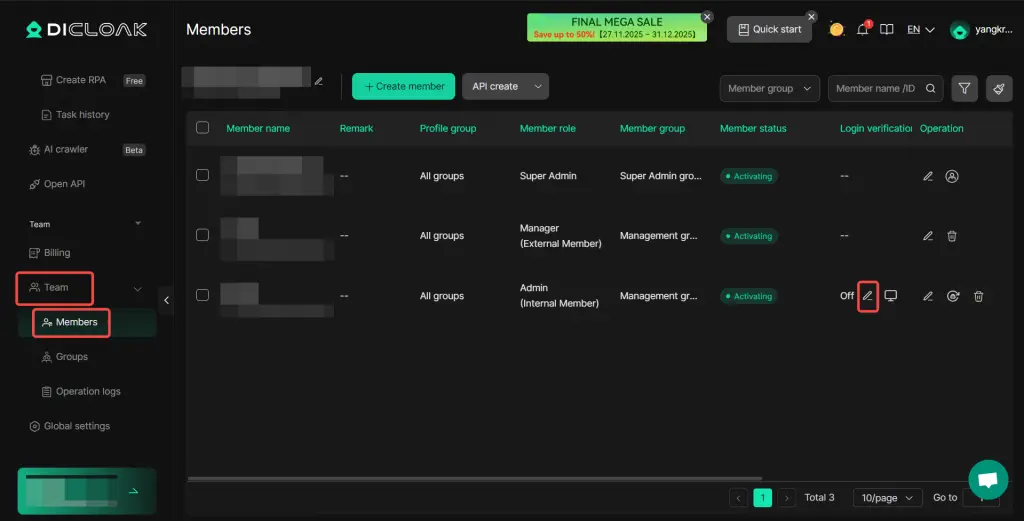
DICloak provides a professional profile for high-volume use cases such as account farming, account sharing, and affiliate marketing. Its core value lies in its ability to manage thousands of accounts on a single device through absolute profile isolation.
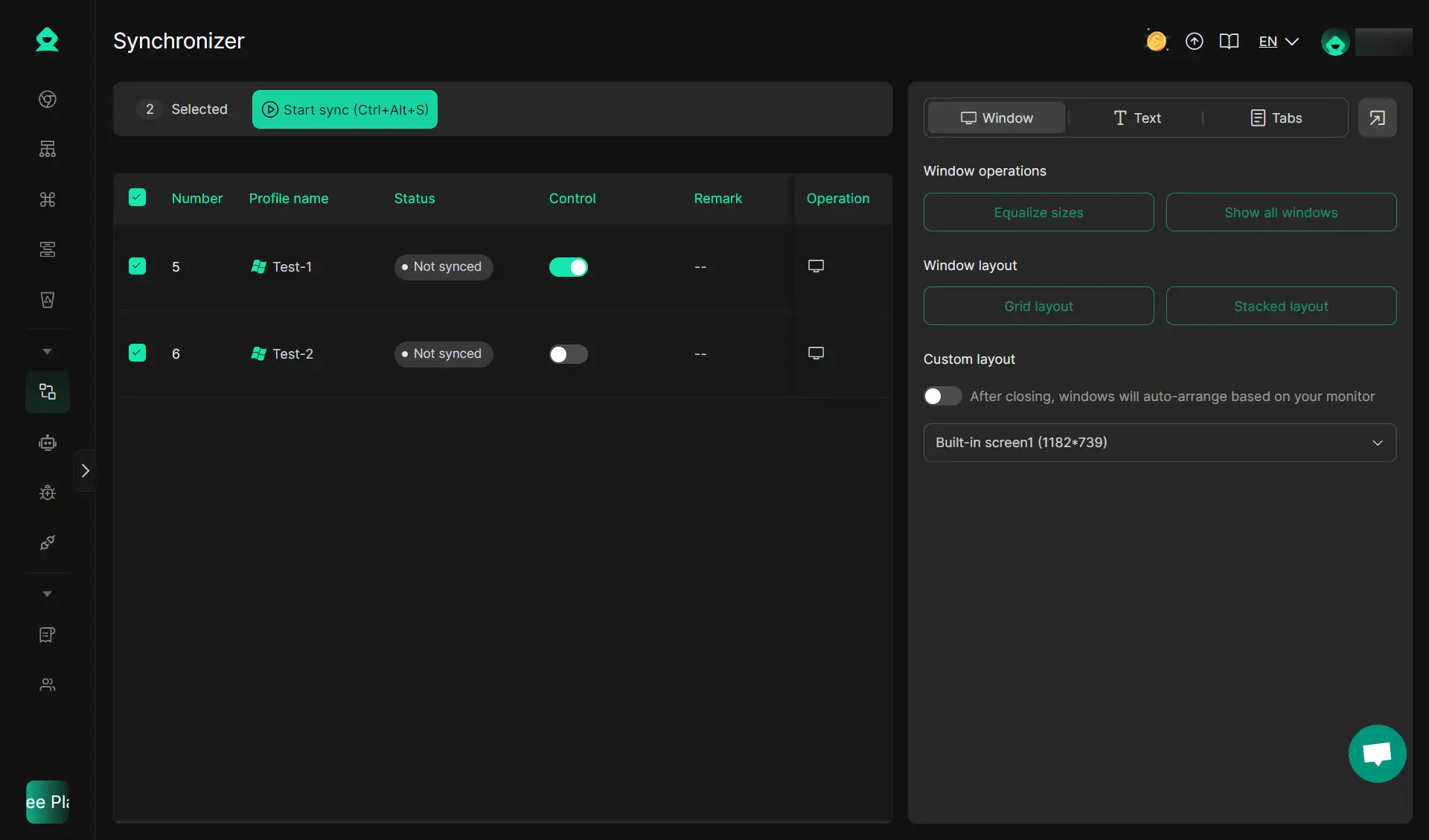
- DICloak Synchronizer & RPA: These tools automate the "grind," allowing a single operator to synchronize actions across hundreds of profiles simultaneously.
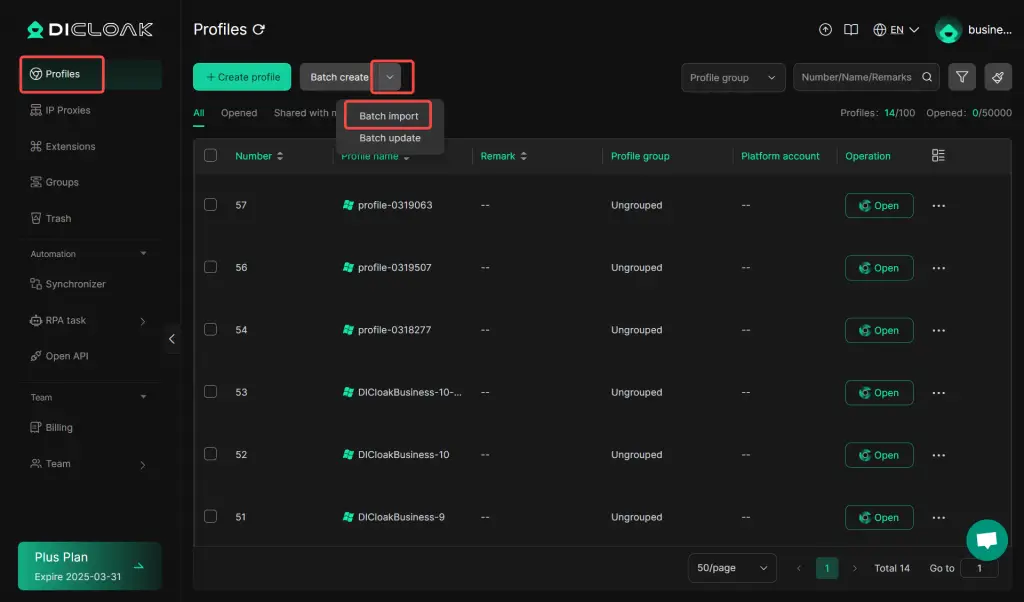
- Bulk Operations: The platform supports one-click bulk import, creation, and transfer of browser profiles, drastically reducing the resource overhead of scaling.
Comparing Manual Methods vs. DICloak Infrastructure
| Feature |
Standard Scripting (Selenium) |
DICloak Infrastructure |
| Detection Risk |
High (Leaked JS signals) |
Minimal (Isolated hardware fingerprints) |
| Setup Complexity |
High (Requires custom stealth logic) |
Low (Integrated GUI/RPA) |
| Scalability |
Limited (High hardware/IP overhead) |
High (1,000+ accounts on one device) |
| Resource Overhead |
High (Requires multiple machines) |
Low (Optimized for single-device scale) |
| Profile Isolation |
Weak (Easy to link sessions) |
Absolute (Complete data & hash isolation) |
Objective Analysis of Professional Anti-Detection Tools
Pros:
- Scalability: Efficient management of massive account pools (Account Farming).
- Integrated RPA: Automates repetitive tasks like social media interactions.
- Cross-OS Simulation: Flawless mimicry of Windows and Mac.
- Data Isolation: Prevents fingerprint leaks and account linkage.
Cons:
- Setup Time: Initial configuration is required for custom fingerprint profiles.
- Subscription Cost: Requires recurring investment compared to open-source scripts.
Advanced Scenarios: Staying Ahead in 2026
The landscape is currently shifting toward hardware-level authentication. Over 50% of iOS device requests now utilize Private Access Tokens (PATs)—cryptographic proof of device legitimacy.
For the modern analyst, "Session Emulation" must now include the entire lifecycle of a user. This includes navigation timing, local storage persistence, and the gradual warming of browser profiles to establish "trust" within the Google ecosystem.
Pro Tip: Avoid "Geo-hopping." Never mix residential and datacenter proxies within a single account session. Sudden shifts in IP type and geographic location are the fastest ways to trigger permanent account checkpoints.
Best Practices for Maintaining Account Safety
Transitioning to a "strategic avoidance" model requires adherence to three non-negotiable practices:
- Strict Proxy Rotation: Utilize clean residential IPs to maintain high reputation scores.
- Fingerprint Isolation: Ensure unique Canvas, AudioContext, and WebGL hashes for every profile.
- Throttled Randomization: Maintain a request rate of approximately 1 per second with a 2–8 second randomization window to mimic human browsing intervals.
Frequently Asked Questions
Why is my undetected-chromedriver still being caught?
Even with stealth patches, Selenium-based tools leak automation signals within the browser's JavaScript environment. Google’s advanced telemetry can identify these inconsistencies in the execution context, making it easier to flag.
Does using a high-quality proxy guarantee a bypass?
No. An IP is only one layer of the fingerprint. Success depends on the total consistency of your hardware signals, headers, and behavioral patterns.
Can I manage 100+ e-commerce accounts safely?
Yes. Using DICloak’s isolated browser profiles ensures each account has its own unique digital signature, preventing Google or e-commerce platforms from linking and banning the accounts.
What is the difference between a proxy and IP protection?
A proxy is the technical routing tool. IP Protection is the broader strategic requirement of using rotated, residential, and high-reputation IPs to ensure the target sees the traffic as a legitimate user rather than a bot.
Is captcha bypass still effective in 2026?
Captcha bypass can still work in 2026, but it is no longer just about solving a challenge after it appears. Modern platforms like Google use risk scoring, browser fingerprinting, IP reputation, and behavior analysis to decide whether a session looks human. This means a successful captcha bypass now depends more on avoiding detection in the first place. Clean residential proxies, consistent browser profiles, realistic behavior, and strong fingerprint isolation matter far more than simple solving tools.
 Web Proxy Tools
 Free Tools
 Cookie Plugin
 UA Generator
 MAC Address Generator
 IP Generator
 IP Address List
 2FA Code Generator
 World Clock
 Anonymous Check
 WebRTC Leak Test
 UUID Generator
 Free Web Proxy Site
 Proxy Checker
 FB Ad Checker
 AI Web Scraping
 Free SMM Tools
 Twitter Shadowban Checker
 Instagram Name Checker
 UTM Generator
 Username Generator
 AI Hashtag Generator
 LinkedIn Headline Generator
 Social Media Image Resizer