The Evolution of Digital Identity and Browser Tracking
The methodology of digital identification has undergone a fundamental shift. While tracking once relied heavily on persistent cookies, modern platforms now utilize sophisticated digital fingerprinting to identify users. This technique involves logging over 50 unique data points the moment a browser interacts with a server.
These parameters extend beyond basic device types and screen resolutions. Websites now collect granular data including time zones, installed fonts, graphics card signatures, and behavioral biometrics—such as how fast a user types or their specific patterns of mouse movement. Within this landscape, a fingerprint spoofer serves as a critical component of digital growth infrastructure. It is a technical solution designed to modify or mask these traits, ensuring privacy and operational security by preventing the systematic linking of distinct browser sessions.
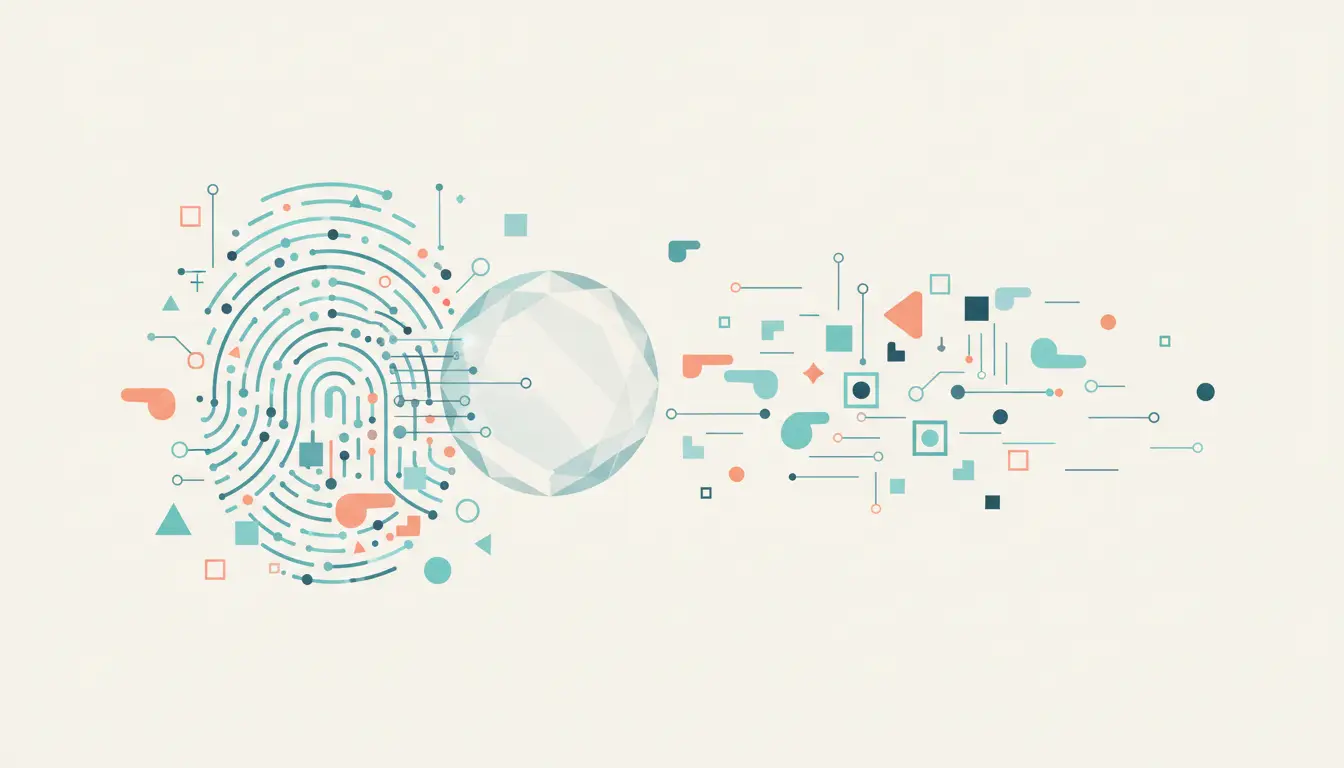
How Fingerprint Spoofer Technology Neutralizes Digital Fingerprinting
To understand the necessity of this technology, consider the "scent trail" analogy used in cybersecurity. Every standard browser session leaves a unique scent—a composite of hardware and software traits. If a user returns to a platform with the same scent, the site recognizes the identity regardless of whether the user has cleared cookies or changed their IP protection settings.
A fingerprint spoofer functions as a "digital perfume." By applying a unique set of technical characteristics to each session, the spoofer ensures that platforms cannot establish a consistent trace. This mechanism does not merely hide data but actively replaces it, allowing professionals to maintain multiple, isolated environments. When combined with robust network isolation, the spoofer ensures that both the connection and the hardware profile appear as a completely unique, legitimate user.
Technical Components of a Professional Fingerprint Spoofer
A professional-grade spoofer manipulates various low-level technical layers to create a believable digital persona that withstands deep inspection.
The Mechanics of Canvas and WebGL Spoofing
HTML5 Canvas and WebGL tracking are based on "hardware entropy." Because every GPU and driver combination renders graphics with minute, unique variations, websites can generate a persistent identifier from an image rendered in the background. A spoofer modifies the rendering process and alters graphics card signatures, ensuring the hardware entropy remains unique and cannot be used for tracking.
Masking AudioContext and Hardware Parameters
Sophisticated trackers use the AudioContext API to measure the frequency response of the system’s audio oscillator. Professional spoofers intervene in this process, falsifying the sound data output. Furthermore, they report simulated hardware specifications—such as CPU core counts and GPU models—to ensure the browser profile appears consistent with the desired profile.
Locality and Timezone Synchronization
A primary "mismatch flag" for security algorithms is a discrepancy between the system time zone/language and the IP location. Professional tools automatically synchronize these locality settings with the assigned proxy to avoid detection.
Pro-Tip: Manual spoofing via basic browser extensions is insufficient for professional scaling. These extensions typically modify the output of an API but fail to hide the fact that the output was tampered with. This leaves a "modification flag" that modern anti-bot systems detect instantly, leading to immediate account flagging.
Why Organizations Use a Fingerprint Spoofer for Scaling
In the current digital economy, fingerprint spoofers are essential industry tools used to reduce operational risk. Organizations utilize these technologies not as a guarantee of success, but as a method to mitigate detection during large-scale operations.
- Social Media Marketing & E-commerce: Managing high volumes of profiles on platforms like Facebook, TikTok, or Amazon requires absolute isolation. Spoofers prevent these platforms from linking multiple accounts to a single machine, which would otherwise trigger a mass termination of the account farm.
- Traffic Arbitrage & Affiliate Marketing: Practitioners use spoofers to test ad creatives and landing pages across diverse geographic regions without being intercepted by regional anti-fraud filters.
- Airdrop Farming & Account Farming: In the decentralized finance and crypto sectors, spoofers allow for the management of multiple wallets and accounts while avoiding "sybil" detection, maximizing the potential for token allocations.
The Operational Risks of DIY vs. Professional Spoofing Solutions
Relying on "incognito" modes or basic extensions creates a patchwork identity that is easily unmasked by modern entropy-based tracking.
| Feature |
Standard Browser (Incognito) |
Fingerprint Spoofer (DICloak) |
| Identity Isolation |
Minimal/None (Hardware traits visible) |
High (Each profile is a distinct sandbox) |
| Fingerprint Customization |
None |
Full (Canvas, WebGL, Audio, Biometrics) |
| IP Management |
Manual external setup |
Integrated (HTTP/HTTPS, SOCKS5) |
| Detection Risk |
High (Easily linked via hardware) |
Low (Mimics unique, real users) |
| Scalability |
Manual and restricted |
Automated via RPA and Bulk tools |
Establishing Multi-Account Infrastructure with DICloak
DICloak provides the technical infrastructure required to implement these strategies at scale, allowing for the centralized management of thousands of profiles on a single device.
Achieving Isolation through Custom Browser Profiles
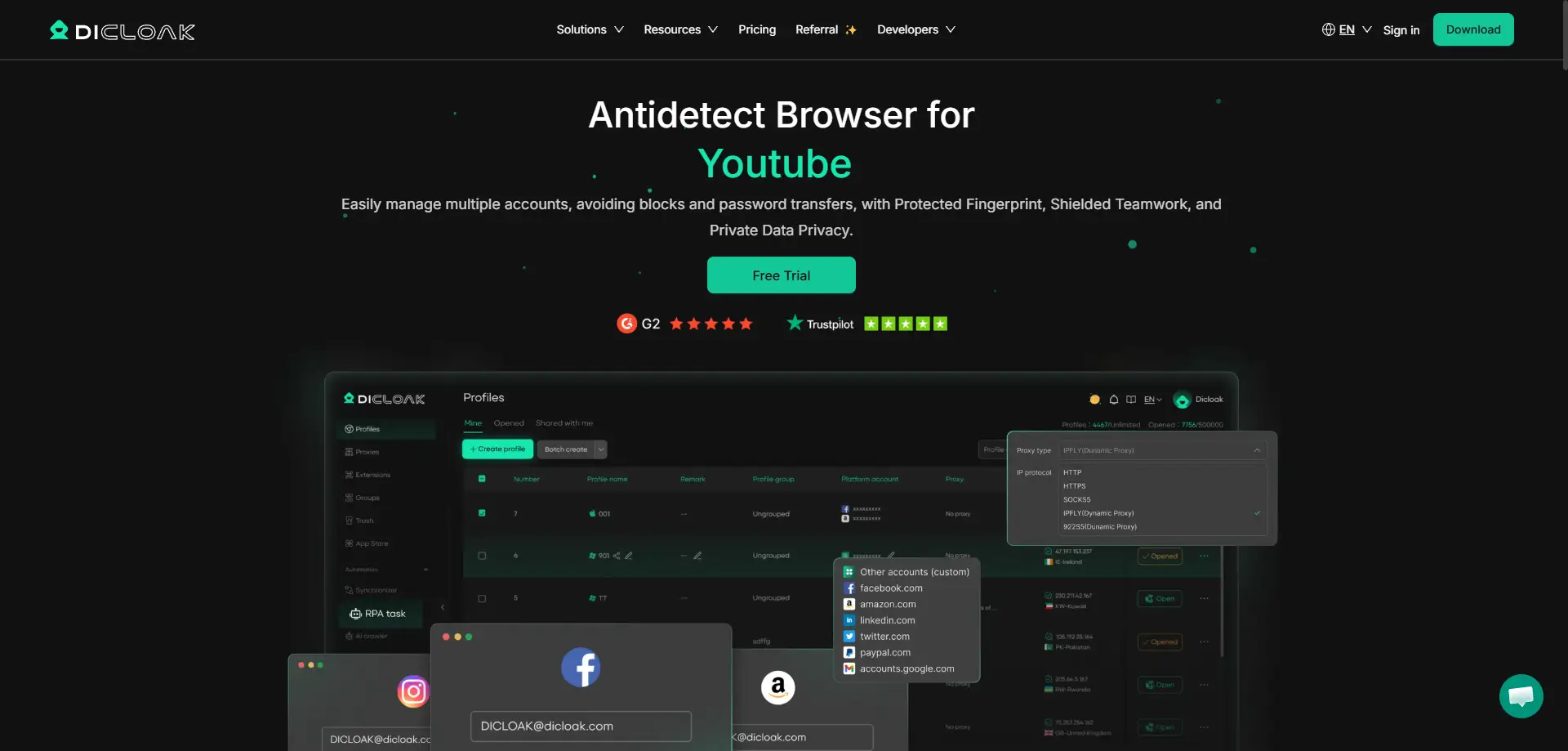
DICloak enables the creation of 1,000+ isolated browser profiles. Each profile functions as a unique digital entity with its own fingerprints and IP protection. This architectural isolation ensures that even if one profile faces scrutiny, the remaining infrastructure is not compromised by association.
Effective multi-accounting requires clean network identities. DICloak supports HTTP, HTTPS, and SOCKS5 protocols, allowing for robust IP protection. The software includes bulk operation tools to manage large proxy pools, ensuring each browser profile is consistently paired with the correct regional IP.
Scaling with RPA and Bulk Operations
To reduce the operational burden of account farming and repetitive maintenance, DICloak features built-in Robotic Process Automation (RPA). Users can automate complex workflows—such as account creation or engagement tasks—across hundreds of profiles simultaneously using bulk launch and import tools.
Optimizing Team Workflows and Data Security
For agencies and growth teams, maintaining security while collaborating is a critical challenge.
Collaborative Management and Permission Controls
DICloak allows for secure profile sharing between team members. Administrators can define permission levels and implement data isolation, ensuring that operators only access the specific accounts required for their tasks, thereby minimizing the risk of internal security leaks.
Simulating Diverse Operating Environments
Built on a Chrome-based core, DICloak can simulate diverse operating systems including Windows, Mac, iOS, Android, and Linux. This allows teams to appear as mobile or desktop users across various hardware types from a single interface.
Pro-Tip: For enterprise-level security, prioritize the use of operation logs. These logs provide the forensic accountability required for security audits, allowing administrators to trace the history of every action within a profile and identify the source of any operational errors.
Evaluating the Fingerprint Spoofer: Benefits and Considerations
While powerful, implementing fingerprint spoofer technology involves a strategic trade-off.
Pros:
- Cost Efficiency: Replaces the need for thousands of physical devices with a single hardware unit.
- Automated Workflows: RPA and bulk tools eliminate the "manual grind" of account management.
- OS Flexibility: Ability to simulate any device environment to bypass platform-specific security measures.
Cons:
- Learning Curve: Configuring advanced fingerprint parameters and RPA logic requires a baseline level of technical expertise.
- Proxy Dependency: The effectiveness of the spoofer is tied to the quality of the IP protection; low-reputation proxies can lead to detection regardless of the fingerprint quality.
Frequently Asked Questions About Fingerprint Spoofer Tech
What is the difference between spoofing and cloaking?
Spoofing refers to the technical act of falsifying a digital identity (like a browser fingerprint or IP). Cloaking is a content-delivery strategy where a website shows different information to different users, such as presenting one version of a page to a search bot and another to a human user.
Is fingerprint spoofing legal?
The legality of spoofing is generally determined by intent and jurisdiction. At the jurisdictional level, using a spoofer for privacy or legitimate business operations (like market research) is legal. However, at the platform level, it often constitutes a "Policy Violation" of the site's Terms of Service. Using these tools for fraud or to circumvent security to cause harm is illegal in most jurisdictions.
Can a spoofer prevent all account bans?
No tool can provide a 100% guarantee. A fingerprint spoofer is a risk mitigation tool. While it effectively masks the hardware and software identifiers that trigger bans, the health of an account still depends on the user’s behavior and the reputation of the associated IP Protection.
Final Strategy: Scaling Safely in 2026
In the 2026 digital environment, traditional browsing is no longer viable for multi-account management. Websites have evolved to track dozens of hardware and behavioral variables, making professional spoofing tools a fundamental requirement for digital growth.
By transitioning from unreliable DIY extensions to integrated solutions like DICloak, organizations can achieve the level of isolation, automation, and security necessary for sustained scaling. To "spoof smarter" is to utilize infrastructure that mimics real user behavior with technical precision, providing the stability required for long-term operational success.
 Web Proxy Tools
 Free Tools
 Cookie Plugin
 UA Generator
 MAC Address Generator
 IP Generator
 IP Address List
 2FA Code Generator
 World Clock
 Anonymous Check
 WebRTC Leak Test
 UUID Generator
 Free Web Proxy Site
 Proxy Checker
 FB Ad Checker
 AI Web Scraping
 Free SMM Tools
 Twitter Shadowban Checker
 Instagram Name Checker
 UTM Generator
 Username Generator
 AI Hashtag Generator
 LinkedIn Headline Generator
 Social Media Image Resizer