Getting a free Google number sounds simple, but in 2026 it is not just about picking a number and verifying it. Google Voice has location rules, phone verification limits, and account trust checks that many users miss. This guide explains how to get a free Google number, what it can be used for, and how to keep the setup more stable when managing projects, 2FA, or separate online identities.
Understanding How to Get a Free Google Number in 2026
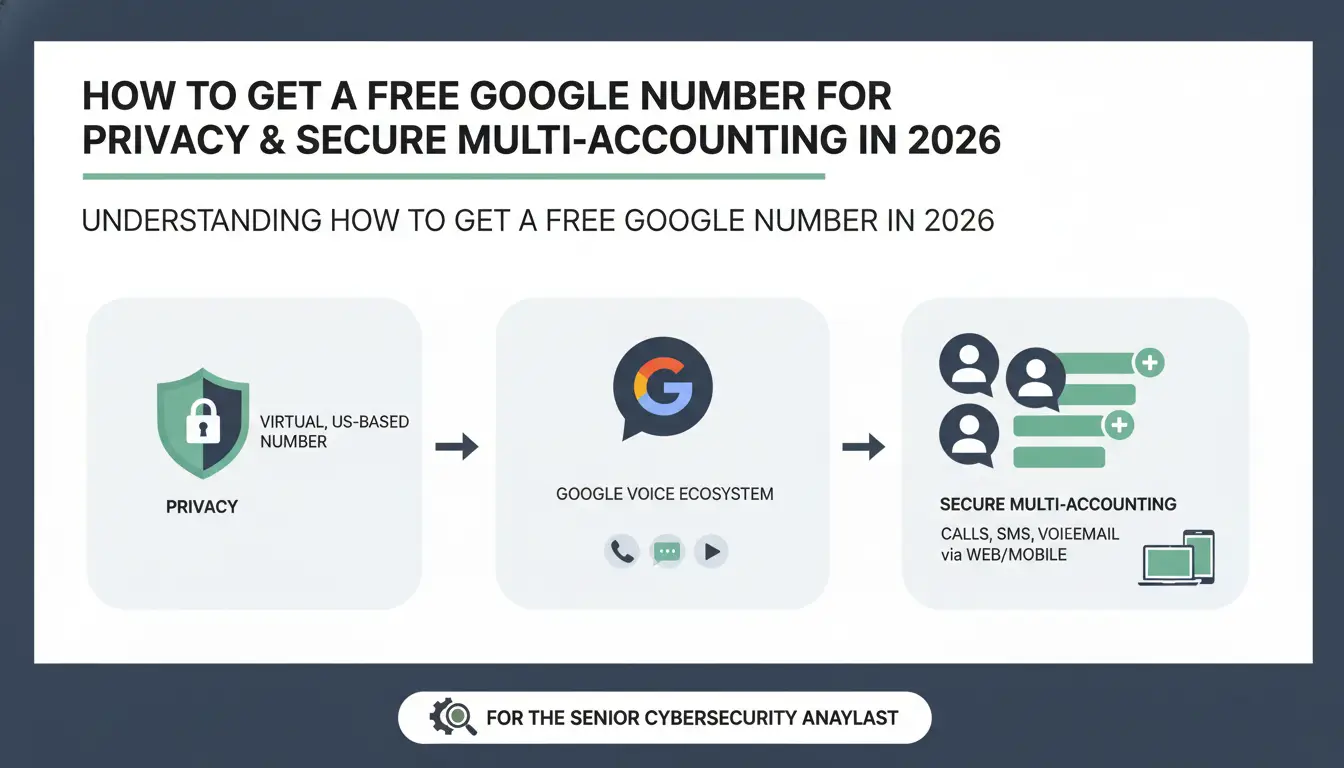
In the current landscape of 2026, obtaining a free Google number remains centered on the Google Voice ecosystem. This service provides a virtual, US-based telephone number tied to a Google account, enabling calls, SMS, and voicemail via web or mobile interfaces. For the Senior Cybersecurity Analyst or Growth Infrastructure Expert, virtual numbers constitute a critical layer of the identity abstraction stack. They allow for the systematic separation of personal identity from professional or experimental projects, effectively reducing the digital footprint of a primary mobile identity.
Pro Tip: A free Google number is most effective when used as a secondary line to reduce the footprint of your primary mobile identity. However, treat it as a traceable intermediary, not a fully anonymous burner.
Professional Applications for Virtual Numbers
Managing digital growth at scale requires a "separation of concerns" protocol. Operational scenarios for these numbers include:
- Infrastructure Verification: Receiving One-Time Password (OTP) codes for platform signups.
- Project Isolation: Managing two-factor authentication (2FA) for brand-specific projects to prevent cross-account contamination.
- Identity Abstraction: Using distinct lines for unique projects to ensure that a security compromise on one does not propagate to the entire network.
Core Requirements and Eligibility for a Free Number
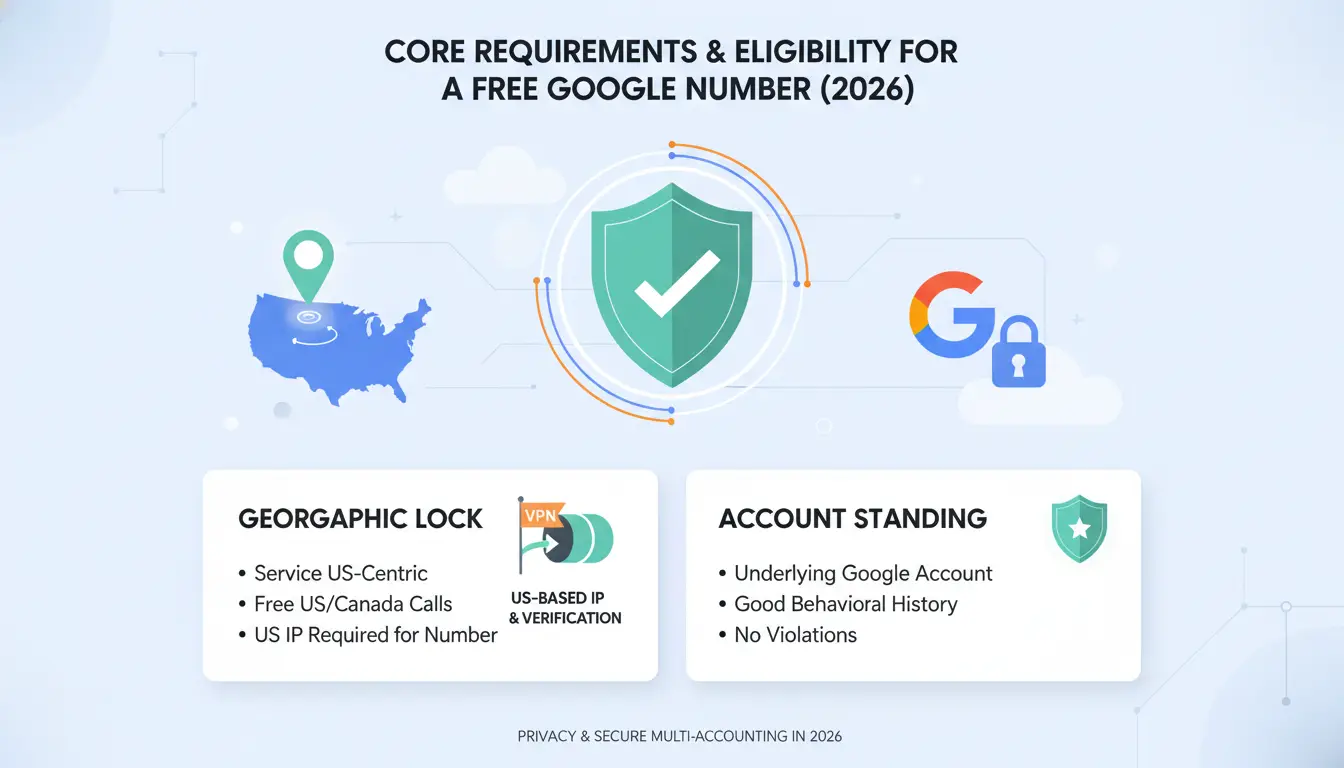
Access to Google Voice in 2026 is governed by strict geographic and behavioral prerequisites:
- Geographic Lock: The service is primarily US-centric. While outbound calls to the US and Canada are free, obtaining the number requires a US-based IP and verification.
- Account Standing: The underlying Google account must be in good standing, with no prior policy violations.
- Verification Constraint: A one-time verification requires an existing physical US mobile or landline number. Google restricts the repeated use of a single number for verifying multiple Voice accounts.
- Porting Fee: While the number is free to acquire, Google charges a one-time $20 fee if you choose to port an existing high-trust number into the Voice ecosystem—a common practice for maintaining established identity signals.
Step-by-Step: Execution of the How to Get a Free Google Number Strategy
Desktop Configuration Protocols
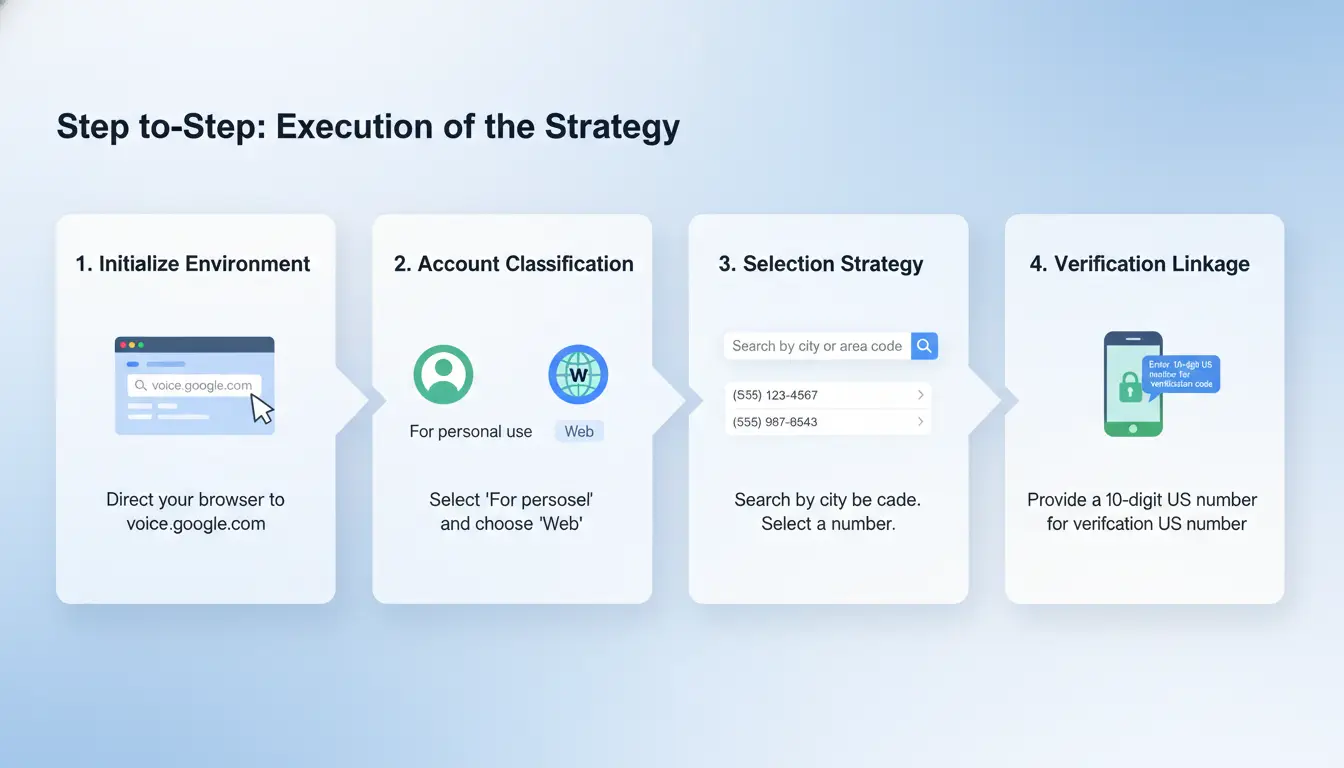
- Initialize Environment: Direct your browser to
voice.google.com.
- Account Classification: Select "For personal use" and choose "Web" as the device type.
- Selection Strategy: Search by city or area code. Select a number from the pool.
- Verification Linkage: Provide a 10-digit US mobile or landline number.
- Finalize: Enter the 6-digit code received via SMS or call. If the system flags the attempt, use a fresh browser profile and ensure your IP reflects the geographic search area.
Mobile Application and Environment Setup
- Deployment: Download the Google Voice app from the official Play Store or App Store.
- Trust-Chain Creation: To minimize data exposure, create the underlying Gmail account using the "Skip" phone number option or the "Recovery Email" method. This builds an initial "trust chain" that automated systems are less likely to flag as bot-generated.
- App-Only Mode: In settings, configure calls to remain app-only to prevent metadata leakage to your primary SIM carrier.
Acquiring a virtual number is only the first step. For multi-accounting, the primary threat is not the phone number, but Hardware Fingerprinting.
The Impact of Hardware Identifiers on Account Health
Platforms utilize "clustering algorithms" to link accounts through shared hardware identifiers, including:
- Canvas Rendering & WebGL: Unique signatures based on how your hardware draws graphics.
- Font Enumeration: The specific list of fonts on your system.
- WebRTC: Often leaks your local, non-proxy IP address.
Using a standard browser—even in Incognito mode—fails because it shares these native identifiers. Blocking these signals often backfires, as "blocking" creates a highly unique and suspicious fingerprint itself. Randomization, rather than blocking, is the professional standard.
Leveraging DICloak to Implement How to Get a Free Google Number at Scale
- Profile Warming: Before signing up for Google Voice, leverage DICloak’s automation capabilities to simulate browsing and generate a "warm" cookie history. This helps build the profile's legitimacy for platform behavioral analysis.
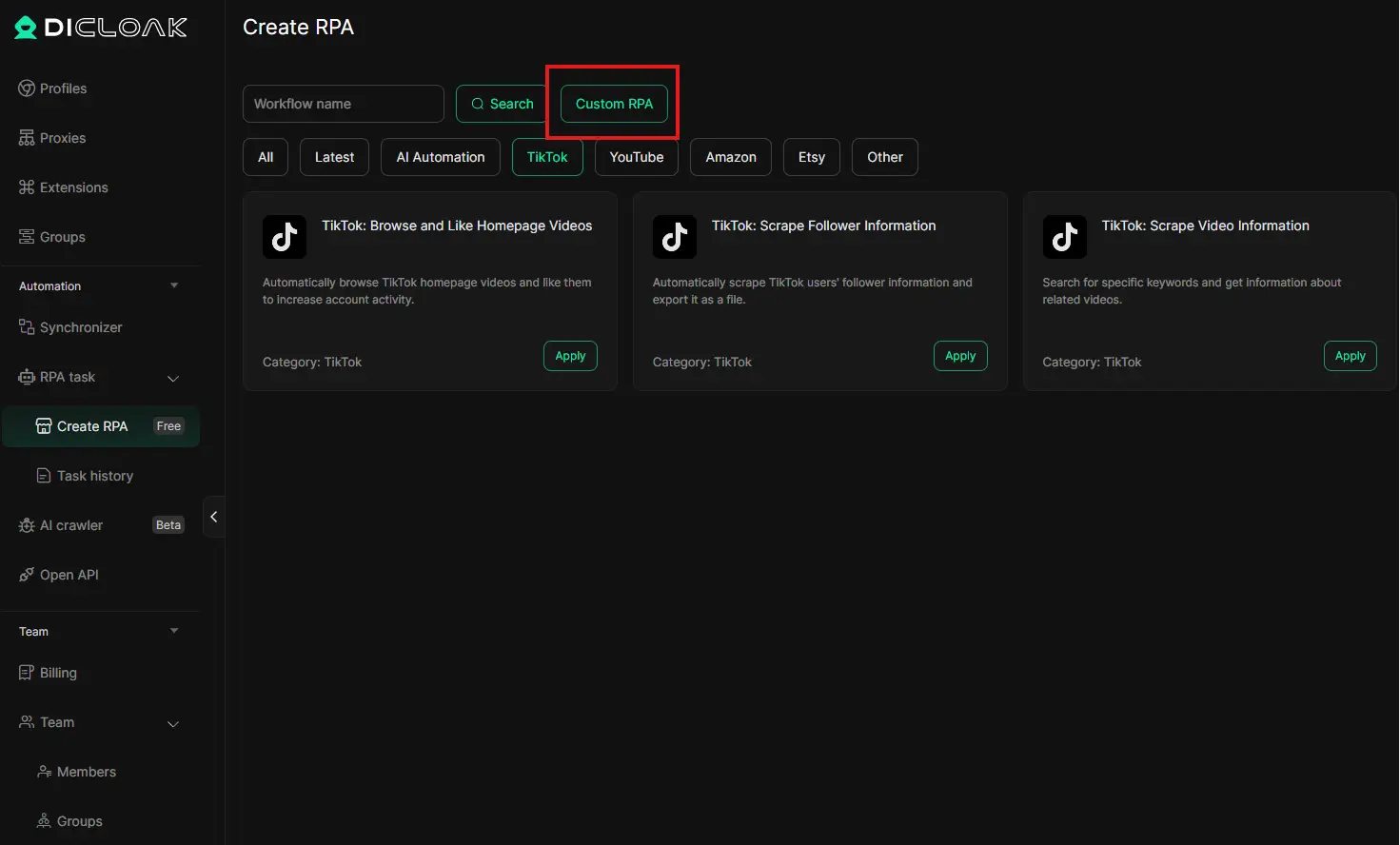
- Signature Randomization: DICloak generates unique Canvas and WebGL signatures for each profile, ensuring no two accounts share hardware metadata.
- Validation Protocols: Before initiating a signup, audit the profile using tools like Pixelscan, AmIUnique, or iphey to ensure the fingerprint is consistent and non-leaking.
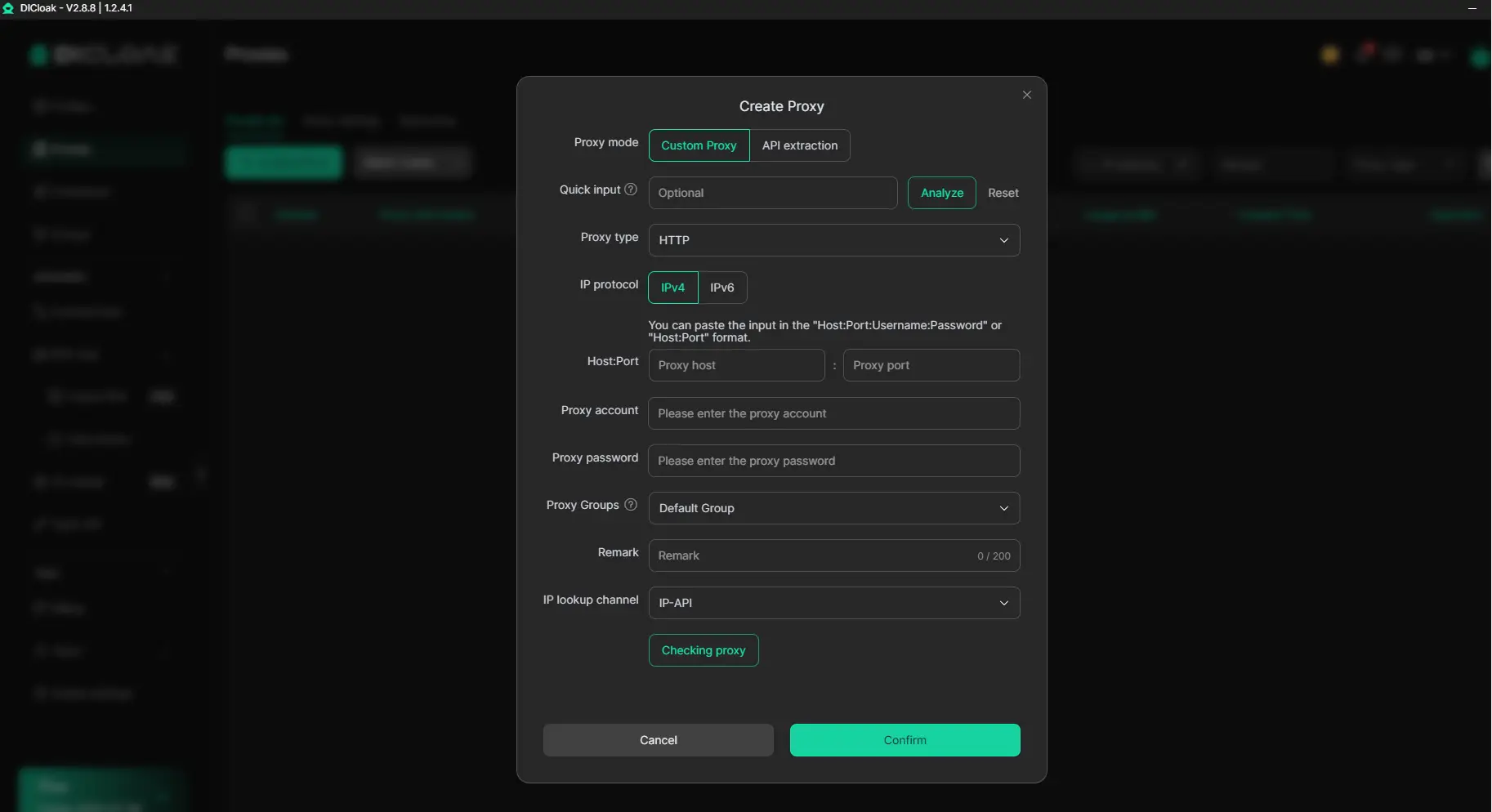
- Proxy Strategy: While creating accounts can use user-configured rotating residential proxies, maintaining a Google Voice account for SMS and VoIP often benefits from Static Residential (ISP) Proxies. This can help prevent session-interrupting IP changes during active calls.
Comparative Analysis of Management Methods
| Feature |
Standard Browser (Incognito) |
DICloak Multi-Account Profile |
| Fingerprint Protection |
Shared/Native Identifiers |
Unique Randomized Signatures |
| Cookie Isolation |
Temporary/Risk of Leakage |
Strictly Isolated per Profile |
| Proxy Integration |
Manual/System-wide |
Per-profile Proxy Management |
| WebRTC Leak Protection |
Vulnerable/Leads to IP Discovery |
Hardened/Masked via Profile |
| Account Survival Rate |
Low (Susceptible to Clustering) |
Supports enhanced account longevity |
Privacy Protocols and Metadata Security
Operational Security (OPSEC) dictates that you treat Google Voice as a traceable intermediary. Google logs originating IP addresses, device identifiers, and comprehensive SMS/Call logs.
Operational Fix for Number Reclamation
- Activity Simulation: Send a periodic self-text or make a call to a trusted number to keep the line active in the pool.
- Metadata Management: Ensure DICloak’s Timezone and WebRTC settings match the Proxy IP to help avoid location-mismatch flags.
Objective Analysis of Google Voice for Scale
Pros
- Cost-Free Utility: Zero cost for domestic calls and SMS to the US and Canada.
- Advanced Features: Seamless integration with Google Workspace, spam filtering, and voicemail-to-text.
- Infrastructure Friendly: Reliable for 2FA across major platforms.
Cons
- VoIP Detection: High risk of detection on platforms like WhatsApp or Telegram, which often block VoIP-based registrations.
- Platform Specifics: X (Twitter) accepts Google Voice numbers only sporadically.
- Data Traceability: Subject to law enforcement subpoenas; metadata is linked to the Google Account.
Common Questions Regarding How to Get a Free Google Number
Can I get a number without a phone for verification?
Google Voice requires an initial link to a physical US number for verification. While you can create the Gmail account using a recovery email to bypass initial phone prompts, the Voice service itself maintains a hard requirement for a one-time verification via a traditional mobile or landline.
Strategic Use of Recovery Emails
Using a recovery email during the foundation of your Google account is a professional best practice. It reduces the initial personal data shared and helps bypass "phone number reuse" limits that often trigger during the creation of bulk Gmail accounts.
Summary of Secure Digital Infrastructure
A free Google number is a foundational tool, but its long-term reliability is dictated by the environment in which it operates. By pairing virtual numbers with isolated DICloak profiles—backed by user-configured Static ISP proxies and proper cookie warming—you create a reliable and scalable infrastructure capable of resisting the most advanced clustering algorithms used by modern platforms.
Conclusion
A free Google number can be useful for calls, SMS, 2FA, and keeping personal and work identities separate. But it is not fully anonymous, and its reliability depends on the account, IP, browser profile, and verification method behind it. For simple use, Google Voice may be enough. For scaled or professional workflows, isolated profiles, stable fingerprints, and careful proxy setup can make the whole system safer and easier to manage.
 Web Proxy Tools
 Free Tools
 Cookie Plugin
 UA Generator
 MAC Address Generator
 IP Generator
 IP Address List
 2FA Code Generator
 World Clock
 Anonymous Check
 WebRTC Leak Test
 UUID Generator
 Free Web Proxy Site
 Proxy Checker
 FB Ad Checker
 AI Web Scraping
 Free SMM Tools
 Twitter Shadowban Checker
 Instagram Name Checker
 UTM Generator
 Username Generator
 AI Hashtag Generator
 LinkedIn Headline Generator
 Social Media Image Resizer