Marketing automation can save a startup hours of repetitive work. Instead of manually sending welcome emails, following up with leads, or moving customer data between tools, a small team can let software handle many of these tasks.
The harder part is choosing the right platform. Some tools focus on affordable email automation. Others offer advanced workflows, CRM features, or deep e-commerce data. A tool that works well for a large company may be too expensive or complex for a five-person startup.
For this guide, we compared five popular marketing automation software platforms based on pricing, ease of use, automation features, integrations, AI tools, and room to grow. If you are looking for the best marketing automation platform for startups with a small team, these five options cover the most common startup needs.
Pricing and features were checked in September 2026. Plans can change, so always confirm current limits before subscribing.
What Makes a Great Marketing Automation Platform for Startups
Startups usually work with tighter budgets, smaller teams, and less time for complicated setup than established companies. The right marketing automation platform should help a team get useful campaigns running quickly without adding unnecessary technical work or becoming too expensive as the business grows.
Our Evaluation Criteria
We focused on three factors that have the biggest practical impact on startup teams: cost, ease of use, and the ability to scale.
Startup-Friendly Pricing
For startups, the advertised starting price is only part of the story. The billing model matters just as much. Some platforms charge based on contacts, email volume, users, automation actions, or access to advanced features.
A low-cost plan can become expensive once a startup begins collecting more leads or sending more campaigns. It is therefore important to look beyond the entry price and consider what happens at 5,000, 10,000, or more contacts.
The strongest options offer a reasonable starting point, useful features without forcing an immediate upgrade, and pricing that remains predictable as the business grows.
No-Code Usability
Most startups do not have a dedicated marketing operations team or developer available to build every campaign. A good platform should allow marketers and founders to create workflows without writing code.
Visual automation builders, reusable templates, simple triggers, and drag-and-drop editors can make automation much easier to launch and maintain.
Setup speed also matters. Teams should be able to create common workflows such as welcome sequences, lead follow-ups, abandoned-cart reminders, and re-engagement campaigns without spending days learning the system. The less time required for training and troubleshooting, the more useful the platform is for a small team.
Scalability for Growing Startups
A marketing automation platform should solve today's problems without creating another migration project six months later. As a startup grows, it may need to manage more contacts, more campaigns, additional team members, and more complex customer journeys.
A scalable platform should make it easy to expand automation workflows, add users, create more detailed audience segments, and connect marketing activity with other parts of the business.
Startups should also look closely at upgrade limits and pricing jumps. A platform that works well for 1,000 contacts may become much less practical at 20,000. A clear upgrade path helps teams understand whether the tool can continue supporting them as their marketing operation becomes more complex.
The 5 Best Marketing Automation Platforms for Startups at a Glance
These five platforms were selected because they solve different startup problems. Brevo focuses on affordability, Mailchimp on ease of use, ActiveCampaign on advanced workflows, HubSpot on CRM-driven growth, and Klaviyo on e-commerce.
Comparison Table of All 5 Platforms
| Platform |
Best for |
Free option |
Starting paid price |
Main strength |
| Brevo |
Budget-conscious startups |
Yes |
Starter from $9/mo |
Affordable multi-channel automation |
| Mailchimp |
Marketing beginners |
Yes |
Essentials from $13/mo |
Easy email marketing and automation |
| ActiveCampaign |
Advanced workflows |
14-day trial |
From $15/mo for under 1,000 contacts |
Conditional and behavior-based automation |
| HubSpot Marketing Hub |
B2B startups needing CRM + marketing |
Yes |
Starter from $20/mo before promotional pricing |
Connected CRM and marketing stack |
| Klaviyo |
DTC and e-commerce startups |
Yes |
Around $20/mo for 500 active profiles |
E-commerce data and personalization |
Prices can increase with contacts, email volume, users, or added features.
Deep Dive Reviews of Each Marketing Automation Platform
Each platform below has a different strength. The right choice depends on how your startup finds customers, sells products, and manages customer relationships.
1. Brevo: Best for Budget-Conscious Early-Stage Startups
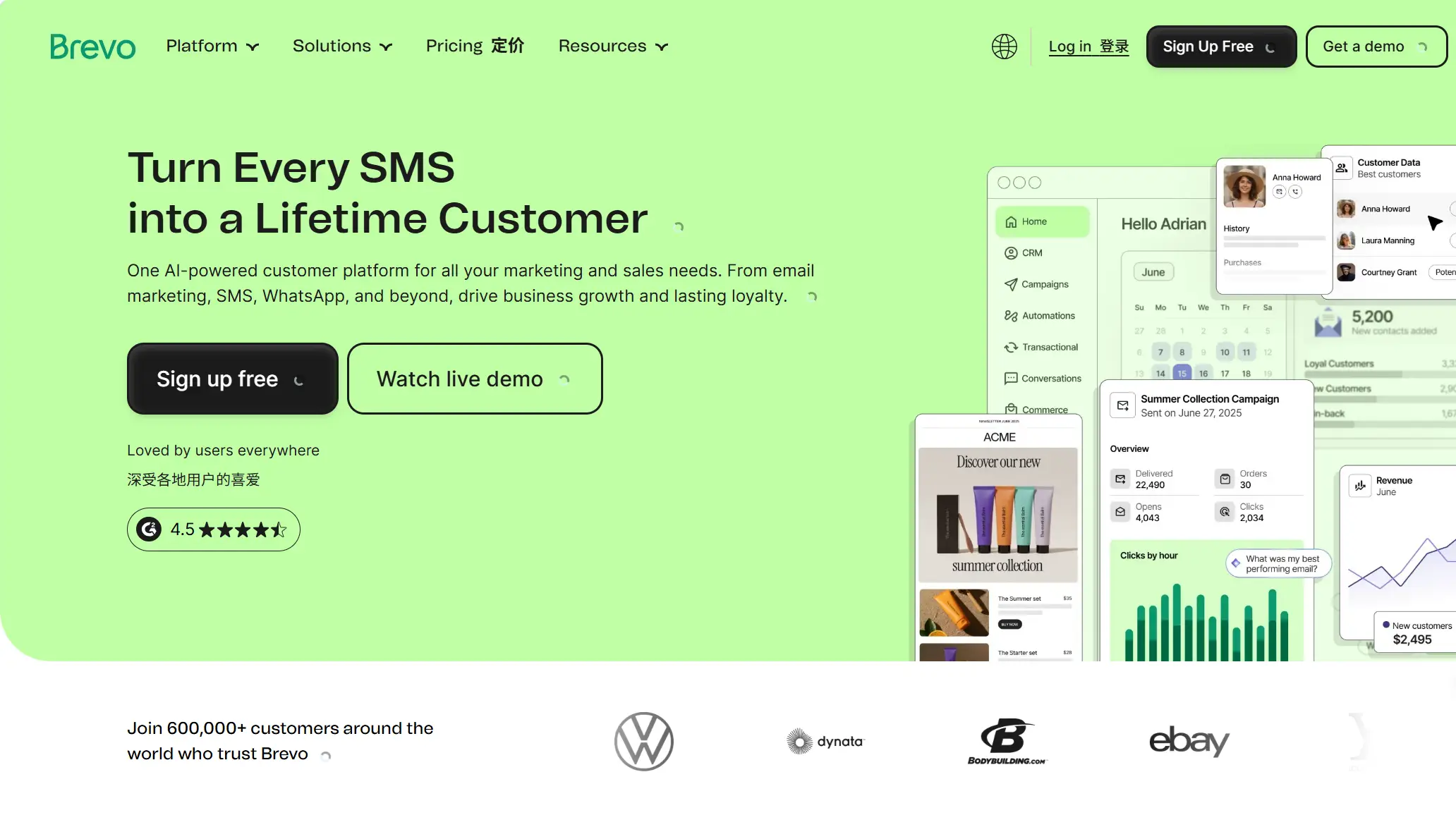
Brevo is a strong option when a startup wants real automation without a large software bill. It combines email, SMS, transactional messaging, forms, contact management, and automation in one platform.
Overview
Brevo's Free plan allows 300 email sends per day, stores up to 100,000 contacts, and includes basic multi-channel automation for up to 2,000 contacts. Standard starts at $18 per month and adds unlimited-contact marketing automation, A/B testing, and advanced reporting.
A small SaaS startup, for example, could automatically send a guide after signup and follow up based on whether the lead engages with the first email.
Pros
- Low starting price
- Free plan includes automation
- Email, SMS, and transactional messaging in one platform
- Unlimited-contact automation on Standard
- Aura AI can help build workflows
Cons
- Full automation requires Standard
- Advanced AI and analytics require higher plans
- Less suitable for complex B2B sales operations
Pricing & Key Features
Brevo starts free. Starter begins at $9 per month and Standard at $18, while Professional jumps to $499 per month.
For most early-stage startups, Standard offers a useful balance between cost and automation features.
2. Mailchimp: Best for Startup Founders New to Marketing Automation
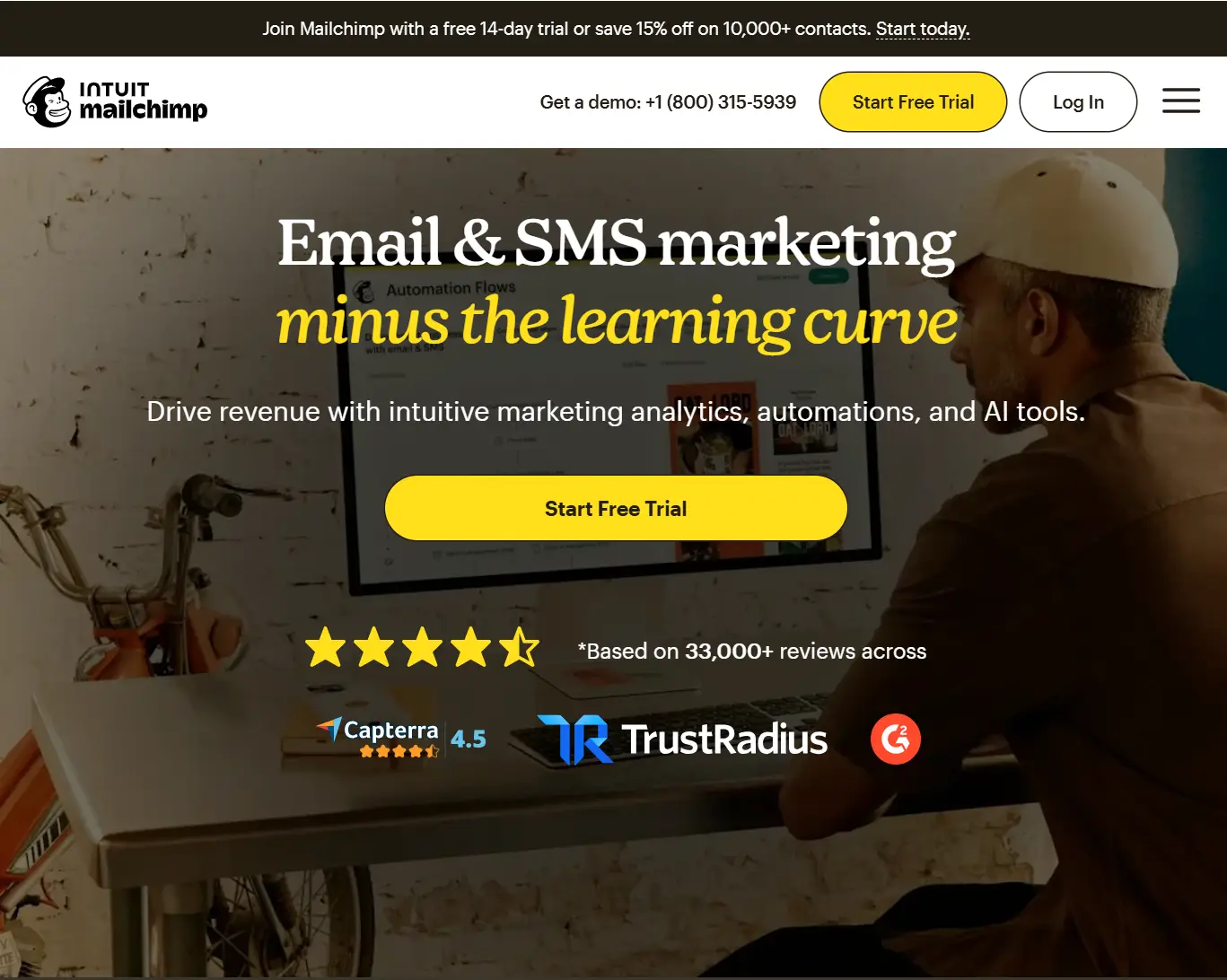
Mailchimp works well for founders who want an easy way to start email marketing and simple automation. Its familiar interface and large template library reduce the learning curve.
Overview
Mailchimp's Free plan supports up to 250 contacts. Essentials starts at $13 per month, while Standard starts at $20. Paid pricing also depends on the number of contacts stored in the account.
A founder promoting an online course could use Mailchimp to welcome new subscribers, send educational content, and follow up before enrollment closes.
Pros
- Easy for beginners
- Strong email editor and templates
- Useful automation for common campaigns
- Large integration ecosystem
- Built-in AI and optimization tools
Cons
- Free plan is limited to 250 contacts
- Costs increase as the database grows
- Less flexible for complex workflow logic
- Unsubscribed contacts can still count toward billing unless archived or removed
Pricing & Key Features
Essentials starts at $13 per month and Standard at $20. Standard offers more automation, personalization, and optimization features.
Mailchimp makes the most sense for startups that value ease of use more than advanced workflow control.
3. ActiveCampaign: Best for Startups Needing Advanced Conditional Workflows
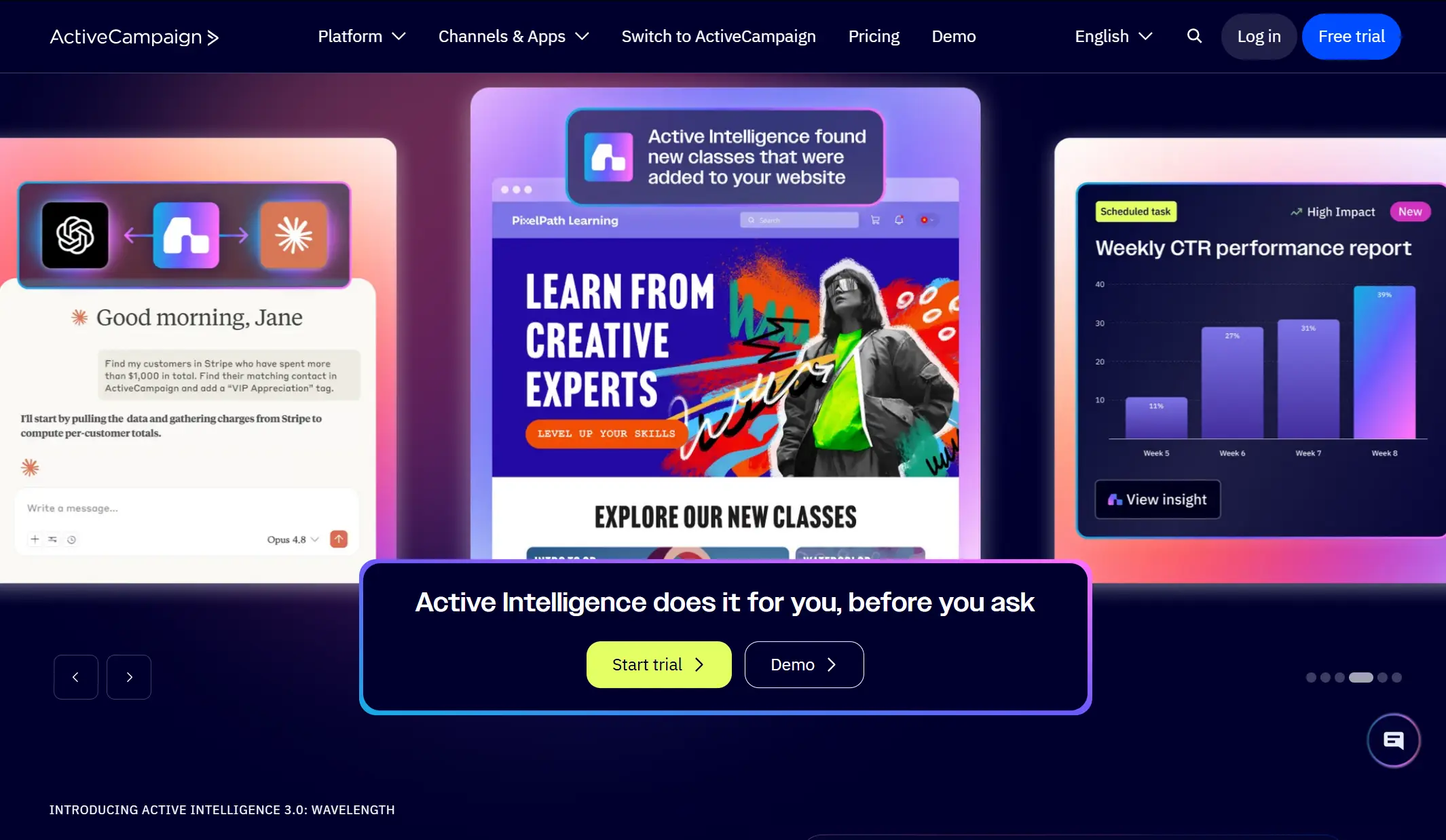
ActiveCampaign is a stronger choice when basic email sequences are no longer enough. Its main advantage is a flexible automation builder with triggers, conditions, branches, and behavior-based actions.
Overview
Pricing starts at $15 per month for accounts with fewer than 1,000 contacts. A 14-day trial is available. The Starter plan includes marketing automation but limits each automation to five actions.
For example, a B2B startup could place an ebook lead into a nurture sequence, then change the workflow automatically if that person visits the pricing page or books a meeting.
Pros
- Strong visual automation builder
- Conditional and split actions
- Large automation template library
- 1,000+ integrations listed on its current pricing page
- AI can create workflows from plain-language prompts
Cons
- No permanent free plan
- Starter limits workflows to five actions
- More complex than Mailchimp or Brevo
- Pricing grows with contact volume
Pricing & Key Features
Starter begins at $15 per month for fewer than 1,000 contacts. ActiveCampaign's current plans also include AI-powered automation tools, while higher tiers remove the five-action limit and add stronger segmentation and personalization.
For startups with detailed customer journeys, ActiveCampaign offers more workflow control without immediately moving into enterprise software.
4. HubSpot Marketing Hub: Best for Startups Wanting CRM + Marketing in One Platform
HubSpot is more than an email automation tool. Its CRM, marketing, sales, content, service, and data products can share the same customer information.
That makes it especially useful for B2B startups where marketing leads eventually move to a sales team.
Overview
HubSpot offers free foundational tools. Marketing Hub Starter is listed at $20 per month in its standard bundle pricing, although HubSpot currently shows lower promotional Starter pricing for some new customers.
The important limitation is automation depth. Starter supports simple workflows, but HubSpot's more advanced marketing automation is tied to much more expensive Professional plans. Marketing Hub Professional is currently listed around $890 per month in HubSpot's product bundle.
Pros
- CRM and marketing data in one system
- Strong fit for B2B lead management
- Connects marketing and sales activity
- Broad integration ecosystem
- Breeze AI works across HubSpot customer data and tools
Cons
- Advanced automation becomes expensive
- Large price jump from Starter to Professional
- Costs can increase with marketing contacts
- More software than a simple newsletter startup may need
Pricing & Key Features
A startup can begin with HubSpot's free tools or Starter plan. This works well for forms, CRM records, email, and simple automation.
HubSpot becomes more attractive when a startup wants one platform for marketing and sales. However, startups should check the cost of Professional before choosing HubSpot mainly for advanced automation.
5. Klaviyo: Best for DTC and E-commerce Startups
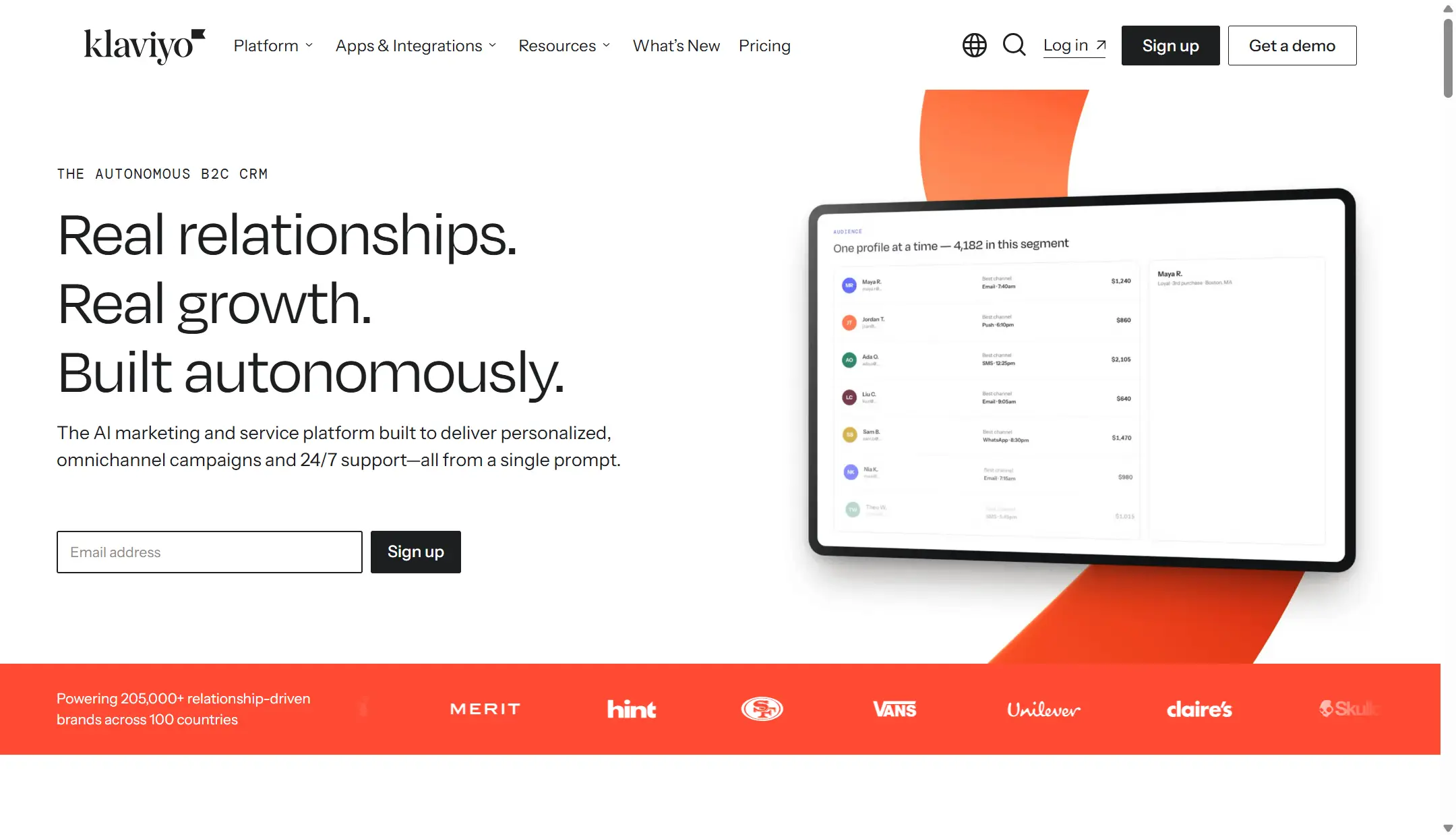
Klaviyo is built around e-commerce customer data. It can use purchases, browsing activity, customer profiles, and product behavior to create more targeted campaigns.
This makes it especially useful for Shopify stores and other DTC brands.
Overview
Klaviyo's Free plan supports up to 250 active profiles and 500 email sends per month. Its current product page shows an email tier around $20 per month for 500 active profiles, although promotional pricing may temporarily reduce that amount.
A skincare brand, for example, could send different post-purchase emails based on the product bought. A customer who has not ordered again after several months could enter a separate win-back flow.
Pros
- Built around e-commerce behavior
- Strong segmentation
- Abandoned-cart and post-purchase automation
- Revenue attribution
- Predictive customer insights
- Supports email and other messaging channels
Cons
- Pricing increases with active profiles
- May be more complex than a very small store needs
- Some products have separate costs
- Less natural for B2B sales funnels
Pricing & Key Features
The Free plan is useful for testing Klaviyo with a small audience. Paid costs increase based on profiles and usage, so startups should watch how the customer database grows.
Klaviyo also continues to expand its AI, analytics, and multi-channel tools. For online stores where purchase behavior drives marketing decisions, that data depth is its biggest advantage.
How to Choose the Right Marketing Automation Platform for Your Startup
There is no single platform that fits every startup. Start with the customer journey your team already has, then choose software that removes the most repetitive work from that process.
Match the Platform to Your Business Model
Different business models need different automation. An e-commerce startup may benefit most from Klaviyo because purchase and product data sit at the center of its workflows. A B2B startup may prefer HubSpot or ActiveCampaign. A very small company focused on basic email campaigns may find Brevo or Mailchimp easier to manage. Some leading marketing automation platforms used by mid-market B2B companies include many more advanced features. Early-stage startups should not assume they need the same level of complexity.
Consider Your Team's Technical Skill Level
The best platform is one your team can actually use. A solo founder may prefer a simple visual builder, while an experienced growth team may want deeper conditions and segmentation. A marketing automation agency can help with complex CRM and automation setups, but many startups can avoid that extra cost by choosing a platform their internal team can manage.
Understand Pricing Models and Long-Term Costs
Do not compare platforms only by their lowest advertised price. Contact limits, monthly sends, extra seats, SMS usage, and higher automation tiers can all affect the final bill. Estimate what the platform would cost with your expected customer base one year from now. This gives a more realistic view of long-term value.
Avoid Overbuying Unnecessary Enterprise Features
More features do not always mean better software for a startup. A company that only needs welcome emails and basic lead nurturing probably does not need an enterprise-level platform. Start with the workflows that matter today, while leaving enough room for the next stage of growth.
Test Free Plans Before Committing
Whenever possible, build one real workflow before paying. Create a form, add a segment, send a test email, connect one important app, and check the reports. Brevo, Mailchimp, HubSpot, and Klaviyo offer free options, while ActiveCampaign offers a 14-day trial. A short test often tells you more than a long feature comparison.
Other Notable Marketing Automation Tools to Consider
The five platforms above cover the most common startup needs. However, a few other tools are worth considering for more specific workflows.
Kit
Kit, formerly ConvertKit, is designed mainly for creators, newsletters, and content-led businesses. Its Free plan supports up to 10,000 subscribers, while paid plans add visual automations and email sequences. It is a strong alternative for startups built around a creator, audience, or paid newsletter rather than a traditional sales team.
Zapier
Zapier is useful when a startup already has several tools and wants them to work together. Instead of replacing a CRM or email platform, it can automate tasks between forms, databases, marketing tools, messaging apps, and other software. It is worth considering when cross-app automation matters more than running marketing campaigns inside one system.
Omnisend
Omnisend is another strong option for e-commerce startups. It offers email, forms, segmentation, and pre-built workflows for tasks such as welcome messages, abandoned carts, and post-purchase campaigns. It can be a simpler alternative to Klaviyo for smaller stores that want ready-made e-commerce automation without as much platform complexity.
How DICloak Can Extend Marketing Automation Across Browser Workflows
Marketing automation platforms are useful for email, CRM, and customer journeys, but many startup teams still have repetitive work happening directly inside websites. DICloak can complement a marketing automation stack by giving teams separate browser Profiles and tools for automating browser-based workflows.
This is especially useful when a small team manages several workspaces or needs to repeat similar browser actions. Instead of treating every task as a separate manual process, users can combine browser Profiles with RPA, synchronized actions, and API-based automation.
Automate Repetitive Browser Tasks with RPA
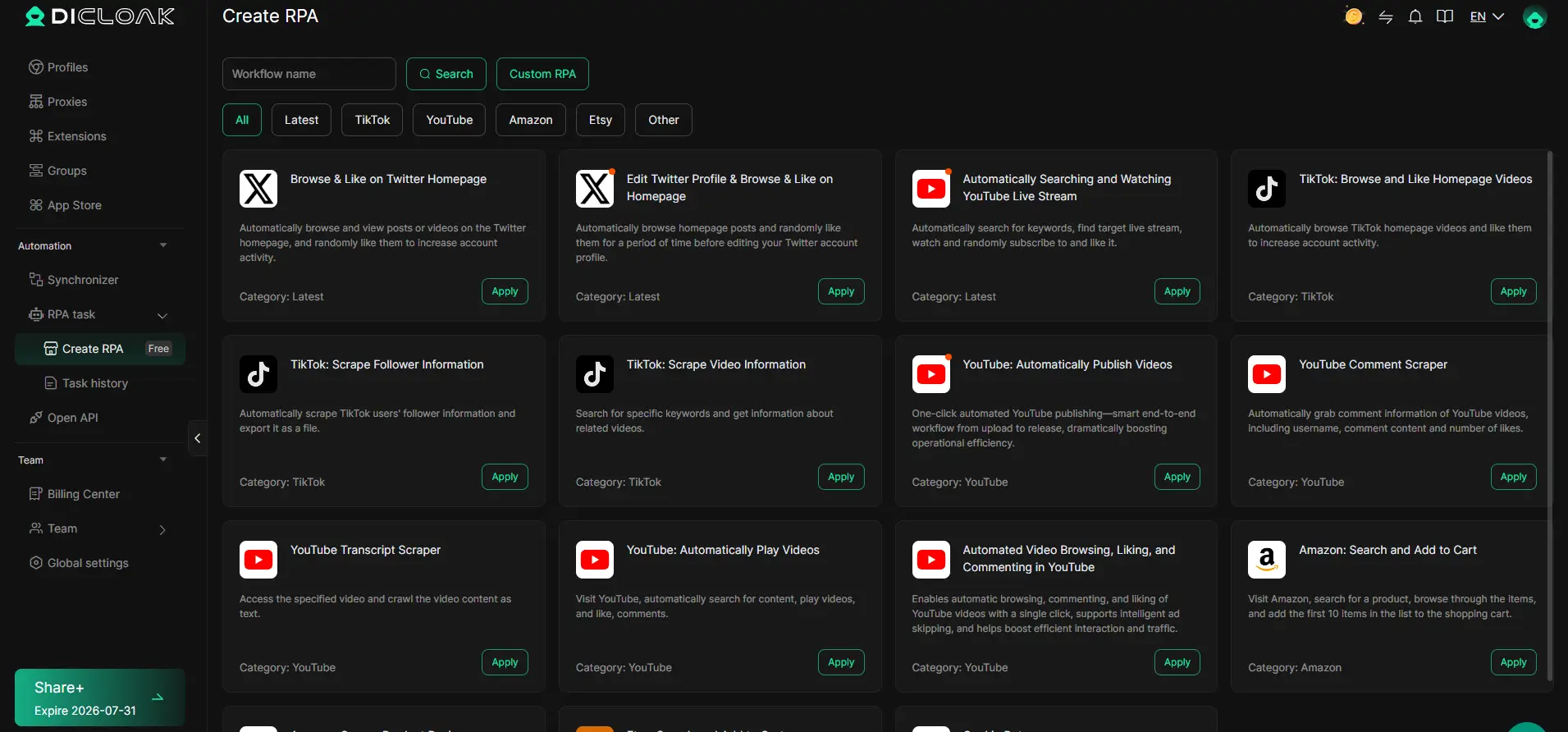
Users can run RPA workflows for repetitive browser tasks instead of completing every step manually. DICloak provides ready-made workflows for platforms such as TikTok, YouTube, X, Amazon, and Etsy, while teams can also create custom RPA tasks for their own processes.
For a small marketing team, this can reduce time spent on routine actions such as collecting public information, publishing content, or repeating the same browser-based workflow. It works best as a complement to marketing automation software rather than a replacement for email or CRM automation.
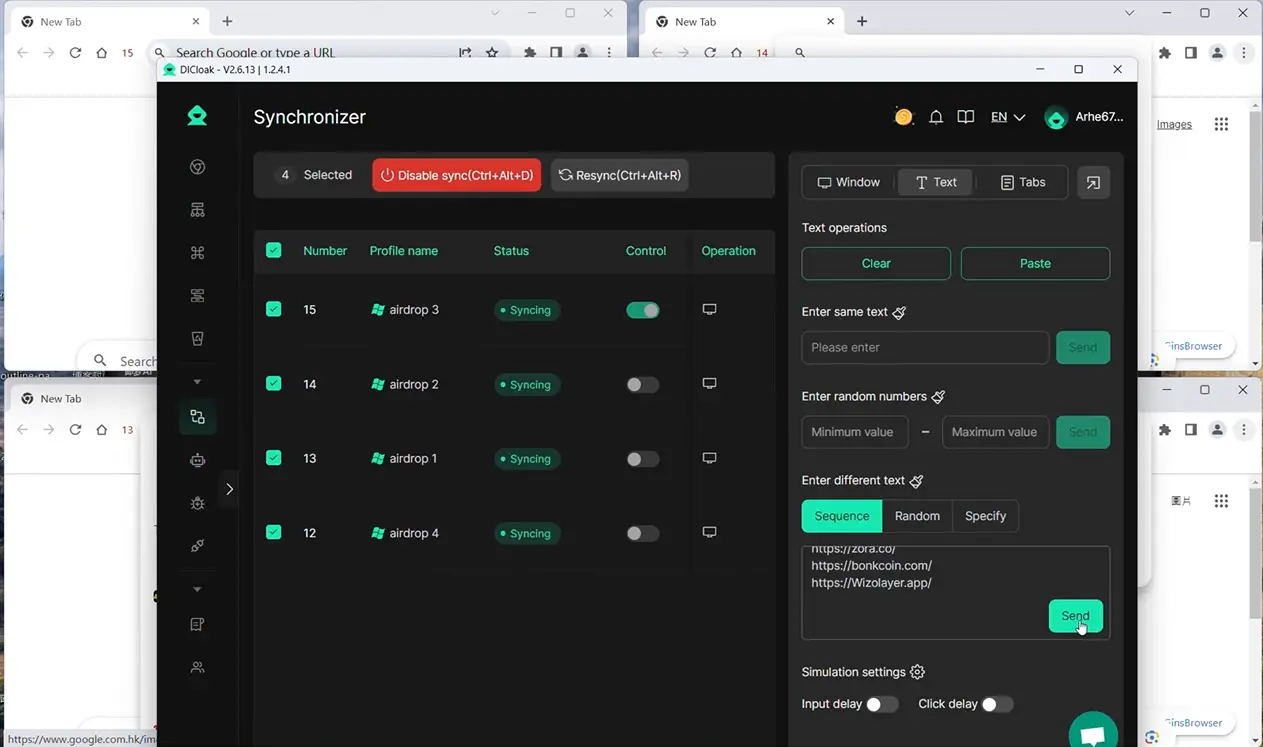
Repeat Actions Across Multiple Browser Profiles with Synchronizer
When the same action needs to be completed across several browser Profiles, users can use the Synchronizer to control multiple windows together. Actions such as clicking, entering text, switching tabs, or sending different text to selected Profiles can be managed from one control panel.
This can help a small team reduce repetitive browser work when several Profiles need similar updates or operations. It also gives users more control than simply opening many browser windows and handling each one separately.
FAQs About Marketing Automation Platforms for Startups
What is the best marketing automation platform for startups with a small team?
The best marketing automation platform for startups with a small team depends on the business model. Brevo is a strong low-cost option, Mailchimp is easier for beginners, ActiveCampaign is better for advanced workflows, HubSpot fits B2B teams, and Klaviyo works well for e-commerce startups.
How much does marketing automation software cost for a startup?
Basic marketing automation software can start free or at around $10 to $20 per month. Costs usually increase as contacts, email volume, team members, or automation needs grow.
What features should startups look for in a marketing automation platform?
Startups should focus on email automation, segmentation, behavior-based triggers, integrations, reporting, and simple workflow builders. The platform should also be easy to use without requiring a large technical team.
Is HubSpot the best marketing automation platform for B2B startups?
HubSpot can be a good choice for B2B startups that want CRM, marketing, and sales tools in one system. However, advanced automation requires higher-priced plans, so smaller teams should compare the cost with tools such as ActiveCampaign or Brevo.
Can a small startup benefit from marketing automation?
Yes. Even a small team can use automation for welcome emails, lead nurturing, abandoned-cart reminders, customer follow-ups, and internal alerts. The main goal is to reduce repetitive work so the team can spend more time on growth and customer strategy.
Conclusion
The best marketing automation platform for startups with a small team is the one that saves time without adding too much cost or complexity. Brevo is a strong choice for budget-focused teams, Mailchimp works well for beginners, ActiveCampaign offers deeper workflow control, HubSpot fits startups that want CRM and marketing in one system, and Klaviyo is built for e-commerce growth.
Start with the tasks you want to automate, then compare pricing, integrations, and how well each platform can scale with your business. Good marketing automation software should make daily work easier, not create another system your team struggles to manage.
 Web Proxy Tools
 Free Tools
 Cookie Plugin
 UA Generator
 MAC Address Generator
 IP Generator
 IP Address List
 2FA Code Generator
 World Clock
 Anonymous Check
 WebRTC Leak Test
 UUID Generator
 Free Web Proxy Site
 Proxy Checker
 FB Ad Checker
 AI Web Scraping
 Free SMM Tools
 Twitter Shadowban Checker
 Instagram Name Checker
 UTM Generator
 Username Generator
 AI Hashtag Generator
 LinkedIn Headline Generator
 Social Media Image Resizer