The primary frustration for YouTube creators in 2026 remains the same: pouring hundreds of hours into high-quality production only to receive "pennies" in ad revenue. To move beyond subsistence-level earnings, you must stop viewing your channel as just a creative outlet and start managing it as a high-margin ad tech asset. Success requires a clinical blend of content quality and technical execution. This guide outlines the exact framework for building a sustainable, high-earning AdSense presence.
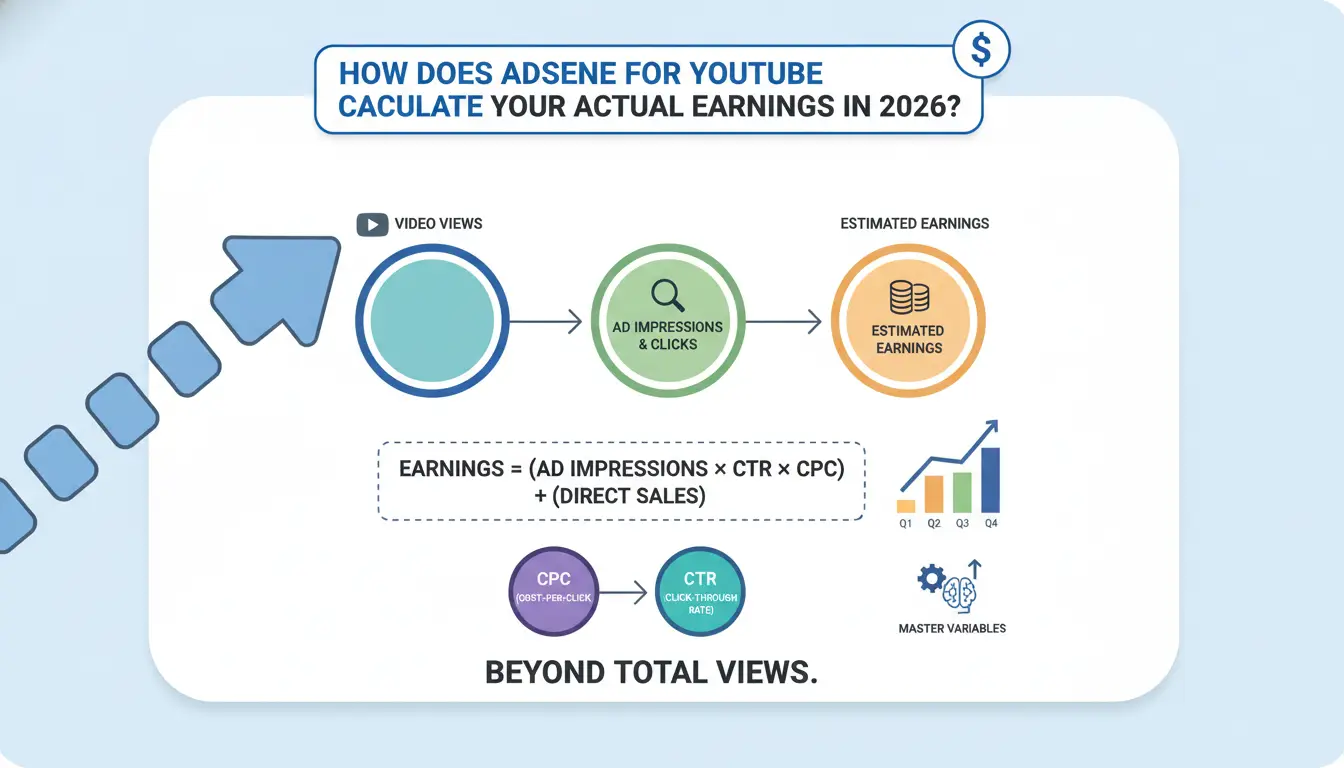
How Does AdSense for YouTube Calculate Your Actual Earnings in 2026?
As a practitioner, you must look beyond the "Total Views" metric in your dashboard. To maximize revenue, you need to master the variables that actually move the needle on your bottom line.
Understanding CPC and CTR in the Video Context
Your revenue is governed by a precise mathematical formula: Earnings = CPC x CTR(%) x Monetized Playbacks.
- CPC (Cost Per Click): This is the amount advertisers pay for a single click on an ad shown during your video. It is driven by advertiser competition and the viewer's location.
- CTR (Click-Through Rate): The percentage of viewers who interact with the ad. A 2% CTR means two out of every 100 viewers engaged with an advertisement.
- CPM vs. RPM: While advertisers pay a CPM (Cost Per Mille), your focus as a creator is RPM (Revenue Per Mille). In 2026, YouTube continues to take a 45% cut of the ad revenue; your RPM reflects your actual take-home pay after the platform’s split.
Why Pageviews and Engagement Metrics Matter
On YouTube, "Pageviews" translate to video views, but specifically, you are hunting for monetized playbacks. High-quality, engaged views are the only currency that matters. If a viewer "bounces" within the first ten seconds, they likely haven't triggered a mid-roll or engaged with an overlay. Engaged traffic leads to higher ad retention, which signals to the algorithm that your content is a "premium" environment for advertisers.
Calculating the Path to $100 a Day
Let’s look at the math required to hit the $100/day milestone. If you target a high-value niche with an average CPC of $0.50 and maintain a 2% CTR, you need 10,000 monetized playbacks daily: $0.50 (CPC) x 0.02 (CTR) x 10,000 (Monetized Playbacks) = $100.
Note that not every view serves an ad; achieving 10,000 monetized playbacks typically requires 15,000 to 20,000 total views, depending on fill rates.
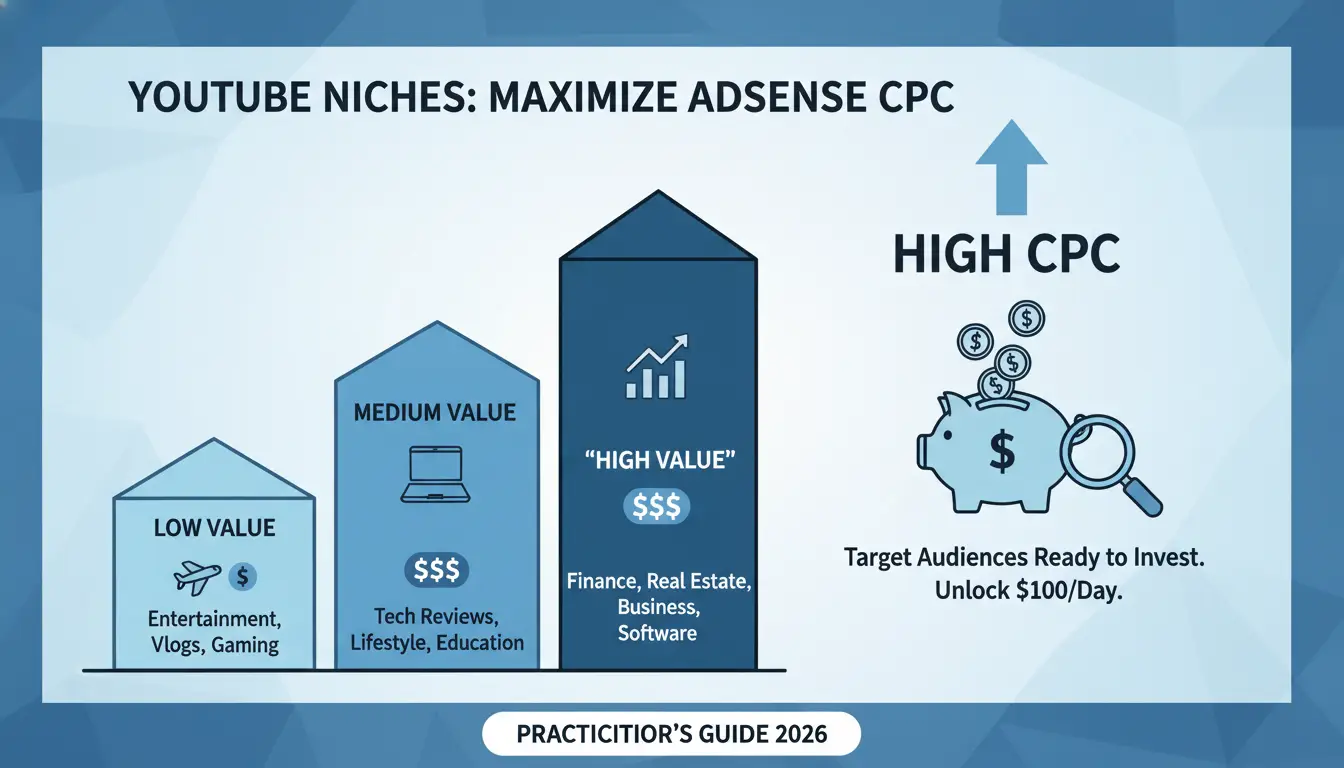
Which YouTube Niches Pay the Most per Click?
You cannot scale a channel efficiently in low-value categories. To hit $100 a day, you must align your content with high-ticket advertiser demand.
Identifying High-Value Advertiser Demand
Advertisers pay the highest CPCs for audiences ready to make significant financial commitments. Focus on these three sectors:
- Finance: Insurance, banking, and investment platforms. These involve high-ticket products where a single lead is worth hundreds of dollars to the advertiser.
- Health: Medical services, pharmaceutical developments, and high-end wellness.
- Technology: Enterprise SaaS (Software as a Service) and high-end hardware.
Advertisers in these niches are not just buying "eyeballs"; they are buying access to users with high purchase intent for expensive services.
Analyzing Competitor Gaps in Your Chosen Category
Identify high-value gaps by auditing the "Top Videos" of your competitors. Do not simply replicate their content. Look at the comment sections of videos from 1–2 years ago to find unanswered questions or complaints about outdated information. If a Finance creator’s tutorial on "Small Business Insurance" is two years old, there is a massive gap for a 2026-updated guide that addresses current regulations.
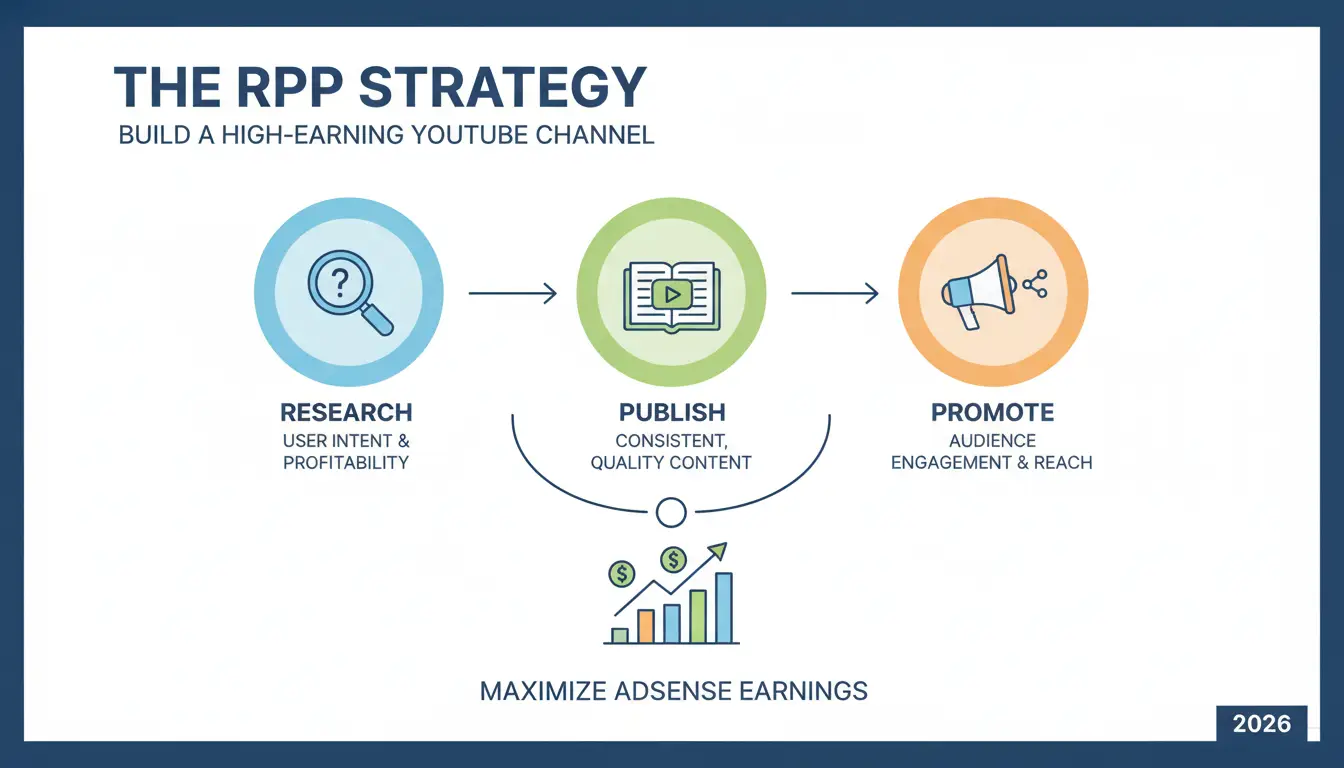
The RPP Strategy: How to Build a High-Earning Channel from Scratch
The Research, Publish, Promote (RPP) framework is the industry-standard method for driving consistent growth.
Researching for User Intent and Profitability
Research must go deeper than surface-level keywords. You must solve specific problems. Use search data to determine user intent: is the viewer looking for a quick "how-to" (high CTR potential) or a deep-dive review (high CPC potential for enterprise software)? Target problems that require high-value solutions.
Publishing Content Optimized for Ad Integration
Practitioners "build for the break." To optimize for ad integration:
- Manual Ad Breaks: Do not rely on YouTube’s "Automatic" placement. Place manual mid-rolls at natural transition points where viewer tension is high.
- Mid-roll Density: In longer-form content (10+ minutes), strategically increase ad density without breaking the user experience.
- Mobile-First UX: Ensure your visuals and text overlays are legible on mobile, where the majority of ad engagement occurs.
Promoting Beyond the YouTube Algorithm
Diversify your traffic to protect your revenue stream from algorithm shifts.
- Video SEO: Go beyond titles. Use full transcripts and descriptive tags to help Google’s crawler index your video.
- Authority Backlinks: Embed your videos on high-authority blogs and niche forums. This "Video SEO" approach signals to Google that your content is an authoritative resource.
- Social and Email: Use TikTok for "hooks" and X (Twitter) for threads that drive viewers back to your main YouTube asset.
How to Drive High-Quality Traffic Without Getting Flagged
Traffic volume is meaningless—and dangerous—if the quality is poor.
The Dangers of Invalid Traffic (IVT)
Google’s filters for Invalid Traffic (IVT) are more aggressive than ever. This includes bot-driven views, "click farms," or even accidental clicks from poorly placed elements. High IVT levels will not only void your earnings but will lead to total account termination.
Maintaining a Clean Traffic Profile
Monitor your YouTube Analytics for "Average View Duration" and "Traffic Sources." If you see a sudden spike in traffic with a 2-second retention rate, you likely have a bot or low-quality referral problem. Clean traffic shows a natural engagement curve. If a traffic source provides high volume but zero engagement, cut it immediately.
Is AdSense Traffic Arbitrage a Safe Strategy for YouTube?
Traffic arbitrage is the practice of buying traffic to "flip" it for a profit.
How the Arbitrage Loop Works
The "profitable loop" is a simple math problem: buying a click for $0.05 from a social or native ad network and directing that user to content where they generate $0.50 in AdSense revenue. If your acquisition cost is lower than your earnings, you have a viable business.
Risks and Ethical Boundaries
Arbitrage is high-risk. You must ensure the traffic you buy is from reputable sources (like Meta Ads or Google Ads) and not "cheap" bot networks. Your content must remain the primary focus; if a user feels "tricked" into clicking an ad, your bounce rates will skyrocket, and Google will flag your account for policy violations.
Why Do AdSense Accounts Get Suspended (and How to Avoid It)?
Account safety is the most overlooked part of ad tech.
Navigating Strict One-Payee Rules
Google strictly enforces a one AdSense account per payee policy. If you attempt to open a second account under your own name after a ban or for a different project, Google will link the identities and terminate both.
Adhering to Ad Network Guidelines
If you use paid ads to drive traffic, you must comply with both the traffic source’s rules (e.g., Meta's ad policies) and Google AdSense policies. A ban on your Facebook Ad account can cut off your traffic supply, effectively killing your YouTube revenue.
How to Manage Multiple YouTube Channels Without Linking Accounts
Professional practitioners often manage multiple channels or client portfolios. To do this safely, you must mitigate the risk of "digital fingerprinting."
The Role of Digital Fingerprinting in Account Safety
Websites link accounts by tracking your browser type, OS, IP address, and cookies. If one of your channels is flagged for a policy violation, Google can use this fingerprint to "bridge" the data and penalize every other account you own.
Professional Workflow with DICloak
DICloak’s practitioner-grade capabilities include:
- Unique Digital Identities: Creates distinct fingerprints for every profile, emulating mobile website visitors across 30+ device models.
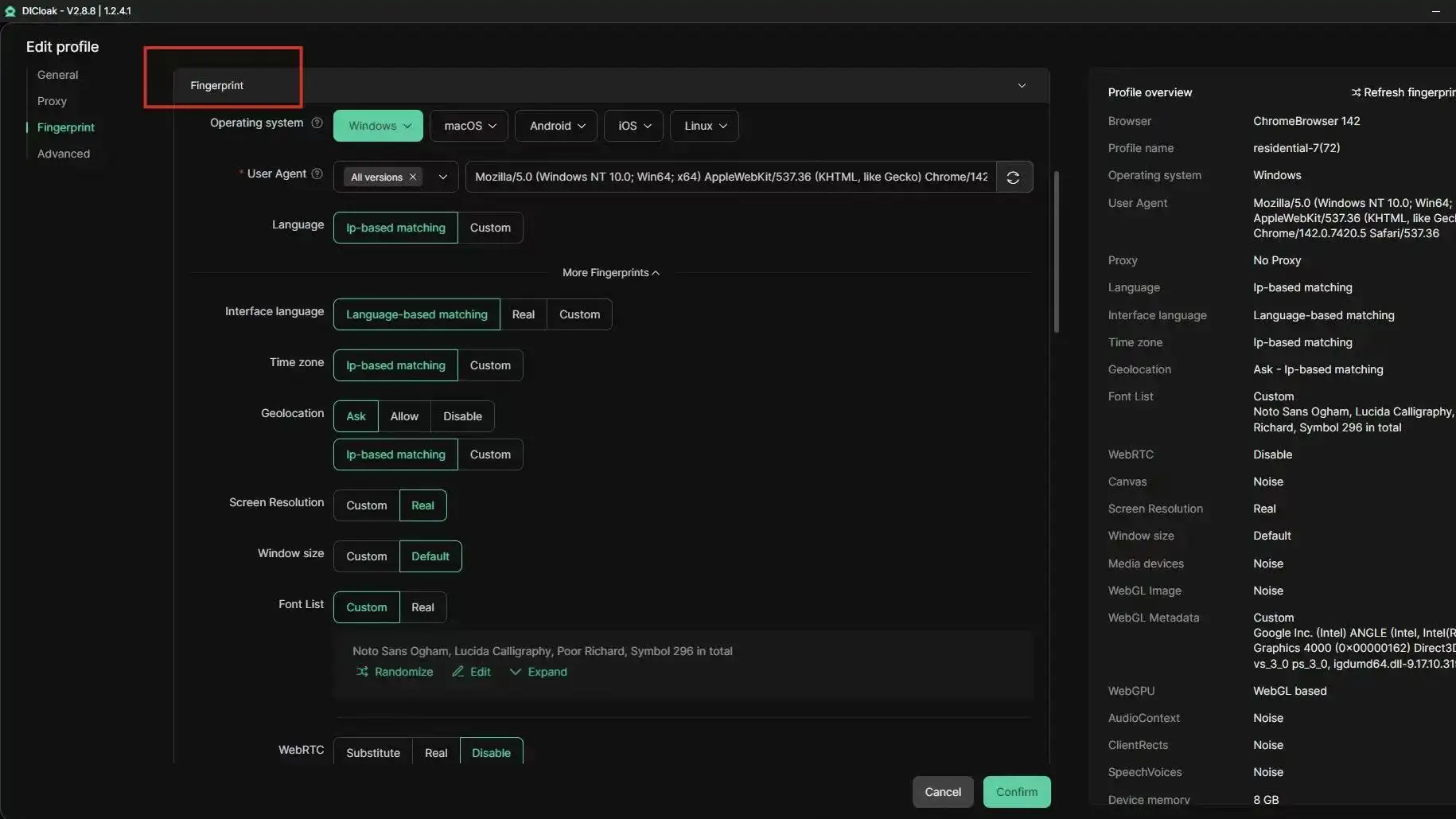
- Operating System Emulation: Supports dedicated browser profiles for Android operating systems to help ensure mobile-app authenticity.
- Data Isolation: Completely separates cookies, local storage, and user-configured proxy integration to help prevent account linking.
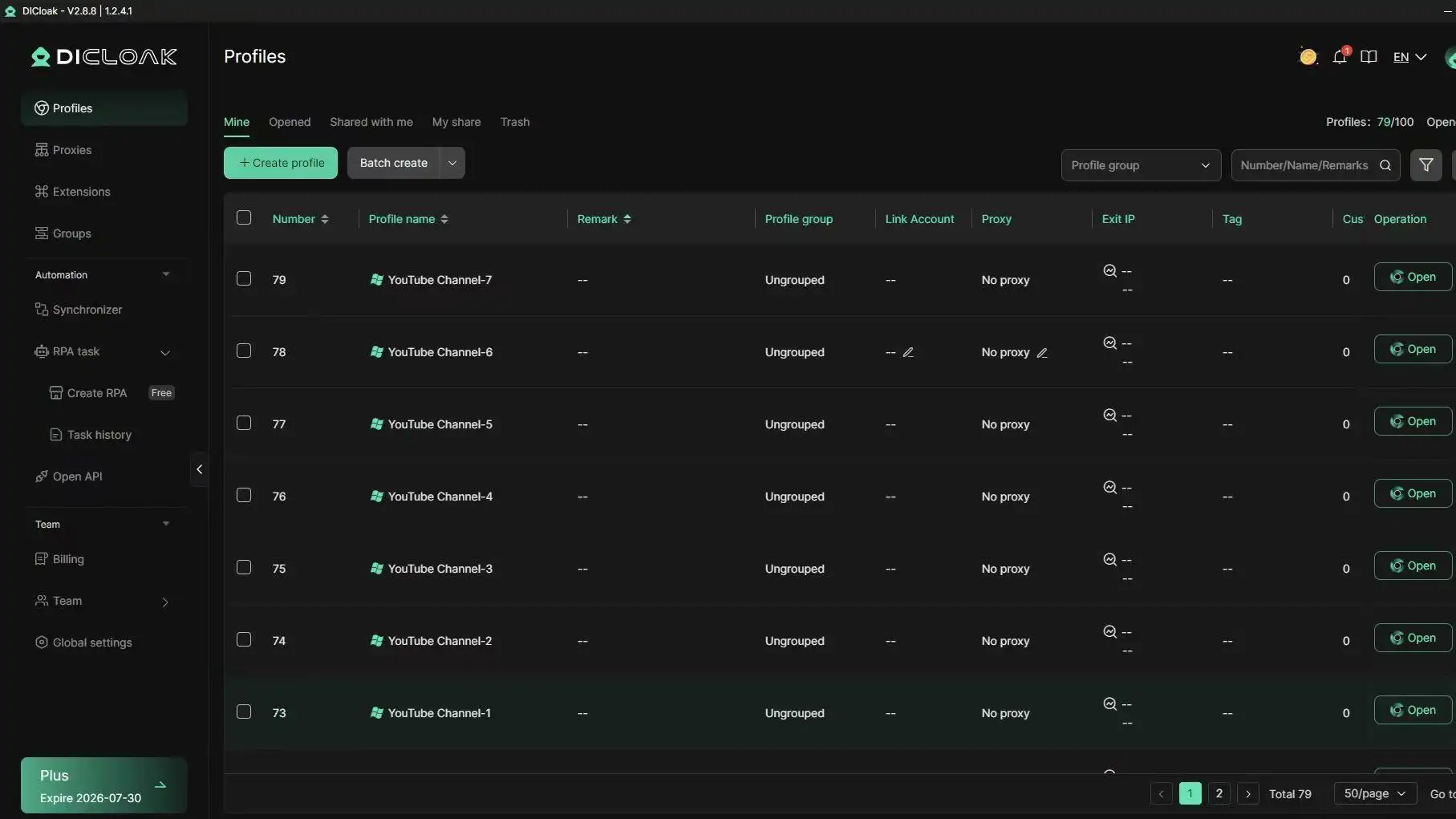
- Portfolio Collaboration: Supports teams to manage diverse channel portfolios securely without sharing master login credentials.
How Long Does it Take to Reach $100 a Day on YouTube?
Setting Realistic Timelines for 2026
Building the necessary traffic volume and advertiser trust is a marathon. Expect a timeline of 6–12 months of consistent effort using the RPP strategy before reaching the $100/day mark. Your CPC will naturally increase as the algorithm categorizes your audience as "high-value."
Scaling and Diversifying Income Streams
Don't rely solely on AdSense. Use it as your base, but layer in affiliate marketing (linking to products in your niche) and direct digital sales. This protects your income from seasonal dips in advertiser spending.
Frequently Asked Questions about AdSense for YouTube
1. How does AdSense for YouTube calculate creator earnings?
AdSense for YouTube earnings are mainly affected by monetized playbacks, CPC, CTR, CPM, and RPM. Total views alone do not decide how much a creator makes. A video with fewer views can earn more if it attracts high-value advertisers and engaged viewers. For creators, RPM is the key metric because it shows the real revenue after YouTube’s revenue share.
2. What niches usually earn more from AdSense for YouTube?
High-value niches often earn more from AdSense for YouTube because advertisers pay more for audiences with strong buying intent. Finance, health, insurance, SaaS, business tools, and high-end technology topics usually have stronger CPC potential. These niches work best when the content solves a clear problem, such as choosing software, comparing services, or understanding a costly decision.
3. How many views do I need to make $100 a day with AdSense for YouTube?
There is no fixed number because AdSense for YouTube income depends on CPC, CTR, RPM, viewer location, niche, and ad fill rate. For example, if a channel has a $0.50 CPC and a 2% CTR, it may need around 10,000 monetized playbacks per day to reach $100. Since not every view becomes a monetized playback, the real number of total views may be higher.
4. Is paid traffic safe for AdSense for YouTube?
Paid traffic can be risky for AdSense for YouTube if the traffic is low quality, bot-driven, or misleading. Google may treat fake views, click farms, or very short visits as invalid traffic. Safer traffic should come from trusted sources and show natural engagement, such as normal watch time, real comments, and healthy traffic sources.
5. Why can an AdSense for YouTube account get suspended?
An AdSense for YouTube account can get suspended because of invalid traffic, repeated policy violations, suspicious clicks, or attempts to create multiple linked AdSense accounts under the same payee. Creators should avoid buying fake views or clicks, monitor unusual traffic spikes, and follow both YouTube monetization rules and Google AdSense policies. Account safety matters as much as content growth.
Conclusion
The RPP method remains the bedrock of success in 2026. Identify high-value gaps, optimize your ad density through manual placement, and protect your assets using professional-grade tools like DICloak. Consistency and strict adherence to ethical practices are the only ways to turn a YouTube channel into a top-tier revenue generator.
 Web Proxy Tools
 Free Tools
 Cookie Plugin
 UA Generator
 MAC Address Generator
 IP Generator
 IP Address List
 2FA Code Generator
 World Clock
 Anonymous Check
 WebRTC Leak Test
 UUID Generator
 Free Web Proxy Site
 Proxy Checker
 FB Ad Checker
 AI Web Scraping
 Free SMM Tools
 Twitter Shadowban Checker
 Instagram Name Checker
 UTM Generator
 Username Generator
 AI Hashtag Generator
 LinkedIn Headline Generator
 Social Media Image Resizer