Fake Trustpilot Reviews can mislead buyers and hurt honest businesses. Some make a company look better than it really is. Others may be fake negative reviews posted to damage a brand’s reputation.
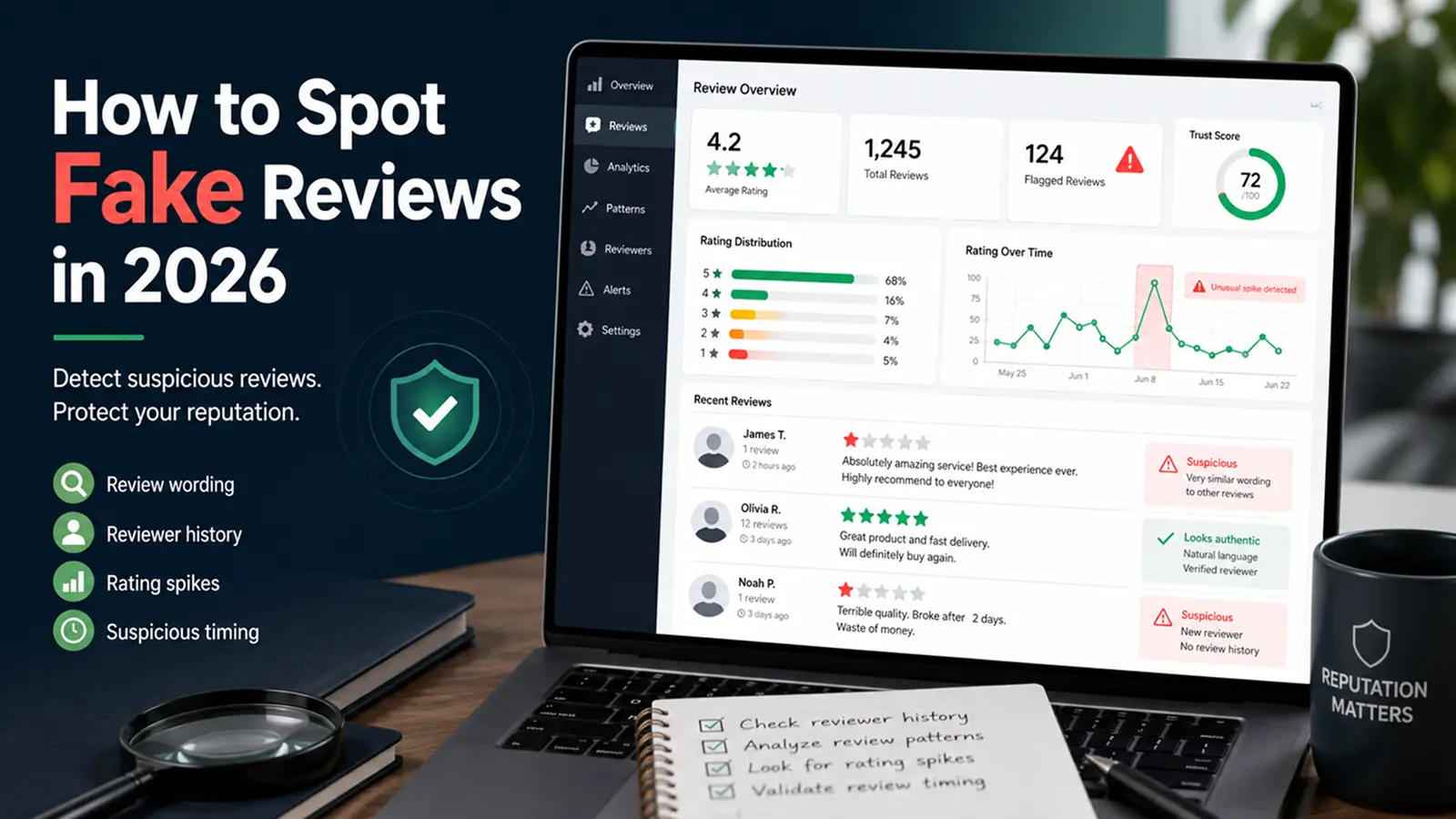
The problem is that fake reviews are not always easy to spot. A review may sound normal, but the wording, reviewer profile, timing, or rating pattern can still look suspicious. This guide explains how to spot Fake Trustpilot Reviews, check suspicious review patterns, and respond in a safer way.
What Are Fake Trustpilot Reviews?
Before you can spot fake review patterns, it helps to know what counts as a fake review. Fake Trustpilot Reviews are reviews that do not reflect a real buying or service experience. Trustpilot’s reviewer guidelines say fake reviews are often written to mislead people, either in a positive or negative way. Trustpilot also says fake reviews are not allowed on its platform.
Fake positive reviews vs. fake negative reviews
A fake positive review makes a business look better than it really is. For example, a company may suddenly get many 5-star reviews with short lines like “Great service” or “Best company ever,” but with no real details.
A fake negative review does the opposite. It may come from a competitor, a former partner, or someone who never used the service. These reviews can hurt sales and make real customers unsure.
Paid reviews, competitor attacks, and review manipulation
Some fake reviews on Trustpilot may be paid reviews. Others may be posted to attack a competitor or push down real complaints. Trustpilot’s business guidelines say fake reviews are strictly prohibited and can be removed. Businesses and users can also flag reviews that breach the rules.
For example, if several new reviewer profiles leave similar 5-star reviews for one business in a short time, that may look like review manipulation. If many 1-star reviews appear after a public dispute, that may also need a closer look.
Why fake reviews can be hard to prove
A suspicious review is not always fake. A real customer can write a short review. A real buyer can also be angry and leave a harsh 1-star rating. That is why you should look for patterns, not just one weak review.
Common Signs of Fake Trustpilot Reviews
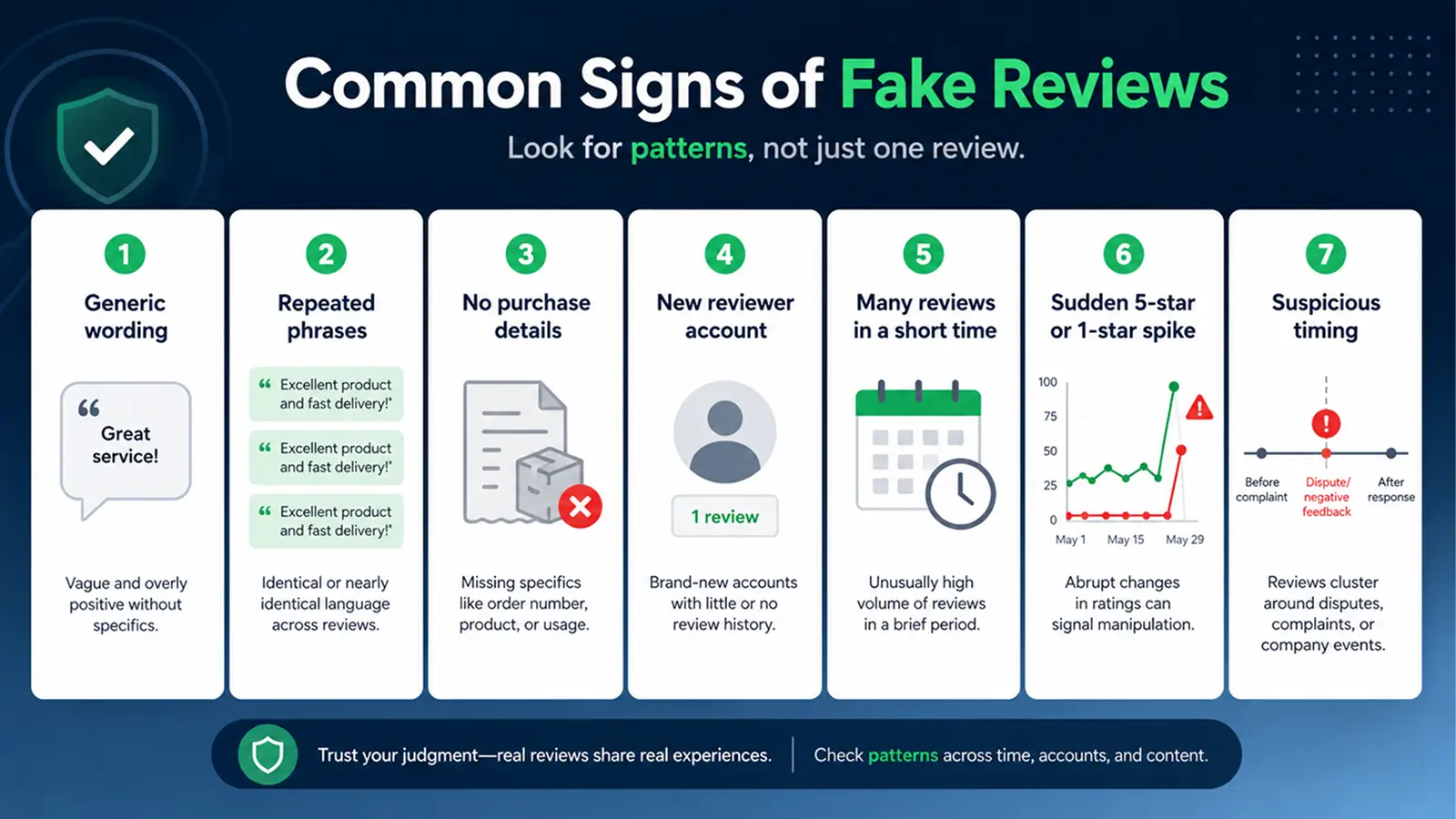
Once you know what fake reviews are, the next step is to look at the review itself. A single weak review does not always prove fraud. But if many reviews share the same tone, timing, or wording, they may be Fake Trustpilot Reviews worth checking. Trustpilot says fake reviews are not allowed and may be removed when its systems detect suspicious patterns.
Reviews that sound too generic or too perfect
A fake review often sounds very broad. It may say “Great company,” “Best service ever,” or “Highly recommended” without saying what the buyer actually bought or used. Real reviews often include small details, such as the product name, delivery time, support issue, refund process, or service date.
For example, one 5-star review that says “Amazing service” may be real. But 20 new 5-star reviews with almost the same short praise can look suspicious.
Repeated wording, formatting, or rating patterns
Repeated language is another warning sign. Some fake reviews on Trustpilot use the same sentence shape, the same punctuation, or the same emotional tone. Others may all give 5 stars or 1 star in a short period.
For example, if several reviews say “fast delivery and excellent support” with no other details, that may be a pattern. It does not prove every review is fake, but it gives buyers and businesses a reason to look closer.
Reviews with no real purchase or service details
A strong review usually explains what happened. It may mention the order, the support team, the product, the delivery, or the result. A suspicious review may only praise or attack the company without showing any real experience.
How to Check Reviewer Profiles and Review History
After checking the review text, look at the reviewer behind it. A review can sound normal, but the profile may still show warning signs. Trustpilot says every review is connected to a user account with a valid email address, and users can sign up by email or through Google, Facebook, or Apple. Still, a profile’s history can help you judge whether a review looks natural or suspicious.
New accounts with little review history
A new profile with only one review is not always fake. Some real customers create an account only after a good or bad experience. But if many new profiles leave similar reviews for the same business in a short time, that may be a sign of Fake Trustpilot Reviews.
For example, one new user saying “fast delivery” is normal. Ten new users saying almost the same thing on the same day looks less natural.
Reviewers posting many reviews in a short time
Review speed also matters. A real person may review a few companies over time. A suspicious profile may post many reviews in one day, across unrelated businesses, with little detail in each review.
This can be a sign of suspicious reviewer behavior. It does not prove fraud by itself, but it adds to the pattern if the wording, rating, and timing also look strange.
Strange patterns across unrelated businesses
Check whether the reviewer’s history makes sense. If one profile reviews a local dentist, a crypto site, a clothing store, and a software tool within a few hours, it may deserve a closer look.
Trustpilot says reviewers should write reviews based on genuine experiences, and fake reviews are not allowed. It also says businesses should not review themselves, ask family or staff to review them, or post reviews against competitors.
How to Spot Suspicious Review Timing and Rating Changes
After checking reviewer profiles, look at when the reviews appear. Timing can reveal patterns that one review cannot show. A real business may get more reviews during a sale, a product launch, or a busy season. But sudden review spikes with the same rating, same tone, or weak details can be a sign of suspicious Trustpilot reviews.
Sudden spikes in 5-star or 1-star reviews
A sudden wave of 5-star reviews can make a business look better than it really is. A sudden wave of 1-star reviews can damage a company fast. Neither pattern proves fraud by itself, but both deserve a closer look.
For example, if a small service business usually gets two reviews a month, then gets 30 short 5-star reviews in one day, that may look unusual. The same is true if many 1-star reviews appear after a dispute or public complaint.
Reviews posted after disputes or public complaints
Some Fake Trustpilot Reviews appear after conflict. A business may have a public argument with a customer, a competitor, or a former partner. Soon after, its Trustpilot page may receive many negative reviews with little detail.
In that case, check the timing and wording. Are the reviews based on real service experiences? Do they mention order details, support tickets, dates, or product issues? If not, they may need more review before you trust them.
Rating changes that do not match normal customer volume
A rating change is more suspicious when it does not match the business’s normal review volume. Trustpilot says all submitted reviews are checked by automated fake review detection systems. This is why timing, rating changes, and repeated patterns can help users and businesses notice suspicious activity.
For example, a large store may get many reviews in a week during a major sale. That can be normal. But if a small company with little traffic suddenly gets a large rating jump from many similar reviews, the pattern may be worth checking. Trustpilot’s 2025 Trust Report says it removed 4.5 million detected fake reviews in 2024, and 90% were found automatically by its detection models.
What Businesses Should Do About Fake Trustpilot Reviews
Once you find a suspicious review pattern, the next step is not to accuse every reviewer. Some bad reviews are real, even if they feel unfair. A better response is to collect facts, check customer records, use Trustpilot’s reporting process, and reply in a calm way that future customers can understand.
Collect evidence before reporting suspicious reviews
Before you report fake Trustpilot reviews, gather clear evidence. Save the review link, reviewer name, date, rating, and screenshots. Then check your customer records. Look for order IDs, support tickets, emails, payment records, or delivery logs.
For example, if a 1-star review says “they never shipped my order,” but you have no matching order or customer name, note that clearly. Trustpilot says users and businesses can flag reviews that may breach its guidelines, including reviews not based on a genuine experience.
Respond calmly without accusing customers too early
A public reply is not only for the reviewer. It is also for future buyers who read your profile. Avoid lines like “This is fake” or “You are lying” unless you have strong proof. A better reply is simple and professional.
For example, you can say: “We cannot find an order under this name. Please contact our support team with your order number so we can look into this.” This shows that you take complaints seriously without attacking the reviewer.
Why posting fake positive reviews is not a safe fix
If your business receives fake negative reviews, writing fake 5-star reviews may feel like a quick defense. But it can make the profile look even more suspicious. It also creates policy and legal risk.
Trustpilot says it can remove fake reviews and take stronger action if it finds misuse by a business, including warnings, profile notices, limiting business account access, contract termination, or legal action where needed. The U.S. FTC has also banned buying or selling fake online reviews, with civil penalties possible for violations.For teams that manage several brand profiles or support accounts, the next challenge is keeping the review response workflow organized and secure.
How DICloak Helps Teams Manage Review Response Workflows
After a business sets a clear process for handling suspicious reviews, team access also matters. Customer support teams, brand managers, and operations staff may all need to check review platforms or reply to customer feedback. If everyone uses the same browser or shared login details, mistakes can happen.
Keep Different Brand Accounts in Separate Browser Profiles
If your company manages reviews for multiple brands, you can use dicloak’s antidetect browser to create a separate browser profile for each account. Each profile has its own cookies, sessions, browser settings, and fingerprint configuration. This helps keep different review workflows organized and reduces the risk of opening the wrong account when responding to customer feedback.
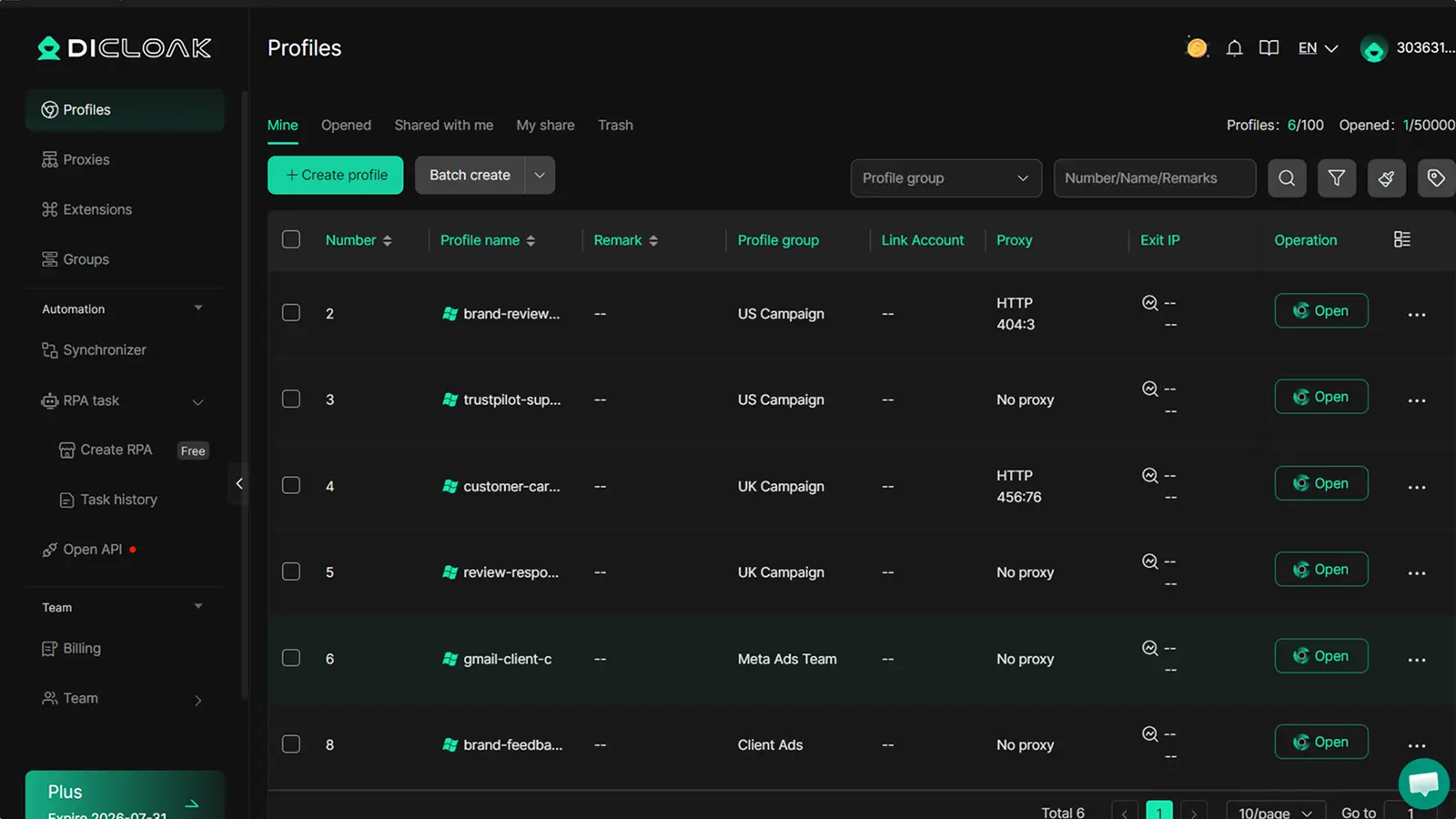
Reduce Shared-Device Confusion for Support Teams
Many support teams work from shared devices or switch between several accounts during the day. You can use DICloak to keep each account environment separate, making it easier to move between brands without mixing login sessions, browser data, or account settings.
Manage Team Access Without Exposing Main Login Details
When multiple employees need access to review management accounts, sharing passwords can create unnecessary risk. You can use DICloak to share browser profiles with team members and assign different permission levels based on their responsibilities. This allows teams to collaborate more efficiently while keeping account access under control.
How Trustpilot Handles Fake or Suspicious Reviews
Once suspicious reviews are identified, Trustpilot takes several steps to keep its platform useful and safe. Trustpilot uses both technology and human review to check reviews before and after they appear.
Automated Checks Before Posting
Every new review is scanned by Trustpilot’s automated detection system as soon as it is submitted. This system looks at patterns in text, reviewer behavior, and data signals to spot reviews that are likely fake Trustpilot reviews. If something seems suspicious, it may be blocked before it ever goes live.
Flagging and Human Investigation
Consumers or business owners can also flag reviews they believe are fake or inappropriate. Once flagged, the review goes to Trustpilot’s Content Integrity Team. They check whether the review violates Trustpilot’s guidelines. If it does, the review can be removed.
For example, if a flagged review shows no real details of an experience with the business, it may be taken down after an investigation.
Reviewer Verification Requests
In some cases, Trustpilot may contact the reviewer directly and ask for proof of purchase or experience to validate their review. This helps confirm if the reviewer really interacted with the business. If the reviewer cannot provide reasonable documentation, the review may be removed.
What Happens After Removal
When a review is removed, Trustpilot usually sends an email to the reviewer explaining why. However, not all flagged reviews are removed — some may stay if they are judged to meet posting guidelines.
Frequently Asked Questions
What are Fake Trustpilot Reviews?
Fake Trustpilot Reviews are reviews that do not come from a real customer experience. They may include fake positive reviews, fake negative reviews, paid reviews, or reviews posted to damage a competitor.
How can I tell if a Trustpilot review is fake?
Look for patterns, not just one review. Fake Trustpilot Reviews may have generic wording, no real service details, new reviewer profiles, repeated language, or sudden rating spikes.
Can Fake Trustpilot Reviews be removed?
Yes. Users and businesses can report suspicious reviews to Trustpilot. If the review breaks Trustpilot’s rules, it may be removed after review.
Are paid Trustpilot reviews considered fake?
Paid reviews can be fake if they are not honest, independent, or based on a real customer experience. Businesses should not buy positive reviews or pay people to attack competitors.
What should a business do after receiving fake negative reviews?
Collect evidence first, such as order records, support tickets, screenshots, and reviewer details. Then report the review through Trustpilot and reply calmly without accusing the reviewer too early.
Stay ahead of Fake Trustpilot Reviews by checking suspicious patterns, reporting fake reviews properly, and keeping your review response workflow organized. For teams managing multiple brand accounts, DICloak helps keep account access cleaner and easier to control. Try DICloak For Free.
 Web Proxy Tools
 Free Tools
 Cookie Plugin
 UA Generator
 MAC Address Generator
 IP Generator
 IP Address List
 2FA Code Generator
 World Clock
 Anonymous Check
 WebRTC Leak Test
 UUID Generator
 Free Web Proxy Site
 Proxy Checker
 FB Ad Checker
 AI Web Scraping
 Free SMM Tools
 Twitter Shadowban Checker
 Instagram Name Checker
 UTM Generator
 Username Generator
 AI Hashtag Generator
 LinkedIn Headline Generator
 Social Media Image Resizer