Fireworks AI is a very popular platform for running AI models, especially open-source ones. It’s easy to get started with, offers serverless inference, and has really become a go-to choice for many developers.
But it isn’t the perfect fit for every project. Depending on what you’re building, you might want better global coverage, lower latency, or some extra features that go beyond AI inference.
So in this guide, we’ll compare three of the best Fireworks AI alternatives in 2026 to help you make the best decisions for your business: Telnyx, Cerebras, and Groq.
Why AI Inference Platforms Matter
AI inference platforms make it much easier to build, deploy, and scale AI applications. Instead of managing your own infrastructure, you can focus on building your product while the platform handles the heavy lifting.
They're commonly used for:
- Chatbots and AI assistants
- Voice AI applications
- Coding assistants
- AI search and automation
A good platform can help you:
- Improve response times
- Scale more easily
- Reduce infrastructure costs
- Integrate quickly with OpenAI-compatible APIs
While many platforms offer similar core features, they often differ in areas like performance, model support, pricing, and global availability. That's why it's worth comparing a few options before deciding which one is the best fit for your project.
And that’s exactly what we will be doing in this quick guide.
Quick Comparison
Before exploring the tools in more detail, here’s a quick comparison table:
| Platform |
Best For |
Why Choose It |
OpenAI-Compatible |
| Telnyx |
Global AI deployments |
Global inference with built-in Voice AI and communications |
Yes |
| Cerebras |
Large AI workloads |
Custom AI hardware built for high-speed inference |
Yes |
| Groq |
Real-time AI |
Extremely fast inference with custom AI hardware |
Yes |
1. Telnyx
For businesses with users around the world, where your AI runs really matters. Deploying inference closer to your users can improve speed and reduce latency. That's where Telnyx stands out.
The platform runs open-weight models on GPU infrastructure that it owns, instead of relying completely on third-party cloud providers. It also lets you deploy inference across the Americas, Europe, MENA, and APAC, helping keep workloads closer to your users.
If you're already using the OpenAI SDK, moving to Telnyx is simple. Since the API is OpenAI-compatible, you can usually switch by updating your base URL instead of changing your code.
Telnyx currently supports models like GLM-5.2, Kimi K2.5/K2.6, MiniMax M3, and Qwen3. It also includes features like function calling, structured outputs, autoscaling, and model fine-tuning.
One thing we like is that Telnyx isn't just an inference platform. It also includes Voice AI, speech-to-text, text-to-speech, and telephony, so if you're building AI agents or voice applications, everything works together on one platform.
Highlights
- OpenAI-compatible API
- Global regional deployments
- Function calling
- Structured outputs
- Fine-tuning
- Autoscaling
- Voice AI and telephony
- Usage-based pricing
Best for: Businesses that want one platform for inference and AI communications.
2. Cerebras
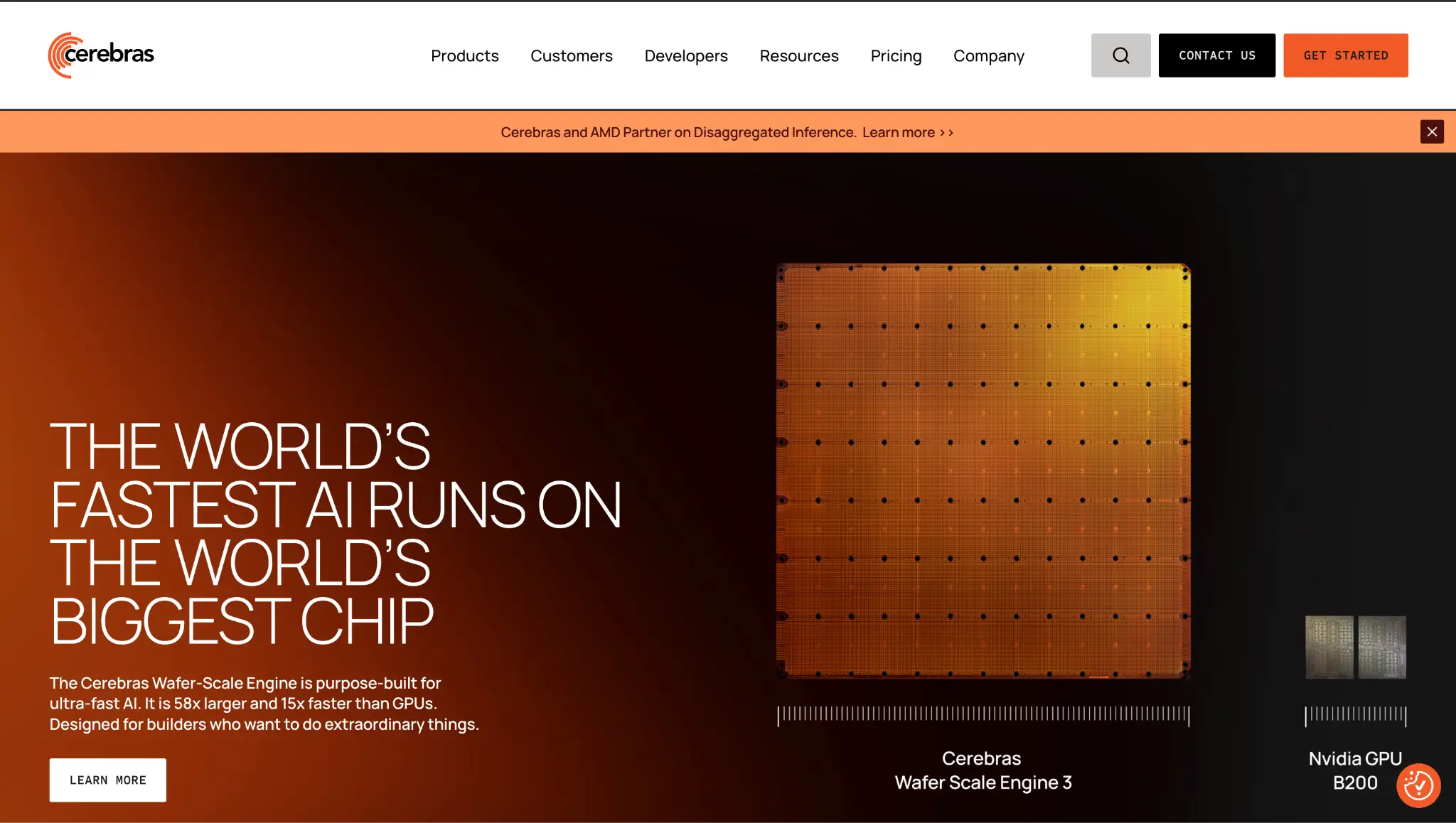
If performance is your biggest priority, Cerebras is worth a look.
Instead of using standard GPU clusters, Cerebras built its own AI hardware specifically for running large AI models. This allows it to deliver high-throughput inference, especially for demanding workloads.
The platform also supports OpenAI-compatible APIs, making it easy to connect existing applications. It offers access to popular open-source models, including models from the Llama and Qwen families, so developers can get started quickly without managing their own infrastructure.
Cerebras is mainly focused on helping businesses run large language models efficiently while keeping deployment as simple as possible.
Highlights
- Custom AI hardware
- OpenAI-compatible API
- Built for large language models
- High-performance inference
- Enterprise-ready platform
Best for: Teams running large AI models that need high performance.
3. Groq
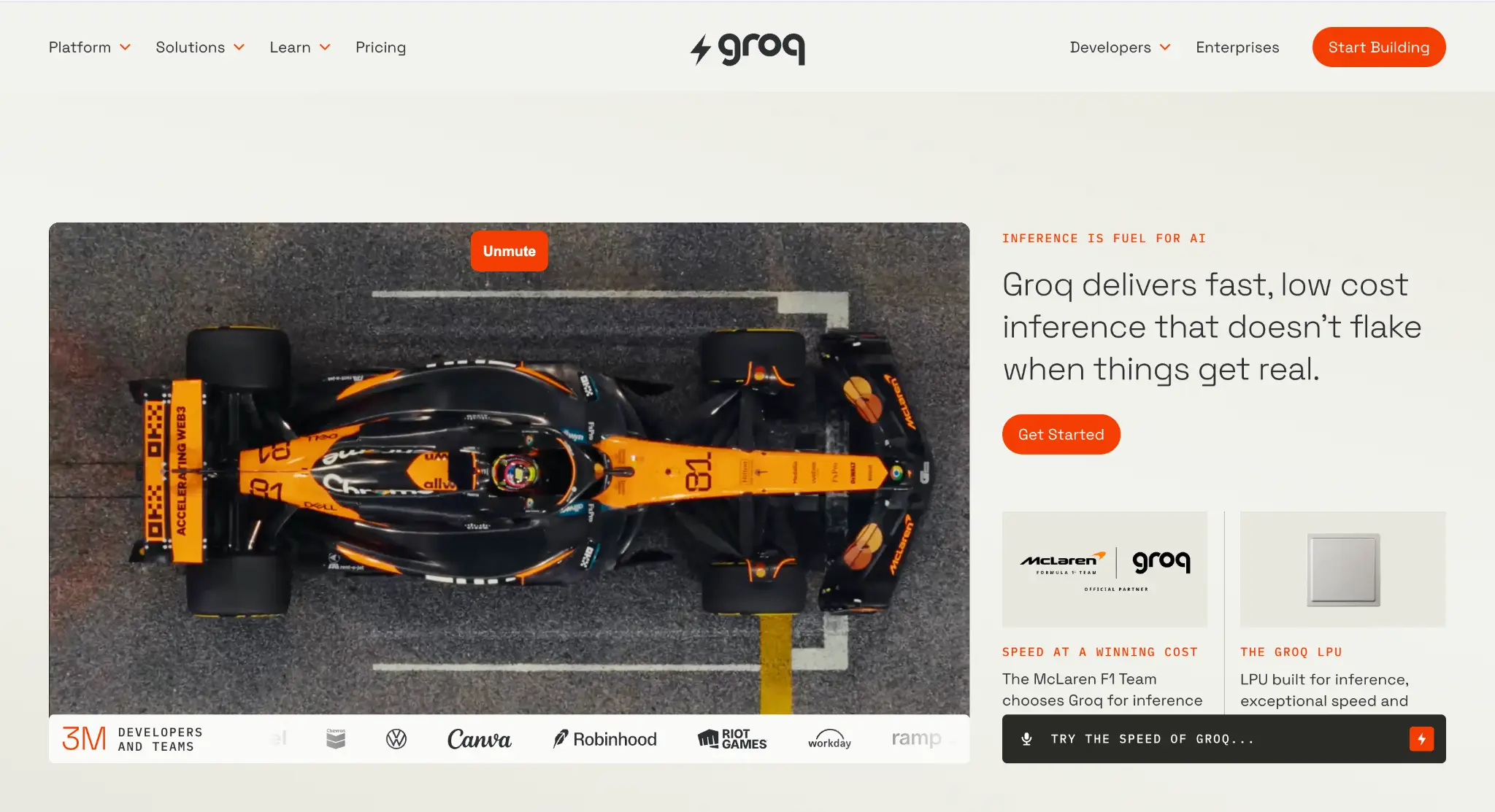
Groq has built its reputation around one thing: speed.
Instead of relying only on GPUs, Groq uses its own custom AI hardware that's designed specifically for inference. That helps deliver very fast response times, making it a great choice for chatbots, AI assistants, coding tools, and voice applications.
Like the other platforms on this list, Groq supports OpenAI-compatible APIs, so getting started is relatively easy. The company is also continuing to expand its cloud infrastructure, giving developers more ways to deploy AI applications at scale.
If your application needs quick responses, Groq is definitely one to consider.
Highlights
- Extremely fast inference
- Custom AI hardware
- OpenAI-compatible API
- Built for real-time AI
- Low-latency performance
Best for: Developers building applications where speed is the top priority.
How to Choose the Best One?
All three platforms are solid alternatives to Fireworks AI, but they each have their own strengths.
If you're looking for a platform that combines global inference with Voice AI and communications, Telnyx is a great option. Cerebras is a strong choice if you're running larger AI models and want high performance, while Groq is ideal for applications where low latency is the biggest priority.
The best platform really comes down to what you're building. Taking the time to compare a few options now can save you a lot of time and money later.
 Web Proxy Tools
 Free Tools
 Cookie Plugin
 UA Generator
 MAC Address Generator
 IP Generator
 IP Address List
 2FA Code Generator
 World Clock
 Anonymous Check
 WebRTC Leak Test
 UUID Generator
 Free Web Proxy Site
 Proxy Checker
 FB Ad Checker
 AI Web Scraping
 Free SMM Tools
 Twitter Shadowban Checker
 Instagram Name Checker
 UTM Generator
 Username Generator
 AI Hashtag Generator
 LinkedIn Headline Generator
 Social Media Image Resizer