A page that usually gets 15 real comments can jump to 300 copy-paste comments in one day after you buy Facebook comments, and that pattern is easy for trust systems and users to spot. Meta’s rules already cover spam behavior in its Community Standards and enforce account-level obligations in the Facebook Terms, so the risk is not just “bad optics.” You can face reduced reach, weak discussion quality, and a page that looks active but does not convert.
The bigger trap is quality, not volume. Cheap comment packages often use repeated phrases, empty profiles, and off-topic text that hurts post relevance. Paid engagement can also create disclosure and deception risk under the FTC endorsement guidance. The key takeaway is simple: if you still plan to buy comments, treat it like risk control, not a growth hack. You need a pre-buy checklist, clear quality filters, and a fallback plan that builds real engagement signals. Start with the checks that separate usable social proof from comment spam that can drag your page down.
Should You Buy Facebook Comments at All? What Most Buyers Miss First
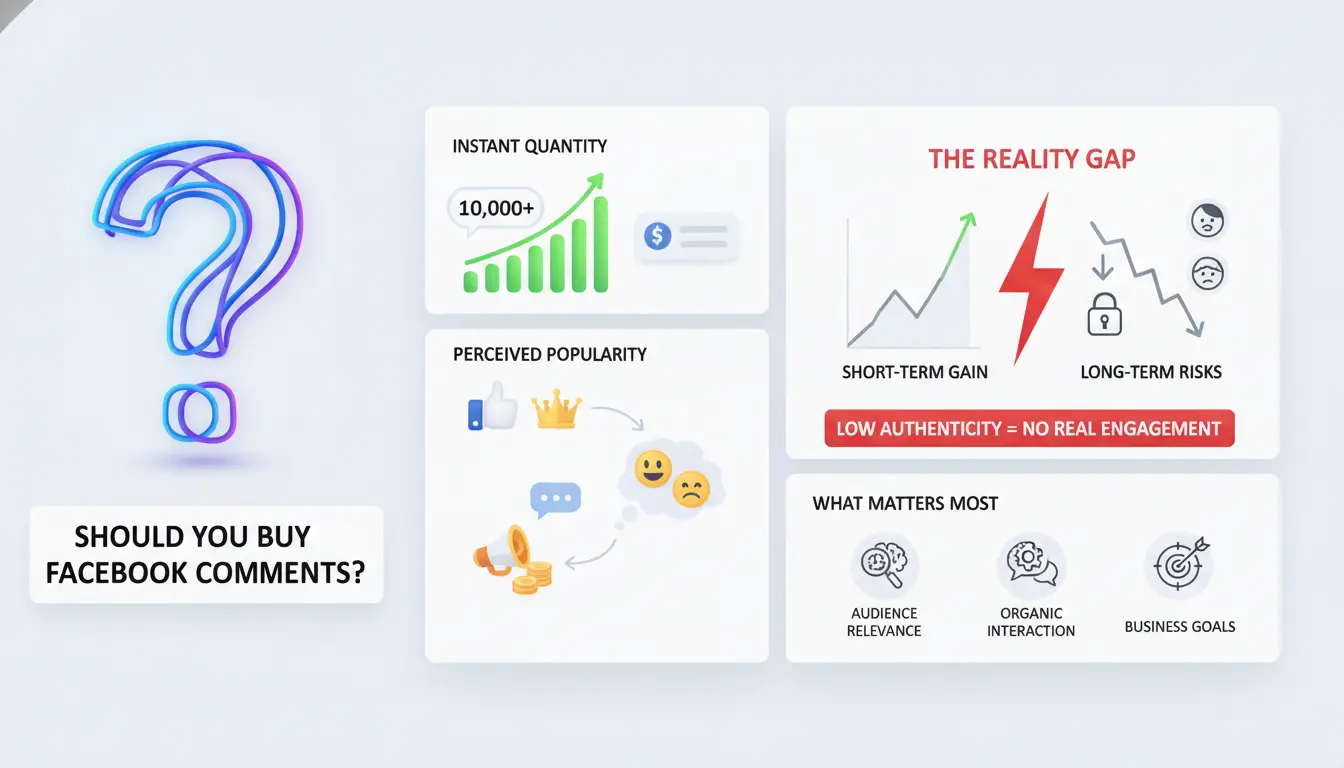
If you plan to buy Facebook comments, treat it as a controlled test, not a growth engine. You are trading quick social proof for trust and policy risk. Comments can make a post look active, yet still hurt reach and sales if the discussion feels fake. A safer path is to test on low-risk posts, review quality by hand, and stop fast if engagement quality drops.
What people expect when they buy Facebook comments
Buyers usually want three things: make a new post look alive, reduce the “empty post” effect, and support a launch. That can work for appearance in the short run. But comments alone do not fix weak creative, bad targeting, or a poor offer. If the post misses audience intent, paid comments only mask the problem for a short time. You still need real replies, saves, shares, and clicks from the right users.
What Facebook rules and moderation systems can flag
Facebook enforces rules against fake engagement under its Community Standards. Its systems can flag repeated text, copy-paste timing, and clusters of low-trust profiles posting in tight windows. Possible outcomes include lower distribution, hidden interactions, and account warnings. In some cases, activity looks “present” on the post but adds little ranking value.
When buying comments creates more harm than benefit
Harm starts when comment quality is low: generic praise, off-topic lines, or empty profiles. Users notice fast. Trust drops faster than the comment count rises. Risk also jumps when comment volume does not match real audience behavior. A post with 80 comments and almost no clicks looks staged. If you still buy Facebook comments, keep volume close to normal post patterns and filter every line before it goes live.
What to Check Before You Pay for a Facebook Comment Service
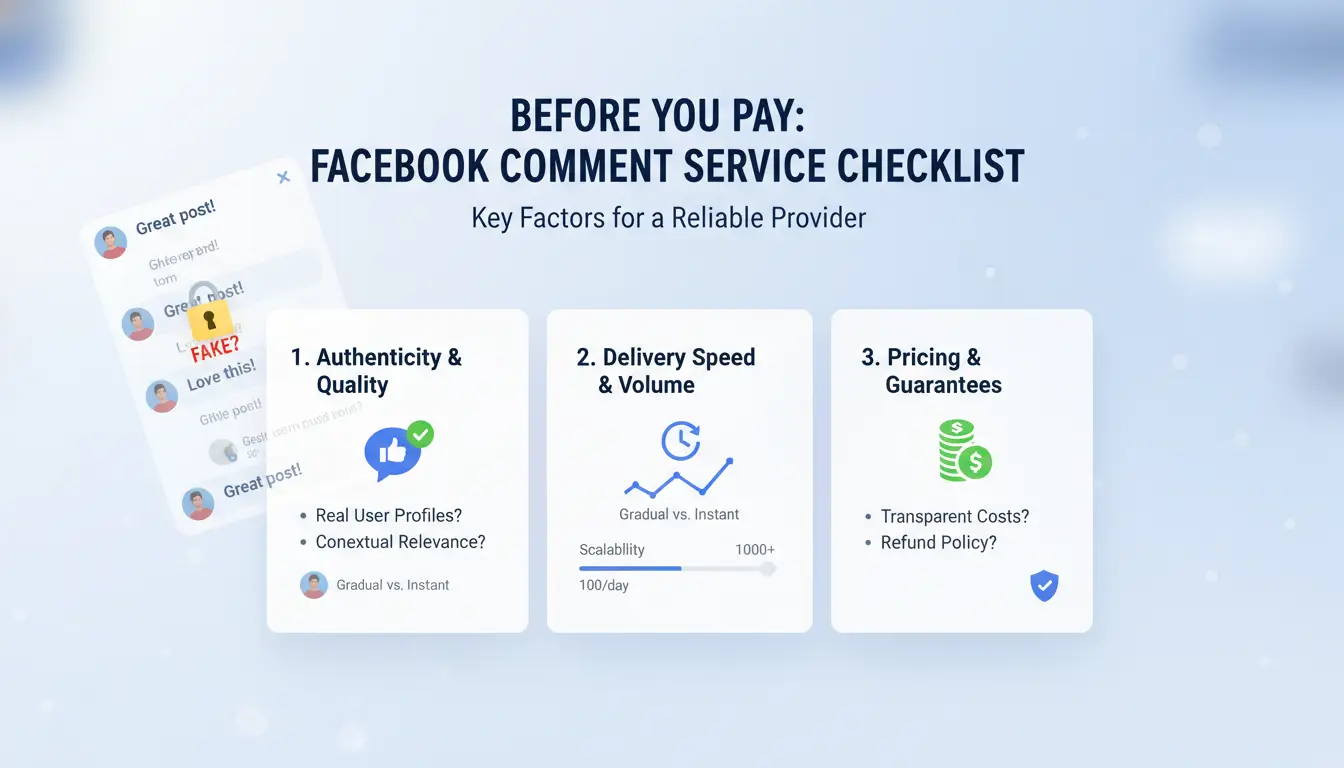
If you plan to buy Facebook comments, screen the seller like a vendor, not a growth shortcut. Pay only after you review real sample links from the last 30 days in your niche. Old screenshots are easy to fake. Live post URLs are harder to fake and show real quality.
How to verify comment quality, relevance, and language fit
Ask for 5–10 recent post links from pages close to your topic. Open each post and check:
- Comments mention the post topic, not random praise
- Language matches your audience style and region
- Accounts have normal profile history, not empty timelines
- Reply timing looks natural, not all posted in one minute
What delivery settings matter most for lower risk
Fast spikes can look unnatural. Drip delivery lowers pattern risk and gives you time to stop bad batches.
| Setting |
Lower-risk option |
Red flag |
| Delivery speed |
Drip over 12–72 hours |
Instant bulk drop |
| Targeting |
Geo + niche + custom prompts |
No targeting controls |
| Edit control |
Pause/replace weak comments |
No edits after start |
Use the Meta Community Standards as a baseline for acceptable content tone and behavior.
Which trust signals separate reliable sellers from risky ones
Check policy pages before payment: refund terms, refill window, and what counts as a failed delivery. Test support with one pre-sale question and time the reply. Also verify business presence through a real domain, consistent contact details, and public reviews on a third-party platform like Trustpilot.
If a seller avoids sample links or policy details, skip them and do not buy Facebook comments from that source.
How Facebook Comment Pricing Works (and How to Spot Overpriced Deals)
Image generation pending: Blog illustration for section "How Facebook Comment Pricing Works (and How to Spot Overpriced Deals)" Reason: AI image generation returned no usable image and no stock fallback was available
If you plan to buy Facebook comments, price alone tells you very little. Package size is easy to fake. Real value comes from relevance, account quality, and delivery pattern.
Why custom comments cost more than generic comments
Custom comments need human writing, post-level context checks, and moderation-safe wording. That labor raises cost. Generic packs usually recycle short lines like “Nice post” across unrelated topics, which looks unnatural and can hurt trust.
You also pay for fit. A comment that references your product, offer, or post topic can blend into real discussion. Cheap volume without relevance often creates visible spam signals, even if the count looks good.
How speed, targeting, and account quality change pricing
Rush delivery usually adds a premium. Fast drops can look suspicious if 200 comments appear in 30 minutes on a page that normally gets 5. Slower pacing costs more in operations, yet it tends to look more natural.
Targeting changes price too. Country filters, aged profiles, and complete account history usually cost more than fresh or empty profiles. If a seller cannot explain profile sourcing, treat that as risk.
Platform rules also matter. Coordinated fake engagement can trigger enforcement under Meta Community Standards and Facebook Page transparency systems.
Cheap vs. expensive packages: when low price is actually costly
| Package type |
What you get |
Hidden cost risk |
| Very cheap bulk |
Repeated text, weak profiles, fast burst |
Cleanup time, lower trust, lower reach |
| Mid/high quality |
Context-aware comments, paced delivery, stronger profiles |
Higher upfront spend, lower correction cost |
If you buy Facebook comments, check FTC endorsement guidance and keep records of what was ordered and posted.
How to Buy Facebook Comments More Safely: A Step-by-Step Workflow
If you still plan to buy Facebook comments, treat each order like a controlled test. The goal is not volume. The goal is stable, relevant discussion that does not trigger trust or moderation issues.
Step 1–2: Run a small test and define success criteria first
Start with one post and a small batch so you can spot quality problems early. Set clear pass/fail checks before you pay:
- Relevance: comments match the exact post topic
- Tone: comments sound like your audience, not copied text
- Delivery pace: spread over hours, not dumped in minutes
Use a simple scorecard. Keep only providers that pass all three checks on test day.
Step 3–4: Place order details carefully and avoid risky patterns
Write a short comment brief with examples of acceptable and blocked phrases. Ban generic lines like “nice post” unless they fit context. Ask for staggered delivery and mixed wording length.
Keep comments aligned with post language and audience slang. If your page is English-only, reject mixed-language batches. Check platform rules and ad disclosure risk in Meta Community Standards and FTC endorsement guidance.
Step 5: Track impact for 7–14 days before scaling
Monitor one full week, up to 14 days. Watch:
- Reach trend on that post versus your recent baseline
- Hide or report signals in comment moderation
- Sentiment quality from real followers
Scale only if quality stays consistent and no risk signals appear. If metrics dip, stop orders and return to organic prompts like pinned questions and reply threads.
Where Buyers Usually Get Scammed When They Purchase Facebook Comments
If you still plan to buy Facebook comments, assume the seller is unverified until proven clean. Most losses come from fake proof, risky payment flow, or bad access sharing.
Fake proofs, recycled screenshots, and false guarantees
Sellers often show cropped screenshots that hide dates, post URLs, or account names. Ask for live proof links, then check timestamp order, profile history, and whether comments are still visible after 24–72 hours. If proof comes from deleted posts or private groups, treat it as invalid.
“Lifetime guarantee” usually means nothing unless terms are written. No written scope means no enforceable promise. Ask what counts as a refill, how long it lasts, and what happens if Meta removes low-quality comments under Facebook Community Standards.
Payment traps and why dispute options matter
If you want to buy Facebook comments safely, payment method is your safety net. Compare before you pay:
| Method |
Buyer dispute path |
Risk level |
| Credit card via known processor |
Chargeback possible |
Lower |
| PayPal Goods and Services |
Dispute and claim flow |
Lower |
| Crypto transfer |
Usually irreversible |
Higher |
| Direct bank transfer to unknown seller |
Hard recovery |
Higher |
Pressure tactics are a red flag: “pay in 10 minutes,” “no invoice needed,” or “price doubles now.” Always require an invoice, delivery terms, and message logs.
Data safety mistakes that can put your page at risk
Never share your password for comment delivery. Use page roles with minimum access, then remove temporary roles right after delivery. Check role settings in Meta Page access controls. Also review active sessions and revoke unknown devices. One rushed handoff can expose your page long after the comments are posted.
What to Do After Delivery to Protect Reach, Trust, and Performance
If you still choose to buy Facebook comments, treat delivery day as the start of quality control. Do not judge success by comment count alone. Judge by comment relevance, reply quality, and downstream actions like clicks and shares.
Audit comment quality and remove obvious low-value comments
Scan all delivered comments within 24 hours. Flag repeated lines, generic praise, emoji-only replies, and text unrelated to your post topic. Those patterns can weaken trust and discussion quality.
Use your Page moderation tools to hide or delete low-value comments and block repeated spam terms. Keep comments that sound human, match the post topic, and can support real replies. Review rules in Meta Community Standards and your Facebook Page settings.
Balance paid comments with real engagement activities
Paid comments should not run alone. Add real conversation signals right away: ask one follow-up question in the post, reply to credible comments, and pin a useful user comment.
If your team handles several profiles, you can use DICloak for social media account workflows to separate account environments and reduce operator mix-ups during moderation and replies.
Measure whether the purchase helped or hurt your page
Track 7-day pre vs 7-day post metrics. Focus on quality actions, not raw comment volume.
| Metric |
Good sign |
Risk sign |
| Saves |
Stable or up |
Drops after comment spike |
| Shares |
Stable or up |
Flat while comments jump |
| Link clicks |
Stable or up |
Downtrend with noisy thread |
| Meaningful replies |
Longer, on-topic replies |
Short, repeated, off-topic text |
Set a stop-loss rule before the next purchase. Example: pause if two quality metrics drop for two straight posts.
How Teams Can Manage Multiple Facebook Pages with Less Account Risk Using DICloak
Why shared logins and messy team handoffs trigger risk
When two or three people use the same Facebook login, behavior changes fast: device, browser, IP, and action timing. That pattern can trigger checks or limits. It also creates ownership gaps. One person edits page settings, another replies, and no one can trace who did what. If your team plans to buy Facebook comments, weak access control can turn a risky tactic into an account lock.
How DICloak lowers risk in social media marketing operations
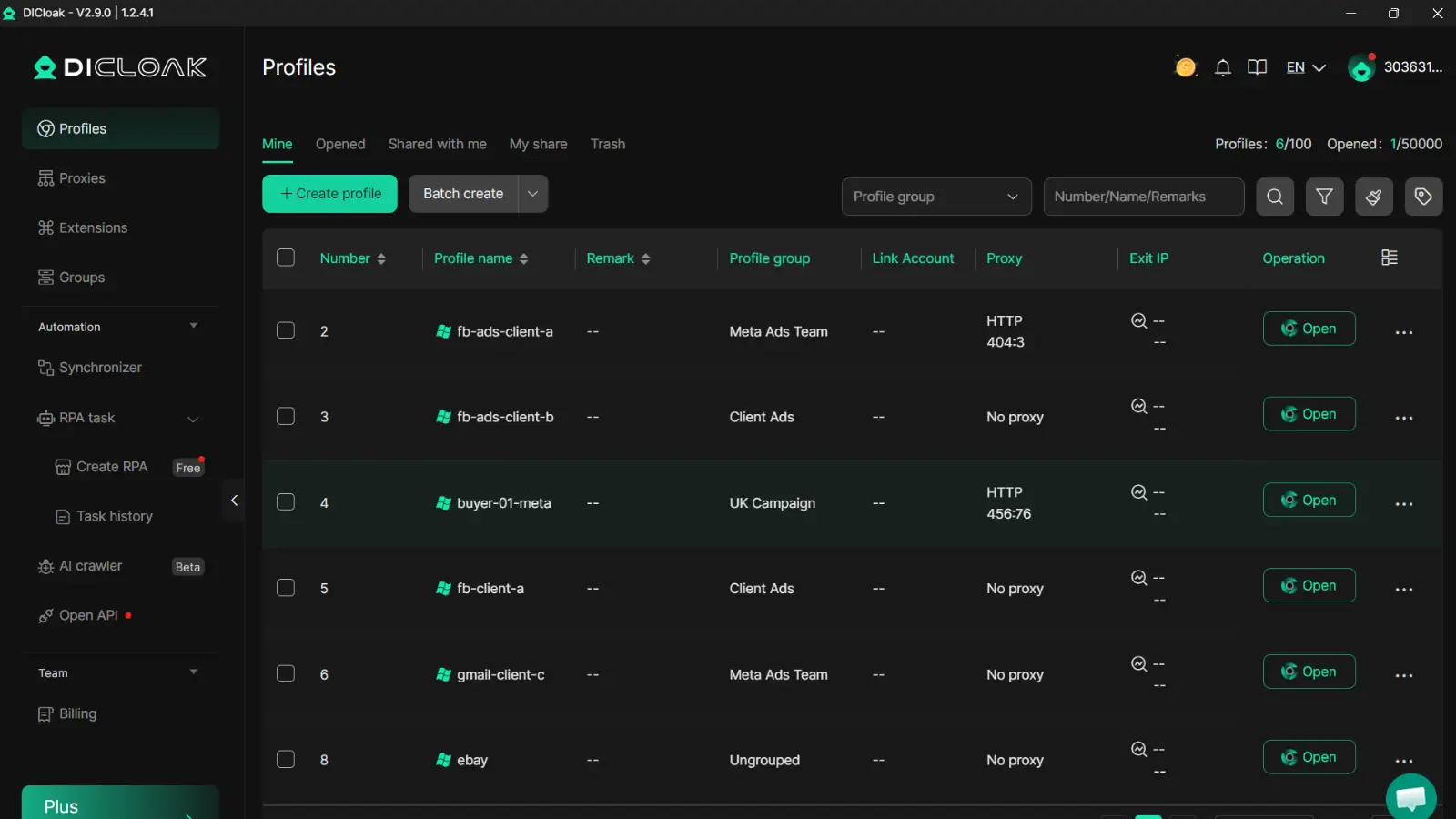
Tools like DICloak let you create one isolated browser profile per page, with a unique fingerprint and its own proxy, so sessions stay consistent. You can use role permissions, profile sharing, and operation logs to avoid password sharing and keep actions traceable. The goal is stable account behavior, not faster posting.
A practical setup for agencies and small teams
Map each client page to one profile. Give editors limited rights, keep admin rights with one lead, and review logs weekly. Use batch actions and RPA for repeat tasks so comment handling stays consistent when you buy Facebook comments.
When You Should Skip Buying Comments and Use Better Growth Tactics Instead
If you plan to buy Facebook comments, pause when your posts already struggle to start real discussion. Paid comments can add surface activity, but they do not fix weak content or weak audience fit. If people do not care about the post topic, extra comments will not create lasting reach or sales.
Signs your content strategy needs fixing before paid engagement
Low saves, low shares, and short watch time usually mean the post itself is the issue. Common causes are weak opening lines, broad targeting, and generic prompts like “Thoughts?” that invite low-effort replies.
Paid comments cannot repair message-market mismatch. If your offer is unclear or your audience is wrong, bought replies only hide the problem for a few days. This also increases policy risk around deceptive engagement under FTC endorsement guidance.
Alternatives that generate real Facebook comments
Use formats that ask for specific answers. Good examples:
- Giveaway entry rule: “Comment your use case in 12 words.”
- Q&A post: one problem, two options, ask people to pick one and explain why.
- Creator collab: ask a niche creator to post a debate prompt, then reply from your brand account.
- Community prompt: “Show your setup photo and one lesson learned.”
A simple decision checklist for your next campaign
| Situation |
Better move |
| New page, unclear offer, low post quality |
Invest in organic conversation systems |
| Clear offer, strong post format, short campaign window |
Test paid comments in a small batch |
| Repeated off-topic replies from paid packs |
Stop paid comments and rebuild prompts |
| Need team-scale testing across accounts |
You can use DICloak social media workflows with isolated profiles and role control |
If you still buy Facebook comments, run a limited test and measure reply depth, not just comment count.
Frequently Asked Questions
Is it legal to buy Facebook comments for business pages?
Buying comments is usually a business transaction, so civil law often allows it. The bigger risk is Facebook policy. If comments look fake, spammy, or coordinated, Facebook can reduce reach, remove content, restrict features, or disable accounts. So legal status and platform rules are separate, and both matter before you buy Facebook comments.
Can I buy Facebook comments without giving page login access?
Yes. Most reputable services only need the public post URL, target country/language, and comment style. You should never share your Facebook password or admin login for this service. If a provider asks for direct account access, treat that as a red flag and choose a provider with clear no-login ordering and support records.
How many Facebook comments should a beginner buy for a test?
Start small: about 10–25 comments on one post, then review quality for 48–72 hours. Check relevance, tone, and whether real users reply. If results look natural, scale gradually to 30–60 on future posts. Avoid instant bulk orders on day one; sudden spikes can look unnatural and raise moderation risk.
Do custom Facebook comments perform better than random generic comments?
Usually yes. Custom comments match your post topic, product, or offer, so they look more believable and help social proof. Generic lines like “Nice.” add little trust and may trigger user suspicion. Custom orders cost more and need clear briefs, but they often reduce moderation issues and improve comment thread quality.
Can buying Facebook comments hurt ad performance on the same page?
Yes, it can. Low-quality comments can attract hides, negative reactions, and complaints, which hurt engagement quality signals. That can lower ad relevance and raise costs over time. If you buy Facebook comments, monitor sentiment, hide rate, click-through, and conversion rate weekly. Pause campaigns fast if comment quality starts dragging performance down.
Buying Facebook comments can quickly increase social proof, but the best results come when purchased engagement supports a clear content strategy and real audience interaction. Focus on providers that deliver relevant, high-quality comments and use them responsibly to strengthen credibility rather than replace authentic community building.Try DICloak For Free
 Web Proxy Tools
 Free Tools
 Cookie Plugin
 UA Generator
 MAC Address Generator
 IP Generator
 IP Address List
 2FA Code Generator
 World Clock
 Anonymous Check
 WebRTC Leak Test
 UUID Generator
 Free Web Proxy Site
 Proxy Checker
 FB Ad Checker
 AI Web Scraping
 Free SMM Tools
 Twitter Shadowban Checker
 Instagram Name Checker
 UTM Generator
 Username Generator
 AI Hashtag Generator
 LinkedIn Headline Generator
 Social Media Image Resizer