How Amazon Drop Shipping Works: What to Know Before You Dropship on Amazon
As the global powerhouse of e‑commerce, Amazon grants sellers unmatched access to massive consumer audiences worldwide, and dropshipping has become one of the most talked‑about ways to tap into this huge marketplace. While dropshipping continues to gain traction among online entrepreneurs for its low‑barrier entry, it is far from a risk‑free shortcut to profits. For aspiring merchants eager to sell on Amazon without heavy upfront inventory costs, it is critical to fully grasp exactly how Amazon dropshipping operates, alongside the platform’s strict rules, hidden pitfalls, and core realities before you launch your dropshipping venture.
What Is Amazon Drop Shipping & the Dropshipping Business Model?
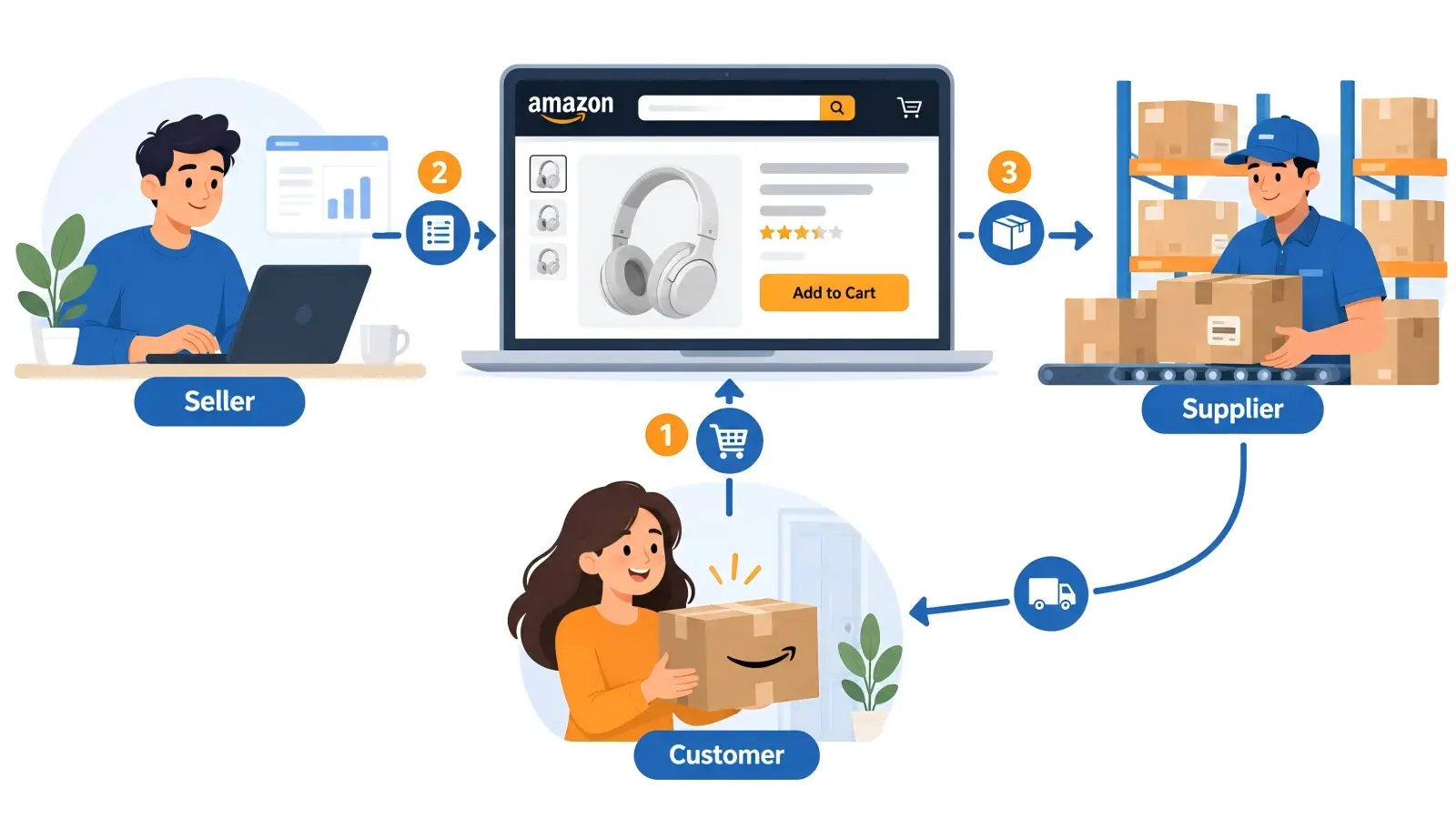
Amazon drop shipping is a fulfillment model where a third-party supplier ships orders directly to your customers. When someone buys from your Amazon listing, you send the order details to the supplier, and the supplier handles packing and delivery.
For example, you may sell a reusable water bottle for $25 without keeping stock yourself. The supplier ships it after the customer places an order. You still remain responsible for the Amazon store and customer experience. This lower-inventory setup is one reason beginners often consider it when learning how to start a dropshipping business.
Amazon Official Policy for How to Dropship on Amazon
The key rule for how to dropship on Amazon is that you must remain the seller of record. Your name should appear on packing slips, invoices, and other customer-facing materials instead of another retailer or supplier. You are also responsible for returns and following Amazon seller policies.
This means retail dropshipping can be risky. For example, if another retailer ships an order with its own logo, invoice, or contact details, the order may not meet Amazon's policy. It is safer to work with suppliers that can ship under your seller identity.
Branded Dropshipping Basics for Amazon Sellers
Branded dropshipping means selling products under your own brand while a supplier still handles storage and shipping. For example, you may sell travel bottles with your own logo and packaging instead of offering the same generic item as many other sellers.
Branding can help your products stand out, but it does not change Amazon's dropshipping rules. Sellers building their own brand may also consider Amazon Brand Registry if they meet its trademark and branding requirements.
Profit Outlook & Startup Costs: Can You Start Dropshipping for Free?
People searching how to start dropshipping for free often like the fact that they do not need to buy large amounts of inventory first. However, Amazon dropshipping is not completely free. Sellers still need to pay Amazon selling fees, supplier costs, shipping, and other business expenses.
For example, if you sell a backpack for $30, pay $16 for the product, $4 for shipping, and $4.50 in Amazon referral fees, only about $5.50 remains before other costs. This is why the answer to “is dropshipping worth it?” depends on your real profit margin. For most beginners, starting “for free” really means starting without a large upfront inventory investment.
How to Dropship on Amazon: Step-by-Step to Start a Dropshipping Business
Now that you know how Amazon drop shipping works and where Amazon draws the policy line, the next step is turning that model into a working store. Learning how to dropship on Amazon is not just about finding a cheap product and uploading a listing. You need a seller account, a product with enough demand and profit, a supplier that can follow Amazon's rules, and a reliable way to keep inventory and orders up to date.
The five steps below show how to start a dropshipping business in a practical order. It is usually better to test a small group of products first instead of uploading hundreds of items at once. This gives you time to find problems with stock, shipping, pricing, or returns before those problems affect many customers.
Step 1: Set Up Your Seller Account to Dropship on Amazon
The first step in how to dropship on Amazon is creating an Amazon seller account. Amazon's current registration process asks for business information, seller details, billing information, store and product information, and identity verification. You may also need a government-issued ID and proof of address. You do not need to form an LLC just to open an account. Amazon allows individuals to register as sellers as well.
You also need to choose between the Individual and Professional selling plans. The Individual plan has no fixed monthly subscription, but Amazon currently charges $0.99 for each item sold, plus applicable referral fees. The Professional plan costs $39.99 per month plus selling fees and includes more tools for bulk listings, advertising, reporting, and selling at scale. A beginner expecting fewer than about 40 sales per month may find the Individual plan useful for testing, while a larger operation will usually need Professional tools.
This is also where the idea of how to start dropshipping for free needs some context. You can avoid buying a large amount of inventory before your first sale, and the Individual plan avoids a monthly subscription fee. However, Amazon selling fees, supplier costs, shipping, returns, and possible advertising expenses still exist. In other words, you can start with a small budget, but Amazon dropshipping is not a truly zero-cost business.
Step 2: Find Products to Dropship on Amazon
Good product research starts with demand, but demand alone is not enough. A product may sell thousands of units and still be a poor dropshipping choice if prices change every day, shipping costs are high, or dozens of sellers compete for very small margins. Before listing anything, check customer demand, competition, average selling price, supplier cost, expected shipping cost, return risk, and Amazon fees.
Amazon's Product Opportunity Explorer can help with this research. It uses Amazon search, browsing, purchasing, review, pricing, and return data to show customer demand and areas where buyers may not be well served. Amazon says sellers can examine search volume, competition, customer reviews, pricing trends, and return activity inside the tool. It also warns that an opportunity shown by the tool does not guarantee sales, so the data should support your decision rather than make the decision for you.
A simple screening process might look like this:
| What to check |
Better sign |
Warning sign |
| Customer demand |
Stable searches and purchases |
Short trend with no lasting demand |
| Competition |
Several sellers but room to improve |
Many strong listings with heavy review counts |
| Selling price |
Enough room for Amazon and supplier costs |
Price is already close to wholesale cost |
| Shipping |
Small, light, easy to pack |
Large, fragile, or costly to ship |
| Returns |
Simple product with clear use |
High size, fit, or quality return risk |
| Supply |
Stable stock from one or more suppliers |
Frequent stockouts |
| Amazon restrictions |
Product can be listed normally |
Brand, ASIN, or category needs approval |
For example, imagine a supplier offers a desk cable organizer for $7 and ships it for $3. Similar products sell for around $20 on Amazon. That $10 difference is not your profit. Amazon referral fees, possible advertising costs, refunds, and other expenses still need to come out of it. Running the numbers before launch is one of the best ways to answer “is dropshipping worth it?” for a specific product instead of treating the whole business model as either profitable or unprofitable.
Also check whether you are allowed to sell the item before building your store around it. Amazon notes that some categories are open to all sellers, while other categories, brands, or products require approval or cannot be sold by third-party sellers. Seller Central's Add Products tool can show whether an item has restrictions.
For branded dropshipping, the product test should go one step further. Look for items that can support a clear brand idea instead of simply copying a product that hundreds of sellers already offer. For example, instead of selling another generic travel bottle, a seller might work with a manufacturer on a leak-resistant version, branded packaging, and a clear use case for hiking or business travel. The product still needs good margins and reliable fulfillment, but the brand gives the seller another way to compete besides price.
Step 3: Find Reliable Suppliers to Dropship on Amazon
Your supplier can make or break an Amazon drop shipping store. A low wholesale price means little if the supplier frequently runs out of stock, ships orders late, sends the wrong product, or places its own invoice inside the package. Amazon requires dropshipping sellers to remain the seller of record. The seller's identity, rather than another retailer or supplier, must be shown on customer-facing packing slips, invoices, and packaging. Sellers are also responsible for customer returns.
Before working with a supplier, test how the business works in real life. Ask whether it supports blind or white-label shipping, how often inventory updates, how quickly tracking numbers become available, where returns go, and what happens when an item is damaged or lost. Place a sample order to yourself before sending real customer orders. Check the delivery time, product quality, packaging, invoice, return information, and tracking accuracy.
For example, suppose a supplier promises two-day processing but your test order does not leave its warehouse for five days. That delay could become a serious problem once customers are involved. It is much safer to discover it with one $20 test order than after 50 Amazon customers have already purchased the item. This is why reliable fulfillment should carry as much weight as product price when choosing a partner.
Avoid building the business around buying an item from another retailer only after an Amazon customer orders it and then asking that retailer to send it straight to the customer. Amazon specifically warns against this setup when another retailer is identified on the shipment, invoice, packing slip, or packaging. A direct relationship with a manufacturer, wholesaler, or fulfillment supplier that agrees to follow your seller-of-record requirements creates much more control.
Step 4: Create Optimized Listings to Dropship on Amazon
Once the product and supplier are ready, create a product listing that helps customers understand exactly what they are buying. Amazon says a listing includes a product detail page and an offer. The detail page can contain the product title, description, bullet points, images, brand information, and other product attributes. Sellers can also add relevant search terms to help customers discover the product.
Do not build the listing by copying your supplier's product page word for word. Supplier descriptions are often written for wholesalers, not Amazon shoppers. Instead, turn product facts into useful customer information. If a supplier describes a lunch bag as “600D Oxford fabric, PEVA lining, 8L,” an Amazon listing could explain that the 8-liter space fits a lunch box, drink, and small snacks, while the insulated lining helps keep food separated from outside heat. The second version tells the customer what the specifications mean.
Your main images should also show the real product clearly. Add other images that explain size, features, materials, or common use cases where appropriate. Amazon's current listing guidance recommends clear, high-quality product images and customer-friendly search terms in areas such as titles, descriptions, and bullet points.
For branded dropshipping, make sure the brand shown in your listing matches the real product and packaging. If you have created your own eligible brand, Amazon Brand Registry may later provide additional brand-building and protection tools. Amazon currently requires an eligible pending or registered trademark and a brand name or logo permanently attached to the product or packaging for enrollment.
Step 5: Fulfill and Sync Orders for Your Amazon Drop Shipping Store
The final step in how to dropship on Amazon is creating a smooth path from the Amazon order to the supplier and back again. When a customer places an order, the correct product, quantity, address, and shipping details need to reach your supplier quickly. After the supplier ships the order, the tracking information needs to return to Amazon. This process becomes harder as order volume grows, so inventory and order syncing should be planned before the store gets busy.
Amazon's Fulfilled by Merchant tools allow sellers to manage inventory, review orders, confirm shipments, and provide tracking information through Seller Central. Amazon also tells sellers to confirm shipment within their stated handling time. Its inventory tools can help update offer information, while Multi-Location Inventory can be used to sync inventory stored in different locations.
Consider a simple stock problem. Your Amazon listing says 15 units are available, but your supplier sold its last five units earlier that morning and your store has not received the update. If three Amazon customers order the item, you may have to cancel those orders. A basic dropshipping store can sometimes update inventory manually, but a growing store needs faster synchronization between supplier stock and Amazon listings.
The same rule applies to prices. If a supplier raises a product from $12 to $17 while your Amazon price stays at $22, the product may no longer leave enough margin after Amazon fees and shipping. Check stock, supplier prices, pending orders, tracking numbers, and failed fulfillment every day when starting out. As the business grows, automation or supplier integrations can reduce manual work, but the seller should still review exceptions rather than assuming every order moved correctly.
That completes the basic workflow for how to start a dropshipping business on Amazon: open the right account, validate the product, confirm the supplier, create a useful listing, and keep fulfillment data accurate. None of these steps is difficult on its own. The real challenge is making all five work together without losing control of customer experience or profit.
Amazon FBA vs. Dropshipping: Which Is Better When You Dropship on Amazon?
After setting up products, suppliers, listings, and order syncing, there is one more choice to consider: should you keep using Amazon drop shipping, move products to FBA, or use both? The answer depends on your cash flow, sales volume, product size, and how much control you want over inventory.
Both methods can work for sellers learning how to dropship on Amazon, but they solve different problems. Dropshipping keeps upfront inventory low, while FBA can make fulfillment easier once a product has steady sales.
Amazon FBA vs. Dropshipping for New Amazon Sellers
With Amazon drop shipping, your supplier holds the inventory and ships each order to the customer. You do not need to purchase a large batch first, which can make it easier to test new products. However, you are still responsible for meeting Amazon's shipping rules, handling returns, and making sure your supplier identifies you as the seller of record.
With Fulfillment by Amazon, or FBA, the process is different. You purchase inventory and send it to Amazon fulfillment centers before customers order it. Amazon then stores the products, picks and packs orders, ships them, and handles customer service and returns. FBA products can also qualify for Prime delivery.
Here is the practical difference:
| Factor |
Amazon Drop Shipping |
Amazon FBA |
| Buy inventory upfront |
Usually no |
Yes |
| Who stores products? |
Supplier |
Amazon |
| Who ships orders? |
Supplier |
Amazon |
| Customer service |
Seller remains responsible |
Amazon handles much of it |
| Inventory risk |
Lower |
Higher |
| Control over supplier delays |
Limited |
Less dependent on supplier after stock arrives |
| FBA storage fees |
No |
Yes |
| Good for |
Testing products and low upfront inventory |
Products with proven, steady sales |
For someone researching how to start a dropshipping business, dropshipping may be easier for early product tests because less money is tied up in stock. It also comes closer to what people mean when they search how to start dropshipping for free, although it is still not truly free because Amazon fees and supplier costs remain. FBA needs more cash upfront and adds fulfillment and storage costs. Amazon notes that FBA charges can include per-unit fulfillment, monthly storage, aged inventory, returns processing, and other service costs.
So, is dropshipping worth it compared with FBA? For an untested product, it can be a useful way to reduce inventory risk. But once a product sells consistently, buying inventory in bulk and using FBA may provide faster delivery and more predictable fulfillment. The right answer often changes as the product grows.
Hybrid Approach: Combine Branded Dropshipping With FBA
You do not have to choose one fulfillment method for your whole Amazon store. Amazon allows sellers to use different fulfillment methods for different products, which makes a hybrid setup possible.
For example, imagine you are building a branded dropshipping store with three travel products. Instead of ordering 500 units of each item, you could first dropship all three and watch the results. After two months, one travel organizer sells 150 units while the other products only sell 15 to 20. You might then order the winning organizer in bulk and move that listing to FBA, while continuing to dropship the slower products.
This approach can make how to dropship on Amazon less risky. Dropshipping becomes the testing stage, while FBA becomes the scaling stage for proven products. It also helps avoid sending large amounts of slow-moving inventory into Amazon fulfillment centers, where storage and aged-inventory costs can reduce profit over time.
For many sellers, that balance is more practical than treating FBA and Amazon drop shipping as competing business models. Test demand with lower inventory risk, then use FBA when the sales data shows that holding stock makes financial sense.
Is Dropshipping Worth It in 2026 for Amazon Sellers?
For sellers learning how to dropship on Amazon, one common question is: is dropshipping worth it in 2026? It can be a practical way to test products with less money tied up in inventory. However, success still depends on reliable suppliers, enough profit margin, and good order management.
Benefits of Learning How to Dropship on Amazon
The main benefit of Amazon drop shipping is lower inventory risk. You can test products without buying hundreds of units first. The supplier keeps the stock and ships the product after a customer places an order.
This can help beginners learning how to start a dropshipping business. You can test several products, keep the ones that sell, and remove weak products without holding unsold stock. It can also work with branded dropshipping, where you test demand before ordering larger branded batches.
Key Risks of Amazon Drop Shipping to Avoid
The biggest risk is having less control over fulfillment. A supplier may run out of stock, raise prices, ship late, or send the wrong product. Even when the supplier makes the mistake, the customer still sees you as the Amazon seller.
Amazon policy is another key risk. You must remain the seller of record, and another retailer or supplier should not appear on packing slips, invoices, or packaging. You are also responsible for returns and order performance.
Profit margins can also be smaller than they first appear. Amazon fees, supplier costs, shipping, ads, refunds, and other expenses can quickly reduce profit. This is why is dropshipping worth it depends on the real margin of each product, not just the difference between your selling price and supplier price.
A simple way to judge is dropshipping worth it is to look beyond sales volume:
- More promising: stable supplier, healthy margin, simple shipping, low return risk, and room to build a brand.
- Higher risk: thin margins, changing supplier prices, long shipping times, frequent stockouts, or dependence on another retailer for fulfillment.
Can You Start Dropshipping for Free on Amazon?
If you search how to start dropshipping for free, the answer needs one important correction. You can start dropshipping without buying a large amount of inventory upfront, but selling on Amazon itself is not completely free. Amazon currently charges $0.99 for every item sold under the Individual plan or $39.99 per month for the Professional plan. Referral fees also apply and vary by product category.
A beginner can still keep startup costs fairly low. For example, you could begin with the Individual plan, test only a few products, avoid large inventory purchases, and use free or low-cost research methods before spending on ads. You will still need money to cover supplier orders, Amazon fees, returns, and other basic expenses.
So, if how to start dropshipping for free really means “Can I start without spending thousands on inventory?”, the answer is much closer to yes. If it means “Can I run an Amazon dropshipping store with no costs at all?”, the answer is no. For sellers learning how to dropship on Amazon, the better goal is not zero cost. It is keeping early costs low while proving that each product can still make money after every real expense is counted.
How DICloak Helps Streamline Amazon Dropshipping
Once you know how to dropship on Amazon, the next challenge is keeping daily work organized as the business grows. A seller may need to check suppliers, research competitors, update listings, work with team members, and manage more than one approved store. Tools such as DICloak can support some of these tasks by giving sellers separate browser Profiles, automation tools, and controlled team access. However, these tools do not replace Amazon's policies, and sellers still need to keep every store and product in good standing.
Streamline Team Operations for Multi-Store Amazon Dropshipping with DICloak
Some sellers may operate more than one Amazon store for legitimate business reasons, such as managing different brands. Amazon allows multiple selling accounts when there is a valid business need and the accounts follow its policies.
When several operators or VAs work on these stores, admins can use DICloak to create team members, organize them into Member Groups, and set different Profile permissions. For example, admins can control whether members can view, open, create, edit, or clone Profiles.
Admins can also review Operation Logs, including login, operation, browsing, Profile sharing, and Profile transfer records. This can help teams better understand how different members are using assigned workspaces.
These features do not change Amazon’s multiple-account or account-association policies. They mainly provide a more structured way to manage team permissions and review member activity.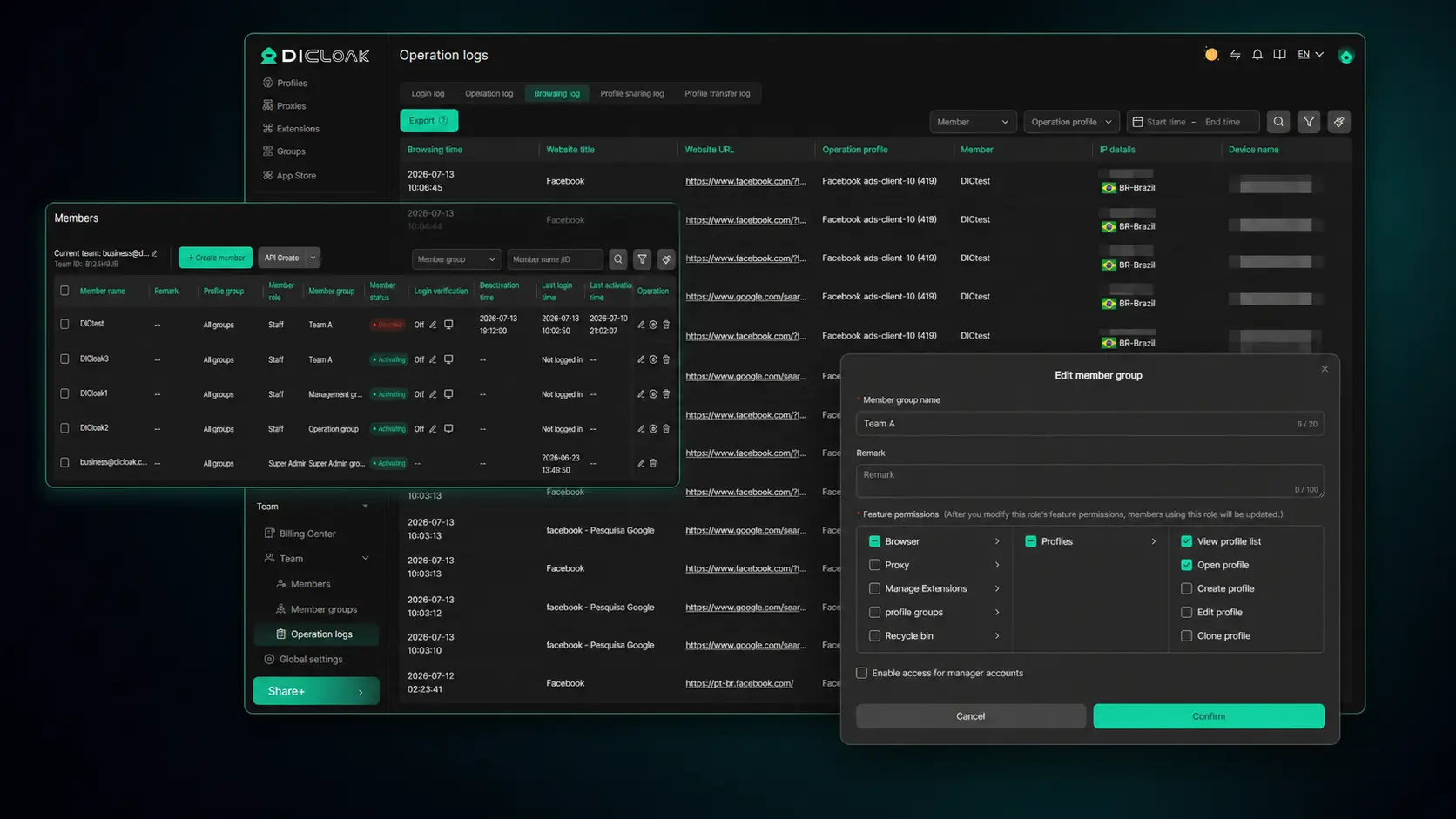
Reduce Account Suspension Risks with Unique Browser Profiles for Your Dropshipping Business
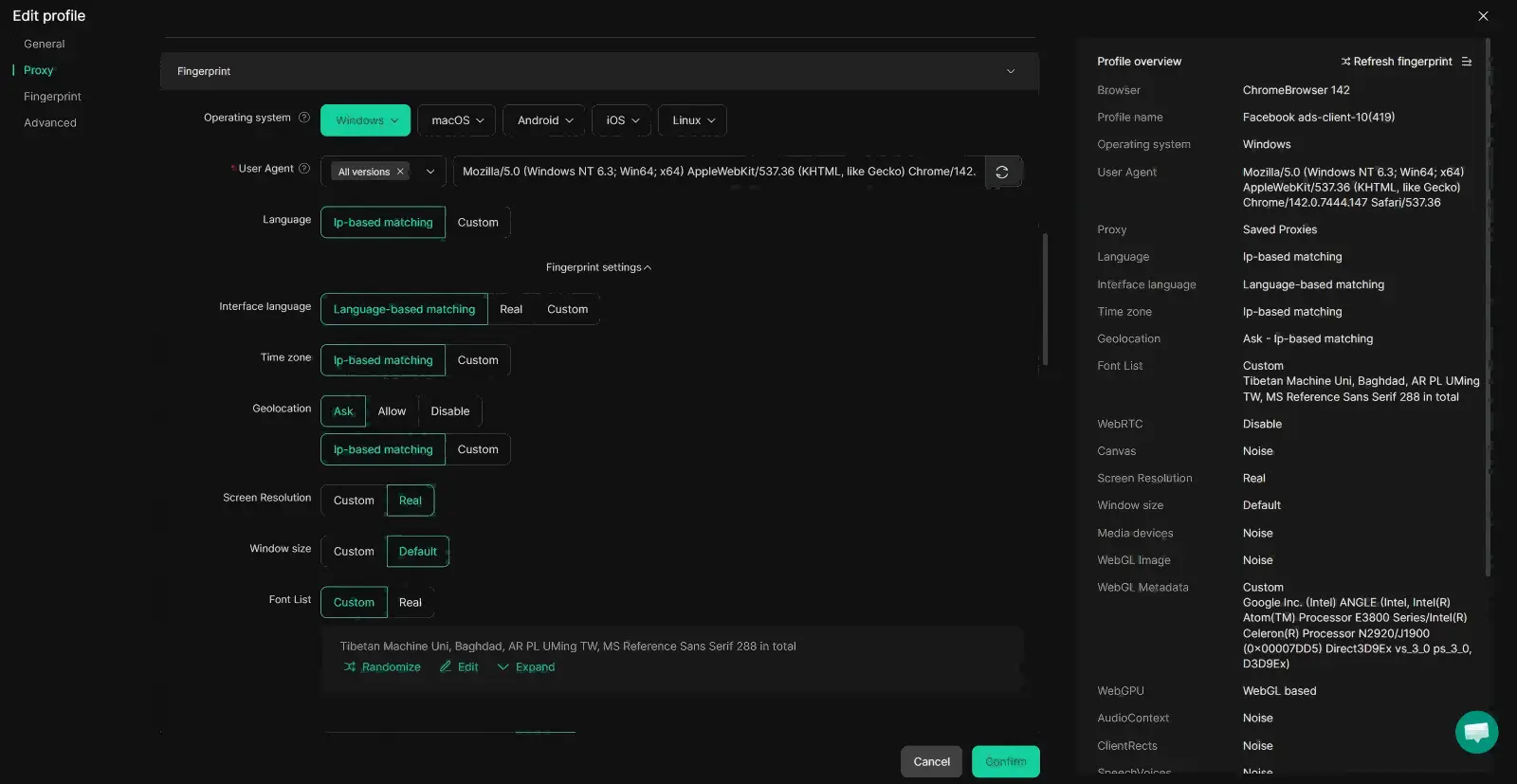
Sellers learning how to start a dropshipping business often focus on products and suppliers first, but account management becomes more important once a team gets larger. Several people signing in from different devices, mixing store sessions, or using the wrong browser Profile can create operational confusion. Sellers can use separate DICloak Profiles to keep cookies, browser storage, and store sessions separated, while team permissions can limit which members are able to open specific Profiles.
This type of setup may reduce some avoidable management risks, but it should not be treated as protection from suspension. Amazon can still take action when a seller breaks dropshipping rules, product policies, account-health requirements, or its multiple-account policy. Amazon also states that policy problems with one related selling account may affect other related accounts.
For that reason, sellers considering DICloak while learning how to dropship on Amazon should use browser Profiles as an organization and access-control layer, not as a way to bypass Amazon's systems. The stronger approach is to combine clean browser workflows with approved accounts, reliable suppliers, accurate listings, good order performance, and regular checks of Account Health. That combination may make a growing dropshipping operation easier to manage without giving sellers a false sense that any browser tool can guarantee account safety.
Frequently Asked Questions About How to Dropship on Amazon
1. Is dropshipping allowed on Amazon in 2026?
Yes. If you want to learn how to dropship on Amazon, you must stay the seller of record. Your supplier should not appear as another seller on invoices, packing slips, or packaging.
2. How much money do I need to start dropshipping on Amazon?
The cost depends on your selling plan, supplier, product, and ads. When learning how to dropship on Amazon, you can start with less money because you do not need to buy large amounts of inventory first.
3. Can I dropship from AliExpress to Amazon?
It may be possible only if the order fully follows Amazon's dropshipping rules. If you are learning how to dropship on Amazon, make sure no third-party seller name, invoice, or packaging reaches the customer.
4. Is Amazon dropshipping profitable in 2026?
It can be profitable if your product has enough margin after supplier costs, shipping, Amazon fees, returns, and ads. The key to how to dropship on Amazon profitably is checking total costs before listing a product.
5. Do I need an LLC to dropship on Amazon?
No. You do not always need an LLC to learn how to dropship on Amazon. Amazon allows individuals to register as sellers, although some sellers later form a business for tax, legal, or branding reasons.
Conclusion
Learning how to dropship on Amazon in 2026 is less about finding a shortcut and more about building a reliable system. Sellers need to follow Amazon’s dropshipping rules, choose products with enough margin, work with dependable suppliers, and keep listings, stock, and orders accurate. Amazon drop shipping can lower the need for large upfront inventory, but it still requires careful cost control and strong customer service.
For beginners asking is dropshipping worth it, the answer depends on execution. Starting small can help you test demand before putting more money into inventory, while branded dropshipping or a later move to FBA may offer more room to grow. The best approach is to treat dropshipping as a real business, not a zero-cost or risk-free model. If you understand the rules and manage each step carefully, you can make a more informed decision about whether Amazon dropshipping fits your goals.
 Web Proxy Tools
 Free Tools
 Cookie Plugin
 UA Generator
 MAC Address Generator
 IP Generator
 IP Address List
 2FA Code Generator
 World Clock
 Anonymous Check
 WebRTC Leak Test
 UUID Generator
 Free Web Proxy Site
 Proxy Checker
 FB Ad Checker
 AI Web Scraping
 Free SMM Tools
 Twitter Shadowban Checker
 Instagram Name Checker
 UTM Generator
 Username Generator
 AI Hashtag Generator
 LinkedIn Headline Generator
 Social Media Image Resizer