You want how to create a google account without confirming your phone without falling into a verification loop, wasting time with random attempts, or ending up blocked in the final step. The problem is that Google doesn't treat this flow the same way for everyone, so a method that worked yesterday may not appear on your device today.
Many people start from the misconception that there is a fixed buttonto skip the cell phone. Not quite. In some cases, the option appears; in others, the system asks for a number because of the context of the creation, the device used, the network, the age informed, and the session history.
What really helps is to understand in which scenarios the phone request is usually optional and which signs increase the chance of demand. Then it makes sense to test the right way: create on Android, adjust the age carefully, avoid "dirty" sessions and recognize when insisting only makes it worse. This goes for both those looking for how to create a gmail account without a phone number and for those who want to know if it is possible to create a google account without confirming a cell phone without improvisation.
Before trying again, it is worth separating what is myth from what usually works in practice.
When can you create a Google account without confirming your phone?

Yes, in some cases you can complete the registration without a number. But this doesn't work as a fixed rule: Google decides based on the context of the creation, the device, the network and the risk signals of the session. If the system understands that the registration looks ordinary and clean, the phone field may appear as optional.
In which situations the phone field can appear as optional
This usually happens in simple personal registration, done in a normal creation flow, without haste and without strange signs on the device or in the session. In part of the practical tests, Google shows the option to skip the phone, especially when the registration seems to be for individual use and not for repeated creation of accounts.
When Google tends to require additional verification
The phone request appears more when the system sees something out of the standard. This includes creating multiple accounts in a short time, repeating attempts in the same browser, using a newly reset device with unusual activity, switching networks during registration, or filling in data that does not match the rest of the session. A common example: you try to open an account on your computer after several previous failures, with old cookies and IP already used in other registrations. In this situation, even if the field was optional before, Google can block the final step and ask for confirmation. The most annoying point is this: not entering phone number and moving on is one thing; insisting on sessions that already seem suspicious is another. When the session is "dirty", repeating the same attempt in the same context usually worsens the block instead of releasing the registration.
The difference between not informing phone number and not being able to complete the registration
Many people mix these two situations, but they are not the same:
- Optional field: The form shows phone, but lets you tap "skip" and follow.
- Security lock : Registration stops in the middle or at the end and requires a number to continue.
- Practical sign: if the forward button exists without a phone, the step is optional; if the screen locks with verification warning, the problem is the reliability of the session, not just the field itself.
This difference helps to adjust the expectation. The next question becomes another: why does Google decide to trust some registrations and distrust others?
Why does Google ask for phone confirmation on some registrations?
Because the system tries to measure risk before releasing the account. If the registration seems common, the phone number may not even appear; if it seems dubious, the check goes up.
Preventing spam, abuse, and mass creation
The most common reason is blocking automation, disposable accounts, and batch creation. When the session is low on trust, the phone becomes an extra test to prove that there is a real person trying to complete the registration.
Account recovery and identity verification
In some cases, the number also serves as a recovery path. If you lose your password, change your device, or fail a login check, this data can help confirm that the account is still yours.
Signs that can increase the chance of the order appearing
Some signs weigh more than others:
- multiple attempts in a row on the same device or browser
- age, name, or other data filled in inconsistently
- session with confusing history, such as logins and exits in sequence
Understanding this reduces error and frustration. With this logic in mind, it's easier to test the right step-by-step without forcing useless attempts.
How to create a Google account without confirming phone in step by step

If the phone request is not locked to your session, you can complete the registration without inventing a number or forcing an awkward path. The point here is simple: follow the clean flow, fill in coherent data, and stop as soon as the system turns the phone into a fixed requirement.
Start with the standard Google Account creation flow
- Open the official Google Account creation page and fill in your name, date of birth, and gender without improvisation. Incoherent or hastily typed date usually changes the flow.
- Choose a simple username. If the system refuses, change only what is necessary. Testing dozens of variations in the same session can trigger more checks.
- Create a strong password and move on to the next screen without coming back all the time. If a red error appears in the form, correct the exact field and proceed again. Do not reload the page.
If the phone field is optional, skip and forward
- If the screen shows phone without a mandatory notice, look for "Skip" or leave the field blank and tap next. The practical sign is this: if the registration continues without blocking the next screen, the phone was optional.
- Review the next screen calmly. Sometimes the system accepts skipping at the first moment, but asks for the number again before completion.
- If a message comes up saying that the number is needed to verify identity, stop. Insisting on filling in and deleting the field rarely helps.
Try creating from the Gmail app on your phone if your browser gets stuck on the order
- If the phone has become mandatory in the browser, test the Gmail app on your cell phone, under "Add another account" > Google. On some devices, the app flow comes out cleaner than the browser.
- On Android, this test usually makes more sense because the system is already integrated with the Google Account. On iPhone it can also work, but the app can redirect to a web step similar to the browser.
- If the app asks for phone number right at the beginning, don't repeat it five times in a row. This usually only confirms that that session has already entered extra review.
Review recovery data before finalizing
- If the phone was skipped, see if the option to add recovery email appears. If you have an email of yours already active, it's worth putting it. This helps with access later.
- Read the final screen before accepting the terms. The common mistake here is to tap fast and not realize that the phone has returned as a required field.
- Finished without a cell phone? Log out and log in again once to confirm that the account opened normally. If the system asks for a phone number anyway, then the type of attempt changes and it is worth treating it separately.
What to do if Google asks for phone anyway?

If the check appeared after the walkthrough, don't force it. The safest way is to reduce risk signals and try again calmly. Insisting on the same session usually makes it worse, because Google can read the repetition as abnormal behavior.
Stop retrying in a row
If the phone request appeared 2 or 3 times in a row, stop for a few hours or until the next day. Continuing to click, go back and re-register on the same device, on the same network and in the same browser usually traps the session in the same risk pattern. If you want to understand how to create a google account without confirming your phone, this is the point where most people make mistakes: they try "by force" and only increase the chance of blocking.
Switch the device or use the official app
- Try another cell phone, preferably with Android and personal account already used normally.
- If it's through the browser, use a clean profile and a regular browser, without weird extensions.
- Try it from the official Google app or from the Android add account screen.
Review age, name, and completed information
Incoherent age, randomly typed name and data changing with each attempt usually trigger a new check. Correct what is inconsistent, but without inventing information just to "pass".
Accept that in some cases confirmation will be mandatory
Sometimes, there is no shortcut. At this time, forcing dubious methods tends to get more stuck.
- Use a real number that you currently have access to.
- Finish the registration and save the account recovery soon after.
- If it fails again, stop and review the most common errors before the next attempt.
What errors make Google ask for verification more often?
If in the previous attempt the phone request appeared out of nowhere, the problem is usually less in the registration button and more in the context of the session. Google tends to increase the check when it sees repetition, strange data or history mixed in the same browser.
Create multiple accounts in no time in the same environment
| Situation |
What the system can interpret |
Safer action |
| 3 or 4 registrations in a row on the same device or browser |
repetitive pattern, similar to automation |
wait a few hours and try later |
| Change only the name and repeat almost the same flow |
Mass attempt |
change the context of the session and do not insist on sequence |
| error, reload, go back and resend multiple times |
unstable or suspicious session |
close the session and start again calmly |
If you insist on the same environment right after failing, the chance of falling into the check usually goes up, not down.
Using inconsistent or unlikely data
Incompatible age, random name and date without coherence draw attention quickly. Those looking for how to create a google account without confirming phone number usually make a mistake here: fill in in a hurry, correct in the middle and leave signs of inconsistency. If the data is simple and credible, the creation tends to flow better.
Mix sessions, cookies and unorganized logins
Creating a new account in the same browser where there are already several logged in accounts confuses the session history. This weighs even more if there have been failed attempts before. This is where separating browsing profiles starts to make a practical difference, especially for those who work with more than one Google Ads account.
How to use DICloak to separate work profiles when operating more than one Google Ads account
If you also work with several Google Ads accounts, the problem after registration is usually another: mixed session. This is not for how to create a google account without confirming phone number, nor does it change Google's decision about asking for cell phone. The fit here is only organizational. The scope is in the access by browser profile and network connection, not in the Google account itself.
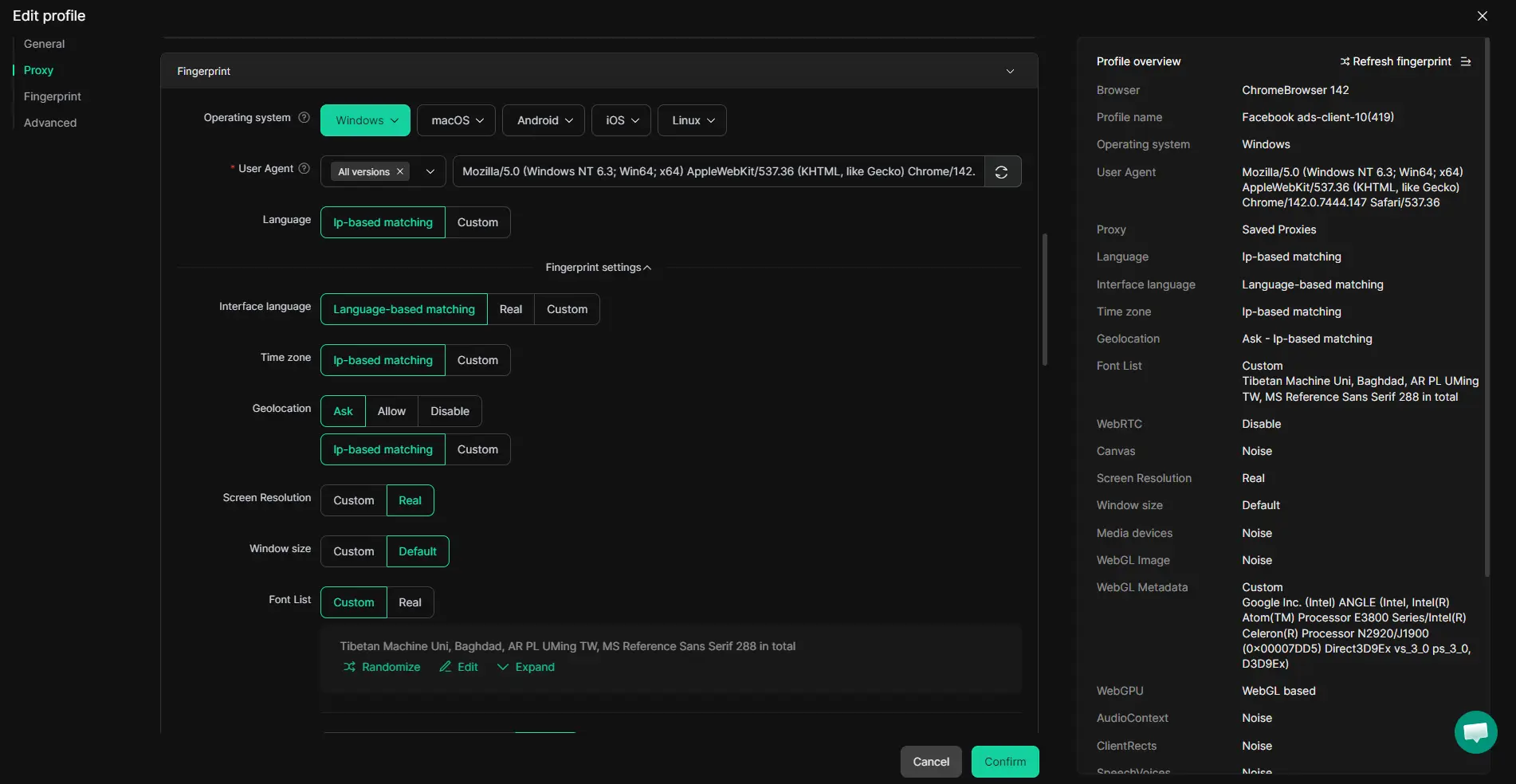
Use isolated profiles and configure browser signals for each access routine
In a real flow of a small agency, an operator can create a profile in DICloak for each Google Ads account or client and store name, group, and notes there. Then, he adjusts the interface language, time zone, user agent, and geolocation in a way that is consistent with that access routine. This reduces the mess of opening everything in the same Chrome and losing which session belongs to which job. The point here is environment separation; there is no promise of acceptance, minor review, or any effect on the Google Account registration.
Add your own proxy to each profile and test the connection before use
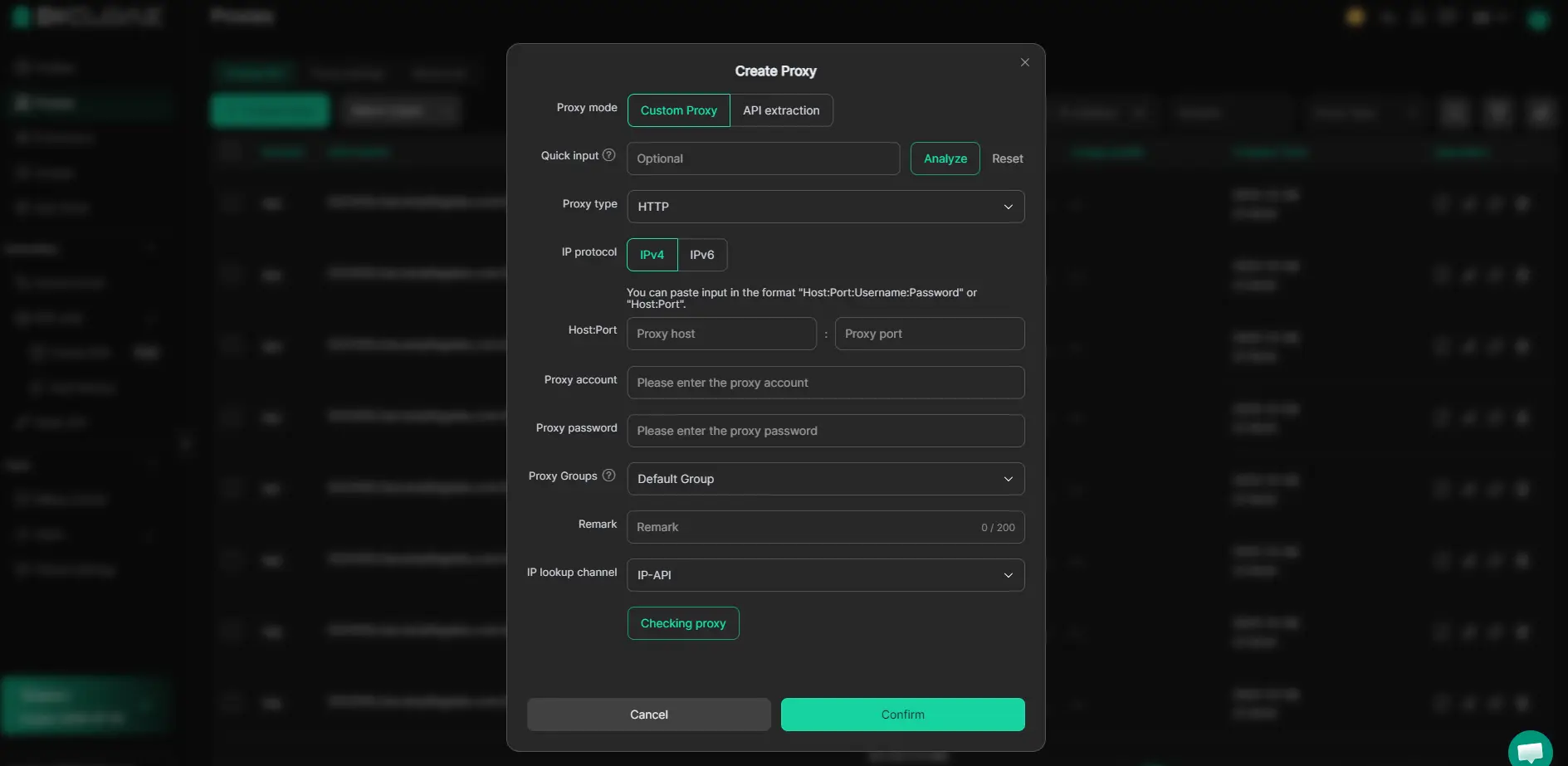
If that routine requires a specific connection, the operator can edit the profile, insert his own proxy with host, port, and credentials, test and check output IP, country/region, and time zone before opening the session. This helps keep each work environment consistent on a day-to-day basis, without improvisation. The proxy is the user's own; DICloak only applies and tests this configuration in the profile.
If even with this organization the doubt remains, the next decision is simple: insist without a phone or confirm the account right away.
Is it more worthwhile to insist without a phone or confirm the bill right away?
If you've tried more than 2 or 3 times and the cell phone request keeps coming back, stopping insisting is usually the most practical choice. After the profiles and separate sessions part, the decision here is simple: spend more time trying without a phone or confirm soon and continue with a stable account.
When it makes sense to try without a phone
| Situation |
Try without phone |
Confirm soon |
| Simple personal use |
It makes sense if the registration is punctual, on a common device and without repeated errors |
It may be overkill if you just want an extra basic account |
| Work account or continuous access |
It can become a waste of time if the system has already marked the creation as sensitive |
Best way if you're going to use Gmail, Drive, YouTube, or Google Ads for longer |
| Verification message reappears |
Low chance of success signal in this session |
Confirms and ends the lock with less friction |
If the attempt is clean and occasional, it is still worth testing once calmly.
When to confirm the phone saves time
If the block is repeated, insisting usually worsens the session and increases the time lost. Confirming also helps in recovering the account later, which weighs even more if you are going to use the account for months.
How to choose the most practical option for your case
Do a simple math: 10 minutes of retry may be worth it; 40 minutes of repeated error may not. If the account is going to store files, receive login from services or become a main account, it is wiser to confirm and then focus on maintaining this stable access.
How to keep your new account more stable after creation
If you were able to create the account without a cell phone, don't force heavy use on the same day. The focus now is on reducing verification requests, loss of access, and alerts for unusual activity.
Add reliable recovery ways
Right after entering, register a recovery email you already use and review the security options. If the session falls in the first few days, this step usually weighs more than filling out the entire profile.
Avoid sudden changes on the first accesses
- Use the same device and the same network for a few days.
- Avoid logging in and out of the account multiple times at the same time.
- Don't open Gmail, Drive, YouTube, and Ads in sequence right at the beginning.
Complete basic account information little by little
Complete the basics without rushing.
- Add name and photo at different times.
- Adjust language and preferences before using sensitive services.
- Start with Gmail and work your way up.
FAQs about creating google account without confirming phone number
Can I create a Google account without confirming phone in 2026?
Yes, in 2026 it may still happen that the phone field appears as optional. This usually varies depending on the device, the network used, the age informed, and the volume of registration attempts. In some flows of how to create a google account without confirming phone, Google lets you move forward without SMS. In others, verification is mandatory.
Is creating a Gmail account without a phone number the same thing as creating a Google account without a phone?
In practice, yes. When you create a Gmail, you are also creating a Google Account. Therefore, the process is usually almost the same. If you are looking for how to create a gmail account without a phone number, you will notice the same basic steps: name, date of birth, username, password and, sometimes, request for verification.
Is using a temporary or fake number to confirm the account a good idea?
No. Temporary or fake numbers can fail at the time of the code and still bring problems later. If Google asks for new verification, you may lose access. In addition, using inconsistent data hinders account recovery. For those looking for how to create a google account without confirming a phone number, this shortcut usually generates more risk than solution.
Can you recover a Google account created without a phone?
Yes. But account security needs to be better elsewhere. Enter a valid recovery email, create a strong password, and save the creation date, names used, and common account activity. These signals help Google recognize that the account is yours, even without a linked number.
Does creating multiple Google accounts without confirming phone number increase the chance of being blocked?
Yes, this can increase the chance of extra checks. Many attempts in a row, on the same browser, IP, or device, can trigger automatic protection. The result can be an SMS request, captcha, or temporary block. To reduce this risk, avoid mass registrations and do not repeat quick actions in the same environment.
Now that you know the alternatives and the precautions involved, the next step is to choose the most appropriate method for your case and follow the process carefully to avoid blocks or extra verification requests. If your priority is more privacy and access control, it is worth testing a solution that helps manage this process more securely and consistently. Try DICloak for free
 Web Proxy Tools
 Free Tools
 Cookie Plugin
 UA Generator
 MAC Address Generator
 IP Generator
 IP Address List
 2FA Code Generator
 World Clock
 Anonymous Check
 WebRTC Leak Test
 UUID Generator
 Free Web Proxy Site
 Proxy Checker
 FB Ad Checker
 AI Web Scraping
 Free SMM Tools
 Twitter Shadowban Checker
 Instagram Name Checker
 UTM Generator
 Username Generator
 AI Hashtag Generator
 LinkedIn Headline Generator
 Social Media Image Resizer












-01-v13.png?x-oss-process=image/interlace,1/format,webp/quality,q_75)