Effective data extraction in 2026 requires more than a functional script; it demands a sophisticated network architecture to navigate the increasingly complex security layers of the modern web. Identifying the best proxies for scraping is a technical necessity for any operation looking to manage geo-restrictions, address advanced behavioral security measures, and maintain high success rates. Proxies serve as the essential intermediary layer that decouples your scraping infrastructure from the target website’s defensive mechanisms, helping automated requests more closely resemble legitimate user traffic. In 2026, the threshold for detection has lowered significantly due to the integration of AI-driven traffic analysis, making careful proxy selection critical to project stability.
Why Proxies are Mandatory for Modern Web Scraping
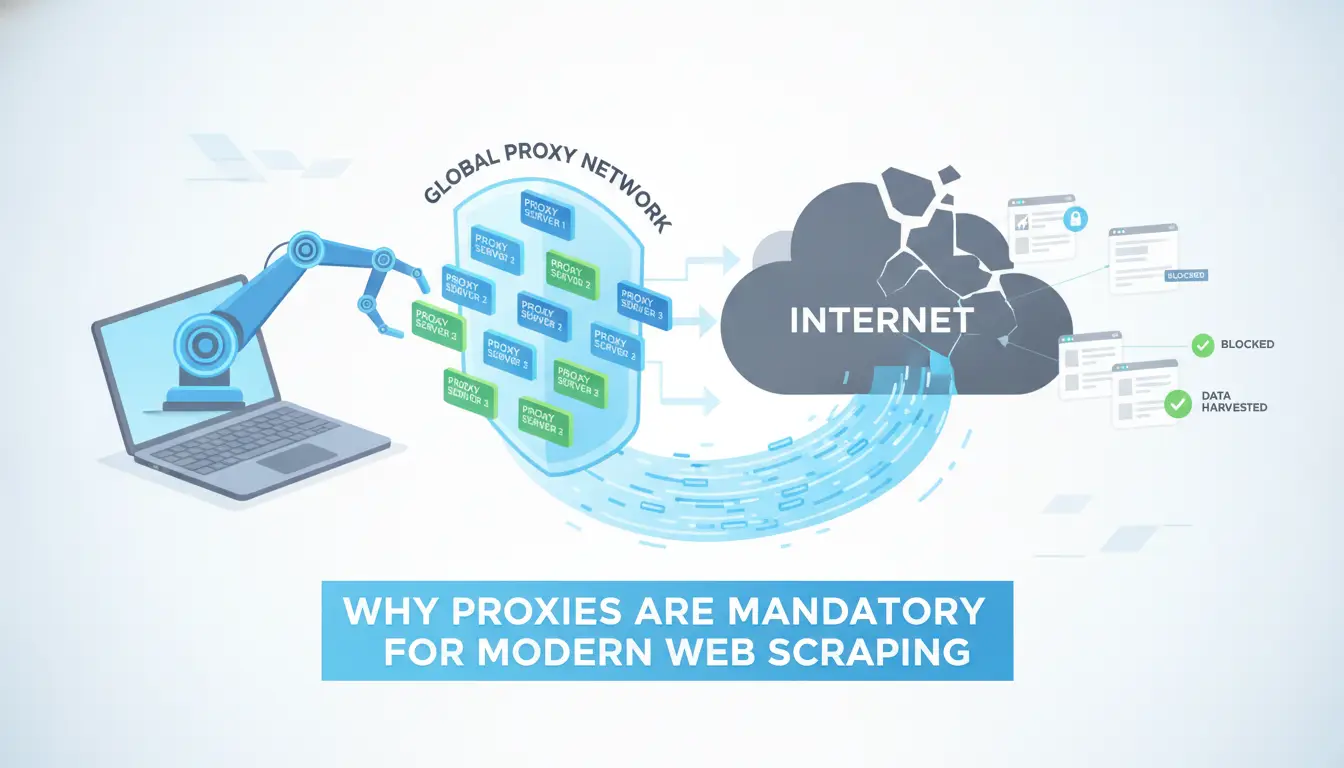
In the current technical environment, a proxy server acts as a critical intermediary between your scraping engine and the target server. By routing requests through various IP addresses, you obfuscate your origin, which is the primary defense against site-wide bans. Without this intermediary layer, a single IP address making thousands of requests per second would be flagged and blocked within milliseconds by modern firewalls. However, the role of the proxy has evolved. It is no longer just about IP rotation; it is about identity management across the OSI model.
In 2026, target websites use sophisticated TLS (Transport Layer Security) fingerprinting to identify the underlying library used by a scraper (e.g., Python's requests or Go-http-client). Proxies, particularly those that offer protocol-level obfuscation, help in breaking these patterns. Furthermore, they allow developers to simulate requests from specific geographic regions, which is mandatory for accessing localized content or pricing data that varies by territory. They are also the first line of defense against CAPTCHAs and behavioral challenges like Cloudflare’s __cf_bm cookie, which is used specifically to distinguish between humans and bots.
Scraping Friction Points
When executing a scraping project in 2026, several technical hurdles—friction points—can halt data collection. Proxies are the primary tool for mitigating these issues:
- Rate Limiting at the Network Layer: Servers often limit the number of requests a single IP can make within a timeframe. Proxies allow you to distribute these requests across a massive pool, keeping each individual IP under the threshold. In 2026, many targets have moved toward "adaptive rate limiting," where thresholds change based on the perceived reputation of the IP’s Autonomous System Number (ASN).
- IP Blocks and Subnet Flagging: When a server identifies bot behavior, it blacklists the IP. Worse, it may blacklist the entire /24 subnet. Using a diverse proxy pool ensures that a single block does not terminate the entire scraping operation.
- Session Persistence and Timeouts: Maintaining a consistent session across multiple requests is difficult when IPs are rotating. Sophisticated proxy management allows for session stickiness, where the same IP is retained for a specific duration or until a task is completed.
- Geo-Fencing and Regional Bias: Many targets, especially in e-commerce and SERP, serve different data based on the visitor's IP location. Proxies provide the necessary regional presence to see the "local" version of a site.
- Behavioral CAPTCHA Triggers: High-frequency requests often trigger visual or behavioral challenges. High-anonymity proxies, such as residential or mobile types, carry a higher trust score, making them less likely to trigger these challenges compared to datacenter IPs.
- Header and Cookie Validation: Modern sites validate cookies like li_gc (for consent) or __cf_bm. Proxies must be used in conjunction with correct header management to ensure these cookies are not flagged as being generated from a suspicious origin.

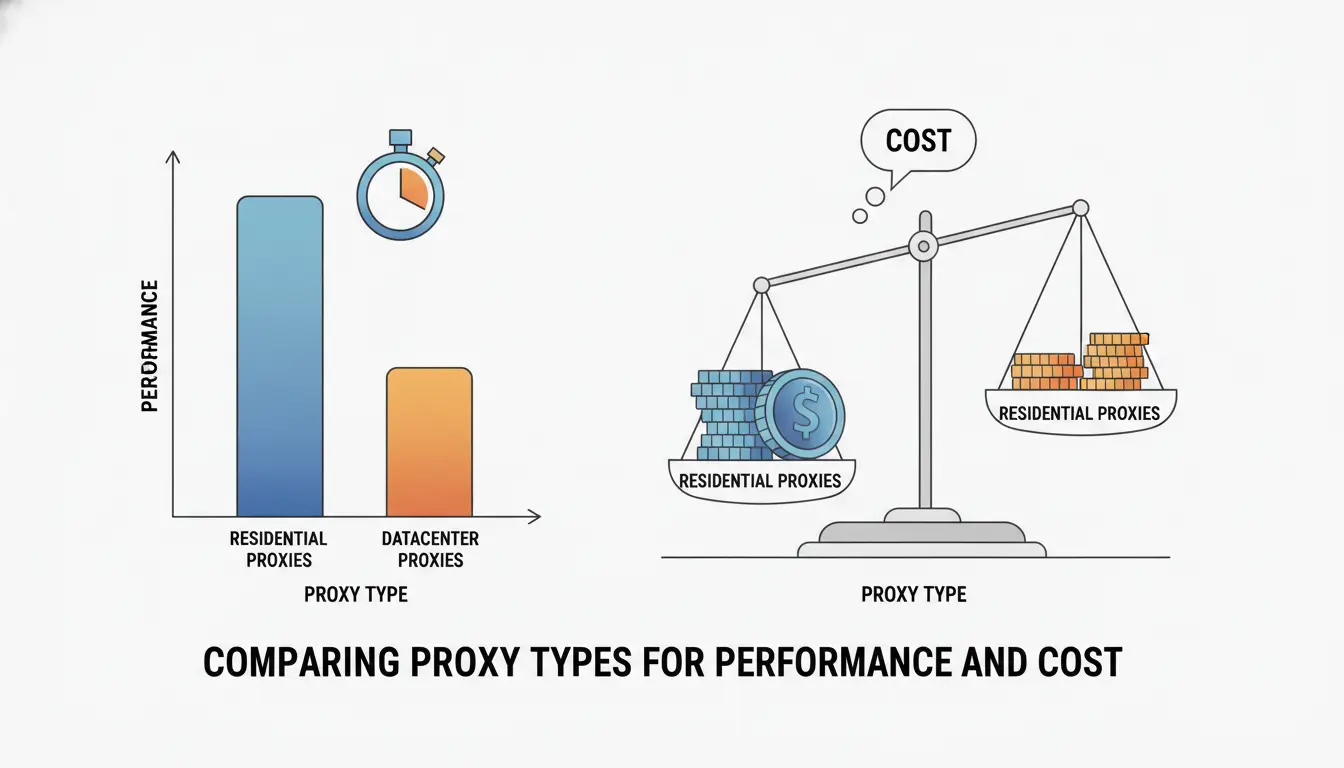
Comparing Proxy Types for Performance and Cost
Selecting the best proxies for scraping involves a trade-off between speed, anonymity, and budget. In 2026, the market has stabilized into four primary classes of proxies, each serving distinct technical requirements.
| Proxy Type |
IP Source |
Primary Advantage |
Risk Level |
2026 Entry Price |
| Residential Proxies |
Real home devices |
175M+ IPs, High Anonymity |
Low (Hard to detect) |
$2.5/GB |
| Datacenter Proxies |
Cloud/Server hubs |
High-speed, Cost-effective |
Medium (Easily flagged) |
$0.7/IP |
| Mobile Proxies |
3G/4G/5G/6G devices |
20M+ IPs, Hyper-localized |
Very Low (Highest trust) |
$3.5/GB |
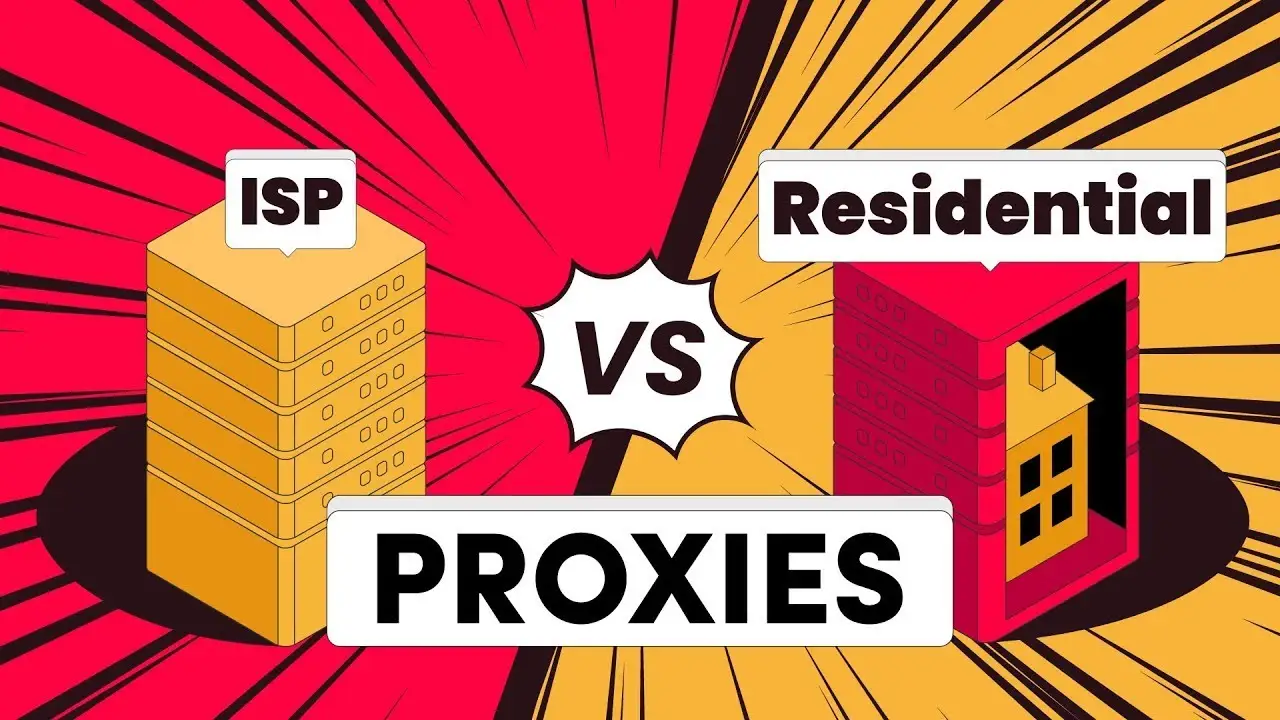
| ISP Proxies |
Trusted ASNs |
Static, Stable Performance |
Low (Residential rep) |
$1.2/IP |
While datacenter proxies offer the highest throughput, residential proxies provide the highest success rates for difficult targets. Mobile proxies represent the premium tier for tasks where localized accuracy is non-negotiable. It depends on the target's security maturity; a low-security target can be efficiently scraped using datacenter IPs, whereas a high-security target like a social media platform or a major retailer will necessitate residential or mobile IPs.
Deep Dive: Residential Proxies and High-Anonymity Targets
Residential proxies are often considered the preferred choice for high-complexity scraping tasks in 2026. These IPs are sourced from real user devices, meaning they carry the reputation of a standard home internet connection. For targets with aggressive anti-bot measures, such as Google or Amazon, residential proxies are often used because they are registered under consumer Internet Service Provider (ISP) ASNs.
The current pricing for residential proxies starts at approximately $2.5/GB. This consumption-based model reflects the value of the 175M+ IP pool. Because these IPs are not part of known datacenter ranges, they are more difficult to distinguish from organic traffic. However, one must remain skeptical of "unlimited" residential IP claims. In reality, residential IP pools may suffer from diminishing returns; as a pool grows, the percentage of "high-quality" (low latency, high uptime) IPs often stays constant, meaning that a larger pool doesn't always translate to a better success rate if the IPs are poorly filtered.
Use Case: E-commerce Price Monitoring
In a large-scale e-commerce monitoring project, the goal is often to track price fluctuations across thousands of SKUs on platforms like Amazon or Walmart. These sites use sophisticated fingerprinting, such as checking for the sec-ch-ua (User-Agent Client Hints) header to see if the browser version matches the expected behavior of the hardware. A residential proxy pool is often chosen here because:
- ASN Diversity: The pool includes IPs from thousands of different ISPs. Sites are hesitant to block a residential ASN because it risks blocking legitimate customers.
- Anonymity at Scale: Even if a single residential IP is flagged due to an improper __cf_bm cookie, the provider’s rotation logic swaps it for another from the millions available, maintaining the scraping flow without manual intervention.
- Regional Precision: E-commerce sites often show different prices to users in different ZIP codes or cities. Residential proxies allow for precise city-level targeting to capture these variations.
When to Choose Datacenter or ISP Proxies
Efficiency and cost are the primary drivers for choosing datacenter proxies. Starting at $0.7/IP, these are significantly cheaper than residential options. They are hosted in server farms and offer lower latency in localized clusters, making them ideal for scraping targets that do not employ heavy IP-based filtering.
However, the major downside of datacenter proxies is the inevitable subnet flagging. Since these IPs come from known ranges owned by cloud providers (like AWS, DigitalOcean, or Hetzner), it is trivial for a target website to block an entire range of 256 IPs (a /24 subnet) if they detect a single bot.
The Rise of ISP Proxies
In 2026, ISP proxies have become the preferred middle ground. These are static IPs hosted in datacenters but registered under the ASNs of legitimate internet service providers. They combine the speed of a datacenter connection with the reputation of a residential IP.
- Choose Datacenter Proxies if you are performing high-volume scraping on low-security targets. If the site does not block based on IP ranges and you need to move terabytes of data quickly, the $0.7/IP price point is attractive.
- Choose ISP Proxies for static needs on demanding platforms. If you need a consistent IP address to maintain a session (e.g., logging into an account to scrape personal dashboard data) but need that IP to look like a home connection, ISP proxies at $1.2/IP provide the necessary stability.
- Choose Dedicated ISP Proxies ($2.5/IP) when performance and exclusivity are important. These are not shared with other users, reducing risks from "bad neighbor" effects—where another user’s aggressive scraping gets the IP banned—impact your project.
The Role of Mobile Proxies in Hyper-Localized Scraping
Mobile proxies utilize IP addresses assigned by mobile carriers to cellular devices (4G, 5G, and the emerging 6G networks). With a pool of over 20M+ mobile IPs available in 2026, these are among the most difficult proxies to detect. This is due to the technical nature of mobile networking: Carrier-Grade NAT (CGNAT).
In a mobile network, hundreds or even thousands of real users may share a single public IP address at any given time. If a website blocks that mobile IP, it risks blocking thousands of legitimate human users. Consequently, mobile IPs are generally considered to have reliable reputation scores. At a starting price of $3.5/GB, they are the most expensive option and should be reserved for high-value targets.
- Scraping mobile-only app APIs.
- Managing scraping tasks on platforms that require high-reputation IPs.
- Testing localized ad delivery that only appears to mobile users on specific carrier networks.
Managing Your Proxy Infrastructure: Rotation and Protocol Choice
Acquiring proxies is only the first step; managing them effectively determines the longevity of a scraping project. Failure to manage rotation or protocols often leads to "leaking" the scraper's true identity, rendering even the most expensive residential IPs ineffective.
Dedicated vs. Shared Proxies
- Dedicated Proxies: You have exclusive use of the IP. This prevents unwanted consequences from other users.
- Shared Proxies: Multiple users utilize the same IP pool. While more affordable, they carry a higher risk of being pre-blocked on popular targets like LinkedIn or Google.
Protocol Choice: HTTP/HTTPS vs. SOCKS5
- HTTP/HTTPS Proxies: These operate at the application layer. They are optimized for web traffic and are easy to integrate. However, they can sometimes inject headers that reveal the use of a proxy unless specifically configured for "Elite" or "High Anonymity" status.
- SOCKS5 Proxies: These operate at a lower level (Layer 5) and do not interpret the traffic. They support any protocol (TCP/UDP) and offer better performance for data-intensive tasks. Importantly, SOCKS5 handles the TCP handshake differently than HTTP; it provides a "cleaner" connection that doesn't modify the data packets, making it harder for advanced firewalls to detect the proxy intermediary through packet inspection.
Maintenance Tasks Checklist
- Rotating User Agents: Never use the same User-Agent string across different proxy IPs. You must match the User-Agent to the expected device type of the proxy. If using a mobile proxy, the User-Agent must be from a mobile browser.
- Managing Headers: In 2026, you must handle "Client Hints" (sec-ch-ua). If your proxy is from a German ISP, but your Accept-Language header is set to en-US, the inconsistency will trigger a manual review or an immediate block.
- Implementing Rate Limiting: Even with a 175M+ IP pool, sending 100 requests per second to a single domain from a single IP is a recipe for failure. Distribute the load across the pool to keep per-IP frequency low.
- IP Quality Pruning: Not all IPs in a paid list are equal. You must implement a feedback loop in your code that identifies IPs with high latency or frequent 403/429 errors and prunes them from your active rotation.
Solving the Session and Profile Isolation Problem
A significant challenge in 2026 is maintaining session integrity across multiple accounts or browser profiles. Standard scraping scripts often leak information through browser fingerprints, cookies, or inconsistent headers, which can link different "isolated" requests back to a single source. Even if the IP address changes, a consistent canvas fingerprint or WebGL signature will reveal that the same machine is behind the requests.
This is where specialized tools like DICloak become essential. While proxies handle the IP layer, DICloak handles the environment layer. For workflows that require distinct browser profiles—such as managing multiple social media accounts or scraping authenticated e-commerce dashboards—DICloak can be used to isolate:
- Cookies: Ensuring no tracking data (like li_gc or session IDs) persists between different scraping sessions.
- Fingerprint Isolation: DICloak allows each browser profile to have unique fingerprint settings, including canvas fingerprint, hardware concurrency, and audio context.
- Environment Parity: Within DICloak, users can configure their own proxies to ensure that each isolated profile operates with a unique IP that matches its hardware fingerprint.
This multi-account workflow is important for reducing account-linking risks. In 2026, using a unique IP from a premium provider without also using a tool like DICloak to isolate the browser profile may result in anti-bot systems connecting different "IPs" into a single "identity" based on fingerprint data. By combining DICloak’s profile isolation with user-provided proxies, you can help prevent linking or detection across multiple browser sessions.
Coding vs. No-Code Scraper Integration
The decision to build a custom scraper or use a ready-made solution depends on the engineering resources and the complexity of the target.
Custom Coding (The Technical Approach)
Developers typically use Python (with Playwright or Selenium) or Go to build bespoke scrapers. This provides flexible control over the TCP handshake, header management, and custom rotation logic.
Technical Detail: When coding custom scrapers, you must handle logic such as solving CAPTCHAs, managing the __cf_bm cookie rotation, and ensuring TLS fingerprints are randomized. This approach is cost-effective for long-term, large-scale projects but has high maintenance costs as target websites update their defenses.
Scraper APIs (The "Ready-Made" Approach)
- Proxy Rotation: Accessing various pools (Residential, Mobile) manually or automatically.
- Web Unblocker Integration: Solutions that retry requests with different headers or proxies until success is achieved.
- JavaScript Rendering: Handling heavy React or Vue-based sites without the developer needing to manage a headless browser fleet.
Decision Framework:
- Build a Custom Scraper: Use this if you have a highly specialized target, require low-level protocol control (SOCKS5), or are operating at a scale where the $0.25/1K cost of an API becomes prohibitive.
- Use a Scraper API: Use this if you need to get a project running quickly, are targeting sites with complex JavaScript/CAPTCHAs, or want to offload the daily task of proxy rotation to a provider.
Evaluating Proxy Providers in 2026
Selecting a provider requires an assessment of your project’s scale and the level of technical support needed.
- Enterprise-Grade: These providers offer large IP pools, technical support, and advanced features suited for corporate data gathering and model training where uptime is critical.
- Small Business/Individual Focused: These providers offer lower entry costs and simplified interfaces, suitable for smaller projects or for developers who need specific, smaller lists of IPs without the overhead of enterprise contracts.
The Risks of Free Proxy Services
It is important to state clearly: free proxy services are a significant risk. In 2026, free proxies are almost universally overused, leading to failure rates exceeding 90%. More importantly, they often lack basic security. Many free proxies are "honey pots" designed to capture the data being scraped. Using a free list often results in more time spent debugging connection errors and dealing with data leaks than actually collecting data. A professional project should always budget for paid, reliable proxies to ensure data integrity and project success.
Frequently Asked Questions About Scraping Proxies
How many proxies do I need for a large-scale project?
The number of proxies required is proportional to the request volume and the target's rate limits. If a target allows 10 requests per minute per IP, and you need to scrape 1,000,000 pages per day, you would technically need approximately 70-100 rotating IPs running constantly. However, because of IP "burnout" and potential blocks, it is safer to have access to a large pool of rotating IPs, where rotation happens automatically at the gateway level.
Is a proxy better than a dedicated server for IP rotation?
Yes. While a dedicated server provides a stable environment, it usually has a limited number of static IP addresses. A proxy service provides access to a massive, geographically diverse pool of IPs that can be rotated with every request. For scraping, the diversity and reputation of the proxy pool are generally more valuable than the static nature of a single server's IP address.
Which proxy location is best for US-based e-commerce?
For US-based targets like Amazon, Walmart, or Target, proxies located within the United States are important to ensure you see the correct localized pricing and inventory. Germany is another well-used location for European e-commerce scraping. In 2026, these two locations remain among the most stable and have high densities of residential and mobile IP pools.
Can I use SOCKS5 for web scraping?
SOCKS5 is recommended for data-intensive scraping. It is generally faster than HTTP proxies because it does not interpret the web traffic, providing a lower-latency connection. It is especially useful for addressing advanced firewalls that look for the specific header injections common in standard HTTP proxies.
Moving Toward a Stable Scraping Architecture
Starting a scraping project in 2026 requires a structured approach to ensure the architecture remains stable. Avoid the "conclusion" mindset; instead, think of scraping as a continuous cycle of auditing and optimization.
2026 Scraping Audit Checklist
Before launching your next scraping operation, perform this technical audit:
- IP Pool Validation: Verify that your provider offers a pool large enough for your scale. Check the ASN reputation to ensure they aren't from flagged subnets.
- Protocol Verification: Ensure your scraping script and the proxy provider both support SOCKS5 if you require lower-level connection control.
- Rotation Strategy Test: Confirm that your proxies can be rotated per request for stateless scraping or per session for account-based tasks.
- Geo-Targeting Check: Test that the proxies are correctly identifying as being in the target region (e.g., USA, Germany, Japan) using an IP lookup API before hitting the target site.
- Profile Isolation Setup in DICloak: For any task involving persistent sessions or browser-based automation, set up unique profiles in DICloak to help isolate cookies and fingerprints. This helps ensure the proxy is not linked to a previously banned hardware ID.
- Cost-to-Success Analysis: Monitor your bandwidth. If using residential proxies at $2.5/GB, ensure the success rate justifies the cost. If the target has low security, consider shifting to ISP proxies at $1.2/IP to save on data costs.
- Header and Cookie Consistency: Audit your automated requests to ensure that sec-ch-ua headers and cookies like __cf_bm are consistent with the proxy’s geographic location and device type.
By following this technical framework and selecting proxies based on your specific target's defenses, you can build a data collection pipeline that is both resilient and efficient in the complex web environment of 2026.
 Web Proxy Tools
 Free Tools
 Cookie Plugin
 UA Generator
 MAC Address Generator
 IP Generator
 IP Address List
 2FA Code Generator
 World Clock
 Anonymous Check
 WebRTC Leak Test
 UUID Generator
 Free Web Proxy Site
 Proxy Checker
 FB Ad Checker
 AI Web Scraping
 Free SMM Tools
 Twitter Shadowban Checker
 Instagram Name Checker
 UTM Generator
 Username Generator
 AI Hashtag Generator
 LinkedIn Headline Generator
 Social Media Image Resizer