Affiliate marketing is a massive global business today. By 2026, the industry is worth over $17 billion worldwide. Big companies like Amazon, Target, Walmart, and thousands of software brands rely on it to get new customers every day.
But is affiliate marketing legit? Yes, it is a completely legal and real business model. It allows regular people to earn money by promoting products they like. However, the online world is also full of bad actors and false promises. To succeed in 2026, you must know how to separate real opportunities from dangerous traps.
In this complete guide, we will break down how affiliate marketing works in 2026. You will learn how to stay safe, follow advertising laws, find trusted programs, and build an honest online business.
Why Do People Question the Legitimacy of Affiliate Marketing?
Common misconceptions about affiliate marketing
Many people wonder if affiliate marketing is actually a real job. A lot of beginners think it is a get-rich-quick scheme. They see ads on social media showing young people sitting on tropical beaches with expensive laptops. These ads claim you can make thousands of dollars a day while you sleep with zero effort.
This gives people the wrong idea. Real affiliate marketing is not a magic money button. It is a performance-based sales business. It requires real work, careful planning, and patience.
Another common myth is that you have to spam your friends and family with buying links. Professional affiliate marketers do not spam anyone. Instead, they build helpful websites, write product reviews, or create informative videos for people who are already looking for advice.
How past scams have shaped public perception
The bad reputation of affiliate marketing comes from years of online scams. In the past, dishonest people used dirty tricks to make a quick buck. Some created fake health review websites to sell useless pills. Others used misleading countdown timers to force people into buying cheap items.
There were also pyramid schemes that tried to hide under the name of affiliate marketing. In a pyramid scheme, you only make money by recruiting new members, not by selling real products. Because millions of internet users lost money to these tricks, public suspicion remains high today. When people see an affiliate link online, they naturally wonder if someone is trying to trick them.
The role of misinformation in affiliate marketing doubts
Misinformation on social media makes this problem worse. Today, many self-proclaimed experts sell expensive digital courses. They show fake earnings screenshots on TikTok or Instagram to impress beginners. They promise that buying their $997 course will guarantee instant financial freedom.
When beginners buy these low-quality courses and fail to make money, they get frustrated. They assume that the entire affiliate marketing industry is a fraud. The truth is that the industry is real, but the fake gurus selling instant wealth are not. Success requires learning real skills like search engine optimization (SEO), market research, and clear writing.
What Makes Affiliate Marketing Legit or Fraudulent?
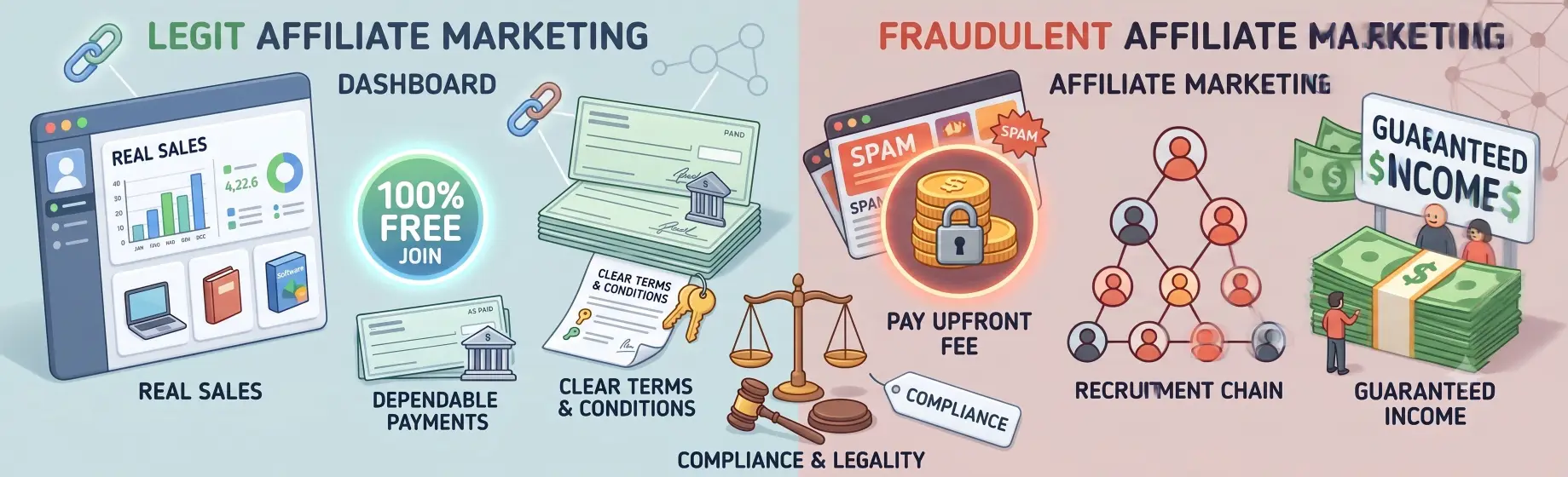
Key characteristics of legitimate affiliate programs
It is very easy to spot a legitimate affiliate program once you know what to look for. Here are the main signs of a real program:
- 100% Free to Join: A real affiliate program will never charge you an application fee or a monthly membership fee.
- Real Products or Services: The brand sells actual physical goods, useful digital software, or real services that people need.
- Clear Terms of Service: Legitimate networks explain their cookie duration (such as 30 days), payout schedules, and commission rates in simple language.
- Transparent Dashboard: You get a secure dashboard where you can track your clicks, sales, and pending payouts in real time.
- Dependable Payments: Established programs like Amazon Associates, ShareASale, or CJ Affiliate pay their affiliates on time every month via bank transfer or PayPal.
In contrast, a fraudulent program will often require an upfront fee, focus heavily on recruiting other members instead of selling products, and make wild promises of guaranteed daily income.
Legal requirements for affiliate marketing compliance
To operate legitimately, an affiliate program must obey international trade laws. Governments enforce these rules to protect online buyers from deceptive advertising.
A real affiliate program requires its marketers to disclose their relationships with buyers clearly. If a brand allows its marketers to post fake reviews, use false claims, or send bulk spam emails, that brand is operating dishonestly. Legit networks enforce strict compliance rules to protect their customers and their brand image.
How to Identify Legitimate Affiliate Marketing Opportunities
Steps to vet affiliate programs before joining
Before you sign up for a new program, take time to check its background carefully:
- Test the Product Yourself: Ask yourself if you would buy this item with your own money. If the product is poor quality, do not promote it.
- Check the Merchant's Website: Visit the official sales page. Is it professional? Does it have a valid contact email, physical address, and privacy policy?
- Review the Refund Policy: Good companies offer a standard 30-day money-back guarantee. If a company refuses refunds, their customers will complain, and you might lose your commissions.
- Evaluate the Commission Rate: A 5% to 30% commission is normal for most physical and digital goods. If a program promises 90% commission on a $1,000 physical product, be very careful.
You do not have to guess if a network is safe. You can use proven online tools and forums to do research:
- Trustpilot: Search for customer and affiliate reviews about the company.
- AffPaying: A directory where marketers leave real feedback about affiliate networks and payment reliability.
- Similarweb: Paste the brand’s domain into this tool to see if they get real search engine traffic.
- Marketer Forums: Read discussions on Reddit (like
r/affiliate_marketing) or forums to hear real experiences from active marketers.
Questions to ask before signing up
Always ask these important questions before giving your details to a network:
- Is this program completely free to join?
- How long does the tracking cookie last after a user clicks my link?
- What is the minimum threshold for payouts (e.g., $50 vs. $1,000)?
- What payment methods do they use to send earnings?
- Does the program provide helpful banners, text links, and affiliate support?
Risks and Challenges in Affiliate Marketing
Financial risks of joining disreputable programs
The biggest financial risk for beginners is wasted time and unpaid effort. If you join a disreputable network, you might spend $500 on paid search ads to send traffic to their site. If the network is fraudulent, they might delete your account right before payday and keep all your earnings. This practice is known as commission shaving.
In worse cases, fake programs might collect your credit card details or bank account info during registration. Always stick to established networks to protect your money.
Ethical dilemmas in promoting affiliate products
As an affiliate marketer, your main asset is the trust of your audience. You will face ethical choices throughout your career. For example, a low-quality product might offer a high $200 commission, while a high-quality product only offers a $20 commission.
Promoting the cheap, low-quality item for quick cash will destroy your reputation. Once your readers buy a bad product based on your advice, they will never trust your recommendations again. If you lose trust, your business fails. If you maintain trust by promoting good products, your income will sustain and grow. Long-term success requires picking honesty over quick money every time.
Common pitfalls that lead to failure
Many people fail at affiliate marketing because of a few simple mistakes:
- Quitting Too Early: Expecting full-time income in 30 days leads to quick disappointment. Building content takes several months.
- Spamming Links: Dropping raw affiliate links in random Facebook groups or YouTube comment sections gets your account banned fast.
- Choosing the Wrong Niche: Picking a topic solely because it pays high commissions, even if you know nothing about it, makes writing good content impossible.
- Relying on One Traffic Source: If you rely only on one social platform, a single algorithm update can erase your traffic overnight.
How to Protect Yourself from Affiliate Marketing Scams
Recognizing fake affiliate offers and schemes
You can protect yourself by recognizing common scam red flags:
- "Pay to Work" Schemes: Any offer that asks you to buy a starter kit or pay a fee to access affiliate links is a scam.
- Guaranteed Daily Income: No real business can guarantee that you will earn $300 every day without fail.
- Vague Products: If the website spends hours talking about making money but never shows the actual product you are selling, walk away.
- Poor Website Design: Look out for broken links, terrible spelling, fake press badges (like "As seen on CNN"), and missing contact forms.
Best practices for verifying program legitimacy
Make it a habit to perform quick background checks. Search Google for the network name plus words like "scam," "payment proof," or "review." Look for recent blog posts from other creators sharing real payment screenshots.
Reach out to the affiliate manager via email or LinkedIn before sending traffic. A real manager will answer your questions promptly and professionally.
Actions to take if you suspect a scam
If you realize you have joined a fraudulent affiliate scheme:
- Stop All Campaigns: Immediately pause your ad campaigns and remove the affiliate links from your website.
- Secure Your Accounts: Change your passwords if you used the same password on other platforms.
- Report the Company: File a official complaint with consumer protection agencies like the Federal Trade Commission (FTC) in the United States.
- Warn Others: Share your experience on marketing forums and social media so other beginners avoid the same trap.
Is Affiliate Marketing Legal in 2026?
Overview of global regulations for affiliate marketing
Affiliate marketing is 100% legal globally, but governments regulate it strictly in 2026. Official consumer protection authorities oversee online advertising:
- United States: The Federal Trade Commission (FTC) enforces strict rules on endorsements and testimonials.
- European Union: The EU General Data Protection Regulation (GDPR) and consumer fairness laws require clear user consent for tracking cookies.
- United Kingdom: The Advertising Standards Authority (ASA) mandates clear labels on all promotional content.
How to ensure compliance with advertising laws
Staying legal is simple if you follow basic disclosure rules. Whenever you share a link that earns a commission, you must tell your readers clearly. For example, you can write: "Disclosure: Some of the links below are affiliate links. This means I may earn a commission if you click through and make a purchase, at no extra cost to you."
- Place Disclosures Above the Fold: Put your disclaimer near the top of your post, before any affiliate link appears.
- Use Clear Text Labels: Use simple hashtags like
#ad or #affiliate on social media posts.
- Spoken Video Disclosures: In 2026, FTC rules state that if you create videos on YouTube or TikTok, you must say out loud that the video contains paid affiliate promotions.
Consequences of violating affiliate marketing regulations
Ignoring advertising laws carries heavy penalties. Regulators can fine non-compliant marketers thousands of dollars per violation. Furthermore, major affiliate networks will terminate your account instantly if you break FTC guidelines, forfeiting all your pending earnings. Search engines like Google may also drop your website's rankings if your site is filled with undisclosed commercial links.
Can You Make Money with Affiliate Marketing?
Factors that influence earning potential
Yes, you can make good money, but your income potential depends on several key business factors:
- Niche Profitability: High-ticket software (SaaS) and financial products pay much higher commissions than low-cost books or consumer gadgets.
- Audience Trust: A small audience that trusts your deep technical knowledge will generate more sales than a huge audience of random visitors.
- Traffic Volume: The more targeted visitors you attract through SEO or content marketing, the more opportunities you have to generate sales.
- Conversion Rate: Writing convincing, helpful product comparisons converts a higher percentage of readers into actual buyers.
Realistic expectations for beginners
Building an affiliate marketing business is like planting a garden. You must prepare the soil and plant seeds before you harvest anything. Here is a realistic timeline for a dedicated beginner:
- Months 1 to 3: During this time, you will build your website, research your niche, and publish your first 20 articles. Your expected earnings are usually $0.
- Months 4 to 6: Search engines will start to index your pages, and your first organic traffic will arrive. You can expect to earn around $10 to $100 per month.
- Months 7 to 12: You will likely see steady traffic growth and better conversion rates. Your earnings could reach $200 to $1,500 per month.
- Year 2 and beyond: You will have an established website with diversified income streams. This brings the potential to earn a full-time income of $3,000 or more per month.
Success stories and lessons from experienced marketers
Successful marketers follow consistent patterns. Consider a blogger who launched a simple website reviewing home office furniture. Instead of posting short, low-quality listicles, he bought five ergonomic chairs, tested them for weeks, and took original photos.
He wrote honest pros-and-cons reviews for each chair. Because his content was detailed and genuine, readers trusted his opinion. Within two years, his honest recommendations turned a simple hobby blog into a full-time business. The lesson is clear: focus on helping people solve problems, and earnings will naturally follow.
How to Safely Scale Your Affiliate Campaigns with DICloak
Managing Multiple Profiles Safely with DICloak
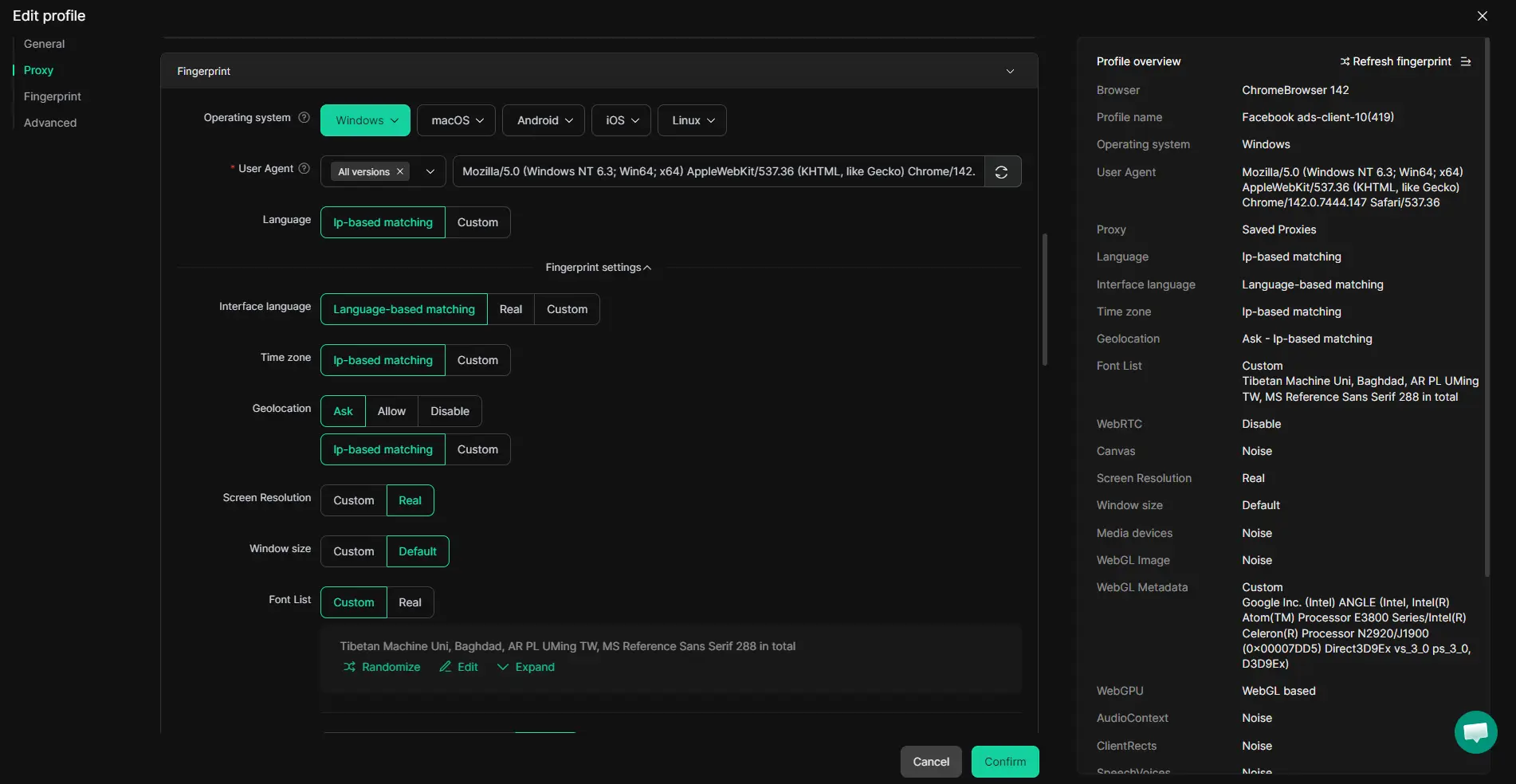
When you scale your affiliate marketing campaigns across multiple ad networks or social media platforms, running everything from one single browser profile is risky. Platforms can easily link your profiles together and issue accidental account suspensions.
To solve this problem, you can use DICloak to set up multiple independent browser profiles on a single device. Marketers can customize digital fingerprints for each individual profile. You can also configure separate residential or datacenter proxies for every profile. This keeps your profiles completely isolated, ensuring your network connections stay safe, stable, and professional.
Automating Tasks to Avoid Detection
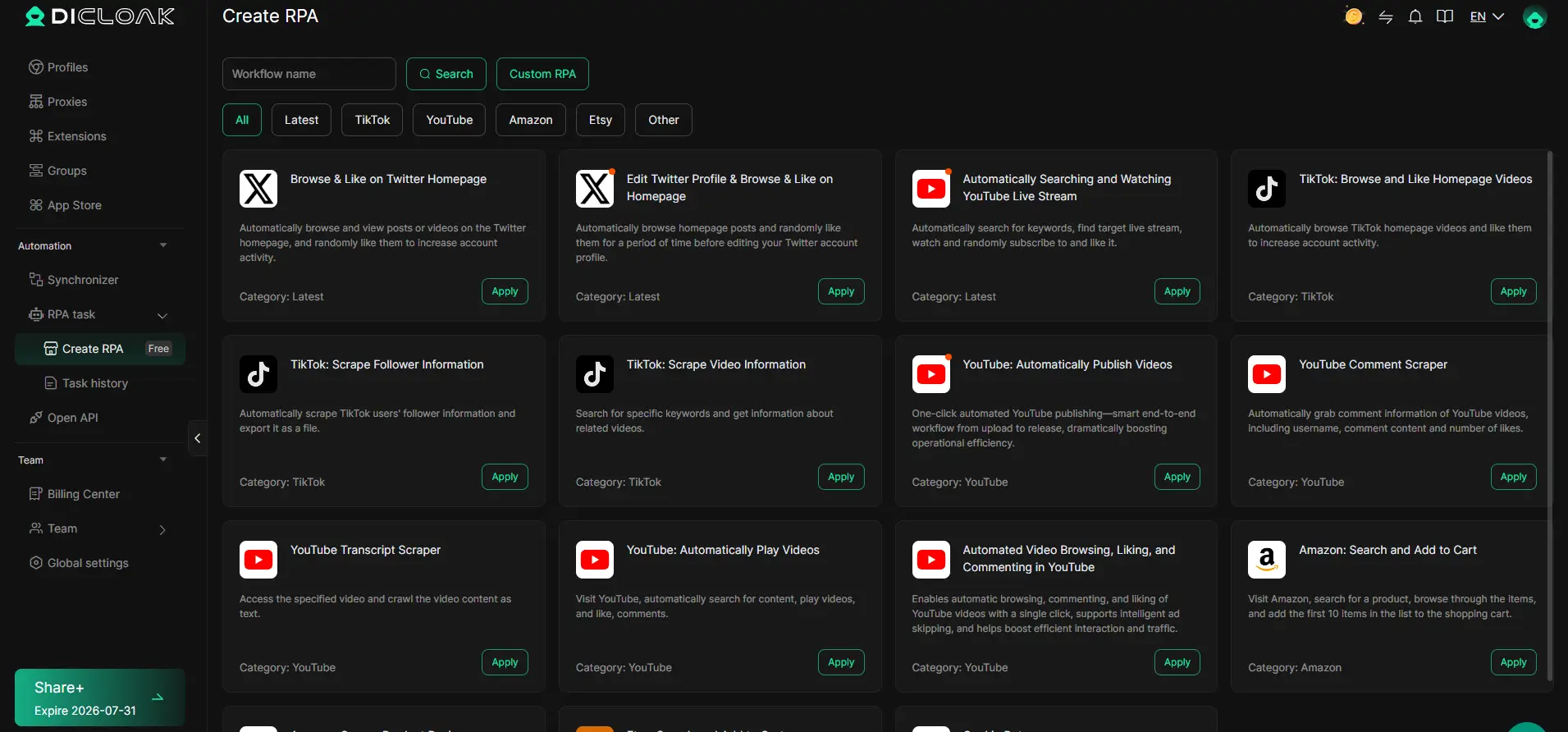
Managing multiple social media or ad accounts manually takes dozens of hours each week. You can streamline this workflow by using the Multi-Window Synchronizer in DICloak to control actions across multiple windows simultaneously.
You can also set up simple Robotic Process Automation (RPA) workflows in DICloak by yourself to automate repetitive actions like checking campaign analytics, opening pages, or posting updates. These automated actions emulate natural human movements, like realistic mouse clicks and page scrolling. This human-like behavior prevents account flags and keeps your daily operations running smoothly.
Frequently Asked Questions about Affiliate Marketing Legitimacy
Is affiliate marketing a pyramid scheme?
No, affiliate marketing is not a pyramid scheme. In a pyramid scheme, members make money primarily by recruiting new people into the program, often with no real product sold. In affiliate marketing, you earn commissions solely by referring real customers to real products sold by established merchants. You never have to recruit anyone.
How much can you realistically earn with affiliate marketing?
Your income depends entirely on your effort, skills, and niche. Complete beginners usually earn between $0 and $100 per month during their first six months. Intermediate marketers with established traffic often earn $1,000 to $5,000 per month. Top-tier professional marketers who run large content teams can earn over $10,000 per month.
Do you need a website to start affiliate marketing?
No, a website is not strictly required to begin. You can share affiliate links through a YouTube channel, a social media account, or an email newsletter. However, building your own website on a custom domain is strongly recommended. Having your own blog gives you full ownership over your content and traffic, protecting your business from sudden social media algorithm changes.
What industries are best for affiliate marketing in 2026?
In 2026, the most profitable and reliable niches include software-as-a-service (SaaS tools), personal finance (investment apps and credit cards), health and wellness, renewable energy products, and online education platforms. Digital software products often offer higher recurring monthly commissions than physical items.
Can affiliate marketing be done part-time?
Yes, absolutely. Most successful affiliate marketers start out part-time while keeping a regular job. You can write review articles or plan campaigns during evenings and weekends. As your content index grows and generates passive search traffic, your earnings will increase, allowing you to transition to full-time if you choose.
Conclusion
Affiliate marketing remains a highly legitimate, legal, and profitable business model in 2026. It is not a magical trick to get rich overnight, but rather an established performance-based sales industry.
By choosing reputable affiliate networks, obeying FTC disclosure laws, using professional profile management tools to secure your accounts, and always prioritizing the trust of your audience, you can build a sustainable online business. Focus on creating valuable, honest content that helps readers make informed purchasing decisions, and long-term financial success will follow.
 Web Proxy Tools
 Free Tools
 Cookie Plugin
 UA Generator
 MAC Address Generator
 IP Generator
 IP Address List
 2FA Code Generator
 World Clock
 Anonymous Check
 WebRTC Leak Test
 UUID Generator
 Free Web Proxy Site
 Proxy Checker
 FB Ad Checker
 AI Web Scraping
 Free SMM Tools
 Twitter Shadowban Checker
 Instagram Name Checker
 UTM Generator
 Username Generator
 AI Hashtag Generator
 LinkedIn Headline Generator
 Social Media Image Resizer