Google AdSense is a popular way to earn money from website traffic, but getting approved can be difficult, and earnings may not meet your expectations. Even with thousands of monthly visitors, your ad revenue might remain low. That's why many publishers look for Google AdSense alternatives with better earning opportunities and more flexible ad options.
There are plenty of alternatives for different types of websites. Media.net offers contextual ads, while Adsterra and Infolinks are worth considering for smaller publishers. Growing websites can explore Journey by Mediavine, Monumetric, or Raptive, while larger publishers may benefit from the advanced ad optimization tools offered by Ezoic and Clickio.
In this guide, we'll compare 12 of the best Google AdSense alternatives in 2026, including their features, traffic requirements, and ideal use cases. You'll also learn how to choose the right ad network, compare earnings, and manage multiple advertising accounts as your website business grows.
12 Best Google AdSense Alternatives in 2026
There are many advertising networks available, but they do not all work the same way. Some connect publishers with advertisers through automated auctions, while others provide full ad management or direct sponsorship opportunities. Their traffic requirements also vary, so a platform designed for a large publisher may not be suitable for a new blog.
Below are 12 Google AdSense alternatives worth considering in 2026. Each offers a different way to monetize website traffic, and knowing those differences will help you choose a platform that matches your publishing goals.
1. Media.net – Best for Contextual Advertising
Best for: Blogs, educational websites, and publishers with topic-focused content.
Main ad formats: Contextual, native, and display ads.
Minimum traffic: No universal public minimum confirmed; publisher approval is required.
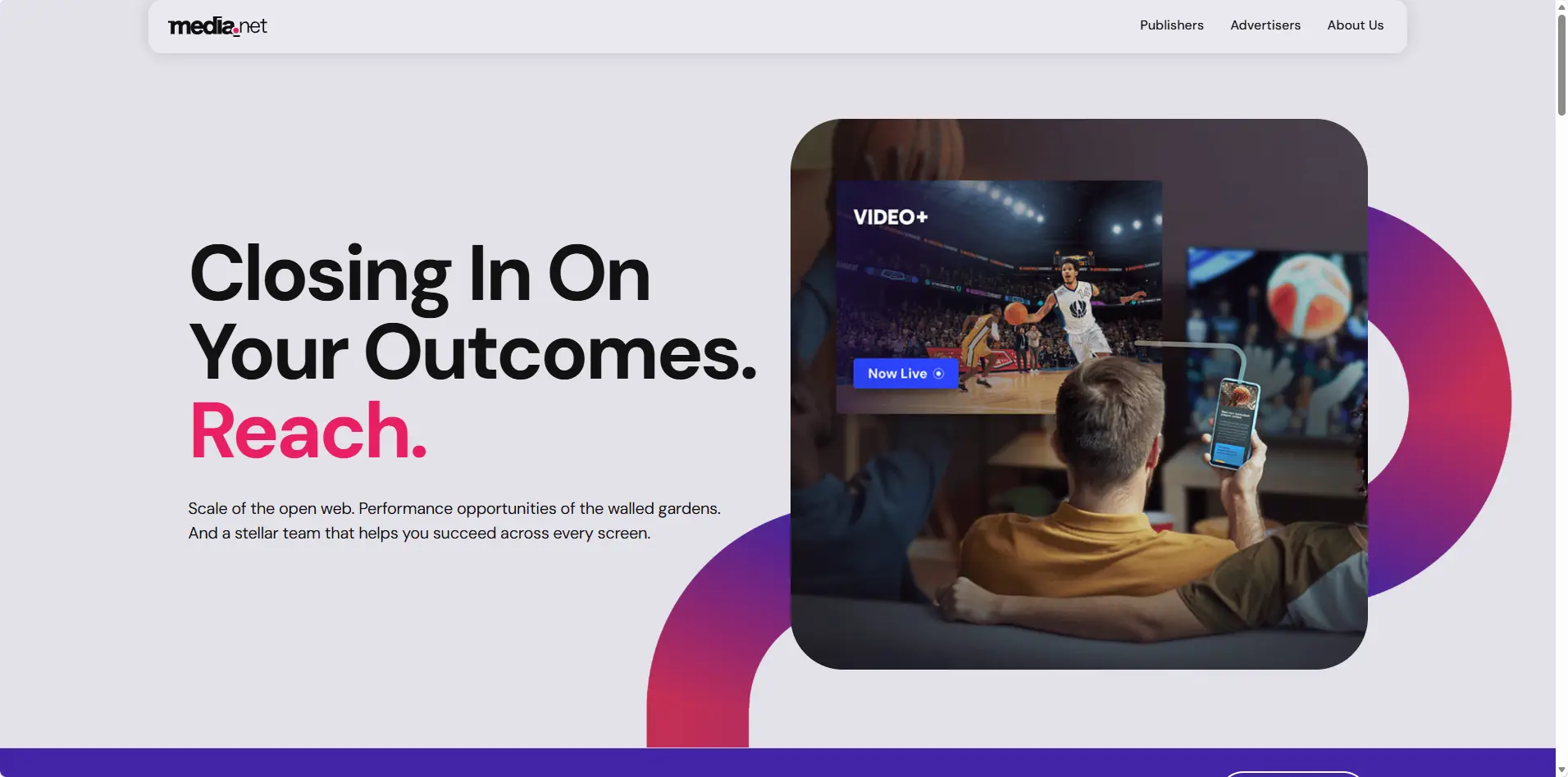
Media.net is one of the closest alternatives to Google AdSense. It focuses on contextual advertising, which means ads can be selected based on the topic of a webpage. Instead of relying only on information about a visitor, the advertising system can use the content itself to understand what may interest the reader. This makes it especially useful for websites that publish detailed guides, reviews, and educational articles.
Imagine a blog that helps small businesses choose accounting software. A reader opens an article comparing tools for managing invoices and expenses. Contextual advertising can show promotions related to business software because the page already focuses on that subject. The ads may feel more relevant than promotions for unrelated products. Media.net also works with multiple advertising demand partners, giving publishers access to advertisers beyond a single source.
However, approval still depends on the quality and suitability of your website. Having useful content and an audience that advertisers want to reach can improve your chances of being a good fit. If your website mainly publishes original articles about specific topics, Media.net is a reasonable option to evaluate. It is less useful to judge the platform only by traffic volume without considering where your readers come from and what they are interested in.
2. Ezoic – Best for AI-Powered Ad Optimization
Best for: Large content websites that want automated testing and ad optimization.
Main ad formats: Display and video advertising, with automated ad placement tools.
Minimum traffic: Generally 250,000 monthly active users for standard applications.
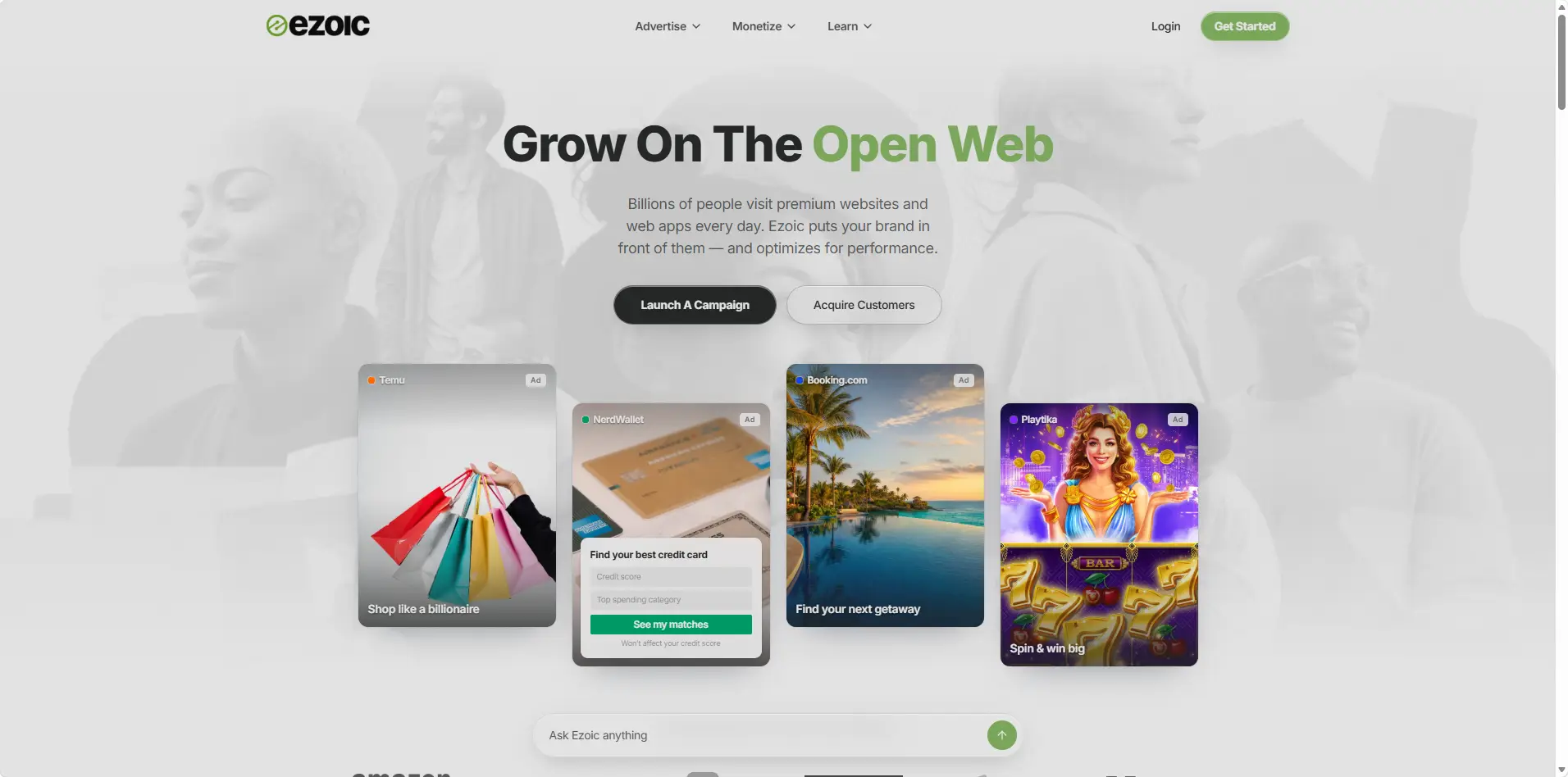
Ezoic is an advertising technology platform that helps publishers test different ad layouts and improve their revenue. Rather than placing the same ads in the same positions for every visitor, its system can test different advertising setups. It uses data about page performance and visitor behavior to help publishers make better decisions. This can be especially valuable for websites with many articles and different types of readers.
One important change in 2026 is Ezoic's traffic requirement. New applicants generally need at least 250,000 monthly active users, which is much higher than the thresholds mentioned in many older reviews. Smaller publishers may have access to a selective Incubator program, but this is not a standard open entry path. If your website is still receiving only a few thousand monthly visits, other networks on this list will probably be more practical.
3. Mediavine – Best for Lifestyle and Content Publishers
Best for: Recipe, travel, parenting, lifestyle, and other original content websites.
Main ad formats: Managed display and video advertising.
Minimum requirements: Journey starts at 1,000 qualifying monthly sessions; Mediavine Official requires at least $5,000 in annual ad revenue.
Mediavine is a popular managed advertising platform for content publishers. It provides advertising technology designed to help websites earn revenue while keeping pages useful and easy to read. Instead of managing every placement alone, publishers can use Mediavine's advertising setup and optimization tools. This is particularly useful for bloggers who would rather spend their time creating content than working on ad code.
Consider a food blog that publishes detailed recipes with photographs and cooking instructions. Readers may spend several minutes on one page as they follow the recipe. Ads can appear at suitable points in the article, creating several opportunities to earn revenue during the visit. The publisher can focus on writing new recipes while the advertising system handles much of the monetization work.
Mediavine now offers different programs based on the stage of a publishing business. In 2026, Journey by Mediavine requires at least 1,000 sessions from Tier 1 countries, including the United States, Canada, United Kingdom, and Australia, within 30 days. Mediavine Official uses a different threshold of at least $5,000 in annual ad revenue, along with content and traffic quality requirements. A growing blogger who does not yet qualify for Mediavine Official can consider Journey as an earlier entry point.
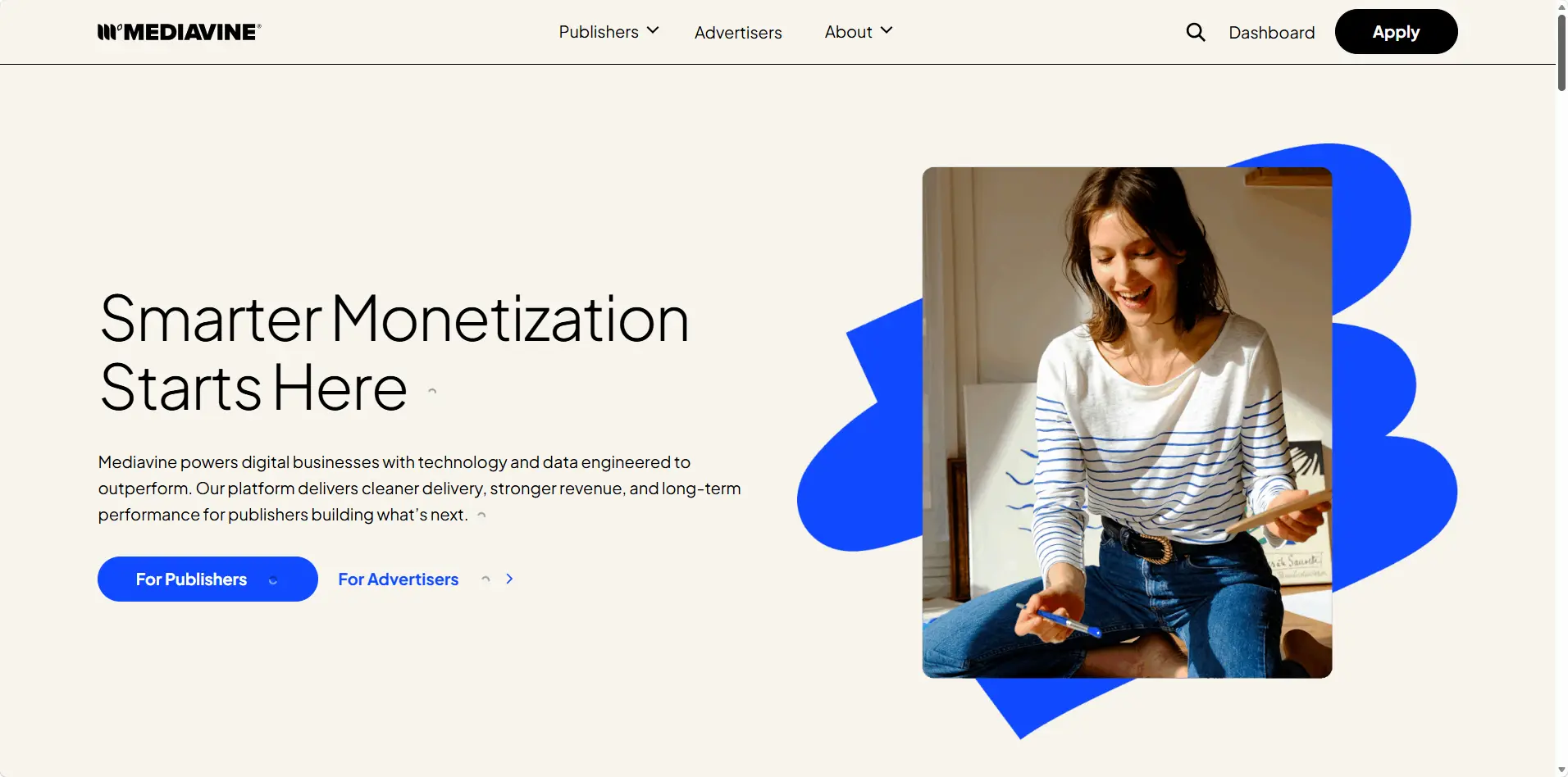
4. Raptive – Best for Established Publishers
Best for: Established blogs and content websites with audiences in major advertising markets.
Main ad formats: Managed display and video ads.
Minimum traffic: 25,000 monthly pageviews.
Raptive, previously known as AdThrive, provides advertising management for content creators and established publishers. It helps website owners monetize their traffic through managed ad placements and advertising partnerships. The platform is particularly relevant to sites with readers in countries such as the United States, Canada, United Kingdom, Australia, and New Zealand. These markets are important because many advertisers spend heavily to reach audiences there.
Imagine a home improvement blog that receives 40,000 pageviews every month. Most readers come from the United States and spend time reading guides about painting, furniture, and home repairs. These topics can attract companies selling tools, home products, and related services. If the blog meets Raptive's requirements, its owner can apply for managed advertising rather than handling every placement manually.
Raptive currently requires at least 25,000 monthly pageviews. Websites with 25,000 to 99,999 pageviews must also receive at least 50% of their traffic from its listed major markets. The platform reviews original content, analytics setup, and website age, among other conditions. Your website must also be at least six months old, so a newly launched site may need more time before applying.
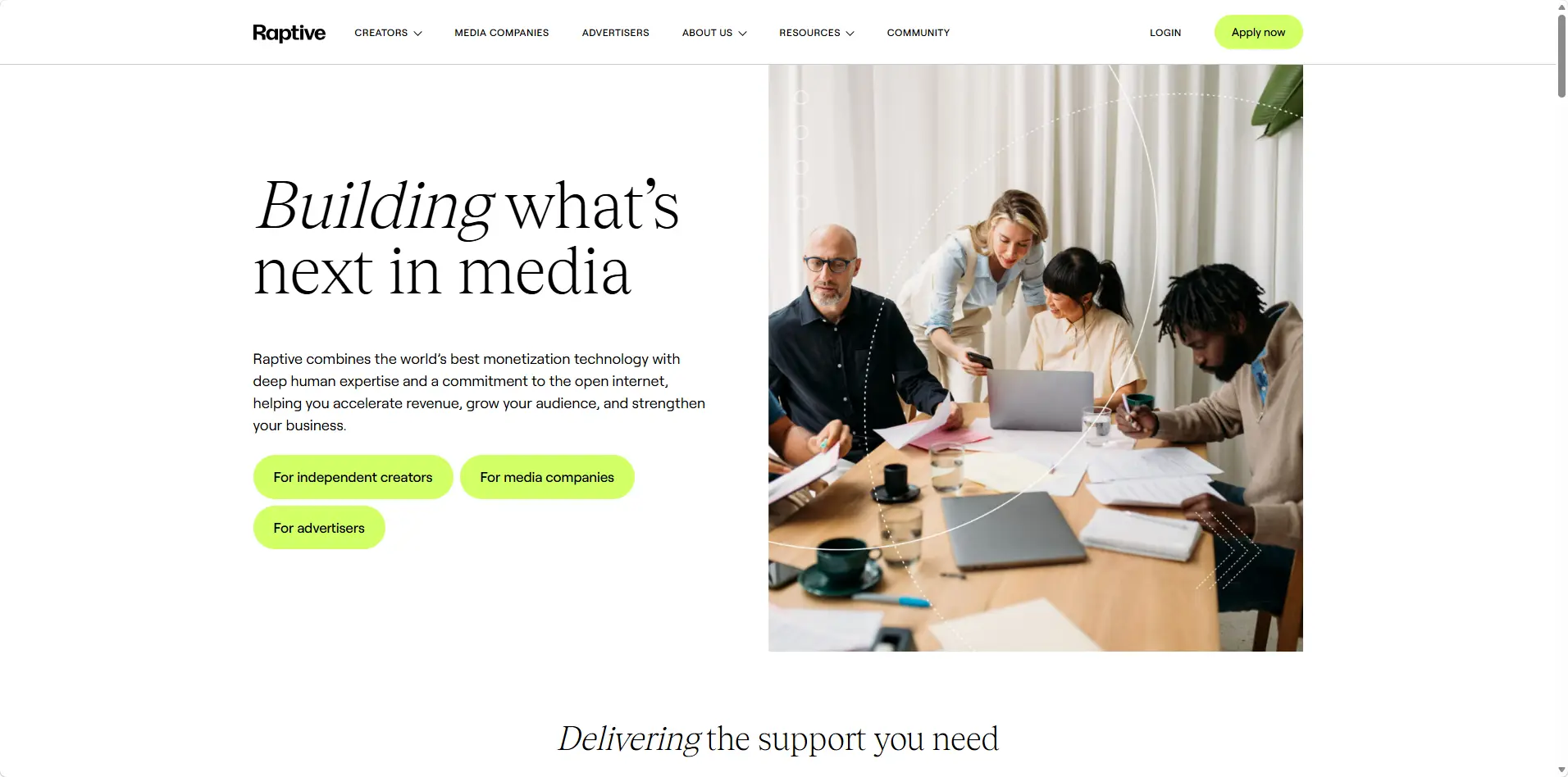
5. Monumetric – Best for Growing Websites
Best for: Growing blogs that want professional ad management.
Main ad formats: Display and video advertising.
Minimum traffic: 10,000 monthly pageviews for the Propel program.
Monumetric offers managed advertising programs for websites at different stages of growth. Its Propel program is aimed at smaller publishers who have started building steady traffic. The platform helps with ad implementation, reporting, and optimization, which can reduce the amount of technical work a blogger needs to handle. It is a useful option for website owners who have outgrown a basic advertising setup but are not yet operating a large publication.
There are several requirements to consider before applying. Monumetric's Propel program is designed for websites with 10,000 to 80,000 monthly pageviews, and the site must use WordPress or Blogger. It also requires a suitable sidebar, at least six ad slots, and a minimum of 50% of traffic from the United States, United Kingdom, Canada, or Australia. A $99 implementation fee applies, so publishers should decide whether the setup fits their budget and website design.
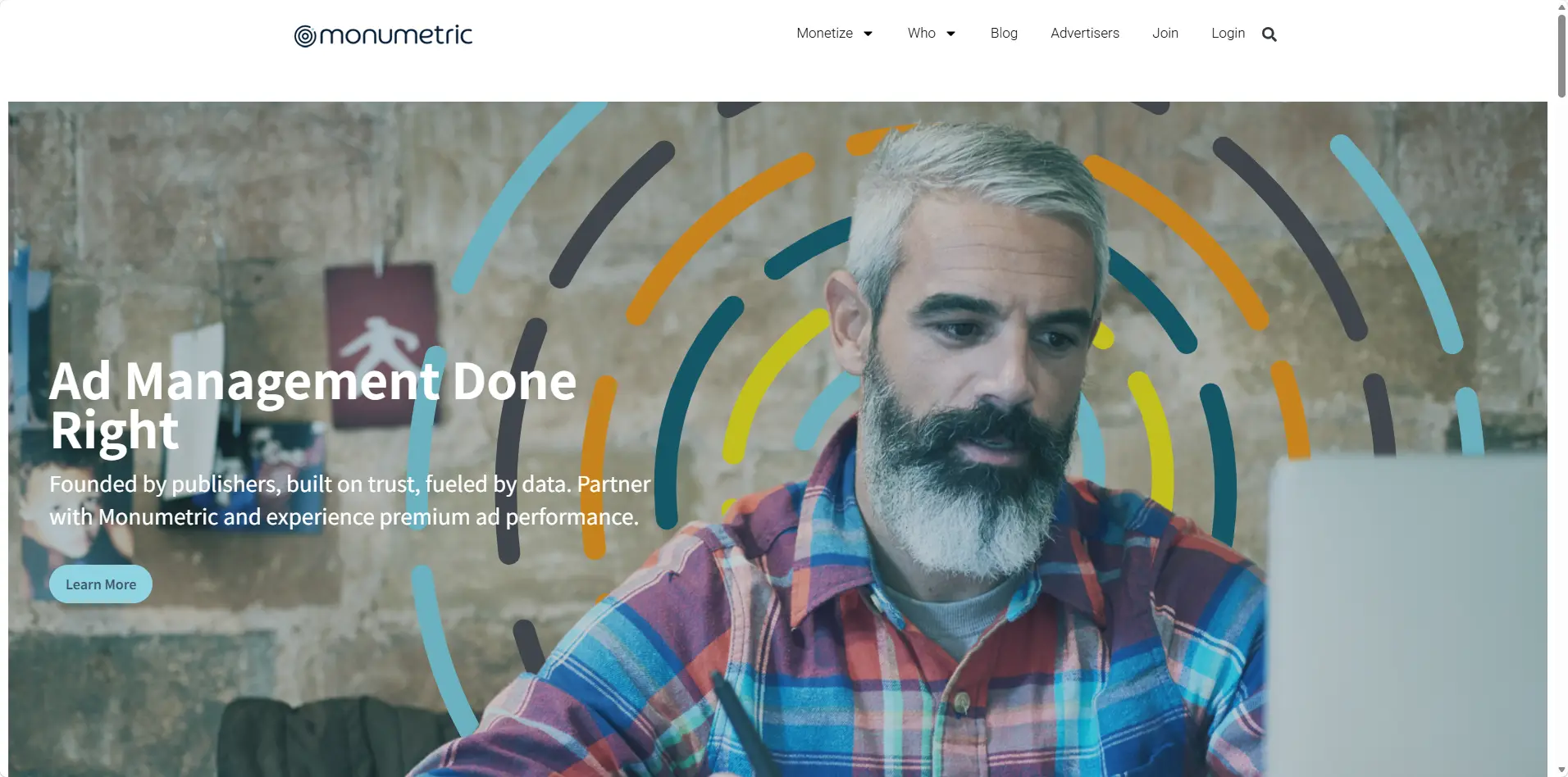
6. PropellerAds – Best for Multiple Ad Formats
Best for: Publishers interested in advertising formats beyond traditional banners.
Main ad formats: Popunder, push, in-page push, and other formats, depending on the publisher product.
Minimum traffic: Varies by monetization product and approval conditions.
PropellerAds is known for advertising formats that work differently from standard display banners. Its publisher monetization products have included popunder ads, push-style formats, and other ways of earning from website traffic. These formats can create opportunities for publishers whose websites do not have many natural places for banner ads. However, they also change how visitors interact with the page.
Consider an entertainment website where visitors browse short articles, images, or downloadable resources. The owner may find it difficult to earn much from a few traditional banner placements. Alternative advertising formats could create additional revenue opportunities without requiring long articles. For this kind of website, testing the available formats may be worth considering.
The trade-off is the user experience. Popunders open advertising in another tab or window, which some readers find distracting. These formats may not suit educational websites, business blogs, or other publications where visitors expect a quiet reading experience. Publishers should also check which products and formats are currently available through PropellerAds and related monetization services before signing up.
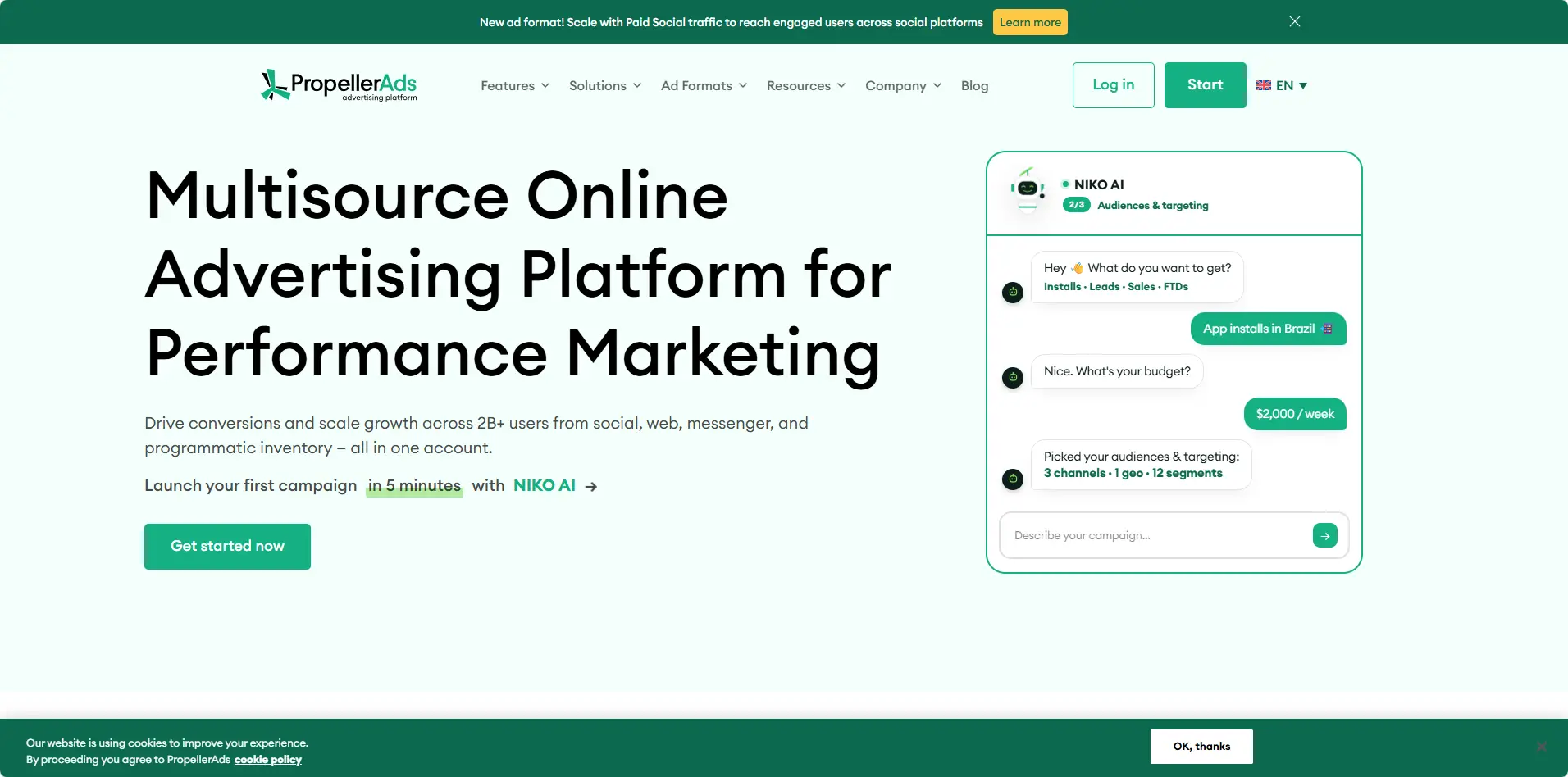
7. Adsterra – Best for Flexible Website Monetization
Best for: Small websites, entertainment publishers, and sites with international traffic.
Main ad formats: Banners, native banners, Social Bar, popunders, and Smartlink.
Minimum traffic: No universal published minimum for all publisher websites.
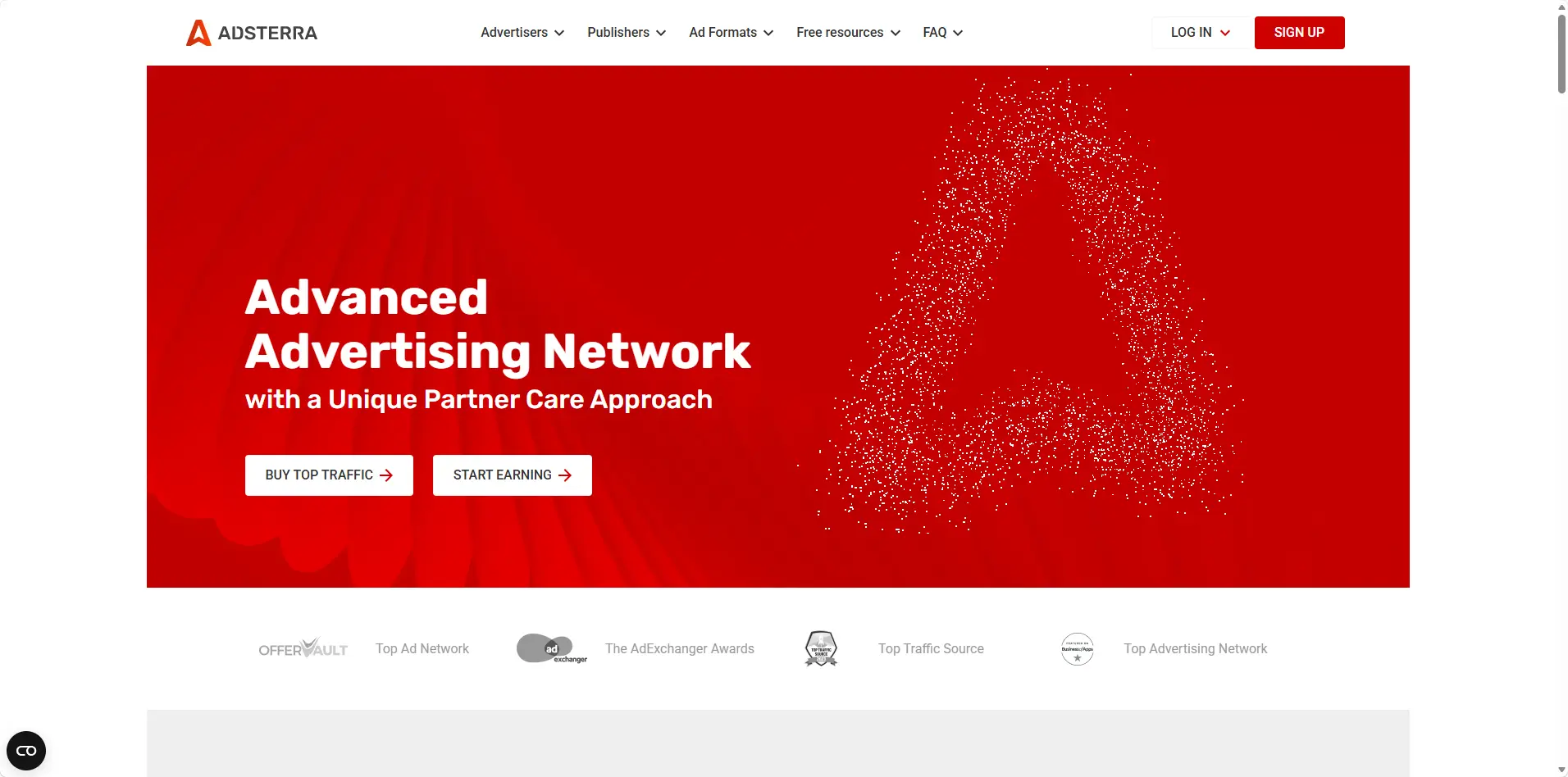
Adsterra is an advertising network that offers several ways to earn money from website traffic. Along with standard display banners, it supports native ads, popunders, Smartlinks, and its Social Bar format. This variety can be useful if your website does not fit the usual model of a long-form content blog. It also gives publishers the chance to test different formats instead of depending on a single type of ad.
Imagine a website that publishes mobile app tutorials for readers in India, Brazil, and Southeast Asia. It may not meet the traffic-location requirements of premium managed networks, even if its monthly traffic is growing. Adsterra provides advertising options for a broad international audience, making it worth evaluating for this situation. The owner could start with native banners and compare their results with other available formats.
Another useful feature is its relatively low payment threshold through certain methods. Adsterra lists a minimum payout starting at $5 via Paxum, although the minimum differs by payment service. This can help smaller publishers access their earnings sooner. Before using formats such as popunders, check how they affect your website and whether they are compatible with any other advertising services you use.
8. Infolinks – Best for In-Text Advertising
Best for: Informational blogs and websites with text-heavy content.
Main ad formats: In-text advertising and other contextual ad placements.
Minimum traffic: Publisher approval is required; no universal public minimum confirmed.
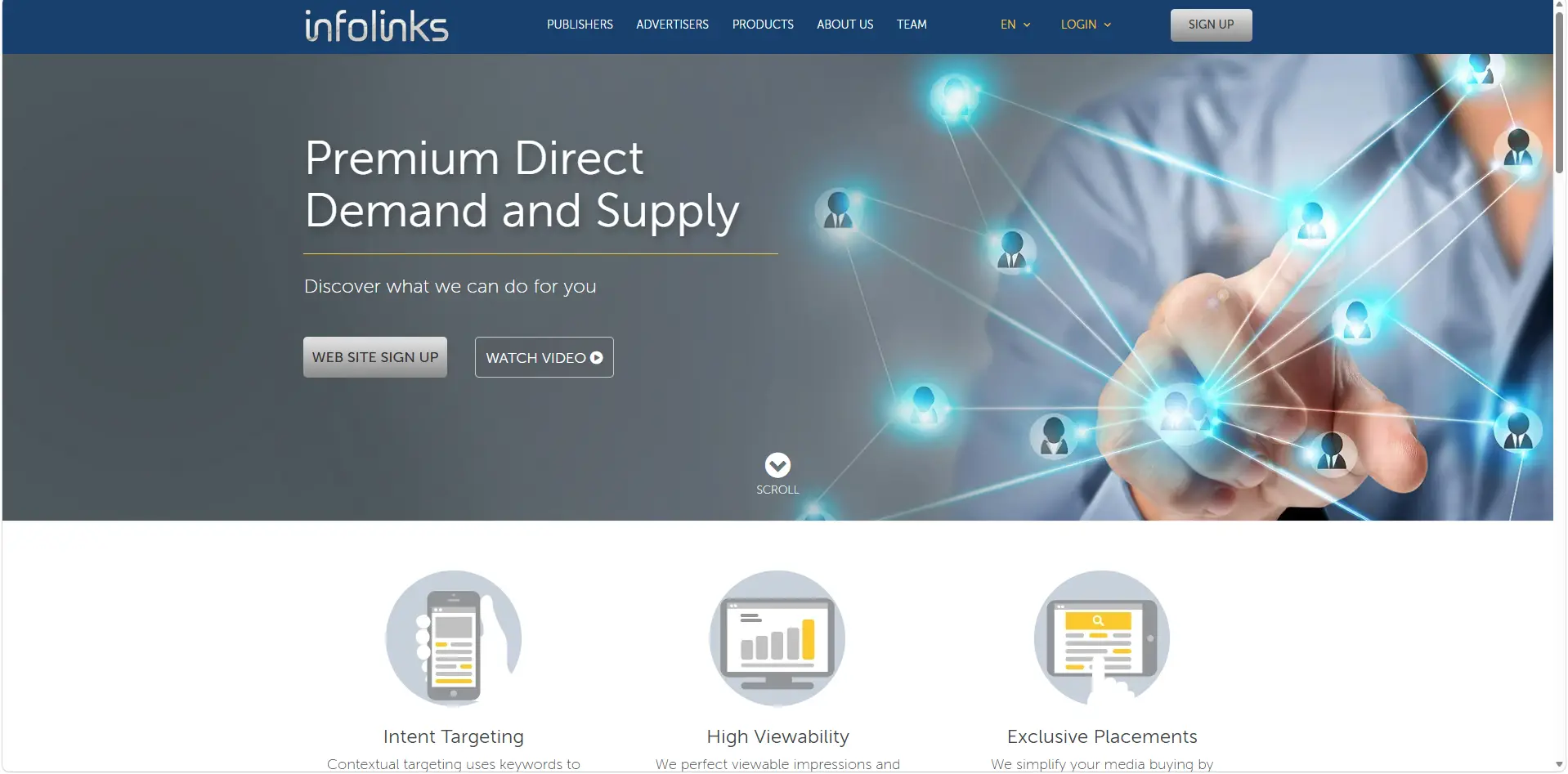
Infolinks is an advertising platform that helps publishers earn revenue from their existing content. One of its main features is in-text advertising, where selected words or phrases can become advertising links. Unlike traditional banners that take up separate space on a page, these ads are connected to the text that readers are already viewing. This makes Infolinks an option for websites that publish long articles, tutorials, and educational guides.
Still, too many advertising links can make an article harder to read. If visitors see highlighted words in almost every sentence, they may find the experience distracting. Publishers should test a limited number of placements and check how the content looks on mobile devices. Infolinks is most useful when its ads support the article rather than interrupt the reader.
9. Taboola – Best for Native Advertising
Best for: News websites, online magazines, and publishers with large content libraries.
Main ad formats: Native ads, sponsored recommendations, and feed-based advertising.
Minimum traffic: Publisher eligibility is reviewed individually.
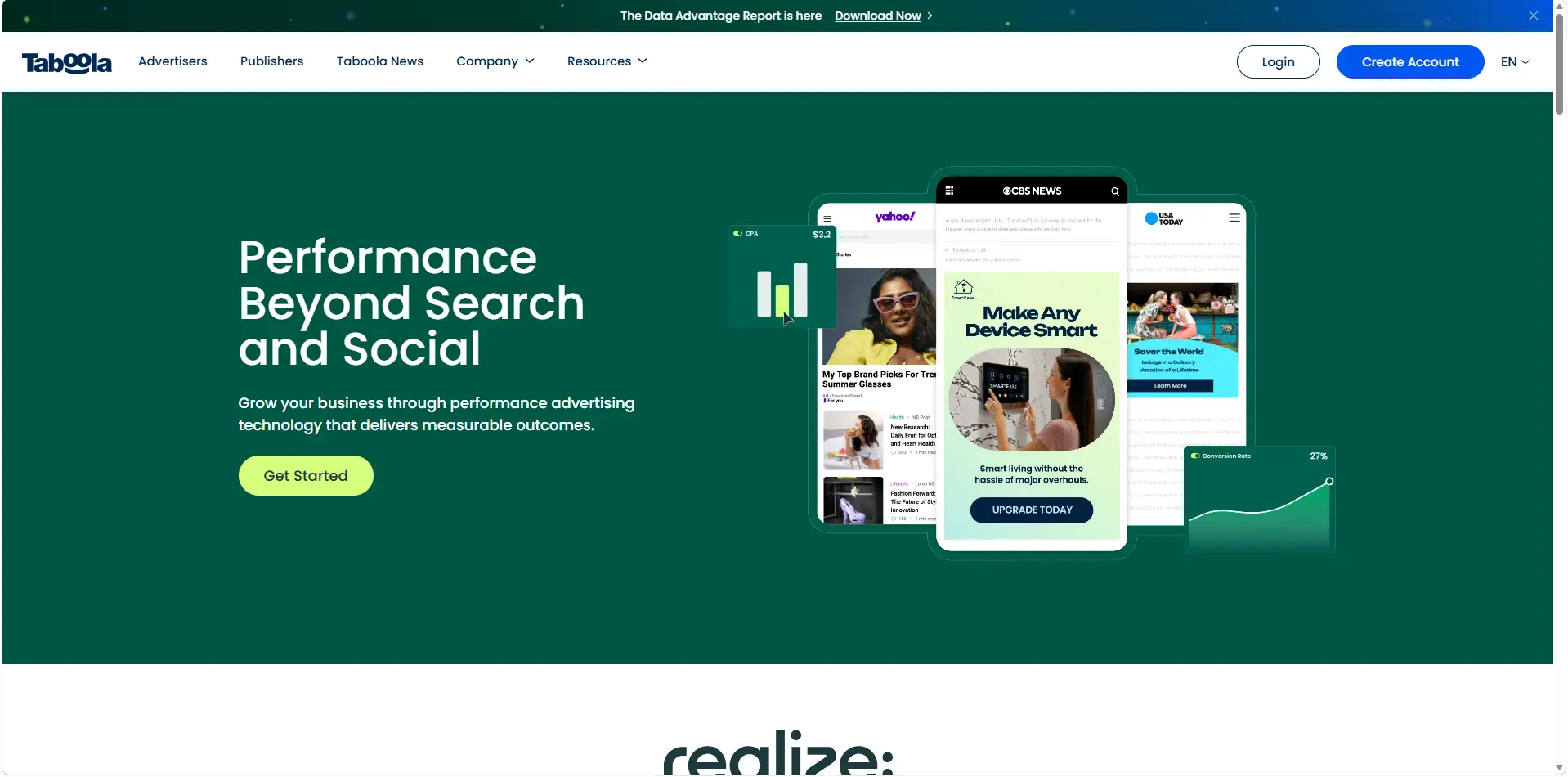
Taboola specializes in native advertising and content recommendations. You may have seen its sponsored content cards below articles on major news websites. These placements often display an image, headline, and link to another article or advertiser's website. The format is designed to fit into the content discovery experience rather than appearing as a traditional banner.
Imagine an online magazine that publishes business, technology, and entertainment news. After a reader finishes an article, the website can display a feed with more stories and sponsored recommendations. Some recommendations lead to the publisher's own articles, while others are paid advertising placements. This gives the publisher another way to earn revenue from the area below an article while encouraging visitors to discover more content.
Taboola's Feed product supports sponsored articles, promoted products, and recommendations from the publisher's own website. Publishers can also control parts of the feed's content and design. The platform is most relevant to established content publishers because recommendation feeds work best when there is enough traffic and content to support them. For a small personal blog, a simpler ad network may be easier to manage.
10. Clickio – Best for Full-Service Ad Monetization
Best for: Established publishers looking for advanced advertising management.
Main ad formats: Display, video, native, sticky, and custom placements.
Minimum traffic: Depends on the country; 100,000 monthly pageviews for websites in the United States, United Kingdom, Canada, and Australia.
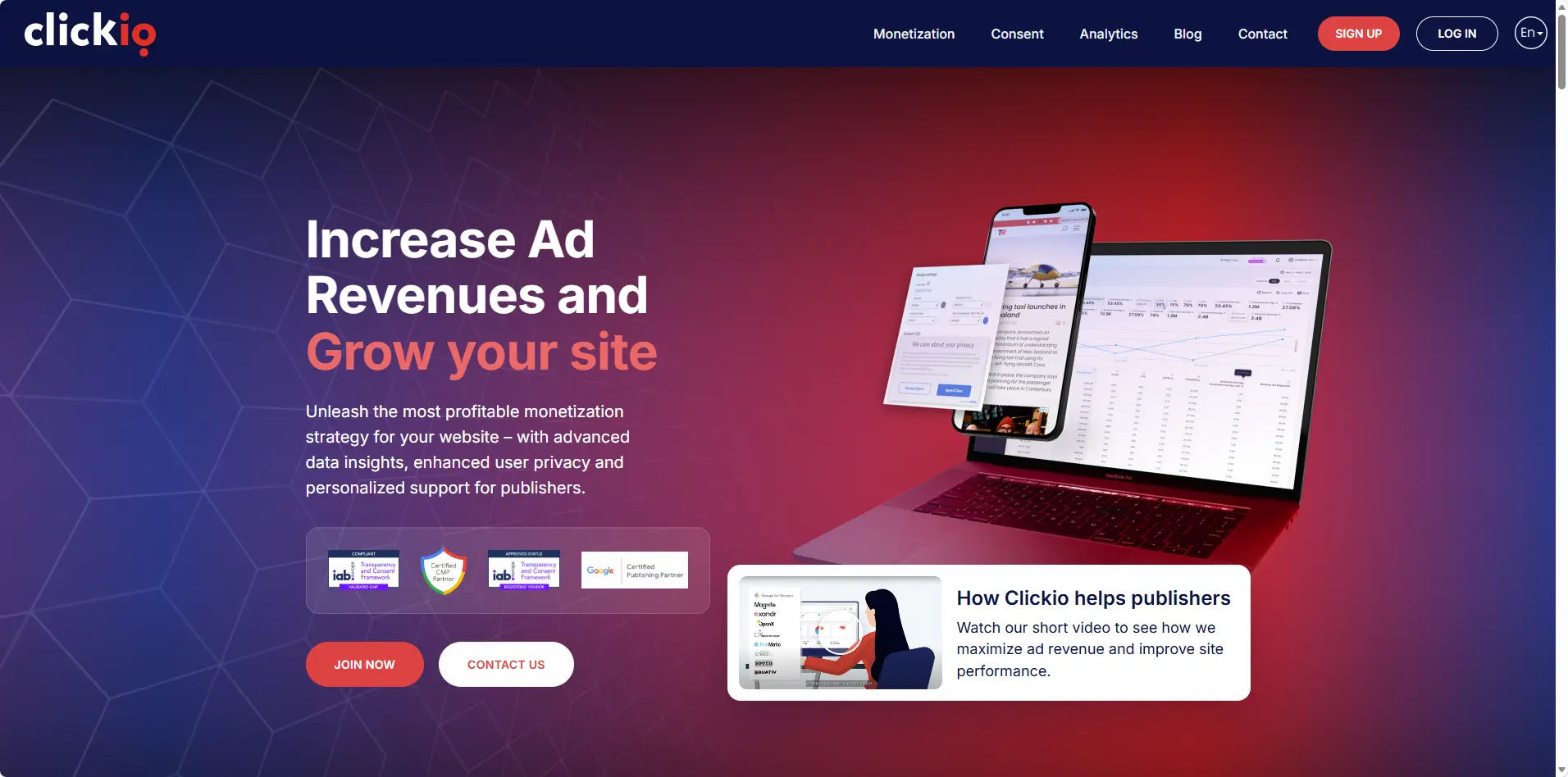
Clickio offers a managed monetization platform for publishers who want more control over their advertising revenue. Instead of relying on a single source of advertising demand, it provides tools that help different advertisers compete for available ad space. This includes header bidding, which allows multiple demand partners to place bids for the same impression. Publishers can also use its reporting and optimization tools to understand how their advertising performs.
Consider a news website with 200,000 monthly pageviews. The publisher already earns from display ads but wants to improve the value of each available placement. With a managed system such as Clickio, the publisher can access different advertising demand sources and test ad layouts across desktop and mobile pages. This can help the website find better revenue opportunities without simply increasing the number of ads.
Clickio is more suitable for established publishers than for websites with very little traffic. Its published entry requirements vary by region. For example, websites in the United States, Canada, Australia, and United Kingdom generally need at least 100,000 monthly pageviews, while some other countries have higher thresholds. Publishers should check the current requirements for their website's location and traffic profile before applying.
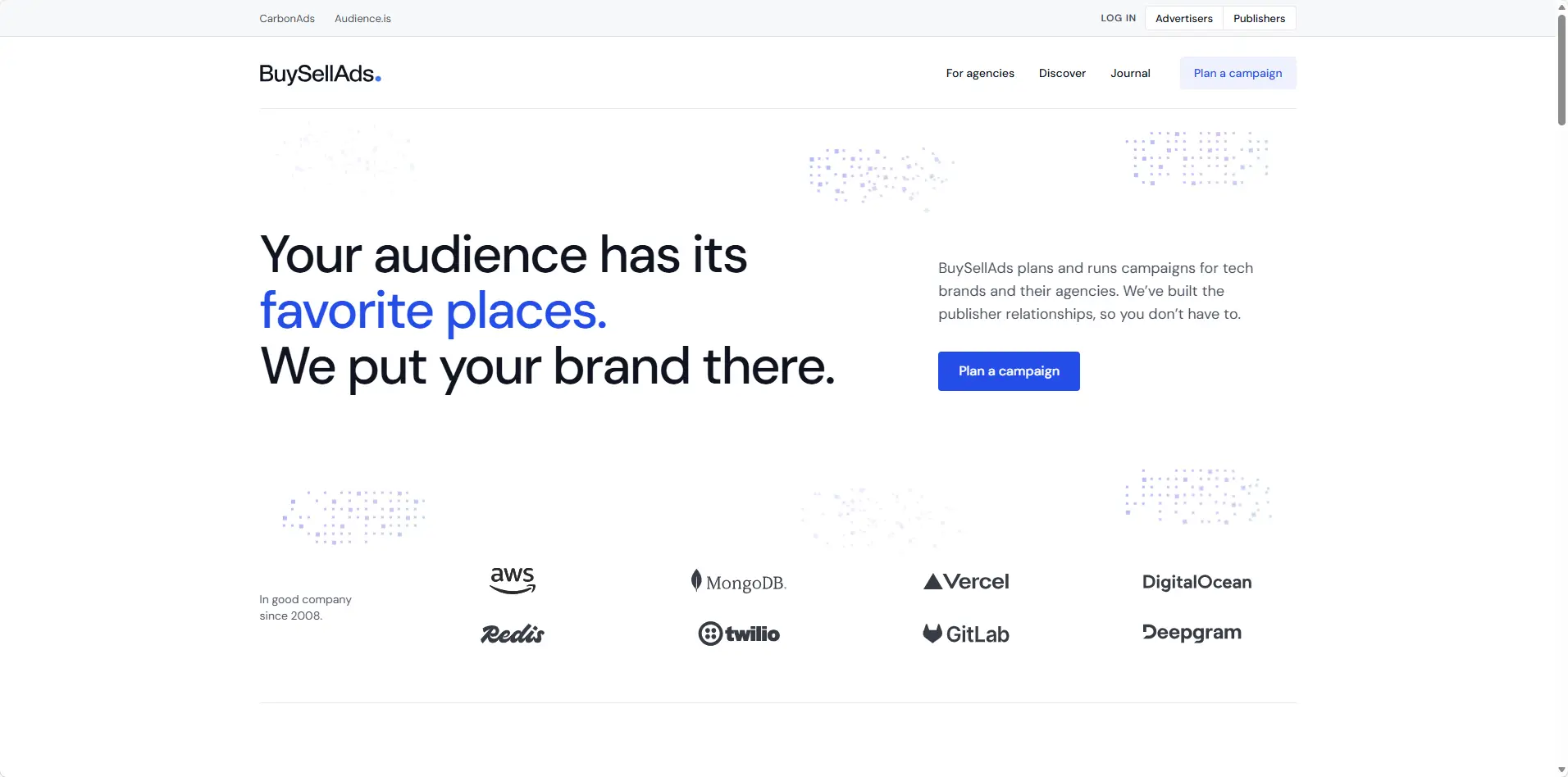
11. BuySellAds – Best for Direct Advertising
Best for: Niche websites, developer communities, and independent publications.
Main ad formats: Native sponsorships, direct advertising, and sponsored content.
Minimum traffic: Publisher partnerships are reviewed based on audience and publication fit.
BuySellAds works differently from traditional advertising networks. It helps publishers connect with advertisers that want to reach a particular audience. Through its Carbon advertising products and sponsorship services, publishers can earn from relevant advertising placements and direct brand partnerships. This approach can be attractive to independent websites that have built a clear identity and a loyal group of readers.
For example, imagine a programming website that receives 30,000 monthly visits. Its audience consists mainly of developers who want to learn about coding tools, software products, and new technologies. A company selling developer software may value those readers more than a much larger audience with no interest in programming. BuySellAds can help connect suitable publishers with advertisers and manage parts of the commercial process.
The main advantage is the focus on audience relevance rather than traffic volume alone. A niche website with engaged readers may attract sponsorship opportunities that a general content site would not. However, direct advertising also requires a clear understanding of who visits your website and why brands should advertise there. If your publication has a strong topic focus and readers who return regularly, BuySellAds is worth exploring.
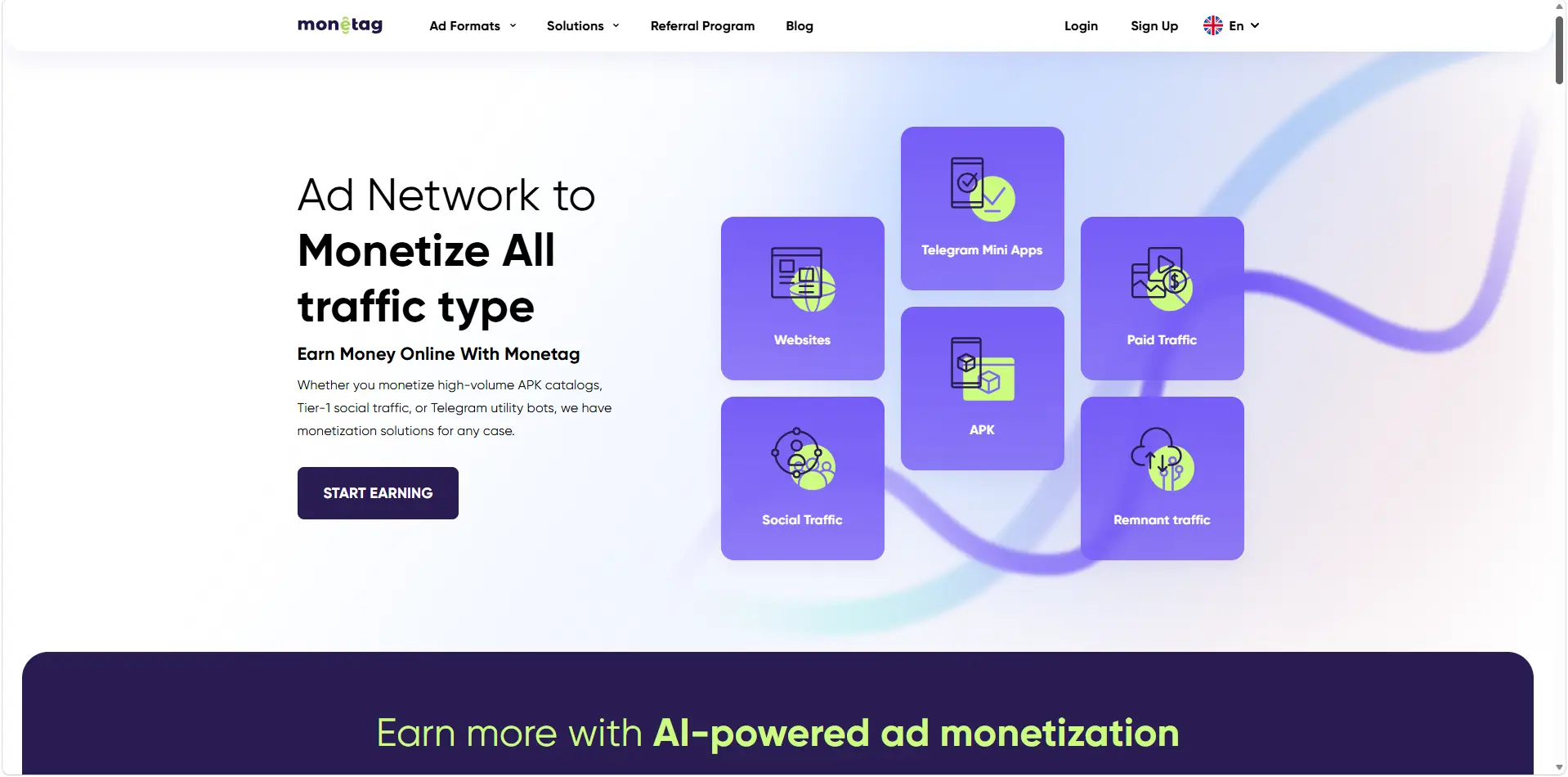
12. Monetag – Best for Monetizing Different Traffic Sources
Best for: Website owners with international traffic, online tools, and short-visit websites.
Main ad formats: SmartLink, popunder, push, and other traffic monetization formats.
Minimum traffic: No universal public minimum confirmed; approval and traffic verification may apply.
Monetag provides several ways for publishers to earn money from digital traffic. It is particularly relevant to websites that do not follow the traditional blog model. For example, online tools, download websites, and content-sharing platforms may have visitors who complete one task and leave. These websites can have valuable traffic but fewer natural places for standard article-based display ads.
Imagine you own a free PDF conversion website. A visitor arrives, uploads a document, converts it, and downloads the result within a minute. Since the visitor does not spend much time reading, the website may have limited opportunities to display traditional ads. Monetag offers formats such as SmartLink and popunder advertising that can be tested on this type of website. The publisher should choose formats that do not interfere with the main tool or confuse visitors.
Monetag also supports several payment methods, including PayPal, Skrill, and Payoneer, depending on the publisher's country. Its published minimum payout starts at $5 for certain methods, while bank transfers and other options have higher limits. Standard payments are generally processed twice a month, with weekly payments available to eligible higher-tier publishers. These details make it useful to compare both earnings and payment terms before choosing the platform.
Google AdSense Alternatives Comparison: Which One Is Best?
With so many networks available, it can be difficult to know where to start. The easiest way to narrow your options is to compare the traffic requirements and the type of website each platform supports. Some are designed for small publishers, while others work best with established websites that already earn steady advertising revenue.
The table below brings together the main differences between the 12 Google AdSense alternatives.
| Ad Network |
Minimum Traffic or Entry Requirements |
Best For |
| Media.net |
Approval-based; no universal public minimum |
Contextual advertising |
| Ezoic |
250,000 monthly active users; selective exceptions |
Large publishers |
| Mediavine |
Journey: 1,000 qualifying sessions; Official: $5,000 annual ad revenue |
Content blogs |
| Raptive |
25,000 monthly pageviews |
Established publishers |
| Monumetric |
10,000 monthly pageviews plus other conditions |
Growing blogs |
| PropellerAds |
Depends on publisher product |
Alternative ad formats |
| Adsterra |
No universal published traffic minimum |
Small and international websites |
| Infolinks |
Approval-based |
Text-heavy websites |
| Taboola |
Individual partnership review |
News and magazines |
| Clickio |
100,000 monthly pageviews in several major markets; varies by region |
Advanced ad management |
| BuySellAds |
Partnership review |
Direct sponsorships |
| Monetag |
Approval and traffic verification |
Websites with varied traffic sources |
One important detail is that these platforms do not all measure traffic the same way. Pageviews count how many pages visitors open, while sessions measure visits to your website. Monthly active users count distinct users over a period. A website with 30,000 pageviews may have far fewer than 30,000 sessions or active users, so always check the exact metric requested before applying.
There is also no reliable fixed ranking based on which network pays the most. Advertising rates change by country, season, topic, and advertiser demand. Instead of trusting a general earnings claim, use this table to shortlist two or three services that fit your website. You can then compare their features, payment terms, and expected revenue.
How to Choose the Right Google AdSense Alternative
Choosing a Google AdSense alternative is not just about getting approved. You also need to compare earnings, ad formats, payment terms, and website performance. The best network should fit your traffic, audience, and long-term goals.
Compare CPM, CPC, and Revenue Potential
Ad networks use different payment models. CPM measures the cost per 1,000 ad impressions, while CPC measures the cost per click. Publishers should also check RPM, which shows revenue per 1,000 impressions or pageviews, depending on the metric used.For example, a blog with 50,000 monthly pageviews might earn $200 from one network and $300 from another. However, actual earnings depend on traffic quality, advertiser demand, and visitor location. Compare results using similar traffic conditions before switching networks.
Check Minimum Traffic and Approval Requirements
Ad networks may require a minimum number of pageviews, sessions, or users. They may also review content quality, traffic sources, and audience location. Meeting the traffic requirement alone does not guarantee approval.For example, a blog with 30,000 monthly pageviews might meet a network's traffic threshold but fail its geographic requirements. Check your Google Analytics data and the network's latest eligibility rules before applying.
Review Ad Formats and User Experience
Different ad formats affect how visitors use your website. Display ads usually fit within the page layout, while popunders and interstitials can interrupt browsing. Choose formats that match your content and audience.For example, an educational website may perform better with simple display ads that do not cover important instructions. Test different placements and watch how visitors respond. Higher ad revenue is less valuable if the ads drive readers away.
Compare Payment Methods and Minimum Payouts
Check each network's minimum payout, payment schedule, supported methods, and fees. These details are especially important for smaller websites with limited monthly revenue.For example, if your site earns $20 monthly, a $100 payout threshold means waiting several months to receive payment. A network with a lower minimum may offer faster access to your earnings. Still, consider payment reliability and total revenue before deciding.
Consider Website Speed and Ad Performance
Advertising scripts can slow down your website and affect the reading experience. Heavy ads may increase loading times or cause page elements to move unexpectedly, especially on mobile devices.Use Google PageSpeed Insights to compare performance before and after adding new ads. Also monitor bounce rates and engagement in your analytics. The right network should help you earn more without making your website harder to use.
How Can DICloak Antidetect Browser Help You Manage Multiple Advertising Accounts?
Finding the right Google AdSense alternative can improve how you monetize a website. But when you manage several websites, ad networks, or client projects, there is another challenge: keeping all those advertising accounts organized. You may need to check earnings in Media.net, update settings in Adsterra, and review reports from another platform throughout the same day.
An antidetect browser like DICloak can make these workflows easier to manage. Instead of opening every advertising account in the same browser session, you can create separate Browser Profiles for different websites or projects. With DICloak, you can also organize Profiles in groups, perform batch actions, and manage team activity from one place.
Keep Advertising Accounts Separate with Browser Profiles
Managing several advertising dashboards in one browser can quickly become confusing. You may have different accounts for client websites, personal blogs, or multiple ad networks. When these accounts share the same browser session, cookies and saved login information can make it easy to open the wrong dashboard. This becomes especially inconvenient when you need to update important advertising settings.
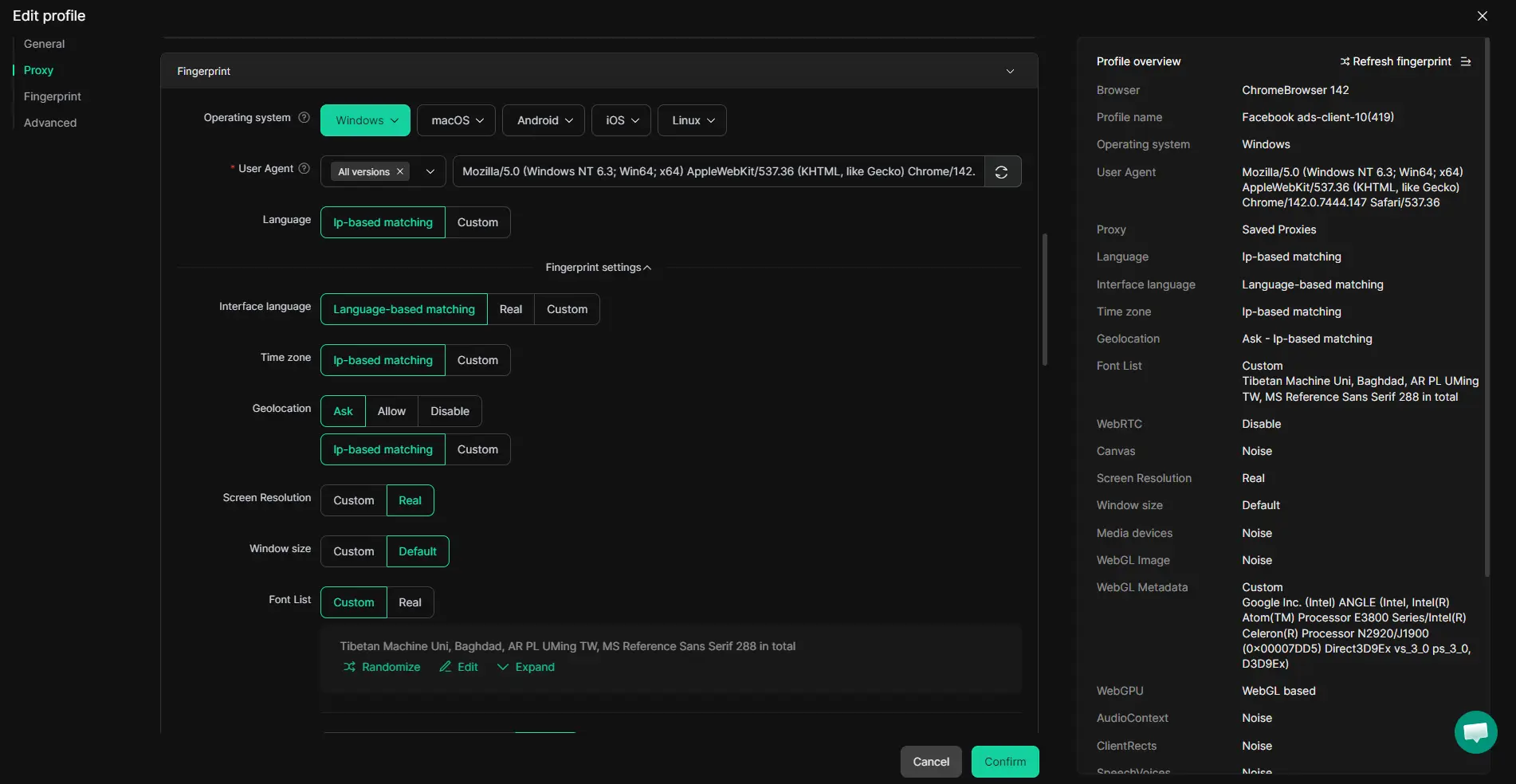
With DICloak Antidetect Browser, you can create a separate Browser Profile for each advertising account or client project. Each Profile keeps its own cookies, browser storage, fingerprint settings, and proxy configuration. For example, an agency working with five publisher websites can create five Profiles and label them by client. Team members can then open the correct Profile to access the relevant advertising dashboard without repeatedly switching between saved logins.
Manage Multiple Advertising Profiles with Batch Operation
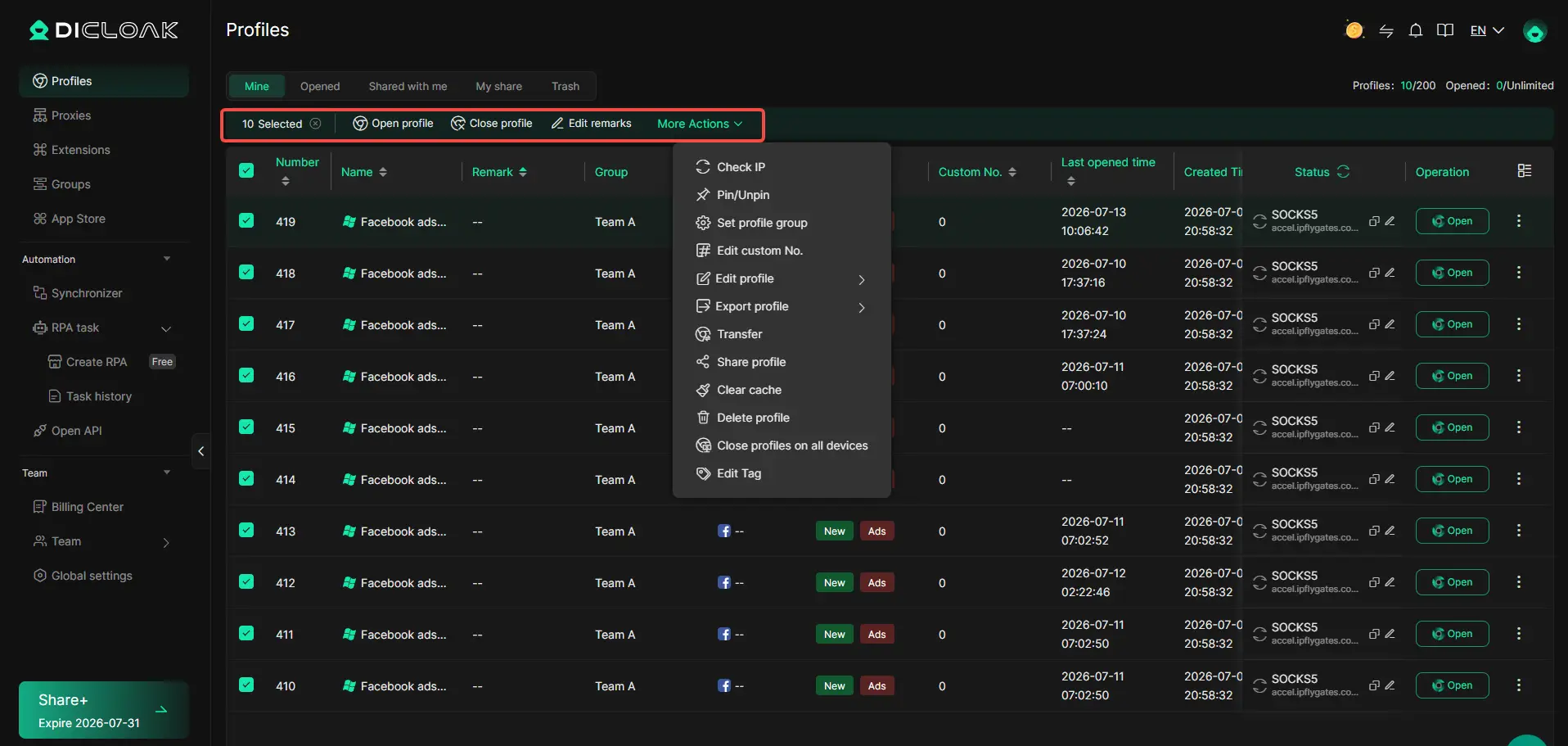
As your publishing business grows, managing each advertising Profile individually can take more time than expected. You may have one group of accounts for content websites, another for client projects, and several more for testing different ad networks. Opening and organizing these Profiles one by one can interrupt your work, especially when you need to review several dashboards in a single session.
DICloak provides batch operations that let you select multiple Browser Profiles and manage supported actions together. From the Profiles dashboard, you can open selected Profiles, organize them into Profile Groups, and use other bulk management options. For example, a publisher managing ten websites can group Profiles by project and open the ones needed for a daily revenue review. This keeps advertising accounts easier to find and reduces the work involved in managing a larger collection of Profiles.
Share Advertising Workflows with Your Team and Track Activity
Working with advertising accounts becomes more complicated when several people are involved. One team member may review daily revenue, another may update ad placements, and a manager may oversee several client websites. Without clear account access and activity records, it can be difficult to understand who worked on a particular Profile. This is especially important for agencies that manage advertising operations for different clients.
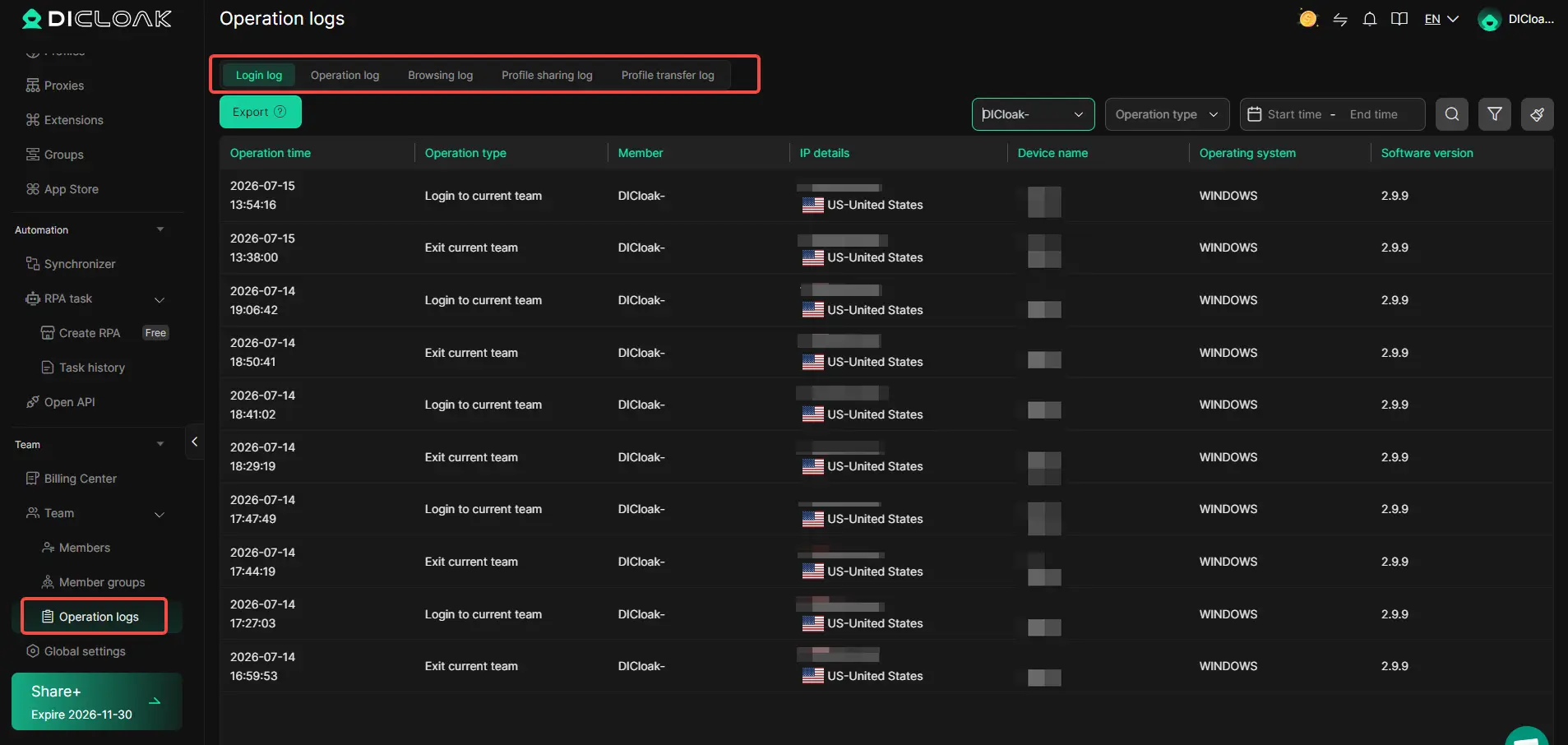
With DICloak's team management features, administrators can assign access to the Browser Profiles that members need for their work. Operation Logs also provide records of login activity, Profile operations, browsing activity, sharing, and transfers. For example, an agency manager can review which team member accessed a shared Profile when checking recent account operations. This makes teamwork more organized while keeping different client workflows easier to manage.
If you manage more than one publishing website or advertising account, DICloak Antidetect Browser provides a practical way to keep Browser Profiles, account sessions, and team workflows organized in one place.
Frequently Asked Questions About Google AdSense Alternatives
Here are answers to five common questions about choosing and using Google AdSense alternatives.
What Is the Best Alternative to Google AdSense?
It depends on your website's traffic and content. Media.net works well for contextual ads, while Adsterra and Infolinks are worth considering for smaller websites. Mediavine and Raptive are suitable for publishers that meet their traffic requirements.
Which Google AdSense Alternative Pays the Most?
No single network pays the most for every website. Earnings depend on your niche, audience location, and ad placements. Mediavine and Raptive offer advanced revenue optimization, but comparing page RPM is the best way to evaluate actual performance.
Are There AdSense Alternatives Without Minimum Traffic Requirements?
Yes. Adsterra, Infolinks, and Media.net do not publish a universal minimum traffic requirement. However, approval still depends on factors such as content quality and traffic sources.
Can I Monetize a Website Without Google AdSense?
Yes. You can earn revenue through other ad networks, affiliate marketing, sponsored content, or direct advertising. Many publishers combine several methods to create different income sources.
Can I Use Multiple Ad Networks on the Same Website?
Yes, you can use AdSense alongside other ad networks if their policies and agreements allow it. Just make sure the ads do not slow down your website or negatively affect the user experience.
Conclusion
The best Google AdSense alternative depends on where your website is today and how you want it to grow. If you have a small blog, start with a network that accepts your traffic and offers ad formats that fit your content. As your audience grows, managed platforms such as Monumetric, Raptive, Mediavine, or Clickio may become more suitable. The important thing is to choose a network based on your actual website rather than promises of high earnings.
Before switching, review your current revenue, traffic location, and page performance. Compare a few suitable networks, check their requirements, and measure the results after changing your advertising setup. A better ad network should help you earn more from your content without making your website difficult to use.
And if your publishing business expands to several websites or advertising accounts, tools such as DICloak can help keep the daily management work organized. The combination of a suitable ad network and an efficient account management workflow can make it easier to run and grow multiple publishing projects.
 Web Proxy Tools
 Free Tools
 Cookie Plugin
 UA Generator
 MAC Address Generator
 IP Generator
 IP Address List
 2FA Code Generator
 World Clock
 Anonymous Check
 WebRTC Leak Test
 UUID Generator
 Free Web Proxy Site
 Proxy Checker
 FB Ad Checker
 AI Web Scraping
 Free SMM Tools
 Twitter Shadowban Checker
 Instagram Name Checker
 UTM Generator
 Username Generator
 AI Hashtag Generator
 LinkedIn Headline Generator
 Social Media Image Resizer