You open a website, but instead of the page you need, you see "Sorry, you have been blocked" or "You are unable to access this website." The page may also display a Cloudflare Ray ID, leaving you wondering whether your IP address, browser, or account has been restricted.
This message usually means the website's security system has denied your request. A VPN connection, browser configuration, suspicious request, or website security rule could be responsible. The good news is that you can often narrow down the cause with a few simple checks before contacting the website owner.
Quick Answer: How to Fix "Sorry You Have Been Blocked"
Start with these three checks:
- Check your connection. Temporarily disable your VPN or proxy and retry the website using an authorized connection.
- Test your browser. Open the website in another browser, check your extensions, and make sure JavaScript and cookies are enabled.
- Contact the website owner. If the block continues, save your Cloudflare Ray ID and ask the website administrator to investigate.
The correct solution depends on what triggered the block. Clearing cookies may help with browser verification problems, while a firewall rule may require action from the website owner.

What Does "Sorry You Have Been Blocked" Mean?
The "Sorry you have been blocked" message commonly appears when a website protected by Cloudflare rejects an incoming request. Cloudflare provides security services that help websites filter attacks, unwanted automated traffic, and requests that match their security rules. When a request triggers a blocking rule, the visitor may see an access-denied page instead of the website.
However, a Cloudflare block does not automatically mean your account is banned. Cloudflare may be preventing a particular request from reaching the website, while an account ban is a separate restriction imposed by the platform itself. For example, if you can open a website on your phone but not through your office network, the difference may be related to your connection rather than your account.
Cloudflare Block vs. Human Verification vs. Error 1020
Not every Cloudflare security message means the same thing. Some visitors are asked to complete a browser challenge, while others are denied access without an option to verify themselves.
| Error or message |
What it usually means |
Recommended action |
| Sorry, you have been blocked |
A website security rule denied the request |
Check the connection and contact the website owner if necessary |
| Verify you are human |
Cloudflare requires a browser challenge |
Complete verification and check browser compatibility |
| Error 1020: Access denied |
A Cloudflare firewall rule blocked access |
Provide the Ray ID to the website administrator |
| Error 1015: You are being rate limited |
The website has limited request frequency |
Stop repeated requests and follow the site's retry guidance |
| Repeated verification challenge |
Browser verification is not completing successfully |
Check JavaScript, cookies, extensions, and browser support |
The key difference is whether the website is asking you to complete verification or has already denied your request. Browser settings may help with a verification loop, but they cannot directly remove a firewall rule configured by the website owner.
Why Does Cloudflare Keep Blocking You?
Cloudflare can block requests for several reasons, and not every restriction is related to your IP address. The most useful clue is often what you were doing immediately before the error appeared. For example, a block that happens after submitting a form may have a different cause from one that appears only when you enable a VPN.
Your IP Address or Proxy Network Is Restricted
Some websites apply stricter security checks to particular IP addresses, networks, or locations. Shared VPN servers and public proxies may receive additional scrutiny because many unrelated visitors use the same IP addresses, sometimes for high-volume automated requests. A website may also have its own rules restricting access from specific networks or regions.
Suppose several users connect through the same VPN server, and some send suspicious traffic to a protected website. Other visitors using that connection could encounter stricter security checks, even if their own activity is legitimate. However, using a VPN or proxy does not automatically cause a Cloudflare block, since the outcome depends on the website's rules and the request's other characteristics.
If the error appears only while using a VPN or proxy, test the website through your normal permitted connection. A successful test suggests that the original connection may be involved, although it does not prove that the IP address alone caused the restriction.
Your Browser Cannot Complete Security Verification
Cloudflare uses browser-based checks for certain security challenges. These checks may depend on JavaScript, cookies, and supported browser features, so strict privacy settings or incompatible browser software can sometimes interfere with verification.
For example, a privacy extension might block a script needed to complete a Cloudflare challenge. Instead of reaching the website, the visitor repeatedly sees a verification page. Outdated browsers and some heavily modified browser configurations may experience similar compatibility problems.
In this situation, testing the website in an updated standard browser is a useful first step. If verification works there, investigate the original browser's extensions, cookie settings, and other changes rather than immediately switching networks.
Your Request Triggers a Website Firewall Rule
Cloudflare's Web Application Firewall (WAF) helps websites inspect requests for patterns associated with attacks. Website administrators can configure rules that evaluate request content, paths, and other characteristics before deciding whether to allow or block traffic.
Imagine submitting a technical question on a developer forum that includes SQL commands. A security rule could interpret part of the submitted content as suspicious and block the request, even though the question itself is legitimate. This type of false positive can happen when a security filter treats harmless activity as a potential threat.
If the error consistently appears after submitting a specific form, uploading content, or opening one particular page, record that action. The website administrator can use the request details and Cloudflare Ray ID to investigate which rule was responsible.
Too Many Requests or Automated Activity
Websites may use rate limits and bot protection to control how often visitors access certain pages or services. Repeated refreshes, high-frequency API requests, and automated scripts may trigger these protections, depending on the website's configuration.
For example, a price-monitoring script that checks a product page every few seconds could exceed the site's permitted request frequency. The website might respond with a rate-limit error, a verification challenge, or a block. Even if the business activity is legitimate, the request pattern may not match what the website allows.
When a block follows repeated requests, pause the activity and review the website's usage limits. If you need automated access for an approved workflow, check whether the website provides an official API or another authorized integration method.
How to Fix "Sorry You Have Been Blocked" Step by Step
The fastest way to troubleshoot a Cloudflare block is to change one variable at a time and compare the results. Randomly switching IP addresses, clearing browser data, and changing browser settings together may restore access temporarily, but it makes the original cause difficult to identify.
Follow the steps below in order, paying attention to how the error changes after each test.

Step 1: Identify When the Error Appears
Before changing anything, check whether the problem affects one page, an entire website, or several unrelated websites. Try opening another page on the same website and note whether the error appears immediately or only after a particular action.
Use these clues to decide where to investigate:
- Blocked before the website loads: A broad website security rule or network-related restriction may be involved.
- Blocked after submitting a form: The submitted content or request characteristics may have triggered a WAF rule.
- Stuck on human verification: Browser compatibility, scripts, or cookies may be interfering with the challenge.
- Blocked after frequent requests: Rate limiting or other traffic controls may be involved.
Save a screenshot of the error page before continuing. If a Cloudflare Ray ID appears near the bottom, record it along with the date and time because it may help the website administrator locate the request.
Step 2: Check Your VPN and Proxy Settings
If you're connected through a VPN or proxy, temporarily disconnect it and retry the website through your normal connection, as long as doing so is permitted by your workplace and the website. Make sure you check browser-level proxy extensions as well as operating-system settings, since different tools can route traffic independently.
If the website works without the VPN, your original connection may be involved in the restriction. This does not necessarily mean the VPN IP has a poor reputation; the website could also have rules for certain networks or locations. If your organization requires a VPN, ask your IT team to investigate rather than disabling it against policy.
Step 3: Compare Wi-Fi and Mobile Data
Testing another permitted network can help identify whether the problem is related to your current connection. For example, you can open the same website using your phone's mobile data with Wi-Fi disabled, then compare that result with your usual network.
| Test result |
What it suggests |
| Works on mobile data but not Wi-Fi |
Your original network or public IP may be involved |
| Works without a VPN but not with it |
The VPN connection may be restricted |
| Works in another browser on the same network |
Browser settings or stored site data may be involved |
| Fails on every tested network |
A broader website rule or another shared factor may be responsible |
These comparisons are useful clues, but they are not definitive proof. Switching both devices and networks at the same time introduces multiple differences, so keep as many conditions consistent as possible during testing.
Step 4: Check Browser Extensions, Cookies, and JavaScript
If the issue appears limited to one browser, start by opening the website in a private or incognito window. This may help identify problems involving extensions or stored site data, although private mode still uses the same underlying network connection.
Next, try the following checks:
- Update your browser to a currently supported version.
- Temporarily disable ad blockers, script blockers, and privacy extensions.
- Confirm that JavaScript and cookies are allowed for the website.
- Retry the page after each meaningful change.
- If necessary, clear the affected website's cookies and site data.
For Chrome users, website permissions and stored data can be managed through the browser's privacy and site settings, although menu names may differ by version. Clearing site data can sign you out and remove saved preferences, so avoid deleting everything before checking whether the problem is browser-specific.
Remember that clearing cookies is mainly useful for certain session and verification problems. It will not remove a server-side firewall rule that blocks a network or particular request.
Step 5: Pause Repeated Requests and Review Recent Activity
If the error began after rapidly refreshing pages, running an automation script, or sending repeated API requests, stop the activity before retrying. Continuing to send requests may create more unwanted traffic without explaining why the website denied access.
Some rate limits expire after a configured period, but there is no universal waiting time for every Cloudflare restriction. A custom firewall rule may remain active until the website administrator changes it. For legitimate automated workflows, review the website's published API requirements and request limits before resuming.
Step 6: Contact the Website Owner With Your Cloudflare Ray ID
If none of the tests resolve the issue, contact the website's support team or administrator. A direct Cloudflare block is often controlled by the protected website, so the website owner may be the only party able to review and change the relevant rule.
Include enough information to make the problem easy to investigate:
- Cloudflare Ray ID
- Date and time of the error, including your time zone
- Page or action that triggered the block
- Browser and network you were using
- Troubleshooting steps already attempted
- Screenshot of the error page
Example support message:
"Hi, I'm receiving a 'Sorry, you have been blocked' error when trying to access my dashboard. The problem continues after testing another browser and checking my connection. My Cloudflare Ray ID is [Ray ID], and the error occurred at [time and time zone]. Could you please review whether a security rule is blocking my request?"
The website administrator can use the available security events to investigate the request and decide whether an adjustment is appropriate. Ordinary visitors cannot directly modify another website's firewall rules.
What If the Cloudflare Block Keeps Coming Back?
A recurring Cloudflare block often has a repeatable trigger. Instead of restarting every troubleshooting step, compare what changed between a successful visit and a blocked request. The pattern may point toward the network, browser, submitted content, or frequency of requests.
Find Your Next Step Based on the Symptoms
| What you notice |
Recommended next action |
| The block appears only with a VPN |
Check the intended connection and VPN configuration |
| The error follows a form submission |
Record the submitted action and ask the website owner to review it |
| Human verification keeps repeating |
Test an updated browser with JavaScript and cookies enabled |
| Automated requests trigger the error |
Pause the requests and review usage limits |
| The website fails only on office Wi-Fi |
Ask IT to check the connection and public IP |
| Every browser and network receives the block |
Collect the error details and contact website support |
Keeping a simple record of your tests can prevent unnecessary changes. For example, note the browser used, the network connection, and the exact action that caused the error. This is especially useful when the same problem affects a business workflow rather than an occasional personal website visit.
How DICloak Helps Organize Browser Profiles and Proxy Connections
If you only need to access one website, a standard browser and a few troubleshooting checks may be all you need. However, agencies, marketing teams, and businesses managing several authorized accounts often work with different login sessions, proxy configurations, and client requirements. When a Cloudflare error appears, they need to identify which browser session and connection were involved without disturbing other projects.
DICloak Antidetect Browser helps organize these workflows through separate Browser Profiles, configurable proxies, and team access controls. These features support consistent browser management and make troubleshooting more structured, but they do not remove Cloudflare security restrictions or guarantee website access.
Keep Website Sessions Separate With Browser Profiles
Managing several client accounts in one ordinary browser can lead to confusion over saved logins, cookies, and browser settings. A team member might open the wrong account or clear browser data while troubleshooting, unintentionally affecting another client's work.
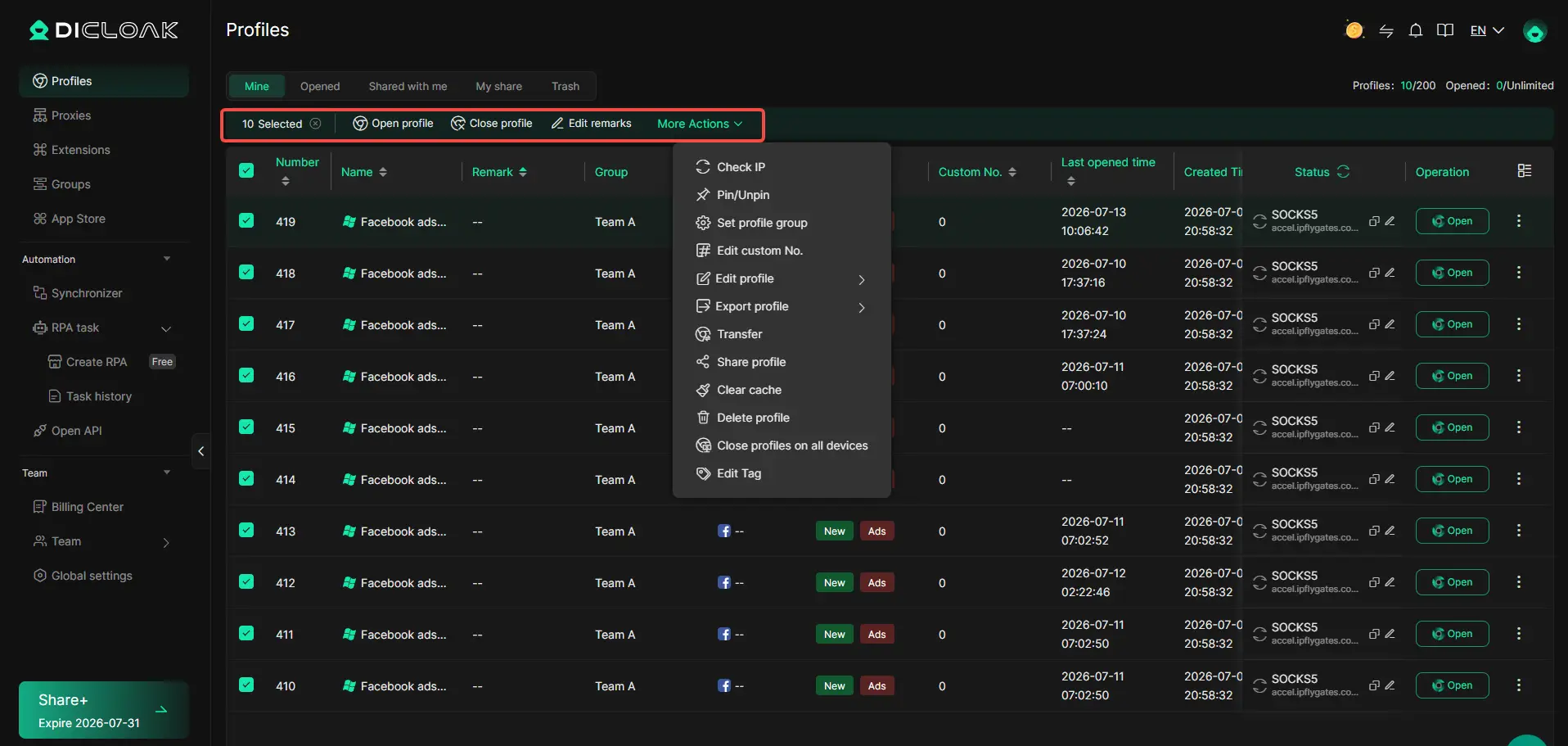
With DICloak, users can create separate Browser Profiles for different authorized accounts or projects. Each Profile maintains independent browser data, including cookies and local storage, while allowing users to configure supported browser fingerprint settings. This makes it easier to investigate one project's access problem without changing unrelated sessions.
For example, an agency managing three client dashboards could assign a separate Browser Profile to each client. If one dashboard displays a Cloudflare block, the team can examine that Profile's configuration and recent workflow while leaving the other client sessions intact. The benefit is better organization and troubleshooting, not guaranteed acceptance by Cloudflare.
Check Proxy Configuration for the Affected Profile
A browser Profile using an unintended proxy may connect through a different IP address or location from the one expected for that project. This can complicate troubleshooting, especially when employees switch between different work accounts throughout the day.
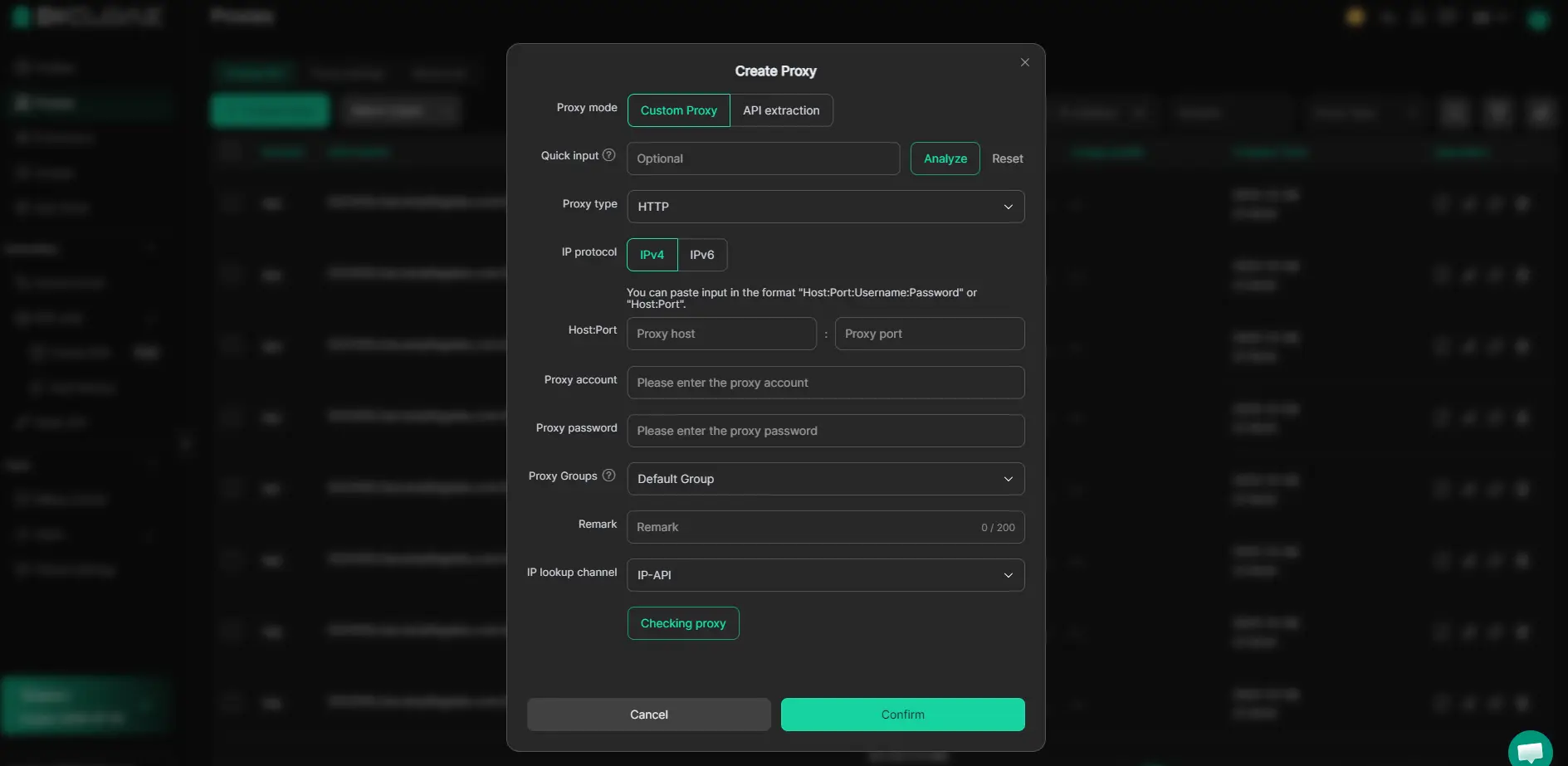
DICloak supports configuring proxies for individual Browser Profiles, including supported HTTP and SOCKS5 connections. Users can review the proxy assigned to a Profile and verify whether it matches the intended setup before investigating a website access error.
Consider a marketing team that uses a corporate connection for one client's dashboard and an approved residential proxy for a separate research workflow. Assigning the appropriate configuration to each Profile reduces accidental connection mix-ups. If the website blocks a request, the team can check which connection was used and provide accurate information to the website administrator.
Changing proxies should not be treated as a guaranteed way to fix a Cloudflare block. The website's security policies and access permissions still determine whether a request is allowed.
Organize Client Projects With Profile Groups and Permissions
As teams grow, separating browser sessions is only part of the challenge. Employees also need clear access to the Profiles required for their projects, without accidentally opening unrelated client accounts.
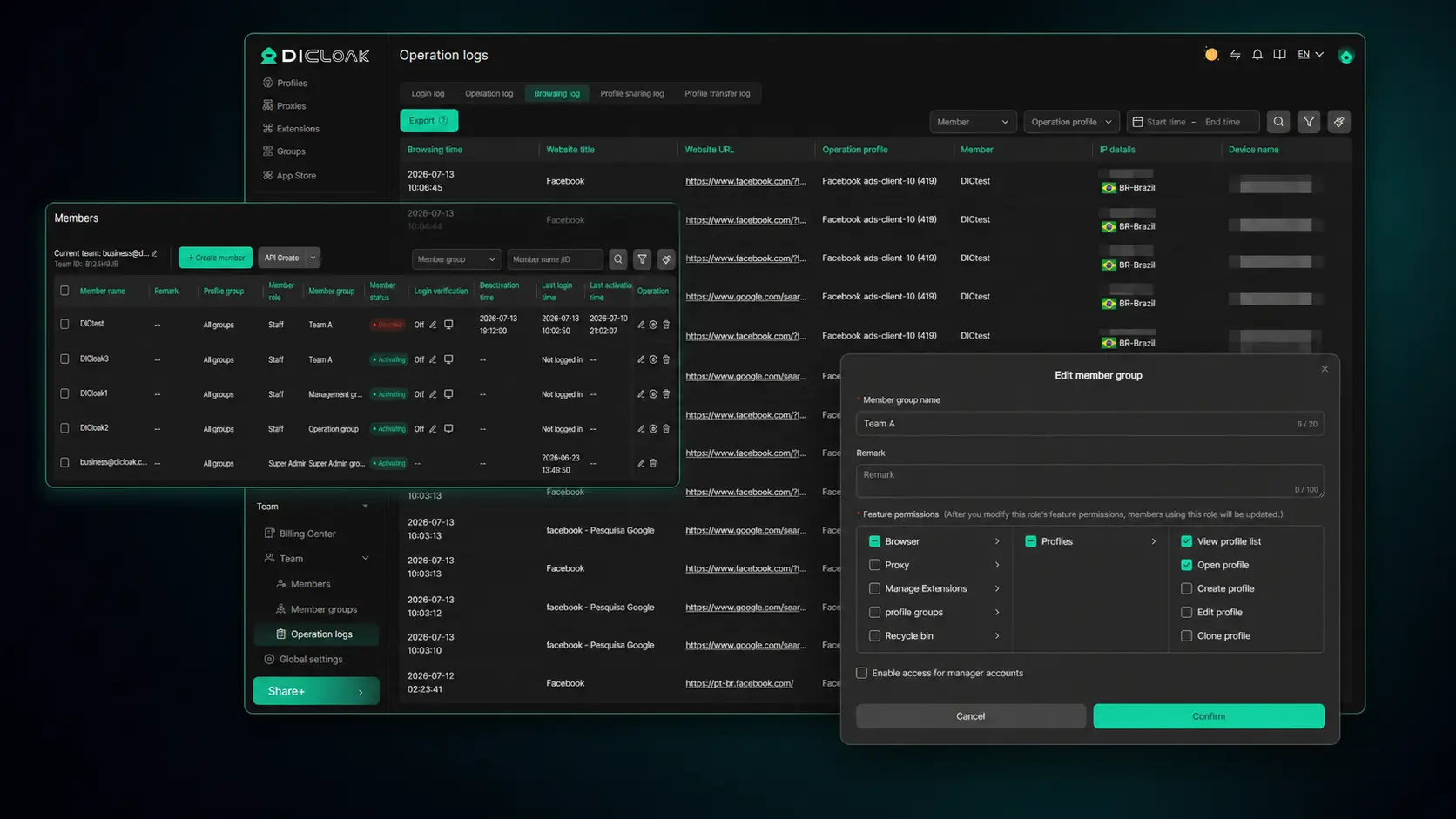
DICloak provides Profile Groups for organizing Browser Profiles by client, project, or department. Administrators can use Member Groups and Permissions to control which Profiles different team members can access, while supported Operation Logs help with reviewing recorded team activities.
For example, an agency working with three e-commerce clients can maintain separate Profile Groups and assign each project team to its relevant accounts. When an employee reports a Cloudflare error, the administrator can identify the affected workflow and review the intended configuration without involving every team member.
This structure supports more consistent multiple account management and reduces the chance of accidental session mix-ups. It does not replace the permissions or account-sharing rules established by the websites being accessed.
Troubleshooting a Blocked Client Dashboard
Imagine an agency employee opens an authorized client dashboard through DICloak and receives the message "Sorry, you have been blocked." Instead of immediately changing browser fingerprints or switching proxies, the team first identifies which Profile and connection were involved.
A practical troubleshooting workflow would be:
- Identify the affected Browser Profile. Confirm the client account, website, and action that triggered the error.
- Review the assigned proxy. Check whether the Profile is using the intended authorized connection.
- Check browser compatibility. Determine whether the issue is a direct block or an unsuccessful verification challenge.
- Record the Cloudflare error. Save the Ray ID, timestamp, and relevant request details.
- Request a security review if necessary. Contact the website administrator rather than repeatedly changing configurations.
This process gives the team a clearer view of the problem while keeping other client sessions organized. DICloak supports the browser management side of the workflow, while the website owner remains responsible for its security rules.
Common Mistakes When Fixing Cloudflare Access Errors
Many online troubleshooting guides suggest changing IP addresses, clearing browser data, or switching browsers. These actions can be useful, but only when they address the actual cause of the restriction. Using them without checking the error type may waste time or make the problem harder to understand.
Myth vs. Reality
| Common belief |
What you should know |
| "Changing my IP will always fix the error." |
A website may be blocking a request because of content, firewall rules, or other security signals |
| "Clearing cookies removes Cloudflare restrictions." |
It may help some browser challenges, but not server-side firewall rules |
| "A different browser fingerprint guarantees access." |
Fingerprint changes cannot override website rules and may cause compatibility problems |
| "Every Cloudflare block expires automatically." |
Some restrictions are temporary, while others remain until a rule changes |
| "A Cloudflare block means my account is banned." |
A blocked request does not prove that the website has suspended your account |
One common mistake is assuming that a new IP address will solve every access problem. If the website is rejecting a specific form submission, changing your connection may not address the underlying WAF rule. Recording what triggered the error and asking the website owner to review it is often more productive.
Another mistake is repeatedly changing browser fingerprint settings when verification fails. Cloudflare challenges require compatible browser features, and certain modifications may interfere with the process. Testing a current standard browser first gives you a clearer comparison before making more changes.
What Can Website Owners Do About False Cloudflare Blocks?
If you manage the affected website, you can investigate the cause through Cloudflare's security tools rather than relying only on visitor reports. Start by opening Cloudflare Security Events and searching for the visitor's Ray ID, IP address, or approximate request time. The available information may help identify the security rule and action involved, although some events may be sampled.
When a legitimate request has been blocked, review the matching rule before making changes. For example, if a WAF rule rejects harmless code submitted through a technical support form, the issue may be resolved through a narrow rule adjustment or justified exception. Disabling broad security protection is usually less appropriate than addressing the specific false positive.
A practical review process includes identifying the request, confirming whether it was legitimate, finding the responsible rule, and testing a targeted adjustment. Continue monitoring the affected workflow afterward to check that legitimate visitors can access it without weakening protection unnecessarily.
FAQ About "Sorry You Have Been Blocked"
Why am I getting "Sorry you have been blocked" on Cloudflare?
You are seeing this message because a security rule has denied your request to a Cloudflare-protected website. Possible reasons include network restrictions, suspicious request patterns, specific firewall rules, or other website security settings.
The message alone does not reveal the exact cause. Check when the error appears, test your browser and connection, and provide the Cloudflare Ray ID to the website owner if the problem continues.
How do I unblock myself from Cloudflare?
Start by checking your VPN or proxy connection, testing the website in an updated browser, and comparing results on another authorized network. If you are stuck on a verification challenge, make sure JavaScript and cookies are enabled and that browser extensions are not interfering.
If a website security rule has explicitly blocked your request, only the website administrator can decide whether to adjust that rule. Visitors cannot directly remove security restrictions configured by another website.
How long does a Cloudflare block last?
There is no fixed duration for every Cloudflare block. Some restrictions, such as certain rate limits, may expire after a configured period, while custom firewall rules can remain active until the website owner changes them.
If the error continues, do not assume that waiting will automatically solve the problem. Collect the Ray ID and contact the website administrator to determine whether the request can be reviewed.
Can I fix "Sorry you have been blocked" without changing my IP?
Yes, depending on the cause. If the issue involves browser verification, updating the browser, enabling JavaScript, or adjusting extensions may help without changing your connection.
If a website firewall rule is rejecting a specific request, the website administrator may need to review that rule. Changing IP addresses is neither necessary nor effective for every Cloudflare access problem.
Why does Cloudflare block me even when I'm not using a VPN?
Cloudflare-protected websites can evaluate requests using signals beyond VPN usage. Your normal IP address, network, request content, location, or traffic pattern may still match a website's security rules.
Try the website in another supported browser and compare the result on a different permitted network. If the error remains, contact the website owner with the Ray ID and details of the blocked action.
Can clearing cookies fix a Cloudflare access denied error?
Clearing cookies may help when stored website data or browser verification is causing a problem. It can remove the affected site's session data, so you may need to sign in again afterward.
However, clearing cookies cannot remove a firewall rule that blocks a particular network or request. Test the website in a private window or another browser before deleting stored data unnecessarily.
What is a Cloudflare Ray ID, and how do I use it?
A Cloudflare Ray ID is an identifier associated with a request processed through Cloudflare. Website administrators can use it to help locate relevant security events and investigate why access was denied.
You can usually find the Ray ID near the bottom of a Cloudflare error page. When contacting support, include it along with the error time, affected page, and action that triggered the problem.
Why does a website work on my phone but not my computer?
Your phone and computer may use different browsers, network connections, IP addresses, and browser settings. Any of these differences could affect how a website's security system handles the request.
Try comparing both devices on the same network, then test another permitted connection if needed. This helps identify whether the issue is more likely related to browser configuration or network access.
No. An antidetect browser cannot guarantee that Cloudflare will accept a request or override website security rules. Browser fingerprint changes and proxy configurations should not be treated as automatic solutions to access restrictions.
DICloak Antidetect Browser can help teams manage separate browser Profiles, maintain independent sessions, and organize proxy connections for authorized workflows. These features make account management and troubleshooting more structured, but website permissions and security requirements still apply.
Final Takeaway
The "Sorry you have been blocked" error does not necessarily mean your account is banned or your IP address is permanently restricted. The best solution is to identify whether the problem comes from your browser, connection, request, or the website's security rules, then test one change at a time.
If the block persists, save the Cloudflare Ray ID and contact the website owner rather than repeatedly changing settings without knowing the cause. For teams managing multiple authorized accounts, DICloak Antidetect Browser can help keep browser Profiles and proxy configurations organized so access problems are easier to investigate.
 Web Proxy Tools
 Free Tools
 Cookie Plugin
 UA Generator
 MAC Address Generator
 IP Generator
 IP Address List
 2FA Code Generator
 World Clock
 Anonymous Check
 WebRTC Leak Test
 UUID Generator
 Free Web Proxy Site
 Proxy Checker
 FB Ad Checker
 AI Web Scraping
 Free SMM Tools
 Twitter Shadowban Checker
 Instagram Name Checker
 UTM Generator
 Username Generator
 AI Hashtag Generator
 LinkedIn Headline Generator
 Social Media Image Resizer