Getting traffic is one of the hardest parts of running a content website. SEO can take months, and social media traffic can change quickly. Because of this, some publishers choose to pay for visitors instead of waiting for organic traffic. They buy traffic, send those visitors to monetized pages, and try to earn more than they spend.
This model is known as traffic arbitrage. The idea is simple: if you spend $100 on traffic and earn $130 from that traffic, the gross difference is $30. However, the model becomes more complicated when publishers want to buy traffic for AdSense, because Google cares about how the traffic is generated, why users visit the page, and whether ad impressions and clicks are genuine.
Buying traffic itself is not automatically against AdSense rules. The bigger issue is traffic quality. Real users who click a clear ad because they want to read your content are very different from bots, incentivized visitors, traffic-exchange users, or people sent through misleading ads. If you want to buy traffic for AdSense, understanding this difference is more important than simply finding the cheapest CPC.

What Is Traffic Arbitrage?
Traffic arbitrage means paying to acquire visitors and then earning money from those visitors through advertising or another monetization method. For AdSense publishers, the most basic model is to buy traffic, send users to content pages with AdSense ads, and earn revenue from the resulting page views and genuine ad interactions.
The challenge is that profit depends on several numbers at the same time. You need to know your cost per visitor, how many pages each visitor views, your AdSense page RPM, and whether part of the traffic is later filtered as invalid. A campaign can look profitable at first but lose money after traffic costs increase or actual earnings come in lower than expected.
For example, suppose you buy 10,000 visitors for $200. If those users generate 20,000 page views and your page RPM is $12, your estimated AdSense revenue would be around $240. On paper, that leaves a $40 gross margin. But hosting, content, tracking tools, ad testing, and invalid traffic adjustments could easily remove that profit.
How Does Buying Traffic for AdSense Work?
When publishers buy traffic for AdSense, they usually purchase visits through paid social ads, native ads, search ads, content recommendation networks, newsletters, or other advertising platforms. The visitor clicks the promotion, lands on a content page, reads the page, and may view one or more AdSense ads.
The important part is that users should visit because they are interested in the content, not because they are being paid or forced to open the page. A person who clicks a Facebook ad about "Ways to Save Money on Groceries" and reads a useful article is normal paid traffic. A person who receives a reward for loading the page or clicking an ad creates a very different situation.
This is why a successful campaign should connect three things: the ad message, the audience, and the landing page. If the promotion promises something different from what appears on the page, users may leave quickly or interact with the page in unusual ways. That hurts both campaign performance and traffic quality.
Step 1: Create a Useful Landing Page
Before you buy traffic, the landing page needs to be worth visiting. A useful page should answer the question or problem promised in the paid ad. It should contain enough original information for users to read naturally instead of arriving on a thin page built mainly around advertisements.
For example, if your ad promotes "7 Ways to Lower Your Electricity Bill," the landing page should provide clear and practical advice about electricity costs. It should not force the user through several unnecessary pages just to create more ad impressions. Useful content can also lead to longer visits, more page views, and better overall monetization.
Page design matters as well. Navigation should be clear, content should be easy to read, and ads should not be placed where users may confuse them with buttons or menu items. If you plan to buy traffic for AdSense, your page should work well even if there were no ads on it.
Step 2: Buy Relevant Traffic
The next step is choosing where to buy traffic. The cheapest source is not always the best source. A visitor who costs $0.04 but reads several pages can be more valuable than a $0.01 visitor who leaves after five seconds.
You should also know exactly how the traffic is generated. A provider should be able to explain whether visitors come from paid social ads, native placements, search ads, publisher placements, or another clear source. If a seller simply promises "100,000 real visitors" without explaining where those users come from, that is a serious warning sign.
Audience relevance is also important. If your website covers U.S. personal finance, buying very cheap traffic from countries where the content has little relevance may create page views but little real engagement or revenue. When you buy traffic for AdSense, the goal should be useful traffic, not just a large number in Analytics.
Step 3: Track Traffic Cost and AdSense Revenue
Traffic arbitrage only works when the numbers make sense. Publishers should compare the cost of acquiring visitors with the revenue those visitors generate. AdSense page RPM is one of the most useful metrics because it shows estimated revenue per 1,000 page views.
Suppose you pay $0.02 per visitor and buy 10,000 visitors for $200. If each visitor views an average of two pages, you receive 20,000 page views. At a $12 page RPM, those page views would generate about $240 in estimated revenue.
That gives you only a $40 gross margin before other costs. If your page RPM falls to $9, the same 20,000 page views generate only $180, turning the campaign into a loss. This is why even a small change in RPM or traffic cost can completely change the result.
Step 4: Stop Low-Quality Campaigns Quickly
Once a campaign starts, you should monitor it closely instead of assuming more traffic means more money. Compare sources by engagement, revenue, location, device, and landing-page behavior. If one source suddenly sends thousands of users who leave almost immediately, it deserves closer attention.
You should also watch for traffic patterns that do not make sense. Extremely high click rates, sudden traffic spikes, unusual locations, or large numbers of users with almost identical behavior can be signs that the source needs investigation. Continuing to buy suspicious traffic just because it is cheap can create a much larger problem later.
Good traffic arbitrage is therefore not only about scaling profitable campaigns. It is also about stopping poor traffic before it damages earnings or creates AdSense concerns.
Can You Buy Traffic for AdSense?
Yes, you can buy traffic for AdSense when the traffic is genuine and your acquisition method follows Google's policies. Paid traffic is not automatically invalid traffic. Publishers can promote websites through advertising, but they remain responsible for the traffic that reaches their AdSense ads.
A normal paid campaign may involve a real user seeing a social, search, or native ad and choosing to visit your article. That user reads the content because the topic interests them. This is very different from a bot repeatedly loading pages or a paid-to-click service sending people who only visit because they receive a reward.
The key question is therefore not "Did I pay for this traffic?" The better questions are: "Where did these visitors come from?", "Why did they click?", "Did the ad accurately describe the page?", and "Are their interactions genuine?" If you cannot answer those questions, you should be careful before increasing spend.
What Type of Paid Traffic Can Be Used With AdSense?
Paid traffic is easier to manage when users have a clear reason to visit the page. Social ads, search campaigns, native advertising, newsletters, and other standard marketing channels can send genuine visitors when the ad and landing page match.
For example, imagine you have a travel article about affordable hotels in New York. You promote it to people researching New York trips. Users click because the article matches their interest, compare the hotels, and perhaps read another page about transportation or attractions. That is a natural user journey.
The traffic source should also give you enough information to measure performance. You should be able to identify the campaign, placement, audience, country, or device whenever possible. Better source data makes it easier to compare traffic quality and stop a problem campaign.
What Traffic Should You Avoid When Buying Traffic for AdSense?
Publishers should avoid traffic designed mainly to create artificial impressions or clicks. This includes bots, autosurf systems, click exchanges, paid-to-click programs, and other services that reward users for visiting or interacting with ads.
These sources are risky because the user's goal is not to consume the content. The user may only be there to complete a task, earn a reward, or generate an artificial page view. That behavior does not represent genuine interest and can create invalid traffic.
You should also be careful with extremely cheap traffic from unclear sources. If a provider will not tell you how users are acquired, which placements are used, or why visitors are clicking, you cannot properly evaluate the risk. A low CPC should never be the only reason to buy traffic for AdSense.
A Simple Example of Buying Traffic for AdSense
The easiest way to understand traffic arbitrage is to compare campaign cost with actual page revenue. The example below is hypothetical, because AdSense RPM varies by niche, country, device, season, and advertiser demand.
Assume two campaigns each buy 10,000 visitors. Both groups view an average of 1.8 pages per visitor, creating 18,000 page views. The only major difference is how much each visitor costs.
| Metric |
Campaign A |
Campaign B |
| Paid visitors |
10,000 |
10,000 |
| Cost per visitor |
$0.015 |
$0.030 |
| Total traffic cost |
$150 |
$300 |
| Pages per visitor |
1.8 |
1.8 |
| Total page views |
18,000 |
18,000 |
| Example page RPM |
$10 |
$10 |
| Estimated AdSense revenue |
$180 |
$180 |
| Gross result |
+$30 |
\\\\\\\\\\\\\\\\\\\\\\\\\\\\\\\\\\\\\\\\\\\\\\\\\\\\\\\\\\\\\\\\\\\\\\\\\\\\\\\\\\\\\\\\\\\\\\\\\\\\\\\\\\\\\\\\\\\\\\\\\\\\\\\\\\\\\\\\\\\\\\\\\\\\\\\\\\\\\\\\\\\\\\\\\\\\\\\\\\\\\\\\\\\\\\\\\\\\\\\\\\\\\\\\\\\\\\\\\\\\\\\\\\\\\\\\\\\\\\\\\\\\\\\\\\\\\\\\-$120 |
Campaign A produces a small $30 gross profit before other expenses. Campaign B loses $120 even though both campaigns produce the same number of page views and the same AdSense revenue. This shows why acquisition cost has such a strong effect on arbitrage performance.
However, Campaign A is still not especially safe financially. If page RPM falls from $10 to $8, its estimated revenue drops from $180 to $144, and the campaign becomes unprofitable. A strong campaign therefore needs enough margin to survive normal changes in RPM, traffic price, and traffic quality.
What Determines Whether Buying Traffic for AdSense Is Profitable?
The basic goal is to make more money from a visitor than you spend to acquire that visitor. In practice, four factors matter most: traffic cost, pages per visitor, page RPM, and traffic quality. A weakness in any one of these areas can remove the profit.
A cheap visitor is useful only if that person behaves like a real reader. A high RPM is useful only if the traffic cost is low enough. More page views help only when users naturally want to continue reading instead of being pushed through unnecessary pages.
Traffic Cost
Cost per visitor sets the starting point for your campaign. If you spend $0.05 to acquire someone who produces only $0.03 in total value, the model is already losing money. You must either reduce the cost, improve monetization, or stop the campaign.
Traffic costs also change quickly. A campaign that performs well at $0.015 per visitor may stop working when the same audience costs $0.025. Publishers should therefore track cost trends instead of assuming a profitable CPC will remain stable.
This is especially important when scaling. Buying ten times more traffic may push you into more expensive placements or lower-quality audiences, so larger campaigns do not always produce the same profit margin.
Page RPM and Pages Per Visitor
Page RPM tells you how much revenue your pages produce per 1,000 views. Pages per visitor tells you how much content each paid user consumes. Together, these two numbers strongly affect how much a visitor is worth.
For example, a visitor who views one page on a site with a $10 RPM has a very different value from someone who views three pages. However, publishers should not try to inflate page views through poor design or unnecessary pagination. The extra pages should exist because users actually want the information.
If you want to earn more from paid traffic, improving content depth and internal linking can be more useful than simply placing more ads. The goal is to create a site where users naturally continue reading.
What Are the Risks When You Buy Traffic for AdSense?
The biggest risk is not simply losing money on an ad campaign. Poor-quality traffic can also affect AdSense earnings and account health. Publishers remain responsible for the traffic that reaches their ads, even when a third-party company sends those visitors.
This means traffic arbitrage requires both financial monitoring and quality control. A campaign may appear profitable in terms of CPC and RPM but still be risky if the source produces unnatural behavior.
Invalid Traffic
Invalid traffic includes clicks or impressions that do not reflect normal user interest. Automated visits, repeated artificial interactions, encouraged clicks, and some accidental clicks can all fall into this category.
If invalid activity becomes significant, Google may remove related earnings or limit ad serving. More serious or repeated problems can create larger account issues. For a publisher who depends on AdSense, this risk can be more damaging than losing money on a single campaign.
This is why traffic quality should be treated as part of campaign cost. A $100 traffic source that produces genuine readers can be more valuable than a $50 source that creates suspicious behavior.
Misleading Ads and Poor Landing Pages
Even real users can create poor-quality traffic if the ad is misleading. A headline that promises one thing and sends people to unrelated content can cause visitors to leave quickly. It may also create strange interaction patterns because users are confused about where they have landed.
The landing page should match the ad closely. Users should immediately understand what the page is about, and the main content should be easy to find. Ads should not look like navigation buttons, download links, or part of the article.
This matters because good traffic does not automatically fix a bad page. If you plan to buy traffic for AdSense, both the traffic source and the landing page need to be trustworthy.
Unstable Profit Margins
Traffic arbitrage often works with narrow margins. A publisher may earn $220 after spending $200 on traffic, which looks profitable until other costs are included. A small RPM drop, CPC increase, or reduction in page views can turn that $20 gain into a loss.
Publishers should also avoid judging a campaign from one good day. Advertising demand changes, traffic prices change, and estimated earnings can change. It is better to look at several days of stable data before increasing the budget.
A campaign that only works when every metric is at its best is difficult to scale safely. Stronger campaigns still make sense when you use more conservative assumptions.

How to Buy Traffic for AdSense With Lower Risk
There is no way to remove every risk, but publishers can reduce unnecessary problems by using transparent traffic sources and monitoring campaigns carefully. The goal should always be to attract people who actually want to consume the content.
Start with a small budget when testing a new source. A limited campaign gives you enough data to review engagement, locations, devices, page views, traffic quality, and estimated revenue without putting a large amount of money at risk. If the results are poor or unusual, stop the campaign before scaling.
Before you buy traffic for AdSense, check the following:
- Know where the visitors come from.
- Use traffic sources with clear placements and targeting.
- Avoid bots, traffic exchanges, autosurf, and paid-to-click services.
- Make sure the ad matches the landing page.
- Send users to original and useful content.
- Track each campaign separately.
- Compare visitor quality, not only CPC.
- Watch for unusual click or traffic patterns.
- Start small and scale only after stable results.
- Stop suspicious sources quickly.
Track Every Traffic Source Separately
One of the biggest mistakes is mixing all paid traffic together. If social ads, native campaigns, newsletters, and other providers all send visitors to the same page without clear tracking, it becomes difficult to identify which source is profitable and which source is causing problems.
Use campaign parameters and analytics to separate sources. Compare pages per visit, user location, device, time on page, revenue, and other useful signals. The goal is not to find one "perfect" metric but to understand whether users behave like people who actually wanted to visit the page.
For example, Source A may cost twice as much as Source B but produce users who read several articles. Source B may produce much cheaper clicks but almost no engagement. For AdSense arbitrage, Source A may still be the stronger traffic source.
Scale Only After the Numbers Are Stable
A profitable test does not always stay profitable when the budget increases. Larger campaigns may reach less relevant audiences, more expensive placements, or lower-quality inventory. That can change both traffic cost and visitor behavior.
Suppose a $50 test produces traffic at $0.015 per visitor and a good RPM. Increasing the budget to $2,000 may push the average cost to $0.025 or reduce engagement. The economics are now completely different.
For this reason, scaling should happen in stages. Recheck cost, page RPM, pages per visitor, and traffic quality after each meaningful increase in spend.
How DICloak Can Help Manage Traffic Arbitrage Workflows
If you buy traffic for AdSense, campaign management can become harder as you test different traffic sources, regions, and team workflows. DICloak is an antidetect browser that can help keep these tasks organized in separate browser Profiles. It does not make invalid traffic compliant with AdSense rules, but it can make legitimate campaign testing and account management easier to control.
Use Separate Browser Profiles with Custom Fingerprint Settings
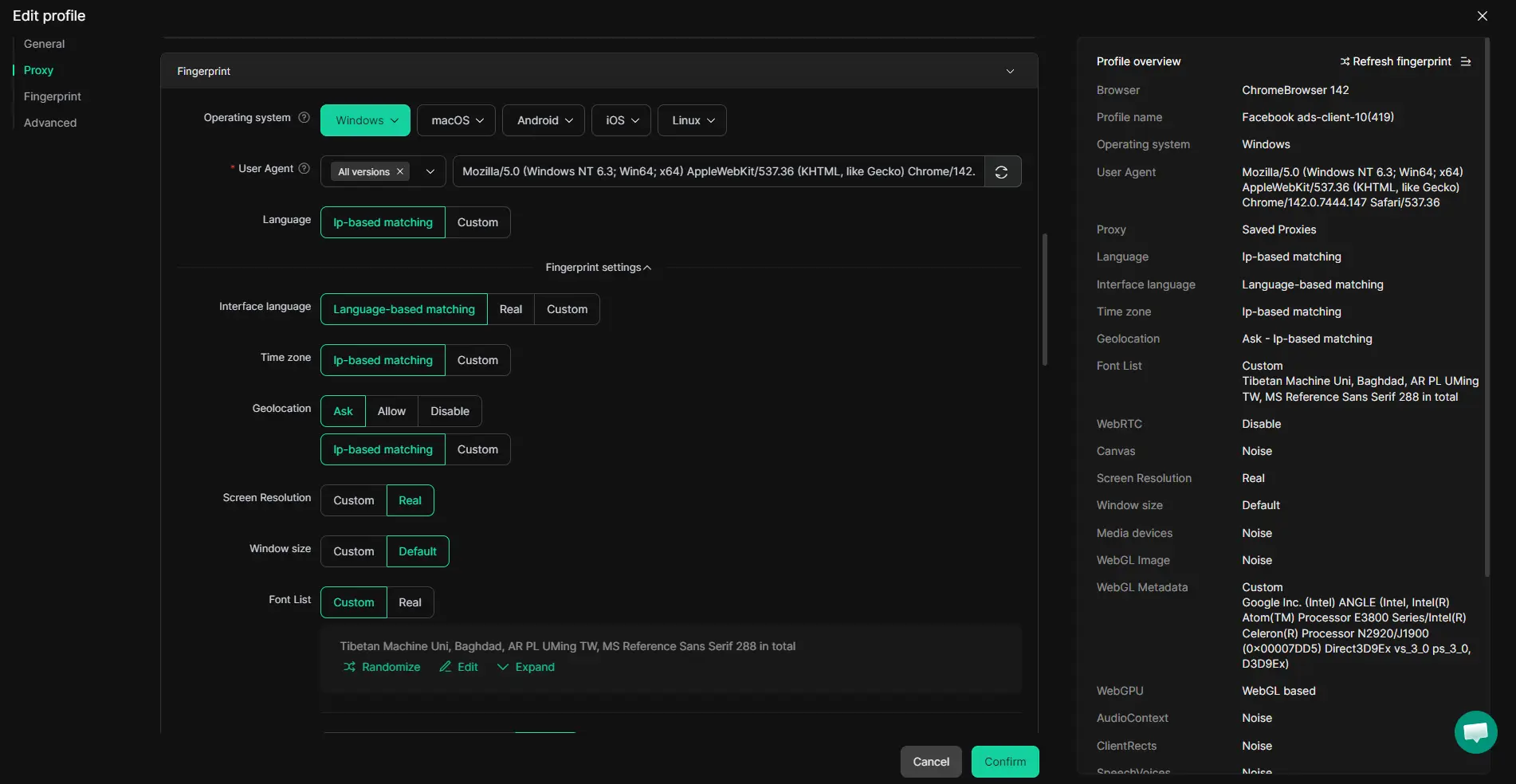
DICloak lets users create separate browser Profiles and configure fingerprint settings such as operating system, User Agent, language, time zone, geolocation, fonts, WebRTC, Canvas, WebGL, and AudioContext. This can be useful when a team needs separate browser setups for different advertising accounts, markets, or campaign environments instead of mixing everything in one browser session. Each Profile can keep its own browser settings and session data, which makes campaign work easier to separate and review.
Manage Proxies for Different Traffic Markets
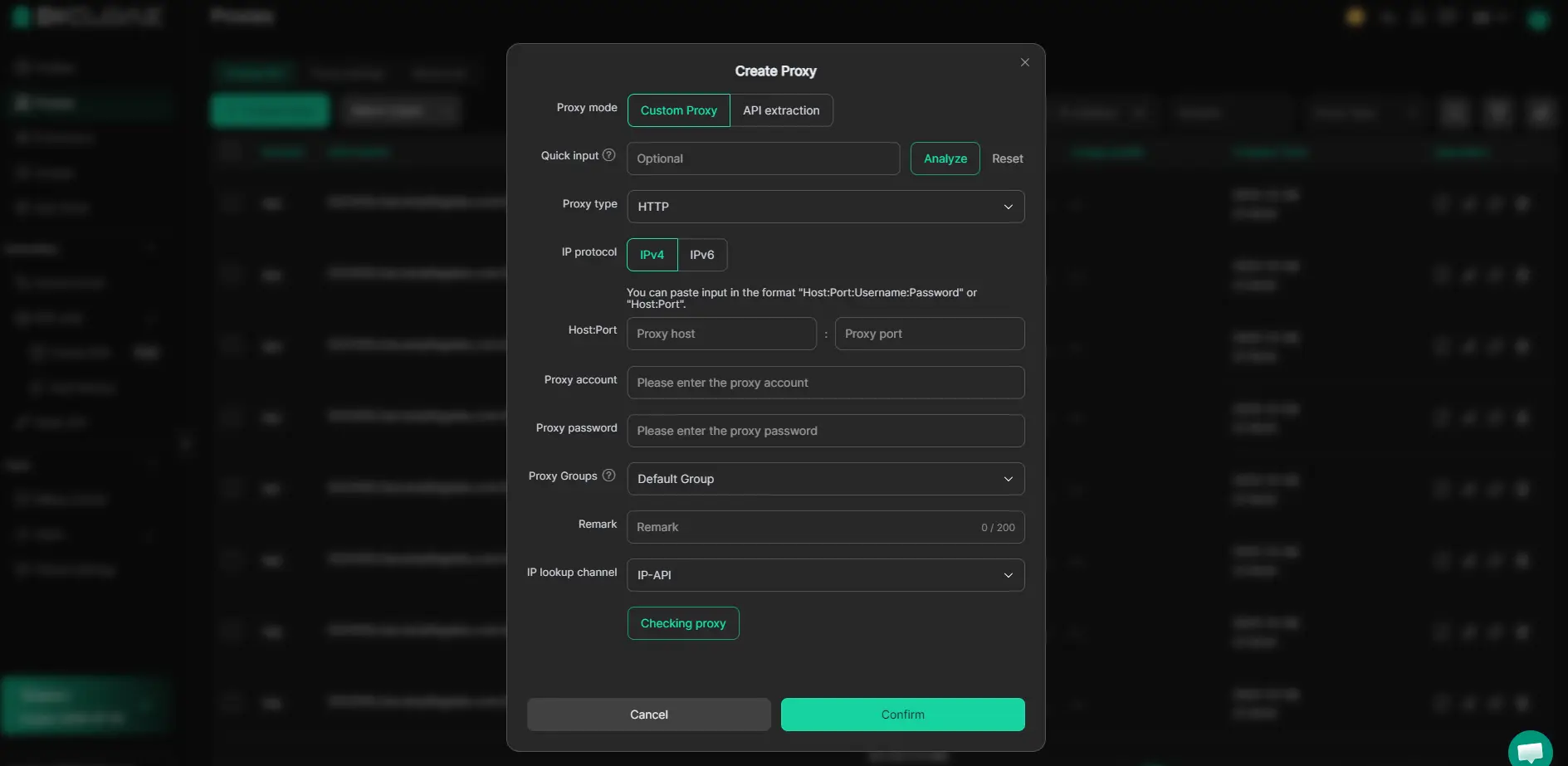
DICloak also supports proxy configuration inside each Profile. Users can add proxy details, choose supported proxy types, check the proxy before use, and organize proxies into groups. For traffic arbitrage teams working with campaigns in different countries or regions, this can help keep each browser Profile aligned with the intended network location. The important point is to use proxies for legitimate campaign management and testing, not to create artificial AdSense impressions or clicks.
Review Campaign Activity with Operation Logs
DICloak's Operation Logs help teams review how Profiles are being used. The interface can record login activity, browsing activity, Profile sharing, Profile transfers, member actions, IP details, device information, and software versions. This is useful when several people manage paid traffic campaigns because admins can see who accessed a Profile and what actions took place. For publishers who buy traffic for AdSense, better activity records can make it easier to investigate unusual behavior and keep team workflows more consistent.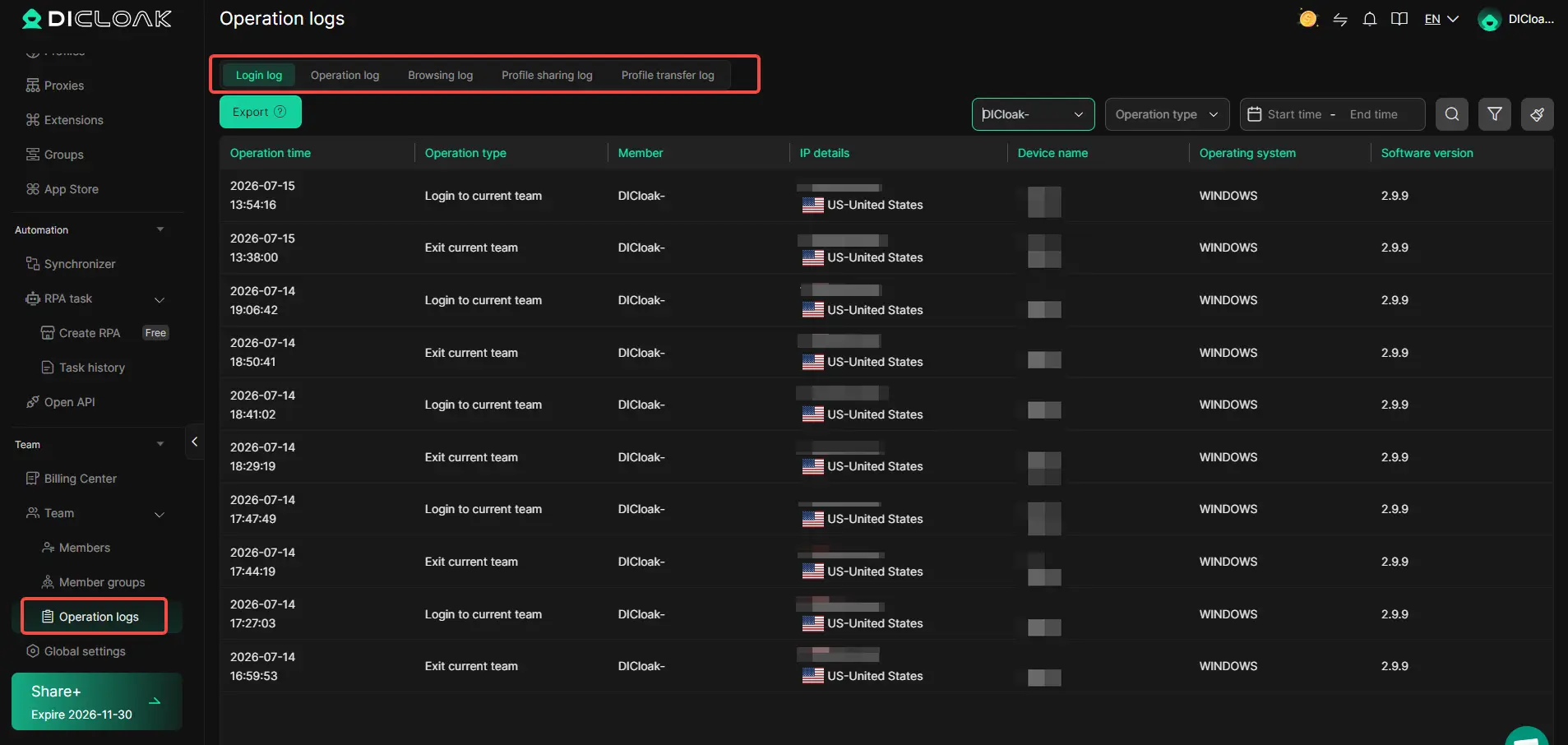
Frequently Asked Questions About Buying Traffic for AdSense
Can You Buy Traffic for AdSense Safely?
Yes, you can buy traffic for AdSense when visitors are real and the source follows Google's policies. Avoid bots, click exchanges, paid-to-click programs, and unclear traffic sellers.
Is It Against Google Rules to Buy Traffic for AdSense?
No. It is not automatically against Google rules to buy traffic for AdSense. Traffic quality, user intent, landing-page quality, and ad behavior are the main concerns.
What Traffic Should You Avoid When You Buy Traffic for AdSense?
Avoid automated traffic, incentivized visits, autosurf systems, traffic exchanges, and providers that cannot explain where their visitors come from. These sources can create invalid impressions or clicks.
Can You Earn Money When You Buy Traffic for AdSense?
Yes, but only when revenue is higher than traffic and operating costs. Profit depends on CPC, page RPM, pages per visitor, and traffic quality.
Is Buying Traffic for AdSense a Good Way to Monetize a Website?
It can be one way to monetize a website, but the profit margin can be small and unstable. Many publishers reduce risk by combining AdSense with other revenue sources.
Conclusion
Buying traffic can be a practical way to grow a monetized website, but it only works when the traffic is real, relevant, and easy to track. If you want to buy traffic for AdSense, focus on where visitors come from, why they click, how they behave on the page, and whether the revenue is higher than the full cost of acquiring them.
Traffic arbitrage can produce a profit, but the margins are often small. Changes in CPC, page RPM, visitor quality, or invalid traffic can quickly turn a profitable campaign into a loss. This is why it is safer to start with small tests, monitor every traffic source separately, and scale only after the results remain stable.
The main goal should not be to find the cheapest possible traffic. It should be to attract real users who actually want your content. That gives you a better chance to earn from AdSense and build a more stable way to monetize a website over time.
 Web Proxy Tools
 Free Tools
 Cookie Plugin
 UA Generator
 MAC Address Generator
 IP Generator
 IP Address List
 2FA Code Generator
 World Clock
 Anonymous Check
 WebRTC Leak Test
 UUID Generator
 Free Web Proxy Site
 Proxy Checker
 FB Ad Checker
 AI Web Scraping
 Free SMM Tools
 Twitter Shadowban Checker
 Instagram Name Checker
 UTM Generator
 Username Generator
 AI Hashtag Generator
 LinkedIn Headline Generator
 Social Media Image Resizer