Trying to figure out TikTok shop affiliate roles often means sorting through conflicting advice and unclear job descriptions. Some guides treat every role as if it’s just posting links or creating content, but real affiliate teams on TikTok Shop juggle far more: tracking conversions, managing product approvals, and negotiating with sellers, all while keeping up with ever-changing platform rules.
It’s easy to get tripped up by the details. For example, the tiktok shop affiliate responsibilities for a manager look very different from a creator’s daily workflow, especially when it comes to handling disputes or monitoring multiple campaigns at once. Miss a key step, like not tracking your unique affiliate links properly, and you could end up losing out on commissions you’ve actually earned, with little recourse.
The reality is, most new affiliates underestimate the amount of coordination and risk management involved. You’re not just signing up and waiting for sales. You need a clear workflow for submitting content, handling product samples, managing deadlines, and flagging suspicious activity. If you’re working as a tiktok shop affiliate manager, you’ll also be vetting partners, troubleshooting with TikTok support, and keeping detailed logs to defend your payouts if a dispute hits.
Understanding how these roles break down, and where the biggest pitfalls are, saves hours of backtracking. Here’s what to watch for before you step into your first campaign.
What Are the Main TikTok Shop Affiliate Roles in 2026?
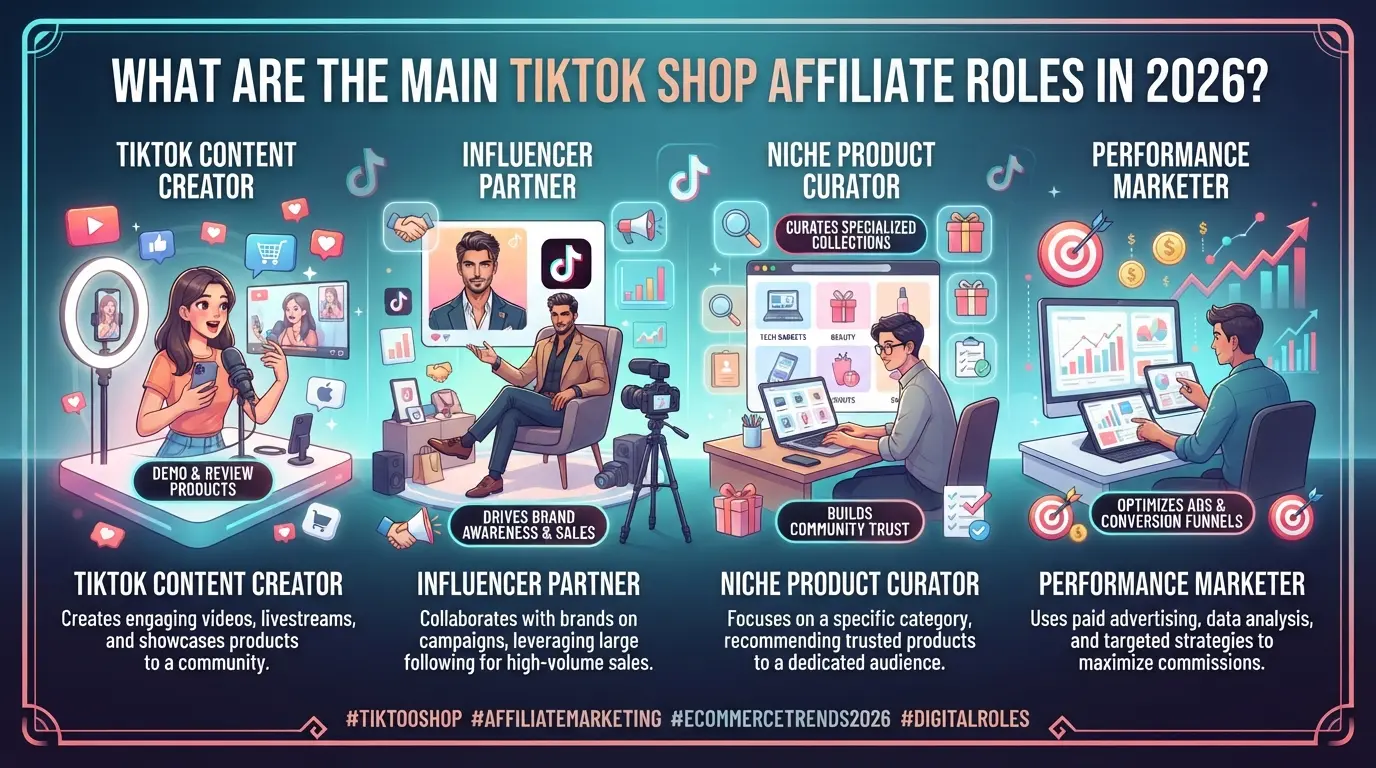
The main roles in TikTok Shop affiliate programs are creators, affiliate managers, and brands or merchants. Each role has its own tasks and risks, so knowing where you fit makes it easier to avoid common mistakes.
Affiliate Creators: Promoting Products and Earning Commissions
Affiliate creators choose which products to feature, then publish videos or livestreams with embedded affiliate links. Commissions are usually a percentage of each sale tracked through their unique link, most creators focus on hot items or trending brands to increase returns.
Affiliate Managers: Coordinating Campaigns and Partnerships
Affiliate managers sit between creators and brands. Their job is to connect the right influencer with the right offer, handle sample shipments, set campaign timelines, and track performance. A typical day involves chasing creators for content deadlines, checking if brands have paid out commissions, and keeping clear records in case TikTok support needs proof of work. If managers skip keeping logs or don’t document sample shipments, they risk disputes where neither side can prove what was promised, this can lead to unpaid commissions or lost partnerships. For example, if a creator claims a sample never arrived and the manager has no delivery record, a campaign may stall and payouts get delayed. Managers also need to flag suspicious traffic spikes; if an affiliate’s link suddenly generates 10x normal sales, TikTok may freeze payouts until the manager clarifies the source. The hardest part is balancing trust and verification, too much oversight slows campaigns, but too little invites fraud or missing commissions.
Brands and Merchants: Setting Up Affiliate Programs
- Brands recruit affiliates by reviewing creator profiles and engagement rates.
- They use TikTok Shop dashboards or third-party tools to track link clicks, sales, and payout status.
- Merchants set commission tiers, approve content, and monitor for abnormal traffic or compliance issues.
The biggest gap is usually in tracking, if a merchant fails to monitor payouts or misses fraud signals, campaigns can go sideways. Each role depends on the others to keep workflows smooth and commissions accurate.
Stepping into any of these roles means checking responsibilities, risks, and expectations up front. Before you accept an affiliate spot, dig into the details, some gaps only show up when you’re already committed.
What Should You Check Before Accepting a TikTok Shop Affiliate Role?
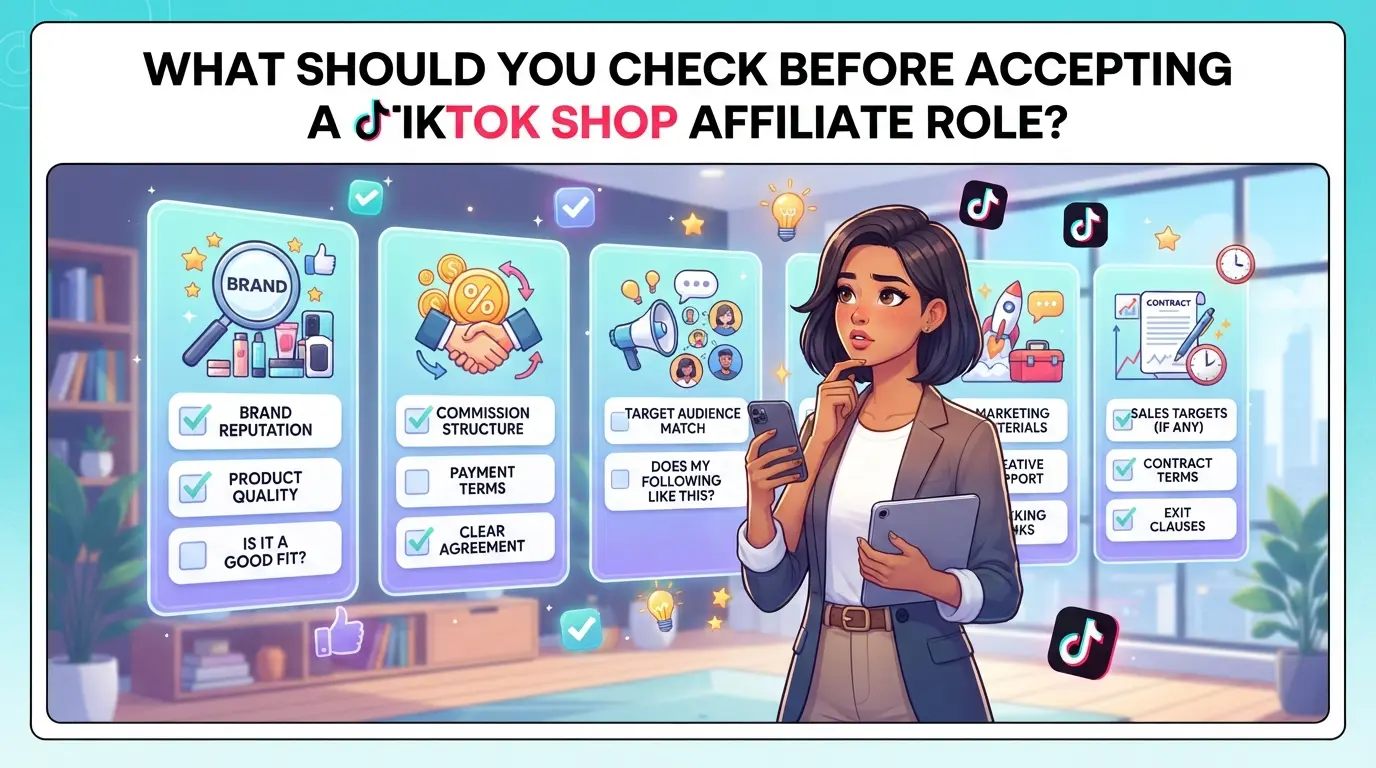
Jumping into a TikTok Shop affiliate gig without checking the basics is how people get stuck with lost commissions, sudden restrictions, or disputes they can’t win. Before you commit, run through these checks, missing even one can mean trouble later.
Eligibility and Account Requirements
Most TikTok Shop affiliate roles require a minimum follower count, active engagement history, or specific account age. If your account doesn’t meet their criteria, you won’t qualify for payouts even if you drive sales.
Check your account’s eligibility before applying, don’t assume you qualify just because you have a TikTok profile.
Program Terms and Commission Details
Program rules are where new affiliates trip up. Skipping the fine print can mean promoting the wrong products, missing payout deadlines, or getting locked out of your earnings. Run this checklist before you agree:
- Confirm the commission rate for each product category.
- Check the payout schedule (weekly, monthly, or after a minimum threshold).
- Review which products you’re allowed to promote and any brand-specific restrictions.
Risks and Restrictions
TikTok’s platform rules change often. Affiliates who don’t keep up risk sudden account suspensions, commission clawbacks, or even losing access to their affiliate dashboard. Missing compliance checks is the most common way affiliates lose their earnings.
- Audit your content for prohibited product claims or misleading promotions.
- Track recent platform rule changes, especially around giveaways, user data, or paid endorsements.
- Flag any history of account warnings, restrictions, or suspicious activity before joining the program.
Missing even one of these checks can mean you’re out not just a commission, but the ability to appeal or recover your account. That’s why affiliates who last in the game keep a running log of program terms, eligibility reviews, and compliance risks. Next up: the exact reasons some TikTok Shop affiliates get restricted or lose commissions, and how to spot them before it happens.
Why Some TikTok Shop Affiliates Get Restricted or Lose Commissions
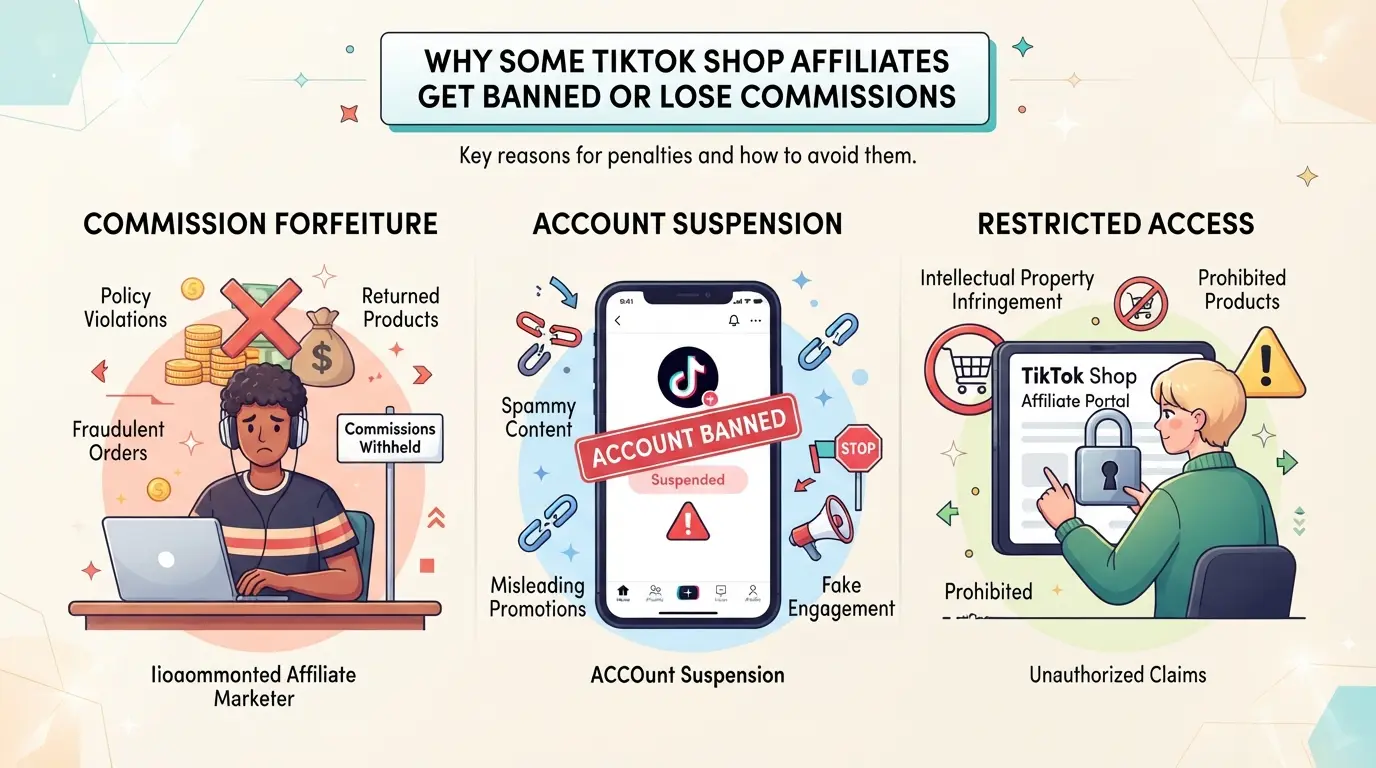
Restrictions and lost commissions hit TikTok Shop affiliates when account actions break platform rules, trigger fraud detection, or cause disputes with brands. Most problems come from ignoring the fine print, trying to shortcut growth, or failing to keep clear records.
Violating Platform or Brand Rules
TikTok bans direct cash giveaways, fake product claims, and links to unapproved stores. Affiliates who promote blacklisted items or use misleading sales language often find their accounts flagged or frozen. Even one violation can put all pending commissions on hold.
Fraudulent Activity and Fake Engagement
Buying followers or engagement may look like a quick fix, but TikTok’s system scans for sudden spikes, repetitive IP addresses, and patterns that don’t match normal user behavior. For example, if you run ten accounts on the same Wi-Fi and each “likes” the same video seconds apart, TikTok’s logs group those actions, flagging them as a bot farm. The risk isn’t just account suspension; TikTok can claw back commissions if it finds fake conversions tied to your content. Even running paid ads with misleading calls to action can trigger a review that freezes your earnings. Trying to inflate stats with fake engagement almost always backfires, and once your account is tagged, it’s nearly impossible to appeal.
Miscommunication Between Affiliates and Brands
- Don’t skip written agreements, verbal promises won’t protect your payout if a brand backs out.
- Send screenshots or logs for product placements, not just links; proof matters in disputes.
- If payment terms are vague, ask for a clear schedule and reporting template before posting.
Missing one of these steps is an easy way to lose months of work with no recourse. A quick DM is not enough, anything not documented can disappear if a brand changes their mind.
Clear communication and proof of work matter just as much as follower count. The next step is understanding how affiliate managers keep teams on track and spot these risks before they turn into lost payouts.
How TikTok Shop Affiliate Managers Coordinate Teams and Campaigns
Affiliate managers on TikTok Shop keep campaigns moving by breaking down each project into repeatable steps and holding each person accountable. The whole point is to catch issues early, missed submissions, expired links, compliance gaps, before they cost the team commissions or get accounts flagged.
Campaign Planning and Role Assignment
- Set a clear campaign goal (ex: 500 sales in 10 days) so everyone knows the target.
- Assign each creator a product, unique code, and deadline, this avoids duplicate content or forgotten posts.
- Track submissions daily. If a creator misses their slot, follow up immediately, late content can void brand deals or push the whole team off schedule.
Communication and Reporting
- Use a shared workspace (like Slack, Notion, or a Google Sheet) for all updates. Chasing DMs wastes hours when one dashboard shows everything at a glance.
- Require daily check-ins, brief, not busywork. Missing two in a row often reveals someone is stuck or losing focus.
- Log every link, sample, and commission in one place. If a payout is lower than expected, you need the exact trail to prove what happened.
Handling Disputes and Compliance Issues
- Address conflicts directly in the shared workspace, side chats only create confusion and missed details.
- Flag any account action (like a post taken down or a warning from TikTok) the same day. Waiting even 24 hours can lock you out of appeals or evidence.
- Double-check that every campaign follows TikTok Shop’s rules, brand content, hashtags, and disclosure. One slip can get the entire group restricted, not just an individual.
When the basics work, teams spend less time fighting fires and more time growing. The next step is locking down account safety at scale, because the bigger the operation, the more one small mistake can ripple out.
How Teams Can Manage Multiple TikTok Shop Affiliate Accounts More Safely with DICloak
Affiliate teams juggling multiple TikTok Shop accounts quickly run into messy logins, tangled browser sessions, and accidental cross-account activity. If you’re running campaigns with several creators or handling tiktok shop affiliate roles across regions, keeping each account environment separate is not just a nice-to-have, it’s how you avoid wasted hours and disputes. Here’s what teams actually do to set up safer workflows using DICloak, focusing on profile isolation, proxy assignment, and batch management.
Creating Isolated Browser Profiles and Configuring Fingerprints
Operators start by creating a separate browser profile for each TikTok Shop account they manage. This isn’t just about having a different login; it means storing each session, cookie, cache, and local storage in its own space. Teams configure fingerprint settings, like OS, user agent, timezone, and geolocation, for every profile, which helps keep account environments consistent and avoids accidental overlap. For example, if your affiliate manager handles accounts for sellers in different countries, they configure each profile’s signals to match the account’s region and device type. The scope is limited to browser-profile access and session storage; DICloak does not change TikTok Shop affiliate program objects or guarantee platform outcomes. 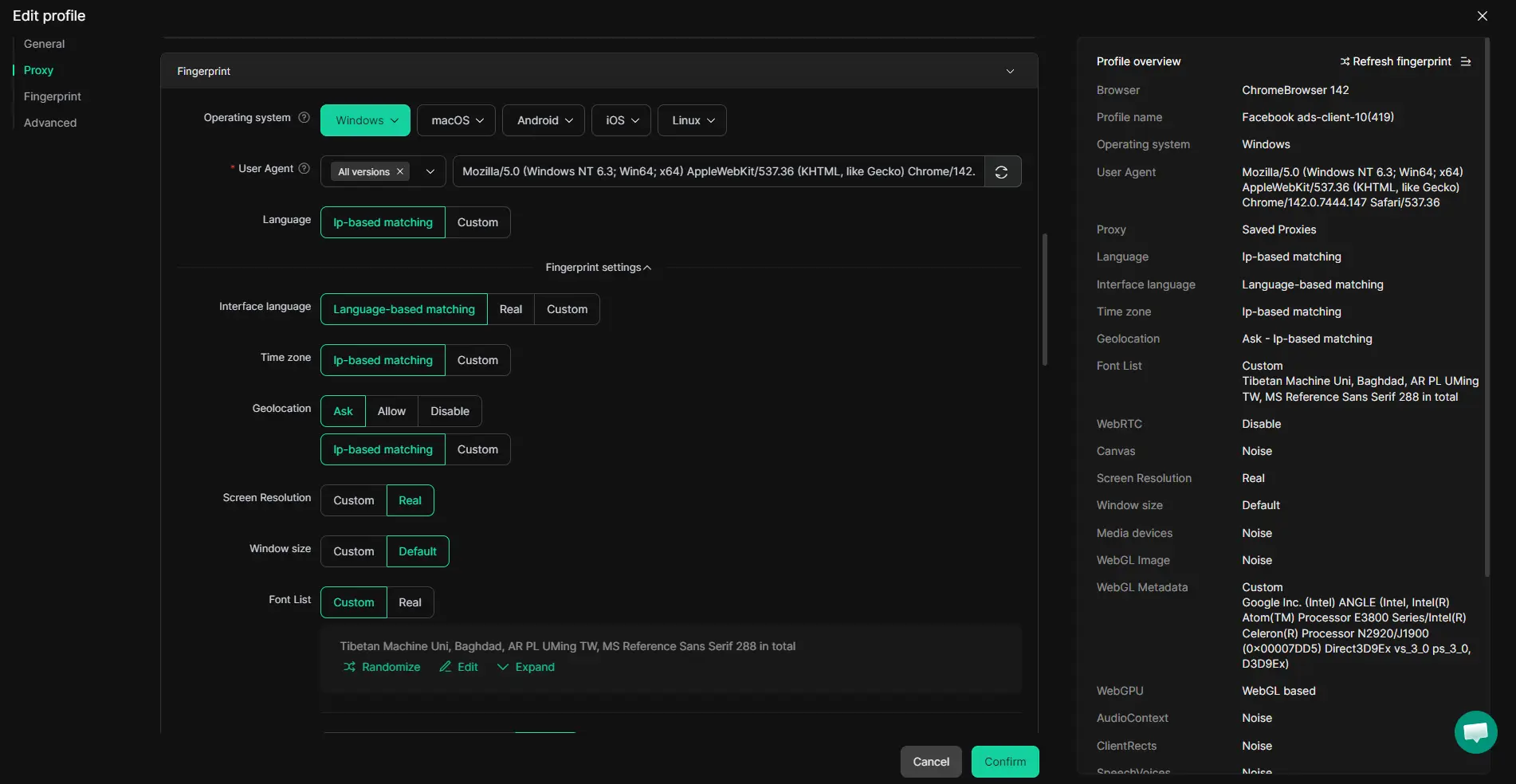
Assigning User-Owned Proxies to Each Account Profile
Once profiles are ready, operators assign their own proxy connection per account. This step matters when you need network separation, say, a team member in Chicago manages one seller while another in London handles another. Operators enter proxy credentials (host, port, username, password) for each profile and use the built-in check to confirm connectivity, exit IP, and region. You can pick No Proxy for the local connection or select from Custom Proxy, Saved Proxies, or API Extraction if your workflow calls for dynamic IPs. Proxy selection and quality are up to the operator; DICloak stores and applies the proxy, but does not sell or supply proxies. 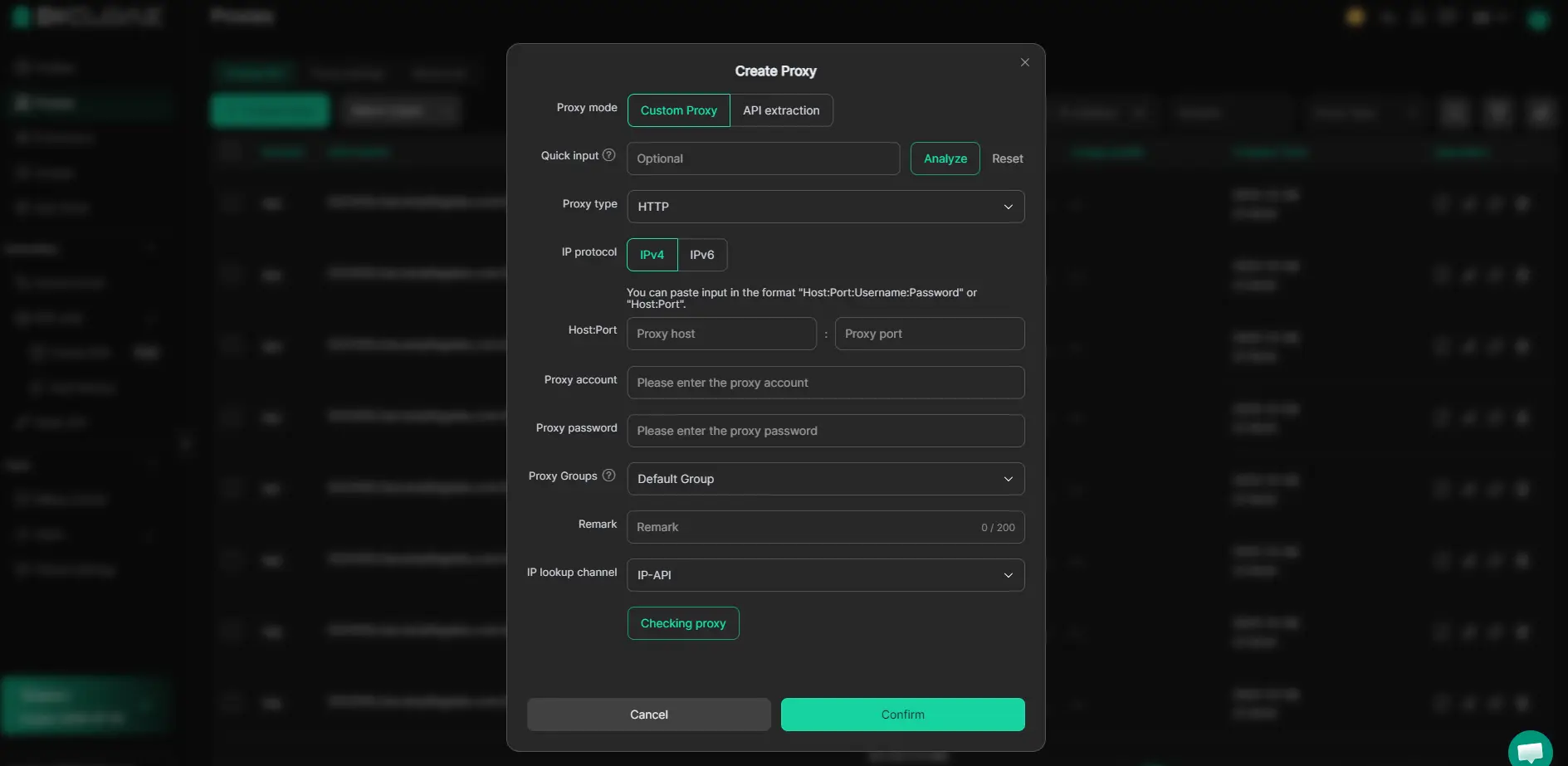
Using Bulk Operations to simplify Profile Management
After setup, affiliate managers use Bulk Operations to handle onboarding or update settings across many profiles at once. This is a huge time-saver, batch editing fingerprint settings, proxy assignments, or tags lets teams onboard new accounts with a few clicks instead of repeating steps for each one. But here’s the tradeoff: a mistaken batch edit can affect dozens of profiles, so it’s worth double-checking selections before applying changes. Supported actions include batch opening/closing profiles, editing remarks, checking exit IPs, assigning groups, exporting, sharing, and clearing cache. Bulk Operations are available on paid plans, and exact feature access depends on your subscription. 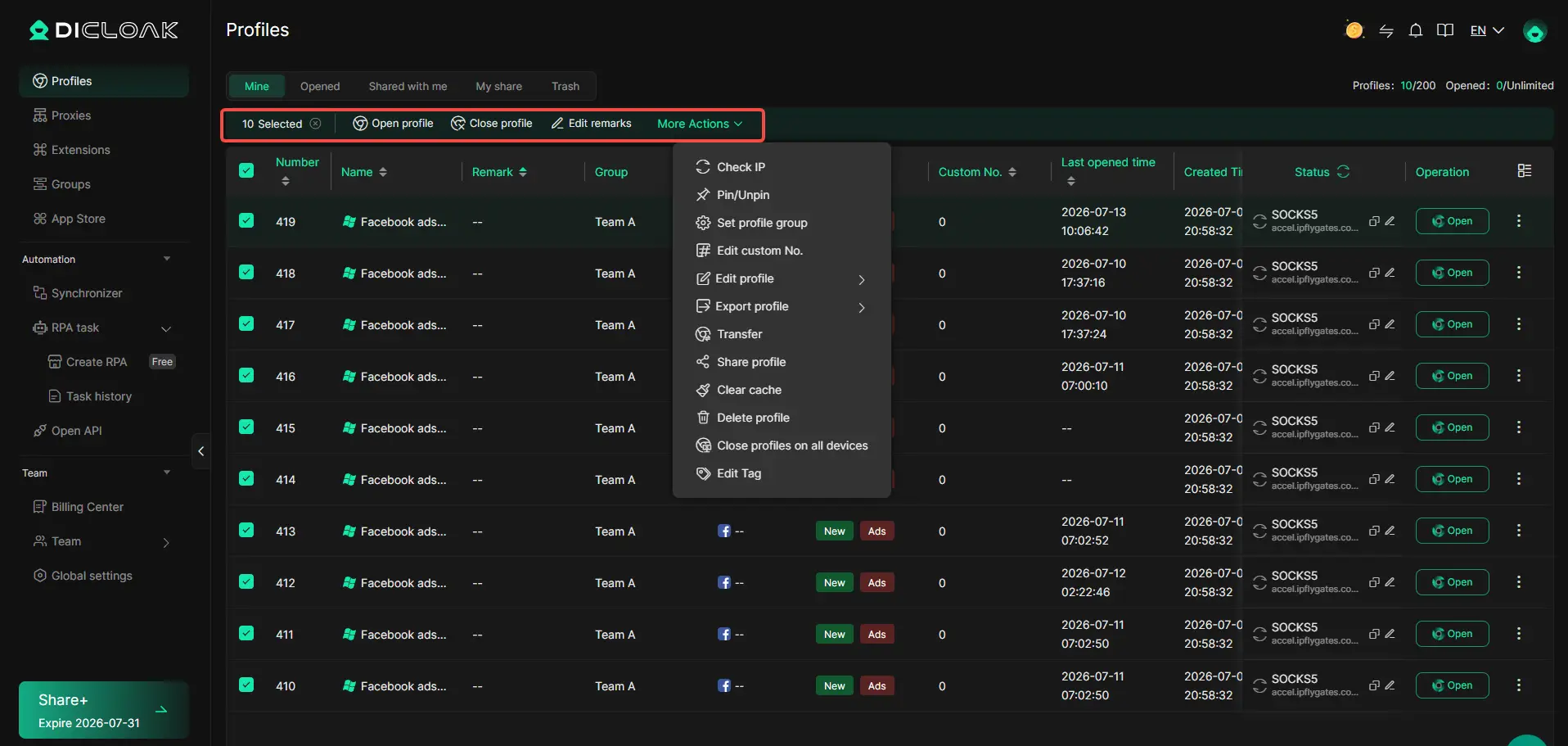
Teams who build these workflows avoid most of the accidental account linkage and wasted time that trip up new affiliates. The next section covers the mistakes that still catch experienced operators, and how to sidestep them.
Common Mistakes TikTok Shop Affiliates Make and How to Avoid Them
Most problems in tiktok shop affiliate roles come from missing small details, like forgetting to check policy changes or sending unclear reports. Spotting these mistakes early keeps your workflow steady and prevents lost commissions.
Ignoring Platform Policy Updates
TikTok changes rules often; missing one update can get your account restricted or your payout denied. Affiliates need to check TikTok's official Shop Affiliate Policy weekly, not just rely on hearsay in creator groups. Policy shifts aren't always flagged in your dashboard, so watch for news on TikTok’s seller blog and look for direct email alerts, especially after major platform updates. Skipping this step means risking a ban or having your content pulled without warning.
Poor Communication with Managers or Brands
Clear reporting stops disputes before they start. Use this checklist:
- Send proof screenshots for every content submission.
- Document product sample requests and delivery times.
- Confirm payout terms in writing before starting new campaigns.
Sharing logins puts affiliate earnings and account history at risk. If you’re working in a team:
- Use TikTok’s built-in role management to assign permissions.
- Avoid sending passwords over chat apps or email.
- Set up account access with device binding, never share codes outside your trusted group.
Mistakes here often lead to restrictions that can't be reversed. Next, you'll want to know when managing multiple accounts becomes the wrong move.
When Managing Multiple TikTok Shop Affiliate Accounts Is the Wrong Choice
If you’re trying to decide whether to run several TikTok Shop affiliate accounts or stick with just one, the safer move is often to focus on a single account, especially if you haven’t hit the limits of what one well-managed profile can do. Scaling up sounds tempting, but the risks and costs can outweigh the benefits if you aren’t set up for complex workflows.
Risks of Scaling Up Too Quickly
| Factor |
Single Account |
Multiple Accounts |
| Detection Risk |
Low – easier to look natural |
Higher – platform flags patterns |
| Time/Setup Cost |
Simple, less daily work |
More tools, more admin time |
| Error Recovery |
Direct, fix issues fast |
Hard to track, messy disputes |
If you try to run too many accounts before mastering one, you’ll spend more time solving login failures, keeping details straight, and fixing mistakes than actually earning commissions.
When a Single Account Delivers Better Results
One well-run account builds trust with your audience and brands, keeps your workflow simple, and means fewer compliance headaches. Quality wins out over quantity if you want long-term payouts and less stress.
Frequently Asked Questions About tiktok shop affiliate roles
How do TikTok Shop affiliate managers differ from creators?
TikTok Shop affiliate managers organize campaigns, find brands to partner with, and make sure creators follow the right steps. They handle communication, deadlines, and reporting. In contrast, creators focus on making videos, sharing products, and earning commissions from sales. Creators don’t usually handle campaign setup or brand negotiations, those are the manager’s responsibilities.
What are the main risks for TikTok Shop affiliates in 2026?
The main risks include account restrictions, losing earned commissions, and violating TikTok Shop’s policies. Sharing account access unsafely can also lead to bans. Affiliates should avoid using public devices or sharing passwords. Policy changes in 2026 may make it even easier for platforms to penalize unsafe or suspicious activity.
Can I use proxies to manage multiple TikTok Shop affiliate accounts?
Yes, you can use proxies to manage several affiliate accounts, but each proxy must be owned and set up for a single account profile. This helps prevent TikTok from linking your accounts, which could cause restrictions. Managing proxies correctly is important for keeping accounts safe and following platform rules.
Is it safer to manage one TikTok Shop affiliate account or several?
Managing one account is easier and less risky. Fewer accounts mean fewer chances for mistakes or rule violations. However, teams with the right tools and careful planning can handle several accounts safely. Always use separate devices, unique logins, and secure workflows to avoid problems.
What should I do if my TikTok Shop affiliate account gets restricted?
First, check TikTok’s rules and see if you broke any. Look for messages in your account for details. Contact your affiliate manager or brand partner for help. Don’t try unsafe fixes like buying new accounts or sharing logins. Fix the issues and follow TikTok’s rules before trying to use your account again.As the landscape of affiliate marketing continues to evolve, now is the time to assess your strengths and decide which role suits your ambitions and resources. Whether you aim to create engaging content or focus on product promotion, taking the next step can help you tap into new revenue streams and build valuable connections. Try DICloak For Free
 Web Proxy Tools
 Free Tools
 Cookie Plugin
 UA Generator
 MAC Address Generator
 IP Generator
 IP Address List
 2FA Code Generator
 World Clock
 Anonymous Check
 WebRTC Leak Test
 UUID Generator
 Free Web Proxy Site
 Proxy Checker
 FB Ad Checker
 AI Web Scraping
 Free SMM Tools
 Twitter Shadowban Checker
 Instagram Name Checker
 UTM Generator
 Username Generator
 AI Hashtag Generator
 LinkedIn Headline Generator
 Social Media Image Resizer