High ticket affiliate marketing refers to the promotion of premium products or services where the commission per successful conversion is $500 or higher. As we move through 2026, sophisticated practitioners are transitioning from high-volume, low-value models to high-value, low-volume strategies to optimize capital allocation.
The economic mechanism driving this shift is the "Volume vs. Value" principle. In traditional low-ticket marketing, reaching high revenue targets requires thousands of individual transactions. Each transaction introduces operational friction and overhead—such as customer support inquiries, tracking pixel discrepancies, and payment processing disputes—that scale linearly with volume. Conversely, high-ticket strategies allow for revenue optimization with far fewer transactions, keeping these administrative costs flat while significantly increasing the Return on Investment (ROI) per lead.
High Ticket vs Low Ticket Affiliate Marketing: An Operational Analysis
Transitioning to high-ticket offers requires a structural change in campaign execution and audience engagement. The following table compares the two models based on standard industry practices:
| Feature |
High Ticket Affiliate Marketing |
Low Ticket Affiliate Marketing |
| Average Commission |
$500+ per sale |
$1 – $100 per sale |
| Sales Volume Needed |
Lower (Focus on high-margin) |
Higher (Volume-dependent) |
| Trust Effort |
Critical; expert-level authority |
Low to moderate |
| Content Requirements |
Long-form, authoritative, technical |
Quick reviews, listicles, "top 10" |
| Buyer Journey |
Long; extensive nurturing required |
Fast; often impulse-driven |
The extended buyer journey in high-ticket models is a function of the financial commitment required from the consumer. Because the price point is significant, the consumer requires expert-level trust and a sophisticated nurturing process that addresses technical objections and demonstrates long-term utility.
Why a High Ticket Affiliate Marketing Strategy is Essential for Risk Diversification
Incorporating high-value offers into a portfolio serves as a hedge against economic volatility through "Market Segment Balancing." By diversifying across B2B enterprise solutions and B2C luxury segments, a marketer can maintain revenue stability. For example, while retail consumer spending may fluctuate, B2B software expenditures often remain resilient as businesses invest in efficiency tools during downturns.
The "200% Shopify model" is a prime example of this: a one-time high-value bounty for enterprise-tier referrals provides a significant capital injection that can subsidize the longer lead times of recurring revenue models.
Pro-Tip: Over-reliance on a single niche or traffic source creates a "single point of failure." Diversifying into high-ticket B2B offers mitigates the risk associated with market saturation or seasonal declines in low-ticket consumer niches.

Profitable Verticals for High Ticket Affiliate Marketing Programs
Analyzing market trends for 2026 reveals several high-growth sectors suitable for high-margin, low-latency operations.
SaaS and Enterprise Software Solutions
Enterprise-grade software, such as CRMs and eCommerce platforms, offers some of the most reliable high-ticket returns. * AI-Powered SaaS Tools: Tools for agency management and automated content workflows (e.g., Jasper, Writesonic) are seeing massive enterprise adoption. * Crypto & Investment Tools: High-security wallets, trading bots, and hedge fund introductions offer substantial commissions due to the high lifetime value of the users.
Luxury Consumer Goods and High-End Electronics
The "High-Intent" buyer profile drives this vertical. Customers looking for designer fashion, professional-grade creative equipment, or high-end jewelry are often deep in the research phase. * Smart Home Tech: Home automation, security systems, and solar panel installations have emerged as high-growth, high-ticket items in 2026. * Creative Equipment: Professional cameras and audio gear require long-form, authoritative content that justifies the technical specifications to convert a lead.
Online Education and Professional Certification
The mechanism of "High-Perceived Value" is leveraged in mastermind groups, coaching, and professional certification programs. These products are positioned as career-advancing assets, justifying price tags that yield commissions in the $1,000+ range.
Tactical Traffic Generation for High Ticket Affiliate Marketing
Attracting enterprise-level leads requires building "Trust Equity" through specialized content and outreach.
Establishing Authority through Expert Content
To convert a $1,000+ commission, a marketer must demonstrate deep domain expertise. Case studies and webinars are the standard for high-ticket lead generation, as they allow for the detailed handling of objections and technical validation that high-net-worth individuals require.
Utilizing Email Funnels for Lead Nurturing
A technical nurturing sequence reduces the friction inherent in high-priced purchases. By utilizing automated sequences that provide incremental value—such as eBooks and checklists—marketers can build the necessary rapport to move a prospect toward a high-value conversion over weeks or months.
The Technical Risks of Scaling Multiple High-Value Campaigns
Scaling high-ticket operations across multiple platforms introduces significant infrastructure risks related to identity association.
Modern platforms utilize "Canvas Fingerprinting" to identify users. This mechanism uses the HTML5 Canvas element to force the browser to render a hidden image or text. Because of minute variations in how specific hardware—including the GPU, drivers, and screen resolution—renders that image, the platform can create a unique digital identifier.
In an operational scenario, an analyst managing 50 different affiliate accounts from a single standard browser will trigger a security "checkpoint." Because the underlying device IDs and hardware signatures are identical, the platform links all accounts to one user. This inconsistent digital footprint is a primary trigger for account bans and shadowbanning.
Implementing DICloak for Secure Multi-Account Infrastructure
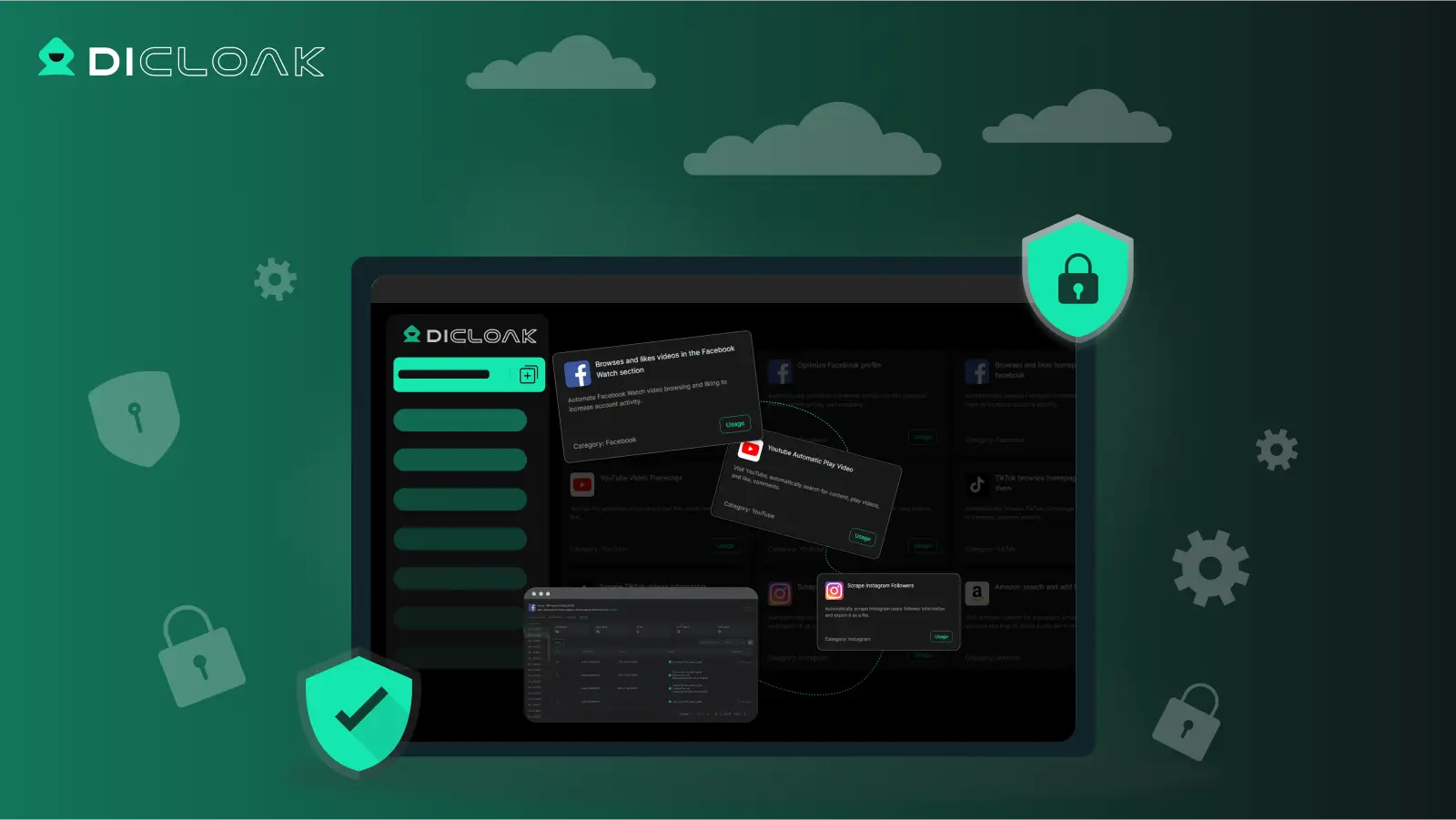
To mitigate these risks, practitioners utilize DICloak (Multilogin) to establish a professional, isolated infrastructure. DICloak employs identity isolation, creating unique browser profiles that appear as distinct physical devices.
- Hardware-Level Masking: DICloak mimics unique hardware signatures, including the GPU, Audio Context, and Font Enumeration. This prevents platforms from associating profiles based on hardware rendering artifacts.
- Cloud Phone Capabilities: For mobile-centric platforms like TikTok or Instagram, DICloak offers "Cloud Phone" features. This allows users to run real Android devices (versions 10–15) in the cloud. This reduces the "physical footprint" and operational risk by eliminating the need for physical phone farms.
- Remote Phone Control: This feature provides access to real phone numbers, Wi-Fi/Cellular toggles, and GPS matching. By matching the GPS location to the proxy's IP address, the system bypasses the most advanced location-based security checks.
Why Do High-Ticket Affiliate Campaigns Run Into Account Risk?
High-ticket affiliate marketing often involves more than one account, more than one platform, and repeated work across Google, Meta, LinkedIn, and other channels. As the setup grows, the bigger challenge is not only campaign performance, but also keeping each account environment organized and consistent over time. When multiple accounts are handled in one shared browser setup, it can become easier to mix cookies, local storage, login sessions, and browser conditions.
For users who need a more structured way to manage these environments, they cankeep multi-account operations more clearly separated with DICloak.
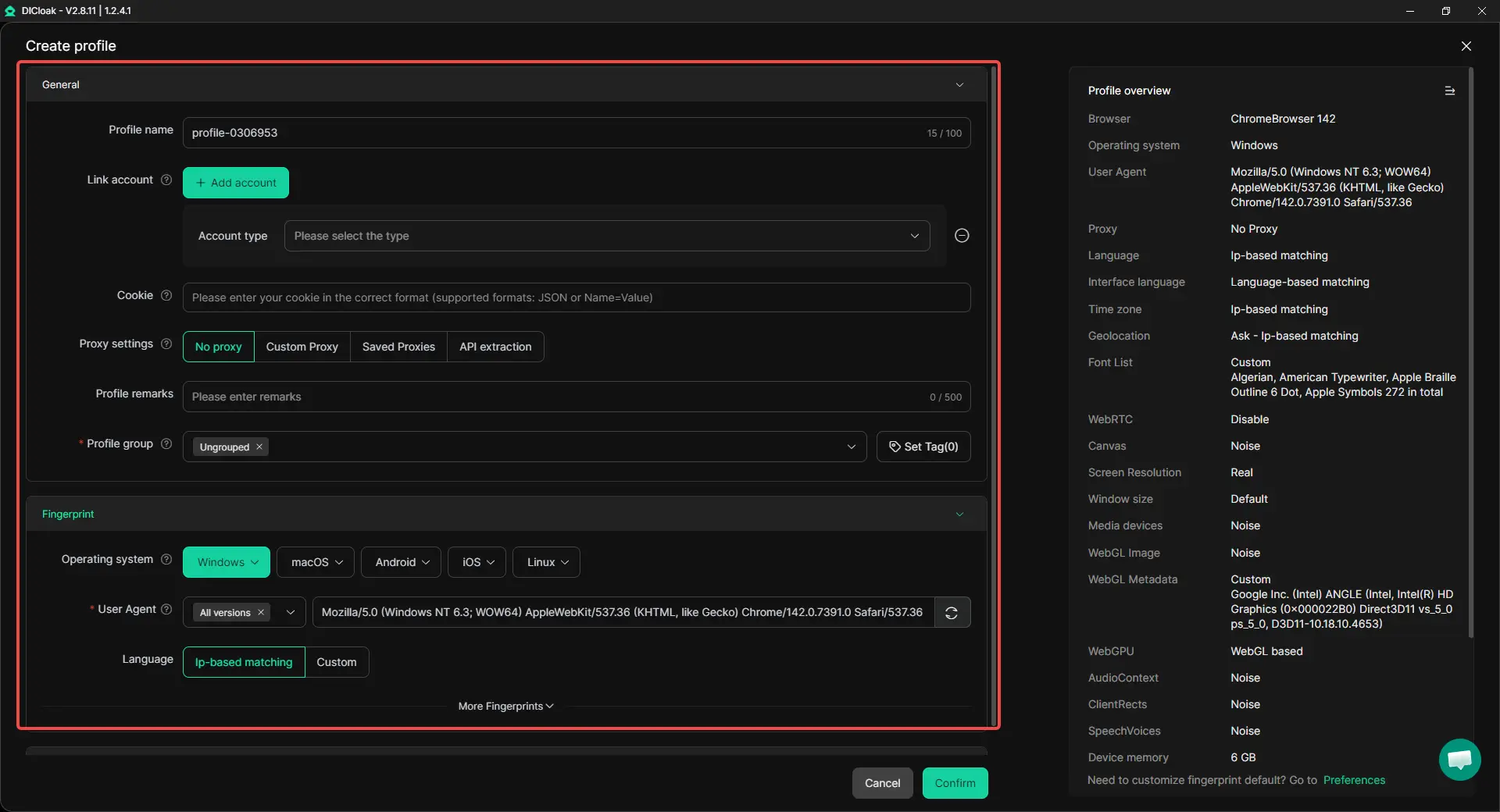
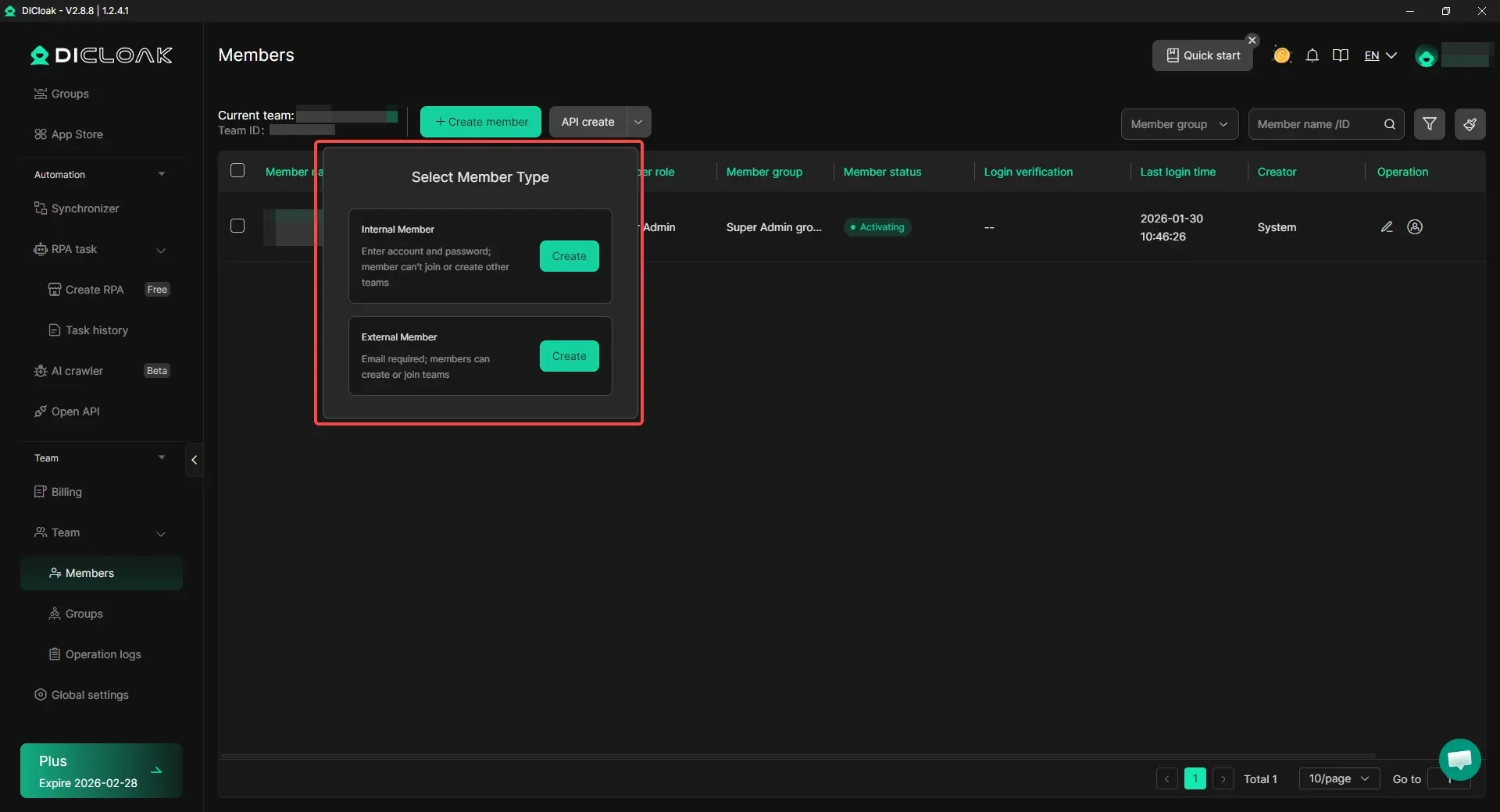
- Profile isolation: Users can create separate browser profiles for different affiliate accounts, ad accounts, or campaign tasks. Each profile keeps its own cookies, cache, local storage, and browser state, which can make account environments easier to separate and manage.
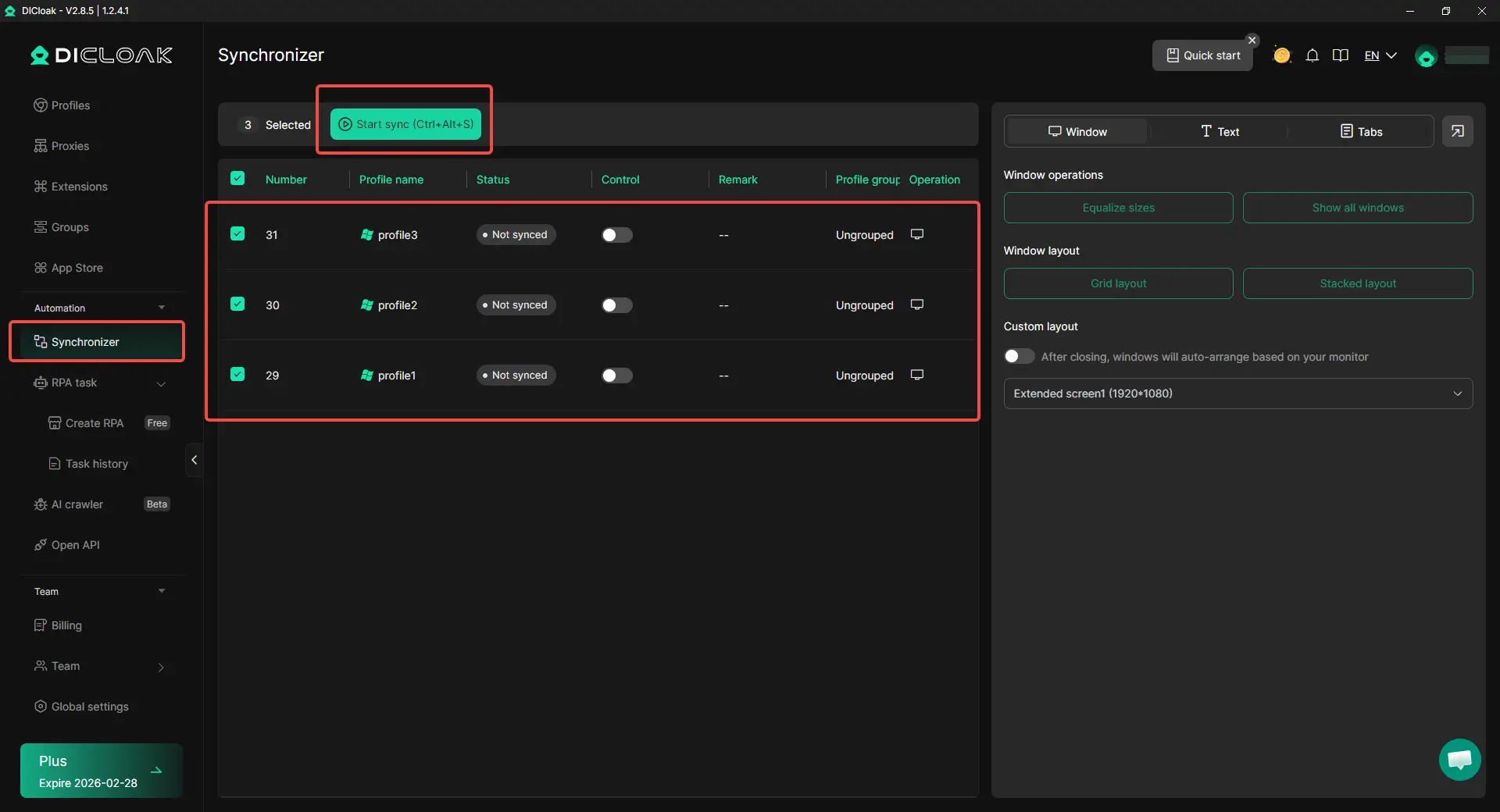
- Synchronizer for repeated actions: When similar steps need to be completed across multiple profiles, users can use Synchronizer to mirror those actions at the same time instead of repeating them one by one. This can help reduce repeated manual work in day-to-day campaign operations.
- Team collaboration and access control: When more than one person is involved in campaign management, users can share profiles with team members, assign permissions, and manage access in a more structured way without passing master account details around repeatedly.
What common mistakes kill high ticket profit margins?
Most beginners fail because they treat high-ticket marketing as a low-tier volume game.
Is "Keyword Stuffing" ruining your search intent?
Conversion happens on high-intent, long-tail keywords. Chasing "CRM" will drain your budget; targeting "best enterprise CRM for 2026" or "best luxury mattress for back pain" attracts buyers ready to pull the trigger.
Why is "Code Leakage" and affiliate fraud a silent killer?
In high-ticket programs, duplicate code usage or "coupon leakage" can inflate payouts for the same amount of sales, destroying your tracking accuracy. Professional setups utilize tools like Social Snowball’s Safelinks, which generates unique, single-use discount codes for every customer to ensure accurate attribution and prevent fraud.
Are you neglecting the "Affiliate Relationship"?
The "Super Affiliate" mindset involves working directly with program managers. Building these relationships often leads to exclusive deals, higher commission tiers, and early access to product updates, giving you a distinct competitive edge.
Frequently Asked Questions About High Ticket Affiliate Programs 2026
What qualifies as a high-ticket product?
A high-ticket product is generally defined as any offer providing a commission of $500 or more per sale. These include enterprise SaaS, luxury goods, and smart home technology.
Are these programs harder to convert?
The conversion threshold is higher, requiring more intensive trust-building and longer nurturing sequences. However, the high ROI per transaction justifies the additional effort.
Can I manage multiple niches simultaneously?
Yes, provided you use profile isolation. Tools like DICloak allow you to run distinct niches in separate, isolated browser profiles to prevent cross-contamination and account association.
Where are the best programs found?
Most high-ticket programs are hosted on networks such as PartnerStack, Impact, and CJ Affiliate, or through direct partnership programs with enterprise brands.
Conclusion: Building a Sustainable High-Ticket Workflow
Success in the 2026 high-ticket affiliate landscape is predicated on the integration of high-value offers with a secure, professional infrastructure. While the financial incentives of $500+ commissions are high, the risks of account loss due to poor digital hygiene are equally significant. To ensure long-term campaign viability, practitioners must prioritize account safety and profile isolation. By utilizing advanced tools like DICloak to manage unique hardware signatures and mobile identities, marketers can scale their operations across multiple high-value niches with confidence.
 Web Proxy Tools
 Free Tools
 Cookie Plugin
 UA Generator
 MAC Address Generator
 IP Generator
 IP Address List
 2FA Code Generator
 World Clock
 Anonymous Check
 WebRTC Leak Test
 UUID Generator
 Free Web Proxy Site
 Proxy Checker
 FB Ad Checker
 AI Web Scraping
 Free SMM Tools
 Twitter Shadowban Checker
 Instagram Name Checker
 UTM Generator
 Username Generator
 AI Hashtag Generator
 LinkedIn Headline Generator
 Social Media Image Resizer