Real-World Pain Points of Managing Multiple Bank Accounts
Having several bank accounts can make your money easier to separate, but it also creates more things to track. You may have one checking account for bills, another for daily spending, and several savings accounts for different goals. There is no fixed limit on how many checking or savings accounts a person can open, according to the Consumer Financial Protection Bureau. So, when people ask how many bank accounts should I have, the better question is often how many accounts they can manage without losing track of their money. Understanding these common problems is the first step in learning how to manage multiple bank accounts well.
Difficulty Tracking Balances Across Different Institutions
Money spread across several banks can make your total cash position hard to see. One app may show $2,000 in checking, another may hold your emergency fund, while a third account is used for monthly bills. Even the balance shown in a banking app may not tell the full story because some purchases, deposits, and scheduled payments may still be pending. The CFPB warns that transactions do not always update immediately or in the order people expect. This becomes more important if you are wondering can you have two checking accounts at the same bank or how many savings accounts should I have. You can have multiple accounts, but every extra account adds another balance, payment schedule, and transaction history to watch.
Time-Consuming Manual Reconciliation and Bookkeeping
More accounts also mean more statements to review. Imagine a freelancer who receives client payments in one bank, pays software costs from another account, and keeps tax money in a separate savings account. At the end of the month, that person may need to compare transactions across three or four statements before knowing whether the records are correct. This is why how to manage multiple bank accounts is not only about opening separate accounts; it is also about keeping them organized after they are opened. For business owners, this work matters even more. The IRS says good records should clearly show income and expenses, and it recommends reconciling business checking records with bank statements.
Missed Payments Due to Scattered Accounts
Automatic payments are useful, but they can become harder to control when different bills come from different accounts. For example, your rent may come from one checking account while a credit card, phone bill, and streaming services pull money from another. If you transfer too much money out of the second account, an automatic debit may arrive when the balance is too low. The CFPB notes that automatic payments can help prevent late payments, but a low account balance can still lead to overdraft or nonsufficient-funds fees. A practical part of learning how to manage multiple bank accounts is therefore knowing which account pays each bill and how much money needs to stay there.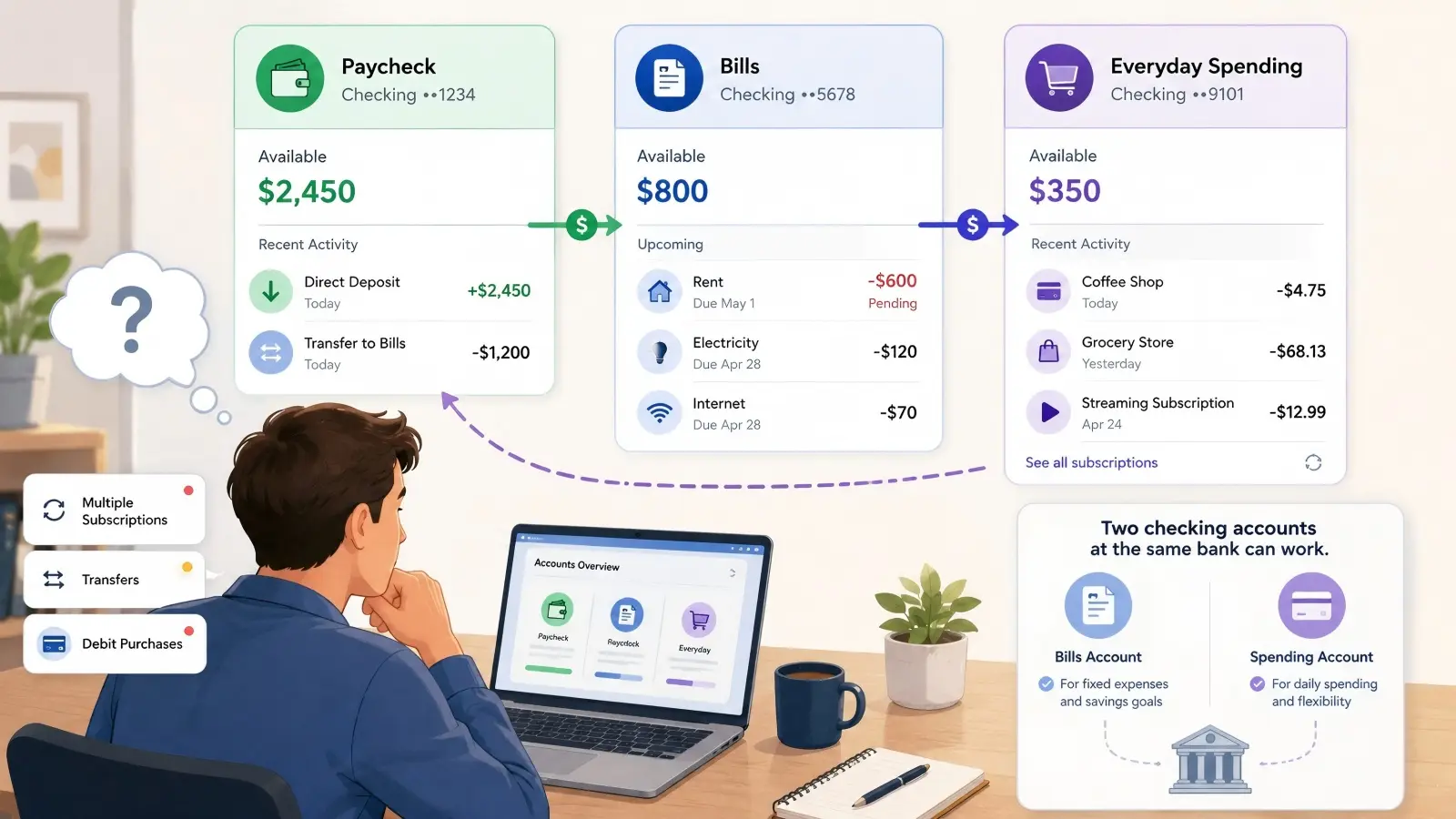
Disorganized Record-Keeping for Personal or Business Use
Multiple accounts can also scatter your financial records. A receipt may relate to a payment from one bank, while the matching invoice is stored elsewhere and the refund later appears in another account. For personal finances, this makes it harder to review spending or understand where your money went. For a business, poor records can create larger problems because bank statements, receipts, invoices, and other documents may be needed to support income and expenses reported on a tax return. The IRS advises businesses to keep records organized and says a recordkeeping system should clearly show income and expenses. Keeping several accounts can still work well, but only when each account has a clear purpose and its records can be reviewed together.
Common Problems When Managing Multiple Bank Accounts
Using more than one bank account can make budgeting easier. You might keep one checking account for bills, another for daily spending, and separate savings accounts for an emergency fund or future goals. The CFPB says there is no general restriction on how many checking or savings accounts you can open. But more accounts also mean more balances, payments, statements, and rules to remember. Before learning how to manage multiple bank accounts, it helps to understand where this setup usually becomes difficult.
Why Multiple Bank Accounts Make Balances Harder to Track
The first problem is simple: your money is no longer in one place. Suppose you have $2,400 in one checking account, $800 in a second account for bills, and $6,000 spread across two savings accounts. To know how much money you really have, you need to check several balances and remember what part of that money is already reserved. A balance of $800 may look available, for example, even though $650 of it needs to cover rent the next morning. This makes it harder to make quick spending decisions.
Bank balances can also change as deposits, card purchases, and scheduled payments are processed. The CFPB notes that transactions may not always update immediately or in the order you expect. With multiple bank accounts, that timing issue is repeated across several places. This is also why questions such as how many bank accounts should I have or how many savings accounts should I have cannot be answered with one ideal number. Five accounts may be easy for one person to track, while three may already feel confusing for someone else.
The Bookkeeping Burden of Multiple Bank Accounts
Every extra account creates another stream of transactions to review. This may not feel like much when you first open an account, but the work adds up over a full month. A freelancer, for example, might receive client payments in one account, pay software subscriptions from another, and move tax money into a third. When it is time to review monthly income and expenses, the freelancer has to compare several statements instead of one. A missing transfer or duplicate payment can take longer to find because the money may have moved between banks.
The problem becomes more important when multiple bank accounts are used for business. The IRS says a business recordkeeping system should clearly show income and expenses, and supporting records can include bank statements, invoices, receipts, and deposit information. The IRS also notes that keeping personal and business accounts separate can make records easier to manage. So how to manage multiple bank accounts is not only about checking each balance. You also need to understand where money came from, why it moved, and which transactions belong to personal or business activity.
How to Avoid Common Mistakes in Multiple Bank Accounts Management
Even a good account structure needs regular attention. Multiple accounts become difficult mainly when users stop checking them, reuse weak security practices, or forget important account information. The number of accounts matters less than your ability to manage each one properly. So when you ask how many bank accounts should I have, consider how much attention you can realistically give to each account.
How to Prevent Unauthorized Access to Your Accounts
Use a strong, different password for every banking account. When you are learning how to manage multiple bank accounts, password hygiene is often overshadowed by common questions such as how many bank accounts should i have, can you have two checking accounts at the same bank, and how many savings accounts should i have. Reusing the same password across multiple banks means one exposed password could compromise all your accounts.
Multi‑factor authentication should also be enabled whenever your bank offers it. It adds an extra verification step, so attackers cannot access your funds even if your password gets stolen. This simple step matters whether you are how to manage multiple bank accounts for personal budgeting or small‑business purposes.
Be careful with unexpected text messages, emails, or phone calls claiming to be from your bank. If you receive an alert saying your account is locked, avoid clicking unknown links. Manually launch the official banking app or visit the bank’s verified website to check your account status.
Solid security is an essential part of how to manage multiple bank accounts. Whether you are wondering can you have two checking accounts at the same bank, how many savings accounts should i have, or how many bank accounts should i have overall, unique passwords and multi‑factor protection keep all your accounts secure.
What to Do When You Forget Account Details
With several accounts, it can be easy to forget which username belongs to which bank. Keep a secure record of bank names, account purposes, and official support information.
However, avoid saving banking passwords in an ordinary budgeting spreadsheet. Use a trusted password manager or the bank's secure recovery process instead.
If you receive an unexpected password-reset message, do not use the link automatically. Go directly to the official bank website or app and start the recovery process there. This becomes even more important as the answer to how many bank accounts should I have increases.
What Are the Risks of Having Too Many Multiple Bank Accounts?
Multiple accounts can improve budgeting, but more is not always better. At some point, extra accounts create more statements, tax records, passwords, fees, and balances to monitor. If you cannot remember why an account exists, it may be a sign that your banking setup has become too complicated. This is why how many bank accounts should I have should always be answered based on usefulness, not quantity.
How Account Inactivity Affects Your Finances
An account should not disappear from your routine just because you rarely use it. When you’re learning how to manage multiple bank accounts, it is easy to push low‑activity accounts to the back of your mind. Even accounts you seldom log into can still carry hidden ongoing activity that flies under your radar. Old forgotten subscriptions, recurring bank fees, or unauthorized payments can keep charging month after month without obvious alerts, slowly draining funds before you notice anything is wrong — one of the most common oversights when managing multiple bank accounts.
Banks may also classify accounts as inactive or dormant after long periods without activity. The exact rules and timelines vary widely from one financial institution to another. While it might feel convenient to leave an unused account open indefinitely, this habit can create unnecessary administrative work, trigger special dormant‑account policies, and even complicate your overall financial oversight over time. This is an important detail to keep top‑of‑mind as you figure out how to manage multiple bank accounts effectively.
Checking statements regularly also helps you detect fraud and suspicious transactions much earlier. Fraudulent charges and identity‑related activity often first show up on accounts people ignore. When building your workflow for managing multiple bank accounts, make sure even low‑use or secondary accounts remain part of your consistent review routine. Do not relegate them to “set‑and‑forget” status, no matter how infrequently you transfer money in or out. Solid habits for how to manage multiple bank accounts mean every account gets checked, not just the ones you use day‑to‑day.
Why Excessive Multiple Bank Accounts Can Complicate Tax Filing
Bank interest is generally taxable income. Even if you do not receive a Form 1099-INT, taxable interest may still need to be included on your tax return.
If you earn interest from five accounts at five different banks, you may receive several tax documents. None of these accounts necessarily makes your tax situation difficult by itself, but together they create more records to review.
This is another reason to avoid opening accounts that provide little practical value. When deciding how many bank accounts should I have, include tax recordkeeping and account maintenance in the decision.
What Happens When You Exceed FDIC Insurance Limits
FDIC insurance normally covers up to $250,000 per depositor, per insured bank, for each ownership category. Deposits in the same ownership category at the same bank are generally combined when coverage is calculated.
For example, suppose you have $150,000 in checking and $150,000 in savings under the same single-owner category at one bank. The total is $300,000. In this example, $50,000 would generally be above the standard $250,000 insurance limit.
The same rule matters when asking can you have two checking accounts at the same bank. You may be able to open both, but the second account does not automatically create another $250,000 of insurance coverage. Knowing this is an important part of how to manage multiple bank accounts when balances become larger.
How to Periodically Review and Optimize Your Multiple Bank Accounts
Your banking needs will change over time. An account that was useful two years ago may no longer fit your current income, spending habits, or savings goals. As you think through how to manage multiple bank accounts, you may also revisit common questions like how many bank accounts should i have and how many savings accounts should i have as your life circumstances shift. New income streams, changed budgeting strategies, or updated financial targets can make once‑valuable accounts feel redundant or poorly suited.
A simple account review every few months can help keep your setup efficient. Regular check‑ins let you spot unused accounts, unnecessary fees, and mismatched features before they create bigger headaches. This is one of the easiest habits to build when learning how to manage multiple bank accounts over the long term. Whether you are considering can you have two checking accounts at the same bank or just tidying your existing portfolio, these periodic reviews keep your banking structure aligned with where you are financially.
Why Regular Account Audits Are Essential
During a review, look at each account's balance, recent transactions, monthly fees, APY, automatic payments, and purpose. Ask whether the account is still helping you manage your money. You may find that two savings accounts now serve the same goal, or that an old checking account is only being kept open for one subscription.
This review can help answer how many bank accounts should I have and how many savings accounts should I have more accurately than choosing an arbitrary number. Keep enough accounts to support your needs, but not so many that basic management becomes difficult.
How to Identify and Close Unnecessary Accounts
Start with accounts that have no clear purpose, little activity, or fees that no longer make sense. Do not close them immediately if payments are still connected. Move direct deposits, automatic transfers, subscriptions, and recurring bills first. Then wait for pending transactions and outstanding checks to clear.
After that, transfer the remaining balance and close the account through the bank's official process. Reducing unnecessary accounts can make how to manage multiple bank accounts simpler and reduce the amount of maintenance you need to do each month.
What to Consider When Switching Banks
Sometimes the account is useful, but the bank is no longer the best choice. Another institution may offer lower fees, higher savings rates, better ATM access, stronger digital tools, or better customer service.
Compare the features you actually use instead of focusing only on a sign-up bonus or promotional APY. Also check whether the new account has minimum balance requirements or other conditions.
If you decide to switch, open the new account before closing the old one. Move your income and recurring payments gradually, leave enough money for pending transactions, and close the old account only after everything is working correctly. This keeps the transition simple and helps you continue to manage multiple bank accounts without missed payments or unnecessary stress.
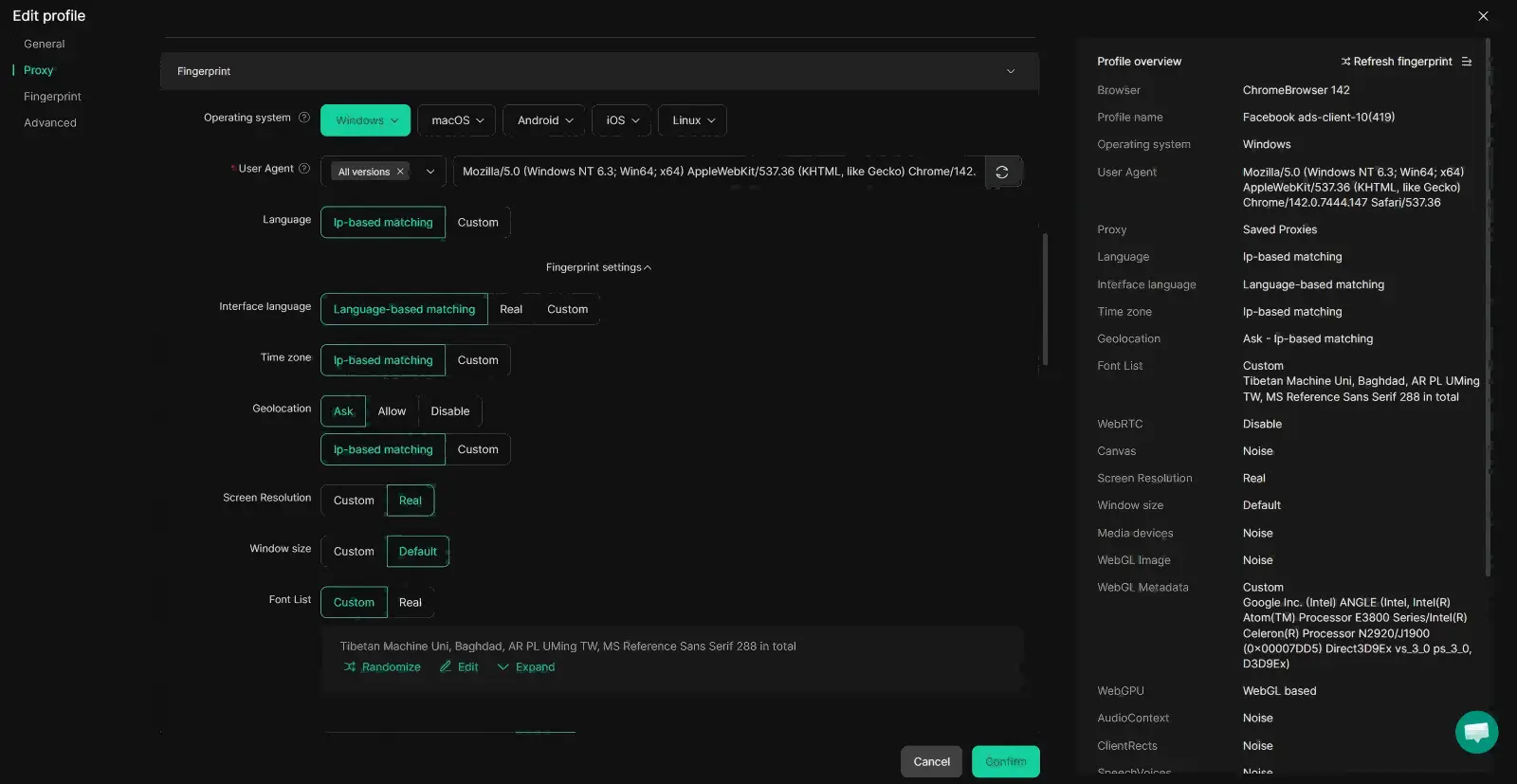
For most people, bank apps, alerts, and a simple spreadsheet are enough to manage personal accounts. The situation can become more complex for a business owner or finance team that works with several authorized online banking accounts. Different logins, browser sessions, and team members can make it easier to open the wrong account or mix browser data between workspaces. In this type of approved business workflow, DICloak can provide a more organized browser profile. It should be used alongside the bank's own security controls, not to hide identity or bypass account verification.
Why Unique Digital Fingerprints Enhance Security
DICloak creates separate browser Profiles with their own browser configuration, cache, cookies, and fingerprint data. This isolation can help keep one authorized workspace separate from another instead of running every account inside the same normal browser session. DICloak's current documentation confirms that each Profile operates as an independent browser profile.
For financial accounts, the main benefit is session separation, not avoiding bank security checks. For example, a company that manages several approved business accounts can keep each banking workspace in its assigned browser Profile, reducing the chance that cookies or saved sessions from one workspace are mixed with another. Bank MFA, identity checks, and other security requirements should still be followed normally.
Frequently Asked Questions About How to Manage Multiple Bank Accounts
1. How many bank accounts should I have?
There is no perfect number. The right amount depends on your goals, spending habits, and ability to stay organized. When learning how to manage multiple bank accounts, focus on giving each account a clear purpose.
2. Can you have two checking accounts at the same bank?
Yes, many banks allow customers to open more than one checking account. This can help separate bills from daily spending. A clear account structure makes how to manage multiple bank accounts much easier.
3. How many savings accounts should I have?
You can use one savings account or several, depending on your goals. For example, you may keep separate funds for emergencies, travel, and a home purchase. The key to how to manage multiple bank accounts is avoiding accounts that serve no clear purpose.
4. Is it bad to have multiple bank accounts?
No. Multiple accounts can improve budgeting and help separate financial goals. However, too many accounts can make fees, balances, tax records, and security alerts harder to track, so how to manage multiple bank accounts becomes more important as the number grows.
5. What is the easiest way to manage multiple bank accounts?
Use one system to track balances, bills, fees, and savings goals. You can use a budgeting app, spreadsheet, bank alerts, and automatic transfers. A simple routine is often the most effective approach to how to manage multiple bank accounts.
Conclusion
Learning how to manage multiple bank accounts is mainly about keeping each account useful, clear, and easy to monitor. You do not need a large number of accounts to stay organized. What matters more is giving each account a clear purpose, tracking fees and balances, reviewing activity, and removing accounts that no longer add value.
A good system may include separate accounts for bills, daily spending, emergency savings, or other financial goals. Regular reviews can help you decide whether you still need each one and whether another bank offers better terms. If you manage several authorized business accounts, tools such as DICloak can also help keep browser workspaces separate and organized.
In the end, there is no single answer to how many bank accounts should I have. The best setup is the one you can manage without missing payments, security alerts, tax records, or important account changes. Keep the structure simple, review it regularly, and adjust it as your financial needs change.
 Web Proxy Tools
 Free Tools
 Cookie Plugin
 UA Generator
 MAC Address Generator
 IP Generator
 IP Address List
 2FA Code Generator
 World Clock
 Anonymous Check
 WebRTC Leak Test
 UUID Generator
 Free Web Proxy Site
 Proxy Checker
 FB Ad Checker
 AI Web Scraping
 Free SMM Tools
 Twitter Shadowban Checker
 Instagram Name Checker
 UTM Generator
 Username Generator
 AI Hashtag Generator
 LinkedIn Headline Generator
 Social Media Image Resizer