Managing multiple accounts is much harder today than it was a few years ago. Platforms no longer rely only on IP checks. They now look at browser fingerprints, device signals, location data, and behavior patterns to detect linked accounts. This means a proxy alone is often not enough.
In this guide, we will explain why modern account security needs both network isolation and browser isolation. We will also look at how Nebula Proxy and DICloak can work together to create a more stable setup for e-commerce, affiliate marketing, social media, and other multi-account workflows.
Introduction to Modern Account Security
The landscape of platform security has shifted from simple IP blacklisting to sophisticated behavioral heuristics and anomaly detection. Modern websites now deploy multi-layered verification systems designed to identify and flag inconsistencies in user data. To maintain a resilient digital presence, practitioners must move beyond basic privacy tools and adopt a dual-pillar strategy of network isolation and browser fingerprinting mitigation.
Nebula Proxy serves as the fundamental network intermediary, providing a critical layer of anonymity by masking the source IP. However, in an era where platforms can detect "suspicious" patterns through hardware-level leakage, IP masking alone is insufficient. Secure scaling requires a comprehensive architecture that synchronizes network-level handshakes with application-level identity masking to reduce browser entropy and prevent account association.
Nebula Proxy in Modern Workflows
A Nebula Proxy functions by routing internet traffic through a high-performance intermediary server, replacing the user’s original IP with a proxy IP. A key technical differentiator of the Nebula architecture is its one-hop connectivity. Unlike traditional proxy chains that add multiple layers of routing—increasing latency and jitter—one-hop connectivity ensures a direct path to the target server, maintaining the low-latency speeds required for high-volume operations.
In professional growth infrastructures, these proxies are deployed to:
- Bypass Geographic Friction: Accessing localized e-commerce data or region-locked content by appearing as a local resident.
- Mitigate Network Tracking: Preventing third-party trackers from building a profile based on consistent IP history.
- Facilitate Stealth Market Research: Enabling the collection of competitive intelligence without exposing the primary corporate infrastructure to anti-scraping countermeasures.
Why Fingerprinting Makes Nebula Proxy Alone Insufficient
While Nebula Proxy provides a "clean" network identity, it cannot prevent "account association" if the browser's digital fingerprint remains consistent across multiple profiles. This "association risk" occurs because platforms can detect unmaskable underlying hardware execution patterns.
Canvas and WebGL Fingerprinting Mechanics
Modern browsers use Canvas and WebGL APIs to render graphics. Because different hardware and driver combinations render these elements with microscopic variations, platforms can extract a unique signature of the user’s GPU. If two accounts appear from different IPs but share the same hardware-level execution pattern, they are immediately linked.
Geolocation and WebGPU Simulation
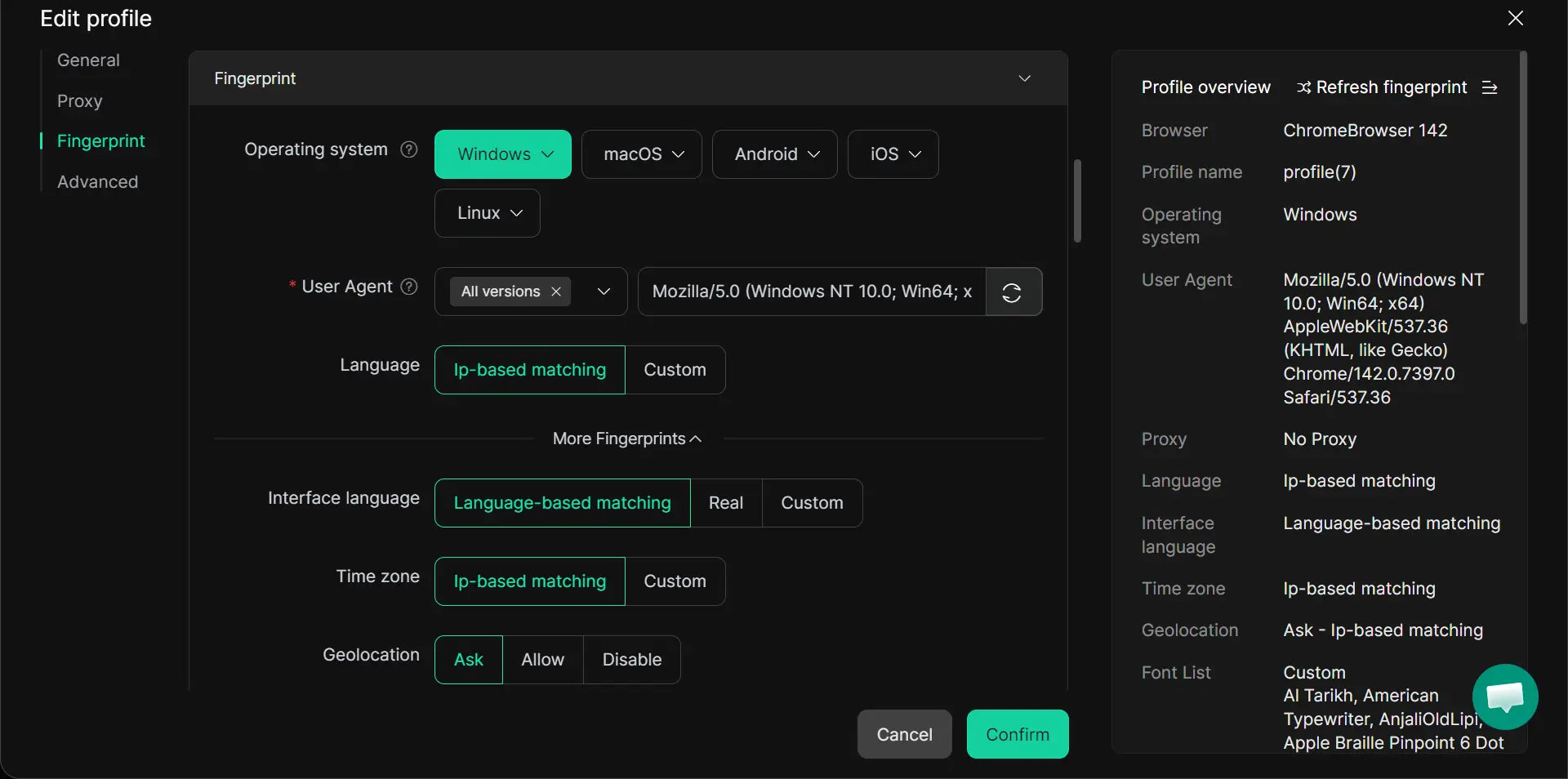
A frequent failure point in multi-account management is the mismatch between the proxy's IP location and the browser’s internal Geolocation API. To avoid triggering security checkpoints, the browser’s internal data must be synchronized with the proxy's coordinates. Furthermore, newer APIs like WebGPU must be carefully masked to prevent hardware-based entropy from leaking the actual device configuration.
Managing User Agents and Browser Entropy
Security systems utilize "anomaly detection" to identify mismatched software and hardware signatures. For instance, presenting a Windows user agent while the underlying hardware renders as a Mac device creates a high-entropy profile that is easily flagged by automated verification systems.
Integrating Nebula Proxy with DICloak
By assigning a dedicated Nebula Proxy to a specific DICloak profile, the user can keep the proxy setup and browser profile aligned for each account. This prevents "leakage" between accounts, as each profile keeps its own cookies, cache, and local session data separate from others.
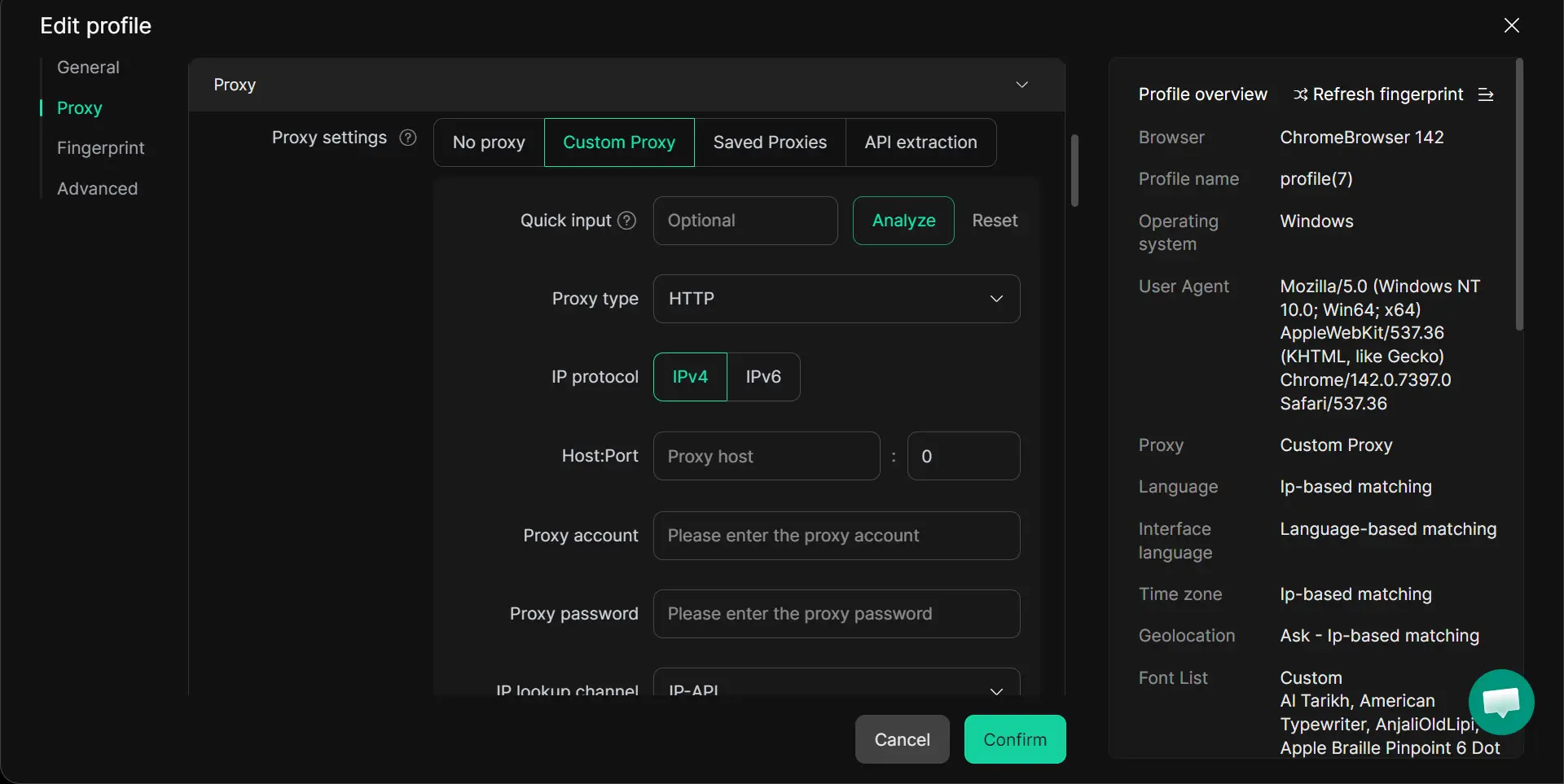
A robust infrastructure requires pairing the network-level handshake (handled by Nebula Proxy) with the application-level handshake (managed by an antidetect profile like DICloak). DICloak helps users create isolated browser profiles with customized fingerprints for each account.
Pro-Tip: To maintain high account reputation, avoid mixing different proxy types—such as residential and datacenter proxies—within the same account cluster. Sudden shifts in network reputation can trigger advanced behavioral heuristics.
Optimizing E-commerce Operations
For sellers managing multiple stores on aggressive platforms like Amazon, eBay, or Etsy, the primary risk is "store linkage." Etsy, in particular, is known for industry-leading detection of linked accounts.
- Data Isolation: Store-specific cookies and local storage are kept entirely separate. Sellers can manage dozens of storefronts from a single device without triggering collective bans.
- Synchronization for Teams: Team members in different locations can access shared profiles with the assigned settings
Scaling Affiliate Marketing and Social Media with DICloak
Scaling marketing operations requires simulating authentic user behavior to bypass bot detection on platforms like TikTok and Facebook.
RPA and Programmatic Scale
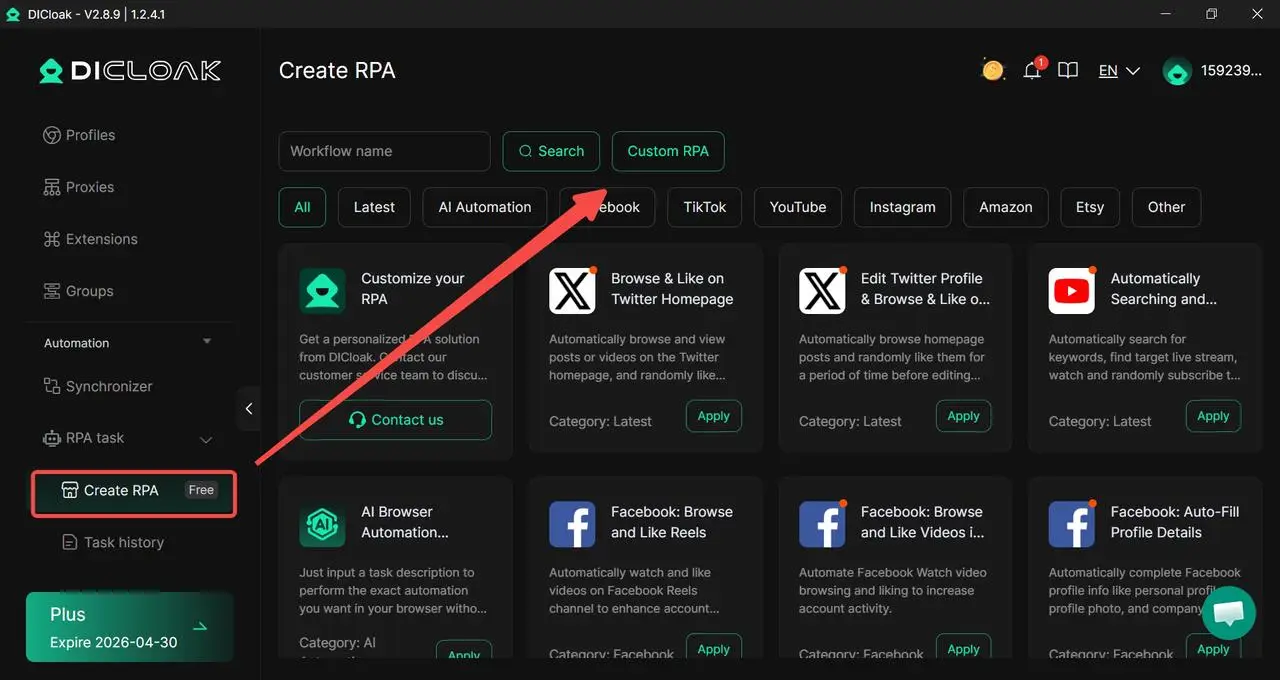
For high-volume operations, DICloak’s Plus and Share+ plans allows for programmatic control of browser profiles. This enables the integration of AI Crawlers to automate market research and content distribution at a scale unattainable through manual operation.
Multi-Window Synchronization and Growth Services
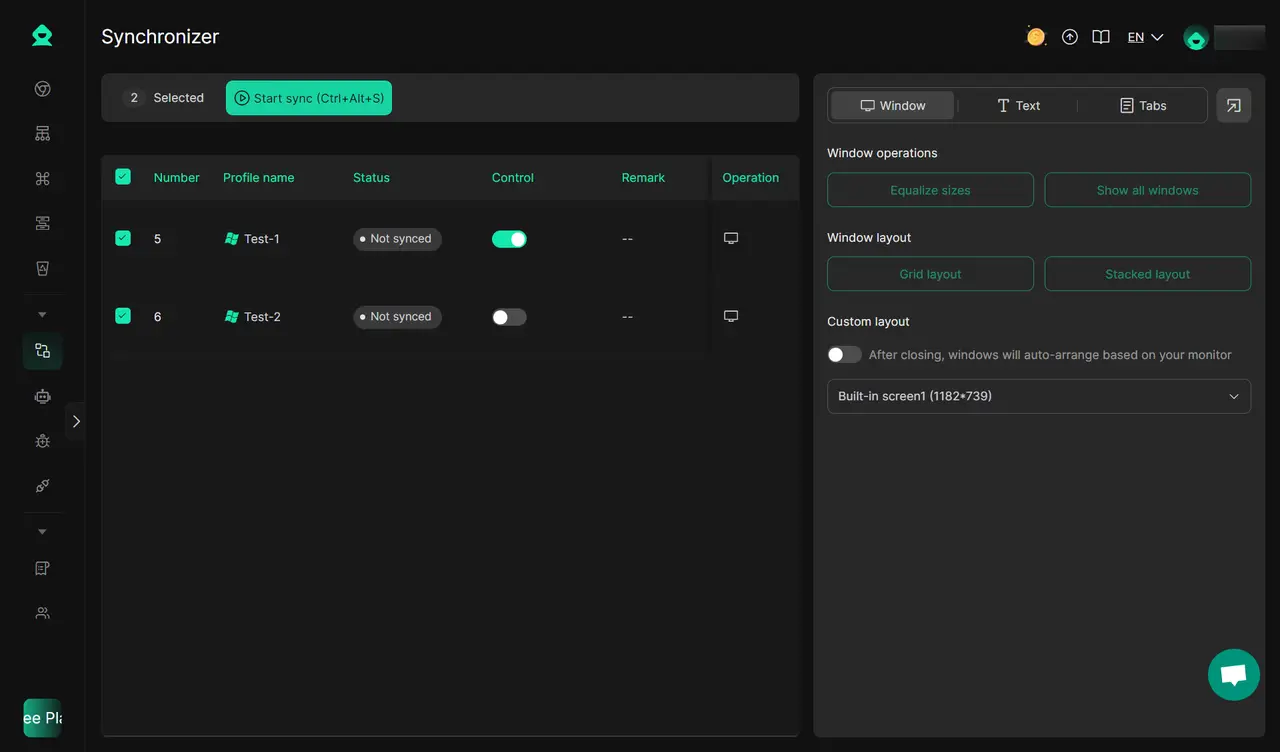
The Multi-Window Synchronizer allows an operator to control multiple browser profiles simultaneously, facilitating bulk engagement. While some practitioners use third-party growth services like FansAI for a "short-term boost" in metrics (followers/likes), a Senior Analyst would caution that such services should only be used in conjunction with "one-hop" residential proxies to ensure that the increased traffic appears to originate from legitimate, high-reputation network sources.
Mobile-First Strategy (TikTok and Instagram)
For mobile-centric platforms, simulating Android or iOS fingerprints is only half the battle. These platforms monitor the network type; therefore, integrating 3G/4G/5G mobile proxies (sourced from Nebula/NetNut) is essential. Because these IPs are shared by thousands of real mobile users, they possess a naturally high reputation, making them virtually "un-bannable" by standard reputation filters.
Comparing Standard Browsing vs. DICloak with Nebula Proxy Integration
| Feature |
Standard Browser + Proxy |
DICloak + Nebula Proxy |
| IP Masking |
Basic IP replacement; potential latency |
Low-latency "One-hop" connectivity |
| Fingerprint Entropy |
High (Leaked hardware IDs/Canvas) |
Low (Unique hardware simulation) |
| Account Isolation |
Shared cookies/cache; high linkage risk |
Encrypted, fully isolated profile storage |
| Geolocation Sync |
Mismatch between IP and Browser API |
Automatic alignment of IP and Geolocation |
| Automation & Scale |
Manual or basic scripts |
Built-in RPA and Open API access |
Advanced Best Practices for Nebula Proxy IP Management
To maintain long-term account viability, follow these expert-level configurations:
- Static IPs for Sensitive Logins: For high-stakes accounts like crypto wallets (Binance, OKX) or e-commerce stores, use static residential proxies to provide a consistent "home" IP, minimizing "suspicious login" challenges.
- Rotating IPs for Scraping: For high-volume data collection, utilize rotating residential IPs to mimic natural user behavior and avoid rate-limiting.
- Geo-targeting Optimization: Always select proxy IPs geographically close to the platform's data centers to minimize latency and improve the "natural" appearance of the connection.
Pro-Tip: Before launching high-stakes ad campaigns or token sales, always perform a latency test and verify the IP's reputation score. A high-latency connection is a primary signal used by anti-fraud systems to identify proxy usage.
Objective Analysis: Pros and Cons of Professional Antidetect Solutions
Pros
- Infrastructure Efficiency: Manage 100+ accounts on a single machine, eliminating the need for vast hardware arrays.
- Risk Mitigation: Significant reduction in ban rates through hardware-level masking and isolated profiles.
- Operational Transparency: Team permission controls and operation logs provide a clear audit trail for large organizations.
- Versatility: Broad compatibility across Windows, Mac, and Linux with the ability to simulate mobile OS profiles.
Cons
- Technical Threshold: Advanced features like Open API and RPA require a baseline understanding of automation logic.
- Operational Overhead: Premium infrastructure requires a recurring investment in high-quality proxy subscriptions.
- Version Management: Browser profiles must be regularly updated to stay in sync with current Chrome core versions to avoid being flagged as "outdated" or "suspicious."
Conclusion: Building a Resilient Digital Infrastructure
Sustainable growth in the modern digital economy requires a move away from "shortcuts" toward a professional, layered defense. By synthesizing the network-level advantages of Nebula Proxy—specifically its one-hop connectivity and mobile IP pools—with the browser-level isolation of DICloak, businesses can build a scalable and secure infrastructure.
Success is not guaranteed by tools alone but by the consistent application of best practices in IP management and fingerprint synchronization. For organizations ready to scale, the first step is implementing a controlled profile to test these core functionalities against their specific platform targets.
Frequently Asked Questions
Can I use a Nebula Proxy for crypto airdrops?
Yes. In fact, it is recommended for farming on platforms like Uniswap or PancakeSwap. Combining Nebula's "one-hop" IPs with DICloak's isolated profiles prevents the "sybil" detection that disqualifies users from rewards.
How many profiles can I run on one device with DICloak?
DICloak is designed to support 100+ profiles on a single device. The actual limit is usually determined by the local machine’s RAM and CPU capacity rather than the software itself.
Is proxy management different for mobile platforms?
Significantly. For TikTok or Instagram, you must use 3G/4G/5G mobile proxies. These proxies use real mobile carrier IPs, which carry much higher trust scores than standard datacenter or residential IPs.
What is the difference between the DICloak's free and paid plans?
The Free Plan is a sandbox for testing (5 profiles). The Base Plan ($8/mo) is for small teams. The Plus Plan ($28.8/mo) introduces RPA and Open API for automation, while the Share+ Plan ($138/mo) offers unlimited seats and the highest capacity for large-scale enterprise operations.
 Web Proxy Tools
 Free Tools
 Cookie Plugin
 UA Generator
 MAC Address Generator
 IP Generator
 IP Address List
 2FA Code Generator
 World Clock
 Anonymous Check
 WebRTC Leak Test
 UUID Generator
 Free Web Proxy Site
 Proxy Checker
 FB Ad Checker
 AI Web Scraping
 Free SMM Tools
 Twitter Shadowban Checker
 Instagram Name Checker
 UTM Generator
 Username Generator
 AI Hashtag Generator
 LinkedIn Headline Generator
 Social Media Image Resizer