Selling online can feel very overwhelming when you first start. I remember launching my first e-commerce store a few years ago. I spent almost every single evening packing cardboard boxes, taping packages, and driving to the post office in the rain. It took up all my free time and made it hard to grow my business.
That is exactly where Amazon FBA comes in to help. FBA makes selling physical products online much easier for everyone. In 2026, the program has updated some of its rules and fee structures, but the core idea remains simple. Let us break down how Amazon FBA works step by step so you can decide if it is right for you.
What Is Amazon FBA?
Definition of Fulfillment by Amazon (FBA)
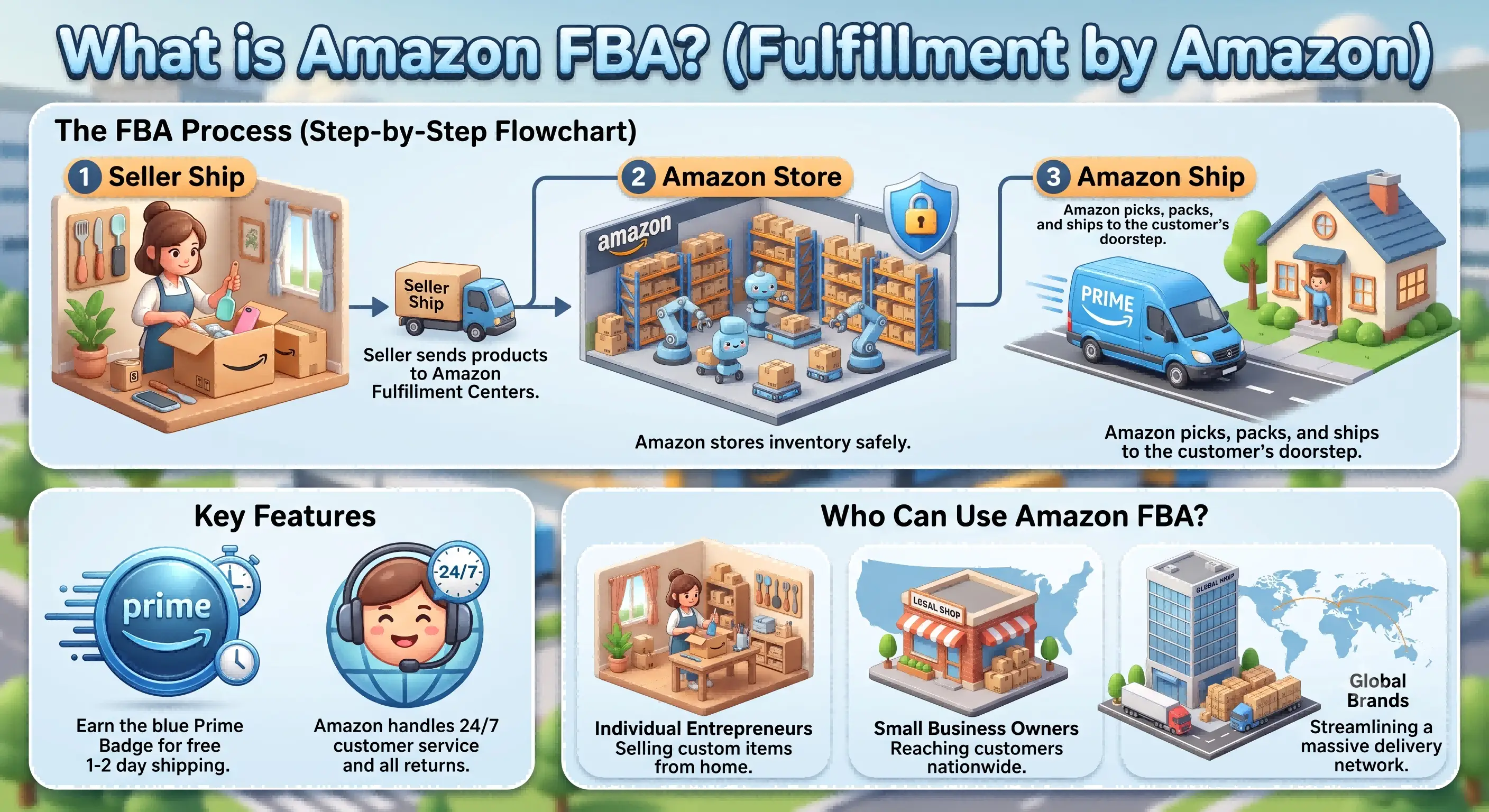
Amazon FBA stands for "Fulfillment by Amazon." It is a logistics service created by Amazon to help third-party sellers. Instead of storing inventory in your garage or bedroom, you send your products directly to Amazon’s massive fulfillment centers. When a customer orders your product on Amazon, Amazon takes care of the rest. They pick the item off the shelf, box it up, and ship it to the customer's doorstep. You never have to touch the package.
Key Features of the FBA Program
The most famous feature of the FBA program is access to Amazon Prime. When you use FBA, your items automatically earn the blue Prime badge. This means millions of Prime members get free one-day or two-day shipping.
Amazon also handles customer service for you 24 hours a day. If a customer has a question about tracking, needs to cancel an order, or wants a refund, Amazon’s support team handles the conversation. They even manage all product returns and exchanges, saving you countless hours of customer support work.
Who Can Use Amazon FBA?
Anyone can sign up and use Amazon FBA! You do not need a business degree or millions of dollars. It works great for:
- Individual entrepreneurs: A single person selling custom products or private-label items from home.
- Small business owners: Local shop owners who want to reach customers across the entire country.
- Global brands: Large companies that want to streamline their online delivery network without building expensive warehouses.
Whether you sell five kitchen spatulas a week or 5,000 phone cases a day, Amazon FBA scales to fit your needs.
Step-by-Step Process of How Amazon FBA Works
Setting Up an Amazon Seller Account
To get started, you must register an Amazon seller account. Amazon offers two main account types:
- Individual Seller Account: This plan has no monthly subscription fee. However, you pay a $0.99 fee for every single item you sell. It is best for beginners testing the waters with fewer than 40 sales a month.
- Professional Seller Account: This plan costs $39.99 per month, no matter how many items you sell. It unlocks advanced selling tools, advertising options, and bulk listing features. If you plan to sell more than 40 units a month, the Professional plan is the most cost-effective option.
How Amazon Handles Orders, Packing, and Shipping
Once your account is ready, you create a shipping plan inside Amazon Seller Central. Here is the exact journey your product takes:
- Labeling: You place a unique barcode (called an FNSKU) on each unit so Amazon knows it belongs to your store.
- Inbound Shipping: You pack your items into larger shipping boxes, print Amazon's shipping labels, and send them to an assigned Amazon warehouse via UPS or FedEx.
- Receiving: Amazon workers scan your shipment upon arrival and place your items into their active storage racks.
- Order Processing: When a shopper clicks "Buy Now," Amazon's smart system alerts warehouse staff (and smart robots). They find your product, place it into a brown Amazon box, seal it with smile tape, and hand it to a delivery driver.
Managing Returns and Customer Service Through FBA
Returns happen in online retail, but FBA makes them painless. When a customer wants to return an item—for instance, a stainless steel water bottle that was the wrong color—they request a return label on Amazon's app.
The customer drops the package off at a local drop-off location like UPS or Kohl's. Amazon receives the returned item back at their center, inspects its condition, and decides if it can be sold again. If the item is still in brand-new condition, Amazon puts it right back into your active FBA inventory.
Costs and Fees Associated with Amazon FBA
Breakdown of FBA Fees in 2026
While FBA is very convenient, it is not free. You must understand your fees to ensure you make a healthy profit margin. In 2026, Amazon's fee structure includes two main costs:
- Referral Fees: This is Amazon’s commission for bringing you a customer. It is usually around 15% of the product's selling price, depending on the category.
- FBA Fulfillment Fees: This per-unit fee covers picking, packing, and shipping your item. It depends strictly on the size tier and shipping weight of your item. For example, a light, small item like an iPhone case costs far less to ship than a heavy wooden coffee table.
Tip: In 2026, items priced under $10 qualify for lower Low-Price FBA rates, which helps sellers maintain profits on small, affordable goods.
Storage Fees and Long-Term Storage Costs
Amazon charges you for the space your products occupy in their warehouses. Storage fees are calculated by cubic feet and vary by season:
- Standard Months (January – September): Storage costs are lower and very affordable.
- Peak Holiday Season (October – December): Monthly storage fees increase significantly because warehouse space becomes extremely valuable.
In 2026, Amazon enforces strict aged-inventory rules. If your inventory sits unsold in a warehouse for longer than 180 to 365 days, Amazon adds an aged inventory surcharge. This extra fee can quickly drain your profits, so keeping your inventory moving fast is essential.
Additional Costs to Consider for FBA Sellers
There are a few other small fees to keep in mind:
- Inbound Placement Fees: In 2026, Amazon charges a small fee if you ask them to distribute your inventory across the country for you. You can reduce or avoid this fee by shipping your inventory to multiple specified warehouses yourself.
- Low-Inventory-Level Fees: If your stock levels drop too low relative to your daily sales velocity, Amazon may charge a small fee because low stock harms their ability to deliver items quickly to Prime buyers.
Advantages of Using Amazon FBA
Streamlined Logistics and Faster Shipping
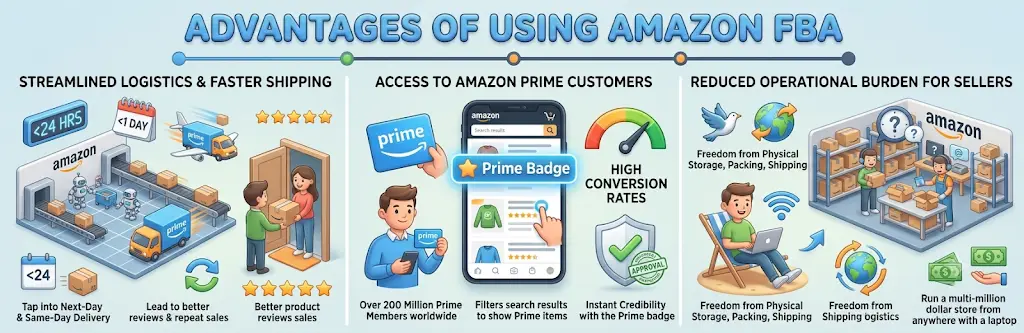
Amazon operates one of the most advanced supply chains in the world. By putting your products into their network, you tap into next-day and same-day delivery speeds that rival massive retail chains. Customers love receiving their orders in less than 24 hours, leading to better product reviews and repeat sales.
Access to Amazon Prime Customers
There are over 200 million Amazon Prime members worldwide. Prime shoppers actively filter search results to see only Prime-eligible products because they want free, fast shipping. Having the Prime badge gives your listing instant credibility and significantly higher conversion rates compared to merchant-fulfilled products.
Reduced Operational Burden for Sellers
The biggest advantage of FBA is freedom. Because Amazon manages physical storage, packaging, late-night customer emails, and shipping logistics, you can operate your e-commerce business from anywhere in the world. You can run a multi-million dollar store with just a laptop and an internet connection.
Challenges and Limitations of Amazon FBA
High Costs for Low-Margin Products
FBA is not ideal for every single product. If you sell a very heavy item with a low price tag—such as a $12 bag of heavy decorative rocks—the fulfillment and shipping fees will swallow all your profit. You must calculate your numbers carefully before launching a new product.
Limited Control Over Branding and Packaging
When you use Amazon FBA, your item arrives in a standard brown Amazon box with Amazon logos. You cannot include custom thank-you cards, custom tissue paper, or branded shipping tape. If creating a unique, high-end unboxing experience is essential to your brand identity, FBA's standardized packaging can feel restrictive.
Inventory Management and Storage Restrictions
Amazon closely monitors how well you manage your stock through an Inventory Performance Index (IPI) score. If your items sell slowly or stay out of stock too long, Amazon may lower your storage limits. You cannot simply send unlimited boxes to their warehouses whenever you want; you must work within the capacity limits Amazon gives you.
Amazon FBA vs. Other Fulfillment Options
Comparing FBA to Merchant Fulfilled Network (MFN)
Merchant Fulfilled Network (MFN)—also known as Fulfillment by Merchant (FBM)—means you store the inventory yourself and ship orders directly to buyers when they purchase on Amazon.
| Feature |
Amazon FBA |
Merchant Fulfilled (MFN / FBM) |
| Storage |
Amazon Warehouses |
Your home, office, or garage |
| Prime Badge |
Automatic |
Requires Special Qualification (SFP) |
| Customer Service |
Handled by Amazon 24/7 |
Handled entirely by you |
| Best For |
Fast-selling, light, standard items |
Large, heavy, custom, or slow-moving items |
How FBA Stacks Up Against Third-Party Logistics (3PL)
A 3PL is an independent warehouse company that stores and ships your orders for multiple sales channels (like your own Shopify site, eBay, and Walmart). While 3PLs offer great flexibility for multi-channel sales, Amazon FBA usually provides faster delivery speeds and better rates for sales made specifically on the Amazon platform.
Choosing the Right Fulfillment Model for Your Business
Many successful sellers use a hybrid approach! They use Amazon FBA for their top-selling, lightweight items to capture Prime traffic, and use MFN or a 3PL for oversized products or custom print-on-demand items.
Tips for Maximizing Success with Amazon FBA
Optimizing Product Listings for Better Visibility
To get sales on Amazon, shoppers must be able to find your listing.
- Titles: Write clear, descriptive titles that include your primary keywords (e.g., "Insulated Stainless Steel Water Bottle - 32oz").
- Images: Use clear, high-resolution photos with pure white backgrounds for your main image. Show the product in use in your secondary photos.
- Bullet Points: Highlight the main solutions your product provides in simple, easy-to-read bullet points.
Managing Inventory Levels Effectively
To avoid 2026 low-inventory fees and aged-inventory surcharges, aim to keep around 30 to 60 days of sales supply in Amazon's network. Monitor your daily sales speed closely, track lead times from your manufacturer, and reorder stock before your levels dip too low.
Leveraging Amazon Advertising to Boost Sales
When launching a brand new product, organic rankings take time. You can use Amazon Sponsored Products ads (PPC) to push your listing to the top of page one search results. You only pay when a customer clicks on your ad. This drives immediate traffic, generates your first sales, and helps you collect verified customer reviews faster.
Managing Multiple Amazon Accounts Safely with DICloak
Why E-Commerce Sellers Need Multi-Account Security
As your e-commerce business grows, you might want to manage multiple Amazon store accounts. For example, you might run one store for pet products and another store for fitness gear to build specialized brands. However, Amazon monitors seller accounts very strictly. If platform systems detect multiple seller accounts operating from the same computer or network without approval, they might link those accounts together. If one store runs into an issue, all linked accounts could face restrictions or bans.
Isolating Browser Environments and Proxy Settings
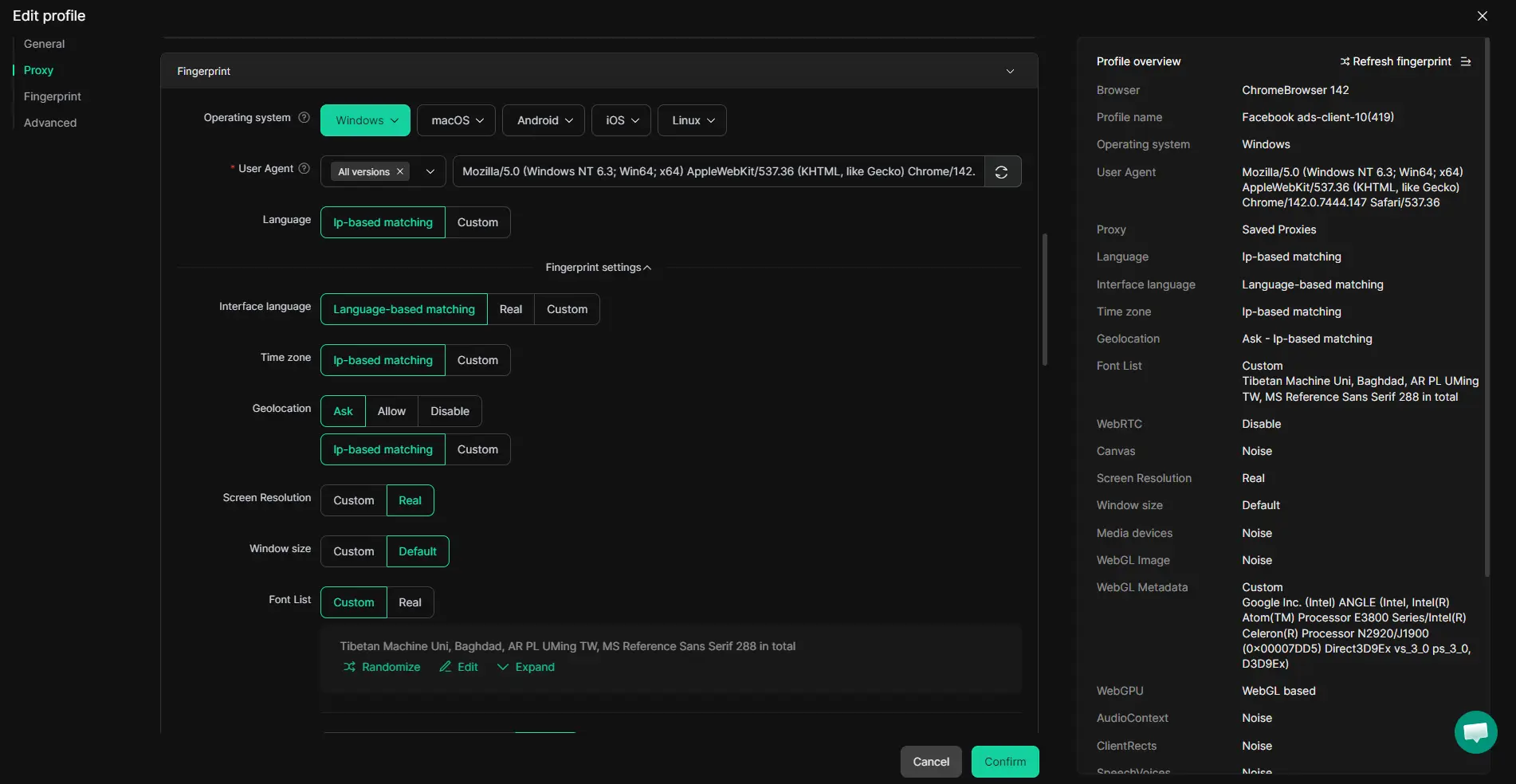
To protect your store accounts from cross-contamination, you can use the DICloak antidetect browser. With DICloak, you can create isolated browser profiles for every e-commerce account you run. Each profile operates with its own custom digital fingerprint and isolated environment, ensuring that platforms view every profile as an entirely separate device. Additionally, you can configure different proxy protocols, such as HTTP, HTTPS, or SOCKS5, directly inside DICloak. This assigns distinct IP addresses to every profile, making it simple to manage multiple storefronts safely.
Streamlining Team Collaboration and RPA Automation
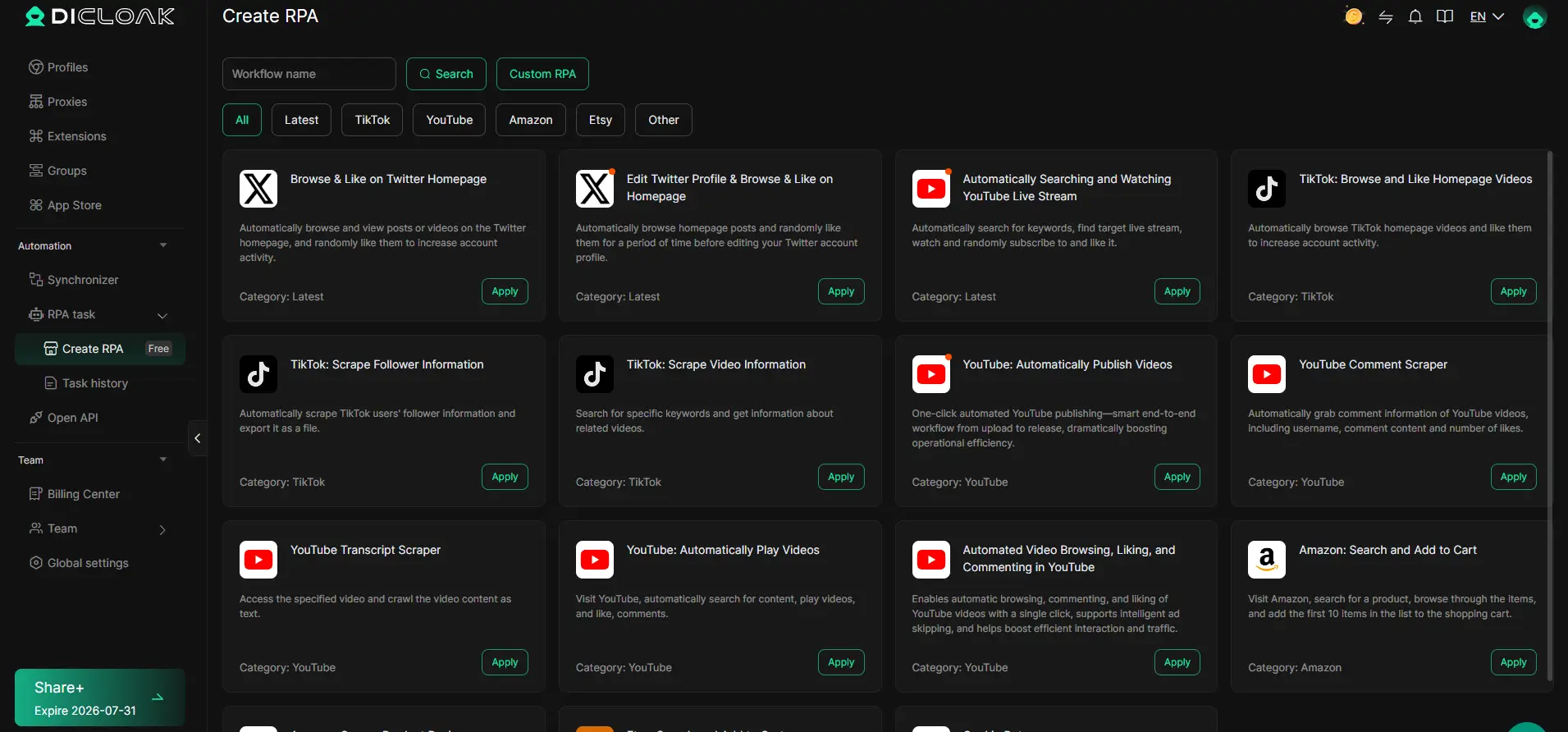
Scaling an online business often involves working with virtual assistants, agency partners, or team members. In DICloak, you can assign custom member permissions to control exactly what each team member can access and manage. You can securely share browser profiles across your team without revealing account passwords or triggering security warnings. Furthermore, you can leverage built-in RPA automation inside DICloak to handle repetitive daily tasks. You can automate routine task management, saving your team hours of manual labor every week.
Frequently Asked Questions About Amazon FBA
How Long Does It Take to Start Selling with FBA?
It usually takes between 6 to 12 weeks to get fully started with Amazon FBA. This timeline includes finding a good product idea, ordering samples from a supplier, manufacturing your first batch of inventory, setting up your Amazon seller account, and shipping your products to an FBA fulfillment center.
What Happens If My Inventory Is Lost or Damaged?
If Amazon accidentally loses or damages your products while they are inside an FBA warehouse or during FBA transit, you do not lose money. Amazon has a seller reimbursement policy. They will investigate the incident and reimburse you for the estimated fair market value of the lost or damaged items.
How Does Amazon FBA Handle Returns?
Amazon handles the entire return process for you. The buyer requests a return through Amazon, receives a prepaid shipping label, and sends the item back to an FBA facility. Amazon's team inspects the returned package. If it is still in good, sellable condition, they return it to your active FBA inventory. If it is damaged, they mark it as un-sellable so you can have it returned to you or disposed of.
Is Amazon FBA Suitable for Small Businesses?
Yes, Amazon FBA is ideal for small businesses! It gives small, home-based businesses access to world-class warehousing, 24/7 customer service, and fast Prime shipping without needing to spend thousands of dollars renting a physical warehouse or hiring shipping staff.
Amazon FBA Storage Fees and Limits
Amazon calculates monthly storage fees based on the volume (in cubic feet) your items occupy in their facilities. In 2026, storage fees are higher during the peak holiday shopping season (October through December). Amazon also sets inventory storage limits based on your sales performance, so keeping your stock moving quickly is essential to avoid extra fees.
Conclusion
Understanding how Amazon FBA works in 2026 gives you a huge advantage in the e-commerce world. By letting Amazon handle warehousing, packing, shipping, and customer support, you free up your valuable time to focus on product research, marketing, and growing your brand.
While you need to plan carefully for FBA fulfillment fees, storage rules, and account safety, FBA remains one of the fastest, most reliable ways to build a profitable online business. Start small, track your numbers closely, and use smart tools to build a lasting e-commerce brand!
 Web Proxy Tools
 Free Tools
 Cookie Plugin
 UA Generator
 MAC Address Generator
 IP Generator
 IP Address List
 2FA Code Generator
 World Clock
 Anonymous Check
 WebRTC Leak Test
 UUID Generator
 Free Web Proxy Site
 Proxy Checker
 FB Ad Checker
 AI Web Scraping
 Free SMM Tools
 Twitter Shadowban Checker
 Instagram Name Checker
 UTM Generator
 Username Generator
 AI Hashtag Generator
 LinkedIn Headline Generator
 Social Media Image Resizer