Affiliate marketers hit a real wall when choosing between ClickBank and DigiStore24. The platforms aren’t just logos, they shape how you get paid, which offers matter, and what your day-to-day looks like. No two marketers agree on which is easier to start with, and picking wrong means wasting weeks on signup delays, payout issues, or mismatched niches. That’s why clickbank vs digistore24 isn’t just a blog question, it’s a dealbreaker choice for anyone chasing new commissions.
The catch is, reviews and Reddit threads talk past the practical stuff. Most people complain about payout timing or dashboard quirks, but they ignore the reason your conversion rate swings: some offers choke on geolocation rules, others are fine but stuck behind slow approval. If you only compare payout methods, you miss the big picture, countries supported, refund headaches, and which offers actually fit your traffic. The digistore24 vs clickbank debate gets blurred by advice that focuses on the wrong end of the funnel.
Real affiliates look past headline features. What matters most isn’t just credit card support or a slick login. You need to see how fast you can launch campaigns, whether offers get flagged in your target markets, and if your payout terms survive sudden volume spikes. The clickbank and digistore24 comparison only makes sense when you dig into how each platform handles daily workflow, from picking offers to solving traffic mismatches.
That’s where most comparisons fall flat: they skip the details that actually decide your profit. Next, here’s how the signup and offer process breaks down.
What Should You Check Before Choosing ClickBank or DigiStore24?
Image generation pending: Blog illustration for section "What Should You Check Before Choosing ClickBank or DigiStore24?" Reason: 图片接口网络连接或响应超时。请检查接口状态后重试。
You have to look deeper than payout rates or website design. The deal-breakers in the clickbank vs digistore24 decision are always about match with your niche, what’s allowed in your country, and how likely your account is to survive a real campaign. Miss any of these, and you risk spending weeks building funnels only to hit a wall at the payout stage.
If your niche is health supplements, ClickBank’s marketplace has more legacy offers and recurring commission options. For e-learning or digital services, DigiStore24 leans heavier into EU-regulated categories and info products. Some niches, like crypto or gambling, are outright banned or limited on both, always check the terms for the offer type you want to promote. Matching your audience’s interests to the available product catalog often matters more than headline commission rates.
- Run a quick search in both marketplaces for your target offer type.
- Check if your desired offer is open to new affiliates or invite-only.
- Review category restrictions before setting up traffic sources.
Platform Restrictions and Regional Access
Even if an offer looks perfect, regional rules can block your earnings or even your signup. Here’s what to check before you waste time on account setup:
- Confirm your country is listed in the platform’s public registration or payout docs.
- Look for payout method limitations, some regions only get wire transfer, not PayPal.
- Check if your target audience’s country is allowed for the offers you want.
Account Approval and Compliance Risks
Getting approved does not mean you’re safe from future problems. Both platforms screen for fraud, mismatched data, and compliance errors. The most common failures happen before your first payout, not at signup.
- Double-check your ID and payment info match your registration details exactly.
- Review the KYC (Know Your Customer) requirements, DigiStore24 is strict on this for EU accounts.
- Avoid using traffic sources not allowed by the platform, especially paid ads or incentivized clicks.
If you skip these checks, you can get stuck in endless support loops or lose your payout after hitting your first sales target. Most platform bans trace back to small mistakes during onboarding or mismatched traffic sources. Next, you’ll see why these pitfalls aren’t rare and what patterns trip up new affiliates.
Why Do Some Affiliates Run Into Problems on ClickBank or DigiStore24?
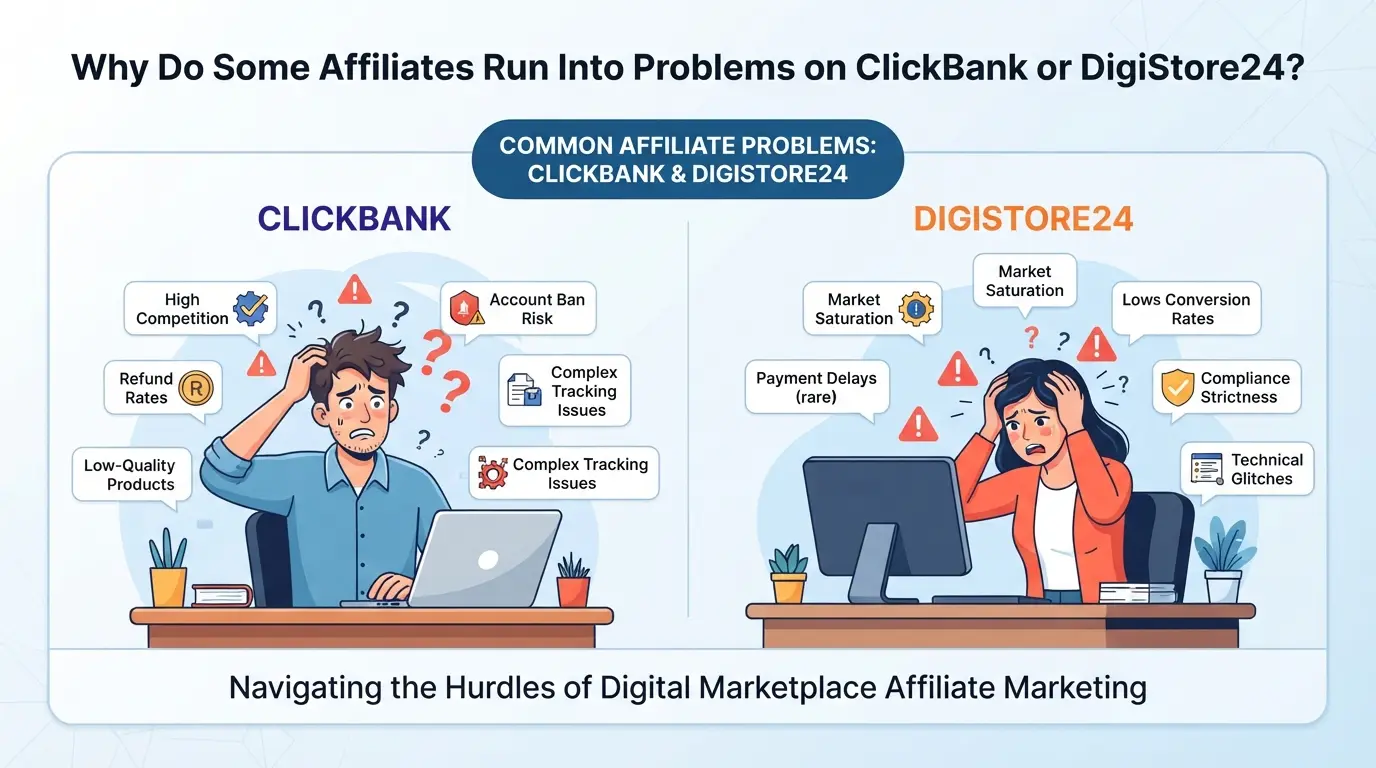
Too many affiliates lose commissions or face account issues not because the platform itself is weak, but due to habits and workflow errors that trigger bans or withheld payments. Digging past the feature list matters less than seeing how mistakes, like running duplicate profiles or using risky promotion tactics, turn real money into delays or blocks. The hardest part isn’t comparing dashboards; it’s knowing where these platforms trip users up and how fast small errors snowball into real losses.
Account Linking and Duplicate Profile Risks
Both platforms monitor for duplicate accounts and unusual profile links. If you log in from two browsers with similar fingerprints, or if you share a device with an old affiliate, you might trigger sudden restrictions. You’ll see a warning or get locked out, sometimes just for cookies that match a previously banned account.
Payment Delays and Withheld Commissions
Everything starts clean, until payout day. ClickBank and DigiStore24 both use fraud filters, quality checks, and multi-step review before releasing commissions. Problems usually happen when affiliates spike volume, switch countries, or promote offers that get flagged as high risk. For example, you clear $400 in commissions, then a payout gets delayed because the platform wants to confirm your payment source or review the offer quality. Digistore24 will sometimes withhold payment if buyers run up refund rates over 15%. ClickBank holds funds if your account or linked profiles are flagged for possible “incentivized” traffic or duplicate affiliate links.
Ignoring payout rules or switching devices without warning leads to weeks of delays, and sometimes total loss of commissions. The risk jumps if you manage team accounts, one mistake can freeze multiple linked payouts. If an affiliate launches campaigns from a new region, the fraud team reviews every transaction. You may get paid late, or not at all, if the traffic or device history doesn’t match their risk criteria. Quick tip: keep your browser, device, and proxy setup consistent. Small changes, like clearing cookies, or logging in from a new phone, often set off the payout review queue.
Promotion Tactics That Lead to Bans
Scan these before launching a campaign, or expect trouble:
- “Super-fast” ad tactics that break platform rules, like auto-redirects or click spamming, get flagged within hours.
- Paid traffic from prohibited sources, think pop-unders, incentivized clicks, or traffic bought cheap, triggers both account warnings and instant bans.
- Using non-approved creative materials or altering tracking links erases your commission history. Some affiliates ignore this, and get wiped out on the next audit.
Each of these mistakes turns the clickbank and digistore24 comparison into a question of “Which platform handles bans and warnings faster?” Real workflow issues, not just feature gaps, decide if your account stays alive or loses payout streaks.
The next step isn’t just a feature chart; it’s about how these platforms stack up with real affiliate workflows in 2026.
How Do ClickBank and DigiStore24 Actually Compare for Affiliates in 2026?

The real difference for affiliates isn’t just payout rates or dashboard look, it’s how each platform fits your traffic, offer quality, and workflow. If you’ve hit limits or slowdowns on one, switching doesn’t always fix the underlying issue. The table below cuts through sales pitches and shows where daily operations actually diverge.
Product Variety and Offer Quality
| Factor |
ClickBank |
DigiStore24 |
| Digital Products |
Wide range, heavy in IM/health niches |
Strong, with more EU focus |
| Physical Products |
Present, but less curated |
Fewer options, mostly digital |
| Niche Saturation |
High, many duplicate offers |
Less crowded in non-English segments |
| Exclusive Offers |
Rare exclusives, many shared listings |
Some exclusive deals, often geo-tied |
If you want evergreen IM or health offers, ClickBank has volume. For less competition in EU niches or new geo-targeted offers, DigiStore24 gives more room to maneuver.
Commission Rates and Payout Schedules
ClickBank usually posts higher top-line commissions (up to 75%), but payout windows can stretch if refunds spike. DigiStore24’s rates trend lower (typically 30-50%) but hit accounts faster in the EU. Minimum payout is $10 on ClickBank, €50 on DigiStore24, watch currency conversion fees.
Affiliate Tools and Platform Features
Tracking in ClickBank is simple but lacks deep segmentation. DigiStore24 offers more advanced reporting and integrations with European ad platforms. If you split-test a lot or need granular data by country, DigiStore24’s dashboard saves time.
Ease of Use and Support
ClickBank’s dashboard is faster to pick up and English support is responsive for payment questions. DigiStore24’s onboarding feels slower, especially if you need to verify a non-EU address, but their live chat is stronger for technical issues. Community resources are patchy on both unless you’re in a top-selling niche.
The biggest difference that impacts daily profit isn’t headline commission rates, but how easily you can find, launch, and maintain offers that stick in your traffic’s region. Skipping research here means you’ll waste days on campaigns that never convert or get stuck in payout delays.
If you’re still running into payment holds, unclear offer rules, or dashboard mismatches, the next step is tightening your operational checks before launch, not just switching platforms.
What Steps Should You Take to Reduce Account Risk on Either Platform?
Affiliate bans and lost payouts rarely come from the platform’s headline rules. The real traps hit when your accounts get linked, flagged for mismatched logins, or trip compliance checks too late to fix. If you want your ClickBank or DigiStore24 income to last, focus on how you run each account day-to-day, not just which platform claims better support.
Keep Each Account Separate and Consistent
- Set up a dedicated email and payment method for every affiliate account. Sharing details across accounts will get them linked.
- Use one device per account. Mixing personal and business logins on the same laptop often triggers review.
- Check that your IP address matches your country setup. If you access from a new region, expect a security alert, sometimes even a lockdown.
- Never reuse browser profiles between accounts. Leftover cookies or autofill data can link you behind the scenes.
Use Reliable Proxies and Secure Browsers
- Choose proxies with stable, clean IPs that match your target country. Cheap or recycled IPs often show up as “abuse” in platform logs.
- Rotate proxies only when you actually change locations, random switching sets off fraud filters.
- Stick to trusted browser tools that isolate sessions. Free plugins leak data or break after platform updates.
Document Everything and Monitor Changes
- Log every login, device, and profile change in a simple spreadsheet.
- Set alerts for password or payout edits. Fast action can save your funds if someone else gains access.
- Check for warning emails or dashboard alerts daily. A missed compliance notice can freeze your payouts for weeks.
The biggest risk isn’t picking the wrong network, it’s treating your account setup as an afterthought.
How Teams Use DICloak to Separate and Manage Platform Accounts in Affiliate Operations
Once you set up risk controls for ClickBank or DigiStore24, the next real bottleneck for teams running several accounts is keeping each session, device, and team member separate. Not every affiliate will need this, but for those handling multiple platform logins or working as a team, browser profile and access control become their own daily workflow. The platform handles offers, payouts, and compliance—operators handle the browser profile. Here’s how actual teams use DICloak for this layer.
Create Isolated Browser Profiles with Custom Fingerprints
Teams can create a separate browser profile for each platform account in DICloak, configuring the browser signals—like reported OS, language, and screen size—so each session runs in its own environment. This avoids browser storage overlap between accounts and keeps session data isolated during team work. The DICloak profile is not the account itself, but the browser container used to access it. 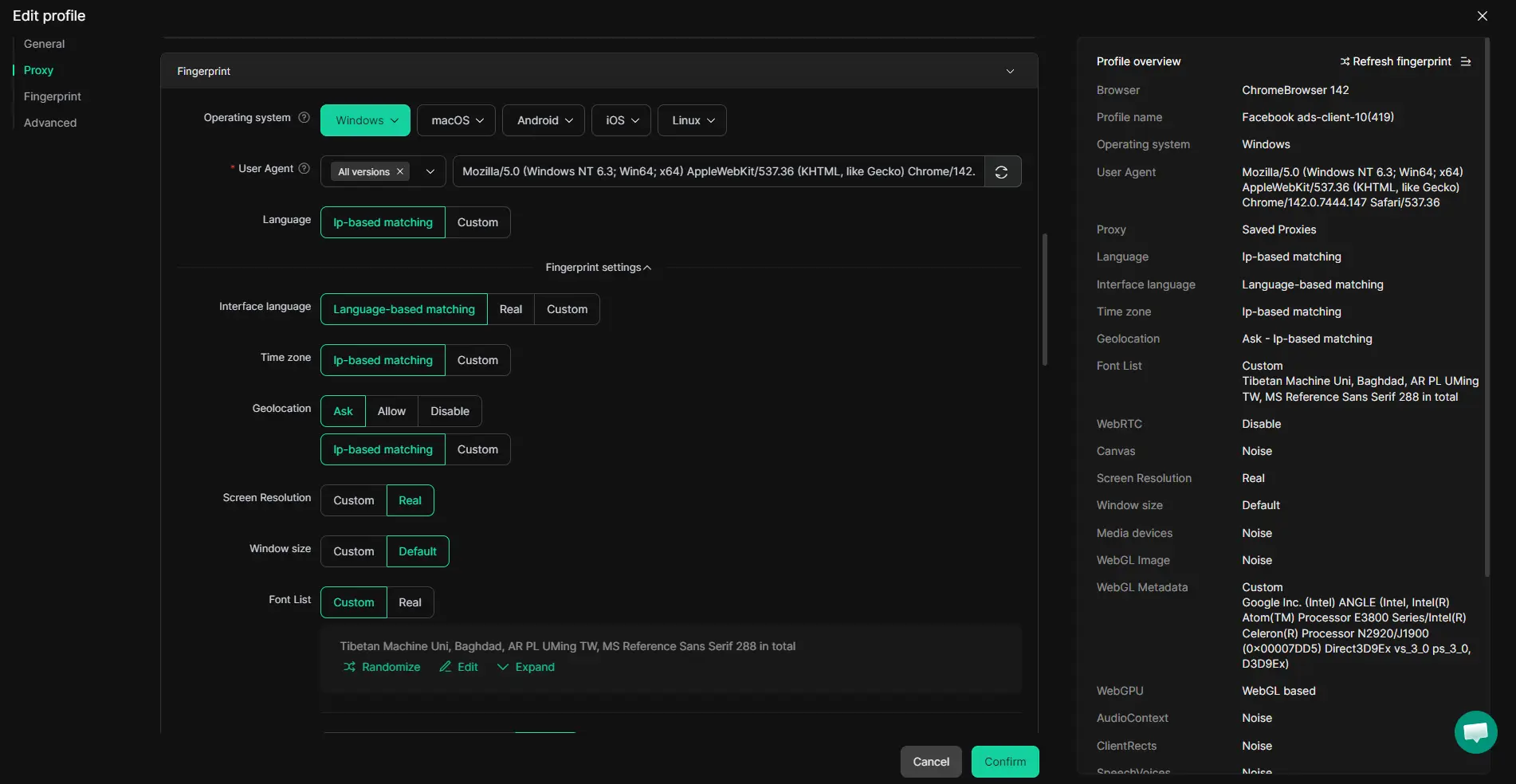
User-Provided Proxy Configuration for Assigned Profiles
For accounts that need a fixed network route, operators can assign their own proxy to each browser profile. Before logging into a platform session, the operator enters the proxy details, checks the connection, and sees the detected IP and region. The platform still decides what to log—DICloak just stores and applies the proxy settings the team inputs. 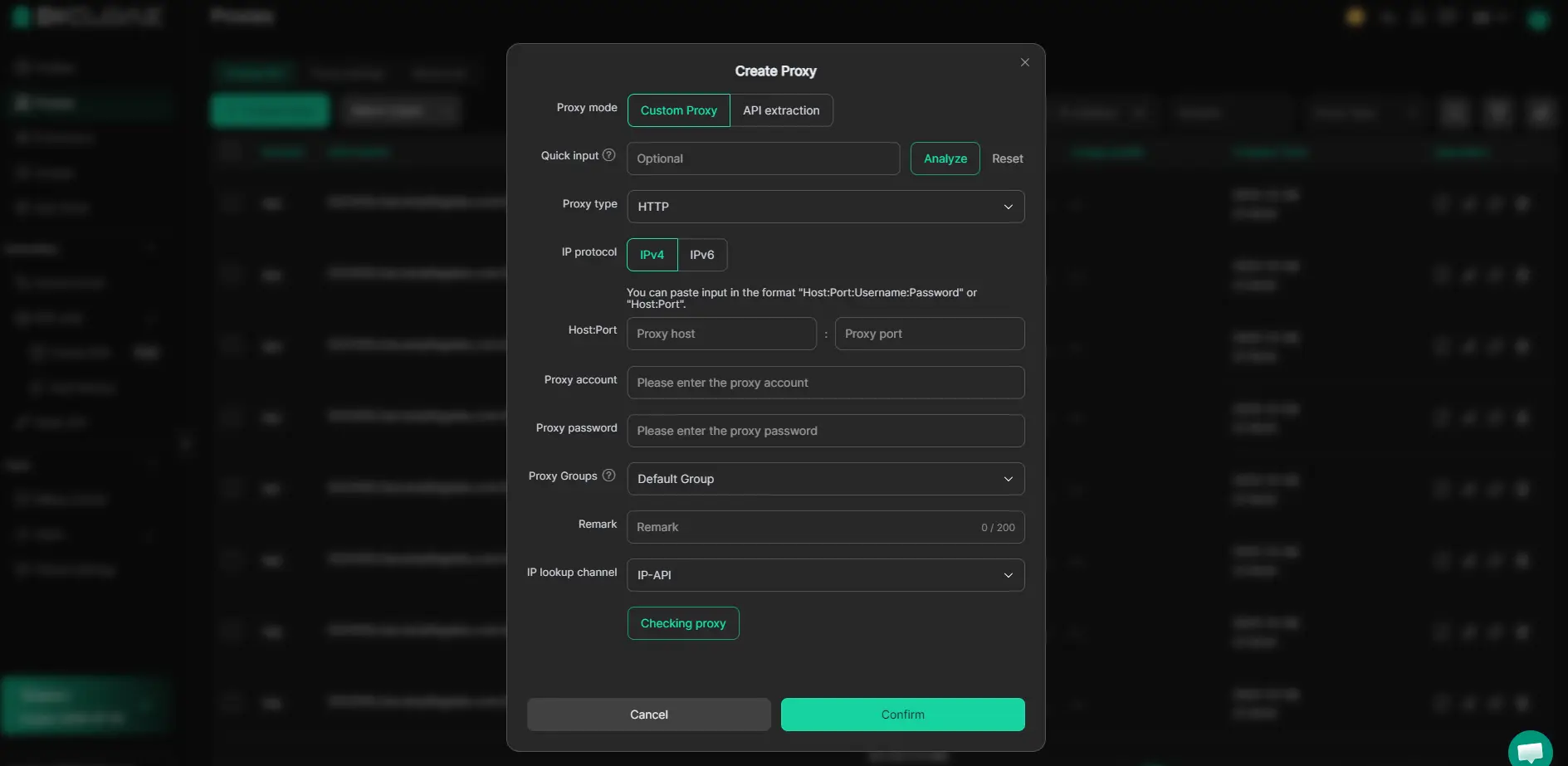
Control Team Access with Permissions
Admins can set up groups in DICloak so each member only sees the browser profiles needed for their tasks. This means one team handles ClickBank, another DigiStore24, and permissions stay separate inside DICloak itself. These controls do not affect roles or settings in the actual affiliate platforms—just the browser-profile layer. 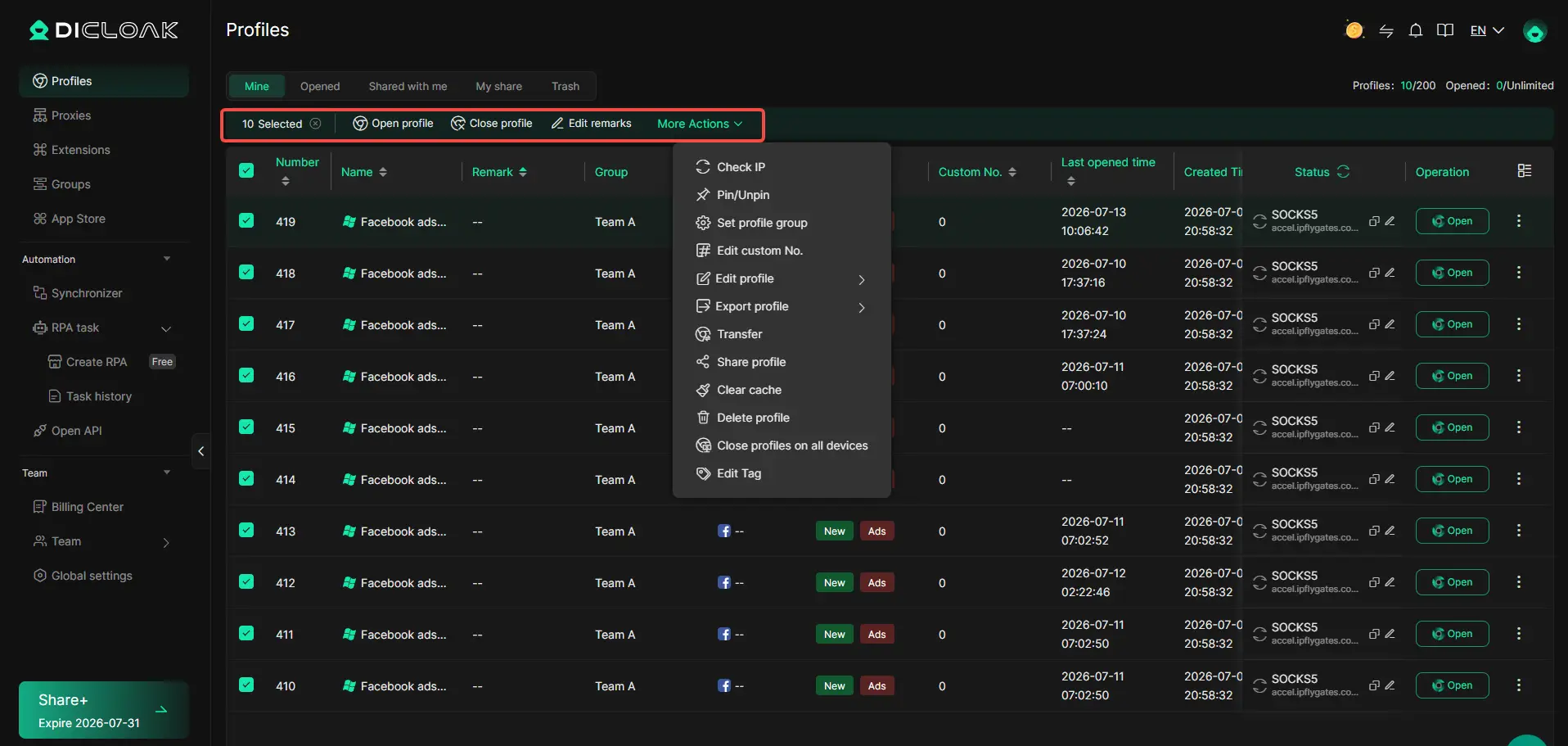
This workflow keeps browser operations organized when teams work across platforms—before you even get to the question of using both networks side by side.
When Does It Make Sense to Use Both ClickBank and DigiStore24?
Running campaigns on both platforms only pays off when you have clear reasons, not just chasing extra reach. Dual-platform strategies make sense if you want to cover different offer types, protect against sudden bans, or patch payout gaps. But the biggest win comes when you can actually keep your tracking and reporting clean between the two.
Diversifying Offers and Reducing Platform Risk
- Use both if you need to test offers that don’t overlap or perform differently on each site.
- Split your traffic sources to avoid total shutdown if one platform restricts your account.
- Watch for payout delays: running both forces you to track separate payment dates and terms.
Managing Separate Accounts and Tracking
Handling clickbank vs digistore24 together means keeping records for every login, payout, and campaign. The common mistake is mixing up account stats, which leads to lost commissions or missed payment cycles. Smart affiliates use spreadsheets or simple dashboards, mark each offer and payout channel by platform, so you never confuse totals when reconciling at month end.
What Are the Most Common Mistakes When Switching Platforms or Managing Both?
Switching from one affiliate platform to another, or running ClickBank and DigiStore24 at once, often causes mix-ups that burn old accounts, trigger restrictions, or leave money unclaimed. Here’s what to avoid.
Reusing Devices, Browsers, or IPs
The main reason affiliates lose accounts is reusing the same device or IP between platforms or different user profiles. Both companies look for overlapping browser data and shared locations. Losing separation means sudden bans or blocked payouts, sometimes without warning. Keep every account on a unique setup, shared fingerprints almost always get flagged, and you rarely get those accounts back.
Ignoring Platform-Specific Rules
- Review the compliance page before listing offers or sending traffic
- Check for new rules each quarter, both change policies without much notice
- Pause campaigns if you get flagged, review what triggered it, then adjust
Failing to Track Earnings and Payouts Separately
Mixing commissions across platforms leads to missed payouts and reconciling errors. Quick wins come from clear tracking.
- Use separate spreadsheets or dashboards for ClickBank and DigiStore24
- Log payout request dates and payout methods for each
- Match deposited amounts to the source platform before you plan next steps
Frequently Asked Questions About clickbank vs digistore24
Is ClickBank or DigiStore24 better for beginners in 2026?
Both platforms are beginner-friendly, but DigiStore24 is often praised for its easier onboarding and step-by-step tutorials. ClickBank has a simple signup, but some new users find the dashboard less intuitive. Both offer decent support. If you’re new to affiliate marketing, DigiStore24 may feel smoother at first, while ClickBank has a larger community for questions.
Can I use both ClickBank and DigiStore24 at the same time?
Yes, you can use accounts on both platforms. Many affiliates compare offers from each network. Just remember to keep your login information, tracking, and payment details separate. Mixing data or running duplicate campaigns across both can cause issues with payouts or account verification, so stay organized for the best results.
What are the payout methods for ClickBank and DigiStore24?
ClickBank pays affiliates by direct deposit, check, and Payoneer, with weekly payments to most countries. DigiStore24 supports SEPA bank transfer, international wire, and PayPal. ClickBank’s options may be limited in some regions not covered by Payoneer or banks. DigiStore24’s PayPal payouts are convenient, but availability depends on your country’s banking regulations.
How do I avoid getting my affiliate account banned?
To prevent bans, always read and follow each platform’s rules on promotion and traffic. Never create duplicate accounts or use fake information. Only promote approved offers, and avoid spammy tactics like mass unsolicited emails. Securing your computer and accounts with strong passwords helps keep your affiliate accounts safe from fraud.
Do I need proxies to work with ClickBank or DigiStore24?
Most affiliates don’t need proxies. However, proxies help if you manage multiple accounts (against platform rules), or if you live in a region with access restrictions. For normal single-account use, proxies are unnecessary. If you use proxies, choose trusted providers and keep your activity secure to avoid triggering fraud alerts.
Consider your business goals, preferred payout structure, and geographic reach when selecting your platform for affiliate marketing. Take time to review their interface and resources by signing up for a free account to see which one best matches your workflow.
Try DICloak For Free
 Web Proxy Tools
 Free Tools
 Cookie Plugin
 UA Generator
 MAC Address Generator
 IP Generator
 IP Address List
 2FA Code Generator
 World Clock
 Anonymous Check
 WebRTC Leak Test
 UUID Generator
 Free Web Proxy Site
 Proxy Checker
 FB Ad Checker
 AI Web Scraping
 Free SMM Tools
 Twitter Shadowban Checker
 Instagram Name Checker
 UTM Generator
 Username Generator
 AI Hashtag Generator
 LinkedIn Headline Generator
 Social Media Image Resizer