In our connected world, every device that goes online is given a unique identifier called an IP address. Think of it like the mailing address for your house; it tells websites where to send the data you request. This address reveals key details like your general location and your Internet Service Provider (ISP). Understanding what your IP address shows is the first step toward managing your online privacy.
While popular tools like Whoer.net provide a quick snapshot of this information, they are just the starting point. A wide range of alternative services has emerged, each offering specialized features, more detailed analysis, or a cleaner user experience. This guide is designed to help you explore these options and find the perfect IP checker for your specific privacy and security needs. To make the best choice, it's helpful to first understand how these powerful tools operate behind the scenes.
How Do IP Checkers Like Whoer Actually Work?
At first glance, IP checkers seem simple, but they use a clever two-step process to analyze your digital identity. They not only see your IP address but also examine the unique characteristics of your web browser. This section will break down the technology behind these tools in simple, easy-to-understand terms.
Pro Tip: No single IP checking tool is perfect. Using more than one service helps cross-check results and ensures you’re not missing hidden leaks.
Capturing Your IP Address and Location
The first step is straightforward. When you visit an IP checking website, your browser sends a request to its server. This request automatically includes your public IP address, much like a website seeing the return address on an envelope. The service logs this IP and then uses large, publicly available geolocation databases to match it to a country, city, and ISP. This gives you an instant overview of what any website you visit can see about you.
Analyzing Your Browser Fingerprint
Beyond your IP, these services use JavaScript to collect more subtle details about your device and browser settings. This process, known as browser fingerprinting, gathers a unique combination of data that can be used to identify you, even if your IP address changes. The information collected includes:
- Your browser type and version (e.g., Chrome, Firefox)
- Your operating system (e.g., Windows, macOS)
- Your screen resolution and color depth
- Your system's timezone and language settings
- A list of fonts installed on your device
This technique helps reveal if your settings are unusually unique or if a privacy service you are using is leaking information that could compromise your anonymity. This combined data from your IP address and browser fingerprint provides the raw material for a full-scale privacy audit, which we will explore next.
What Do Whoer and Similar IP Checkers Test?
Advanced IP checkers go far beyond simply displaying your IP address. They run a comprehensive suite of tests to give you a complete picture of your digital footprint and identify potential privacy vulnerabilities. The table below outlines the most common tests these services perform and what each one reveals about your connection.
| Test Performed |
What It Reveals |
| Public IP Address |
The main address that websites and online services see when you connect. |
| Geolocation (Country/City) |
Your approximate physical location, based on public IP-to-location databases. |
| ISP & Network Info |
The company that provides your internet connection (e.g., Comcast, Verizon). |
| Privacy Tool Detection |
Checks if your IP address belongs to a known anonymity service or data center. |
| DNS Leak Test |
Shows if your internet requests are accidentally revealing your true ISP. |
| WebRTC Leak Test |
Checks for a common browser leak that can expose your real IP address. |
| IPv6 vs IPv4 Status |
Determines if your connection is leaking information through a newer IP protocol (IPv6). |
| Browser Fingerprinting |
Analyzes how unique your browser settings are, making you more or less easy to track. |
| System & Browser Settings |
Reveals your language, timezone, and whether you have tracking protection enabled. |
| Blacklist Check |
Checks if your IP address is listed on public spam or security blacklists. |
| Connection Type |
Determines if you are using mobile data, a corporate network, or a home internet connection. |
| Privacy Score |
An overall score that summarizes your level of anonymity based on all test results. |
Pro Tip: Some IP checkers run active tests (like DNS/WebRTC leaks) in real time, while others only perform database lookups. That’s why using multiple services can reveal more details.
Now that we understand what these tools are looking for, let's explore how the top 10 alternatives to a standard Whoer check implement these tests to protect your privacy.
The Top 10 Alternatives for a Deeper Whoer Check
The following reviews analyze the top 10 alternatives to Whoer.net, highlighting their unique strengths, ideal users, and key features. This breakdown will help you choose the best tool to verify your online privacy and security.
WhoerIP.com – The Modern Privacy Champion
- What It Is: A premium IP analysis platform that represents the new generation of privacy tools, combining traditional IP checking with advanced browser fingerprinting and an overall privacy score. It focuses on accuracy and a clean, ad-free user experience.
- Best For:
- Privacy-conscious individuals needing a complete anonymity analysis.
- Cybersecurity professionals who require reliable detection tools.
- Users of anonymity services who want to verify their connection are secure.
- Key Strengths: WhoerIP.com stands out with its real-time analysis, detailed device fingerprinting, and clear anonymity scoring. Its professional, modern interface is fully optimized for mobile devices, making it a top choice for anyone looking for a powerful and user-friendly alternative to older Whoer websites.
Pixelscan.net – The Fingerprinting Specialist
- What It Is: A specialized platform that focuses heavily on browser fingerprinting analysis, bot detection, and privacy leak testing.
- Best For:
- Advanced privacy users and cybersecurity researchers.
- Developers testing privacy-focused applications.
- Anyone studying how browser fingerprinting works.
- Key Strengths: Pixelscan.net excels at providing deep insights into how unique and trackable your browser is. Its modern, dark-themed interface is clean and functional, with an outstanding mobile experience. The platform's focus on fingerprinting makes it a valuable tool for users with advanced privacy needs.
WhatIsMyIP.com – The Internet Pioneer
- What It Is: One of the oldest and most established IP checking services, offering reliable IP lookups alongside a large library of educational content and networking tools.
- Best For:
- General internet users looking for basic IP information.
- Students and educators learn about internet technology.
- Small businesses need simple, trustworthy tools.
- Key Strengths: Its greatest strength is its long-established reputation as an internet pioneer, operating for over 25 years. Its extensive collection of tutorials and guides explains networking concepts in a straightforward way, making it accessible to everyone.
MyIP.com – The Statistical Analyst
- What It Is: An established IP lookup service that provides statistical insights into internet trends, browser usage, and global connectivity data.
- Best For:
- Data enthusiasts are interested in internet statistics.
- Researchers are studying online usage patterns.
- Technical users who appreciate detailed system information.
- Key Strengths: MyIP.com goes beyond a simple IP check by presenting data in clean, easy-to-read charts and tables. This focus on statistical analysis provides a broader context for your connection, which is useful for research and technical analysis.
WhatIsMyIPAddress.com – The Content-Heavy Veteran
- What It Is: A long-running IP checker that has grown into a large content hub focused on privacy, security, and internet technology articles.
- Best For:
- Users are looking for privacy guides and articles.
- General consumers seeking basic IP information.
- People who don't mind ad-supported experience.
- Key Strengths: The site’s main advantage is its vast library of content covering a wide range of privacy topics. While heavy advertising can slow down user experience, it remains a useful resource for those looking to learn more about online security.
IP.me – The Privacy-Focused Service
- What It Is: A modern, privacy-first IP checker with a clean, user-friendly design. It is backed by Proton, a well-known name in the privacy space, and often guides users toward its broader ecosystem of security solutions.
- Best For:
- Privacy-conscious consumers seeking simple, clean IP information.
- Users of secure connection services.
- Anyone interested in straightforward online privacy solutions.
- Key Strengths: IP.me offers a beautifully simple and clean interface that is easy to use. Its strong focus on privacy and security messaging, combined with the reliability of being backed by a reputable company, makes it a trusted choice.
IPLocation.io – The Technical Powerhouse
- What It Is: A technically advanced platform designed for professionals, offering a comprehensive suite of IP intelligence tools and the ability to compare data from multiple providers.
- Best For:
- Network administrators and IT professionals.
- Cybersecurity researchers and analysts.
- Developers who need detailed IP data for their applications.
- Key Strengths: This service stands out for its technical depth. It allows users to cross-reference IP information across different databases, providing a more accurate and detailed analysis than most other checkers. Its professional toolset is ideal for security research and network administration.
Whoer.com – The Feature-Rich Veteran
- What It Is: A full-scale privacy platform that combines IP analysis with anonymity testing and fraud scoring. While powerful, its user experience is often impacted by heavy advertising for proxy services.
- Best For:
- Advanced privacy users who need fraud risk assessment.
- Cybersecurity professionals and privacy researchers.
- Users who can look past a cluttered, ad-heavy design.
- Key Strengths: Whoer.com offers a comprehensive set of features, including a unique fraud score that assesses the risk associated with an IP address. Despite its aggressive advertising, the underlying tools provide valuable and detailed technical information.
IPLocation.net – The Professional Platform
- What It Is: A professional-grade IP analysis service offering advanced tools like email tracing, privacy scanning, and bulk IP lookups for business use.
- Best For:
- Business users and corporate security departments.
- Email administrators and security teams.
- Anyone needing to process or analyze many IP addresses at once.
- Key Strengths: The platform’s focus on professional applications makes it unique. Features like email header tracing and bulk IP processing are invaluable for corporate security and IT professionals. The interface remains clean and functional despite some sidebar ads.
Whoer.to – The Minimalist Alternative
- What It Is: A simplified, ad-free version of the main Whoer.com platform. It provides core IP checking functions and technical details in a clean, table-based format.
- Best For:
- Users who want the technical data of Whoer.com without the ads.
- Technical users who prefer organized, easy-to-read data.
- Anyone needing a quick, efficient, and distraction-free IP check.
- Key Strengths: Whoer.to excels in its simplicity and speed. By removing all advertising and commercial promotions, it delivers a fast, professional, and straightforward user experience, making it a favorite among users who value clarity and efficiency.
Why choose DICloak Antidetect Browsers for your business?
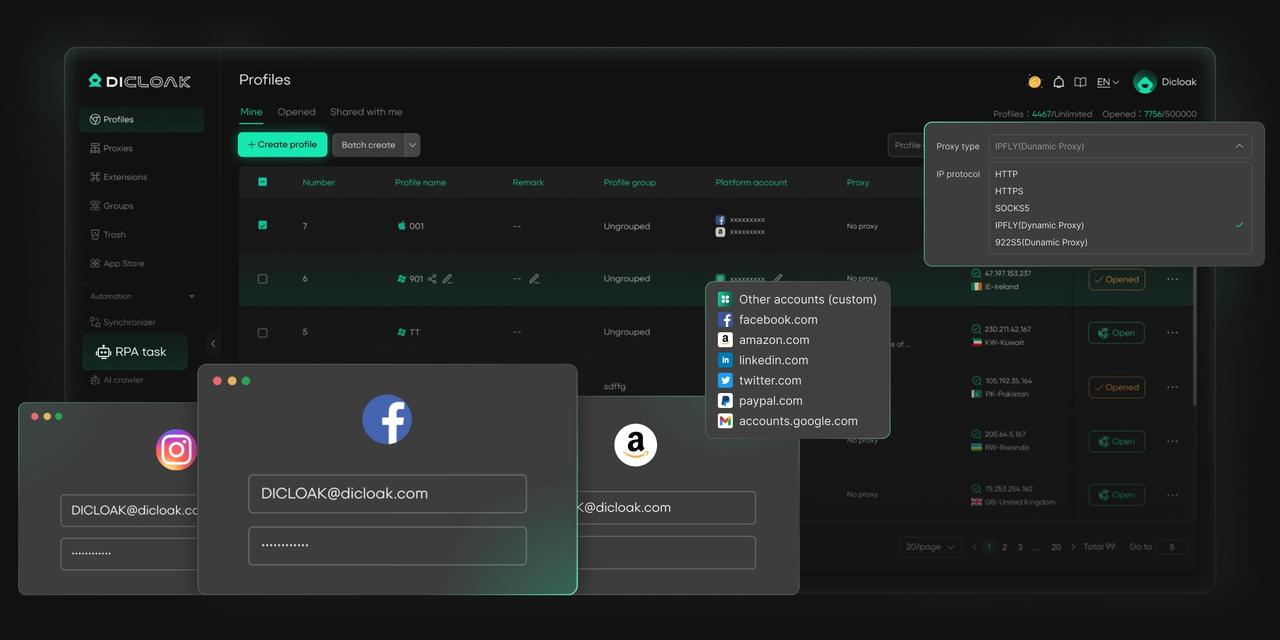
⚡The DICloak Antidetect Browser has become a global favorite for its unparalleled ability to efficiently and securely manage multiple accounts. Designed for professionals in social media management, affiliate marketing, traffic arbitrage, e-commerce, account farming, airdrops, and more, DICloak offers powerful features like RPA automation, bulk operations, and a synchronizer. Additionally, it allows you to customize fingerprints and integrate proxies for each profile, ensuring top-level security and operational efficiency. It’s the ultimate tool for seamless, secure, and scalable operations.
What Makes DICloak Stand Out?
✅ Manage 1,000+ Accounts on One Device:
Stop wasting money on extra hardware! DICloak allows you to manage multiple accounts on a single device, cutting costs and boosting efficiency.
✅ Guaranteed Account Safety, No Ban Risks:
Every account gets its own isolated browser profile with custom fingerprints and IPs, drastically reducing the risk of bans. Your accounts, your control!
✅ Flexible Proxy Configuration for Maximum Performance:
Seamlessly integrate with all major proxy protocols (HTTP/HTTPS, SOCKS5) and manage your proxy pool with bulk operations. No more struggling with IP management—DICloak has you covered.
✅ Streamlined Team Collaboration for Better Results:
Easily manage your team with advanced tools like profile sharing, permission settings, data isolation, and operation logs. Your team works smarter, not harder.
✅ Automate the Grind with RPA:
DICloak's built-in RPA saves you hours of manual work. Automate repetitive tasks, streamline workflows, and focus on what really matters—growing your business.
✅ Powerful Bulk Tools to Scale Your Operations:
Create, import, and launch multiple browser profiles in one click. DICloak makes scaling your business as easy as it gets.
✅ Compatible with All Major Operating Systems:
Based on the Chrome core, DICloak supports simulating Windows, Mac, iOS, Android, and Linux operating systems. No matter what platform you need, DICloak has you covered.
🔗 Ready to Get Started?
Visit the DICloak website to explore more details and choose the plan that’s right for you. Start for free today and experience the power of secure, efficient, and scalable multi-account management!
Conclusion: Why People Choose a Whoer Alternative
While Whoer.net has long been a popular tool for checking IP addresses, many users are now exploring alternatives for a simple reason: different services specialize in different strengths. Some focus on advanced leak detection, others provide highly accurate geolocation data, and new players deliver superior speed and innovative features.
Today’s internet users expect more than just an IP display; they want in-depth privacy analysis, faster performance, and clear results that help them improve their anonymity. This is where modern platforms like WhoerIP.com truly shine. As the market evolves, these tools are quickly gaining trust because they combine accuracy, usability, and innovation. For anyone serious about online privacy, choosing the right IP checker is a proactive security measure—it's about protecting your identity, preventing data leaks, and staying one step ahead of online tracking technologies.
Frequently Asked Questions about Whoer and IP Checks
Here are answers to some common questions about IP checking services.
What is the main difference between Whoer.com and Whoer.to?
Whoer.to is a minimalist, ad-free alternative to the main Whoer.com platform. It focuses on delivering core technical data in a clean, straightforward format without the heavy advertising and promotional content found on the primary site.
Can a Whoer check tell me if my connection is truly anonymous?
It can give you a "privacy score" by testing for common leaks and analyzing your browser fingerprint. However, no single tool can guarantee 100% anonymity. As experts advise, "No single IP checking tool is perfect. Using more than one service helps cross-check results and ensures you’re not missing hidden leaks."
Why do different IP checkers like Whoer sometimes show different locations for my IP?
This happens because services use different geolocation databases to match an IP address to a location. These databases are not always perfectly aligned, which can lead to slight variations in the city or region they report.
Is it safe to use a public Whoer or IP checking website?
Yes, reputable IP checkers are safe to use. They only see the same public information that any website you visit can see, such as your public IP address and browser details. They do not have access to personal information on your device.
What is a browser fingerprint, and why does Whoer test for it?
A browser fingerprint is a unique profile created from your device's settings, such as your screen resolution, installed fonts, and browser type. IP checkers test for it to see how unique and easily trackable your browser is, which is a key factor in overall online anonymity.
 Web Proxy Tools
 Free Tools
 Cookie Plugin
 UA Generator
 MAC Address Generator
 IP Generator
 IP Address List
 2FA Code Generator
 World Clock
 Anonymous Check
 WebRTC Leak Test
 UUID Generator
 Free Web Proxy Site
 Proxy Checker
 FB Ad Checker
 AI Web Scraping
 Free SMM Tools
 Twitter Shadowban Checker
 Instagram Name Checker
 UTM Generator
 Username Generator
 AI Hashtag Generator
 LinkedIn Headline Generator
 Social Media Image Resizer