Starting an online business can feel overwhelming. Many people worry about buying thousands of dollars in inventory before making their first sale. That is why dropshipping on Amazon remains a popular business model in 2026.
With Amazon dropshipping, you sell products to buyers without holding any inventory yourself. When a customer orders a product from your Amazon store, you purchase the item from a third-party supplier. The supplier then ships the item directly to the customer. You keep the difference in price as your profit.
In this guide, you will learn how to start dropshipping on Amazon step by step. We will cover the rules, risks, tools, and strategies you need to build a real, profitable business in 2026.
What Are the Key Requirements to Start Dropshipping on Amazon?
Do You Need an Amazon Seller Account?
Yes, you must have an active Amazon seller account to list products. Amazon offers two main account types:
- Individual Seller Account: This plan costs $0.00 per month, but you pay a $0.99 fee for every item you sell. It works best if you plan to sell fewer than 40 items a month.
- Professional Seller Account: This plan costs $39.99 per month. It allows you to sell unlimited items without paying the per-unit fee. It also unlocks advanced selling tools, advertising options, and bulk listing features.
If you are serious about building a dropshipping business, the Professional plan is the best choice.
What Are Amazon's Dropshipping Policies?
Amazon allows dropshipping, but they have very strict rules. If you break these rules, Amazon will suspend your account quickly.
To follow Amazon's dropshipping policy, you must:
- Be the seller of record: Your business name must be on all invoice slips, packing slips, and external packaging.
- Remove third-party branding: The package cannot show the logo or name of a retail store like Walmart, Target, or Home Depot.
- Handle returns: You are responsible for accepting and processing customer returns.
- Comply with seller agreements: You must follow all standard seller policies on Amazon.
Purchasing products from another online retailer and shipping them directly to your customer is strictly banned. You must work directly with wholesale suppliers or manufacturers who agree to your terms.
How Much Capital Do You Need to Start?
You do not need thousands of dollars to launch an Amazon dropshipping store, but it is not completely free. Here is a realistic budget for beginners in 2026:
- Amazon Seller Account: $39.99 per month for a Professional account.
- Product Sample Testing: $50 to $100 to test item quality and shipping speeds.
- Software and Research Tools: $30 to $80 per month for product research and repricing software.
- Cash Reserves for Orders: $200 to $500 to pay suppliers for customer orders before Amazon payouts hit your bank account.
Starting with a total budget of $300 to $700 gives you a safe, comfortable start.
What Are the Risks of Dropshipping on Amazon?
Why Can Amazon Suspend Your Account?
Amazon places customer trust above everything else. They will suspend seller accounts that cause a bad shopping experience.
Common reasons for account suspension include:
- Shipping items late or failing to provide valid tracking numbers.
- Sending items in boxes stamped with retail logos like Walmart or Sam's Club.
- Receiving high rates of customer complaints about defective or fake items.
- Operating linked seller accounts without proper security protocols.
What Are the Common Mistakes Beginners Make?
Many new sellers fail because they rush the setup process. They pick random products without checking the profit margins. They also forget to factor in Amazon's seller fees, which usually range from 8% to 15% per sale.
Another big mistake is relying on slow, unverified overseas shipping. If a package takes three weeks to arrive, the buyer will open a complaint, and your account metrics will drop.
How Can You Avoid Supplier Issues?
Supplier mistakes can ruin your reputation on Amazon. To avoid bad suppliers, always order sample products to your home first. Check the packaging quality, shipping speed, and item accuracy.
Communication is also essential. Ask your supplier these important questions before listing their items:
- Do you include custom invoices with my store name inside the package?
- How fast do you process orders after receiving them?
- Do you provide real-time tracking numbers that Amazon accepts?
How to Choose the Right Products for Amazon Dropshipping
What Makes a Product Profitable for Dropshipping?
Not every product works well for dropshipping. To maximize your profits, look for items that fit these guidelines:
- Lightweight and small: Items under 2 pounds cost much less to ship fast.
- Non-fragile: Avoid glass, delicate electronics, or ceramics that break easily during delivery.
- Consistent demand: Look for items people buy year-round, like kitchen utensils or pet accessories.
- Solid profit margins: Aim for items where you can make at least a 20% net profit after paying Amazon fees and supplier costs.
For example, a silicone garlic press that costs $3.00 from a supplier and sells for $14.99 on Amazon can yield a clean, healthy profit margin.
How to Use Market Research Tools Effectively
Finding winning products manually takes too much time. You can use market research software like Helium 10, Jungle Scout, or Keepa to analyze market data.
Look for items with a low Best Sellers Rank (BSR) and steady historical prices. Check how many other sellers share the listing. If 30 sellers are fighting over the exact same item, price competition will eat up your profits.
Which Niches Are Best for Amazon Dropshipping in 2026?
In 2026, buyers favor functional, problem-solving everyday items.
Top niches for dropshippers include:
- Home & Kitchen: Drawer organizers, reusable food storage bags, and specialized cooking tools.
- Pet Supplies: Grooming brushes, slow-feeder dog bowls, and durable cat toys.
- Office Supplies: Ergonomic mouse pads, cable management clips, and desktop organizers.
- Outdoor & Sports: Resistance bands, compact camping towels, and bicycle phone mounts.
Step-by-Step Guide to Start Dropshipping on Amazon
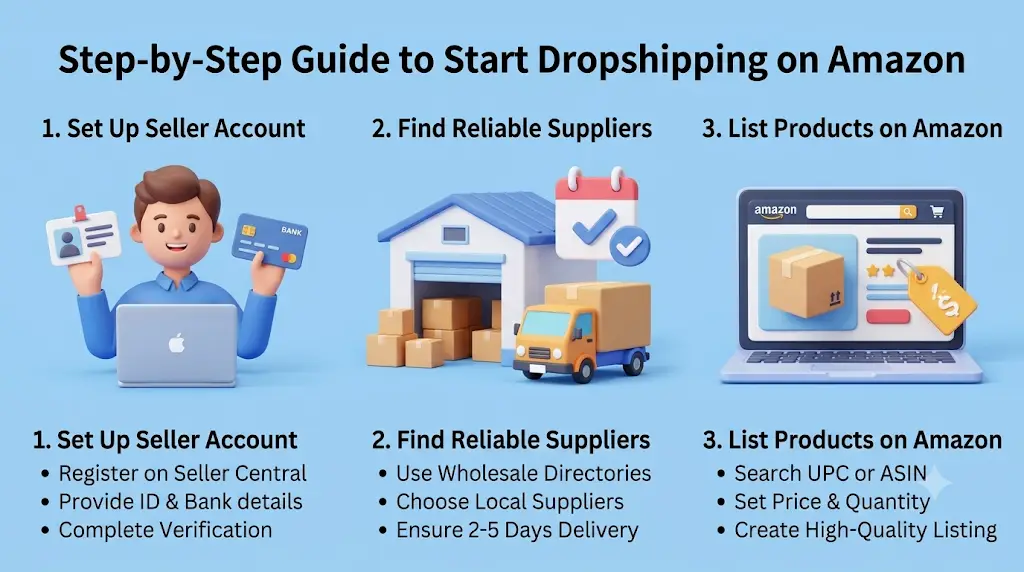
How to Set Up Your Amazon Seller Account
Follow these simple steps to register your account on Amazon Seller Central:
- Go to the official Amazon Seller Central website and click "Register now."
- Provide your personal details, government ID (passport or driver's license), and business address.
- Enter a valid credit card for monthly account fees and a bank account for receiving payouts.
- Complete the identity verification process, which may include uploading bank statements or completing a brief video call.
How to Find Reliable Suppliers
To follow Amazon's strict policies, you need wholesale dropshipping suppliers or trade distributors. You can search directory platforms like Wholesale Central, SaleHoo, or CJ Dropshipping.
Look for suppliers located in the same country as your buyers. For example, if you sell on Amazon US, work with US-based warehouses. This ensures delivery times stay between 2 to 5 business days.
How to List Products on Amazon
Once you select a supplier, you need to list the product on Amazon.
- Log into Seller Central and click "Add a Product."
- Search for the existing product using its UPC code or ASIN.
- Click "Sell this product" and enter your price, item condition (New), and available quantity.
- If the product is not listed on Amazon yet, create a new product listing with high-quality images, bullet points, and relevant keywords.
How to Price Your Products for Maximum Profit
How to Calculate Costs and Margins
Before setting your sale price, calculate your true costs to avoid losing money.
Use this simple profit formula:
Net Profit = Selling Price - (Supplier Cost + Shipping Cost + Amazon Referral Fee + Software Costs)
Example Calculation:
- Target Selling Price on Amazon: $25.00
- Supplier Item Cost: $8.00
- Supplier Shipping Fee: $4.00
- Amazon Referral Fee (15%): $3.75
- Total Net Profit: $9.25 (37% profit margin)
What Are the Best Pricing Strategies for Amazon?
Winning sales on Amazon requires competitive pricing. Most buyers purchase from the "Buy Box"—the box on the right side of the product page with the "Add to Cart" button.
To stay competitive:
- Price your product within 1% to 2% of the current Buy Box price.
- Avoid pricing too low, as this can trigger a price war with other sellers.
- Use psychological pricing, such as setting prices to end in
.99 or .95.
How to Compete with Other Sellers on Price
Instead of engaging in a race to the bottom on price, stand out through superior service. Offer faster shipping processing times or bundle complementary products together under a unique private bundle listing.
What Tools Can Help You Succeed in Amazon Dropshipping?
Which Tools Help with Product Research?
Data-driven tools help you avoid selling slow-moving products.
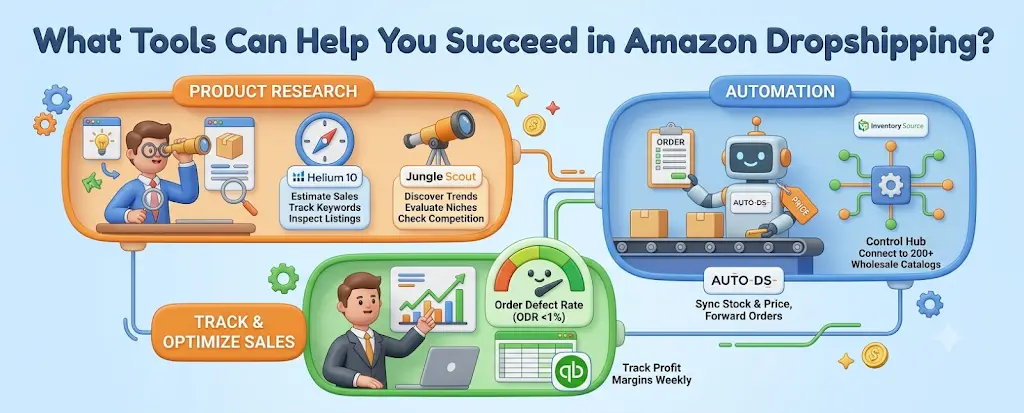
- Helium 10: Helps you estimate monthly product sales, track keyword search volume, and inspect competitor listings.
- Jungle Scout: Excellent for discovering market trends and evaluating niche competition levels.
How to Automate Inventory and Order Management
Manual updates can cause stock issues if a supplier sells out. Automation tools keep your store synchronized in real time.
- AutoDS: Automatically updates stock levels and prices, and forwards customer orders to your supplier.
- Inventory Source: Connects your seller account directly to over 200 wholesale supplier catalogs.
How to Track and Optimize Your Sales Performance
Keep a close eye on your store metrics inside Seller Central. Monitor your Order Defect Rate (ODR), which must stay strictly below 1%. Track your net profit margins weekly using simple spreadsheets or accounting tools like QuickBooks to ensure your business stays healthy.
How to Handle Customer Service and Returns as a Dropshipper
How to Manage Customer Inquiries Effectively
Amazon requires sellers to respond to all customer messages within 24 hours. Always maintain a polite, helpful tone.
If a buyer asks about a delayed delivery, check the tracking number immediately. Send them a clear update and offer a small partial refund if the shipment was delayed by a logistics issue.
What Are Amazon's Rules for Returns and Refunds?
Amazon sellers must offer a return window of at least 30 days. When a customer requests a return:
- Provide a pre-paid return shipping label that routes the package back to your address or your supplier's warehouse.
- Once the item is delivered and checked, issue a full refund through Seller Central.
- Coordinate with your supplier to receive a credit or replacement on your wholesale account.
How to Build Trust and Maintain Positive Reviews
Positive customer feedback boosts your account standing and improves your chances of winning the Buy Box.
- Ship items faster than your estimated delivery date whenever possible.
- Provide clear, accurate product descriptions so buyers know exactly what to expect.
- Include friendly packing slips inside packages (when supported by your supplier).
How to Scale Your Amazon Dropshipping Business
When Should You Expand Your Product Line?
Only scale your business after your initial products generate consistent sales and positive customer reviews. Once you successfully manage 3 to 5 items without operational delays, begin adding 2 to 3 new products per week in the same niche.
How to Use Advertising to Boost Sales
To gain visibility on new listings, consider using Amazon Sponsored Products ads (PPC). These pay-per-click ads display your listings at the top of Amazon search results when customers search for specific keywords.
Start with a small daily budget of $5 to $10 per product. Target high-intent search terms to drive instant traffic to your new listings.
What Are the Best Practices for Scaling Profitably?
- Reinvest profits: Put your earnings back into inventory reserves, better tools, and advertising.
- Negotiate bulk discounts: Once you sell high volumes, ask your suppliers for lower unit prices or free shipping.
- Expand storefronts: Scale up operations by managing niche-specific seller accounts safely.
How to Manage Multiple Amazon Seller Accounts Safely
As your e-commerce operations expand, managing multiple Amazon seller stores across different product niches is one of the most effective ways to grow revenue. However, logging into several seller accounts from the same computer or browser can trigger automated safety checks and account linkings.
To prevent these risks, you can use the DICloak antidetect browser to set up fully isolated browser profiles. You can create separate browser profiles for every Amazon store on a single device. By configuring dedicated HTTP or SOCKS5 proxies for each profile, you ensure each account operates under a distinct IP address and unique browser fingerprint, keeping every store independent and secure.
Integrating Open APIs for Market Research and Store Management
Analyzing market trends and competitor pricing on Amazon requires consistent data collection.
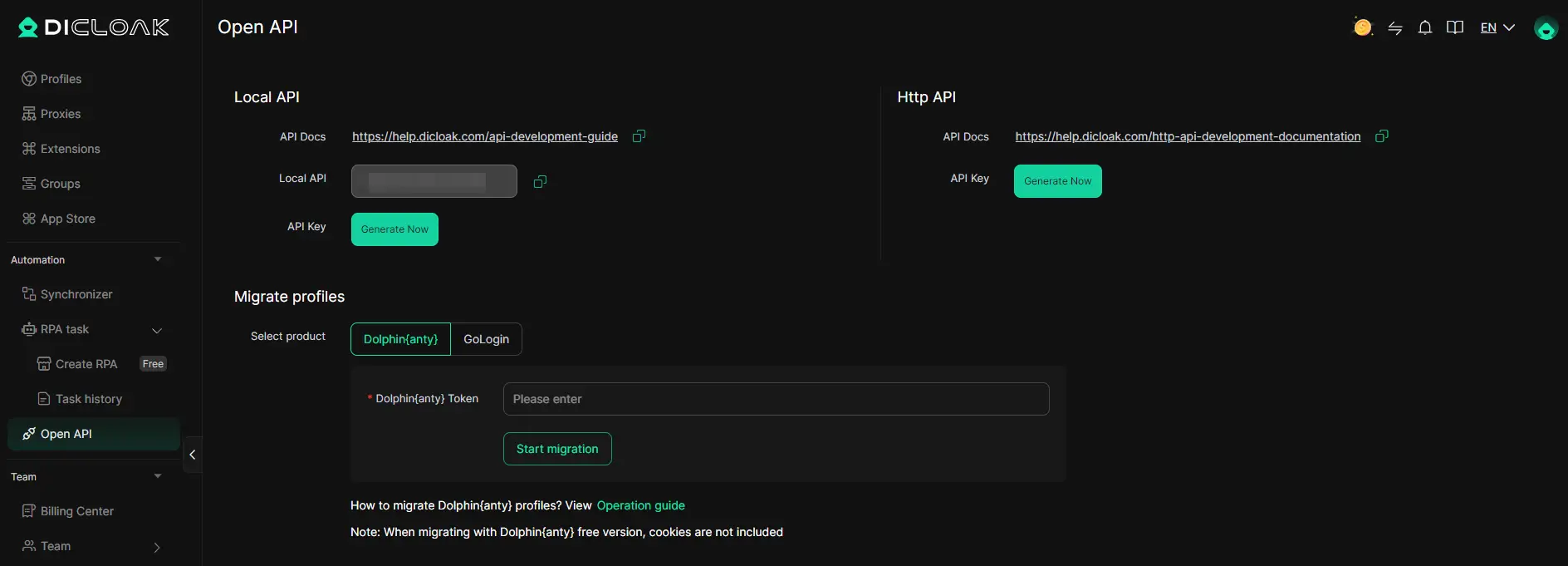
You can access open Local API and HTTP API interfaces directly within your dashboard. To build your own custom data workflows, you just need to generate an API key and connect your own web scraping scripts manually. Once you connect your custom code to your separate browser profiles, you can track live competitor prices safely. When you customize your digital fingerprints and simulate authentic browsing behavior, you can easily bypass anti-scraping defenses.
Additionally, if you already manage Amazon stores using other software, you can quickly move your data. You can use the built-in migration tool to transfer your browser profiles from platforms like Dolphin{anty} or GoLogin using a simple token. This hands-on setup allows you to conduct continuous market research and organize your dropshipping stores without exposing your main account to tracking.
Reducing Account Suspension Risks with Unique Profiles
Account suspensions often happen when platforms detect cross-account activity or conflicting browser data.
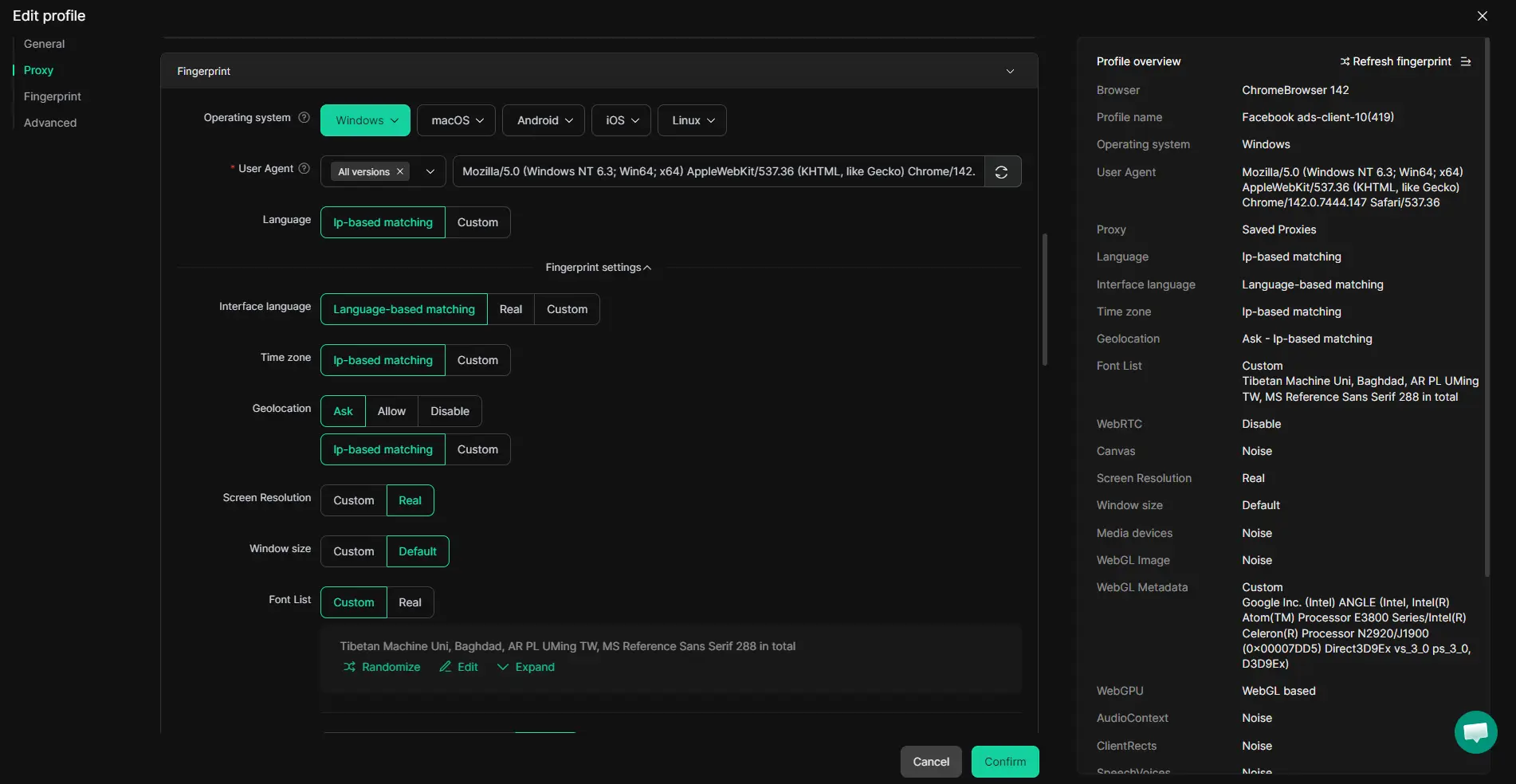
You can use DICloak to customize digital fingerprints—including user agents, screen resolutions, operating system settings, and canvas parameters—for every account you run. Furthermore, if you work with a team, you can share browser profiles securely using DICloak's flexible permission settings. This allows team members to handle order processing and customer service without sharing raw passwords or risking account security.
Frequently Asked Questions about Dropshipping on Amazon
Is Amazon Dropshipping Legal in 2026?
Yes, dropshipping on Amazon is completely legal in 2026. However, you must strictly follow Amazon's official dropshipping policy. You must be the seller of record on all packaging, and you cannot ship items directly from other retail stores like Walmart or Target to your buyers.
Can You Start Dropshipping on Amazon Without Money?
While you do not need to buy bulk stock upfront, you cannot start completely without money. You need capital to cover Amazon's monthly Professional seller fee ($39.99), order product samples, pay for research software, and process customer orders before Amazon releases your sales payouts. A starter budget of $300 to $500 is recommended.
How Long Does It Take to Start Earning Profits?
Most dedicated beginners who follow proper research methods make their first sales within 2 to 4 weeks of listing products. Achieving steady monthly profits usually takes 2 to 3 months of continuous testing, pricing optimization, and supplier refining.
What Happens If a Supplier Fails to Deliver?
If a supplier fails to ship an order or provides a invalid tracking number, communicate with the customer immediately. Issue a full refund or send a replacement item at your own expense to prevent negative seller feedback. After resolving the customer's issue, contact your supplier for reimbursement and consider switching to a more reliable supplier.
Can You Dropship on Amazon and Other Platforms Simultaneously?
Yes! Many successful e-commerce business owners dropship on Amazon, eBay, Shopify, and Walmart at the same time to diversify their income streams. Using multi-account tools like DICloak helps you manage separate sales channels securely from a single computer without triggering account conflicts.
Conclusion
Starting a dropshipping business on Amazon in 2026 is an accessible, practical way to enter the e-commerce industry. By working directly with legitimate wholesale suppliers, following Amazon's dropshipping policies, and selecting low-risk, high-demand products, you can build a sustainable online store.
Focus on delivering great customer service, keeping delivery times fast, and using reliable software tools to streamline your daily tasks. Take the first step today, start researching your target niche, and build your business step by step!
 Web Proxy Tools
 Free Tools
 Cookie Plugin
 UA Generator
 MAC Address Generator
 IP Generator
 IP Address List
 2FA Code Generator
 World Clock
 Anonymous Check
 WebRTC Leak Test
 UUID Generator
 Free Web Proxy Site
 Proxy Checker
 FB Ad Checker
 AI Web Scraping
 Free SMM Tools
 Twitter Shadowban Checker
 Instagram Name Checker
 UTM Generator
 Username Generator
 AI Hashtag Generator
 LinkedIn Headline Generator
 Social Media Image Resizer