The dropshipping landscape in 2026 has moved past the era of "cheap and slow." Modern consumers demand immediacy, and platform algorithms now aggressively penalize the logistical friction inherent in overseas sourcing. For the strategic e-commerce operator, domestic fulfillment is no longer an optional upgrade; it is the fundamental architectural requirement for a scalable, high-trust brand. Moving your supply chain to the United States directly resolves the primary failure points of the old model: prohibitive shipping windows, inconsistent quality control, and the constant threat of account deactivation.
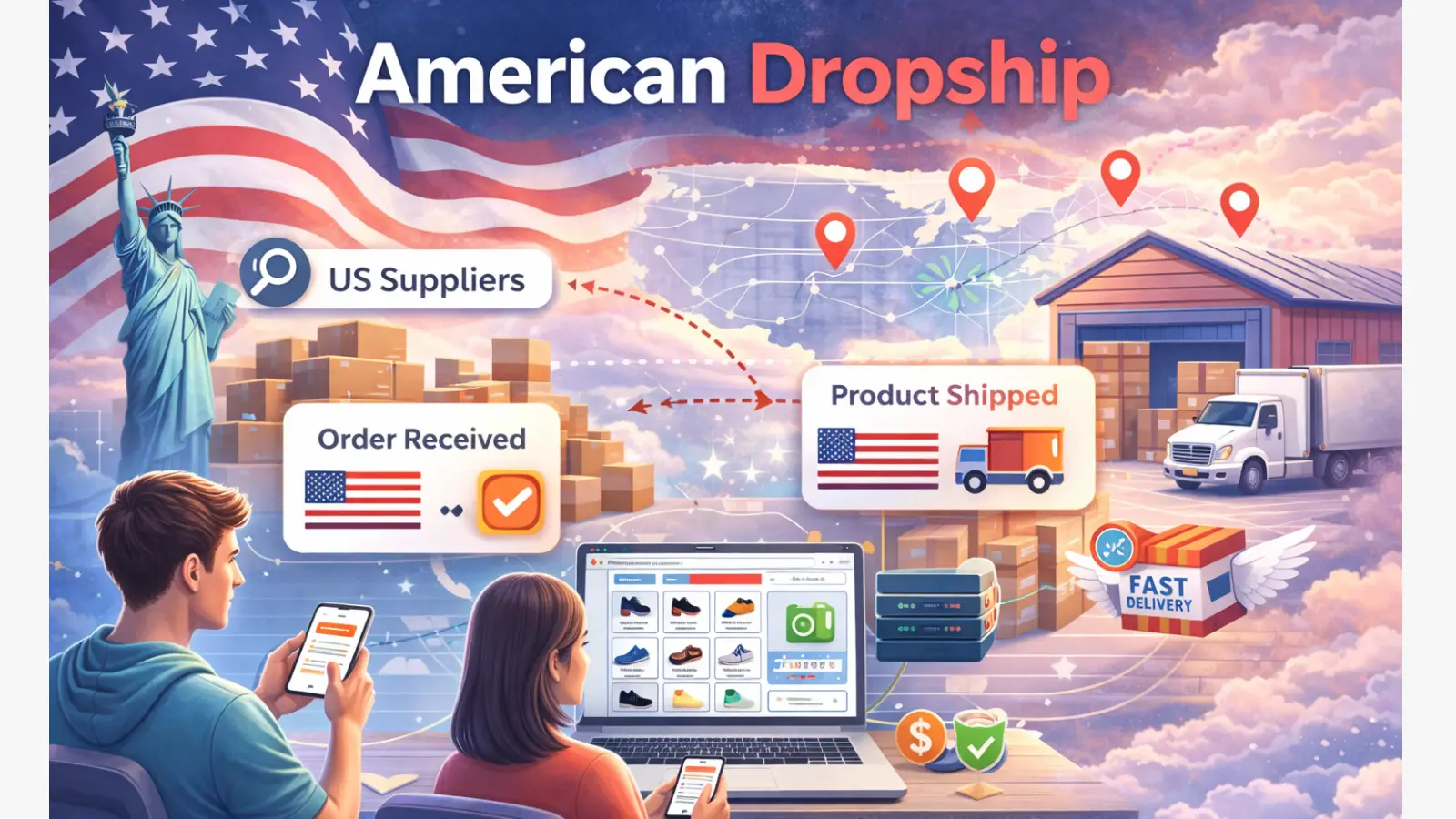
Why are sellers moving toward American dropship models in 2026?
The pivot to domestic sourcing is a strategic response to the rising costs of customer acquisition and the decreasing tolerance for logistical delays.
Does the "3-day delivery" promise actually drive more sales?
In 2026, delivery speed is the strongest lever for conversion rate optimization. Sourcing from US hubs allows you to secure "Fast Shipping" badges on major marketplaces, which significantly boosts visibility and trust. Beyond the initial sale, 1–3 day shipping—provided by suppliers like Kimmy Shop—drastically reduces customer service tickets and buyer remorse, leading to higher lifetime value (LTV) and lower churn.
How does US sourcing solve the "Returns Nightmare"?
International returns are a profit-margin killer. By utilizing US suppliers, you gain access to domestic return addresses and localized support, allowing for seamless reverse logistics. This infrastructure ensures that refunds and exchanges are handled within days rather than weeks, preserving your seller rating and preventing the chargeback cycles that often lead to merchant account freezes.
Can you really build a "Premium Brand" using overseas suppliers?
Brand perception in 2026 is inseparable from origin. US-labeled goods carry a "quality-first" connotation that justifies premium pricing. Furthermore, domestic partners like FragranceX and Printful offer sophisticated private-label and white-label capabilities. This allows your brand to appear on all invoices and packaging inserts, ensuring the customer experience is centered on your company’s identity rather than a generic manufacturer.
Which US dropshipping suppliers are the most reliable right now?
The 2026 market is dominated by a few key players who have effectively bridged the gap between domestic manufacturing and digital storefront integration.
Who are the best generalists for a broad storefront?
- Spocket: This remains a top choice for its seamless integration with Shopify and Wix. It offers an innovative "Image Search" feature, allowing you to source suppliers instantly by uploading a product photo, and focuses heavily on US-based partners for a localized experience.
- AliExpress (US Fulfillment): While traditionally international, AliExpress has evolved. Many sellers now offer specific US-based shipping flexibilities, custom packaging, and white-label options designed specifically for dropshippers prioritizing domestic speed.
- Doba: For stores requiring high-level technical precision, Doba offers advanced product filtering and a versatile API. It provides real-time tracking and instant alert notifications for inventory fluctuations, which is critical for high-volume operations.
Which suppliers dominate the Print-on-Demand (POD) space?
- Printful: Beyond standard apparel, Printful offers high-margin options like embroidery and warehousing solutions. This allows you to manage inventory in a manner similar to Amazon FBA while utilizing their multiple print-on-demand facilities to reduce shipping distances.
- Printify: Printify excels in operational efficiency through automated order routing. It features a free design tool and a vast network of providers, ensuring your orders are automatically directed to the hub closest to your end customer.
Are there specialized suppliers for niche electronics and tech?
- Petra Industries: A cornerstone for consumer technology, Petra provides an extensive catalog of over 800 brands and 60+ categories. Their efficient supply chain management is ideal for scaling smart home or outdoor gear brands.
- D&H Distributing: As an ESOP (Employee Stock Ownership Plan) company, D&H is known for exceptional service. They assign dedicated representatives to accounts, providing a personalized consultancy level of support that is rare in the wholesale space.
- Essendant: Focused on conversion optimization, Essendant works with major manufacturers to provide retailers with expert merchandising guidance, ensuring product imagery and descriptions are engineered for maximum sales impact.
How do you identify a "fake" US supplier in 2026?
Vetting is a non-negotiable step in supply chain architecture to ensure your "domestic" partner isn't just an overseas middleman.
What red flags should you look for in a supplier’s return policy?
A primary red flag is a lack of transparency regarding return locations. If a supplier claims to be US-based but their policy mandates that returns be sent to an international address at the customer's expense, they are a middleman. Authentic warehouse-holding suppliers, such as Mirage Pet Products, maintain clear, structured domestic refund terms that protect the retailer’s brand integrity.
How to verify a supplier’s physical inventory?
Reliable partners offer deep technological transparency. A true US supplier will provide real-time inventory syncing to prevent overselling. Tools like AppScenic provide access to up to 30,000 items with automated order processing, while Dropified offers 24/7 automated fulfillment. If a supplier cannot offer an API or a live inventory feed, they likely lack physical possession of the stock.
What are the best American dropship niches for high-ticket items?
In 2026, high-margin niches allow for the absorption of domestic fulfillment costs while still providing significant profit.
Is there still room for growth in the US toy and hobby market?
The toy market is thriving, especially for brands that lead with social responsibility. Kimmy Shop is a standout example, offering over 1,000 toy products from their New York warehouse with 1–3 day shipping. Their model of donating a portion of profits to children's hospitals provides the "story" that 2026 consumers use to justify their purchase decisions.
How to navigate the luxury and jewelry segment?
High-ticket success in jewelry requires verifiable authenticity. Richard Cannon Jewelry is a top-tier partner, offering goods in Platinum as well as 18K, 14K, and 10K gold. For the fragrance market, Scents World and FragranceX are the gold standards. FragranceX, in particular, offers over 8,000 perfume brands, including niche scents, with shipping starting at a highly competitive $5 and discreet branding to maintain your store's authority.
What about the organic and health-conscious food market?
UNFI leads the organic sector by focusing on "UNFI Next," a program that introduces innovative brands and breakthrough products into the market. They utilize Supplier Relationship Managers (SRMs) to help dropshippers navigate market strategies, prioritizing supplier diversity and the growth of diverse-owned businesses.
How can I manage the logistics of multi-platform selling?
Operational complexity increases exponentially as you scale across Shopify, eBay, and Amazon. Automation is the only way to maintain synchronization.
How does automated fulfillment reduce manual error?
Manual data entry is the greatest risk to your seller rating. AliDropship provides a specialized WordPress/WooCommerce plugin and store-building services that automate the link between supplier and store. Importify further streamlines this by allowing "competitor spying" to monitor pricing trends while using one-click imports to keep your listings updated without manual intervention.
What is the most efficient way to sync inventory across Shopify and eBay?
Efficiency requires a unified dashboard. Platforms like AppScenic and Importify allow you to manage multiple stores from a single interface. These tools enable you to set standardized "Price Rules," ensuring your margins remain consistent across different platforms—Shopify, eBay, or WooCommerce—without the need to update every listing individually.
How do I protect my seller accounts while scaling across multiple regions?
Scaling a high-growth business often requires managing multiple regional accounts, which increases the risk of "random verifications" and catastrophic account bans.
Why do platforms like Amazon and eBay ban high-volume dropshippers?
Platform security systems utilize advanced browser fingerprinting to identify account "cross-linking." If you access multiple seller accounts from the same device, or if your digital fingerprint appears inconsistent, the platform may flag the activity as suspicious. This leads to immediate shutdowns, often without a clear path to appeal.
Decision: Should you use an antidetect browser to stabilize operations?
Utilizing a tool like DICloak is a critical decision for protecting your logistical architecture. It functions as a professional workflow tool that allows you to:
- Isolate browser profiles: Create completely separate, isolated environments for every seller account to prevent cross-linking and account "association" bans.
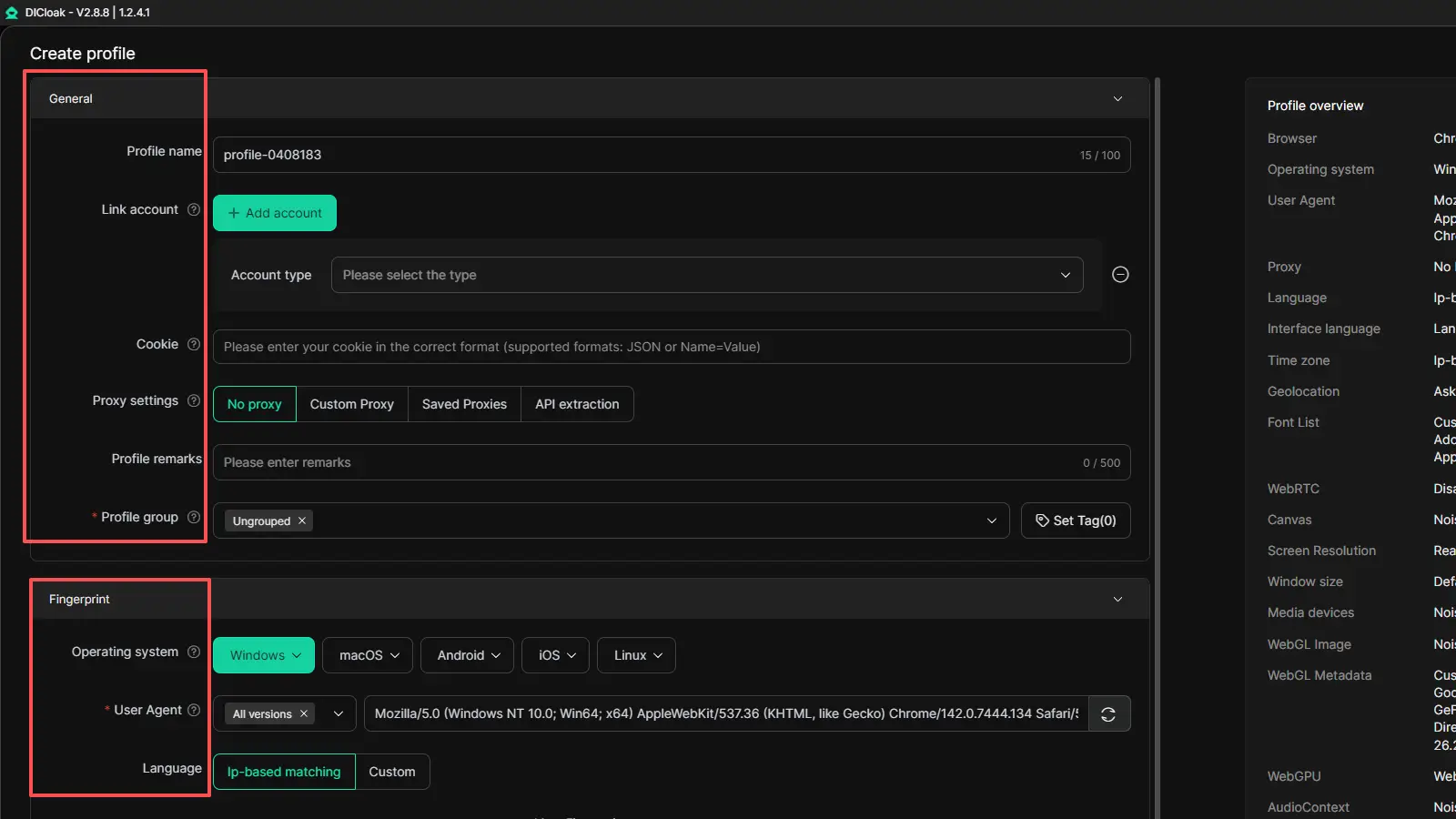
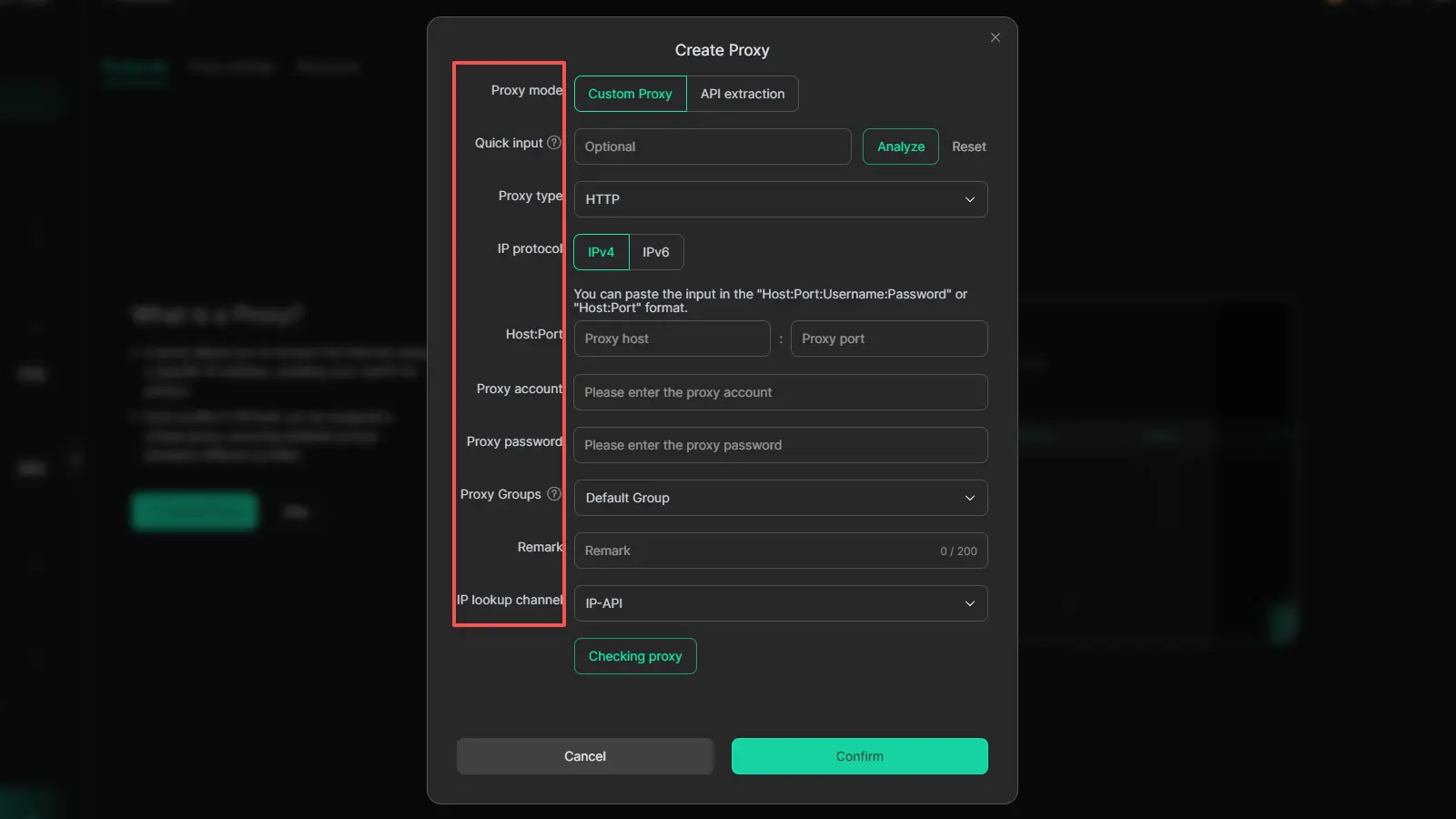
- Localize logins with flexible proxy configuration: DICloak lets users add their own proxies to each browser profile, making it easier to match different account environments with the right network setup. This can help teams keep logins more stable across regions and reduce the chance of unusual login alert.
- Enable seamless teamwork: Share browser profiles with remote managers without triggering two-factor authentication (2FA) resets, as the login session remains "continued."
- Maintain session stability: Avoid the risk of unrecognized device fingerprints by keeping sessions active and consistent across different team members.
Is the higher product cost of American dropshipping worth the investment?
A sophisticated cost-benefit analysis usually reveals that the "premium" of US sourcing is actually a cost-saving measure.
Calculating the real cost of "Cheap" international shipping
Cheap international shipping carries massive hidden liabilities: high customer churn, wasted ad spend on one-time buyers, and expensive chargeback fees. When you factor in the time spent on customer support for "where is my order?" tickets, the true cost of overseas shipping often exceeds the price of domestic fulfillment.
How to use "American Made" as a marketing lever
The "USA-Sourced" or "American Made" label is a high-authority marketing asset. Use your supplier’s US location to justify higher price points and lower your Customer Acquisition Cost (CAC). Transparency regarding your domestic supply chain builds the trust required to convert high-ticket shoppers who are wary of low-quality imports.
What are the common mistakes to avoid in the first 90 days?
Success in 2026 is determined by the stability of your operations rather than the intensity of your marketing.
Why ignoring "Supplier Diversity" can kill your scaling plans.
Relying on a single supplier is a single point of failure. If that supplier has a stock outage, your cash flow stops. Use aggregators like TopDawg, which provides access to over 600,000 products, to diversify your catalog. This ensures that your business can continue to fulfill orders even if one partner faces technical or logistical hurdles.
The danger of "Slogan-First" marketing vs. Product-First operations.
In the 2026 market, authenticity is the highest currency. Empty marketing claims will be quickly exposed by negative reviews. Prioritize suppliers like FragranceX for authenticity or Tasha Apparel for quality. When your operations—shipping speed, packaging, and product quality—are superior, your marketing becomes significantly more effective because it is backed by a legitimate customer experience.
Frequently Asked Questions About American Dropship
Q1:Do I need a US business license to use American dropship suppliers?
While some suppliers accept international sellers, many elite US distributors (like D&H) require a US business tax ID or a resale certificate to provide wholesale pricing and ensure tax compliance.
Q2:How do I handle sales tax when dropshipping from the USA?
Tax liability is determined by your "nexus." You typically provide your supplier with a resale certificate to buy tax-free, and you are then responsible for collecting and remitting sales tax from the end customer where required.
Q3:Which US suppliers offer the fastest shipping to the West Coast?
Tasha Apparel is highly recommended for West Coast speed; they fulfill orders directly from their Los Angeles shipping hub.
Q4:Can I use US dropshipping for international customers?
Yes. Many US-based suppliers, such as FragranceX, offer international shipping services starting at a $5 rate, allowing you to serve a global market from a US inventory base.
Q5:What is the best way to test product quality before listing?
Order samples directly to your business address. This is the only way to verify the shipping speed, the professionalism of the packaging, and the actual product build quality.
Conclusion
In 2026, American dropship is no longer just a faster version of traditional dropshipping. It is a more stable way to build a real e-commerce business. Faster shipping, easier returns, better product trust, and stronger supplier control all make a big difference when competition is high. At the same time, success still depends on careful supplier vetting, smart automation, and clean account management as you scale. If you want to build a store that feels more reliable to both customers and platforms, working with US-based suppliers can be a strong long-term move.
 Web Proxy Tools
 Free Tools
 Cookie Plugin
 UA Generator
 MAC Address Generator
 IP Generator
 IP Address List
 2FA Code Generator
 World Clock
 Anonymous Check
 WebRTC Leak Test
 UUID Generator
 Free Web Proxy Site
 Proxy Checker
 FB Ad Checker
 AI Web Scraping
 Free SMM Tools
 Twitter Shadowban Checker
 Instagram Name Checker
 UTM Generator
 Username Generator
 AI Hashtag Generator
 LinkedIn Headline Generator
 Social Media Image Resizer