Scrolling through social feeds, it’s easy to wonder why some creators explode while others barely get noticed. The real challenge isn’t just posting more, but figuring out which steps actually move you closer to that first real audience, especially with so many guides on how to become an influencer offering conflicting advice.
Most people jump in thinking it’s all about follower counts or viral trends. But focusing on numbers alone often leads to burnout or feeling stuck after a few months. The real risk is losing momentum before you figure out what works for your voice and your content.
What sets successful influencers apart in 2026 isn’t chasing every new tactic or copying someone else’s style. Instead, they build influence step by step, by picking the right platform, understanding their niche, and working through proven routines that fit their own strengths. If you’re looking for a practical influencer guide 2026 that cuts through the hype, you need a workflow you can actually stick with, not just a list of random tips.
Here’s what actually works when you’re starting from scratch.
What Actually Makes Someone an Influencer in 2026?
Being an influencer in 2026 means you have real pull over a group, people listen, trust, and act on your ideas or recommendations. It’s not about chasing numbers or copying trends; it’s about building a focused presence that actually shapes opinions and choices.
How influencer roles have evolved
The biggest change: brands and followers care less about raw follower count and more about genuine engagement. Niche and micro-influencers, those with smaller but active audiences, often get better deals and build longer careers now.
Key platforms and content types in 2026
Short video isn’t just trending, it’s the main way audiences discover and connect with new voices. If you can’t create punchy, watchable clips for TikTok, Instagram Reels, or YouTube Shorts, growing an audience gets much harder. But putting all your effort into just one app is risky. Platforms shift fast (think of what happened to Vine or the drop in organic reach on Facebook), so serious creators keep at least two profiles active, often Instagram plus TikTok, or YouTube plus X (Twitter). LinkedIn now matters too, especially for B2B niches. What trips up many new creators is trying to copy whatever went viral last month. That usually leads to scattered content and burned-out followers who don’t know what you stand for. Instead, the creators who stand out in 2026 focus on formats they can deliver consistently, adapt their message for each platform, and build habits around regular posting, no matter what the algorithm does next.
What brands and audiences look for now
- Show your real process, don’t hide the messy parts
- Respond to comments and DMs; build real conversations
- Share stories and behind-the-scenes, not just polished ads
If you’re aiming for influence, you need to decide up front what you want to be known for and where your content fits. The next step is getting clear on your goals and tradeoffs before you jump in.
What Should You Decide Before Trying to Become an Influencer?
Jumping in without a clear plan usually means wasted time and effort. Before you start, you need to decide exactly who you want to reach, what you’ll offer, and whether you can keep up with the pace. Picking your direction early makes every later step smoother, and keeps you from burning out after the first few months.
Choosing your niche and target audience
The biggest mistake is picking a broad topic just because it’s popular. A niche you can actually own fits your skills, matches what you like to share, and fills a gap your audience cares about. If you can’t point to a group of real people who’d want your content, you’ll end up shouting into the void.
- Can you describe your niche in one sentence?
- Is there an audience with unmet needs or overlooked interests?
- Do you have practical experience or unique stories in this space?
Setting realistic goals and expectations
Most new influencers in 2026 don’t see results for 3-6 months, and some platforms take up to a year to show real growth. If you expect instant success, you’ll likely quit before you build momentum. It’s smarter to set milestones based on steady progress rather than chasing viral spikes.
- Map out a timeline for hitting your first 1,000 followers.
- Decide if you want to monetize early or focus on building trust first.
- Check if you enjoy creating content even when numbers are flat.
Picking the right platforms for your content
Where you post matters as much as what you post. Instagram favors visual content, while TikTok rewards quick reactions and trends. If your audience prefers deep discussions, YouTube or podcasts might fit better. Don’t spread yourself thin, start where your people actually hang out.
- List top platforms your target audience spends time on.
- Check each platform’s content format and engagement style.
- Test posting on two platforms for a month; compare engagement rates.
Getting these decisions right is what lets you build a brand step by step, instead of guessing and hoping for likes. Next, you’ll need to set up your routines and start building your influencer brand with a clear workflow.
What Steps Should You Follow to Build Your Influencer Brand?
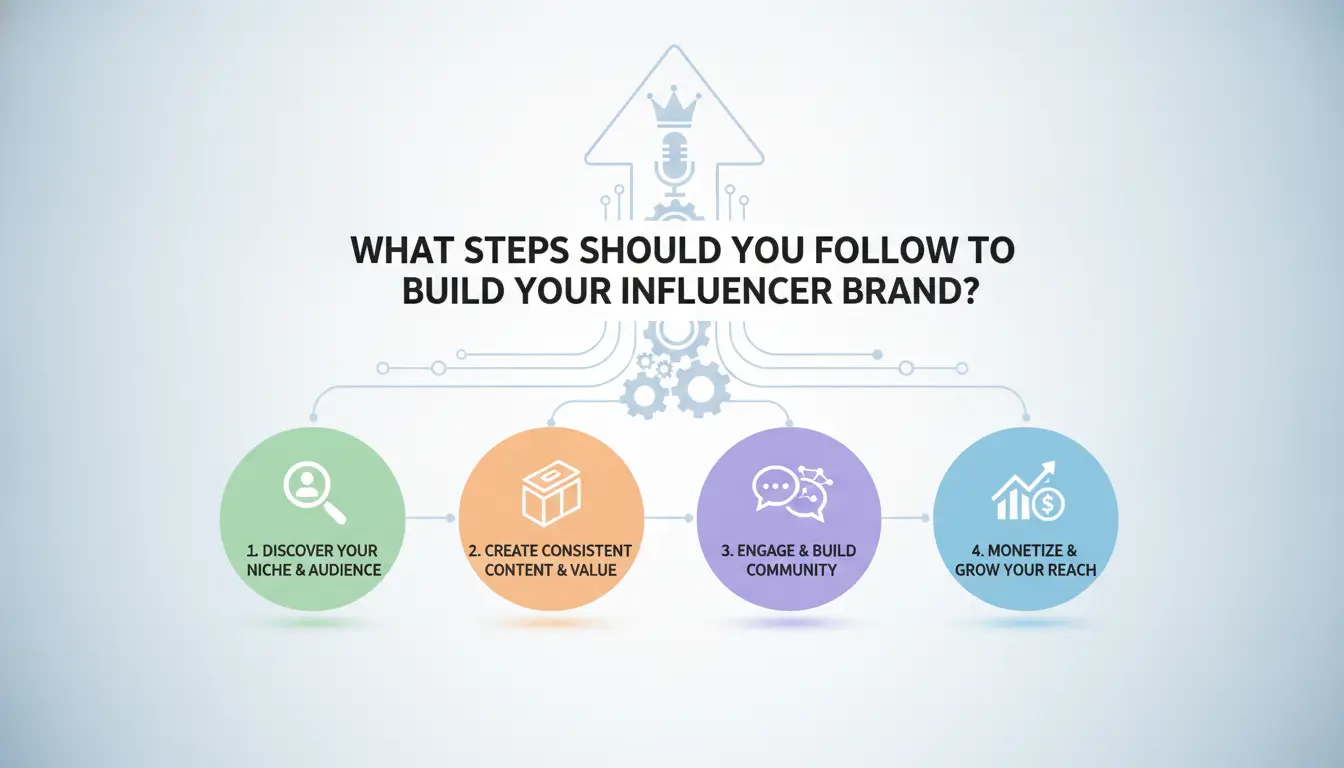 If you’re searching for how to become an influencer, the real question is what order of steps actually gets you noticed and keeps your momentum going. Here’s a clear roadmap, each step fixes a common failure point so you don’t stall halfway.
Step 1: Define your brand identity and story
- Nail down what you offer that others don’t, whether it’s a point of view, a skill, or a story.
- Pick 1-2 colors, fonts, and a visual style for your profile and posts. This makes your feed recognizable after only a few scrolls. Using an image enhancer can also help you improve the quality of your visuals and make your feed more recognizable after only a few scrolls.
- Write a short “about” or tagline that shows your personality and purpose, skip generic lines like “just sharing my journey.”
- If you can’t explain your brand in one sentence, pause and rewrite. A clear brand message prevents getting lost among copycat accounts.
Step 2: Set up and improve your social profiles
- Use a sharp, consistent profile photo across platforms. Faces perform better than logos for new accounts.
- Fill your bio with keywords and a call-to-action, not just emojis or vague interests.
- Link all relevant platforms, but prioritize the one you’ll focus on most.
- Check your profile from a guest’s perspective, if it’s unclear what you do, fix it before posting.
Step 3: Develop a content strategy that fits your audience
- Pick 2-3 main content pillars, like tutorials, reviews, or Q&A.
- Decide how often you’ll post. Daily is risky for burnout; 3-4 times per week is sustainable.
- Mix evergreen topics (that stay relevant) with timely posts tied to trends.
- If your topics don’t match your audience’s interests, engagement drops fast.
Step 4: Create and publish high-quality content consistently
- Batch-record or write 1-2 weeks ahead, this avoids last-minute stress.
- Use scheduling tools so posts go live even when you’re offline.
- Quality beats quantity, rushed, messy posts get ignored.
- If you skip a week, explain why and reset your schedule to avoid losing followers.
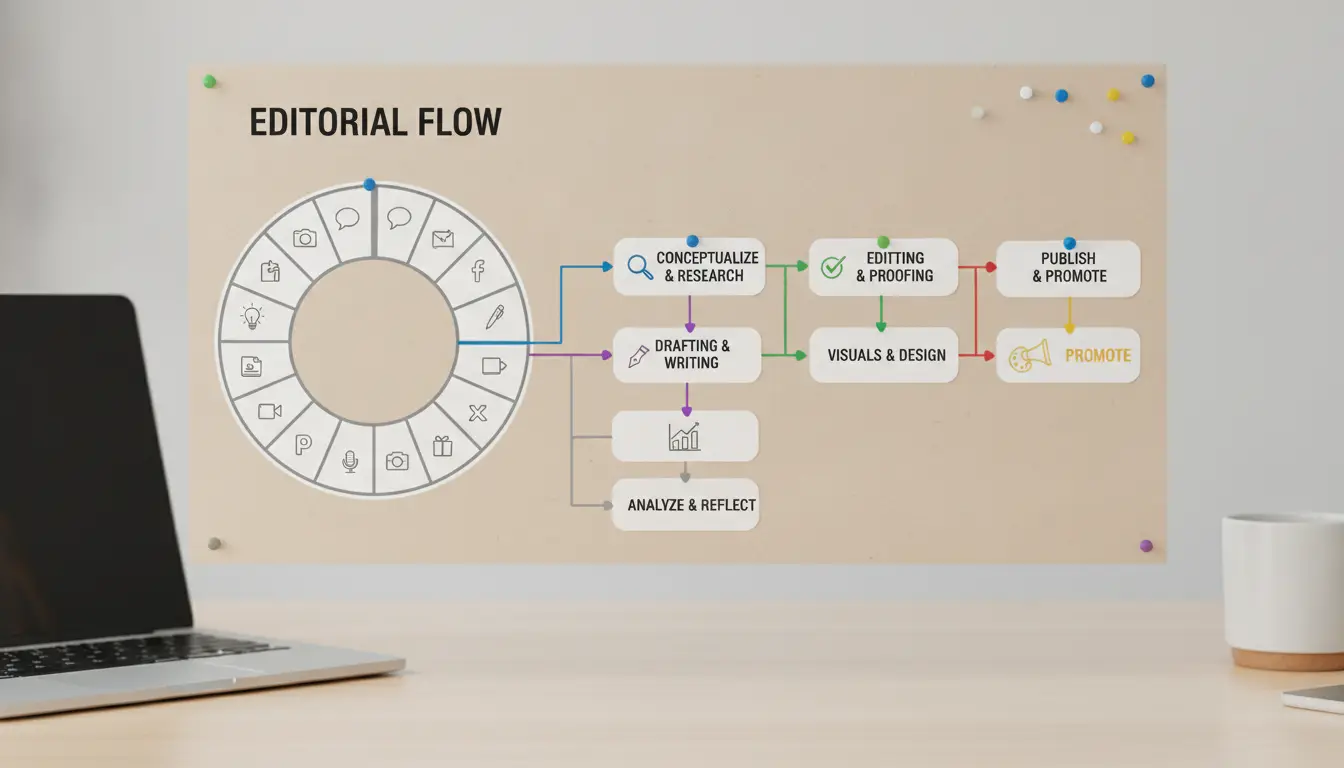
Step 5: Engage with your audience and build community
- Reply to comments and DMs within 24 hours, delays give a cold impression.
- Host live sessions or Q&As monthly. These boost loyalty and make your brand feel reachable.
- If you ignore feedback or questions, people move on and stop recommending your content.
The next challenge: avoiding classic mistakes that stall growth even when you follow these steps.
What Mistakes Stop Most New Influencers from Growing?
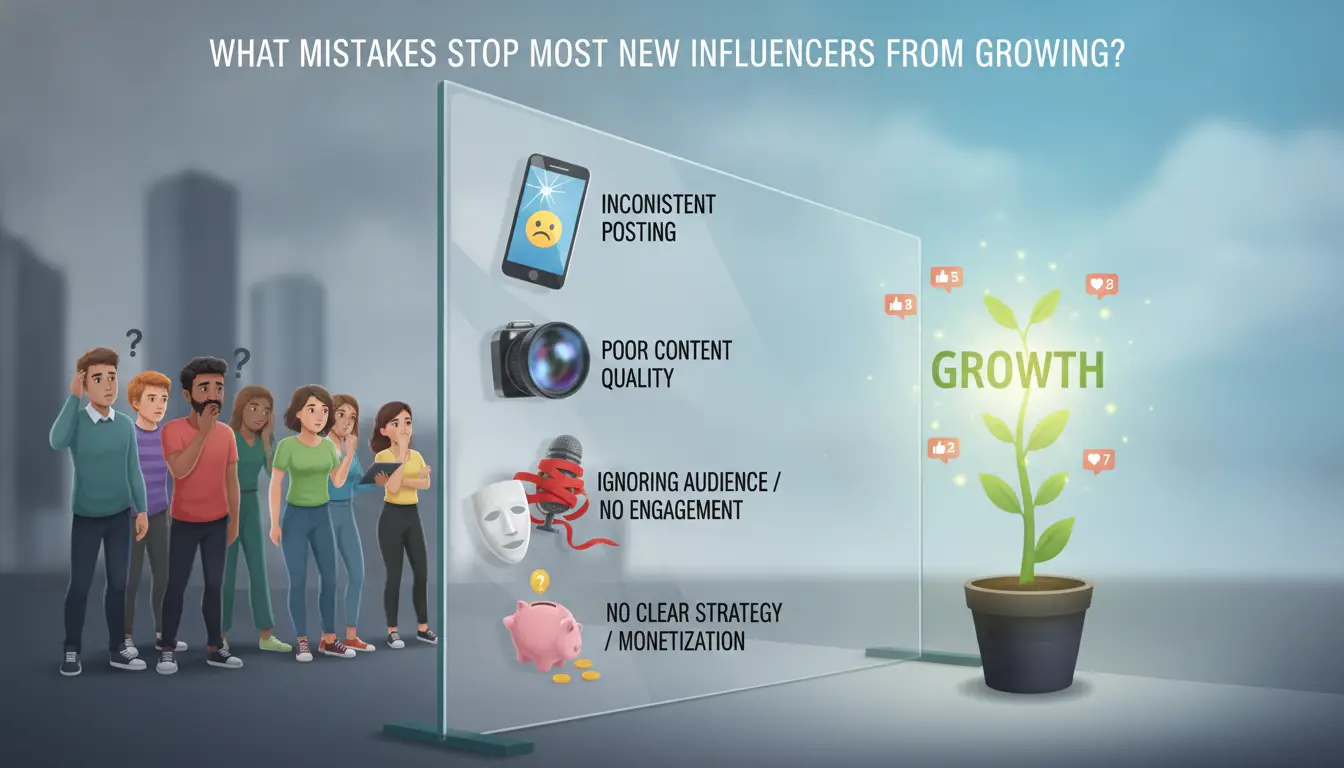 Most new creators stall out by repeating a few avoidable mistakes, these traps waste time and can damage your reputation long before you figure out how to become an influencer who actually gets results.
Focusing on follower count over engagement
Platforms spot fake followers and low interaction. Chasing numbers leads to empty growth, real brands look at your engagement, not just your audience size.
Inconsistent posting or brand messaging
Missing posts or switching your style too often leaves followers confused, and algorithms stop showing your content.
- You’ll lose hard-won momentum, making it tough to recover.
- Set a posting routine you can actually stick with, even when you’re busy.
Ignoring platform rules and risking account restrictions
Copying trends or using banned tactics often triggers limits or bans. One flagged post can lock your account, so check each platform’s latest rules before you jump on a new trend.
Over-automation or using risky growth hacks
Shortcuts like mass-follow tools or buying engagement almost always backfire in 2026. Use approved scheduling tools and focus on real conversations to build trust, quick tricks get caught and can wreck your credibility.
Most influencers hit a wall when they try to run several accounts on different platforms. It’s not just about posting everywhere, if you don’t separate your workflows, one slip can lead to bans, lost access, or even wiped-out progress. Here’s how to keep your accounts safe while staying efficient.
Why influencers need separate environments for each account
Platforms track browser fingerprints, cookies, and device IDs. If you log into multiple accounts from the same browser or device, detection systems can link those accounts together. That’s how “multi-login” mistakes trigger bans or shadow restrictions, especially if you manage accounts for different brands or niches.
Best practices for account isolation and security
The safest way to handle multiple accounts is to use separate browser profiles for each one, paired with unique proxies. This creates a distinct digital “environment” for every account. For example, running three Instagram accounts means you need three isolated browser profiles, each with its own proxy. If you reuse cookies or passwords across profiles, platforms can spot the overlap and flag you. Password managers help, but they’re only as safe as the profiles they’re tied to. If you skip isolation, expect sudden lockouts or security checks that can disrupt your posting schedule. Keeping every account truly separate is the single strongest defense against unwanted platform attention.
When to automate workflows and when to avoid it
Automation can save hours, like scheduling posts or batch replies, but it’s risky if you push too far. Using bots for engagement or mass actions often triggers platform rule changes, leading to bans or account throttling. Stick to automation for routine, low-risk tasks and watch for updates in platform policies before scaling up.
How to coordinate content and engagement across accounts
- Use content scheduling tools to keep posts consistent
- Track engagement stats for each account separately
- Rotate cross-platform shoutouts and collaborations, not just reposts
Keeping your accounts organized this way makes it easier to spot issues early. The next step is learning how dedicated tools can handle these tasks with less manual effort.
How DICloak Helps Influencers Manage Multiple Social Media Accounts Safely and Efficiently
Handling several social media accounts quickly gets messy, especially when you’re aiming to grow as an influencer and your workflow needs to stay sharp. Manual logins, platform-specific settings, and juggling proxies can lead to mistakes that waste time or trigger platform review. If you’re searching for a way to manage multiple accounts without risking overlap or failing basic checks, the right tools matter much more than another set of tips.
Using profile isolation and fingerprint configuration to keep accounts separate
Operators can create a dedicated browser profile for each account, making sure that sessions, cookies, and browser fingerprint signals never mix. For every creator, client, or brand account tied to influencer work, teams can configure the operating system, browser version, language, and time zone inside DICloak’s fingerprint settings. Keeping each account in its own environment means less risk of session overlap or accidental cross-login, the single best move for influencers who need strict separation in daily workflows. The scope is limited to browser-profile access; it does not change the connected SaaS tool. 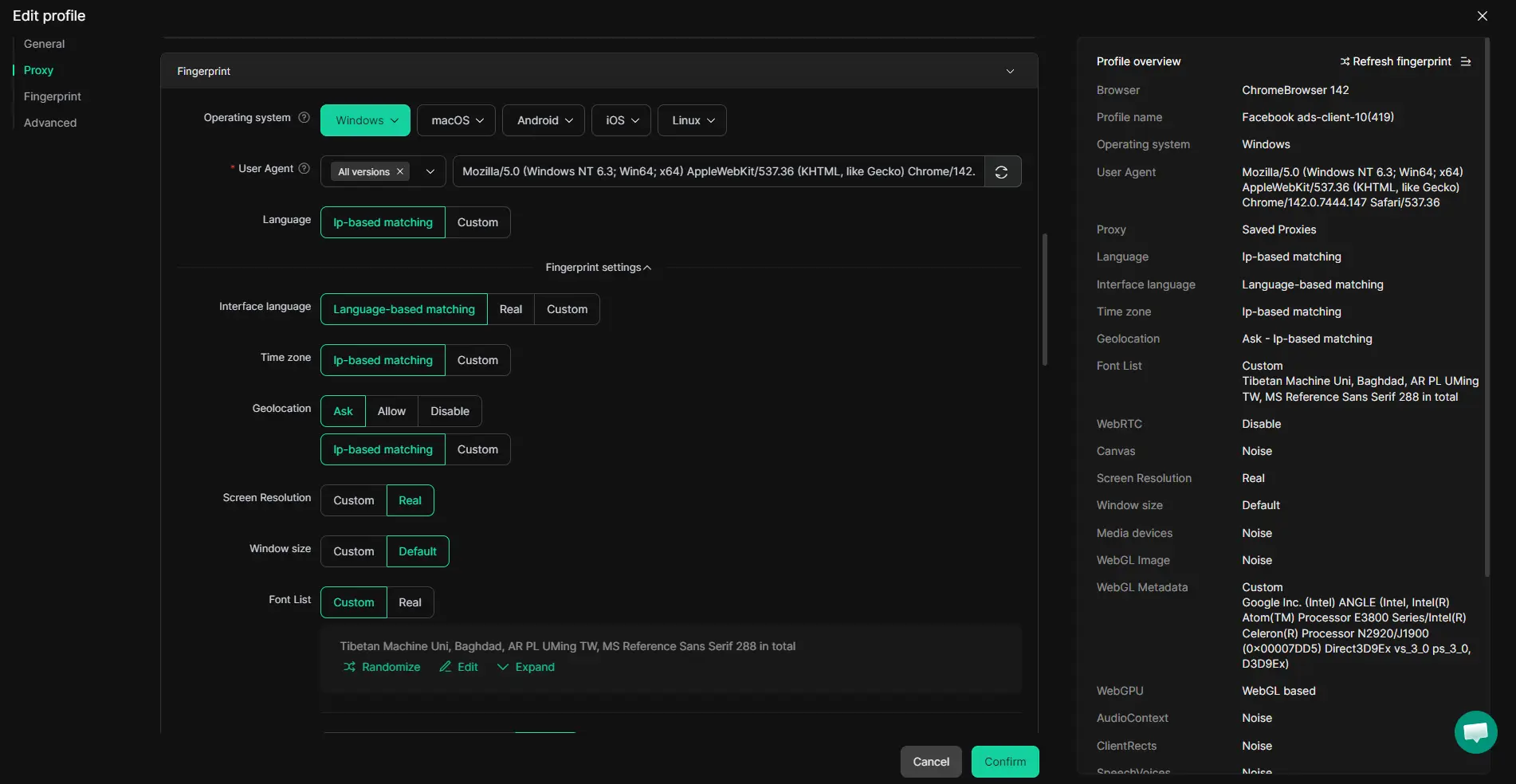
User-Provided Proxy Configuration for Assigned Profiles
Sometimes a workflow calls for each account to operate from a different network location. Operators can set up a user-provided proxy for each profile, choosing between HTTP, HTTPS, or SOCKS5. The built-in test confirms the proxy’s connectivity and shows the detected IP and region. It’s up to the operator to select, check, and rotate proxies as needed, DICloak does not supply them. This step helps prevent accounts from being linked by IP or geo signals. 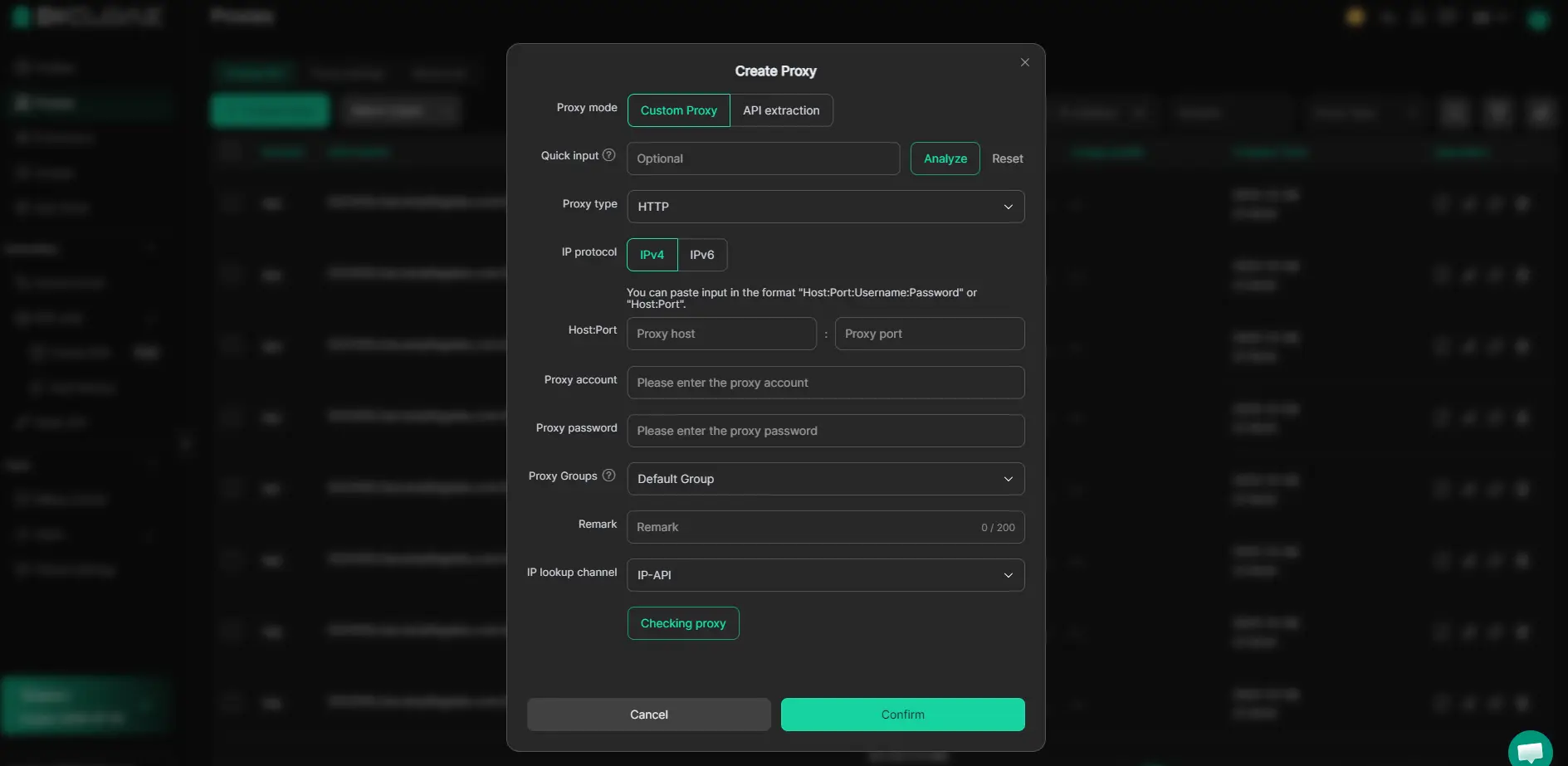
Automating repetitive influencer tasks with RPA
When influencers face repetitive browser steps, like navigation or data entry, operators can build an approved workflow with DICloak RPA. Tasks can be scheduled and run across profiles, with live status and logs available for review. The team stays responsible for task design and compliance; RPA only executes what’s been configured. If a run fails, the logs highlight which profiles hit errors, so you know where to fix before rerunning. 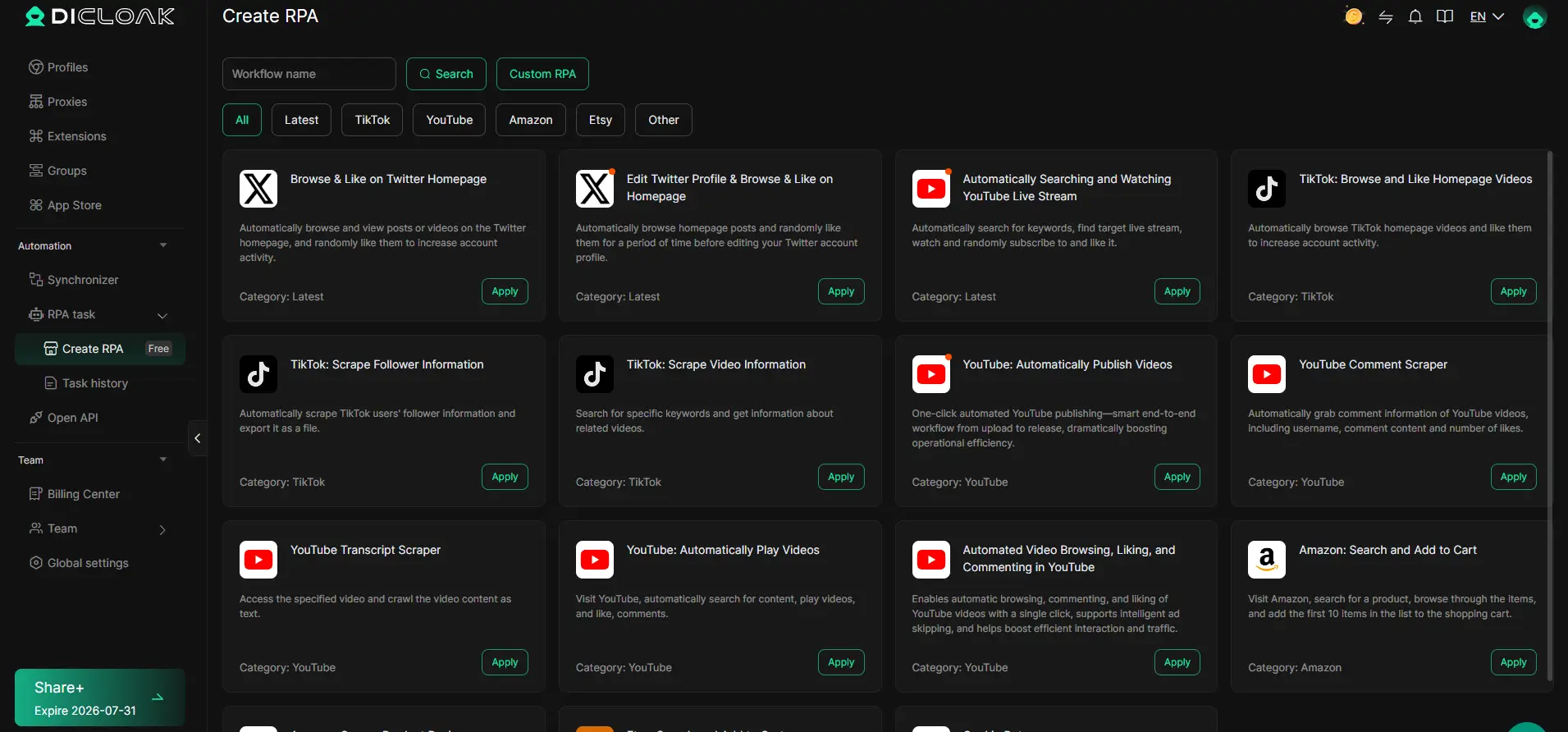
Coordinating live actions across accounts with the Window Synchronizer
Operators can mirror clicks, text input, and scrolling from a master window to multiple selected profile windows. That’s useful for setting up or navigating through several accounts at once, without relying on risky automation. Admins supervise every action live, so mistakes can be caught before they cascade across accounts. Synchronization is operator-controlled and does not automate unattended workflow steps. 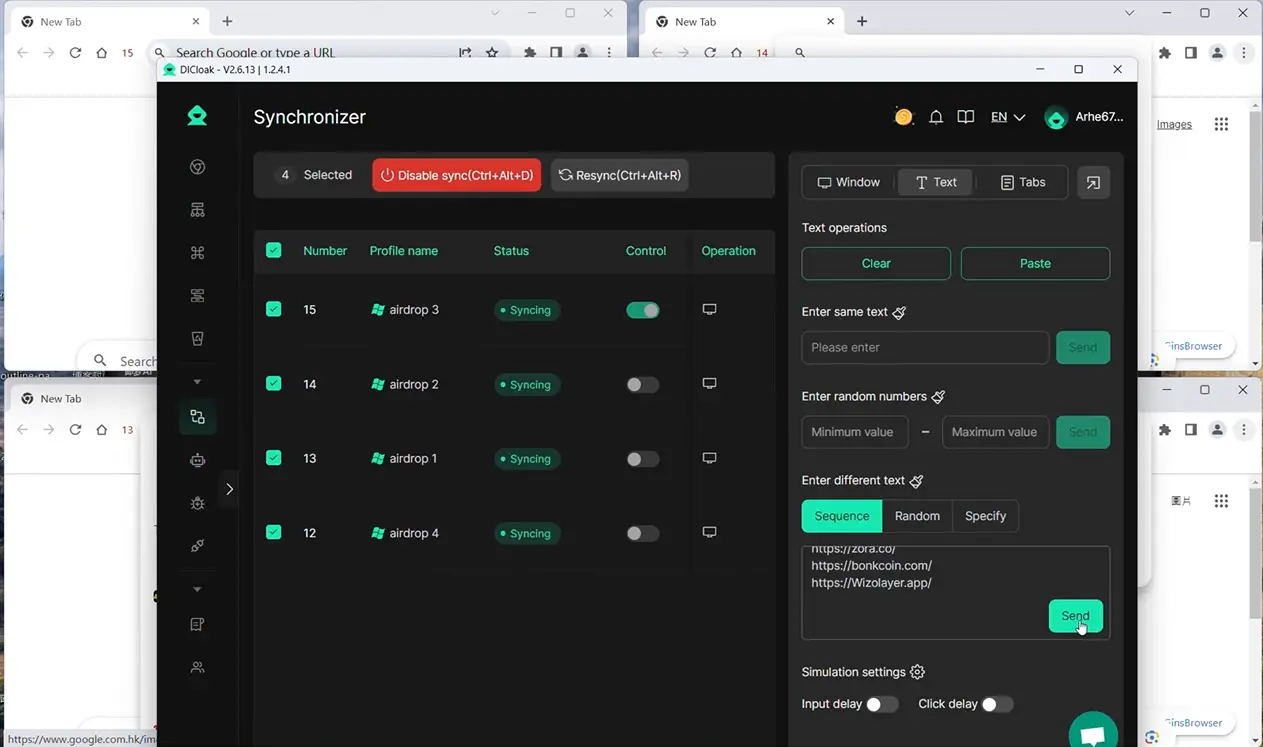
Once your account setup and routine tasks are under control, you’re ready to focus on growing your influence, where collaborations and scaling become the next practical step.
How to Grow Your Influence: Collaborations, Monetization, and Scaling Up
Brand deals and income streams start showing up once you prove steady engagement, not just follower count. If you’re wondering how to become an influencer who gets paid, focus on relationships, not random outreach.
How to approach collaborations and sponsorships
Finding brands that fit your values matters more than chasing every offer. Negotiate deals that pay fairly and set clear deliverables, rushed deals usually mean mismatched expectations.
Diversifying income streams as an influencer
Most influencers mix sponsored posts with affiliate links, courses, or merchandise. Balancing paid and organic content keeps your audience from losing trust, if every post looks like an ad, followers start tuning out.
Scaling your team and workflow
- Hire help when editing or posting takes over your week.
- Track deadlines with basic tools like Google Calendar or Notion.
- Outsource customer support if merch or paid services grow.
When Becoming an Influencer Isn’t the Right Fit: Signs and Alternatives
Jumping into influencer work isn’t always the right move, sometimes the signs say you’ll get more from a different digital path.
Signs influencer life may not suit you
| Warning Sign |
What You’ll Notice |
What Happens Next |
| Constant burnout |
No excitement making content |
Posting feels like a chore |
| Privacy worries |
Stress about sharing details |
You start holding back |
| Mismatch with your values |
Content feels fake or forced |
You lose motivation fast |
If you see these early, don’t ignore them, pushing through usually leads to faster burnout or regret.
Alternative digital careers to consider
Not everyone needs to be the face of a brand. Many people find better fit in community management, content writing, digital marketing, or freelance consulting. You can still use your skills online without the pressure of always being “on.”
Frequently Asked Questions About how to become an influencer
How long does it take to become an influencer in 2026?
Most people need 6 to 18 months to become an influencer, depending on their niche, consistency, and content quality. Fast growth happens if you post regularly, engage with your audience, and use trending formats like short videos. Slow growth is common if you rarely post or switch topics often.
Do I need to be on every social media platform to succeed?
No, you don’t need every platform to start as an influencer. Focus on where your target audience spends the most time. For example, fashion trends are big on Instagram, while gaming is popular on Twitch and YouTube. Pick one or two platforms and build your presence there before expanding.
Is it safe to use automation tools as an influencer?
Automation tools can help schedule posts and manage comments. However, using them too much or breaking platform rules may get your account flagged or banned. Always use trusted tools and follow platform guidelines. Avoid bots that fake likes or followers, as these often violate terms of service.
How do I avoid getting my accounts banned when managing multiple profiles?
To safely manage multiple profiles, use separate browser accounts and proxies. Don’t use risky automation tools or share passwords across profiles. This helps prevent platforms from linking your accounts and flagging them for spam. Follow each platform’s rules to keep your profiles safe.
What’s the difference between a micro-influencer and a traditional influencer?
Micro-influencers have between 1,000 and 100,000 followers. Their audiences are smaller but highly engaged, which is great for niche brands. Traditional influencers have larger followings, often over 500,000, but their engagement rates can be lower. Brands often work with both for different goals.
Now is the time to identify your niche, set clear goals, and consistently engage with your audience across multiple platforms. Start by experimenting with content formats and collaborating with others in your field to build credibility and momentum. Try DICloak For Free
 Web Proxy Tools
 Free Tools
 Cookie Plugin
 UA Generator
 MAC Address Generator
 IP Generator
 IP Address List
 2FA Code Generator
 World Clock
 Anonymous Check
 WebRTC Leak Test
 UUID Generator
 Free Web Proxy Site
 Proxy Checker
 FB Ad Checker
 AI Web Scraping
 Free SMM Tools
 Twitter Shadowban Checker
 Instagram Name Checker
 UTM Generator
 Username Generator
 AI Hashtag Generator
 LinkedIn Headline Generator
 Social Media Image Resizer