E-commerce is undergoing a seismic shift as static marketplace listings give way to high-velocity, interactive live shopping. For professional resellers and retail entrepreneurs, the core concern is no longer whether live commerce is a trend, but whether platforms like Whatnot are viable business environments or merely spaces for hobbyists. Founded in 2019 with a focus on Funko Pops and Pokémon cards, Whatnot has since exploded into a dominant US-based live shopping powerhouse, supporting over 250 categories ranging from vintage streetwear to high-end electronics. With the average seller on the platform earning approximately $25,000 annually, the transition from side-hustle to a full-time revenue stream is a proven reality for those who understand the platform's strategic levers.
How Does the Whatnot Live Auction System Actually Work?
Top-tier sellers leverage Whatnot’s live show format to transform passive browsing into high-energy auction events. Unlike traditional e-commerce, where a buyer might deliberate over a purchase for days, Whatnot operates on a "pulse-check" mechanic where the host’s personality and the real-time interaction drive immediate conversions.
The Real-Time Bidding Experience
Sellers host live streams where they showcase inventory one item at a time. This fast-paced environment is engineered to trigger specific psychological conversion drivers, most notably the "Fear Of Missing Out" (FOMO). Professional sellers use several interactive features to maximize this urgency:
- Live Chat Integration: Sellers answer buyer questions in real-time, removing barriers to purchase and building immediate trust.
- Rapid-Fire Bidding: A transparent, high-visibility bidding system where users compete in real-time, creating a sense of gamified competition.
- Instant Feedback Loops: Direct engagement allows sellers to pivot their sales pitch based on audience reactions, a level of agility impossible in static marketplaces.
Why the Live Format Drives Higher Prices
The competitive atmosphere of a live auction frequently pushes final sale prices significantly higher than typical market value. Professional practitioners recognize that a host’s energy and ability to foster split-second decision-making are key. When two or more bidders engage in a "bidding war," the psychological drive to win often eclipses the initial price sensitivity, leading to superior margins for the seller.
Can You Buy and Sell Without Hosting a Live Stream?
While high-energy streams are the platform’s signature, Whatnot maintains a secondary marketplace function to ensure consistent commerce and operational flexibility.
Utilizing "Buy It Now" Marketplace Listings
Sellers can utilize fixed-price "Buy It Now" listings to capture revenue 24/7. These listings function as a traditional e-commerce storefront, allowing buyers to purchase items even when the seller is offline. This provides a steady baseline of income and ensures that inventory is always working, regardless of the seller’s broadcast schedule.
The Advantage of Pre-loading Inventory
Strategic sellers pre-load their upcoming auction items into their Whatnot store well before the scheduled broadcast. This allows potential buyers to browse the "Preview" section and utilize the "pre-bid" feature. Pre-bidding builds early momentum and ensures that the auction starts with high-velocity interest the moment the host begins the stream.
Is Whatnot Safe for New Buyers and Sellers in 2026?
Trust is the currency of live commerce. Whatnot has established its legitimacy through robust institutional backing and a structured safety ecosystem.
Platform Security and Financial Backing
Whatnot is a heavily venture-capital-backed company, ensuring the platform has the infrastructure to support large-scale commerce. To maintain marketplace integrity, Whatnot relies on a transparent review and rating system. Buyers vet sellers based on historical performance, shipping speed, and item accuracy, creating a self-policing community that rewards professional conduct.
How the Payout System Protects Both Parties
The platform utilizes Stripe integration for all financial transactions, providing a professional-grade layer of security. To protect buyers from "ghost shipping," Whatnot employs a delivery-based payout window: funds are typically released for cash out 48–72 hours after an item has been confirmed as delivered. This ensures that the seller fulfills the order before the capital is accessible, mitigating the risk of fraud for new users.
How Much Does Whatnot Take from Your Sales?
Calculated margin management is the hallmark of a successful e-commerce strategy. Whatnot's fee structure is transparent, though professional sellers must account for how these fees apply to the total transaction.
Understanding the Commission and Processing Fees
For most sellers in the US, Canada, and Australia, the standard costs are:
- 8% Commission Fee: Deducted from the final sale price of the item.
- 2.9% + $0.30 Payment Processing Fee: Crucially, this fee is calculated based on the total amount the buyer pays, which includes the item price, shipping costs, and applicable taxes. Sellers must factor this into their "break-even" math when setting starting bids.
Category-Specific Fee Reductions
To incentivize growth in high-volume sectors, Whatnot offers reduced commission rates for specific categories: * Coins & Money: Reduced to 4% commission. * Electronics: Reduced to 5% commission.
What Are the Steps to Get Approved as a Whatnot Seller?
Whatnot maintains a higher barrier to entry than open marketplaces like eBay to ensure the quality of the streaming experience.
Nailing the Application and Social Proof
Prospective sellers must apply via the Whatnot app or website. Approval is not guaranteed; the platform looks for "social proof" and existing retail experience. Linking established social media accounts (Instagram, TikTok) and providing evidence of sales history on other platforms can significantly expedite the approval process.
Setting Up Your Professional Streaming Space
Professionalism converts better than amateur setups. To compete at a high level, sellers must invest in:
- Balanced Studio Lighting: Essential for showcasing item condition and ensuring color accuracy.
- High-Fidelity Audio: A clear microphone prevents "listener fatigue" and ensures instructions are understood.
- Stable Multi-Angle Setup: Using a stable tripod or multi-camera setup prevents shaky video and allows for detailed product close-ups.
How Do Professional Sellers Turn a Profit on Whatnot?
Profitability on Whatnot is a function of sourcing strategy and community engagement rather than just volume.
The Art of Sourcing and Flipping High-Demand Items
The "flip" remains the most effective way to scale. Consider the case study of part-time reseller Becky Park: over a 10-day experiment, she generated $5,501.25 in gross sales, resulting in $4,527.24 in revenue and a final net profit of $2,727.24. This reflects a margin of roughly 50-60%, achievable by sourcing inventory at flea markets, garage sales, and clearance aisles, then presenting them to a targeted audience.
Building a Niche Community and Joint Ventures
Success in 2026 requires specializing in one of the 250+ categories to become a recognized authority. Beyond solo shows, top sellers utilize "joint shows" and collaborations. Partnering with other sellers for cross-promotions exposes your brand to new, pre-vetted audiences, accelerating follower growth and total sales velocity faster than organic solo growth.
How Do You Manage Multiple Whatnot Accounts Without Getting Banned?
As operations scale, sellers often seek "operational redundancy" or the ability to manage multiple niche-specific storefronts. However, Whatnot’s strict "one seller account" policy presents a significant risk to growth.
Risk Mitigation and Operational Redundancy
Attempting to manage multiple seller profiles from the same IP address or device often triggers automated security flags, leading to linked account suspensions. For a professional business, this represents a single point of failure that must be mitigated.
Securely Scaling with DICloak
When sellers manage more than one workflow, the main risk is not just the account count itself. It is the overlap between browser profiles, sessions, and network settings. A more practical way to reduce that overlap is to keep each workflow in its own separate profile.
- Browser fingerprint control: Different profiles can use different fingerprint settings, so stores do not all appear to come from the exact same browser profile.
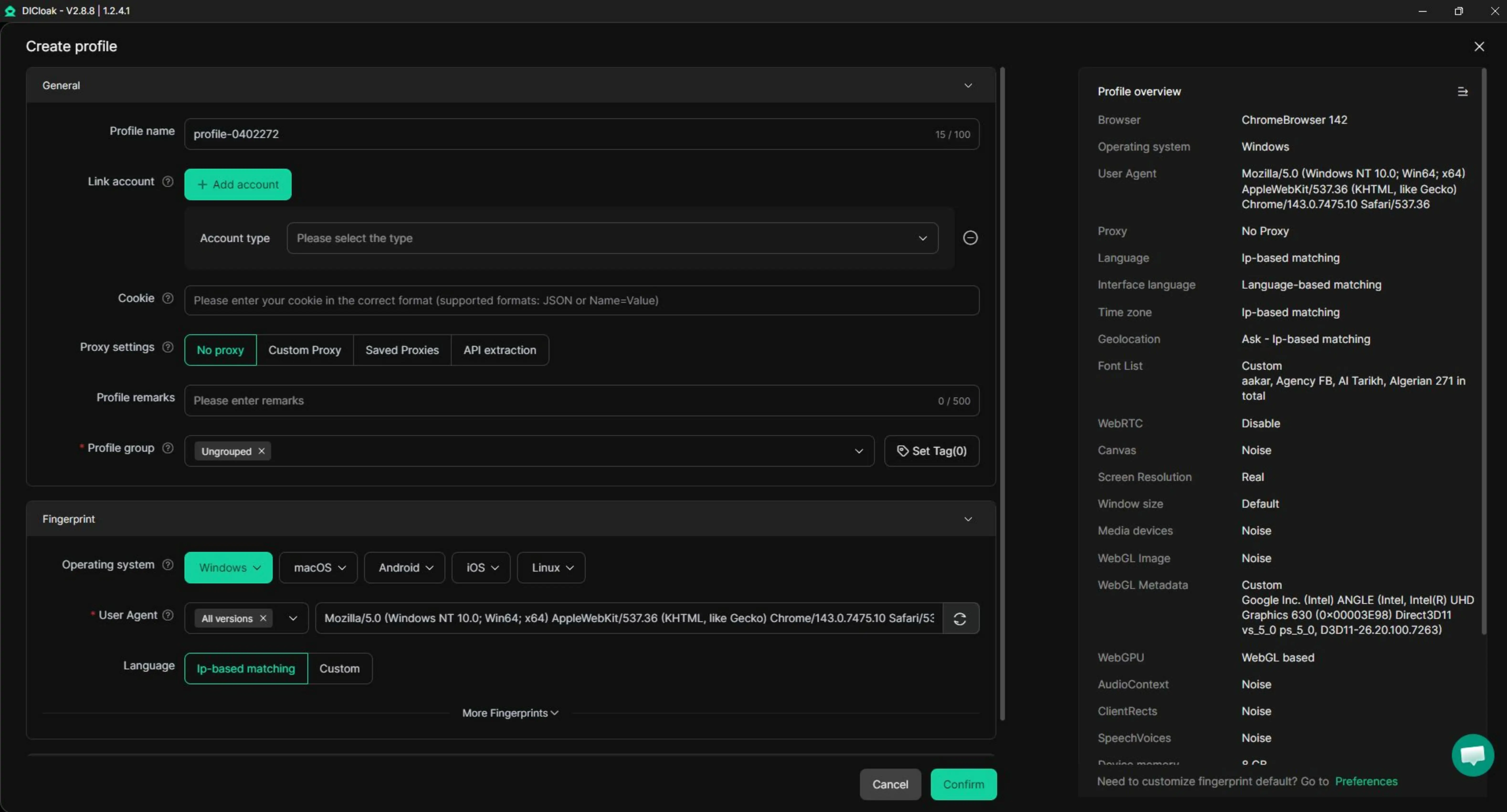
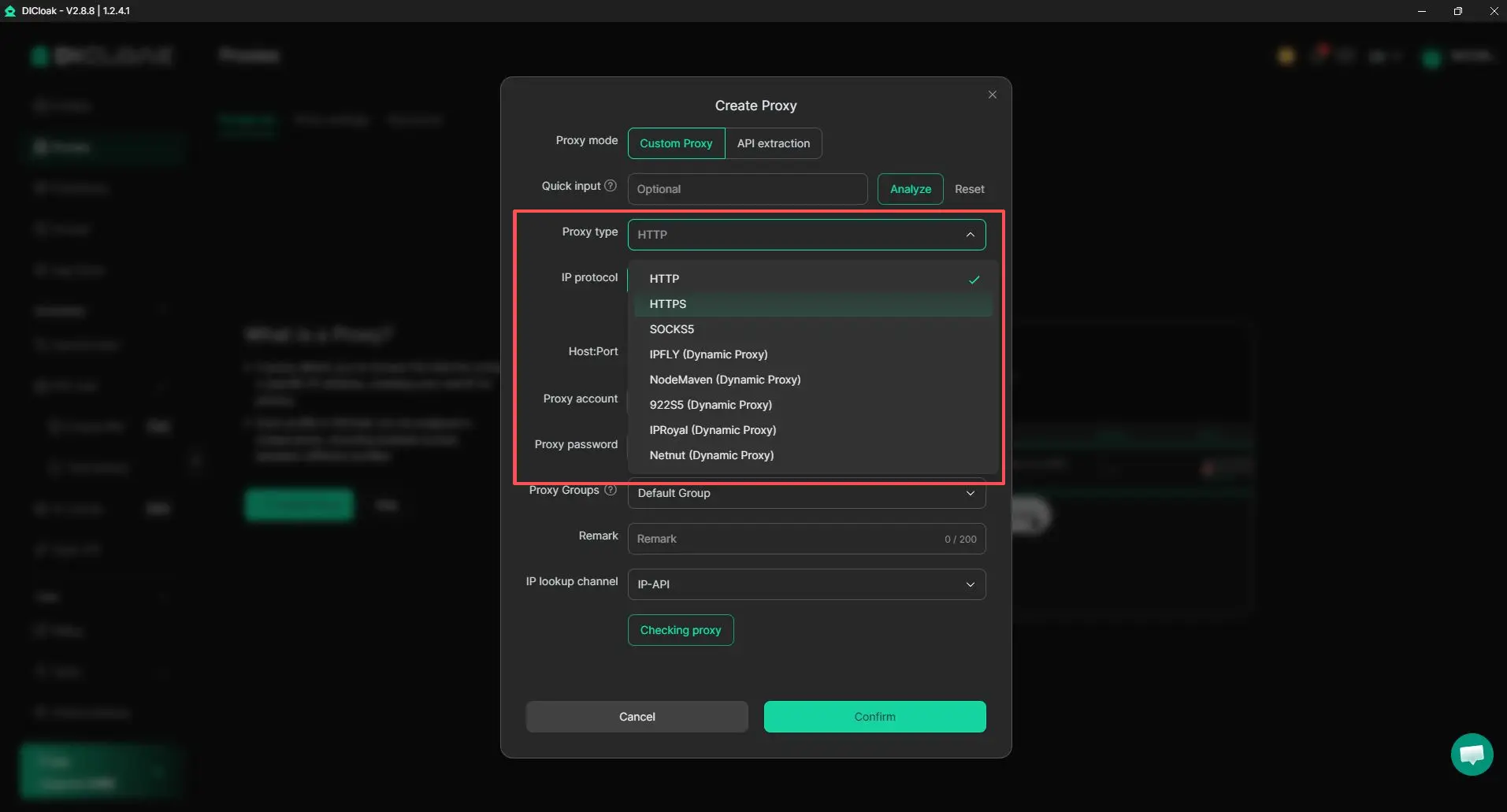
- Separate proxy configuration for each profile: Users can configure a different proxy for each profile based on their own setup. This helps keep network environments separated across stores. The actual IP quality and stability depend on the proxy provider the user uses.
- Consistent session handling: Each profile keeps its own cookies, login state, and local data. That makes it easier to keep the environment consistent over time instead of constantly changing signals that may trigger review.
Frequently Asked Questions
Q1:Is Whatnot legit or a scam?
Whatnot is a legitimate, US-based company with significant venture capital backing. It is a secure platform for commerce, though professional practice dictates checking seller ratings and reviews before transacting.
Q2:Can I have more than one Whatnot account?
Official guidelines allow a single user to have up to eight (8) buyer accounts. However, users are strictly restricted to only one (1) account with selling permissions unless specifically authorized or managed through secure multi-accounting tools.
Q3:Who pays for shipping on Whatnot giveaways?
While giveaways are an elite engagement tool for building a follower base, the seller is legally responsible for all associated shipping costs.
Q4:How long does it take to get paid on Whatnot?
Payouts are managed via Stripe and are typically available for withdrawal 48–72 hours after the buyer has received the item.
Q5:What are the most popular categories on Whatnot?
While the platform has expanded to 250+ categories, the strongest performers remain Pokémon cards, Funko Pops, and vintage fashion.
Final Thoughts on Starting Your Whatnot Journey
Succeeding in the live-commerce era requires a blend of retail precision and performance art. To begin, focus on a specific niche where you possess expert-level knowledge and can build a dedicated following through consistent, high-energy shows. Apply through the official app or website with your best social proof, invest in a professional audio-visual setup, and utilize secure management tools to protect your digital footprint as you scale. The transition from a static seller to a live-commerce professional starts with the first stream—focus on community first, and the revenue will follow.
 Web Proxy Tools
 Free Tools
 Cookie Plugin
 UA Generator
 MAC Address Generator
 IP Generator
 IP Address List
 2FA Code Generator
 World Clock
 Anonymous Check
 WebRTC Leak Test
 UUID Generator
 Free Web Proxy Site
 Proxy Checker
 FB Ad Checker
 AI Web Scraping
 Free SMM Tools
 Twitter Shadowban Checker
 Instagram Name Checker
 UTM Generator
 Username Generator
 AI Hashtag Generator
 LinkedIn Headline Generator
 Social Media Image Resizer