Many freelancers search for buy verified Upwork accounts because starting from zero can feel slow. A verified profile with work history, client reviews, or ratings may look like a shortcut, especially for people who want to win projects faster.
But buying verified Upwork accounts also comes with real risk. A purchased account may face identity checks, recovery disputes, seller control issues, or sudden restrictions if the account activity changes too quickly.
This guide explains why people buy verified Upwork accounts, what risks to check first, why purchased accounts often get restricted, and what safer alternatives may work better in 2026.
Why Do People Buy Verified Upwork Accounts?
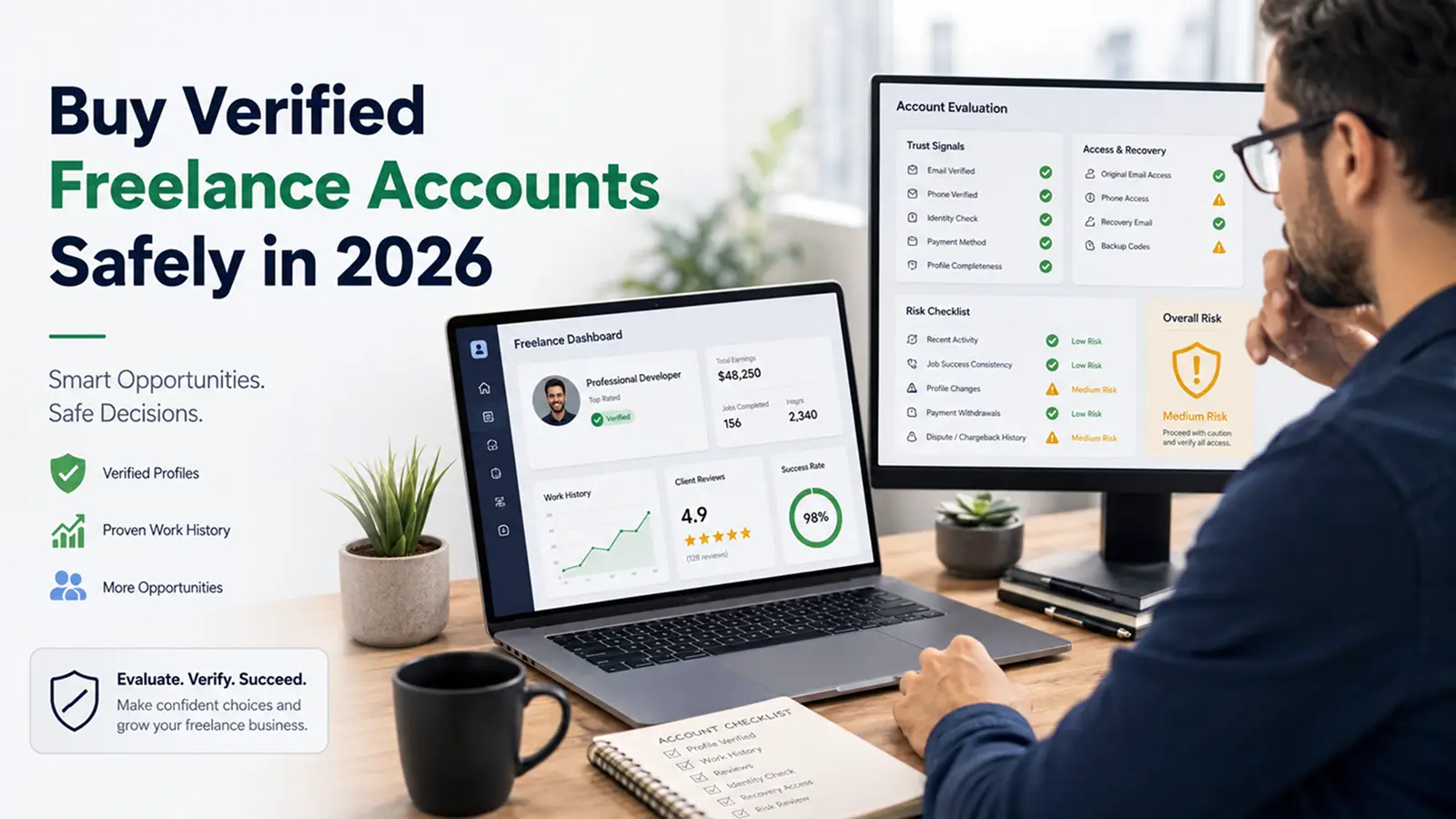
After learning that buying verified Upwork accounts carries real risk, it helps to understand why people still search for them. Most buyers are not only looking for an account. They are looking for a faster way to start freelancing, win trust, or manage more work. But this shortcut can create problems because Upwork says selling, sharing, trading, or transferring an account is not permitted.
Skipping the new-account stage
Many new freelancers want to skip the slow start. A new Upwork freelancer account has no job history, no ratings, and no client feedback. That makes it harder to win the first project.
For example, a designer may send many proposals but get no replies. When they see a verified Upwork account with past activity, it may look like an easier path. But the account history belongs to another person, so the risk does not disappear.
Accessing established work history and ratings
Some buyers look for verified Upwork accounts because they want profiles with reviews, ratings, or completed jobs. A strong profile can make clients feel more confident.
The problem is that the profile’s history may not match the new user. If the account was built by a writer, but the buyer starts offering web development services, the change may look strange. Clients may also notice that the work style, portfolio, or communication no longer fits the old profile.
Agency, outsourcing, and scaling needs
Agencies may also search for buy verified Upwork accounts topics when they want to manage more freelancers, roles, or projects. This often happens when teams want separate workflows for sales, delivery, or client communication.
The Real Risks of Buying Verified Upwork Accounts
The reasons for buying verified Upwork accounts may seem understandable. However, many buyers focus on the potential benefits and overlook the risks. In reality, the biggest problems often appear after the purchase. Before you buy verified Upwork accounts, it is important to understand what can go wrong.
Identity verification and ownership issues
One of the biggest risks involves identity verification. Upwork regularly asks users to confirm their identity through documents, photos, video verification, or other checks. If the account was originally created by another person, the information on the profile may not match the new user.
For example, a freelancer may buy a verified account that has been active for years. Everything works normally at first. Then Upwork requests another identity check. If the buyer cannot provide matching information, the account may face restrictions or even permanent suspension.
Account recovery disputes and seller control
Many buyers assume that once they pay for an account, they fully own it. Unfortunately, that is not always true. In some cases, the original owner still controls the recovery email, phone number, or security settings.
A common problem happens when a seller regains access after the sale. The buyer may have already invested time, submitted proposals, or communicated with clients. Then the account suddenly becomes inaccessible because the original owner recovers it through email or account recovery tools.
Scams, stolen accounts, and fake listings
Not every seller offering verified Upwork accounts is legitimate. Some listings use fake screenshots, edited earnings records, or copied profile information to attract buyers. Others may sell the same account to multiple people.
For example, a buyer may pay for an account that appears to have strong reviews and a long work history. After logging in, they discover that important information was hidden, the profile was recently compromised, or the account was already flagged for suspicious activity.
How to Evaluate a Verified Upwork Account Before You Buy
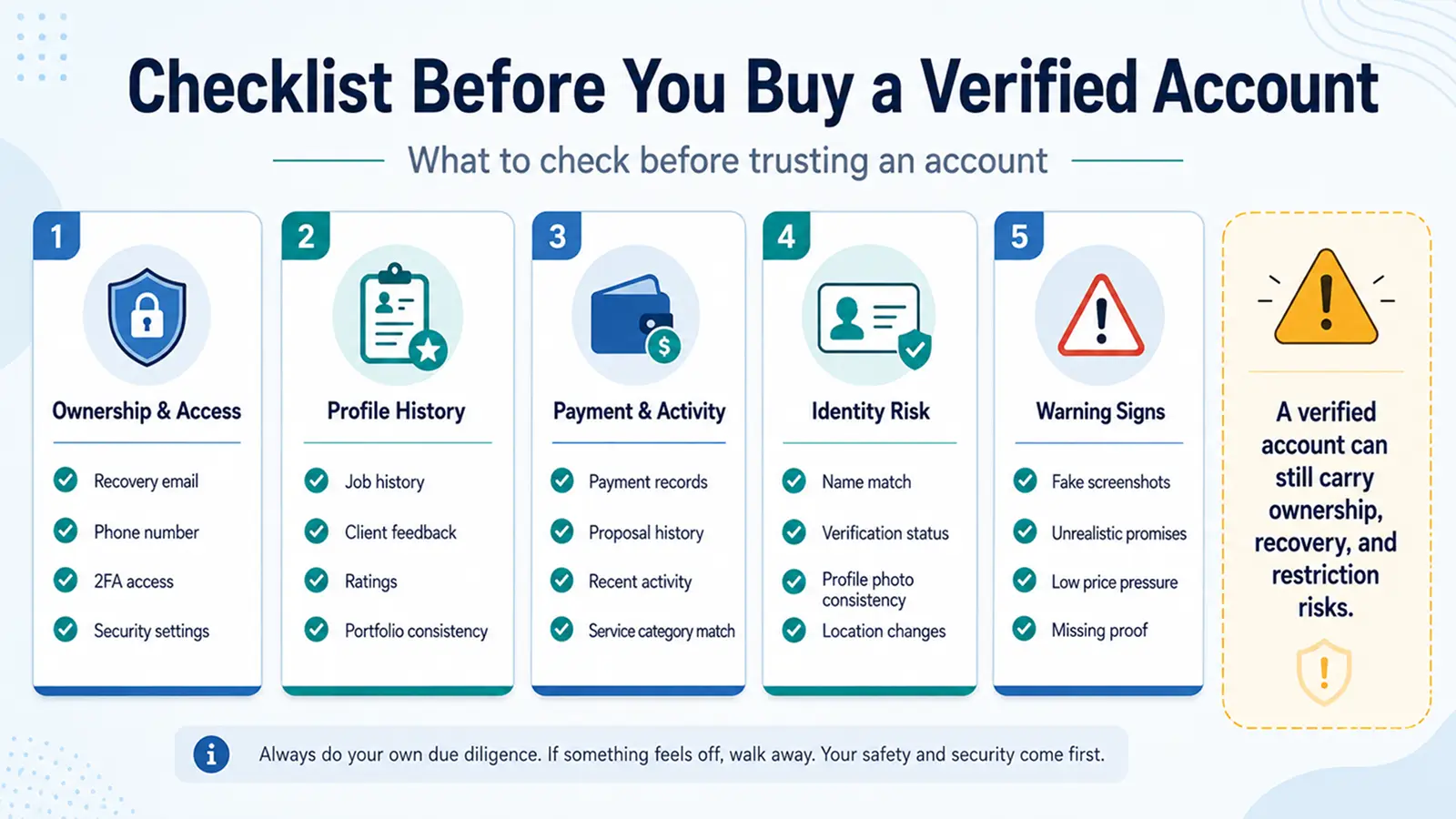
After understanding the risks, the next step is checking whether a verified Upwork account is even worth trusting. Many sellers may show screenshots, ratings, or old project records. But those details do not prove that the account is safe, transferable, or under the seller’s full control.
Checking ownership and recovery access
Before you buy, ask who controls the recovery email, phone number, two-factor authentication, and payment settings. If the seller cannot explain this clearly, the account may still be tied to the original owner.
For example, a buyer may receive login details but not the recovery email. Later, the seller can recover the account and lock the buyer out. This is one of the biggest risks when people buy verified Upwork accounts from unknown sellers.
Reviewing job history, ratings, and client feedback
A strong profile should have a clear and natural work history. Check completed jobs, client feedback, job categories, skills, and earnings records. A real profile usually has a work history that makes sense over time.
For example, if the profile has years of writing projects but suddenly changes to software development, clients may notice the mismatch. The account may also face questions if the work style, language, portfolio, or service category changes too fast.
Warning signs that an account may not be legitimate
Be careful with sellers who promise “no ban risk,” “instant delivery,” or “fully safe transfer.” No seller can control future identity checks, account reviews, or client trust. Upwork says freelancer identity verification may include government ID, profile photo, phone, location, or visual verification checks when required.
Also watch for fake screenshots, copied profile text, unclear payment history, or sellers who refuse to use secure proof before payment. A low price may look attractive, but a weak or stolen account can cost more in the long run.
Why Purchased Upwork Accounts Often Get Restricted
Even if a verified Upwork account looks normal at first, problems can appear after the buyer starts using it. The account may have old work history, reviews, and client records, but the new activity may not match that history. This is why many purchased accounts become unstable after the transfer.
Sudden login, device, and location changes
A purchased account may have a long login history from one device, city, or internet connection. After a sale, that pattern may change overnight.
For example, an account used for years in one region may suddenly log in from a new device and a new location. This type of change can lead to extra security checks. It does not prove anything by itself, but it can make the account harder to keep stable.
Fast profile edits and service changes
Many buyers quickly change the profile after purchase. They may edit the name, photo, skills, portfolio, hourly rate, and service category. This can make the account look very different from its old work history.
For example, an account that used to offer writing services may suddenly become a web development profile. Old reviews may no longer match the new service. Clients may notice the mismatch, and the profile may lose trust.
Unusual proposal, payment, and communication patterns
A bought account may also change in how it behaves. The new user may send proposals faster, change pricing, use a different writing style, or add new payment details. These changes can make the account look less consistent.This is why a verified account may still become unstable after purchase, even if it looked useful at first.
Are There Safer Alternatives to Buying Verified Upwork Accounts?
After seeing how many problems can appear after a purchase, some freelancers start asking a different question. Instead of looking for verified Upwork accounts, is there a safer way to build a long-term freelancing business?
In many cases, the answer is yes. While buying an established account may seem faster, safer alternatives often provide more stability and fewer risks over time.
Building and Verifying Your Own Upwork Profile
The safest option is still creating and verifying your own profile. This process takes more time, but it gives you full control over the account, identity verification, payment settings, and client relationships.
For example, a new freelancer may spend several weeks building a profile, creating portfolio samples, and sending proposals. The progress may feel slow at first. However, every review, rating, and completed project belongs to the same person who owns the account. This makes future growth much easier to manage.
Using an Upwork Agency Account
For teams, agencies, or outsourcing businesses, an agency account may be a better fit than purchasing a profile created by someone else. Agency accounts allow multiple team members to work together while keeping project management more organized.
For example, a small design agency may have separate people handling sales, client communication, and project delivery. An agency structure allows these roles to operate under one business workflow instead of relying on a purchased freelancer profile.
Comparing the Long-Term Costs and Risks
Many people focus on the purchase price when they buy verified Upwork accounts. However, the real cost is often much higher. Buyers may spend money on account transfers, account recovery problems, lost projects, or rebuilding client trust if issues occur later.
A verified account may save time in the beginning, but it also introduces risks that can be difficult to predict. Building your own profile usually requires more patience, yet it creates a stronger foundation for long-term freelancing success.
How to Manage Multiple Upwork Workflows Efficiently
For many freelancers and agencies, the real challenge is not finding verified Upwork accounts. The bigger challenge is managing projects, clients, and team operations efficiently as the business grows. A well-organized workflow can save time, reduce mistakes, and make it easier to scale without relying on shortcuts.
Separating Freelancer, Agency, and Client Operations
Different types of work often require different processes. A freelancer may handle proposals, project delivery, and client communication alone. An agency may have separate people managing sales, account management, and production.
For example, a design agency might have one person sending proposals, another handling client meetings, and a team of designers completing the work. Keeping these responsibilities organized helps prevent confusion and improves the client experience.
Keeping Project Environments Organized
As the number of projects increases, organization becomes more important. Files, messages, proposals, contracts, and deadlines can quickly become difficult to manage if everything is mixed together.
For example, an agency managing several clients at the same time may create separate workflows for each project. This makes it easier to track progress, find important information, and avoid sending the wrong files or messages to a client.
Managing Team Access and Collaboration
Growing teams often need multiple people to access project information and client communications. Without a clear system, team members may share passwords, lose track of responsibilities, or accidentally make changes that affect ongoing work.
For example, a virtual assistant may need access to proposals, while a project manager only needs access to client communication. Giving each person the right level of access helps teams work together more efficiently while maintaining better control over daily operations.
How DICloak Helps Organize Upwork Account Workflows
When a freelancer or agency manages several Upwork-related workflows, browser confusion can become a real problem. Different projects, client-side accounts, agency operations, and team roles may all need separate access. You can use DICloak’s antidetect browser to keep these workflows in cleaner browser profiles, instead of mixing everything in one normal browser.
Keep different Upwork accounts in separate browser profiles
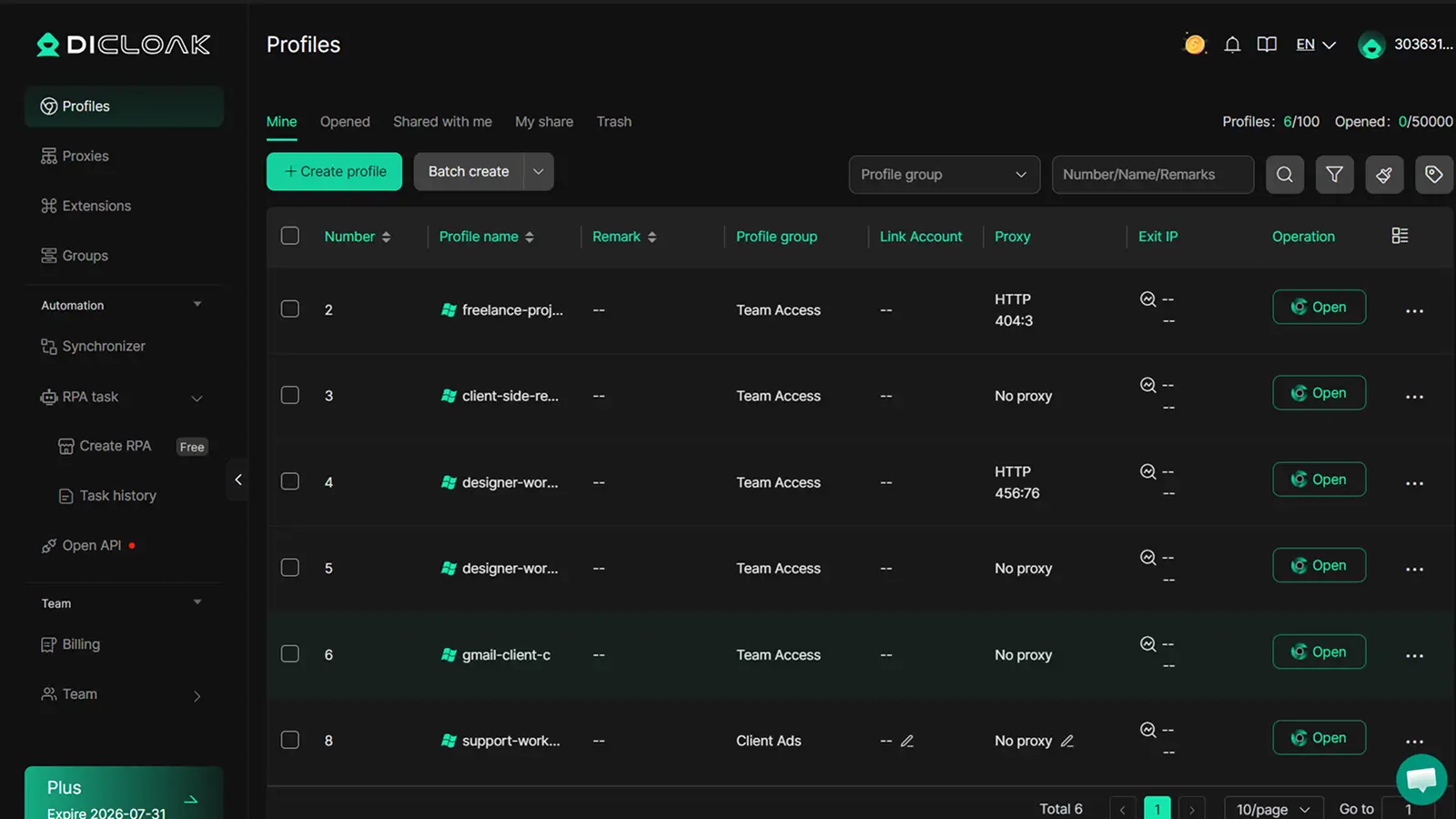
You can create a separate browser profile for each work account or project workflow in DICloak. Each profile keeps its own cookies, sessions, browser settings, and fingerprint configuration. This helps users keep freelancer, agency, and client-side workflows separated, especially when several projects are managed from one device.
Configure custom proxies for consistent work environments
You can also configure custom proxies for different profiles when needed. This helps keep each workflow’s access environment more consistent. For example, an agency team can keep different project profiles clearly separated, instead of switching between accounts in the same browser session.
Share profiles securely with team members
For teams, sharing login details directly can create unnecessary risk. You can use DICloak to share selected profiles with team members and set access permissions based on each person’s role. This helps project managers, assistants, and team members work together without exposing main login details or losing control of account access.
Frequently Asked Questions
Is it safe to buy verified Upwork accounts?
Buying verified Upwork accounts always involves risk. Problems may include identity verification requests, account recovery disputes, seller fraud, or account restrictions. Before making a decision, it is important to understand both the short-term benefits and long-term risks.
Can a purchased Upwork account get banned?
Yes. A purchased account may face restrictions if account ownership, login activity, profile information, or verification details do not match the account's history. Sudden changes after a transfer can also create problems.
How much does a verified Upwork account usually cost?
The price of verified Upwork accounts varies based on factors such as account age, work history, ratings, earnings, and client reviews. Accounts with stronger profiles are usually more expensive, but a higher price does not guarantee lower risk.
What should I check before buying a verified Upwork account?
Before buying a verified Upwork account, check who controls the recovery email, phone number, and security settings.You should also review job history, client feedback, account activity, and any signs that the account information may not be legitimate.
What is the safest alternative to buying an Upwork account?
The safest option is usually building and verifying your own Upwork profile. For teams, an Upwork agency account may also be a better solution than relying on a purchased account, because it provides clearer ownership and long-term stability.
Buying verified Upwork accounts may look like a fast way to start freelancing, but the risks can be much higher than they seem. By checking account ownership, reviewing work history, understanding restriction risks, and considering safer alternatives, you can make a more informed decision in 2026. For freelancers and teams managing multiple Upwork workflows, keeping accounts, projects, and team access organized also matters. Try DICloak For Free.
 Web Proxy Tools
 Free Tools
 Cookie Plugin
 UA Generator
 MAC Address Generator
 IP Generator
 IP Address List
 2FA Code Generator
 World Clock
 Anonymous Check
 WebRTC Leak Test
 UUID Generator
 Free Web Proxy Site
 Proxy Checker
 FB Ad Checker
 AI Web Scraping
 Free SMM Tools
 Twitter Shadowban Checker
 Instagram Name Checker
 UTM Generator
 Username Generator
 AI Hashtag Generator
 LinkedIn Headline Generator
 Social Media Image Resizer