Looking to buy a verified Revolut account for international payments, online business, or faster access to banking services? You may have come across sellers offering fully verified Revolut accounts, aged UK accounts, or ready-to-use Business accounts. These offers often promise instant access, completed identity checks, and the ability to receive money without going through the usual registration process.
The problem is that buying a verified Revolut account does not make you its verified owner. Even if the seller provides a working login, the account remains connected to the identity and personal information used during registration. If Revolut asks for additional verification or account recovery details, you may be unable to provide them.
Quick Answer: Buying verified Revolut accounts from third-party sellers is not a reliable way to access Revolut services. Revolut requires customers to verify their own identities and does not treat possession of someone else's login details as proof of account ownership. For most users, opening and verifying a personal account is free. Businesses should consider Revolut Pro or Revolut Business, where available and eligible, rather than purchasing existing accounts.
What Does It Mean to Buy a Verified Revolut Account?
A verified Revolut account is an account whose registered holder has completed the identity checks required by Revolut. These checks generally involve submitting personal details, a valid government-issued identification document, and a selfie. Additional documents may be requested depending on the customer's location and account activity.
When someone advertises a verified Revolut account for sale, they are usually offering access to an account created under an existing identity. The seller may provide login credentials, a registered phone number, or access to other account details. However, these items do not establish that the buyer is recognized as the account's legitimate holder.
Types of verified Revolut accounts sold online
Sellers often divide their listings into categories based on country, account age, verification status, or advertised features. Some claim that certain accounts are better suited for international transfers or business payments. These descriptions can sound useful, but they should not be confused with official guarantees from Revolut.
| Account type |
What sellers usually advertise |
What buyers need to understand |
| Fully verified Revolut account |
Identity checks already completed |
Verification belongs to the registered account holder |
| Aged Revolut account |
An account created months or years ago |
Account age does not guarantee higher limits or fewer reviews |
| Verified UK Revolut account |
An account registered in the United Kingdom |
UK residency and service eligibility requirements still matter |
| Verified EU Revolut account |
Access associated with an eligible European country |
Purchasing credentials does not establish residency |
| Revolut Business account |
Existing business registration and payment features |
Business ownership and authorization must be verified |
| Revolut account with a physical card |
An account with an existing debit card |
Card possession does not establish account ownership |
For example, a seller may offer a two-year-old UK Revolut account with a physical card and a completed identity check. A buyer might assume that receiving the card and login credentials provides full control. However, the account could still be registered to another person's name, address, and identification documents.
That distinction matters when an account receives significant payments or requires a new identity check. What looks like a convenient purchase can become a long-term dependency on the original account holder.
Does a verified Revolut account come with higher limits?
A completed identity check does not guarantee unlimited transfers, immediate access to every feature, or freedom from future account reviews. Revolut may request additional information about an account holder, a payment, or the source of funds when necessary.
Some sellers promote aged Revolut accounts as having better transaction histories or higher transfer limits. However, an older registration date does not prove that an account will receive special treatment. The buyer may also have no reliable way to review previous account activity or unresolved issues.
Imagine a freelancer planning to receive several large international payments. Purchasing an aged account might seem faster than opening a new one, but it provides no guarantee that those payments will proceed without further questions. The freelancer would be better served by an eligible account registered in their own name, supported by clear records of their work and income.
Is It Safe to Buy Verified Revolut Accounts in 2026?
Buying a verified Revolut account from an unknown seller carries serious risks because the buyer may never gain legitimate ownership. The login might work during delivery, but the account's identity records, recovery process, and financial history may remain connected to someone else.
Three issues matter most: whether your identity matches the account, whether you can independently recover access, and whether you understand the account's previous activity. These concerns become especially important when you plan to use the account for regular payments or business income.

The verified identity may belong to someone else
Revolut uses identity verification to establish who is opening and operating an account. Customers are generally required to provide accurate personal details, a valid identification document, and a selfie. For business accounts, additional information about the company and its authorized representatives may be necessary.
Suppose a freelance designer purchases a verified UK Revolut account registered to another individual. The designer receives the login details and begins accepting payments. Later, Revolut asks the account holder to confirm their identity or submit updated information.
The designer may be unable to complete the request because their documents do not match the original registration. Even if they can change certain contact details, that does not make the underlying identity records theirs.
Before using any financial account, ask yourself whether you could independently complete its identity checks with your own documents. If the answer is no, the account is not a reliable option for receiving or storing money.
The seller may still be able to recover the account
A seller may promise full ownership by transferring the registered email address, phone number, and password. However, those details are not necessarily enough to complete every security check. Revolut may use identity verification and other recovery steps to confirm that someone requesting access is the legitimate account holder.
For example, imagine purchasing an account that works for several weeks before you lose access to the registered phone number. If recovery requires a selfie or identification details connected to the original owner, you may be unable to restore access without the seller's assistance.
The situation becomes more serious if the seller disappears or refuses to help. If you have already received client payments into the account, you may face additional difficulties accessing the funds and maintaining your financial records.
For regular financial use, independent recovery is essential. You should not depend on a third party to prove that an account belongs to you.
Is Buying a Verified Revolut Account Legal?
Buying and selling Revolut accounts raises both contractual and legal concerns. The exact legal consequences depend on the country, the account's origin, and how it is used. However, there is an important difference between a private agreement to exchange login details and Revolut recognizing someone as an authorized account holder.
Revolut's personal terms require accurate customer information and allow account restrictions or closure in specified circumstances, including suspected fraudulent activity or false information. A private account sale should not be treated as an approved way to transfer verified identity or account rights.
Revolut accounts are linked to verified customers
A personal Revolut account is intended to be operated by its registered customer. Revolut's onboarding process requires identity information for that person, and its official guidance limits customers to one personal account across countries.
This makes a third-party account purchase fundamentally different from buying an ordinary digital product. You are not purchasing a transferable software license. You are attempting to take over a financial account whose registration is linked to another individual.
For example, receiving login credentials for a UK account does not mean Revolut has approved you as the new account holder. If you cannot meet the applicable identity and eligibility requirements, the original verification does not solve that problem.
If you are unsure whether a particular business transfer or account arrangement is permitted, contact Revolut directly before moving any money.
Buying account credentials is not the same as acquiring a business
There is an important difference between purchasing a company's assets and buying someone else's Revolut login. A legitimate business acquisition may involve transferring company control, updating directors, and changing authorized financial representatives.
Revolut Business provides processes for proving authority to open or manage an account. In some circumstances, a director can verify an applicant's authority, or the business can provide an appropriate power of attorney. The required documentation depends on the jurisdiction and business structure.
Suppose you purchase an existing e-commerce company that uses Revolut Business. The proper next step is to confirm how the business's ownership and account administrators should be updated. Simply asking the former owner for their password does not replace that process.
This distinction matters because a legitimate company transfer may have a supported administrative path, while a private sale of account credentials does not establish authorized financial account ownership.
How to Get a Verified Revolut Account Without Buying One
The most reliable alternative is to create and verify a Revolut account using your own identity. For eligible customers, opening a personal account is free, and the official application process is designed to establish account ownership from the beginning.
Before registering, you should decide which type of account fits your needs. Revolut Personal, Revolut Pro, and Revolut Business serve different purposes, and availability varies by country.
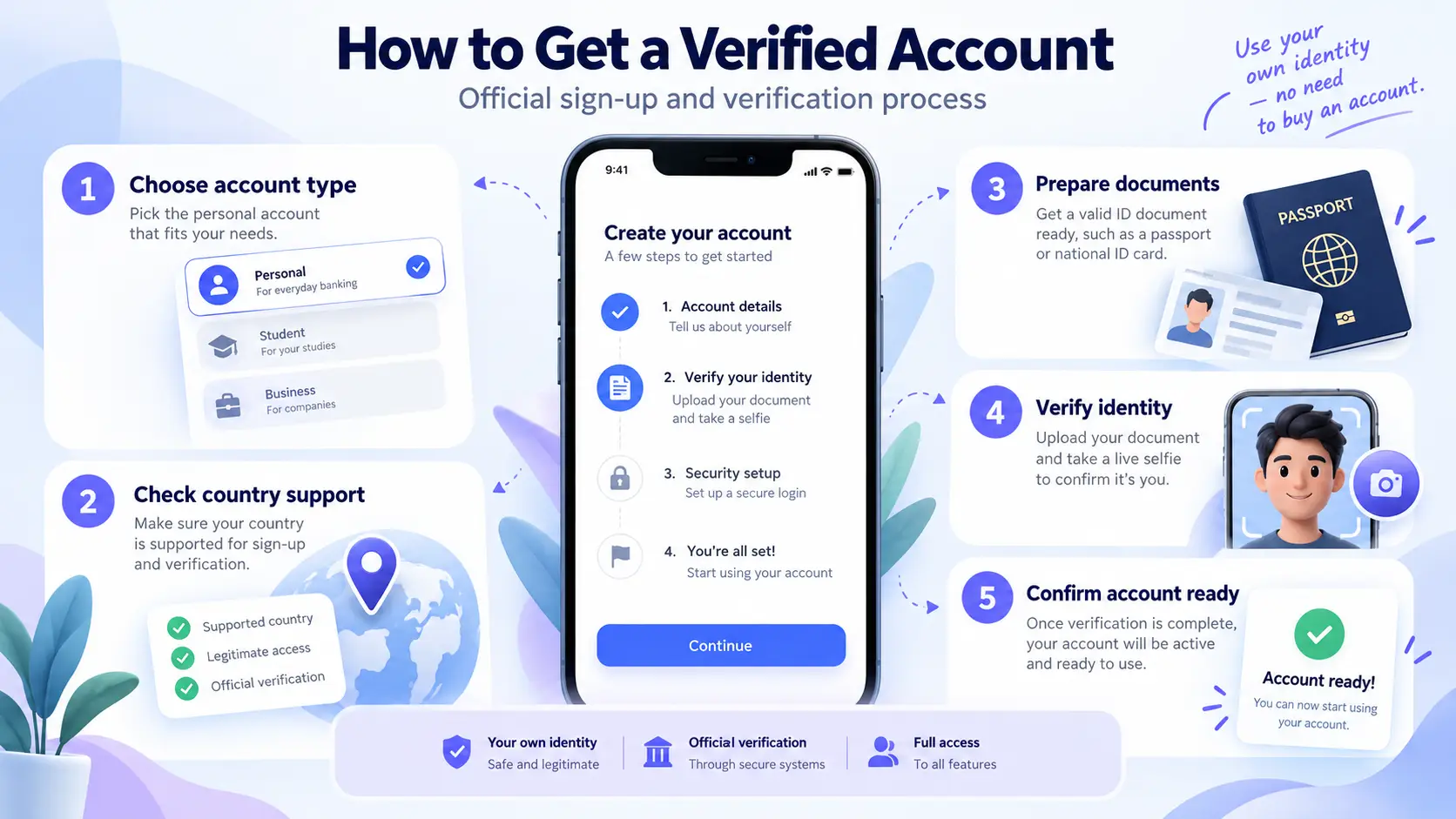
Step 1: Choose the right Revolut account type
Choosing the correct account type matters because personal spending, freelance income, and company finances have different requirements. Using the wrong product can create problems later, particularly if you try to process business income through an account intended for personal use.
| Account type |
Best suited for |
Important consideration |
| Revolut Personal |
Everyday spending, personal transfers, and travel |
Intended for personal financial activity |
| Revolut Pro |
Eligible freelancers, self-employed people, and solo businesses |
Availability and business requirements vary by region |
| Revolut Business |
Eligible registered companies and business organizations |
Requires business verification and may involve paid plans |
For example, a student using Revolut while traveling would normally choose a Personal account. A freelance photographer receiving payments for individual projects might find Revolut Pro more appropriate, where available. A registered e-commerce company with employees and regular supplier payments would generally need to assess Revolut Business.
These products are not interchangeable, and not every type is available in every region. Revolut's UK guidance, for example, distinguishes Pro for eligible smaller independent businesses from Business for eligible registered organizations. Its US Business eligibility requirements are different, including restrictions on certain legal structures.
Step 2: Check whether Revolut supports your country
Before submitting an application, confirm that Revolut accepts customers who legally reside in your country. Eligibility is not determined only by nationality. Your residence, age, and the type of service you want can all affect which products are available.
Revolut's October 2026 personal-account guidance identifies several supported markets, including the United Kingdom, United States, European Economic Area, Australia, Japan, New Zealand, Singapore, Switzerland, and Brazil. Its published list also includes Mexico as a waiting-list market pending launch, so being listed does not always mean full registration is available.
For example, someone who holds an EU passport but lives permanently outside the supported markets should not assume citizenship alone makes them eligible. Likewise, a person living in a supported country should verify which products are offered locally rather than assuming that all Revolut features are available worldwide.
If your location is unsupported, purchasing an account registered in another country is not a substitute for eligibility. Consider a licensed provider that serves your actual country and offers the financial functions you need.
Step 3: Prepare the documents needed for verification
Revolut generally asks personal-account applicants for identifying information, a valid government-issued document, and a selfie. Some applicants may need to provide further details, such as proof of address or information about the intended use of the account.
Prepare the following before starting:
- A valid mobile phone number and email address.
- Your full legal name, date of birth, and current address.
- A valid passport, national identity card, or other accepted document.
- A phone with a working camera for identification and selfie checks.
- Additional documents if Revolut requests proof of address or other information.
The documents accepted may depend on the country and type of account. A document that works for one applicant may not be accepted for another, so follow the options offered during registration.
For example, a freelancer who recently moved to a new country may need to provide information reflecting their current legal residence. Using an old address simply to qualify for a particular market can create verification problems later.
Check that the details entered in your application match your documents. Use your own identity throughout the process rather than borrowing someone else's information.
Step 4: Complete the Revolut identity verification process
Once you have confirmed eligibility, download the official Revolut app and begin registration. The app will guide you through providing personal information and verifying your identity.
The general process is:
- Open the Revolut app and begin creating an account.
- Enter your phone number, email address, and required personal details.
- Select an accepted identity document when prompted.
- Capture a clear image of your document using the app.
- Complete the selfie or other identity checks requested.
- Submit the information and review your account status.
Revolut's document-upload guidance advises users to photograph a valid, unexpired physical document with all four corners visible and the details clearly readable. Poor lighting, missing corners, or blurred information can cause a submission to fail.
For instance, if you photograph your passport under strong overhead lighting, glare may make some details difficult to read. Moving to a well-lit area with softer lighting and following the app's instructions can help produce a clearer image.
Do not edit identity-document images or use documents belonging to another person. If verification fails, review the reason shown in the app and follow the available resubmission or support process.
Step 5: Confirm your account is ready before moving money
Creating an account does not mean every feature is immediately available. Depending on your location and product, Revolut may need to complete further checks before you can use particular services.
After registration, review your account status and any pending requests. Make sure your personal details are correct and that the payment features you need are available before making important transfers.
For example, someone preparing to receive freelance income should confirm that their chosen account type supports that activity. A registered company should complete its Revolut Business application and authorization requirements before relying on it for supplier payments or payroll.
If Revolut requests additional information, provide it through the official app or supported business-account process. Avoid purchasing another account simply because verification takes longer than expected.
Buying vs. Creating a Verified Revolut Account: Which Is Better?
Buying an existing Revolut account may appear faster than registering a new one. However, the real value of a financial account depends on whether you can legally operate it, explain its transactions, and recover access without relying on another person.
The differences become clearer when you compare the two options beyond the initial setup.
| Factor |
Buying a verified Revolut account |
Creating your own Revolut account |
| Initial access |
Existing login credentials |
Official registration |
| Identity ownership |
Usually tied to the original holder |
Verified using your own information |
| Account recovery |
May depend on the seller |
Connected to your registered identity |
| Transaction history |
Previous activity may be unclear |
Built through your own transactions |
| Country eligibility |
Not established by the purchase |
Checked during registration |
| Account-opening cost |
Third-party purchase fee |
Free for eligible Personal accounts |
| Long-term suitability |
Significant ownership uncertainty |
Better for regular financial use |
| Additional verification |
May require unavailable records |
You can provide your own documents |
A freelancer who needs to receive monthly payments should prioritize stable account ownership over instant access. Likewise, an online business needs financial records that match its legal identity and actual operations.
The key question is not whether an account has already been verified. It is whether the account is verified for the person or business that will actually use it.
For most eligible users, registering directly is the more practical choice. If your business has complex financial requirements, confirm the correct product and account structure with Revolut before proceeding.
How DICloak Helps Manage Multiple Authorized Business Accounts
Once your Revolut account is properly registered, the next challenge may be managing the online services connected to your financial operations. Businesses often work with payment platforms, e-commerce stores, advertising dashboards, and customer management tools at the same time. When several employees handle different projects, switching between browser sessions and keeping account access organized can become time-consuming.
This is where DICloak Antidetect Browser can support multiple account management. It helps businesses organize separate Browser Profiles, manage project-based access, and review supported team activities. DICloak does not replace Revolut's identity verification or Business account permissions, but it can help teams manage the wider browser workflows around their authorized accounts.
Separate business accounts and browser sessions with Browser Profiles
Using one browser for several business projects can create confusion. Cookies, saved sessions, and website data may remain active when employees switch between accounts, increasing the chance of opening the wrong dashboard or mixing project activities. These problems are especially common when a team works with multiple stores or clients throughout the day.
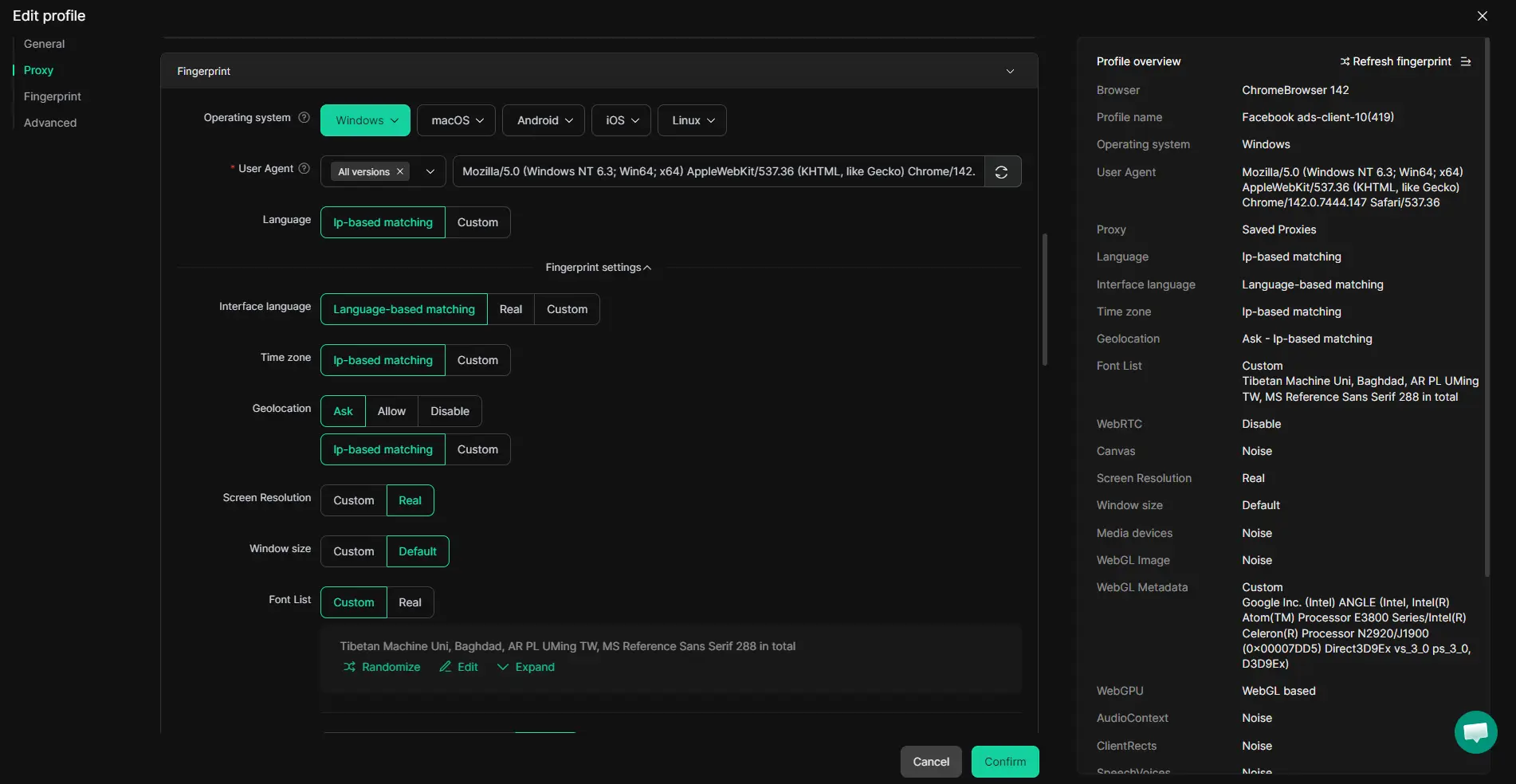
DICloak allows users to create independent Browser Profiles with separate Cookies, Local Storage, and other supported browser data. Each Profile can also have configurable browser fingerprint settings, including parameters such as User Agent, language, time zone, and browser-related characteristics. These settings help teams maintain separate browser workspaces for their authorized online activities.
For example, an agency may manage two independent e-commerce clients, each with its own store dashboard, payment-related reporting tools, and advertising accounts. The agency can create dedicated Browser Profiles for each client's services rather than repeatedly signing in and out through one browser session. Employees can then open the appropriate workspace while keeping its browser data separate from other projects.
This type of browser session isolation supports clearer account organization, but it does not establish ownership of a Revolut account or authorize additional registrations. Users can also configure their own proxies in DICloak when appropriate for legitimate workflows, although proxy settings do not replace Revolut's residence and identity requirements.
Organize multiple projects with Profile Groups and batch management
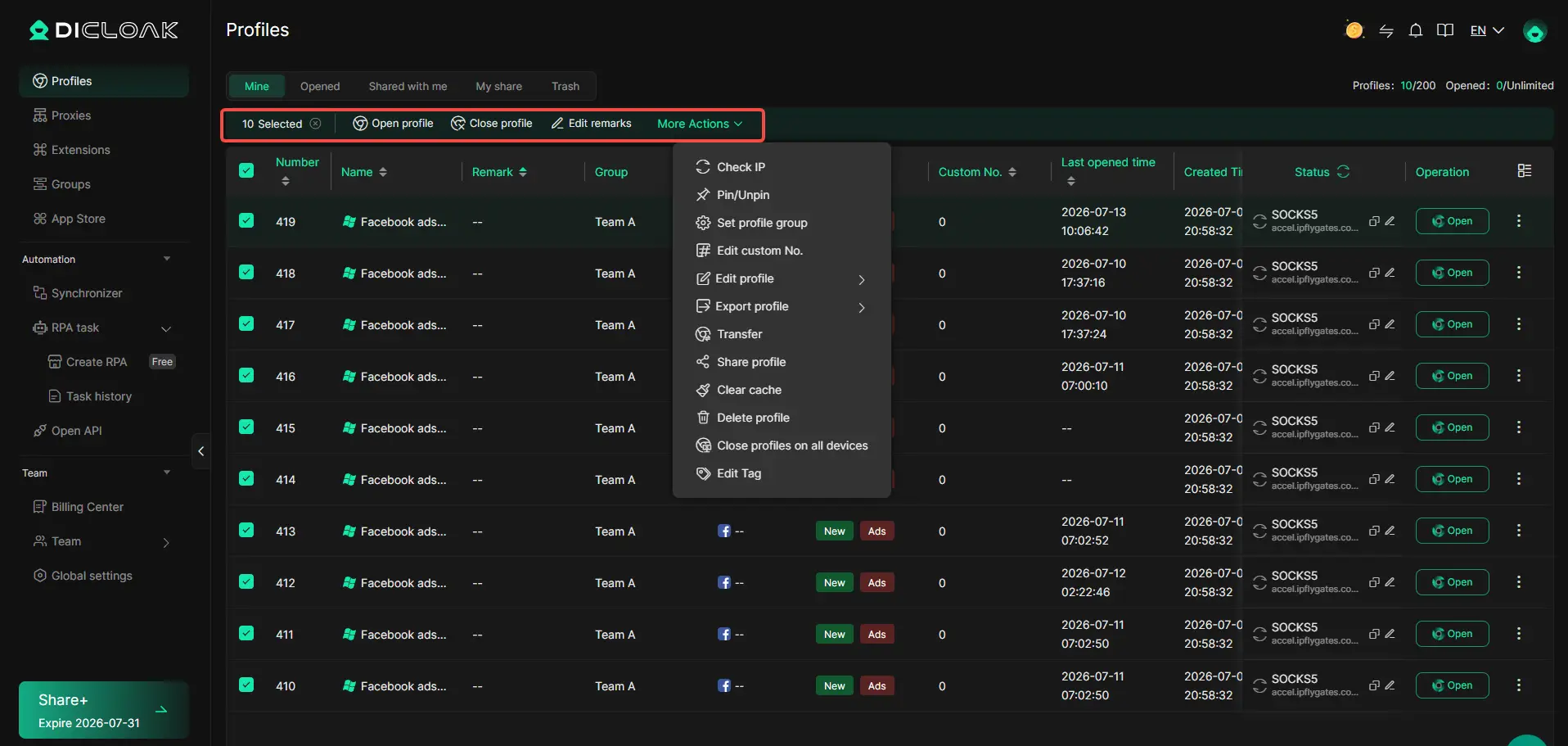
As a business grows, keeping track of individual Browser Profiles becomes more complicated. A company running several online stores may have separate accounts for advertising, customer support, inventory, and financial reporting. Without a clear structure, employees can waste time finding the right workspace or accidentally opening accounts assigned to another project.
DICloak provides Profile Groups that allow administrators to organize Browser Profiles by team, client, store, or business activity. Users can also perform supported batch operations, making it easier to manage multiple Profiles without updating every item separately.
Imagine an e-commerce agency managing four client stores. Each client has its own authorized online accounts and staff responsibilities. The agency can create one Profile Group per client, then place the relevant browser Profiles inside that group. When a new client joins, administrators can build another organized workspace without changing the existing projects.
This approach is useful because the structure follows the business rather than the number of accounts. For teams handling many authorized services, Profile Groups help reduce unnecessary switching and make daily account management more predictable.
Control team access and review activity with permissions and Operation Logs
As more employees join a business, account access becomes an important management issue. Marketing staff, financial employees, and customer support representatives rarely need access to the same services. Giving everyone access to every browser Profile can make it harder to maintain clear responsibilities.
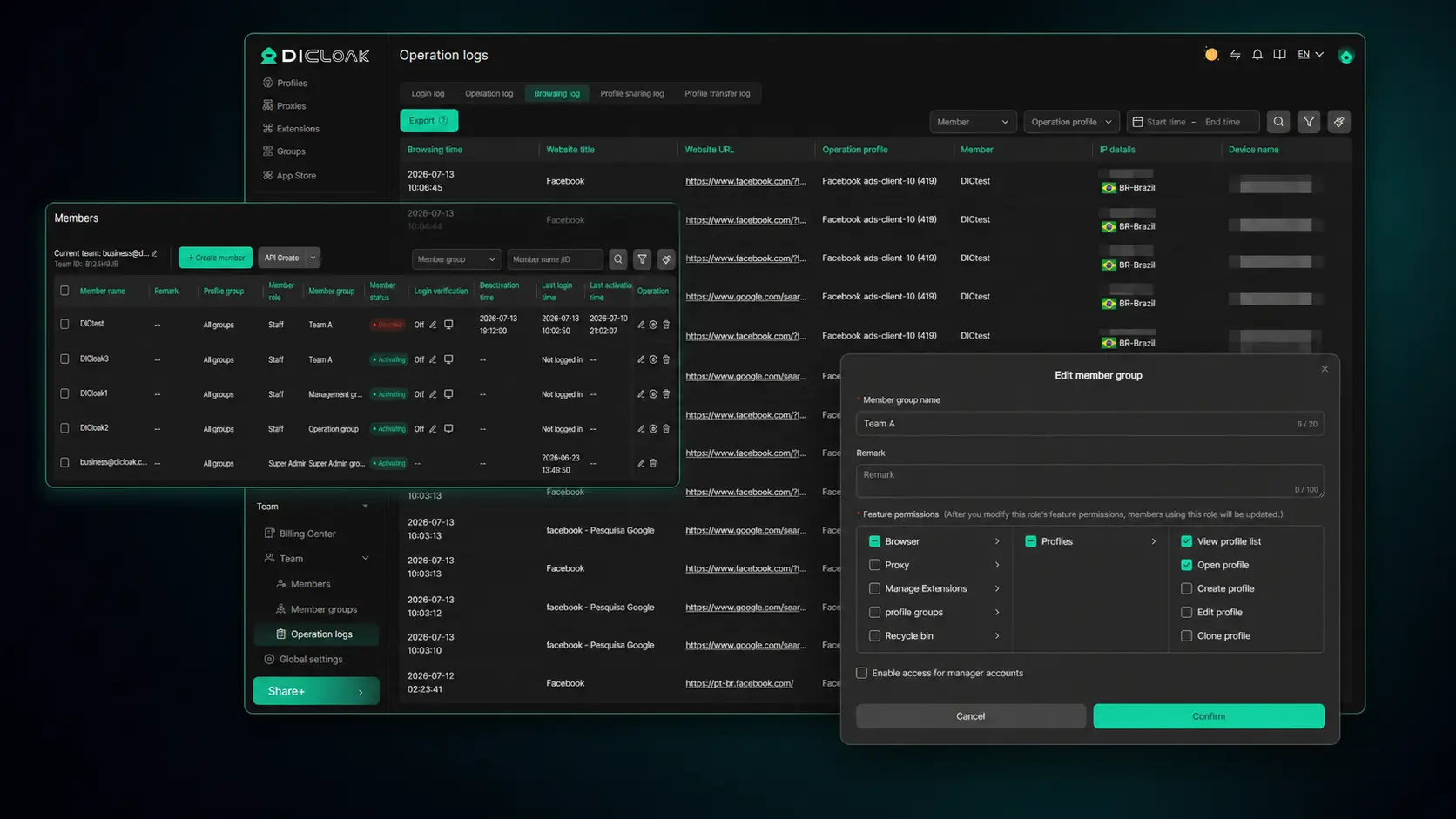
DICloak supports Member Groups, Profile Sharing, and configurable permissions that help administrators control access to supported browser workspaces. Administrators can assign the relevant Profiles to different team members and restrict selected operations or Profile information based on their responsibilities.
For example, an agency can give its marketing team access to advertising-related Profiles while reserving financial reporting workspaces for authorized employees. If a staff member moves to another client project, the administrator can update the assigned Profiles rather than rebuilding the entire browser setup.
DICloak also provides Operation Logs for reviewing supported activities, including certain member operations, browsing records, and Profile management actions. These logs can help administrators understand changes to internal workspaces and investigate unexpected activity. They are not a substitute for Revolut's financial transaction records or authorization controls.
For a growing business, this combination of organized Profiles, team permissions, and activity records offers a more practical workflow than sharing login details across employees. Revolut remains responsible for financial access and verification, while DICloak helps structure the browser-based work surrounding those accounts.
FAQ About Buying Verified Revolut Accounts
Where can I buy a verified Revolut account safely?
Third-party sellers may advertise verified Revolut accounts through websites, marketplaces, and private messaging channels. However, a seller's positive reviews or promise of full access does not prove that Revolut recognizes the buyer as the legitimate account holder.
For regular financial use, opening your own account is the more reliable option. If you are acquiring an existing company that uses Revolut Business, contact Revolut about the appropriate ownership and administration process rather than purchasing the account credentials separately.
Is it legal to buy a verified Revolut account?
The legal consequences depend on the account's origin, the country involved, and how the account is used. A private sale of login credentials does not automatically establish an authorized transfer of a financial account, and using another person's identity information can create additional legal concerns.
Revolut's terms require accurate information and allow it to restrict or close accounts in certain circumstances, including suspected fraud. If your situation involves a legitimate business acquisition, verify the supported ownership and authorization process directly with Revolut.
How much does a verified Revolut account cost?
Third-party sellers set their own prices based on advertised features such as account age, country, verification status, and available cards. These prices are not official Revolut fees, and paying more does not guarantee that the account can be transferred or used legitimately.
Eligible individuals can open a Revolut Personal account without paying a registration fee. Optional paid plans and certain financial services may carry additional charges, depending on the market and product.
Can I buy an aged Revolut account with higher limits?
An aged Revolut account may have an established transaction history, but that does not guarantee higher transfer limits or fewer account reviews. Revolut can request updated information when required, regardless of how long an account has existed.
If your goal is to make larger international payments, review the limits and requirements that apply to your own account. A registered business may also need to consider whether Revolut Business offers a more suitable product for its transaction needs.
Can I create a verified Revolut account for free?
Yes. Eligible customers can open and use a standard Revolut Personal account without an account-opening fee. You will still need to complete the identity checks required for your country and account type.
Paid membership plans are optional and provide different benefits and allowances. Revolut Pro and Revolut Business have their own eligibility rules, service features, and potential charges, so do not assume every business product is free.
Final Takeaway: Should You Buy a Verified Revolut Account?
Buying a verified Revolut account may look convenient, but a working login cannot replace legitimate account ownership. If the account is registered to someone else, you may struggle to complete future identity checks, recover access, or explain its financial history.
For most users, the better option is to register directly with Revolut and choose the account type that fits their actual needs. If your business manages several authorized online accounts, DICloak Antidetect Browser can help organize Browser Profiles, project workspaces, and team access without relying on purchased financial accounts.
 Web Proxy Tools
 Free Tools
 Cookie Plugin
 UA Generator
 MAC Address Generator
 IP Generator
 IP Address List
 2FA Code Generator
 World Clock
 Anonymous Check
 WebRTC Leak Test
 UUID Generator
 Free Web Proxy Site
 Proxy Checker
 FB Ad Checker
 AI Web Scraping
 Free SMM Tools
 Twitter Shadowban Checker
 Instagram Name Checker
 UTM Generator
 Username Generator
 AI Hashtag Generator
 LinkedIn Headline Generator
 Social Media Image Resizer