If you search for "buy verified PayPal accounts," you will find sellers offering ready-made accounts with completed verification, linked banks, and sometimes years of account history. These offers sound useful, especially if you need to accept payments quickly or run an online business. But buying a verified PayPal account can create bigger problems than opening one yourself.
Quick Answer: Buying verified PayPal accounts from third-party sellers is not a reliable way to start accepting payments. A verified account is tied to the identity or business information used during verification. Buying its login details does not transfer that verified identity to you. PayPal's U.S. User Agreement also requires prior written consent before transferring rights or obligations under the agreement.
For most users, the better choice is to create and verify their own PayPal account. Businesses that need several accounts or team access should use PayPal's supported account types and permission features rather than purchasing existing logins.
What Does It Mean to Buy a Verified PayPal Account?
A verified PayPal account is an account that has completed certain checks required by PayPal. Depending on the account type and country, these checks may involve bank details, personal identity, business registration, or other supporting documents.
When a seller offers a "verified PayPal account," they are usually selling access to an account created and verified using information already provided to PayPal. The buyer receives login credentials, but the original verification records may still belong to someone else.
This creates an important difference between having access to an account and being its recognized owner.
What sellers mean by fully verified, aged, and business accounts
Not every advertised PayPal account is the same. Sellers often use labels that make their listings appear more valuable, but these labels do not prove that a buyer can use the account without problems.
| Account type |
What sellers usually advertise |
What buyers need to understand |
| Fully verified PayPal account |
Identity checks or bank confirmation already completed |
Verification may belong to another person or business |
| Aged PayPal account |
An account created months or years ago |
Account age does not guarantee higher limits or future approval |
| Verified PayPal Business account |
Business details already submitted |
The registered business information may not match the buyer |
| US or UK verified PayPal account |
An account registered in a specific country |
Country-specific eligibility and identity requirements still apply |
| Bank-verified PayPal account |
A linked or confirmed bank account |
The linked bank may belong to the original account holder |
An account can look ready to use while still having unresolved ownership and verification issues. Before paying for any account, ask whether its legal identity, banking details, and business records would actually match your own.
If the answer is no, the account does not solve the main problem of verification.
Does a verified account mean there are no payment limits?
No. Verification does not mean a PayPal account has unlimited transaction capacity or will never face a payment review. PayPal can apply limits or request additional information based on the account and its activity.
For example, a seller might advertise an aged account as suitable for receiving large business payments. However, an account's age alone does not establish its transaction capacity or guarantee that incoming payments will be available immediately.
Buyers should also distinguish between identity verification, bank confirmation, transaction limits, and payment holds. These are related issues, but completing one step does not automatically resolve the others.
Is It Safe to Buy Verified PayPal Accounts in 2026?
Buying an account from an unknown seller is a high-risk choice because you may not receive lasting ownership or control. Even if the login works during delivery, the account may later require information that only the original holder can provide.
The central issue is not whether the seller can demonstrate access today. It is whether you can legitimately operate, verify, and recover the account tomorrow.
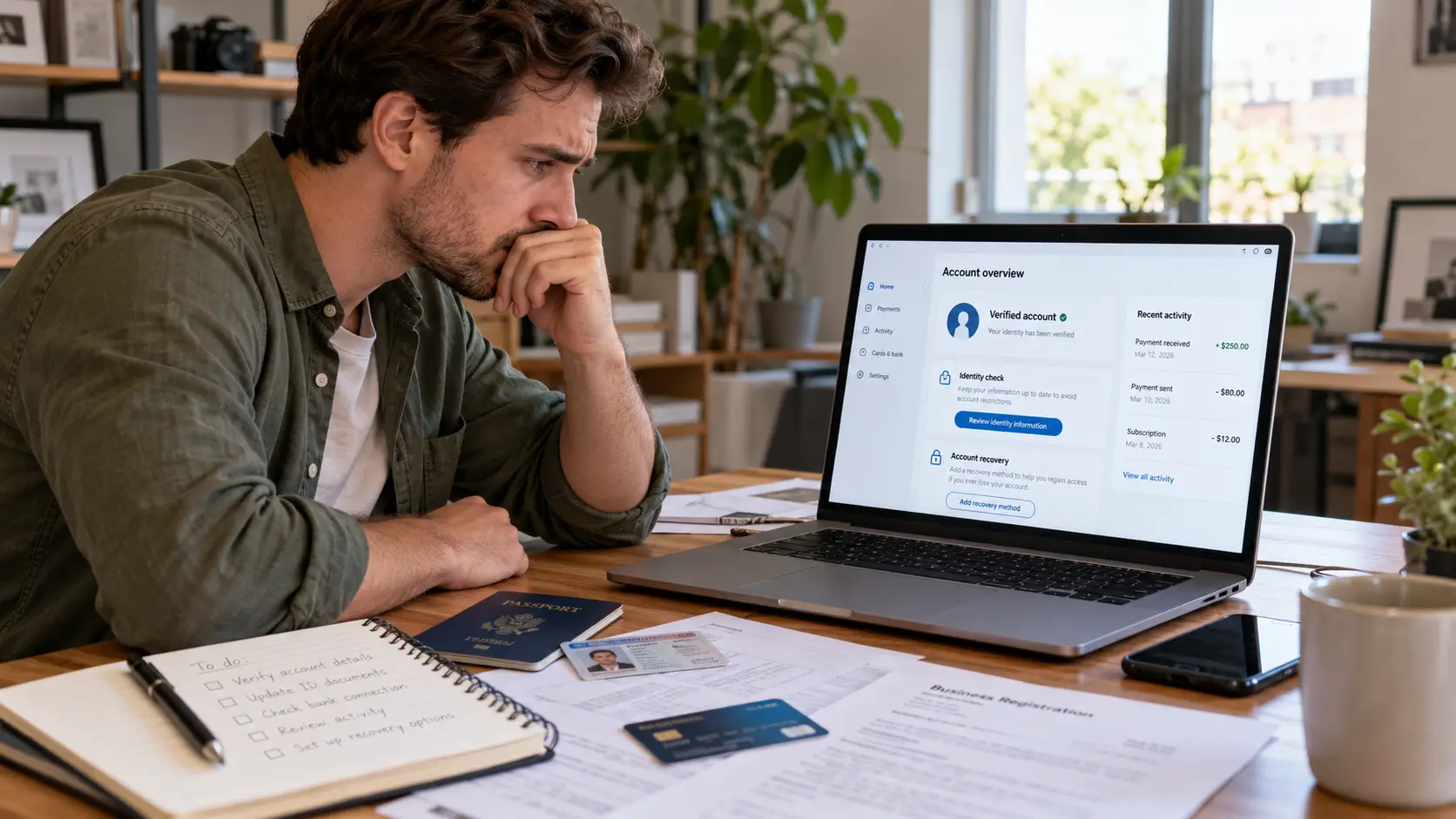
Account ownership and identity may not match
PayPal verifies information about the person or business using its services. For a U.S. business account, this may include the legal business name, address, tax details, executive contact, and beneficial owners.
Suppose a freelance designer purchases a verified US PayPal Business account registered to a different person. The designer may be able to log in, but if PayPal requests identity documents or business ownership information, the designer's records will not match the original registration.
That mismatch is difficult to solve through ordinary account settings. PayPal's verification process is designed to establish the identity of the actual customer, not simply the person holding a password.
The practical choice is to use an account registered with accurate information from the beginning.
The original seller may still control account recovery
A seller might give you the email address, password, and access to an authentication method. However, that does not always mean every recovery method or ownership detail has been transferred.
For example, if an account is later locked and recovery requires the original owner's identification, you may have no independent way to complete the process. The seller could also become unreachable after the purchase.
This makes claims such as "full access," "permanent ownership," or "recovery guaranteed" difficult to trust without an authorized transfer process.
For an account that will receive client payments or store business funds, independent control over recovery is essential. A purchased password is not enough.
An aged account does not guarantee a better payment history
Some sellers promote older PayPal accounts as more trustworthy than newly created ones. They may claim that account age helps avoid restrictions or makes large transactions easier.
But an old registration date does not reveal the account's complete history. Previous disputes, payment activity, or unresolved issues may not be visible to a buyer. There is also no verified basis for assuming that a purchased aged account automatically receives better treatment.
Consider an online store preparing for its first major sale. Buying an account that was created several years ago may appear faster than building a new payment setup, but it introduces an unknown payment history into the business.
A business is better served by an account whose transactions, ownership, and financial records it can explain.
Common Mistakes People Make When Buying Verified PayPal Accounts
The most expensive mistakes often happen before the first payment is received. Buyers focus on what a seller promises instead of whether the account is suitable for their real business needs.
Choosing the cheapest seller instead of checking account ownership
Low prices and instant delivery can make purchased accounts appealing. However, price says very little about whether an account was created with legitimate information or can be used by a new owner.
Imagine finding two listings: one offers a fully verified account at a low price, while another promises an aged business account with bank verification. Neither listing establishes that PayPal recognizes you as the account holder.
Instead of comparing sellers by price, compare the purchase with the cost of opening and verifying your own account. In the U.S., PayPal states that opening a Business account has no sign-up fee or monthly maintenance fee, although transaction fees may apply.
Assuming verification can be transferred with login credentials
A common misunderstanding is that receiving the login email and password also transfers the original verification status to the buyer as a recognized account owner.
In practice, the registered identity and business records still matter. If PayPal asks for updated documentation, the buyer may need to provide information matching the account's ownership details.
A simple way to evaluate the situation is to ask: "Could I prove to PayPal that this account legitimately belongs to me without relying on the seller?"
If not, buying the account adds an ongoing dependency that could affect future payments.
Buying an overseas PayPal account to access unavailable features
Country-specific accounts are another popular type of listing. Sellers may offer US or UK PayPal accounts to people living elsewhere, sometimes suggesting that these accounts unlock payment features unavailable in their own countries.
However, PayPal account eligibility and available services depend on location and other requirements. A US PayPal account is not simply a different interface that anyone can purchase and use.
For instance, a business operating outside the United States should not assume that buying an account registered to a US resident gives it legitimate access to US-only services. A mismatch between the registered account holder and the actual operator can create verification problems.
Check the services available in your country and use your real personal or business information. If the needed service is unavailable, consider a payment provider that officially supports your location.
How to Get a Verified PayPal Account Without Buying One
The most reliable alternative to buying a verified PayPal account is to register an account with your own information and complete PayPal's official verification process. You can then manage payments without depending on another person's identity, bank details, or recovery methods.
The exact requirements vary by country, account type, and business structure, but the main steps are straightforward.
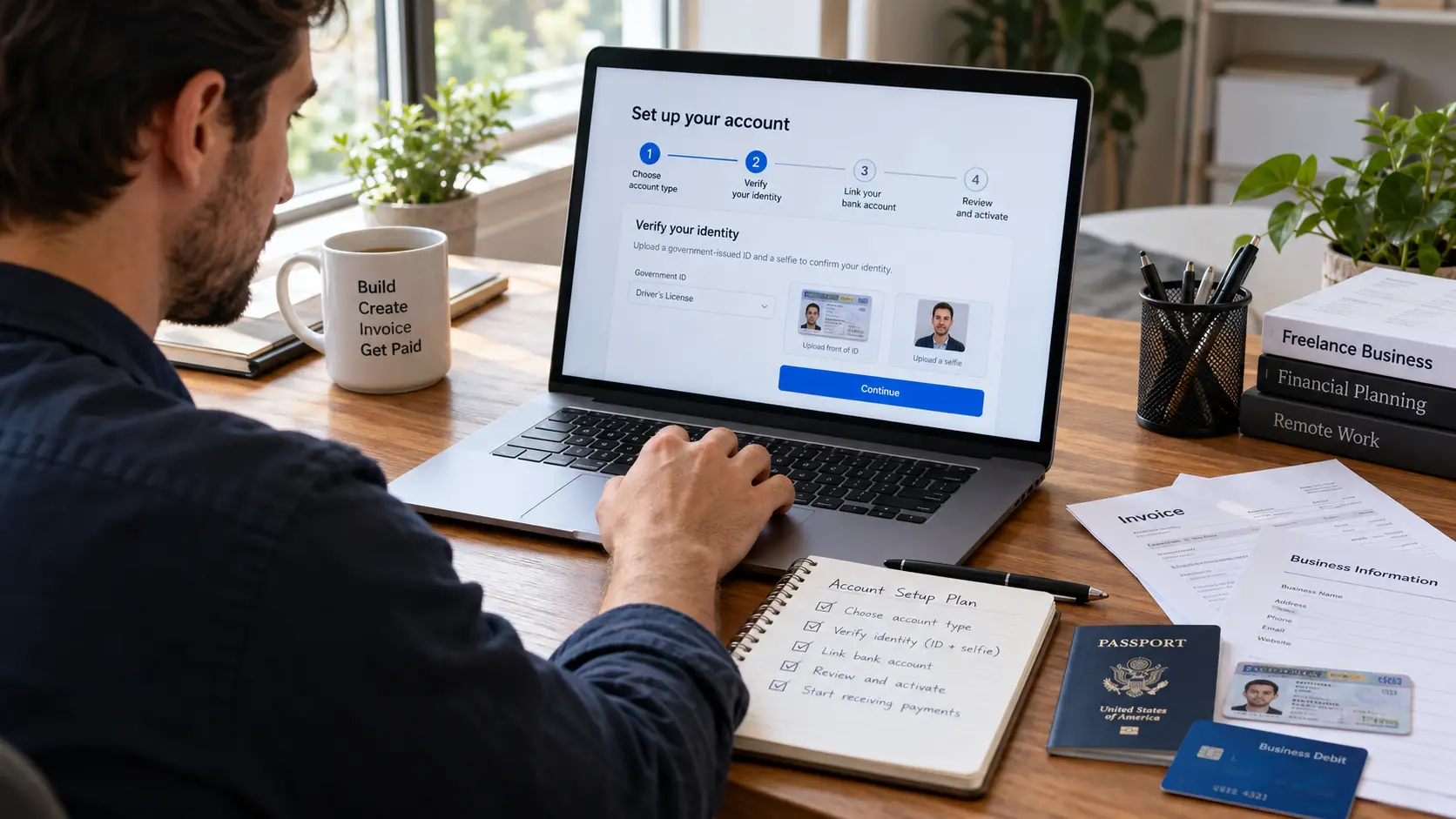
Step 1: Choose the right PayPal account type
PayPal offers Personal and Business accounts. The right choice depends on how you plan to use the service.
A Personal account is intended for everyday payments, online shopping, and personal transfers. A Business account is designed for merchants, freelancers, and companies that accept payments for goods or services.
If you run an online store or sell services regularly, a Business account is usually the appropriate option. PayPal also allows sole proprietors to open Business accounts, so you do not necessarily need a registered LLC.
Step 2: Complete identity and business verification
After registering your account through
PayPal's official website
, provide the requested information. PayPal may verify some details automatically or ask you to submit supporting documents.
Depending on your situation, these may include:
- Your legal name, date of birth, and residential address.
- A government-issued ID or proof of address.
- Your business name, registration details, and tax information.
- Information about company owners or authorized representatives.
For example, a US company opening a Business account may need to identify individuals who own at least 25% of the business. A sole proprietor may have different documentation requirements.
Use accurate information that matches your documents. If your details cannot be verified automatically, follow the instructions shown in your PayPal account rather than buying a replacement account.
Step 3: Link and confirm your bank account
Bank confirmation is an important part of preparing an account for regular payments and transfers. In the US, PayPal supports instant confirmation for eligible banks and a manual process using small deposits.
To link a bank account:
- Log in to PayPal and open Wallet.
- Select Link a card or bank.
- Choose Link a bank account and enter the requested information.
- Follow the available confirmation process.
If you use manual confirmation, PayPal may send two small deposits to your bank. You then enter those exact amounts to confirm ownership.
Do not use a stranger's bank account simply because it is already linked to a purchased PayPal profile. The financial information should belong to you or your authorized business.
Step 4: Check your account's status before accepting payments
Finishing registration does not mean every account feature is immediately available. Review any verification requests, account notifications, and payment requirements before relying on the account for business transactions.
For example, a new online store should confirm that its Business account is ready to accept payments before adding PayPal Checkout to its website. If PayPal requests more documents, the store owner should complete that process before planning major payment activity around the account.
PayPal says that many business accounts can be verified instantly. When additional documents are required, reviews may take longer, and there is no guaranteed approval time for every case.
Buying vs. Creating a Verified PayPal Account: Which Makes More Sense?
The main advantage sellers advertise is convenience. However, the time saved during setup may not matter if the account later requires documents or access that only the original owner controls.
| Factor |
Buying a verified account |
Creating and verifying your own account |
| Initial setup |
Seller provides existing credentials |
You register and submit your information |
| Identity ownership |
May belong to someone else |
Registered under your own identity or business |
| Verification |
Previously completed, but not necessarily valid for you |
Completed using your actual details |
| Account recovery |
May depend on the original holder |
Based on your own registered information |
| Payment history |
Existing history may be unclear |
History develops from your own activity |
| Cost |
Seller charges an account purchase fee |
No fee to open a US PayPal Business account |
| Long-term business use |
Significant ownership uncertainty |
More suitable for ongoing operations |
For a business that plans to accept payments over several months or years, ownership and control matter more than instant delivery.
The key comparison is not an aged account versus a new account. It is an account whose identity you can prove versus one whose identity you cannot.
Some people search for verified PayPal accounts because they need separate payment accounts for different stores, projects, or business entities. Their real problem may be account organization rather than verification itself.
Buying several ready-made accounts does not solve that problem. Businesses should first determine which account structures PayPal permits and whether existing account-management features meet their needs.
Understand PayPal's rules for multiple accounts
PayPal's US guidance states that an individual can have one Personal account and one Business account, each registered with a unique email address. This does not mean every person can freely create several accounts of the same type.
For businesses operating through multiple legal entities, the situation may be different. Each entity's ownership, eligibility, and account requirements should be checked with PayPal before additional accounts are created.
For example, someone operating one online store and handling personal purchases may use separate Personal and Business accounts. A company running several registered businesses may need a more complex arrangement that reflects its actual legal structure.
The right approach is to confirm what PayPal permits for your situation. Using different emails or browser sessions does not create permission to open accounts that would otherwise be ineligible.
Use PayPal's built-in team permissions
If your main goal is to let several employees manage payments, you may not need additional PayPal accounts at all.
PayPal Business accounts support secondary users with individual login credentials and assigned permissions. PayPal also offers centralized management features for eligible businesses with multiple Business accounts.
For example, an e-commerce company may need its finance manager to review transactions while a customer service employee handles payment-related questions. Giving each person the required access can be more practical than purchasing separate accounts or sharing the owner's login.
PayPal's US Business account information describes support for limited access for up to 200 employees. Actual permissions should be configured based on each employee's responsibilities.
How DICloak Helps Organize Multiple Authorized Business Accounts
Once a business has its own verified PayPal account, the next challenge may be keeping daily online work organized. A company might handle several stores, client projects, payment dashboards, and other business tools throughout the day.
This is where DICloak Antidetect Browser can support account management. DICloak helps teams organize separate Browser Profiles, manage browser sessions, assign work, and control access across supported online platforms.
DICloak does not verify PayPal identities, authorize additional PayPal accounts, or replace PayPal's own account permissions. Its role is managing browser workflows for accounts that the user or business is authorized to operate.
Keep business workflows separate with Browser Profiles
When someone uses several online services in a normal browser, switching between accounts can become confusing. Cookies, active sessions, and stored website data may lead to mistakes, especially when similar dashboards are open simultaneously.
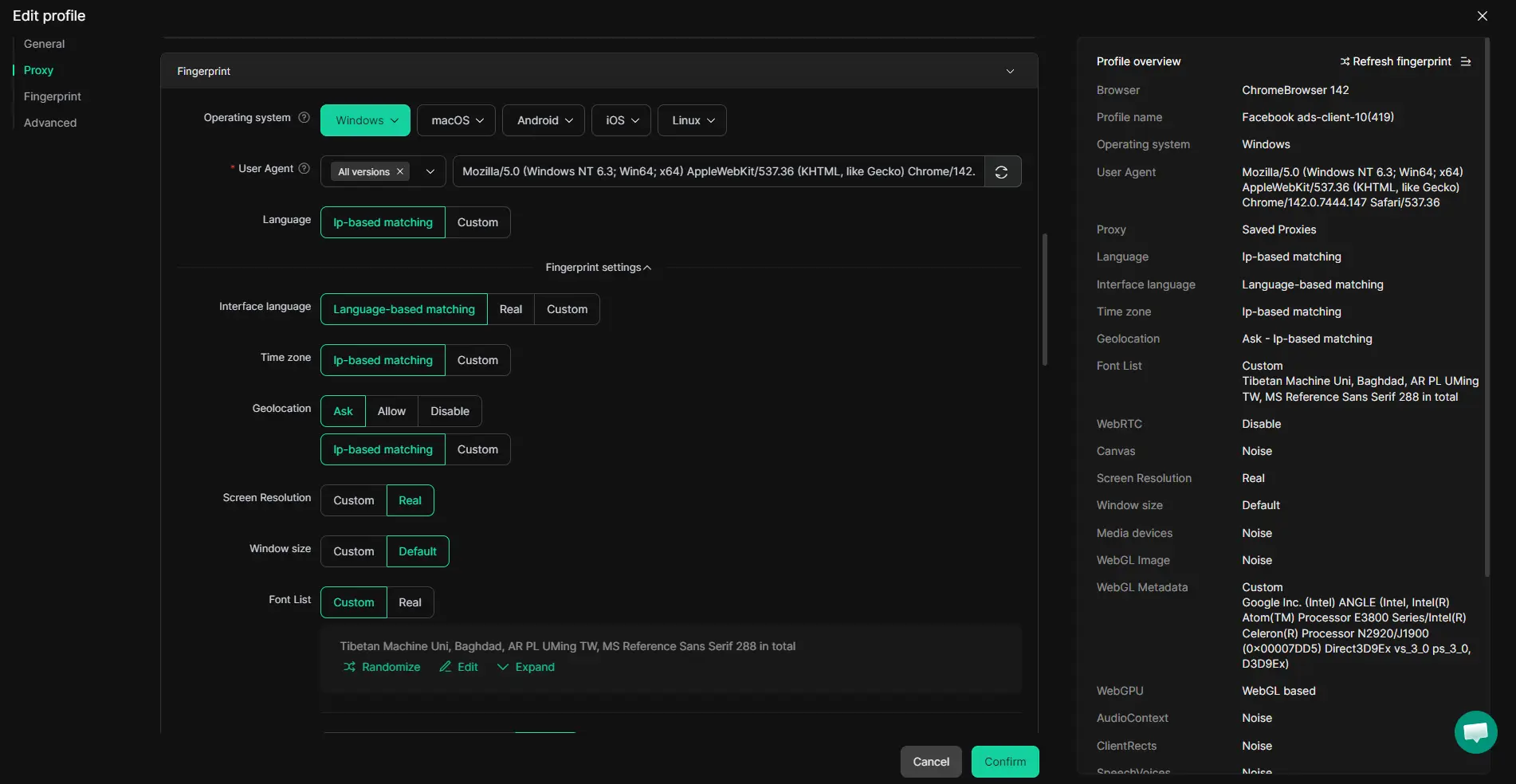
DICloak allows users to create separate Browser Profiles with their own browser data and configurable fingerprint settings. This helps keep different sessions organized without repeatedly clearing cookies or switching accounts in the same browser window.
Consider a small business owner who manages an authorized PayPal Business account, an e-commerce store, and a separate client project. The owner can assign different Browser Profiles to those workflows and keep each project's browser data separate.
Users can also configure their own proxies within DICloak where appropriate for authorized business operations. However, changing a proxy or browser fingerprint does not change PayPal's verification requirements or resolve an account limitation.
The benefit here is clearer daily account organization, not bypassing financial platform controls.
Organize multiple projects with Profile Groups
As a business grows, managing individual browser windows becomes less practical. Employees may need to work on different stores or client projects, but they should not have access to every browser Profile in the company.
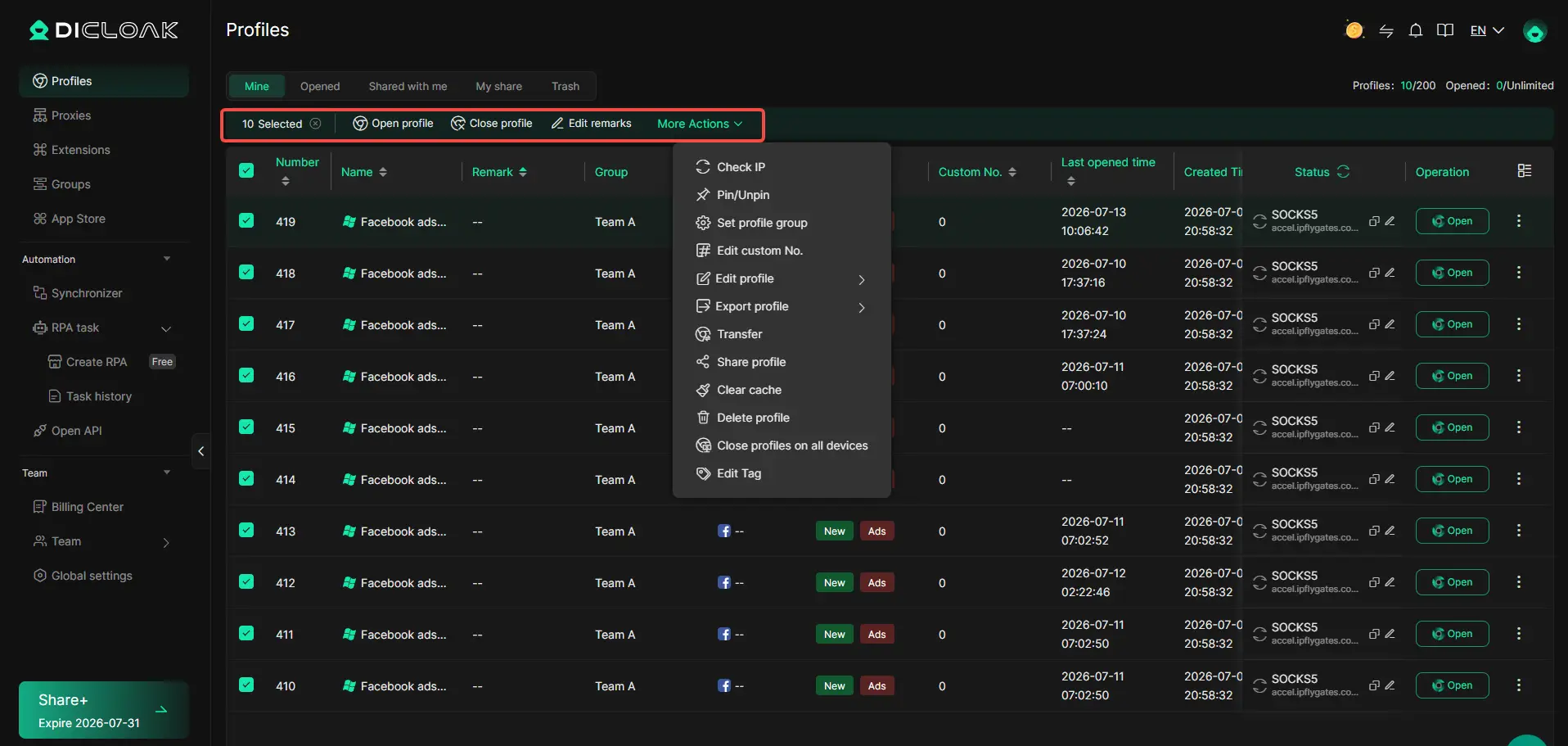
DICloak supports Profile Groups for organizing Browser Profiles and assigning them to appropriate team members.
For example, an agency might support three online stores. Each store has its own authorized business services, reporting dashboards, and support tools. Instead of placing everything into one browser workspace, the agency can organize Profiles by client or project.
A team member working on Store A can then be assigned to the relevant Profile Group without automatically receiving access to Profiles for Stores B and C.
This approach becomes especially useful when employees change responsibilities or when an agency takes on more clients.
Manage team access without sharing every login
Account sharing is only one part of multiple account management. For businesses, the more important question is who should access each workflow and what they should be allowed to do.
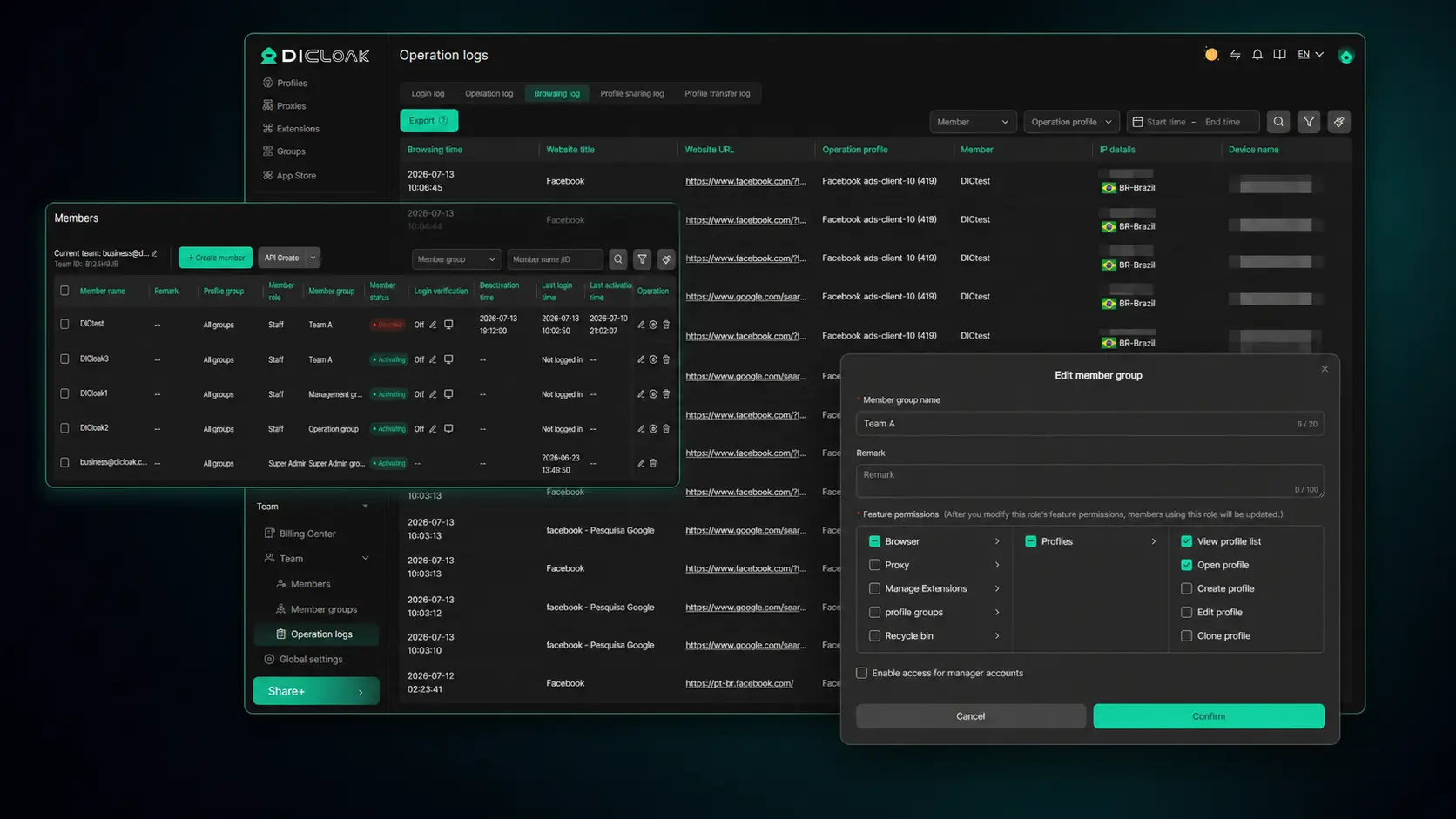
DICloak provides Member Groups, Profile access permissions, and Profile field visibility controls. These features help administrators assign the right Browser Profiles and restrict access to selected information.
For example, a marketing employee may need access to an online store's advertising dashboard but not its financial records. An administrator can assign only the relevant Profiles and configure the member's available functions.
DICloak also supports Profile Sharing and Data Sync for supported browser data. However, teams should use PayPal's native secondary-user permissions for PayPal financial operations rather than treating a shared browser session as a replacement for authorized PayPal access.
A structured permission system is more manageable than giving everyone the same set of credentials.
What Should You Do If Your PayPal Account Is Limited?
A limited PayPal account is another reason users may look for verified accounts for sale. Some sellers suggest buying a new account rather than resolving the problem with the existing one.
That approach does not address the original issue and may create another account with unclear ownership.
Find out why the account is limited
PayPal may apply account limitations for different reasons, including verification requirements, account activity reviews, or compliance concerns. The right response depends on the information shown in your account.
For example, a business may be asked to provide updated company documents, confirm its identity, or supply details about certain transactions.
Log in directly through PayPal's official website and review the notifications or Resolution Center. Follow the instructions associated with your specific limitation rather than assuming that every restriction has the same solution.
If you believe a limitation is incorrect, contact PayPal through its official support channels. Keep the explanation factual and provide the requested documents.
Do not treat a purchased account as a replacement for a restricted one
Buying another verified account may appear to offer an immediate fresh start. However, the new account can introduce different identity and ownership problems while leaving the original limitation unresolved.
For example, if PayPal requests documentation for a merchant's existing account, purchasing an aged account registered to someone else does not satisfy that request.
Likewise, a new Browser Profile or proxy cannot remove a PayPal limitation. DICloak can help organize authorized browser sessions, but it is not a tool for reversing account restrictions or evading enforcement.
The better approach is to resolve the account issue through PayPal before making further payment arrangements.
FAQ: Buying Verified PayPal Accounts
Is it legal to buy verified PayPal accounts?
There is no single legal answer that applies to every country or situation. However, buying access to another person's financial account can create contractual, identity, privacy, and fraud-related risks.
PayPal's US User Agreement states that rights or obligations under the agreement cannot be assigned without prior written consent. Users should not assume that buying account credentials establishes an authorized ownership transfer.
Where can I buy verified PayPal accounts safely?
There is no third-party marketplace that can independently guarantee PayPal will recognize a buyer as the legitimate owner of a previously verified account. Even a seller with positive reviews cannot guarantee that the buyer's identity will match the account's registration records.
For regular business use, the safer option is to open an account directly with PayPal. If you are acquiring an existing company, discuss the appropriate handling of its payment accounts with PayPal as part of the business transfer.
Can I buy a fully verified US PayPal account if I live outside the United States?
Buying credentials does not make you eligible for a US PayPal account. PayPal's US account agreement has residency and business-location requirements, and verification may involve US-specific information.
If you live or operate a business elsewhere, review PayPal's services and eligibility rules for your actual country. Do not assume that using a US address, phone number, or proxy can replace legitimate eligibility.
Can I create a verified PayPal account for free?
You can register a PayPal account without buying one from a third party. In the US, opening a Personal or Business account does not require purchasing a pre-verified account.
You must still complete the verification steps PayPal requires for your circumstances. Any transaction fees, currency conversion fees, or other applicable service charges are separate from the account registration process.
Can I have two verified PayPal accounts?
PayPal's US guidance permits one Personal account and one Business account for an individual, each using a different email address.
Businesses with more complex structures should confirm their eligibility for additional accounts with PayPal. Opening multiple accounts simply to avoid restrictions is different from operating legitimate business accounts for an authorized purpose.
Final Takeaway: Is Buying a Verified PayPal Account Worth It?
For most individuals and businesses, buying verified PayPal accounts is not worth the uncertainty. An existing verification status may look convenient, but it cannot replace legitimate ownership, accurate business records, and reliable account recovery.
If your goal is to accept payments, create and verify your own PayPal account. If your goal is to run several stores or projects, use an account structure that PayPal permits and organize your workflows accordingly.
For teams handling multiple authorized online accounts, explore DICloak to keep Browser Profiles, sessions, and team access organized. Build your payment setup around accounts your business can genuinely control, rather than accounts someone else has already verified.
 Web Proxy Tools
 Free Tools
 Cookie Plugin
 UA Generator
 MAC Address Generator
 IP Generator
 IP Address List
 2FA Code Generator
 World Clock
 Anonymous Check
 WebRTC Leak Test
 UUID Generator
 Free Web Proxy Site
 Proxy Checker
 FB Ad Checker
 AI Web Scraping
 Free SMM Tools
 Twitter Shadowban Checker
 Instagram Name Checker
 UTM Generator
 Username Generator
 AI Hashtag Generator
 LinkedIn Headline Generator
 Social Media Image Resizer