Why you might need a better Incogniton alternative today
Running a digital agency or scaling an e-commerce operation requires reliable infrastructure. If your browser profiles crash or leak data, your entire business is at risk. Many teams start with Incogniton because it offers an accessible entry point. However, as your operation grows, you may notice performance bottlenecks. The costs of downtime and lost accounts quickly outweigh the savings of a cheaper tool. If you are looking to switch from Incogniton to DICloak or another premium option, you are likely feeling these growing pains right now.
Common frustrations with account stability and loading speeds
Speed and stability dictate your team's daily output. When you manage hundreds of profiles for client campaigns, every second of loading time impacts your bottom line. A primary reason business owners seek an alternative is software lag. As you add more browser profiles, Incogniton can consume heavy local CPU and RAM resources. This leads to frustrating interface delays and occasional application crashes during critical automation workflows.
A crashed profile is not just a minor inconvenience. It forces your operators to abruptly restart sessions. This erratic behavior can trigger suspicious activity flags on strict platforms like Amazon or Facebook, risking instant account bans. To protect your assets, you need a scalable environment that handles high-volume tasks smoothly. Modern agencies require lightweight architecture that does not choke under pressure. When your team spends more time waiting for profiles to sync than actually running campaigns, it is time to audit your software stack. Newer tools offer encrypted cloud synchronization and highly optimized codebases that prevent these heavy resource drains, ensuring your daily operations run without interruption.
When Incogniton's free plan limits start slowing you down
Free tiers are excellent for testing, but they are not built for scalable business use. The incogniton free plan limitations become a harsh reality when you attempt to grow your operations. Currently, their starter tier only offers 10 free profiles for two months, before dropping you down to just three profiles. For a social media agency multiple profile manager, three profiles are entirely insufficient.
You cannot securely manage separate client accounts, ad managers, and testing environments within such a tight constraint. Furthermore, free plans often restrict access to advanced API integrations and essential team collaboration features. If you want to integrate a local API stealth browser automation setup using Puppeteer or Selenium, you will quickly hit a paywall.
Relying on limited free plans creates operational bottlenecks. Your team cannot share access securely, meaning login credentials get passed around unsafely. While the initial zero-dollar price tag looks appealing, the lack of robust role-based access control creates severe security vulnerabilities. Investing in a robust alternative ensures your business infrastructure can scale without hitting arbitrary profile limits or sacrificing data security.
How we pick a reliable Incogniton alternative for 2026
Finding a replacement for your current infrastructure requires more than just looking for cheap multi-account browser tools. You need a platform that guarantees uptime, protects your data, and fits your financial model. When evaluating how to switch from Incogniton to DICloak, or other market leaders in 2026, we apply a strict business-first lens. We look past the marketing claims to test what actually keeps your campaigns running safely at scale.
Ease of managing 50+ browser profiles daily
Operating a handful of accounts is simple. Scaling past 50 active environments is where basic tools break down. A proper social media agency multiple profile manager must streamline daily operations, not complicate them. We prioritize platforms that offer instant encrypted cloud synchronization and robust role-based access control. If your team cannot securely share a profile without passing passwords in a spreadsheet, the tool fails our test.
We also measure interface responsiveness. When operators open 20 profiles simultaneously, the software should not freeze. The best antidetect browsers for 2026 handle bulk actions—like proxy updates, cookie imports, and status tagging—with zero lag. We heavily penalize tools that consume excessive local RAM. Your team's time is your highest operational cost. Every minute spent waiting for a dashboard to load reduces your daily ROI.
For enterprise teams, manual work is a vulnerability. We look for advanced local API stealth browser automation capabilities. Connecting your infrastructure to tools like Puppeteer or Playwright should be straightforward. Whether you are running a browser profile management tool free tier for testing or a fully paid enterprise plan, the architecture must support rapid, reliable scaling without sudden performance drops.
Real-world success rates on platforms like Facebook and Amazon
Fingerprint masking theory does not matter if your accounts get suspended. We judge alternatives entirely on their survival rate against advanced commercial tracking. When searching for the best stealth browser for Amazon seller central or a reliable antidetect browser for Facebook ads 2026, trust scores are the only metric that counts.
Platforms like Google, Meta, and Amazon deploy aggressive behavioral and hardware tracking. They look for inconsistencies in WebGL, Canvas, and AudioContext signals. WebGL is a tool websites use to render 3D graphics, but trackers use it to read your computer's unique hardware setup. If a browser simply blocks these scripts, it triggers an immediate red flag. The most reliable tools provide sophisticated canvas fingerprint spoofing browsers that feed trackers mathematically consistent, unique data. We test each platform's ability to pass strict security audits on testing sites like CreepJS.
Furthermore, we evaluate how naturally these browsers integrate with premium residential proxies. A mismatched IP timezone and system clock will burn a valuable ad account instantly. We look for tools that automatically force WebRTC leak protection and sync timezone data to the assigned proxy. Your business cannot afford to lose seasoned seller accounts due to a simple software leak.
Fair pricing for solo users vs. large agencies
Enterprise infrastructure is an investment, but it should not feature predatory pricing. We analyze the true cost of ownership as your business scales. Finding affordable alternatives to Incogniton premium requires looking past the entry-level subscription. Many competitors lure you in with a low base rate, only to drastically hike the price when you need API access or team seats.
We evaluate the cost-per-profile ratio and the feature limits placed on basic tiers. For a solo affiliate marketer, a rigid $100 monthly minimum might destroy profit margins. Conversely, a large agency needs unlimited team members and centralized billing without paying per-seat penalties. We compare the exact break-even point for each tier to ensure logical scaling.
We also look for hidden paywalls. Does the platform charge extra for premium fingerprint updates? Do you lose access to cloud synchronization if you downgrade? Transparency is critical. Whether you are evaluating cheap multi-account browser tools for a startup or negotiating a custom 5,000-profile enterprise package, you need predictable monthly expenses. We reward platforms like DICloak that offer flexible, feature-rich plans that scale smoothly from solo operators to massive corporate teams, ensuring every dollar spent protects your overall ROI.
Top 7 Incogniton alternatives ranked for safety and speed
Protecting your return on investment means choosing software that outpaces modern tracking. If you plan to switch from incogniton to DICloak or another tool entirely, you must find a platform that balances cost with enterprise-grade stability. Before reviewing the top seven platforms in detail, here is a complete comparison matrix of the broader antidetect market in 2026.
| Product |
Best For |
Entry Paid Plan |
Core Strength |
| DICloak |
Digital Marketers, Agencies |
$8/month (20 Profiles) |
RPA & low scaling cost |
| AdsPower |
Ad Account Managers |
$9/month (10 Profiles) |
Window Synchronizer & RPA |
| GoLogin |
Beginners, Small Teams |
$9/month (10 Profiles) |
Easy setup & free proxies |
| Dolphin Anty |
Social Media Arbitrage |
$10/month (20 Profiles) |
Bulk tag & status management |
| Multilogin |
Enterprise Operations |
€9/month (10 Profiles) |
Deep stability & premium proxies |
| MoreLogin |
E-commerce, Mobile Emulation |
$9/month (10 Profiles) |
ARM-based Android cloud phones |
| Octo Browser |
Web Scraping, Crypto |
€10/month (3 Profiles) |
Fast Chromium kernel updates |
| Incogniton |
Existing QA Teams |
$19.99/month (10 Profiles) |
Paste-as-human simulator |
| Browser.lol |
Casual Privacy Testing |
$9/month |
No installation web sandbox |
| Hidemium |
Prompt-based Automators |
$15/month (30 Profiles) |
AI natural language workflows |
DICloak: Best for repetitive tasks and budget-friendly scaling
Why it's the top overall choice for digital marketers
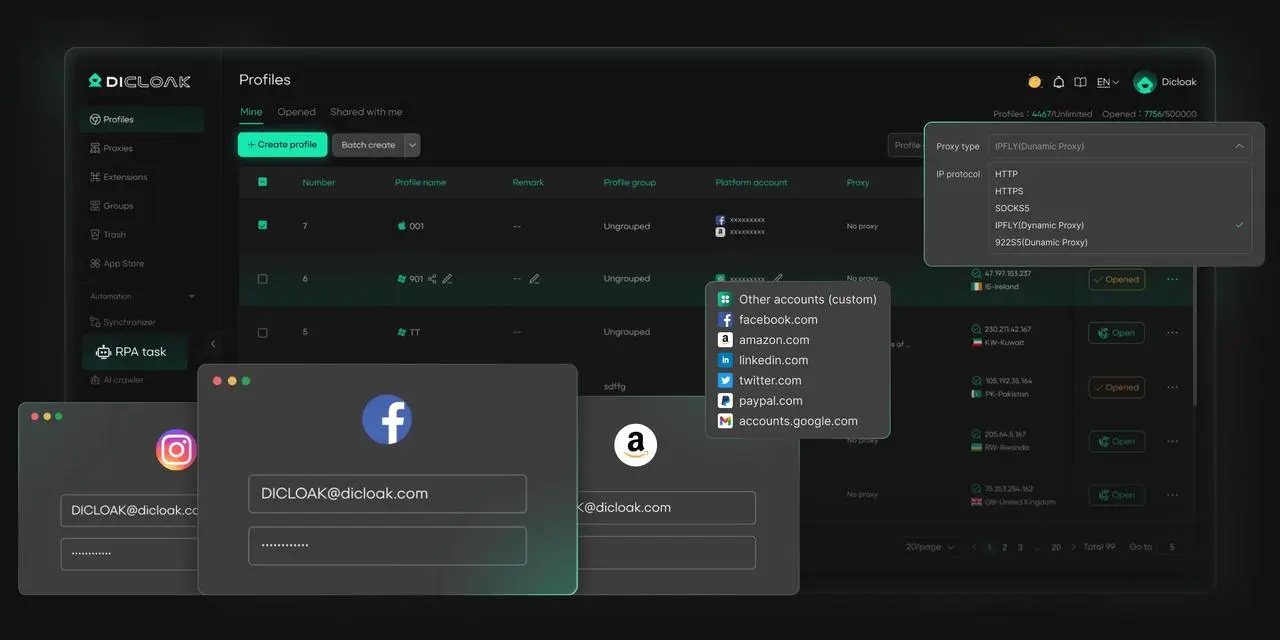
When you need a reliable gologin alternative for multi accounting or a direct upgrade from Incogniton, DICloak stands out. It gives your team precise control different fingerprint parameters. What makes this platform exceptional is its integrated automation. You can build complex Robotic Process Automation (RPA) workflows without writing code. This drastically reduces the time your staff spends warming up new accounts.
Pricing breakdown: How it compares to Incogniton’s cost
Incogniton pushes users quickly toward its $79.99 tier for 150 profiles. DICloak offers a much more logical path. The Plus Plan gives you 100 profiles for just $28.80 per month. If you manage an agency, the Share+ Plan unlocks 200 profiles and unlimited team members for $138 monthly. This predictable pricing protects your margins as you grow.
One trade-off you should know before starting
DICloak is heavily focused on team collaboration. If you only need two profiles for casual browsing, the depth of its role-management tools might feel unnecessary. However, for serious business use, it is the best investment on the market.
AdsPower: The choice for professional ad account managers
Best features for running Facebook and Google ads at scale
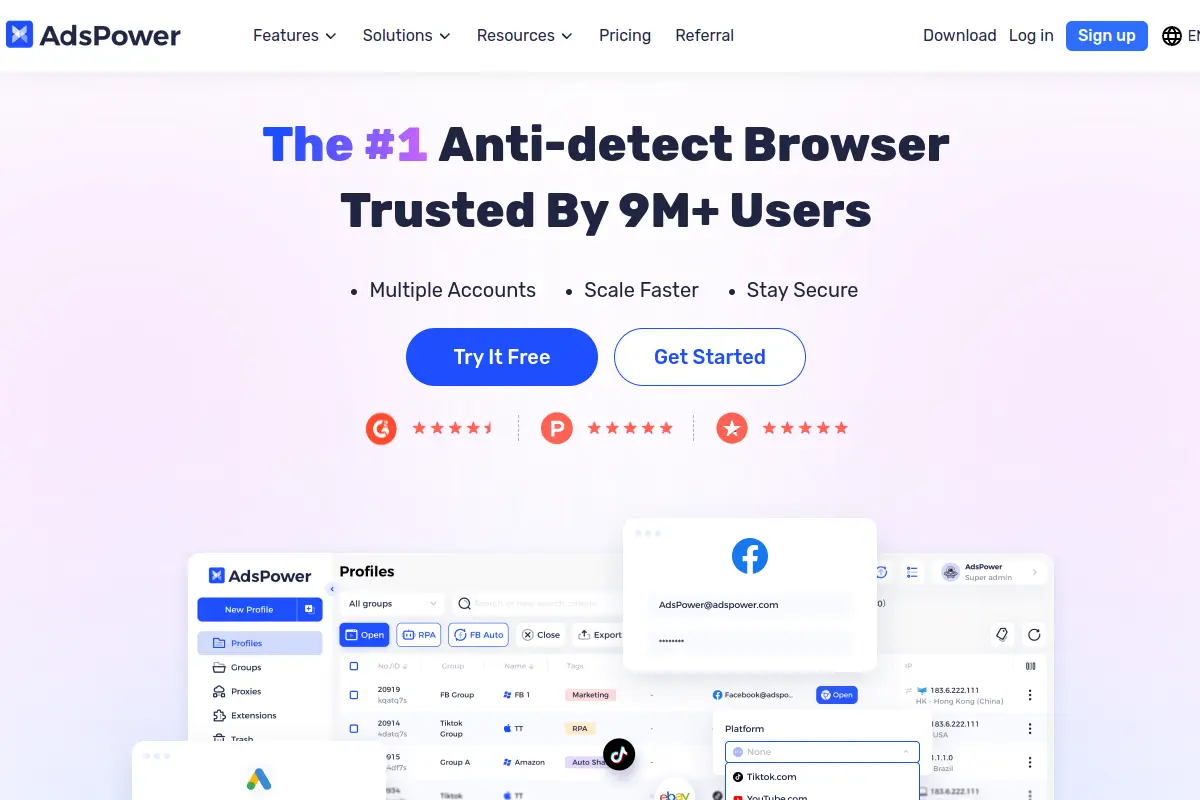
AdsPower provides dual browser engines, letting you choose between Chromium and Firefox architectures. This variation is crucial when managing hundreds of ad accounts to prevent footprint linking.
How the window synchronizer saves hours of manual work
The Window Synchronizer is a massive operational asset. If you need to install the same tracking pixel or change settings across 20 accounts, you perform the action in one main window. The synchronizer mirrors your exact mouse movements and typing across all other open profiles.
Is the learning curve worth it for your team?
AdsPower has a complex interface. Setting up no-code RPA tools requires technical patience.
GoLogin: Easy setup for beginners and small agencies
Why beginners prefer this over more complex tools
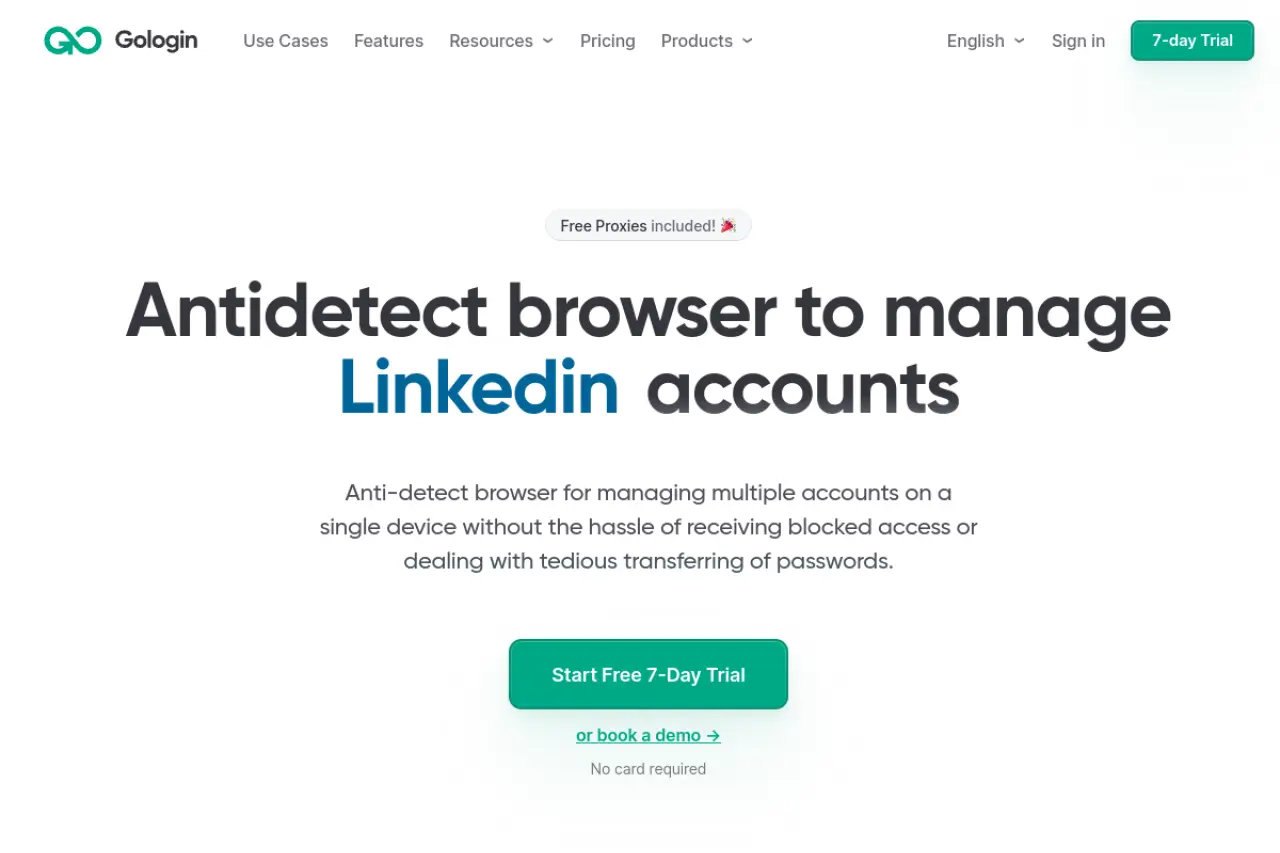
Not every team has a dedicated IT staff. GoLogin helps reduce the friction of managing antidetect software. It generates secure fingerprints automatically across 50 masked parameters. The interface is clean, making it very easy for new hires to grasp immediately.
Managing accounts on the go with the cloud-based web app
Unlike traditional software, GoLogin offers a cloud-based web application. You can launch profiles directly from a standard web browser without a local installation. This is highly effective for remote teams or managers who need to check account health from a laptop while traveling.
What to expect from their built-in proxy options
GoLogin provides free built-in proxy IPs across five global locations. While convenient for basic access, these free proxies are not suitable for high-risk platforms. You will still need to purchase premium residential proxies for serious account management.
Dolphin Anty: Built specifically for social media arbitrage
How it handles the needs of social media marketers
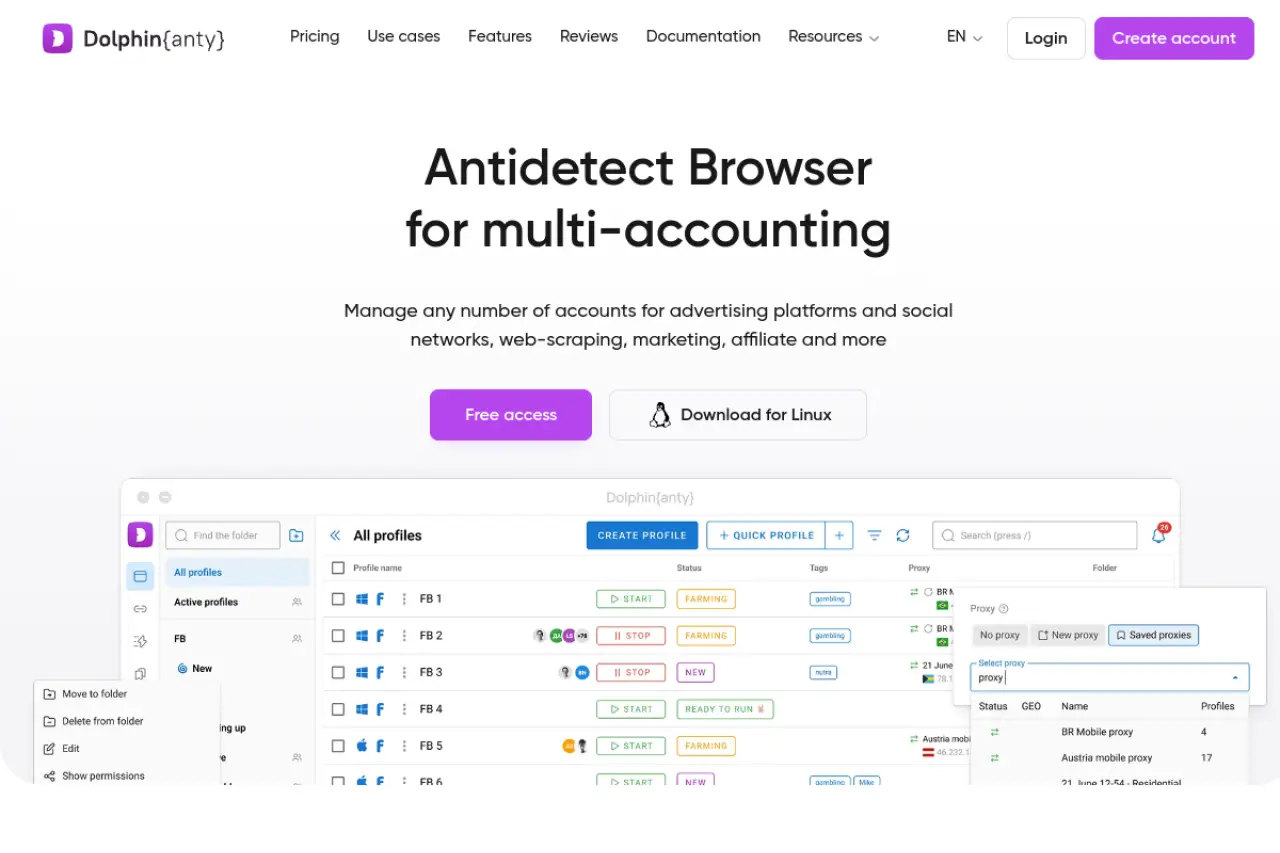
A dolphin anty vs incogniton comparison reveals Dolphin’s intense focus on traffic arbitrage. The platform uses real-life browser profiles collected from genuine physical devices. This raw authenticity makes it highly resilient against strict social media algorithms.
Managing bulk profiles with statuses and custom tags
Dolphin Anty thrives when handling massive volume. The software includes built-in statuses, custom tags, and team organization roles. You can instantly filter thousands of profiles to see which accounts are active, suspended, or currently warming up.
Wait times and performance issues at high profile counts
The primary drawback is resource consumption. If your hardware is older, loading 50 concurrent profiles can cause significant system lag. You must ensure your local machine has the RAM to support the volume.
Multilogin: Enterprise stability
Why big agencies choose this for long-term account health
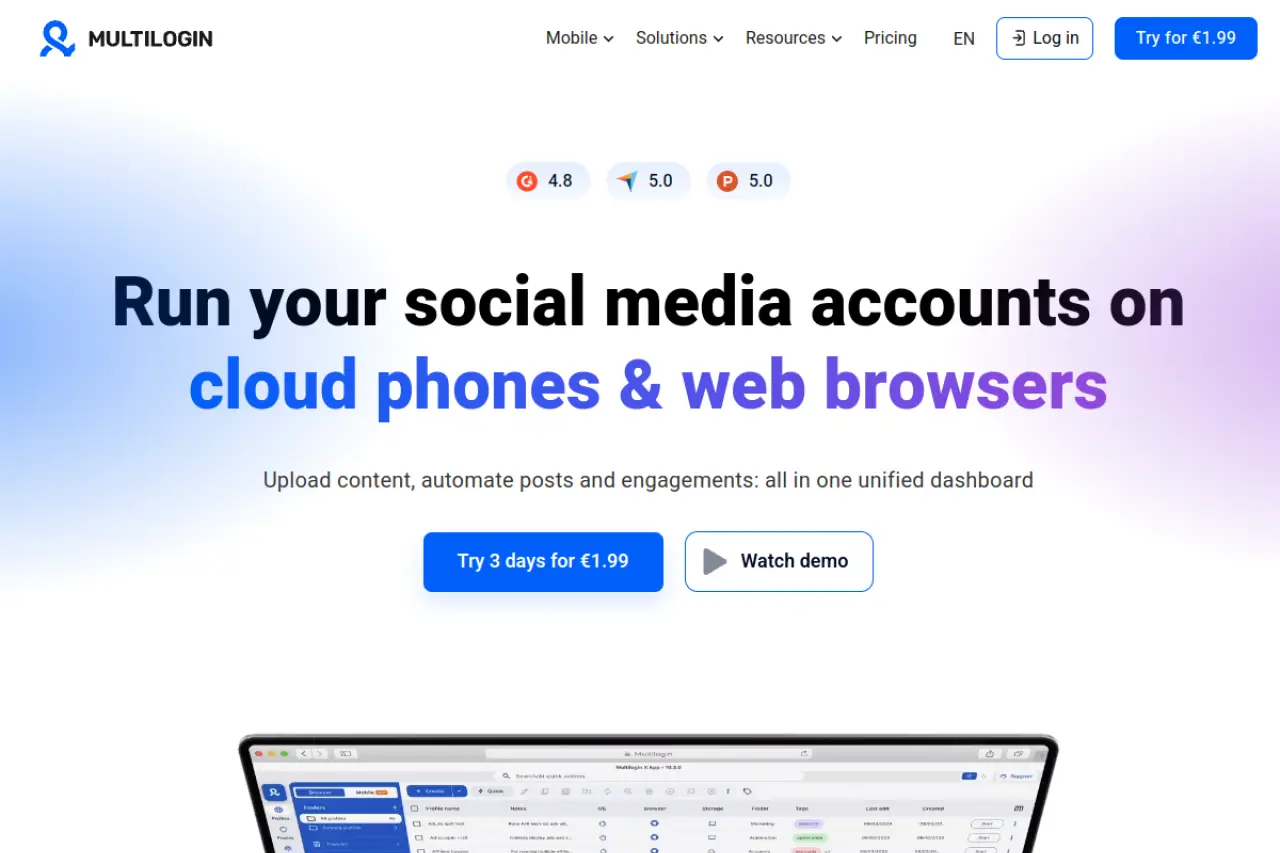
Multilogin offers dual custom browsers and deep API access supporting Selenium, Puppeteer, and Playwright. The platform is engineered to prevent critical data leaks.
Understanding the cost vs. the reliability you get
This stability requires a premium budget. At €79 for 100 profiles, it is noticeably more expensive than the competition. However, when a single corporate ad account holds a $50,000 credit line, paying for absolute data integrity is mandatory.
Is it overkill for solo affiliates?
Yes. If you are a solo affiliate operating with tight margins, the enterprise features will be underutilized. You are better off choosing a more agile, budget-friendly option.
MoreLogin: For e-commerce and mobile profile emulation
Using cloud-based mobile profiles for harder-to-reach platforms
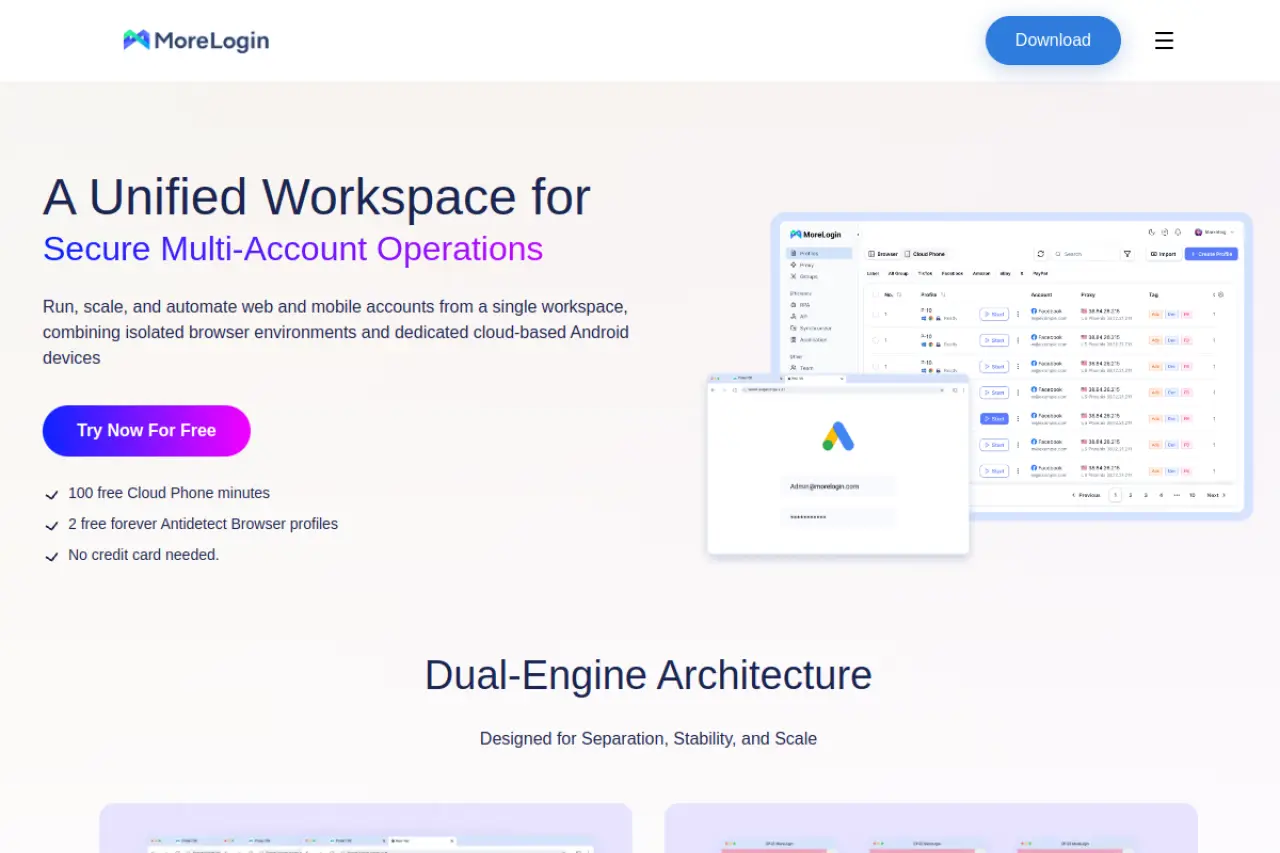
Desktop emulation is sometimes not enough. If you need a kameleo mobile alternative to incogniton, MoreLogin offers Cloud Phone integration. It simulates genuine ARM-based Android devices, which is critical for platforms that restrict desktop account creation.
How it handles Amazon and eBay seller verification
E-commerce platforms deploy aggressive hardware checks. MoreLogin uses sophisticated Canvas, WebGL, and AudioContext masking to ensure your seller accounts appear as distinct, physical computers. This prevents catastrophic chain suspensions across your storefronts.
Pricing reality for users scaling to 100+ profiles
MoreLogin is competitive early on, charging $35 per month for 100 profiles. Just be aware that adding multiple virtual cloud phones will increase your operational costs beyond standard desktop profiles.
Octo Browser: Fast choice for web scraping and crypto hunters
Why performance matters for airdrops and bulk creation
Octo Browser operates on the latest Chromium code, meaning it blends in perfectly with everyday web traffic. This rapid update cycle makes it highly effective for web scraping and fast-paced crypto airdrops.
How simple it is to use on the latest Chromium builds
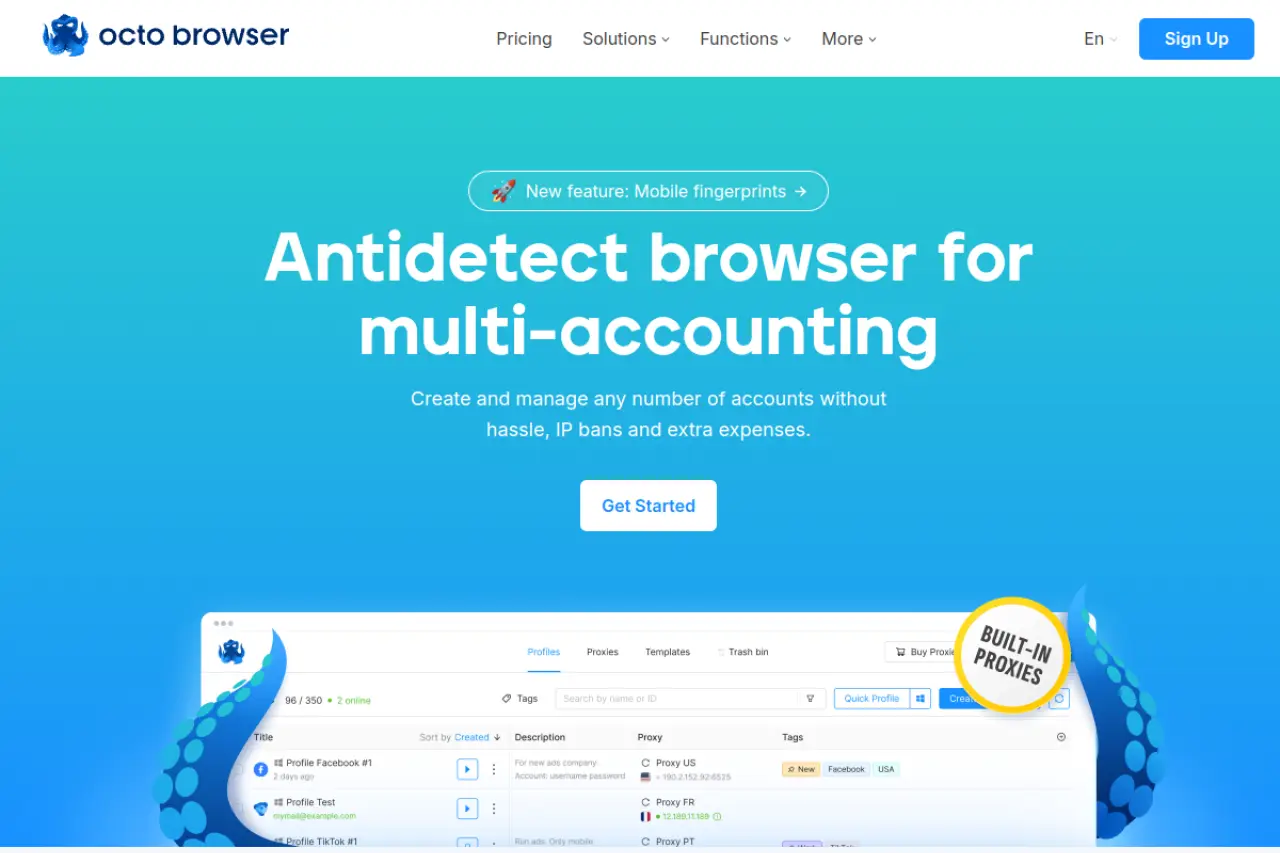
Octo Browser strips away unnecessary clutter. The interface relies on profile templates that allow for rapid, bulk account creation. You can spin up fifty unique profiles in seconds, all protected by strict multi-component AES-256 encryption.
Limitations when it comes to team collaboration tools
While it provides a local API for automation, its team management tools are less granular than competitors. If you manage a large hierarchy of virtual assistants, you might find the permission settings restrictive.
Common mistakes when switching from Incogniton to another tool
Choosing the right tool based on pricing is only half the battle. The actual migration process introduces severe operational risks. When agencies switch from incogniton to DICloak, they often treat it like a simple software update. This mindset leads to suspended ad accounts and lost revenue. A secure migration requires a strict protocol to protect your digital fingerprint history and IP reputation.
Why you shouldn't just copy-paste your proxies
Proxy management dictates your account survival rate. Many business owners make the critical error of lifting their existing proxy lists from Incogniton and dropping them directly into a new platform. This triggers immediate security flags on target websites.
Advertising algorithms monitor the relationship between your IP address and your browser fingerprint. When you change the core anti-detect engine but keep the exact same proxy, you create an unnatural data mismatch. The platform sees a completely new device structure operating from the exact same residential network node. To advanced tracking scripts, this looks like session hijacking.
Instead, you must rotate your IP addresses during the transition. Treat the migrated profile as a brand-new physical device logging in from a familiar geographic area. If you use static residential proxies, request a new IP pool from your provider before setting up your new profiles. This breaks the link to your old fingerprint configuration. Taking shortcuts with proxy porting destroys your ROI faster than any subscription cost. A clean proxy setup ensures your new infrastructure starts with a zero-risk trust score.
What happens to your account history when you migrate?
Your account history is your most valuable asset. It proves to platforms like Google and Facebook that your profiles are operated by real humans. When you migrate away from Incogniton, you cannot easily transfer this behavioral history. Anti-detect tools use different proprietary methods to store cookies, cache, and local data. Moving a profile means you are fundamentally starting over from a device fingerprint perspective.
If you rush this process, platforms will see an established account suddenly logging in from a completely unrecognized device with zero local cache. This sudden loss of session history triggers mandatory verification loops or outright bans. To mitigate this risk, you must employ a strict warmup strategy on your new platform.
Begin by running both tools simultaneously for a short overlap period. Export your active session cookies from Incogniton and import them into your new tool. Then, use automated workflows to build a new baseline of browsing history before executing high-risk actions in your ad managers. This phased approach preserves your account trust score and guarantees operational continuity for your team.
Frequently Asked Questions about Incogniton Alternatives
When you shift your business infrastructure away from Incogniton, you need clarity on security, scaling, and migration risks. Switching antidetect engines is a major operational move. Here are the most critical answers to help your team transition smoothly without disrupting your current revenue streams.
What is the best free alternative to Incogniton in 2026?
DICloak is the strongest free option available this year. It provides a permanent free plan for up to five profiles with access to over 50 custom fingerprint parameters. Unlike basic free tiers that limit security, it gives you the core isolation needed to protect valuable assets without immediate overhead costs.
Can I easily migrate my browser profiles from Incogniton to DICloak?
Yes, but you must move your session cookies manually to maintain account trust. Do not just transfer your proxy list without rotating IPs, or you risk triggering algorithmic flags. By running both tools concurrently for a short period, your team can build a safe behavioral history on the new platform before shutting down Incogniton.
Which Incogniton alternative is safest for running Facebook and Google Ads?
DICloak offer the highest security for sensitive ad platforms. DICloak excels with its RPA automation and strict fingerprint isolation, making it ideal for scaling digital marketers.
How do these Incogniton alternatives handle advanced tracking on sites like CreepJS?
Modern platforms use deep behavioral and hardware checks to detect profile spoofing. Tools like DICloak consistently pass advanced tests by customizing core hardware fingerprints rather than just masking software data. This ensures your infrastructure maintains a high trust score against aggressive tracking scripts.
Is there a cheap alternative to Incogniton for a small team of three?
Yes, DICloak offers a Base Plan at just $8 per month for 20 profiles, which is highly cost-effective for small groups. If you need advanced team collaboration and role management tools, the Plus Plan provides enough capacity for three users to scale operations safely. This setup drastically reduces the software overhead compared to traditional enterprise tiers.
 Web Proxy Tools
 Free Tools
 Cookie Plugin
 UA Generator
 MAC Address Generator
 IP Generator
 IP Address List
 2FA Code Generator
 World Clock
 Anonymous Check
 WebRTC Leak Test
 UUID Generator
 Free Web Proxy Site
 Proxy Checker
 FB Ad Checker
 AI Web Scraping
 Free SMM Tools
 Twitter Shadowban Checker
 Instagram Name Checker
 UTM Generator
 Username Generator
 AI Hashtag Generator
 LinkedIn Headline Generator
 Social Media Image Resizer