Bitcoin’s launch in 2009 triggered over 30,000 new blockchain projects by 2026, yet most people still can’t answer what is blockchain without mixing it up with crypto or vague tech hype. Developers, business owners, and even regulators keep running into the same confusion: is blockchain just a database, a payment system, or something else entirely? According to IBM’s blockchain overview, the real story is more technical than marketing headlines suggest.
The core of blockchain technology explained is simple: it’s a distributed ledger that records transactions across many computers, so no single person can secretly change the data. But the way blockchains work, how blocks are linked, how trust gets built without a central authority, and why public versus private chains matter, creates real-world risks and tradeoffs. For example, the Ethereum network can process smart contracts automatically, but anyone can see the transaction history, and mistakes can’t be undone.
This guide cuts through the noise. You’ll get a clear blockchain definition, see real use cases beyond crypto, and learn which risks matter most if you build or adopt blockchain systems. From supply chain tracking to secure voting, here’s how blockchain really works, and where you need to pay attention before trusting a ledger.
What Does Blockchain Actually Mean and Why Do People Care?
People ask "what is blockchain" because the word gets thrown around everywhere, crypto, banking, even supply chains. The simple answer: a blockchain is a public record book that everyone can check but no one can secretly change. It’s a way to build trust without needing a single authority or company to keep everyone honest. Instead, computers around the world keep copies and check every move.
How Blockchain Differs from Traditional Databases
Most databases are run by one company or group. That owner can add, edit, or delete entries as needed. Blockchains don’t work that way. They use decentralization, which means no single person or group controls the data. Anyone can join and help keep the records safe.
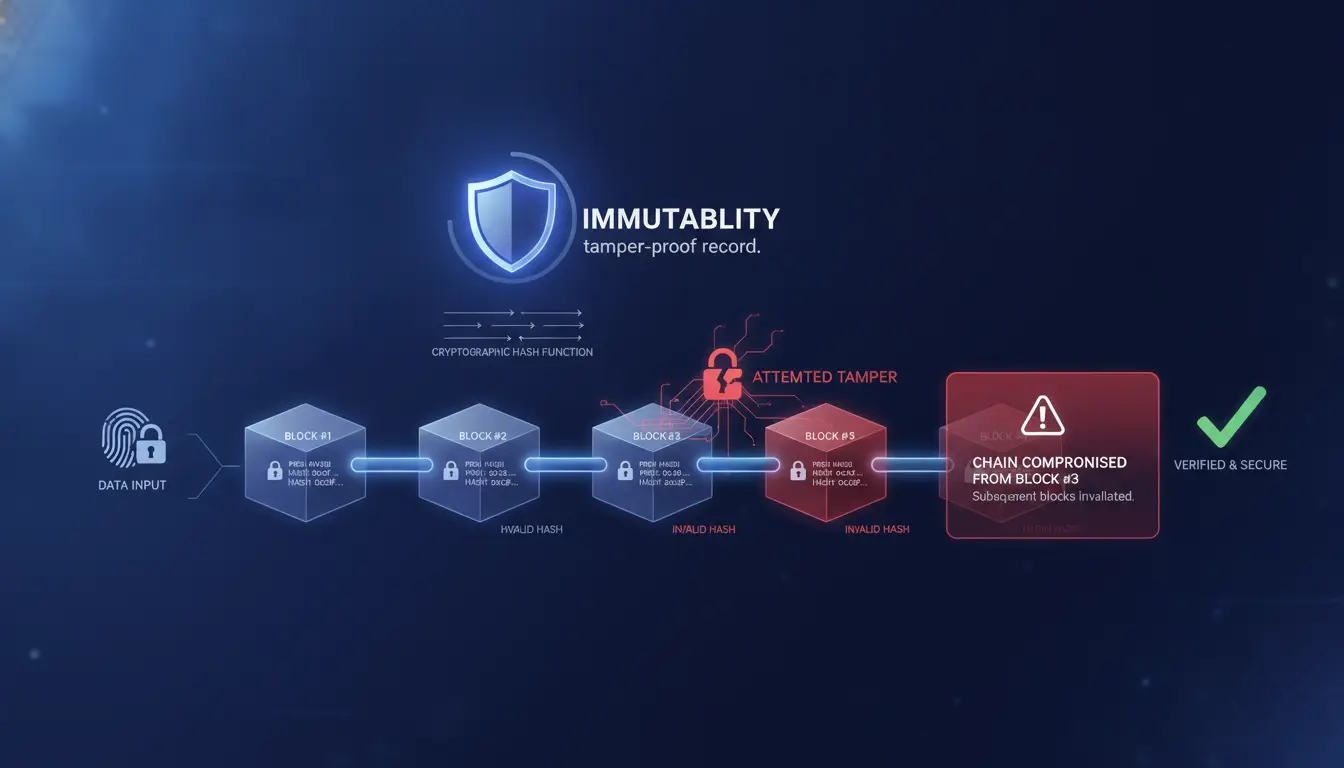
Once a record, or "block," gets added to the chain, it can’t be quietly changed or erased. This is called immutability. If someone tried to fake a record, everyone else on the network would see the mismatch. That’s a big shift from old-school databases, where a system admin might quietly fix, or mess with, your data.
| Feature |
Blockchain (e.g., Bitcoin) |
Traditional Database (e.g., MySQL) |
| Control |
Decentralized |
Centralized |
| Can Edit Past Records? |
No (immutable) |
Yes (admin can edit/delete) |
| Who Can Join? |
Anyone (public chains) |
Only approved users |
| Trust Needed? |
Built-in by design |
Trust the owner |
Table: How blockchain and databases compare. See IBM’s blockchain guide and Wikipedia’s blockchain page.
Why Blockchain Became Popular
Interest in blockchain exploded after Bitcoin showed people could send money online without banks. The key was trust, users didn’t need to know each other, trust a website, or rely on a company. Transactions are open for anyone to check, but no one can fake or erase them.
That same transparency helps in other fields, like tracking food from farm to store, or making sure votes can’t be changed. When people talk about "blockchain technology explained," they mean this new kind of trust, built by code, not by a company. The real power of blockchain is letting strangers agree on what happened, with no central boss.
How Does Blockchain Actually Work? Step-by-Step Breakdown
Blockchain technology explained starts with a simple idea: record every transaction in a block, then link those blocks together, so no one can quietly change the data. This step-by-step process is what makes blockchain trustworthy, even without a central authority. If you’re searching for “what is blockchain,” here’s how it works in real life.
Recording Transactions as Blocks
Each block on a blockchain is like a page in a ledger. It holds several pieces of information: a list of transactions, a timestamp, and a fingerprint (called a hash) of the previous block. When a new transaction happens, like sending Bitcoin or updating a supply chain record, the network groups it with others into a block.
Blocks are created by nodes, which are computers on the network. These nodes compete or cooperate to package transactions into blocks. Once a block is ready, it gets added to the chain, linking back to the last block with its hash. If anyone tries to change a single block, the hashes break, and the network rejects the change.
Consensus: How Blockchain Validates Data
Recording is only half the story. The real question is: how does blockchain work to make sure data is valid? That’s where consensus comes in.
There are two main methods: Proof-of-Work (PoW) and Proof-of-Stake (PoS). PoW asks nodes to solve math puzzles, like Bitcoin does. PoS lets nodes “stake” coins, and the network picks a validator. Here’s a simple table comparing the two:
| Method |
How It Works |
Example Chain |
| Proof-of-Work |
Solve puzzles, burn energy |
Bitcoin |
| Proof-of-Stake |
Stake coins, get selected |
Ethereum |
Consensus matters because it stops cheating and keeps the blockchain definition clear. Without consensus, anyone could rewrite the ledger, breaking trust for every user. That’s why every blockchain network relies on rules to approve blocks, making sure the data stays accurate and secure.
What Are the Key Features That Make Blockchain Unique?
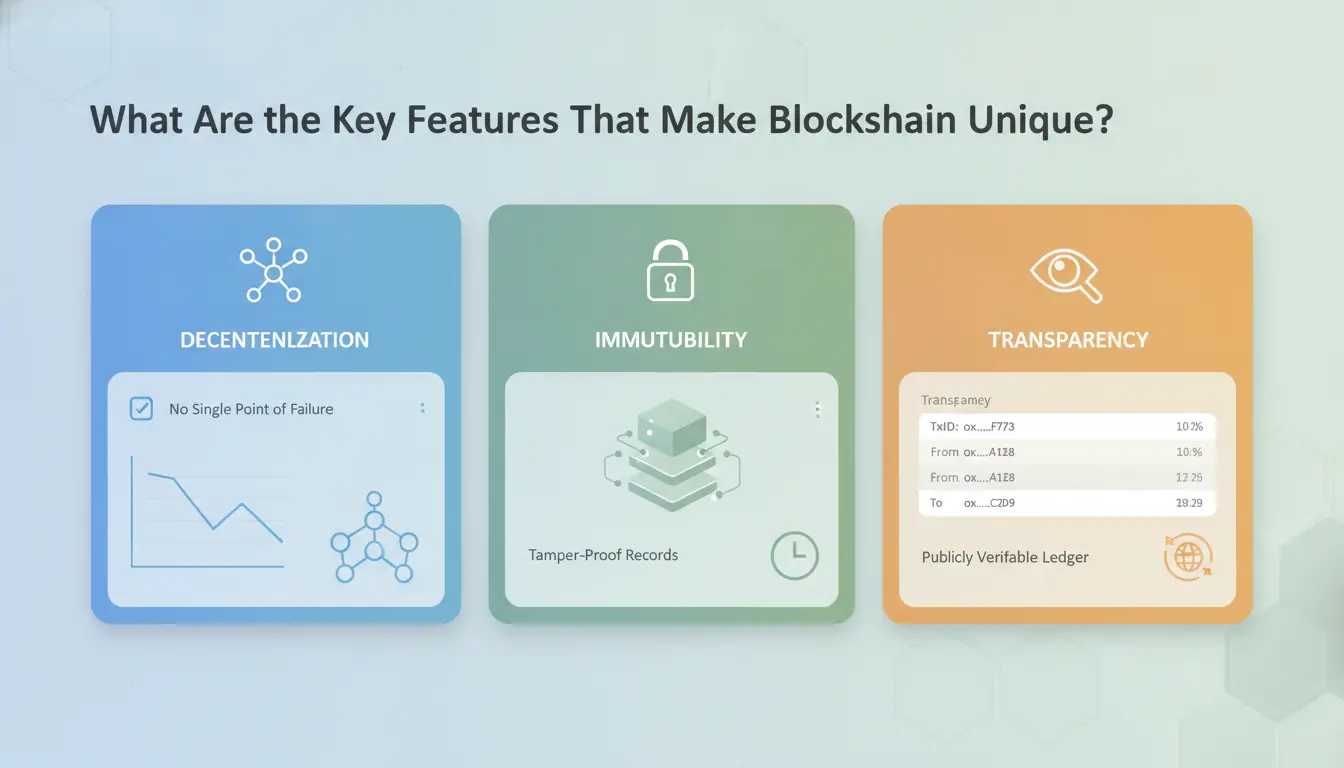
Understanding what is blockchain means looking at four core features: decentralization, distributed ledgers, immutability, transparency, and cryptography. These features make blockchain different from regular databases or cloud storage.
Decentralization and Distributed Ledgers
Blockchains are not run by one company or government. Instead, copies of the ledger are stored on many computers, called nodes. If one node goes down, the rest keep working. No one can secretly change records because the network checks every transaction. For a real example, the Bitcoin blockchain has thousands of nodes worldwide. This setup removes single points of failure, which banks or cloud services can’t avoid.
A distributed ledger means every change is copied across the network. If someone tries to cheat, the other nodes will notice and reject the fake change. That’s why trust is built into the system, not given to one person.
Immutability and Security
Once a block is added, its data cannot be changed. This is called immutability, and it’s enforced with cryptography. Every block contains a unique code, or hash, created from its data and the previous block’s hash. If even one letter changes, the code no longer matches, and the block is rejected.
Cryptography also protects who can make changes. Only those with the right digital keys can send transactions. Even if you know how does blockchain work, hacking the system means breaking tough math problems, not just guessing a password.
Transparency and Smart Contracts
Most blockchains, like Ethereum, let anyone view the history of transactions. This transparency means you can check balances, track payments, or search for fraud.
Smart contracts are bits of code that run automatically when certain rules are met. For example, a payment can be sent only if goods arrive. This helps automate deals, removing the need to trust a middleman. You can find blockchain technology explained in detail at IBM’s blockchain page.
What Are the Main Types of Blockchain Networks and Why Do They Matter?
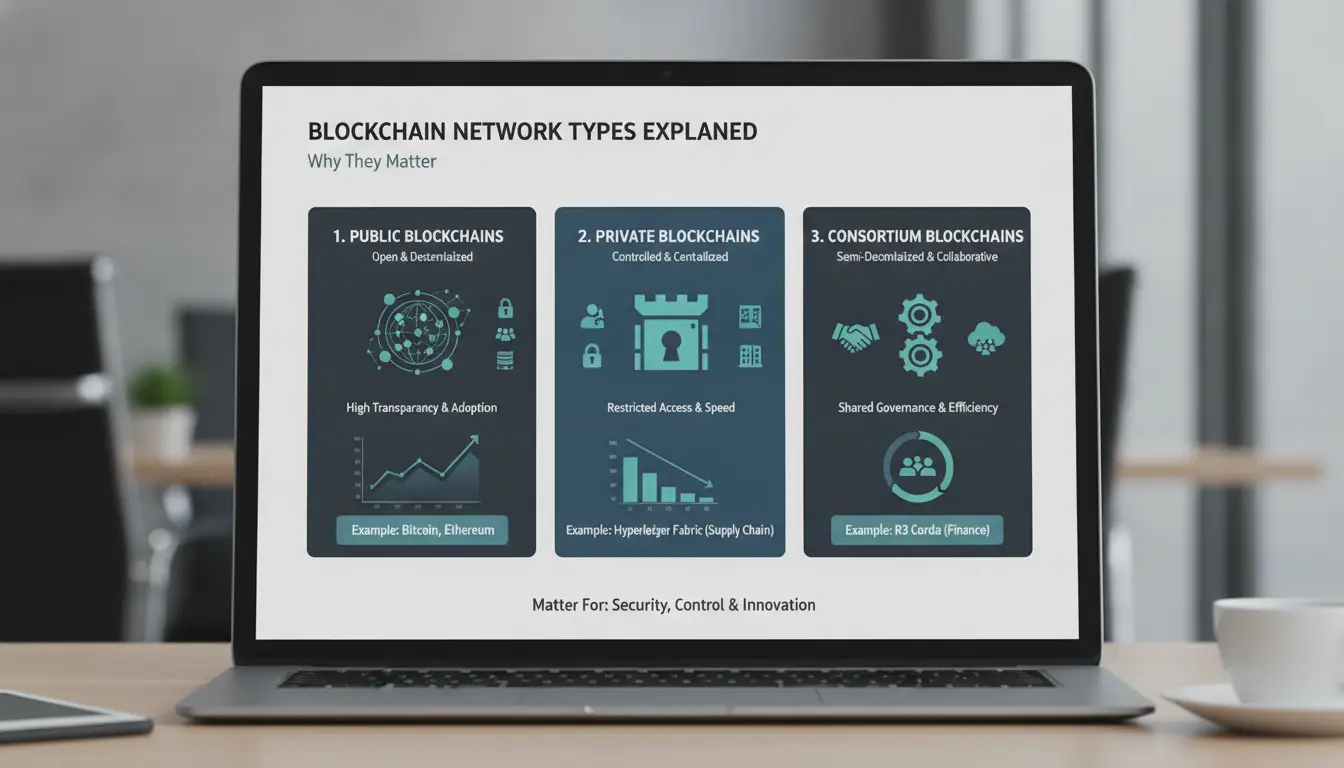
Not all blockchains work the same way. If you search "what is blockchain," you’ll see talk about trust, security, and transparency, but these depend on how the network is set up. The type of blockchain network changes who controls data, who can join, and how much privacy you get.
Public vs Private Blockchains
Public blockchains, like Bitcoin and Ethereum, are open to everyone. Anyone can view records, join the network, and help validate transactions. This means public chains are usually more transparent, but every action is visible, and changes are nearly impossible to reverse. Use cases include cryptocurrencies, open finance, and transparent voting.
Private blockchains, in contrast, only allow approved users. A single company or group controls access and validation. Data is hidden from outsiders, and rules can be changed quickly if needed. Private chains are common in supply chain tracking, business contracts, and secure recordkeeping.
| Type |
Who Can Join |
Who Validates |
Privacy Level |
Typical Use Case |
| Public |
Anyone |
Anyone |
Low |
Crypto, public voting |
| Private |
By invite |
Approved only |
High |
Supply chain, business deals |
Source: Ethereum.org
Consortium Blockchains: Shared Control
Consortium blockchains are run by a group of organizations. No single company holds all the power. Each member helps validate transactions, and rules are agreed on together. This setup works well when competitors need to share data but don’t fully trust each other, like banks settling payments or companies tracking food safety. Shared control reduces single points of failure and keeps everyone honest.
Permissioned vs Permissionless Networks
Permissioned networks restrict who can join or change records. Permissionless networks stay open to all. The main trade-off? Permissioned blockchains offer more privacy and control, but may rely on trust in the operators. Permissionless networks, like most public chains, are open but less private.
The biggest difference comes down to control and trust, how much you want to share, and who gets to check or change the records. For a deeper dive, see blockchain technology explained.
What Risks and Common Mistakes Should Beginners Watch Out for with Blockchain?
Even after understanding what is blockchain, beginners often run into problems that cost them money or privacy. Blockchain technology explained in guides rarely covers the mistakes users actually make. Below are the main risks and errors you need to watch for, whether you’re using crypto, building on platforms, or just exploring how does blockchain work.
Security Risks: Hacks, Scams, and Data Leaks
Hackers target blockchain users in ways most people don’t expect. If your private keys or seed phrases end up on a compromised device, anyone can drain your wallet. Malware that grabs clipboard data or browser extensions with hidden permissions are common entry points. Scams are everywhere in crypto, fake token launches, phishing links, and “giveaway” sites often trick new users. Because blockchains are public, leaking sensitive info in a transaction or smart contract exposes it forever. The most critical insight: blockchain transactions are permanent, and mistakes can’t be reversed, making security checks vital every time.
Mistakes That Lead to Loss of Funds
Losing private keys means permanent loss, no bank or company can restore access. Beginners often forget to back up their seed phrases, or store them in insecure locations. Phishing attacks are common: fake wallets, cloned websites, and “support” chats trick users into revealing credentials. You can check warnings on sites like CoinMarketCap before sending funds to unknown projects. Even trusted exchanges like Binance warn users about fake customer support. For airdrop hunters, missing out on rewards often happens because they use the wrong address or fall for social media scams.
Misunderstanding Blockchain Limitations
Not all blockchains are anonymous. Public chains like Bitcoin record every move; anyone can look up your transactions. Some users ignore gas fees, small costs for every action, which can spike during busy periods. Delays also happen: a transaction might take minutes, or even hours, to confirm if the network is overloaded. Believing “blockchain definition” means total privacy usually leads to disappointment. Always check how does blockchain work for your platform before trusting a ledger.
How to Manage Multiple Crypto Accounts, Wallets, and Airdrop Participation Safely
Why Managing Multiple Accounts Gets Risky
Platforms like Binance or OKX watch for patterns that expose account “farms”, for example, logging into several wallets from the same device or IP. If you reuse browser fingerprints, or skip proxy setup, you risk account linking and mass bans. These platforms use browser fingerprinting and IP checks, so even small mistakes can cost you every airdrop or farming reward.
Safer Workflow for Crypto, Airdrops, and Farming
A safer workflow means each wallet and exchange account gets its own isolated profile with a unique browser fingerprint and proxy. This breaks the link between accounts. For airdrop farming, automating tasks like social follows or routine logins reduces manual errors. Tools that handle this can make a big difference.
How DICloak Helps Secure Multi-Account Operations
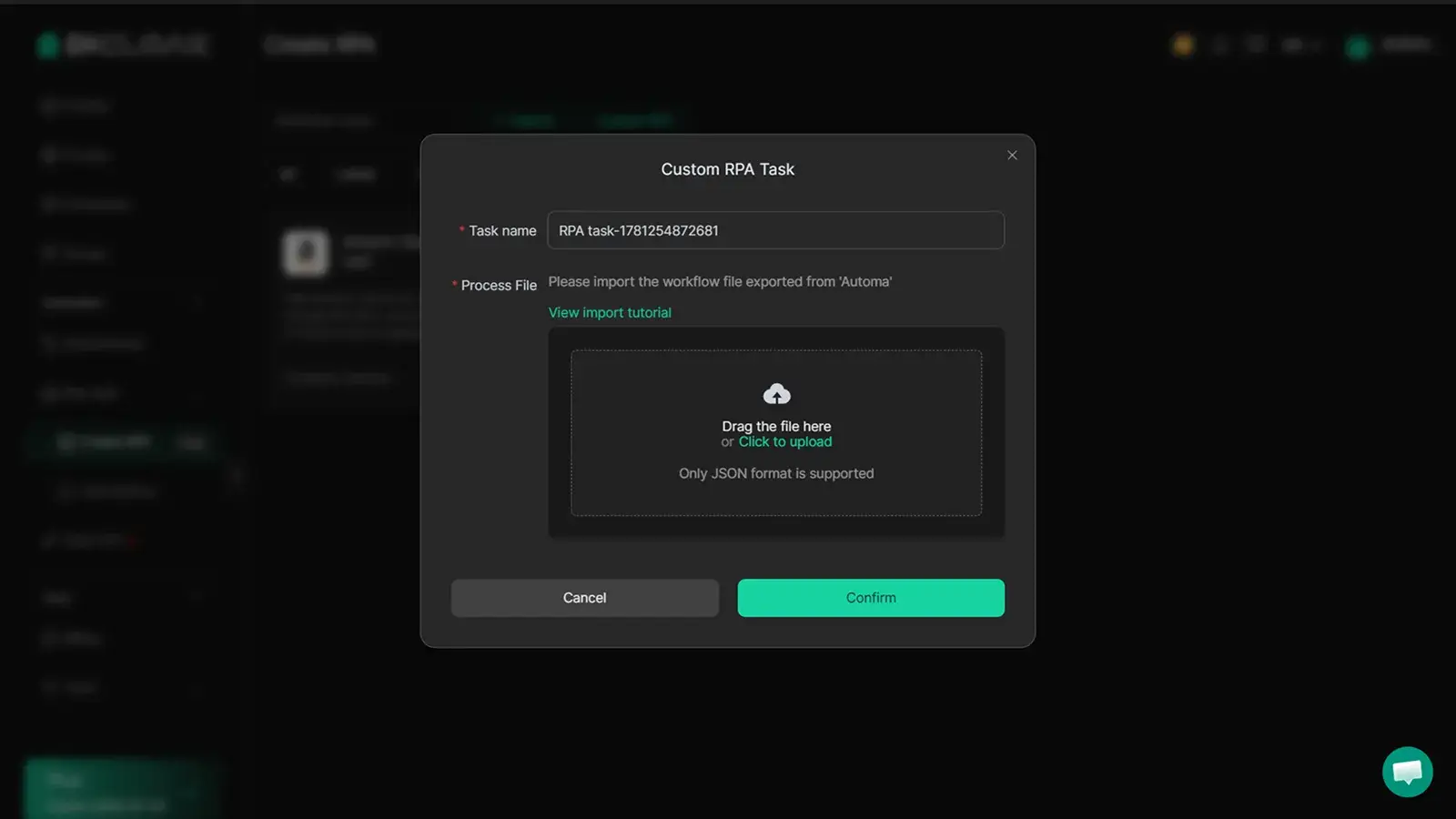
You can use DICloak to set up unique browser profiles for every wallet or exchange, each tied to its own proxy. This slashes the chance of bans. Bulk automation features, like RPA for airdrop tasks, cut manual work and lower risk. With tools like DICloak, the core promise of what is blockchain, trust built without a central gatekeeper, becomes more practical for real users.
What Are the Real-World Uses of Blockchain Beyond Crypto?
Blockchain isn’t only about digital coins. If you search “what is blockchain,” you’ll see it’s a system for recording data securely, but the real impact comes from how it’s used outside crypto. Here’s where blockchain technology explained gets practical.
Blockchain in Finance and Payments
Banks and payment firms use blockchain to move money across borders in minutes, not days. For example, Ripple lets businesses send payments worldwide with less risk of fraud. Because every transaction is visible, it’s harder for anyone to hide mistakes or change records. The biggest shift is transparency, payments can be traced and verified, cutting out hidden fees and errors.
Supply Chain and Logistics
Supply chains rely on blockchain to track goods from factory to store. IBM’s Food Trust helps companies spot fake products and find where items came from. If something goes wrong, the chain of records shows exactly when and where it happened. This reduces fraud and makes recalls much faster.
Healthcare, Media, and Other Industries
Hospitals use blockchain to share patient data safely. Only those with permission can access records. In media, artists and publishers use blockchain to protect copyrights and prove ownership. A public ledger helps manage digital rights and prevents unauthorized use, as seen on OpenSea for NFTs.
When Does Blockchain Make Sense, and When Is It Overhyped?
Most people ask "what is blockchain" thinking it's always a game-changer. In reality, it only solves specific problems. Knowing when blockchain technology adds real value, and when it’s just extra cost or buzz, means the difference between a useful project and wasted effort.
Scenarios Where Blockchain Adds Real Value
Blockchain makes sense when you need trust without a central authority. For example, tracking goods in a supply chain gets easier when every step, factory, shipping, and delivery, gets recorded across many computers. This stops any single company from secretly changing records. In voting systems, blockchain can help by making vote counts public and hard to tamper with. This works best when you need automated, transparent workflows that anyone can audit. Smart contracts on the Ethereum network let actions happen without manual checks. You also see real value in situations where people don’t trust each other but still need to share data.
Cases Where Blockchain Is Not the Best Fit
There are plenty of cases where simple databases do the job better. If you don’t need public records or aren’t worried about tampering, classic solutions like MySQL or PostgreSQL cost less and run faster. Blockchain systems can get expensive. Running nodes, storing data, and keeping up with updates add real costs. If your project doesn’t need distributed trust or transparency, blockchain usually adds complexity without solving anything new. For private records, speed matters more than blockchain definition.
| Use Case |
Blockchain Needed? |
Simpler Option |
| Supply chain tracking |
Yes |
No |
| Internal HR database |
No |
Yes |
| Public voting |
Yes |
No |
Table: When blockchain makes sense vs. simple database (see Wikipedia: Blockchain and Ethereum)
How to Evaluate Blockchain Projects Critically
Spotting hype versus substance starts with asking real questions. Are you getting true transparency, or could a regular database work? Does the project rely on blockchain features like distributed trust or automated rules? Before investing or building, check if the team explains how does blockchain work in their system. If no one can show why blockchain is required, it’s probably just hype. Always look for clear logic, not buzzwords.
Frequently Asked Questions
Is blockchain really anonymous?
Most blockchains are pseudonymous, not truly anonymous. When using blockchain technology, your transactions are tied to a wallet address, not your real name. However, with enough effort, someone can sometimes link an address to a real person. Privacy-focused blockchains, like Monero, work differently, but standard blockchains like Bitcoin offer only basic privacy.
Can I use blockchain for non-crypto purposes?
Yes, blockchain technology is used for more than just cryptocurrency. For example, supply chains use what is blockchain to track goods and prevent fraud. In healthcare, blockchains help share patient data safely. Even voting systems and digital identity projects use blockchain to improve trust and security.
What happens if I lose my private key?
If you lose your private key, you lose access to your blockchain account and any funds it holds. There is no way to reset or recover the key because blockchain is designed to be secure and decentralized. Always back up your private key in a safe place to avoid permanent loss.
How do blockchains prevent fraud?
Blockchains prevent fraud by being open and unchangeable. Every transaction is recorded for everyone to see, making cheating very hard. When people ask "how does blockchain work," the answer is that it uses consensus rules and stores data in blocks that can’t be changed, making records trustworthy.
Do I need special software to manage multiple crypto accounts?
Managing many blockchain accounts can be confusing. Special tools like DICloak help users handle multiple accounts safely and easily. These tools keep your private keys secure and let you switch between accounts without logging in and out. Using proper software is important when dealing with blockchain technology explained.
Blockchain is a decentralized technology that enables secure, transparent, and tamper-resistant record-keeping across various industries. Its ability to build trust without the need for intermediaries is transforming how data and value are exchanged. Try DICloak For Free
 Web Proxy Tools
 Free Tools
 Cookie Plugin
 UA Generator
 MAC Address Generator
 IP Generator
 IP Address List
 2FA Code Generator
 World Clock
 Anonymous Check
 WebRTC Leak Test
 UUID Generator
 Free Web Proxy Site
 Proxy Checker
 FB Ad Checker
 AI Web Scraping
 Free SMM Tools
 Twitter Shadowban Checker
 Instagram Name Checker
 UTM Generator
 Username Generator
 AI Hashtag Generator
 LinkedIn Headline Generator
 Social Media Image Resizer