You’ve probably seen deals on AliExpress that seem too good to pass up, but every time you get close to ordering, the same question pops up: is aliexpress trustworthy? Between stories of lost parcels, fake tracking, or items that never match the photos, it’s hard to know if you’re about to grab a bargain or get stuck with a headache.
Some buyers say AliExpress is legit and share photos of cheap gadgets or clothes that actually showed up. Others warn that you can’t trust AliExpress sellers, pointing to slow refunds, poor support, or goods that vanish once shipped. The real trouble is, even people who buy online all the time still get caught by changing seller tactics, vague shipping promises, or payment disputes that drag on for weeks.
What most guides miss is that risk on AliExpress isn’t evenly spread. A few careful checks before you buy, like reading the seller’s history the right way, avoiding “just launched” stores, and understanding how payment protection actually works, can cut your odds of a problem much more than just reading five-star reviews. But skip these steps, and even experienced shoppers can get burned by bait-and-switch listings or sellers that disappear after a sale.
Here’s how to spot real warning signs before you place that order.
What Makes People Question If AliExpress Is Trustworthy?
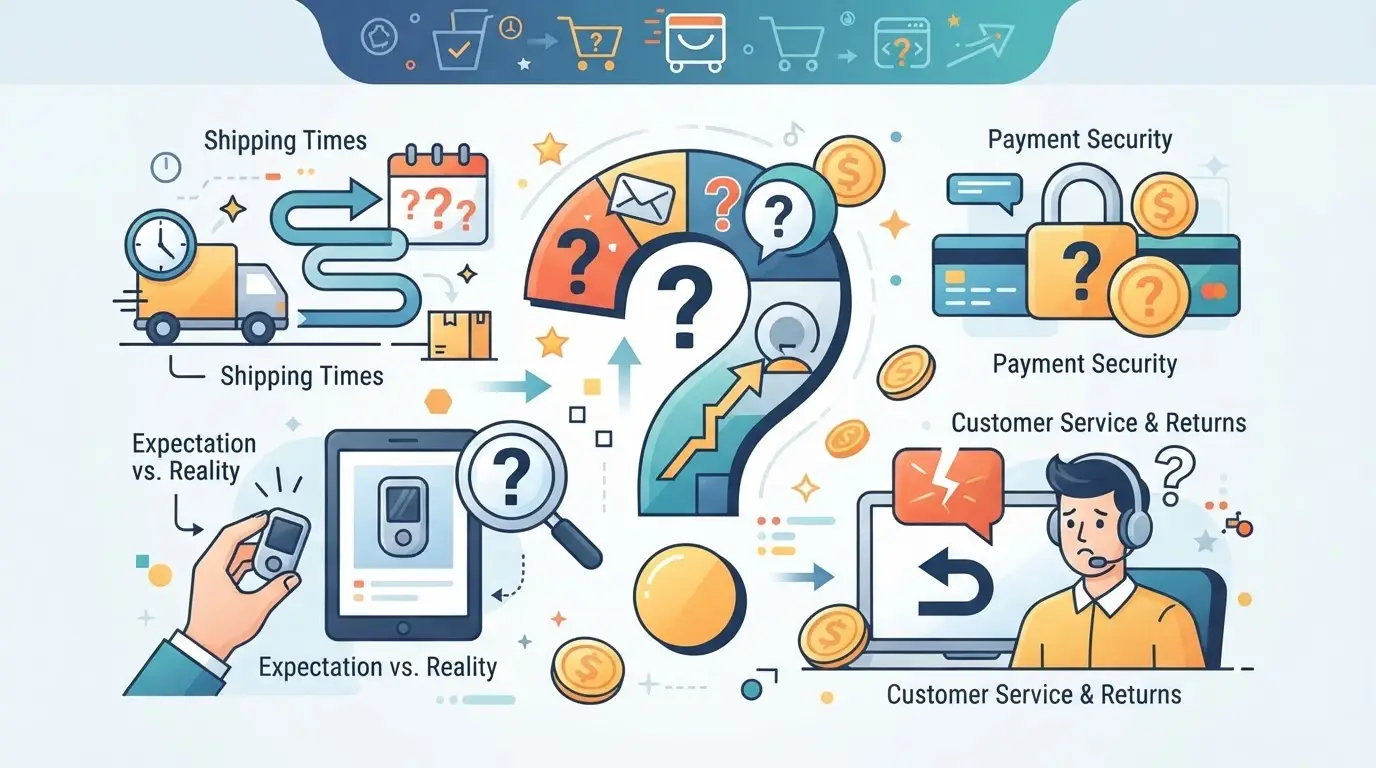
Buyers ask “is AliExpress trustworthy” because real losses aren’t rare, stories of missing packages, fake goods, and impossible refunds keep spreading, even among people who know how online shopping works. The risk isn’t just theoretical; it shows up whenever a deal goes sideways and support drags out for weeks.
Past Scams and Negative Reviews
Viral threads about counterfeit headphones, switched products, or “delivered” orders that never arrive shape how people see AliExpress. One story of a $100 gadget turning out to be a box of rocks can leave thousands wary, especially when screenshots of ignored disputes or vanished sellers circulate in reviews and forums.
Unfamiliar Sellers and Platforms
AliExpress isn’t like Amazon or eBay. Instead of buying from a single brand or a tightly controlled marketplace, you’re dealing with thousands of small shops, many completely unknown outside AliExpress itself. This setup means the site acts as a middleman, but it also opens the door for sellers to set up, sell aggressively, and vanish if trouble starts. That’s why you’ll see two sellers offering the same item at wildly different prices, or one store with hundreds of listings but no real address or customer service. When a problem hits, the platform’s support might step in, but the process can be slow or unclear, especially if the seller stops responding or closes the store. The core issue is that trust on AliExpress depends on individual sellers, not just the platform, so even if the site itself is legit, each purchase is its own risk calculation.
Payment, Delivery, and Refund Concerns
- Buyers worry about paying and never seeing the product, especially with long shipping times.
- Disputes often feel stacked against the buyer if tracking shows “delivered” but nothing arrives.
- Refunds can take weeks or get denied if evidence is weak or a seller pushes back.
The mix of unknown sellers, slow or unreliable shipping, and support that can’t always resolve cross-border disputes quickly means trust is earned one purchase at a time. Next, the real test is figuring out how to judge if a specific AliExpress seller deserves your order.
How Can You Tell If an AliExpress Seller Is Trustworthy?
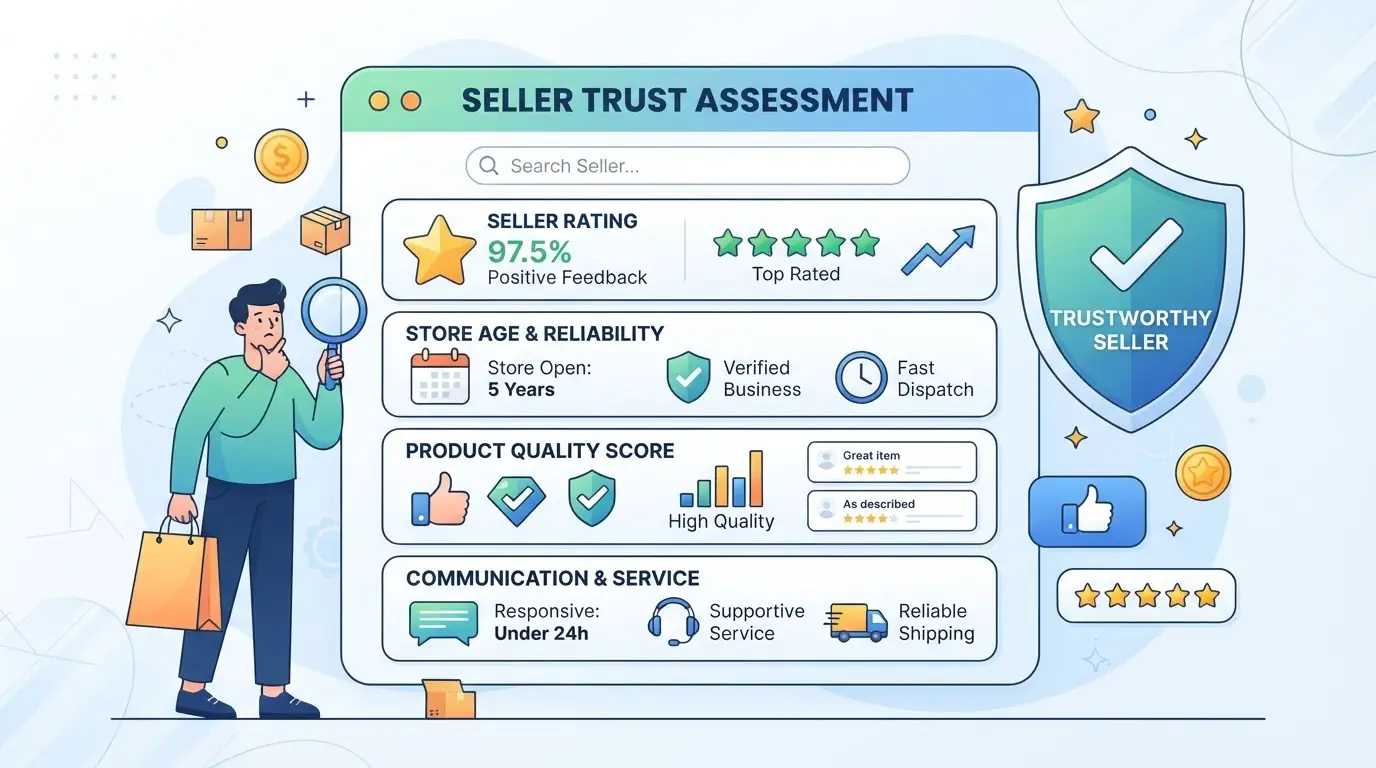
Most buyers scan star ratings and reviews, but that only tells part of the story. If you want to avoid refund headaches or sellers who vanish, focus on a few checks that reveal how a seller really operates, not just how they look at first glance.
Check Seller Ratings and Feedback
A store with a 95%+ positive rating and several thousand orders signals some real-world stability, but don’t stop there. Read recent feedback, not just the top highlights. Look for patterns, like repeated complaints about fake tracking numbers, slow shipping, or low-quality goods. If buyers mention “item not as described” more than once or say returns were ignored, treat that as a red flag.
Short answer: A high rating means little if recent reviews show a surge in problems. Scan a mix of 1-star and 3-star feedback to spot issues that don’t show up in the percentage.
Look for Verified Badges and Store Age
Shops that have been open for years and show official verification are less likely to vanish overnight. Quick checks:
- Look for the “Verified Seller” or “Top Brand” badge beside the store name.
- Prioritize stores with at least 2+ years in business and a long sales record.
- Avoid shops with launch dates under 6 months, these are where most “disappearing seller” complaints come from.
Analyze Product Listings for Red Flags
Some scams hide in the product details. If a listing’s price is much cheaper than everywhere else, or the photos look copied from a brand’s website, slow down. Genuine sellers use original images and list realistic shipping times.
Quick checklist:
- Skip listings with prices 30% lower than similar items from top-rated stores.
- Watch for blurry, watermarked, or mismatched product photos.
- Be wary if the description is full of generic claims and missing key specs (like material, size, or brand).
If any of these signals stack up, it’s safer to keep searching than to risk a store that only looks good on the surface. Next up: the most common AliExpress scams and how to avoid them, so you know exactly what to watch for before you buy.
What Are the Most Common AliExpress Scams and How Can You Avoid Them?
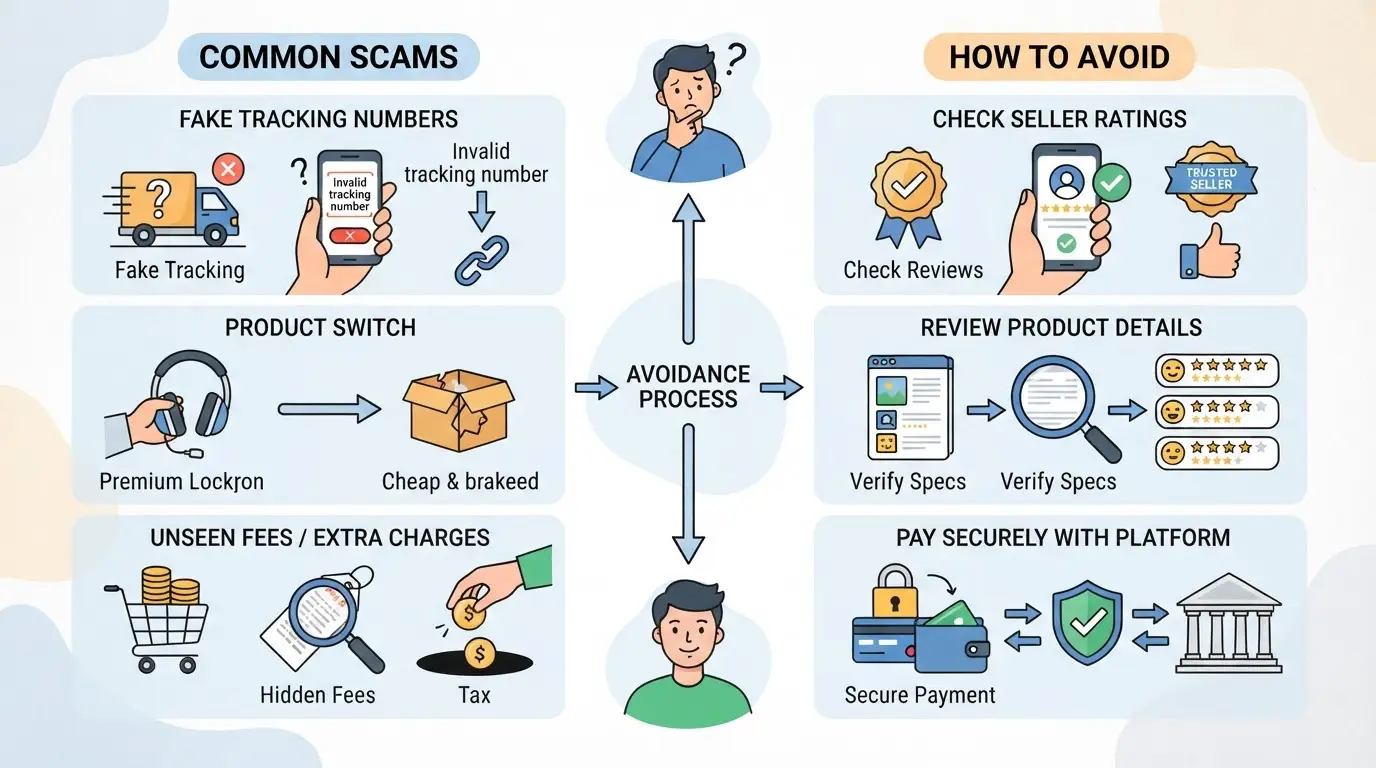
Even buyers who check seller ratings still run into scams on AliExpress. The real risks hide in product categories where rules are easy to bend, and in shipping tricks that make disputes hard to win.
Counterfeit and Fake Products
Fakes show up most in electronics, branded clothing, and beauty items. If a deal looks too good or the brand is spelled strangely, skip it , these listings often vanish after a few weeks, leaving you with knockoffs or nothing at all.
Non-Delivery and Empty Packages
Scammers sometimes mark orders as shipped, then send an empty envelope or nothing at all. If your tracking shows “delivered” but you never got the item, the dispute process can stall or even close in the seller’s favor.
Warning:
- Disputes get harder to win if a package is marked delivered by a local courier, even if it’s empty.
- Safer move: Always record unboxing on video and check the delivery address on the package. If the tracking number shows delivery but you received nothing, file a dispute right away and include evidence , waiting too long can get your case auto-closed.
Fake Tracking Numbers and Brushing
Some sellers enter fake tracking numbers or send random parcels just to trigger “delivered” status. This closes your dispute window before you notice. If tracking links to a different region or the parcel doesn’t match your order, push for a refund , brushing scams count as non-delivery under buyer protection rules.
How Does AliExpress Buyer Protection Actually Work?
If you run into a problem with an AliExpress order, like an item not arriving or being completely wrong, the platform’s buyer protection gives you a way to dispute the transaction and request a refund. But the real safety net has limits, and knowing how it works is what separates a mild hassle from a total loss.
How the Dispute and Refund Process Works
Buyers can open a dispute for most issues, but the process is strict about timing and proof. Here’s what actually matters:
- Open the dispute within the protection window (usually 15 days after the order is marked delivered).
- Provide clear evidence, such as tracking screenshots, photos of damage, or communication with the seller.
- Respond quickly, if you miss system prompts, the case can auto-close in the seller’s favor.
If you follow these points, you’ll have a much stronger case. If the seller refuses, AliExpress steps in as a final reviewer, but only if you’ve supplied real proof.
What Buyer Protection Does NOT Cover
AliExpress buyer protection does not cover every bad outcome. You’re on your own if a package is marked delivered but someone else signs for it, or if you accept a fake tracking number but wait too long to act. For example, some sellers upload a shipping number that looks valid but leads nowhere, if you don’t flag this before the protection window closes, support may side with the seller. The biggest gap: once you confirm delivery or let the dispute window expire, you cannot reopen a claim, no matter what turns up later. Many people think buyer protection acts like a credit card chargeback, but after that window closes, your options drop to nearly zero.
If you want to avoid these traps, you need a checklist that fits real AliExpress risks, not just the official help page.
What Steps Should You Take to Protect Yourself When Buying on AliExpress?
Skipping basic checks is where most people get burned, not by AliExpress itself but by rushing through sellers or ignoring the real warning signs. A tight checklist, done before and after you pay, cuts risk far more than reading product reviews or hoping buyer protection will fix everything.
Before You Buy: Pre-Purchase Checks
A seller with thousands of sales and clear feedback is rarely a problem, but a “brand new” store offering deep discounts often is. Always check the store launch date, not just star ratings. Read negative reviews from the last six months, not just the top page. Make sure the payment and shipping options are standard, anything that says “contact seller for payment” or “special shipping” is a red flag. The fastest way to get caught is to skip these checks and trust a low price.
During Purchase: Payment and Communication Tips
- Use AliExpress’s official payment system, never pay through outside links or direct transfers.
- Keep all communication inside AliExpress chat for a record if you need to open a dispute.
- If a seller pressures you to confirm delivery before the product arrives, stop and contact AliExpress support.
After Purchase: Tracking and Dispute Steps
It’s easy to relax once you’ve paid, but that’s when small mistakes stack up. Orders that go quiet for days or tracking numbers that never update are the main warning signs.
- Check the tracking number every three days, if it shows no movement after a week, message the seller right away.
- If you spot fake tracking or missing updates, open a dispute before the protection window closes.
- Save screenshots of all chats and order status changes in case you need to prove your case.
For teams managing several accounts, the next step is handling multi-account risks without tripping AliExpress’s security filters.
How Can E-Commerce Teams Manage Multiple AliExpress Accounts More Safely with DICloak?
For e-commerce teams running several AliExpress accounts, the risk isn’t just about getting scammed, it’s about keeping each account’s workflow separate, avoiding accidental mix-ups, and making sure only the right people touch the right session. While most buyers only think about “is AliExpress trustworthy,” business users have to juggle login environments, network setups, and team handoffs. DICloak doesn’t manage AliExpress itself, but it gives operators the right controls to run separate browser profiles, assign proxies, and control team access, reducing confusion and tightening up account management.
Set Up Isolated Browser Profiles and Fingerprint Settings for Each Account
Operators can create a dedicated browser profile in DICloak for every AliExpress account, ensuring that cookies, login sessions, and browser-identifying details don’t overlap. Each profile lets users set the operating system, User Agent, timezone, and more, so each account operates from its own configured environment. This keeps session data from mixing, even if multiple accounts are open at once. The scope here is limited to browser-profile management and does not affect AliExpress’s own account controls. 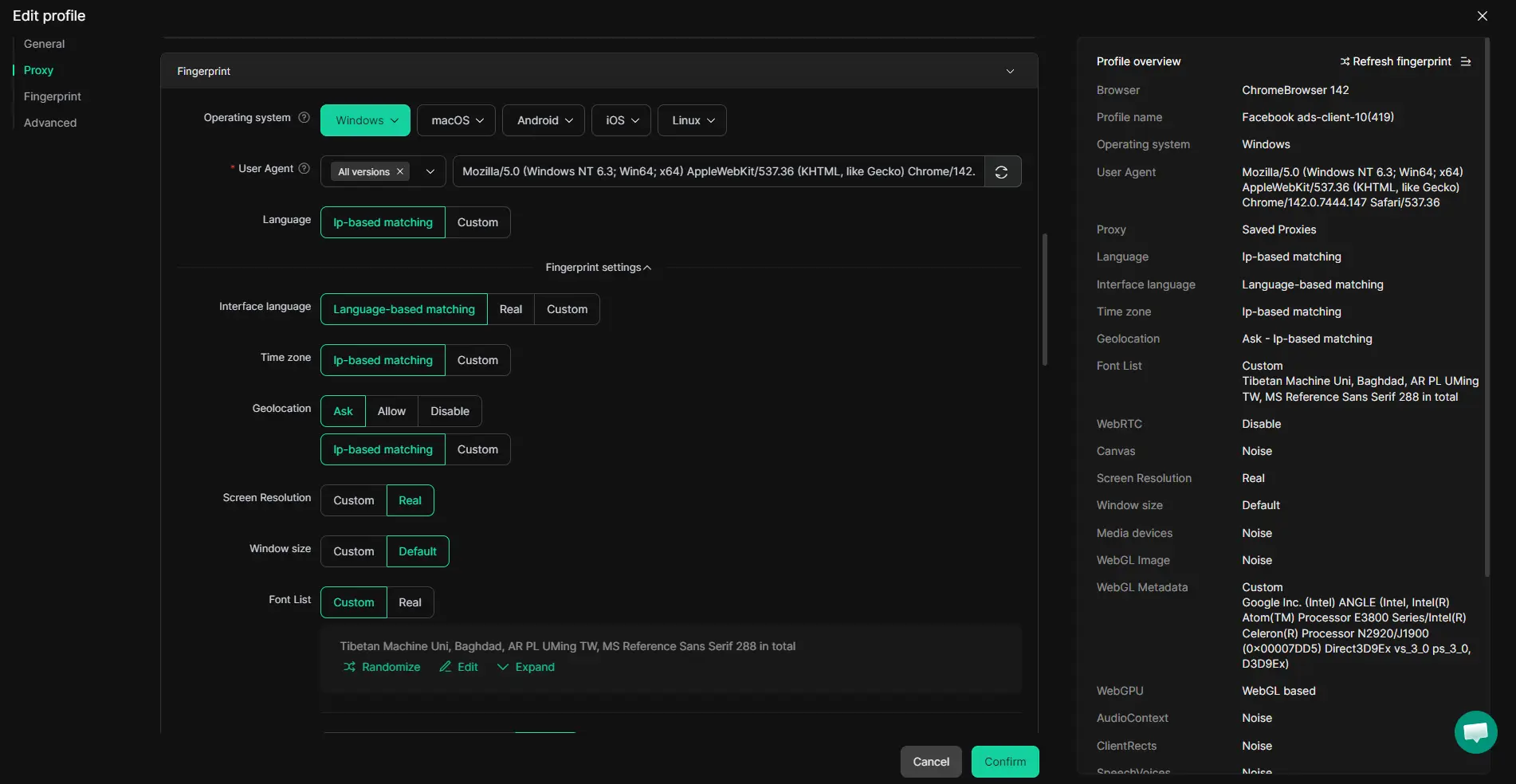
User-Provided Proxy Configuration for Assigned Profiles
Account workflows sometimes require a separate network route for each login. Users can assign a proxy to each DICloak profile by entering their proxy details and testing the connection. This way, each account runs over its own network path, helping with region-specific sourcing or split operations. Operators are responsible for proxy choice and setup; DICloak only stores and applies the settings per profile. 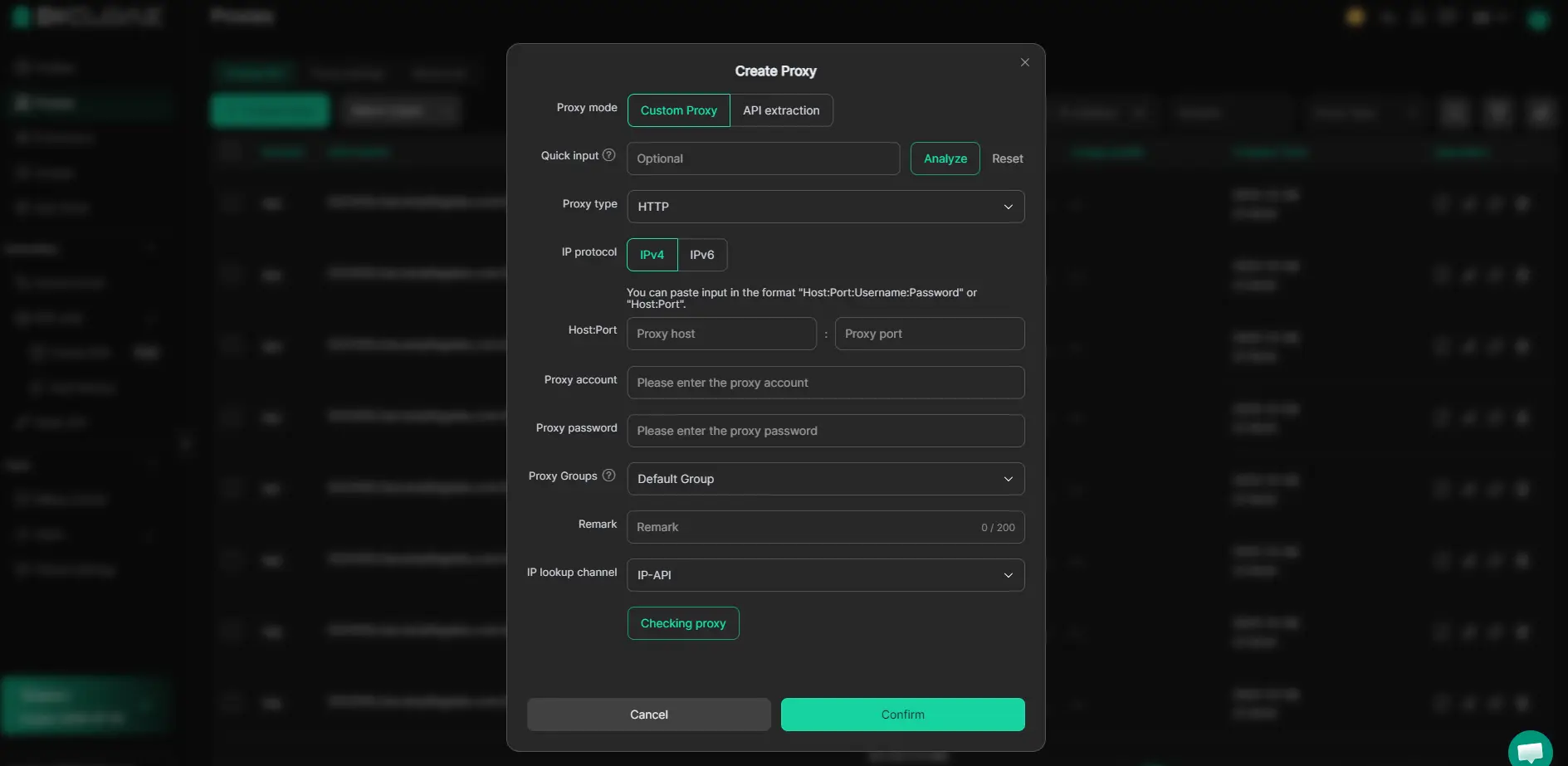
Control Team Member Permissions and Access to Profiles
Admins can group team members and set which browser profiles they can view or use. By assigning permissions, only approved staff see or act on a given account profile, reducing accidental changes or leaks. Permission controls apply inside DICloak; they don’t change AliExpress-side roles or access. 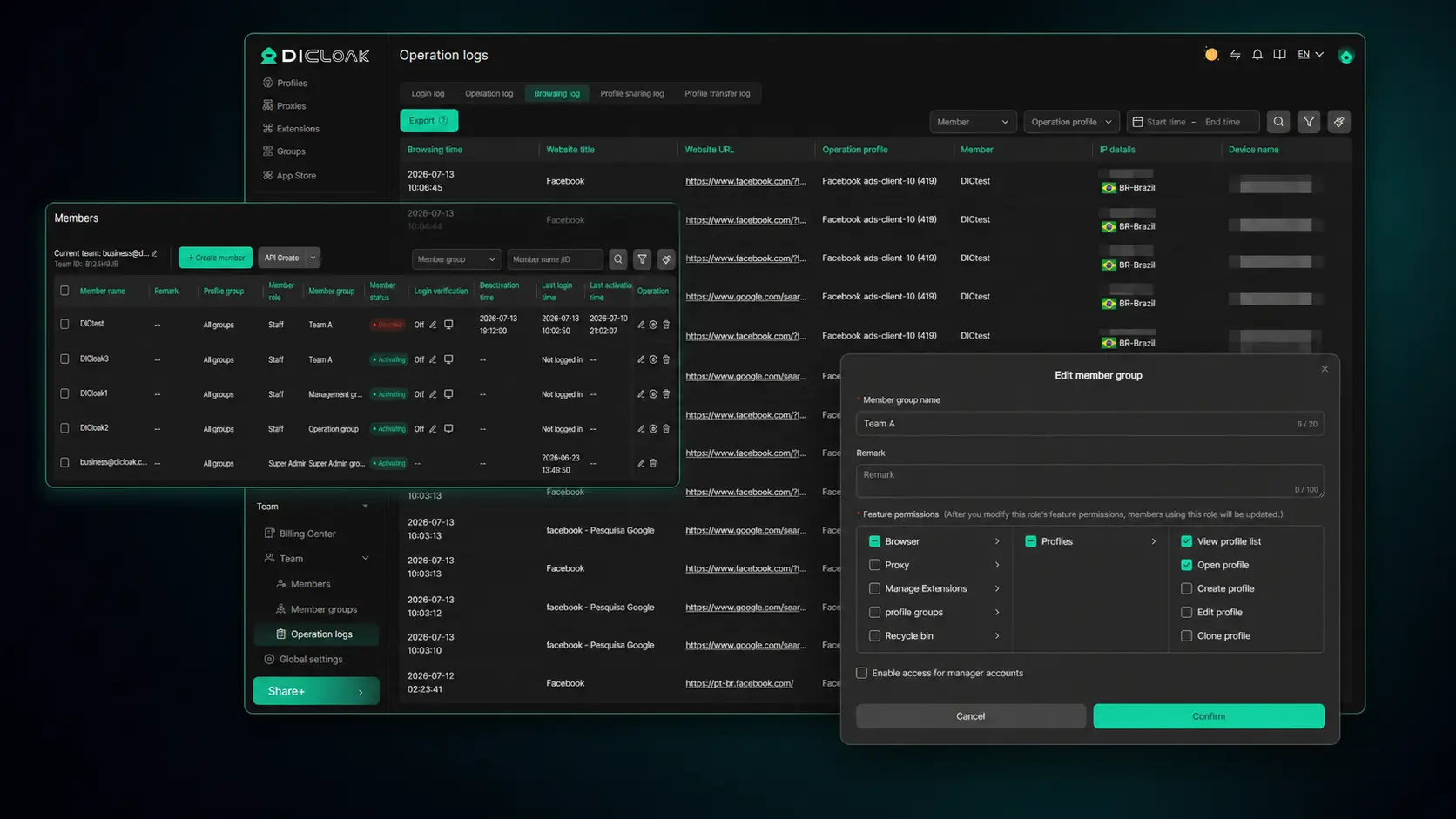
If your operation is growing, these controls help keep account workflows organized and reduce the chance of cross-account mistakes. Next, check for warning signs that make it too risky to buy from AliExpress at all.
When Is It Too Risky to Buy from AliExpress? Warning Signs and Safer Alternatives
Sometimes the answer to "is aliexpress trustworthy" is no, especially when these warning signs pop up. Before placing an order, check for issues that even experienced buyers can miss.
Red Flags That Mean You Should Walk Away
| Warning Sign |
What Happens If You Ignore It |
Safer Move |
| Seller or brand cannot be verified |
Goods may not arrive or could be fake |
Stick to top sellers with long histories |
| Seller asks you to pay outside AliExpress |
You lose all buyer protection, refund is unlikely |
Only pay through AliExpress checkout |
| No real photos or vague descriptions |
You risk getting the wrong item |
Choose listings with detailed, real images |
If you spot even one of these, it’s usually not worth the risk, most cases of lost goods or money begin with these warning signs.
When to Consider Other Platforms or Local Options
Amazon, eBay, and local stores almost always handle refunds faster, and you can verify sellers more easily. If an AliExpress deal seems too risky or slow, switching to a local or well-known platform can save time and hassle.
Is AliExpress Trustworthy for Business Buyers and Teams?
AliExpress can work for business buyers, but bulk orders and repeat sourcing raise risks you don’t see with one-off shopping, especially if you skip supplier vetting or rely on chat promises.
Bulk Orders and Supplier Relationships
- Check supplier track record: avoid “new” badges and confirm order volume history.
- Use formal purchase contracts, not just chat screenshots.
- Negotiate escrow or staged payments for large orders, never wire full amounts up front.
Managing Multiple Orders and Accounts Safely
When teams place many orders or split work across accounts, workflow mistakes multiply risk. One missed dispute deadline or mixed-up shipping address can cost thousands. Use clear account assignment and written processes, otherwise, you’ll lose track of who’s responsible for each order, making it much harder to resolve problems if something goes wrong.
Frequently Asked Questions About is aliexpress trustworthy
Is AliExpress trustworthy for expensive electronics?
AliExpress can be riskier for expensive electronics because some sellers list fake or low-quality products. To reduce your risk, check seller ratings, read recent reviews, and look for stores with long histories. Always check photos and ask questions before buying. Using official stores and avoiding deals that seem too good to be true also helps.
Can you get a refund if you get scammed on AliExpress?
Yes, you can get a refund through the AliExpress dispute process. You’ll need to provide clear evidence, like photos or tracking info. Most buyers who provide proof get their money back, but it may take a few weeks. Persistent follow-up and careful documentation improve your chances of a successful refund.
How long does shipping from AliExpress usually take?
Shipping from AliExpress usually takes 2 to 6 weeks. Delivery time depends on the shipping method, seller location, and customs checks. Free shipping options are often slower. Delays can happen during busy seasons or due to customs. Some items may arrive faster if you pay for premium shipping.
Is it safe to use your credit card on AliExpress?
AliExpress uses secure payment systems to protect buyers’ information. Credit card details are not shared with sellers. For extra safety, use cards with fraud protection, avoid public Wi-Fi, and never share personal info in chat. The platform holds payment until you confirm you received your order.
What should I do if my AliExpress order never arrives?
First, track your package using the tracking number provided. If it’s delayed, contact the seller for updates. If there’s no solution, open a dispute before the buyer protection period ends. Provide screenshots and proof of non-delivery. AliExpress will review your case and may issue a refund if your claim is valid.
When shopping on international marketplaces, it's wise to review seller ratings and buyer feedback before making a purchase. Taking a few extra moments to research can help you spot trustworthy deals and minimize potential risks. Try DICloak For Free
 Web Proxy Tools
 Free Tools
 Cookie Plugin
 UA Generator
 MAC Address Generator
 IP Generator
 IP Address List
 2FA Code Generator
 World Clock
 Anonymous Check
 WebRTC Leak Test
 UUID Generator
 Free Web Proxy Site
 Proxy Checker
 FB Ad Checker
 AI Web Scraping
 Free SMM Tools
 Twitter Shadowban Checker
 Instagram Name Checker
 UTM Generator
 Username Generator
 AI Hashtag Generator
 LinkedIn Headline Generator
 Social Media Image Resizer