In the landscape of modern digital marketing and social media growth, account security is a primary operational requirement rather than a secondary concern. A compromised account represents more than a loss of access; it signifies a breach in data integrity and a potential threat to an entire growth infrastructure. This guide provides a technical analysis of how to identify, recover from, and proactively prevent scenarios where a TikTok account is hacked, with a focus on professional-grade isolation strategies and risk mitigation.
Why a TikTok Account Hacked Incident Happens in the First Place
Before looking at the warning signs, it helps to understand why a TikTok account hacked problem happens in the first place. In most cases, it is not caused by one single issue. It usually happens because several small security weaknesses build up over time and finally give attackers a chance to take control.
Common reasons behind a TikTok account hacked incident include:
- Weak or reused passwords If the same password is used across different platforms, one leaked password can put the TikTok account at risk too.
- Phishing links and fake login pages Many users enter their account details on fake TikTok login pages without realizing it. This is one of the fastest ways a TikTok account hacked case can happen.
- Unsafe downloads or infostealer malware Malware can steal cookies, saved passwords, and session tokens from the browser. This allows attackers to access the account without going through a normal login process.
- Poor browser and session management When multiple accounts are handled in one uncontrolled browser profile, cookies and session data are easier to mix, leak, or get abused.
- Loose team sharing practices For teams, risk grows when account access is shared through plain passwords instead of controlled permissions and isolated environments.
- Missing recovery and security settings If backup email, phone number, or extra security checks are not set up properly, attackers have a better chance of locking out the real owner after taking over the account.
In short, a TikTok account hacked situation is usually the result of weak account hygiene, unstable access environments, and poor security habits working together. Once these risks are understood, it becomes much easier to recognize the signs of compromise early and respond before the damage gets worse.
Identifying the Symptoms of a TikTok Account Hacked Scenario
Early detection is critical in mitigating the damage caused by unauthorized access. Malicious actors typically aim to secure the account by altering recovery information or utilizing the account for automated spam activities. Industry observation suggests that these breaches often originate from Infostealer malware, which exfiltrates data directly from local browser storage. Commonly observed indicators of compromise include:
- Unauthorized Credential Modifications: Immediate notification of changes to the primary email address, password, or associated phone number that were not initiated by the authorized user.
- Atypical Account Activity: The presence of unauthorized video uploads, sudden changes to the profile bio or links, and direct messages sent to followers without user consent.
- Session Hijacking via Token Theft: Scenarios where the account remains accessible on the user’s primary device, yet displays activity occurring from external locations. This is technically achieved when session tokens are stolen via malware, allowing an attacker to bypass traditional login barriers.
- Unexplained Security Alerts: TikTok security notifications regarding logins from unrecognized devices or geographic locations, particularly those utilizing suspicious network routes.
Critical Recovery Steps Following a TikTok Account Hacked Event
When a breach is confirmed, recovery must follow a systematic workflow to ensure the malicious actor is fully evicted from the account environment. Industry practice dictates a focus on session termination and credential reset.
The immediate priority is to regain control of the credentials. If access is still possible, users must utilize the "Log Out of All Devices" functionality immediately. This action is critical because it invalidates all current session tokens, effectively severing the connection for any malicious actor who may have bypassed 2FA through token theft. Following this, the password must be updated to a unique, complex string not utilized on any other platform.
If the credentials have been altered, the formal recovery process involves contacting TikTok support. Success in this area is highly dependent on providing original account creation data, such as the initial sign-up date, the device model used for registration, and the original email address or phone number.
The Golden Hour Pro-Tip: Industry observation suggests the existence of a "Golden Hour"—the first 60 minutes following a compromise. Recovery probability is highest during this window before a malicious actor can implement secondary security layers or successfully request a permanent change to the recovery email.
Understanding Why Your TikTok Account Hacked Risk Increases in Multi-Account Operations
E-commerce and social media marketing teams operating multiple accounts face escalated risks compared to individual users. The primary vulnerability lies in "Account Association." If one account within a cluster is compromised, TikTok's security algorithms may flag all associated accounts, leading to a "chain reaction" ban. This association is typically established through shared browser fingerprints or overlapping network signatures.
TikTok utilizes sophisticated tracking to identify Device IDs and MAC addresses. Even if credentials are kept separate, managing multiple profiles on a single machine without hardware masking allows the platform to link all accounts to a single physical entity. If one account is flagged within a "tiktok account hacked" scenario, the entire hardware profile—including the MAC address—is often blacklisted to prevent further malicious activity.
Session Cookie Vulnerabilities in Standard Browsers
Standard browsers are designed for consumer convenience, not professional security. They store session cookies in local directories that are frequently targeted by Infostealer malware. Once these cookies are exported, a malicious actor can impersonate the user's session perfectly, bypassing password requirements and Two-Factor Authentication (2FA) entirely by presenting a "valid" pre-authenticated session to the server.
Technical Mechanics of Browser Fingerprinting and Account Vulnerability
To protect high-value account assets, it is necessary to understand the methods used by platforms to track and identify users beyond simple IP addresses or cookies. These methods are frequently employed for Sybil attack prevention and device reputation scoring.
Canvas and WebGL Fingerprinting Techniques
Platforms utilize the system's GPU to render hidden images or shapes via the Canvas API and WebGL. Because of subtle variations in hardware manufacturing and driver versions, the resulting image is unique to that specific hardware configuration. This allows TikTok to generate a persistent identifier for Sybil attack prevention, ensuring that one device cannot easily masquerade as hundreds of different users.
Audio Context and Font Enumeration Logic
The way a computer processes audio—specifically the frequency response of the virtual audio stack—can be measured to create a fingerprint. Similarly, "Font Enumeration" identifies the exact list of fonts installed on a system. The combination of these data points facilitates device reputation scoring, making it statistically improbable for two different users to have the exact same system signature.
User-Agent Inconsistency and Flagging
Security checkpoints are often triggered by inconsistencies between a browser's User-Agent string (which claims a specific version and OS) and its actual technical behavior. Malicious actors often use poorly configured automation tools that fail to align these parameters, leading to immediate account flags or increased susceptibility to hacking through known browser vulnerabilities.
Transitioning from Reactive Recovery to Proactive Prevention when tiktok account hacked
For high-scale operations, standard browsing environments are inherently insufficient. Relying on simple "incognito" modes or manual logout procedures does not prevent fingerprinting or session hijacking. Industry practice suggests that environment isolation is the only reliable method to may mitigate the risk of mass account loss.
| Parameter |
Standard Browsing Environment |
Isolated Browser Profiles |
| Fingerprint Customization |
Exposed/Static |
Unique per account |
| Cookie Isolation |
Shared/Overlapping |
Strictly partitioned |
| Team Access Control |
Shared Credentials |
Granular Permission Management |
| Hardware Masking |
None |
Randomized Canvas/WebGL/Audio |
In this kind of setup, tools like DICloak become useful, because they help separate browser profiles, manage account access more clearly, and build a more stable environment for ongoing TikTok account security.
Mitigating TikTok Account Hacked Risks with DICloak Infrastructure
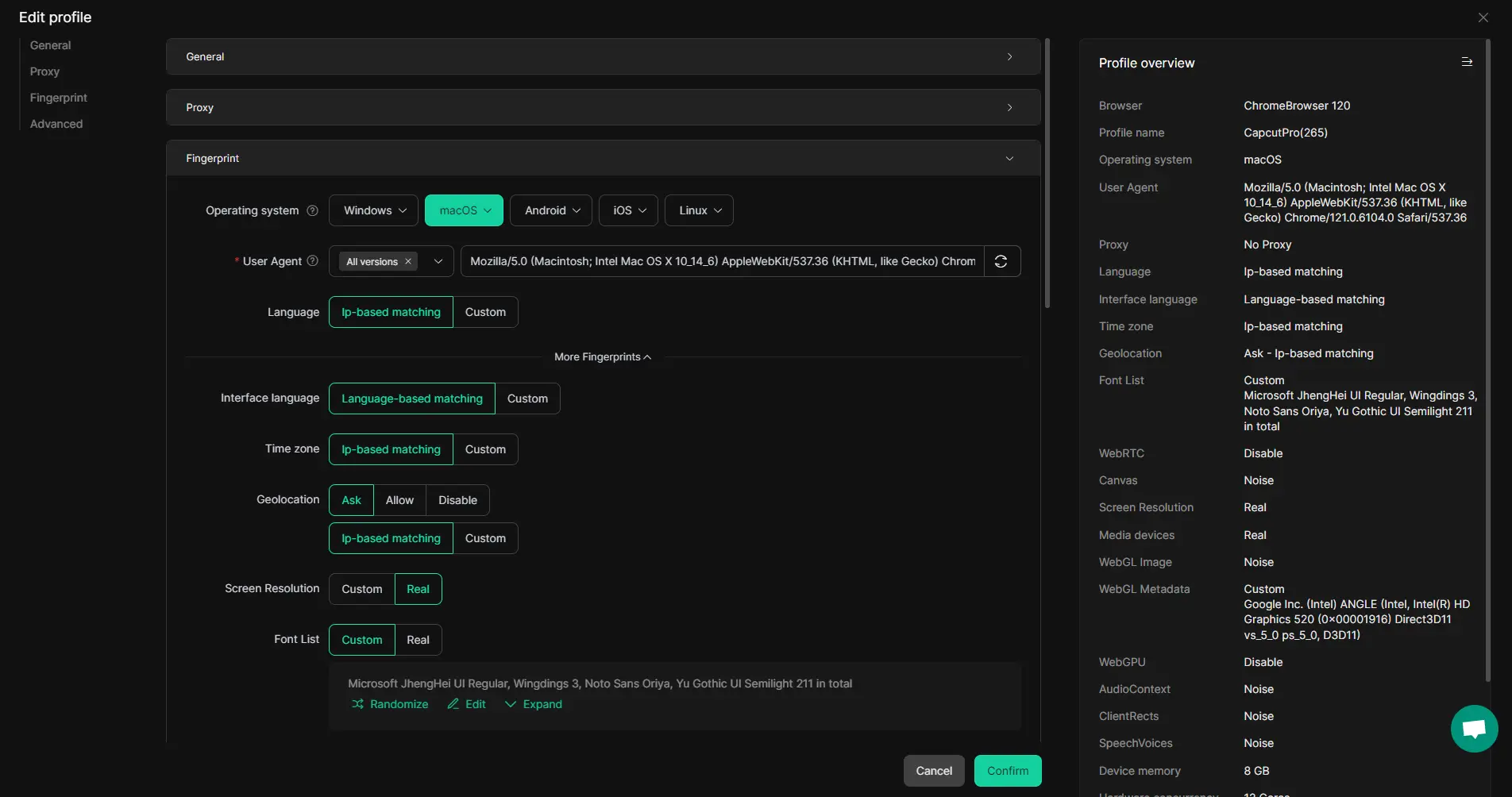
DICloak provides the technical infrastructure necessary to implement the isolation strategies required for professional account management. By creating independent browser profiles, it ensures that each TikTok account operates within its own virtualized container, significantly reducing the "blast radius" of any potential compromise.
This configuration may mitigate the risk of account association by masking hardware parameters, including Canvas, WebGL, and AudioContext signatures. This means that even if one account in a team’s portfolio is targeted, the others remain protected behind unique hardware profiles.
Centralized Team Permission Management
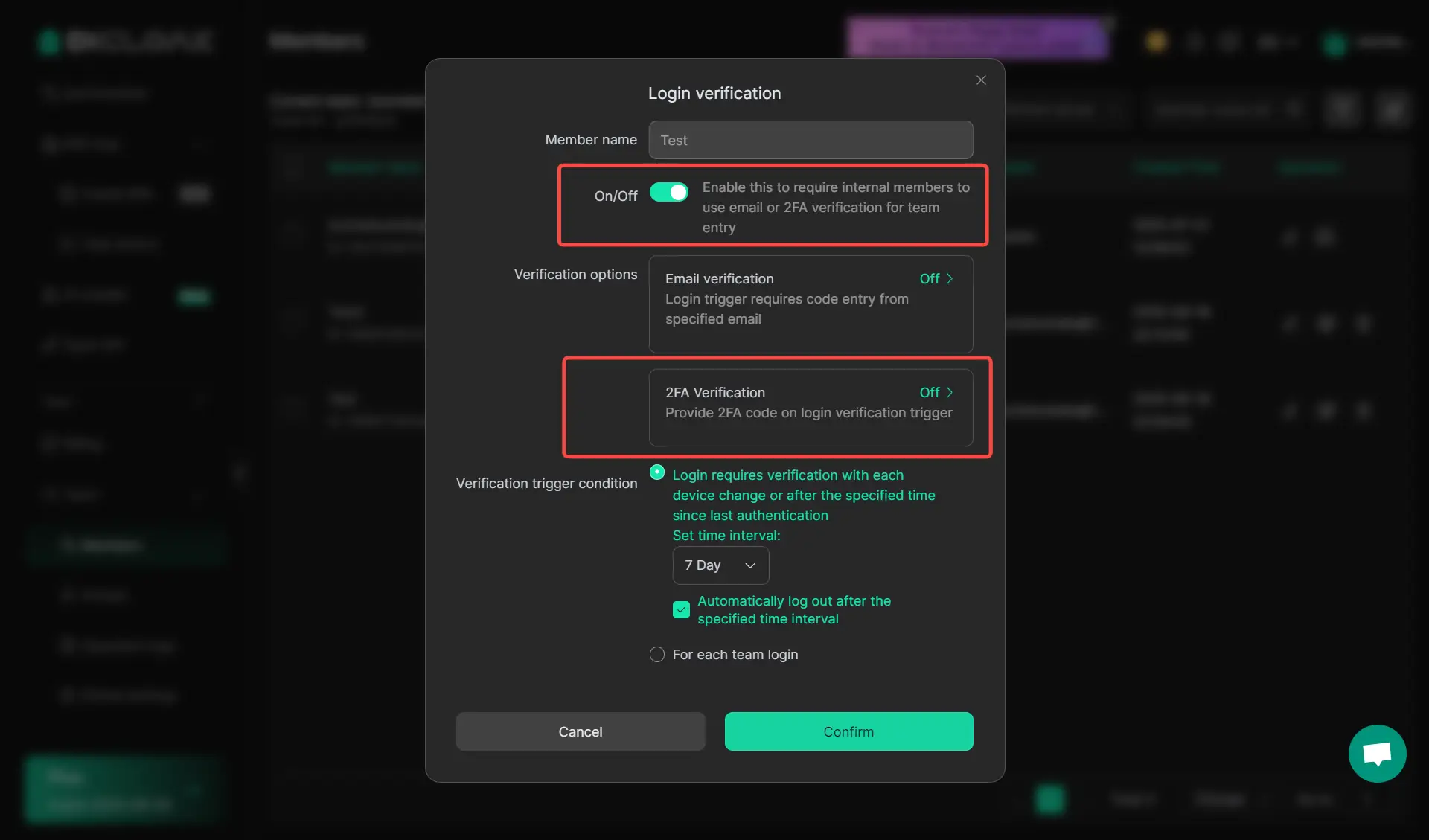
Internal security is just as important as external defense. DICloak allows administrators to manage account access through a centralized interface. By using Set member permissions, teams can access and do inside the browser profile, without giving full control over the account. This helps reduce the risk of internal leaks and keeps sensitive account data more secure. Even if a team member’s personal device is compromised, the main account credentials and critical settings remain better protected.
Strategic Proxy Management for Enhanced Network Isolation
While browser fingerprints identify the hardware, network signatures identify the location and legitimacy of the connection. Effective network isolation avoids the use of standard consumer tools in favor of dedicated proxy management.
Professional operations distinguish between residential proxies and datacenter proxies. TikTok’s security algorithms are highly sensitive to datacenter IPs, which are often associated with automated bot activity. Residential proxies provide the appearance of a legitimate home user, reducing the likelihood of security challenges.
Network Security Pro-Tip: A critical risk factor is "IP Leakage," specifically through WebRTC protocols which can reveal a user's true IP address even when a proxy is active. Professional tools like DICloak are configured to disable or spoof WebRTC data, ensuring complete network isolation. Users should strictly avoid free or public proxies, as these are almost universally blacklisted and lead to immediate account flags.
Evaluating the Infrastructure: DICloak Pros and Cons
Implementing an anti-detect browser is a strategic decision that involves weighing operational benefits against resource requirements.
- Pros of DICloak Infrastructure:High-level scalability for managing hundreds of accounts simultaneously without association. * Precise accuracy in hardware fingerprint masking to maintain high device reputation scores. * Advanced team collaboration features, such as session sharing, that protect raw credentials. * Significant reduction in the likelihood of a "chain reaction" ban following a security event.
- Cons of DICloak Infrastructure:Initial learning curve for configuring complex hardware parameters for optimal isolation. * Ongoing subscription costs compared to free, standard consumer browsers. * Necessity of high-quality, paid proxy sourcing to maintain network integrity.
Frequently Asked Questions About Preventing a TikTok Account Hacked Scenario
Q1:Can two-factor authentication be bypassed?
Yes. While 2FA is a strong deterrent against brute-force attacks, it does not protect against session token theft. If a malicious actor steals the session cookies from a standard browser using Infostealer malware, they can enter the account as an already-authenticated user, bypassing the need for a 2FA code entirely.
Q2:Does clearing cache and cookies prevent account association?
No. Standard cache clearing only removes basic tracking data. Browser fingerprinting—utilizing Canvas, WebGL, and Audio Context—goes much deeper, allowing platforms to recognize the same hardware and MAC address even after cookies have been deleted. Professional isolation is required to provide a unique signature for each account.
Q3:Is it safe to manage numerous TikTok accounts on a single laptop?
Managing multiple accounts on a single device using a standard browser is a high-risk activity. Without virtualized environment isolation, the platform will inevitably link the accounts through hardware fingerprinting. Utilizing a professional infrastructure is necessary to create the required separation between profiles and may mitigate the risk of a total account lockout.
Q4: Can a tiktok account hacked case affect my other accounts?
Yes. If the same password, browser, email, or device is used across accounts, one tiktok account hacked case can increase the risk for other accounts too.
Q5: How can I stop a tiktok account hacked problem from happening again?
To reduce another tiktok account hacked risk, change your password, enable 2FA, secure your email, review linked devices, and use a cleaner account setup for long-term protection.
Conclusion
A tiktok account hacked crisis is not only an access problem. It is a warning that your account, browser session, and overall security setup may already be exposed. The first priority is always recovery: log out of all devices, reset the password, review account changes, and contact TikTok support if needed. But real protection starts after recovery, when you fix the weak points that made the breach possible in the first place.
For users or teams managing more than one TikTok account, long-term safety depends on stronger environment control. Shared browser sessions, weak fingerprint separation, and poor access management can increase the risk of another tiktok account hacked event or even a wider chain reaction across related accounts. That is why a more professional setup matters. Tools like DICloak can help by isolating browser profiles, separating fingerprints, controlling team access, and reducing overlap between accounts. In the end, the best response to a tiktok account hacked case is not just getting the account back. It is building a cleaner, more stable system that helps protect every account going forward.
 Web Proxy Tools
 Free Tools
 Cookie Plugin
 UA Generator
 MAC Address Generator
 IP Generator
 IP Address List
 2FA Code Generator
 World Clock
 Anonymous Check
 WebRTC Leak Test
 UUID Generator
 Free Web Proxy Site
 Proxy Checker
 FB Ad Checker
 AI Web Scraping
 Free SMM Tools
 Twitter Shadowban Checker
 Instagram Name Checker
 UTM Generator
 Username Generator
 AI Hashtag Generator
 LinkedIn Headline Generator
 Social Media Image Resizer