You post on X like usual, but something feels off. Your tweets are live, your account looks normal, and nothing says you were banned. Still, your posts stop showing up in search, your replies get buried, and your engagement suddenly drops. That is when many users start asking the same question: is this just a bad week, or is it time to run an X shadowban test?
In 2026, this problem is still hard to judge because X does not always make visibility limits obvious. A real twitter shadowban usually looks less like a full block and more like a quiet loss of reach. That is why guessing is not enough. You need a clear way to test what other people can actually see, understand what may have triggered the problem, and know what to do next if your reach really is being limited.
This guide walks through the full process in a simple way. You will learn the warning signs, common triggers, the most accurate ways to run an X shadowban test, which tools are worth trying, and how to reduce the chance of the same problem happening again.
Signs Your X Account Might Be Shadowbanned
Before you run an X shadowban test, it helps to know what signs matter most. On X, this issue does not always look like a full ban. Your account may still post and reply, but your content can become harder to find. X says it may limit visibility in search, recommendations, notifications, timelines, and reply threads. It also says some accounts may be filtered from search when activity looks spammy, repetitive, or low quality. That is why many users still search for a twitter shadowban test, even though X does not usually use that exact term.
Why your posts may not appear in search results
One common sign is that your public post does not appear in search, even when you search for a unique phrase from it. X says duplicate posts, repeated links, aggressive follow and unfollow behavior, and similar content across many accounts can hurt search visibility.
For example, a user may post the same promo message several times with only small wording changes. The posts still appear on the profile, but they may stop showing in search. That does not always mean a full ban, but it can be a warning sign in an X shadowban test. A stronger check is to look in Latest, not only Top, because Top results are ranked by relevance and other signals.
This is also why some people try tools to check shadowban on twitter or use a shadowban tester twitter site. These tools can help, but they are only a first check. Manual testing is still more reliable. Tweet Archivist’s 2026 guide also treats missing search visibility as one of the clearest early signs.
How engagement drops can indicate a shadowban
A sudden drop in likes, replies, reposts, and profile visits can also be a warning sign. This is often when people start looking for a twitter shadowban or a twitter shadowban test. But one weak post is not enough to prove anything. Reach can fall for normal reasons too, such as weaker timing or lower interest in the topic.
The stronger signal is a pattern. For instance, a creator may usually get 30 to 50 likes on short posts, then suddenly see several posts in a row fall to only 2 or 3 likes, while those same posts also stop appearing in search. That kind of drop is more serious than one bad day. In that case, an X shadowban test becomes much more useful.
Identifying restricted visibility on replies and mentions
Replies are another place where visibility problems often show up. X says it can reduce discoverability by lowering where content appears in search, timelines, recommendations, and reply threads. In real use, that can mean your reply still exists, but fewer people see it.
This can be easy to miss from your own account. You may see your reply normally, but from another account or a logged-out view, it may be pushed lower or hidden behind extra clicks. That is often a stronger sign than low likes alone. Recent guides on X shadowban test methods also treat hidden replies as a key warning sign.
Mentions can make things look normal at first. X says that even if an account is filtered from search, followers may still see its posts, and direct replies or mentions may still reach the tagged person. So a mention can still work, while wider visibility stays weak. That is why missing reach on replies and mentions should be part of any serious X shadowban test.
Common Triggers for Shadowbans on X
If your account shows the warning signs from the last section, the next question is simple: what may have caused them? On X, a so-called shadowban usually starts with patterns that look spammy, manipulative, or low quality. X says repeated violations, platform manipulation, and spam can lead to actions that reduce visibility. It also says some accounts may be filtered from search when their behavior hurts search quality. That is why an X shadowban test is more useful when you also understand the common triggers behind it.
Posting frequency and spam-like behavior
One major trigger is posting too aggressively in a way that looks unnatural. X says spam and platform manipulation can include posting duplicate or near-duplicate content, sending repeated replies, and using systems that create artificial activity. Its search policy also says accounts may be removed from search if they post the same or very similar updates again and again, especially across many accounts.
For example, a user may post the same sales message six times in one day, then paste a very similar reply under many popular posts. Even if each post is technically public, X may treat that pattern as low quality or spam-like. In that situation, a manual twitter shadowban test may show weaker search visibility or buried replies. Some people then turn to tools to check shadowban on twitter or a shadowban tester twitter site to confirm the pattern.
Violating platform guidelines or community standards
Another common trigger is posting content that breaks X rules or gets caught by policy enforcement. X says it may make content less visible by removing it from search, recommendations, trends, notifications, and home timelines, or by downranking it in replies. This kind of reduced visibility can happen when posts cross the line into abuse, hateful conduct, or other rule-breaking behavior.
In real use, this means a twitter shadowban may not always come from posting too often. It can also start after a post or reply is reported, flagged, or judged harmful. For instance, if an account keeps posting insulting replies during a heated topic, the user may notice that later replies stop getting seen as clearly. In that case, an X shadowban test is not just checking reach. It is also a way to spot whether policy issues may be affecting visibility.
Using flagged hashtags or repetitive links
Hashtags and links can also become part of the problem, but usually because of the pattern around them. X’s search policy warns against repeated links, duplicate posts, and behavior that lowers search quality. It does not publish a simple public list of “bad hashtags” on the help pages I checked, so it is safer to say this: the bigger risk is not one hashtag by itself, but using the same hashtags and links in a repetitive, spam-like way.
For example, a creator may attach the same link and the same block of hashtags to every post for days. The account may still look active, but discovery can get weaker over time. Recent 2026 shadowban guides also list excessive hashtags, repeated links, and near-identical posts as common reasons users fail an X shadowban test. So if your search reach drops after that kind of posting pattern, the cause may be your content routine, not just bad luck.
In short, the most common triggers are repetitive posting, spam-like behavior, rule-breaking content, and overused links or hashtags. Knowing these triggers makes your next X shadowban test much more useful, because you are not only checking whether visibility dropped. You are also checking why it may have happened.
How to Perform an Accurate X Shadowban Test
Once you know the warning signs and common triggers, the next step is to test your account the right way. A good X shadowban test should not rely on one clue only. On X, visibility problems can affect search, replies, suggestions, and overall reach at the same time. That is why the best method is to combine manual checks, outside-account checks, and third-party tools.
Using manual methods to check for shadowbans
The best place to start is a manual twitter shadowban test. Open an incognito or private browser window, go to X without logging in, and search for a unique phrase from one of your recent posts. Then check whether your post appears in search results. You can also search a hashtag you recently used and see whether your post appears there. If your public post is missing, that is a stronger warning sign than low engagement alone.
Another useful step is the from:username search test. Search from:yourusername and check whether your recent posts appear. If none show up, or only a few do, your visibility may be limited. This is not perfect proof, but it makes an X shadowban test much more accurate.
Reply testing matters too. Reply to a busy post with a unique line, then check that thread from outside your own account. If your reply is hidden behind “Show more replies” or hard to find, that may point to reduced visibility or a possible twitter shadowban.
Leveraging third-party tools for shadowban detection
After manual checks, many users try tools to check shadowban on twitter. A shadowban tester twitter tool can give you a fast first check on search visibility, reply visibility, or account discovery. That makes these tools useful as a starting point.
Still, they are not official X tools, so they should not be treated as final proof. A tool may flag a problem, but it cannot always tell whether the cause is real visibility filtering, weak content performance, or a temporary issue. The safer approach is to compare tool results with your own manual checks.
Testing visibility with a second account or logged-out search
The most important step is to test from outside your own account. Your posts and replies can look normal to you, even when other people cannot find them easily. A second account or a logged-out browser gives you a much cleaner view.
For example, post a short reply under a popular thread, then open that thread in incognito mode or from another account that does not follow you. Search for your post text, check the thread, and see whether your reply appears naturally. You can also start typing your username into search to see whether your account appears in autocomplete. If your content looks normal only from inside your own account, but not from outside, your X shadowban test becomes much stronger.
In practice, the most accurate X shadowban test is simple: use incognito search, run a from:username check, test one reply in a live thread, compare results from a second account, and only then use tools to check shadowban on twitter to support what you found. This gives you a more balanced answer and helps you avoid mistaking one weak post for a real twitter shadowban.
Tools and Platforms for Testing Shadowbans
After you run a manual X shadowban test, tools can help you check faster and compare results. The key is to use them as support, not as final proof. X does not provide an official public shadowban checker, so third-party tools are mainly used as a starting point.
Free tools for shadowban detection on X
Several free tools to check shadowban on twitter are still active in 2026. One widely used option is shadowban.yuzurisa.com, which checks an account by username and shows different visibility results. Another active option is Hisubway, which also lets users check account status by entering a username. TweetDeleter offers a free twitter shadowban test tool as well, and its page says it checks visibility in search, replies, and timelines without requiring login. Users can also try DICloak’s Twitter Shadowban Checker, which is built for quick account checks and gives another simple way to review possible visibility limits by username.
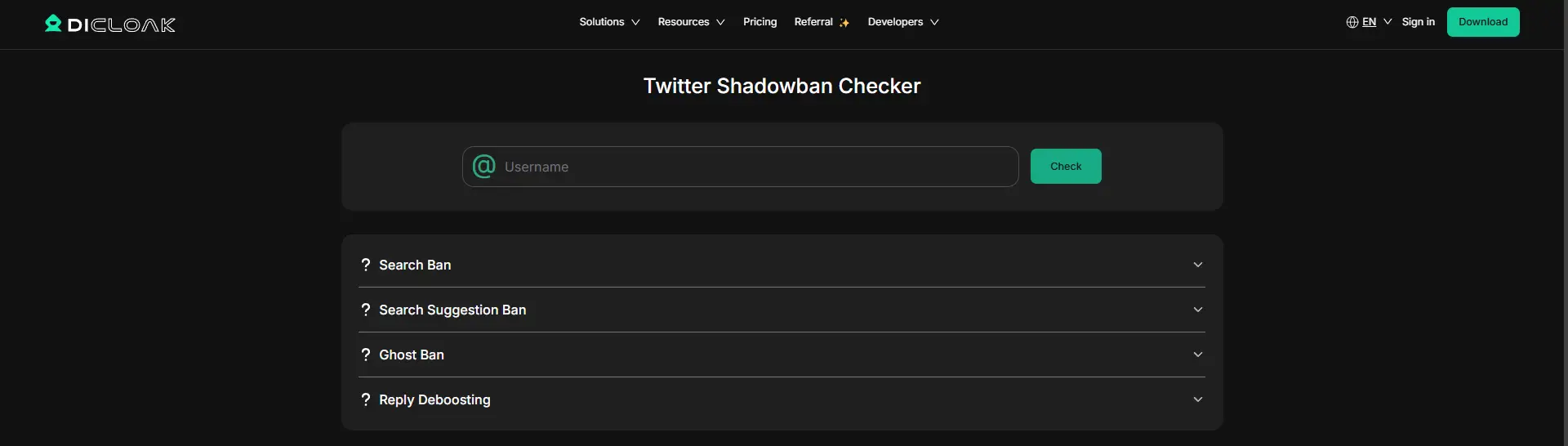
For example, if your posts stop appearing in search, you can first do a manual X shadowban test, then run the same username through one of these free tools. If both checks point to the same problem, the result is more useful than relying on one method alone.
Paid services with advanced visibility analytics
Some paid tools go beyond a simple shadowban tester twitter result. Circleboom offers a Twitter shadowban test page and also includes wider account tools. Fedica focuses more on analytics such as impressions, engagement, follower changes, and audience activity. These platforms are more useful when you want to understand not only whether reach dropped, but also where and when it started to fall.
For instance, a creator may find that search visibility looks weak, but the bigger issue is actually a steady drop in impressions over several days. A broader analytics tool can show that trend more clearly than a basic checker.
Comparing manual testing vs. automated tools
Manual testing is slower, but it is usually better for confirming a real twitter shadowban. Searching your posts in incognito mode, checking from:username, and testing replies from a second account show what people can actually see. Automated tools are faster and easier, but they can miss context. Some only scan by username, while others may ask for account connection or OAuth access. That is why privacy matters too. Tools that do not require login are usually the safer first step if you only want a quick visibility check.
So the safest workflow is simple: start with a manual twitter shadowban test, use free tools to compare results, and only then move to broader paid analytics if you need more detail. That gives you speed, context, and a lower chance of misreading one weak post as a real visibility restriction.
Steps to Remove a Shadowban on X
If your manual checks and tools to check shadowban on twitter point to the same problem, the next step is to clean up the account and lower risk signals. There is no official X page that says “click here to remove a shadowban.” But X does explain that posts can have reduced reach when they violate rules, look low quality, or include unsafe links, and it may require users to delete violating posts or complete account steps when an account is limited. That means recovery usually comes from changing the behavior that likely triggered the issue, not from using a single reset button.
Pausing account activity to reset visibility
A short pause can help when your account has been posting too fast or in a spam-like pattern. X says spam and platform manipulation include duplicate or near-duplicate posts, repeated replies, and coordinated inauthentic activity. If that kind of behavior triggered your X shadowban test results, continuing to post the same way can make the pattern worse.
For example, if an account has been posting the same sales line many times a day and replying under many large threads, it makes sense to stop for a short period, then return with slower and more natural posting. This does not guarantee that a twitter shadowban will disappear right away, but it removes the behavior that may have caused the visibility loss in the first place. After the pause, run another manual twitter shadowban test before you go back to normal posting.
Removing flagged or spammy content from your account
The next step is to review your recent posts and remove content that may be hurting visibility. X says it can make posts less visible, remove them from search and recommendations, downrank them in replies, or require post removal when content violates rules. It also warns that repeated links and unsafe links can limit visibility.
A practical cleanup means looking for duplicate posts, repeated promo lines, copied replies, overused hashtags, and links that may have triggered warnings. For instance, if you posted the same landing-page link with almost the same caption across many posts, delete the repeated ones and keep only the strongest version. If you sent aggressive or insulting replies during a heated topic, remove those too. Then wait and retest. In many real cases, cleanup works better than constantly rerunning a shadowban tester twitter tool without changing anything.
Contacting X support for account review
If you cleaned up the account, paused risky activity, and your X shadowban test results still look bad, the next step is to ask X for review. X says users can submit an appeal if they believe enforcement was a mistake. It also says some restricted accounts may need to verify ownership, add a phone number, verify an email, or delete violating posts before limits are lifted.
When you contact support, be specific. Explain what changed, which posts were removed, and what your manual checks showed. For example, you can say that your posts no longer appear in search, your replies are buried from logged-out view, and multiple tools to check shadowban on twitter show the same pattern. That gives support more context than simply saying, “I think I am shadowbanned.” If X restricted visibility by mistake, an appeal is the clearest official path to review.
In short, the best recovery path is simple: pause risky activity, remove low-quality or flagged posts, then appeal if the problem does not improve. That is a safer and more realistic plan than relying only on a shadowban tester twitter result or waiting for the issue to fix itself.
Preventing Future Shadowbans on X
Once you fix a visibility problem, the next step is making sure it does not happen again. X says spam, platform manipulation, duplicate content, repeated replies, and unsafe links can all lead to limits or stronger enforcement. That is why prevention matters just as much as recovery after an X shadowban test.
Best practices for maintaining account health
The safest approach is to post in a natural way. Avoid repeating the same message, copying replies, or posting too aggressively. For example, if a business wants to promote one product, it is better to change the wording and timing instead of posting the same sales line all day. That lowers the chance of a future twitter shadowban pattern.
Avoiding flagged hashtags and risky behaviors
Hashtags and links can also create risk when the pattern looks spammy. X does not publish a simple public list of banned hashtags on the help pages I checked, so the bigger problem is usually repeated hashtag blocks, repeated links, and low-value replies. A safer habit is to use only relevant hashtags, avoid overposting the same URL, and stay away from aggressive reply spam.
Monitoring account activity to detect early signs
It also helps to catch problems early. Watch for sudden drops in search visibility, reply reach, impressions, and follower growth. If several of those fall at the same time, run an X shadowban test early instead of waiting. A quick manual check, plus a few tools to check shadowban on twitter, can help you spot a problem before it grows. In practice, that is much better than depending on a shadowban tester twitter tool only after reach has already collapsed.
Enhancing Shadowban Tests with a Cleaner Multi-Account Setup
When an X shadowban test involves more than one account, the browser setup can affect how clear the results look. A second account, a reply check, and a logged-out search are all useful, but the process gets messy when accounts share the same browser session, cookies, and local data.
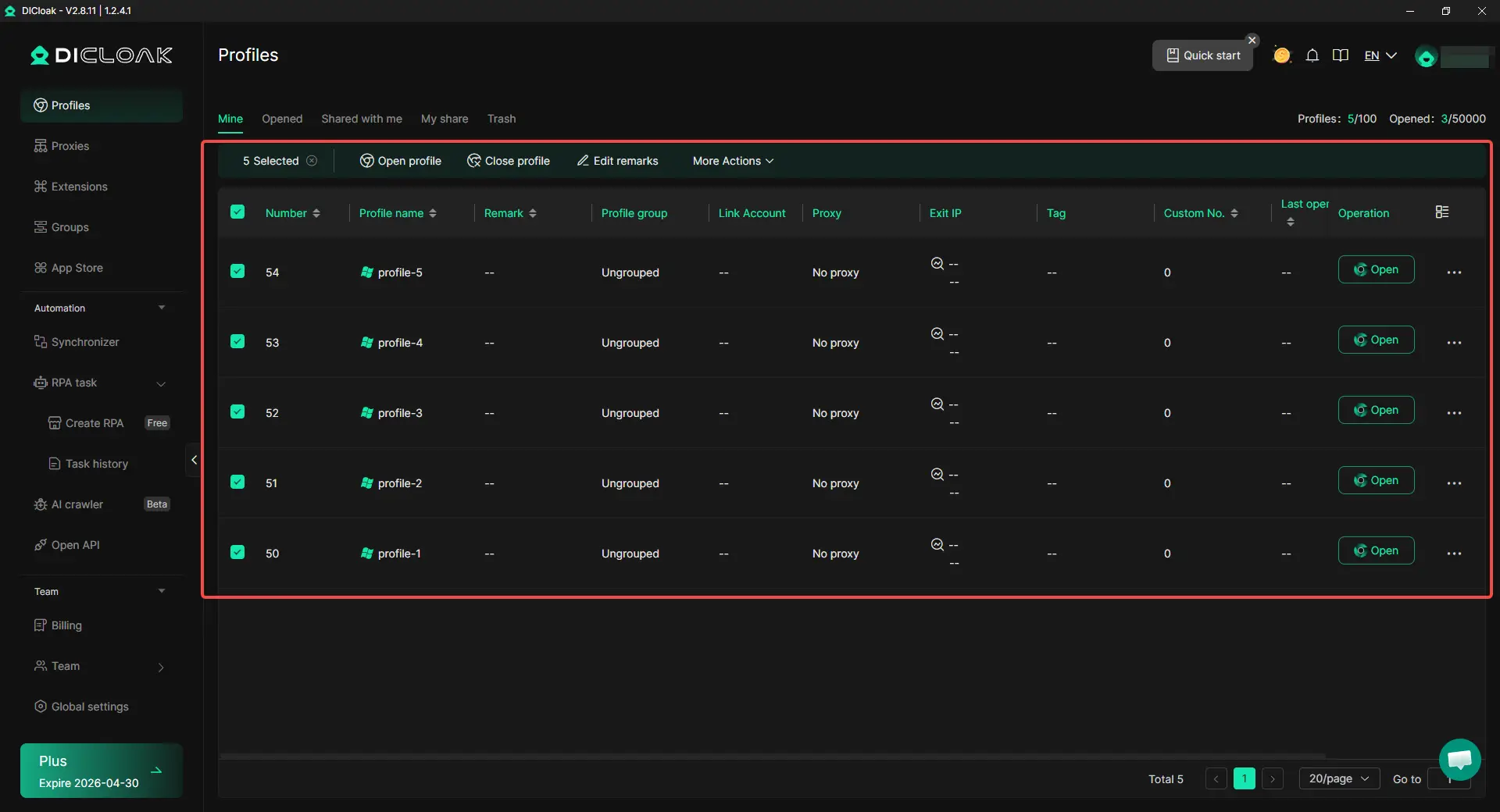
Safely managing multiple X accounts for testing
Users who need to test several X accounts can place each one in a separate browser profile instead of keeping everything in one browser session. One profile can be used for normal posting, another for reply checks, and another for search or visibility testing. This makes it easier to compare results without mixing logins or account data.
Keeping profiles isolated with separate proxy settings
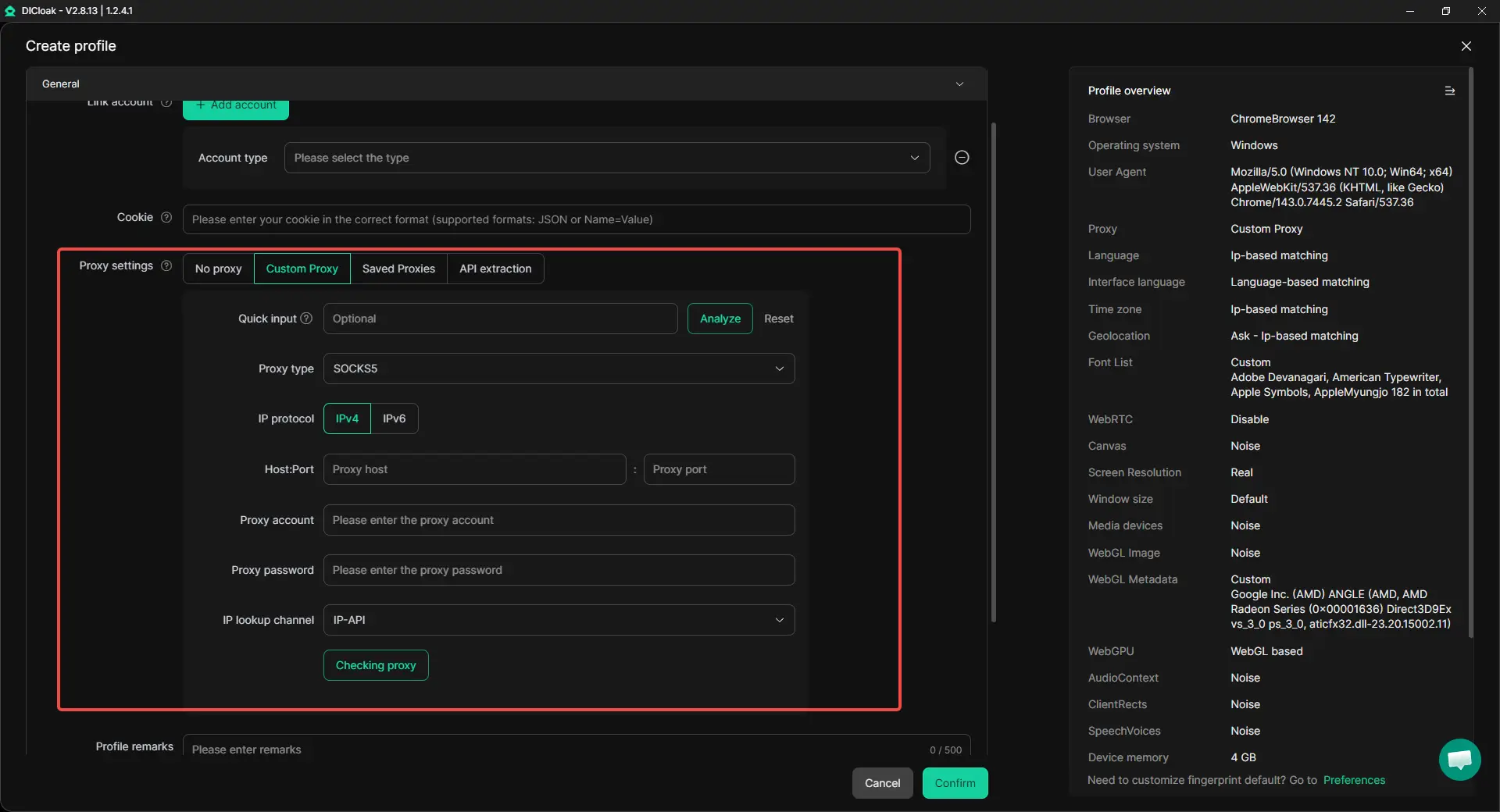
Users can also assign a different proxy to each profile and keep each account running in its own setup. That works well for teams, marketers, and operators who need to manage multiple social media accounts on one device while keeping sessions separate. With isolated profiles, custom fingerprints, and separate proxy configuration, multi-account testing becomes cleaner and easier to control.
Making repeated checks easier to manage
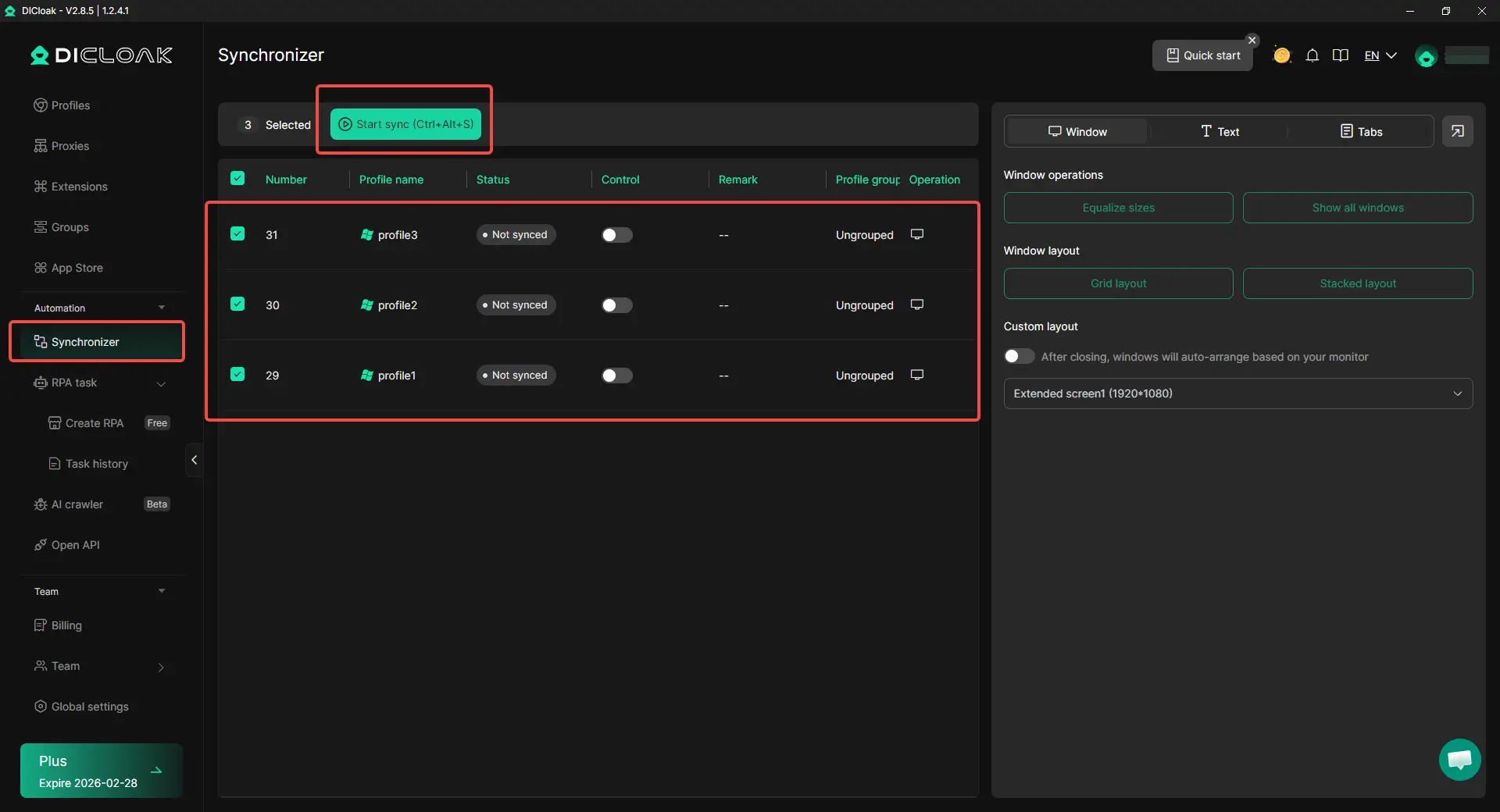
When the same X shadowban test needs to be repeated across several accounts, users can keep the process more consistent by opening multiple isolated profiles together and syncing the same actions across them with DICloak's Synchronizer. This works well for tasks like opening the same search page, loading the post URL, or repeating the same click and typing steps in several windows without switching back and forth all the time.
FAQs about X Shadowban Test
What is an X shadowban test?
An X shadowban test is a way to check whether your posts, replies, or profile are harder to find on X. It usually includes search checks, reply checks, and outside-view testing from a second account or a logged-out browser.
How do I run an X shadowban test manually?
You can run a manual X shadowban test by searching for a unique phrase from one of your posts in incognito mode, checking from:yourusername, and seeing whether your replies appear clearly in public threads.
Are tools to check shadowban on Twitter accurate?
Some tools to check shadowban on twitter are useful for a quick first check, but they are not perfect. A tool can show warning signs, but it should be compared with a manual X shadowban test before you decide there is a real visibility problem.
How do I know if my X shadowban test result is serious?
An X shadowban test result is more serious when several signs appear together, such as missing search visibility, hidden replies, and a sharp drop in engagement across multiple posts.
Can an X shadowban test help prevent future visibility problems?
Yes. An X shadowban test can help you catch early warning signs before the problem gets worse. If you test early, you can review recent posts, remove spam-like patterns, and adjust account activity before reach drops further.
Conclusion
An X shadowban test in 2026 is the best way to check whether your posts, replies, and profile are becoming harder to find on X. The clearest signs are missing search visibility, hidden replies, and a sharp drop in engagement across several posts. The most reliable way to test this is to combine manual checks, logged-out or second-account testing, and third-party tools instead of relying on one signal alone.
If your X shadowban test shows a real problem, the next step is to review what may have triggered it. Repetitive posting, spam-like behavior, risky links, copied replies, and rule-breaking content can all hurt visibility. In many cases, recovery starts with slowing down account activity, removing low-quality or flagged posts, and checking whether visibility improves over time.
The best long-term fix is prevention. Keep your posting natural, avoid risky patterns, and monitor your account early so small reach problems do not turn into a bigger twitter shadowban issue later.
 Web Proxy Tools
 Free Tools
 Cookie Plugin
 UA Generator
 MAC Address Generator
 IP Generator
 IP Address List
 2FA Code Generator
 World Clock
 Anonymous Check
 WebRTC Leak Test
 UUID Generator
 Free Web Proxy Site
 Proxy Checker
 FB Ad Checker
 AI Web Scraping
 Free SMM Tools
 Twitter Shadowban Checker
 Instagram Name Checker
 UTM Generator
 Username Generator
 AI Hashtag Generator
 LinkedIn Headline Generator
 Social Media Image Resizer