OnlyFans is a paid subscription platform where creators sell content directly to fans. It grew fast because setup is simple and payouts are clear. Recent reporting on company filings said OnlyFans had about 377.5 million fan accounts and 4.6 million creator accounts in 2024, with $7.2B in fan spending.
Still, many creators now look for OnlyFans alternatives and sites like OnlyFans. The reasons are practical. You may want better discovery, different content rules, or a safer “backup” income stream. OnlyFans once announced a major policy change and linked it to pressure from banking and payout partners. Many creators worried about payment disruptions and rushed to set up a second income channel, which is why relying on one platform can feel risky.
This article lists 10 solid OnlyFans alternatives for 2026 and explains what each one is best for, with simple examples so you can pick faster and avoid surprises.
Why Seek OnlyFans Alternatives?
If you like OnlyFans, you may still want a backup. After you build an audience, your income can depend on payouts, rules, and tools you do not control. That is why many creators compare OnlyFans alternatives and other sites like OnlyFans before they go “all in” on one platform.
Payout Issues
Getting paid is not always instant. Many creators notice that earnings can sit in a “pending” stage before they become available to withdraw. Some guides describe a waiting period (often about 7 days) for new earnings to clear, plus a minimum payout (often $20), and then 1–5 business days for the money to reach your bank after you request it. For example, you do a big promo on Friday, earn money over the weekend, and hope to use it for bills on Monday. If part of that money is still pending, you may not be able to withdraw it right away. That is a real reason creators look at OnlyFans alternatives with faster or more flexible payout options.
Policy Concerns
Creators also worry about sudden rule changes. OnlyFans has previously announced major policy updates and said they were tied to pressure from banking partners and payout providers. Even if a change is later adjusted, the message is clear: payment partners can influence what a platform allows and how stable accounts feel. A practical response is to keep a second home on one of the OnlyFans alternatives, so one announcement does not force you to rebuild your income from zero.
Feature Limitations
Finally, some creators outgrow the platform’s tools. One common complaint is discovery. Many creators say OnlyFans does not help fans find you unless they already know your name or have your link, so you must bring traffic from social media. For instance, you post every day, but your growth still depends on Instagram, X, Reddit, or YouTube. If those channels slow down, your OnlyFans growth can stall too. That is why creators test sites like OnlyFans that offer stronger built-in feeds, search, or recommendations—so new fans can find them inside the platform, not only outside it.

Criteria for Choosing an OnlyFans Alternative
After you see the payout delays, policy surprises, and weak discovery issues on OnlyFans, it’s smart to slow down and choose carefully. The best OnlyFans alternatives are not just “copies.” Different sites like OnlyFans can feel very different once you try to earn on them.
User Feedback and Reviews
Do not rely only on a platform’s homepage. Look for real creator experiences. Reviews can reveal things like slow support, confusing payouts, or sudden account checks. For example, many creators share detailed “what worked / what didn’t” posts in creator communities on Reddit, including payout tips and pricing setups. These posts are not perfect, but they often show the day-to-day reality in a way marketing pages never will.
Monetization Options
Next, check how many ways you can get paid. Some sites like OnlyFans focus mainly on subscriptions. Others make it easier to sell paid messages, tips, video calls, or one-time unlocks. For instance, LoyalFans supports earnings from subscriptions, PPV unlocks, tips, and paid messages, and it also provides settings for message pricing. If your income depends on private chats or custom requests, that kind of setup can matter a lot when comparing OnlyFans alternatives.
Community Engagement Features
Last, look at how the platform helps you keep fans close. Tools like comments, community chat, and member-only spaces can improve retention, because fans feel like they are part of something, not just buying content. For example, Patreon offers member community tools (like community chats) and lets creators control comment settings on posts. That can be a good fit if your goal is steady membership and strong fan relationships—one reason it’s often listed among OnlyFans alternatives for creators who want deeper community features.
Top 10 OnlyFans Alternatives
Based on the criteria above—real user feedback, monetization options, and community tools—here are 10 OnlyFans alternatives creators consider in 2026. These sites like OnlyFans are not the same. Pick the one that matches how you sell and how your fans find you.
Exclu – 0% commission fee platform
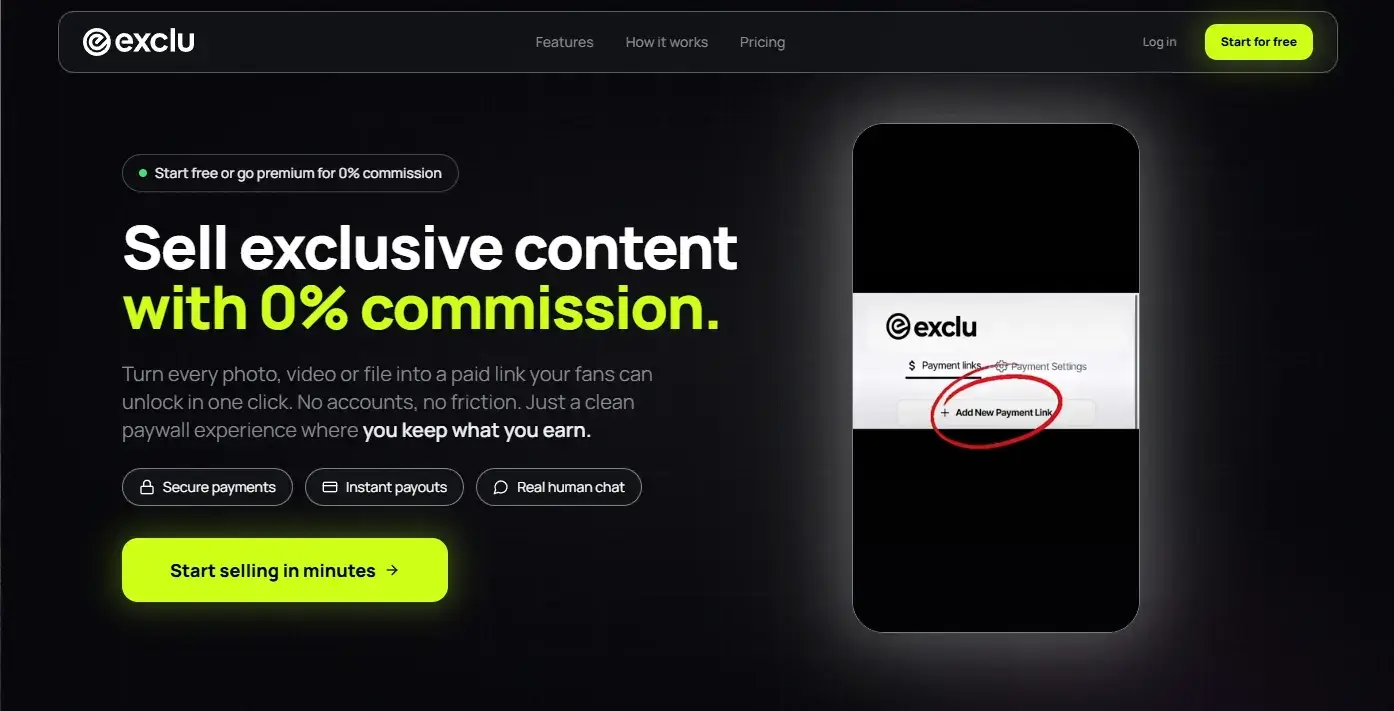
Exclu is built for direct selling through paid links. The platform says you can turn a photo, video, or file into a paid link, and fans can unlock it in one click, without creating an account. It also markets itself as 0% commission. This is closer to “sell in DMs” than “run a full subscription feed.”
Pros
- 0% commission claim (you keep more of each sale).
- Fast, low-friction buying for fans (no account step).
- Works well with Instagram / WhatsApp / Telegram link sharing (DM-first workflow).
Cons
- It is not a classic subscription community. You may need other tools for ongoing memberships.
- Your growth depends heavily on your own traffic (DMs, socials, groups).
📌 Best positioning: Exclu is best for creators who want maximum control and want to sell through DMs using paid links, not run a heavy “platform feed.”
Fansly
Fansly is one of the closest sites like OnlyFans. It supports subscriptions, sold media, messages, and tips. Fansly also states creators receive 80% of revenue, and its Terms mention creators earn 80% on subscriptions, sales, and tips. Creators often like it because it has teaser-style tools that help turn free viewers into paying fans.
Pros
- Clear 80/20 revenue split in official materials.
- Supports multiple monetization types (subs + sold media + messages + tips).
- Designed for conversion (free-to-paid journey feels smoother than “link-only” models).
Cons
- You still need consistency and promotion to stand out.
- Like most platforms, results can vary a lot by niche and posting rhythm.
📌 Best positioning: Fansly works best for creators who want OnlyFans-style subscriptions plus stronger teaser and conversion tools.
JustForFans
Founded by adult performer Dominic Ford, JustForFans is built around adult creators and niche communities, with strong support for LGBTQ+ creators.
Pros
- Strong niche and community identity.
- Built around adult creators (not an add-on category).
- Often fits creators who want community visibility, not “mass mainstream.”
Cons
- If your niche is outside its core audience, growth may be slower.
- Like many niche platforms, external promotion still matters.
📌 Best positioning: JustForFans is best for adult creators who value niche visibility and community identity over mass-market reach.
Patreon
Patreon is a long-standing membership platform (founded in 2013) and is widely used for art, music, podcasts, education, and writing. Patreon’s official fee docs explain platform fees and payment processing fees, and Patreon’s pricing page highlights a 10% standard fee for many creators. It also has stronger “community” tooling than most subscription pages.
Pros
- Strong tiered memberships and community features (chats, comments, polls).
- Clear official fee documentation.
- Better fit for brand-safe content and long-term memberships.
Cons
- Fees and billing rules can be complex (plan, payment method, region).
- Some creators may need to plan around app-store billing changes on iOS.
📌 Best positioning: Patreon is ideal for stable, recurring income in non-explicit niches like art, music, education, and writing.

LoyalFans
LoyalFans combines subscriptions, messaging, and other paid features. It positions itself as an all-in-one platform for creators. It is often picked by creators who want more ways to monetize than just monthly subs.
Pros
- Multiple monetization options in one place (subs + paid messages + tips + more).
- Clear “platform + monetization” positioning (built for creator income flows).
- Works well if your business relies on repeat buyers and direct interaction.
Cons
- More tools can mean more setup time.
- You still need strong content planning and fan management to grow.
📌 Best positioning: LoyalFans is ideal for creators who want multiple revenue tools and internal discovery options instead of relying only on external social traffic.
Fanfix
Fanfix is a brand-safe subscription platform. Its site clearly states it is brand-friendly and does not allow nudity or explicit content, and it publishes content guidelines for that environment. So it is not for everyone, but it is strong for mainstream creators.
Pros
- Brand-safe positioning is clear (safer for sponsors).
- Good fit for creators who already have social followers and want paid “behind-the-scenes.”
- Clear guidelines reduce “surprise rules.”
Cons
- Not suitable if your content depends on adult content.
- Like most brand-safe platforms, you often need an existing audience.
📌 Best positioning: Fanfix works best for social-media-first creators who want a clean, non-adult subscription platform.
ManyVids
ManyVids is a marketplace-style platform. It supports video sales, store items, custom videos, and memberships. Its help center publishes payout percentages by product type, such as 60% for vids and 80% for store items, custom vids, and club (and notes they can change).
Pros
- Many income streams in one platform (sales + custom + club).
- Clear payout table by sale type.
- Marketplace buyers can discover you without already knowing your name.
Cons
- Competition is high, so packaging (titles, thumbnails, pricing) matters a lot.
- Your payout % depends on what you sell, not one flat rule.
📌 Best positioning: ManyVids is perfect for creators who want multiple revenue streams in a marketplace environment.
Ko-fi
Ko-fi is lightweight and flexible. It supports tips, memberships, and digital sales. Ko-fi’s official pricing says creators pay 0–5% in platform fees depending on options, and Ko-fi Gold can unlock 0% service fees for a monthly cost.
Pros
- Simple setup and low friction for fans.
- Great for tips, one-off sales, and light memberships.
- Clear fee messaging (0–5%, with Gold for 0%).
Cons
- Limited built-in discovery. You usually bring your own audience.
- Not designed for heavy “paid DM” workflows.
📌 Best positioning: Ko-fi is best for creators who prefer tips, one-off sales, and lightweight monetization instead of full subscriptions.
Fanvue
Fanvue is a newer subscription platform. Its official legal page lists the monetization types it supports (subscriptions, tips, PPV messages, bundles, custom content). It also states creators receive 85% for the first 30 days after KYC, then 80% after that.
Pros
- Clear fee terms published by the platform (85% then 80%).
- Supports many monetization formats (subs + tips + PPV + bundles + custom).
- Smooth for creators who want an OnlyFans-like workflow but newer tools.
Cons
- Newer platform, so audience scale can vary by niche.
- Incentives can change, so always check current terms.
📌 Best positioning: Fanvue suits early adopters looking for modern tools and lower initial platform fees (first-month 85% take-home).
SubscribeStar
SubscribeStar focuses on creator independence. Its pricing page states a 5% platform service fee (for regular content providers). It also publishes a payouts policy that describes risk controls like a rolling reserve in some cases (for chargeback risk).
Pros
- Low platform fee stated clearly (5%).
- Simple subscription-first structure (good for long-term supporters).
- Transparent about payout risk controls instead of hiding them.
Cons
- Discovery is limited. Most creators still need external traffic.
- Rolling reserve policies can affect cash flow for some accounts.
📌 Best positioning: SubscribeStar is best for creators who want long-term stability and reduced risk of sudden platform shifts, and who are okay bringing their own audience.

OnlyFans Alternatives Comparison Table in 2026
| Platform |
Fees (Platform Cut) |
Main Monetization Methods |
Built-in Discovery |
Best For |
| Exclu |
0% platform commission |
Paid links, one-time unlocks, DM sales |
❌ No |
Creators who sell via DMs (Instagram / Telegram / WhatsApp) and want full control |
| Fansly |
~20% |
Subscriptions, PPV posts, paid messages, tips |
⚠️ Limited (feed + previews) |
Creators who want OnlyFans-style subs with strong teaser conversion |
| JustForFans |
~20% |
Subscriptions, tips, live content |
⚠️ Niche-focused |
Adult creators who value community and niche identity (e.g. LGBTQ+) |
| Patreon |
~10% platform fee (new creators) |
Tiered memberships, exclusive posts, community access |
❌ No |
Non-explicit creators (art, music, education, writing) seeking stable monthly income |
| LoyalFans |
20% |
Subscriptions, paid DMs, PPV, tips, video calls |
✅ Yes (profiles + tags) |
Creators who earn heavily from chats, customs, and repeat buyers |
| Fanfix |
Platform fee varies (brand-safe model) |
Subscriptions, exclusive posts |
❌ No |
Social-media-first, Gen-Z creators who need brand-safe monetization |
| ManyVids |
20–40% depending on product type |
Video sales, custom content, tips, live streams, memberships |
✅ Yes (marketplace) |
Creators who want multiple income streams in a marketplace |
| Ko-fi |
0–5% (0% with Ko-fi Gold) |
Tips, memberships, digital products |
❌ No |
Creators who prefer tips, one-off sales, and lightweight monetization |
| Fanvue |
15% first 30 days → 20% after |
Subscriptions, PPV, tips, paid messages, bundles |
⚠️ Growing |
Early adopters who want modern tools and clear payout rules |
| SubscribeStar |
5% platform fee (+ processing) |
Subscriptions, recurring support |
❌ No |
Creators who value stability, low fees, and policy predictability |
How to read this table (quick guidance)
- If you sell mostly through DMs → Exclu, LoyalFans
- If you want OnlyFans-like subscriptions → Fansly, Fanvue
- If you want marketplace traffic → ManyVids
- If you want brand-safe, long-term income → Patreon, Fanfix
- If you want low fees and simplicity → Ko-fi, SubscribeStar
Tips for Transitioning to an OnlyFans Alternative
Once you pick one of the OnlyFans alternatives from the list, the real work is moving without losing trust. Most fans don’t leave because they dislike you. They leave because they feel confused, rushed, or unsure where to pay next. The good news is that creators can reduce churn with a simple transition plan—especially when moving to sites like OnlyFans that still use subscriptions and paid posts.
Communicating Changes to Your Audience
Give fans notice and repeat the message in more than one place. Many creator “switch” guides suggest giving 2–3 weeks so subscribers have time to see the news and ask questions. Use a short, friendly message. Explain what changes and what stays the same. Keep it about the fan experience: “same content,” “same schedule,” “new link,” “how to join.” Also be careful with links and wording inside platforms. Some compliance guides warn that platforms can restrict links to competing sites, so creators should follow the current rules and avoid risky link-sharing inside paid messages.
For example, a simple message many creators use is: “I’m adding a backup page on another platform. If you ever miss a post here, you can find me there. I’ll keep posting normally this week.” It feels calm, not dramatic.
Migrating Existing Content and Subscribers
Think of migration as two tracks: content and people.
- Content: export your best posts first (top videos, top bundles, top pinned posts). Re-upload those before you announce a hard switch, so fans land on a page that looks “alive.” If you make long-form content like podcasts, Patreon has an official feature that can import an existing RSS feed so you can bring older episodes over instead of starting from zero.
- People: you usually can’t “move subscribers” automatically between platforms. So your job is to make the new signup easy. Give one clear link, one clear instruction, and one small reason to try. Some creators offer a short free trial or a welcome bonus to help fans take that first step (signing up is often the biggest hurdle). If you’re moving to Ko-fi, you can message supporters directly after they support you, which helps you guide them without blasting public posts all day.
Learning New Platform Features
Even if two sites like OnlyFans look similar, the small tools change your results. Spend one hour learning three things on the new platform:
- How discovery works (search, tags, previews, feeds)
- How paid unlocks work (PPV posts, paid messages, bundles)
- How fan communication works (DMs, notifications, pinned posts)
For instance, Fansly has official docs on follower controls and creator plan settings. Learning these early helps you avoid accidental “free access” settings and keeps your page cleaner from day one.
If you treat the move like a small launch—with a notice period, a clean page setup, and clear instructions—your switch to OnlyFans alternatives can feel smooth for fans and safer for your income.
Managing Multiple OnlyFans Alternatives More Safely with DICloak
After switching to one or more OnlyFans alternatives, many creators face a new challenge. They are no longer running one account on one platform. Instead, they manage several accounts across different sites like OnlyFans, often with different logins, payout settings, and posting schedules. This is where operational risk usually appears.
When creators run multiple creator accounts on the same device or browser, platforms may link sessions, fingerprints, or IP activity. Over time, this can lead to extra verification, login issues, or account instability. To reduce these risks, many creators choose to work inside isolated browser profiles instead of normal browsers.
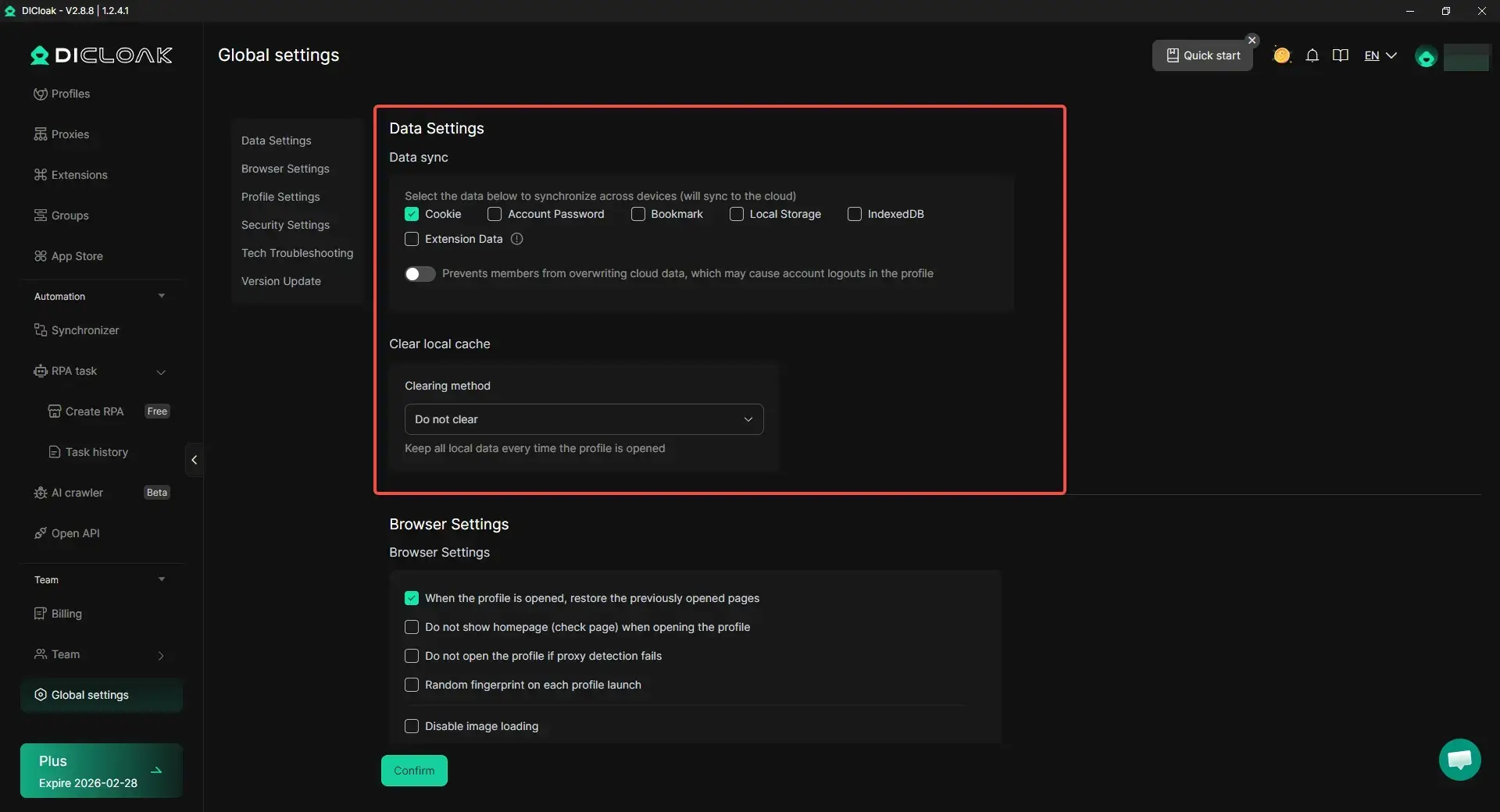
With tools like DICloak Antidetect Browser, creators can separate each platform account into its own independent browser profile. Each profile runs in a clean profile with its own browser fingerprint, cookies, and local data. This makes it easier to manage accounts on Fansly, Fanvue, LoyalFans, Patreon, and other OnlyFans alternatives without signals overlapping.
Here is how creators typically use this setup in real workflows:
- Run multiple creator accounts safely: Each account is opened in a separate browser profile. Sessions do not mix. This helps creators manage several platforms on one device while keeping accounts independent and stable.
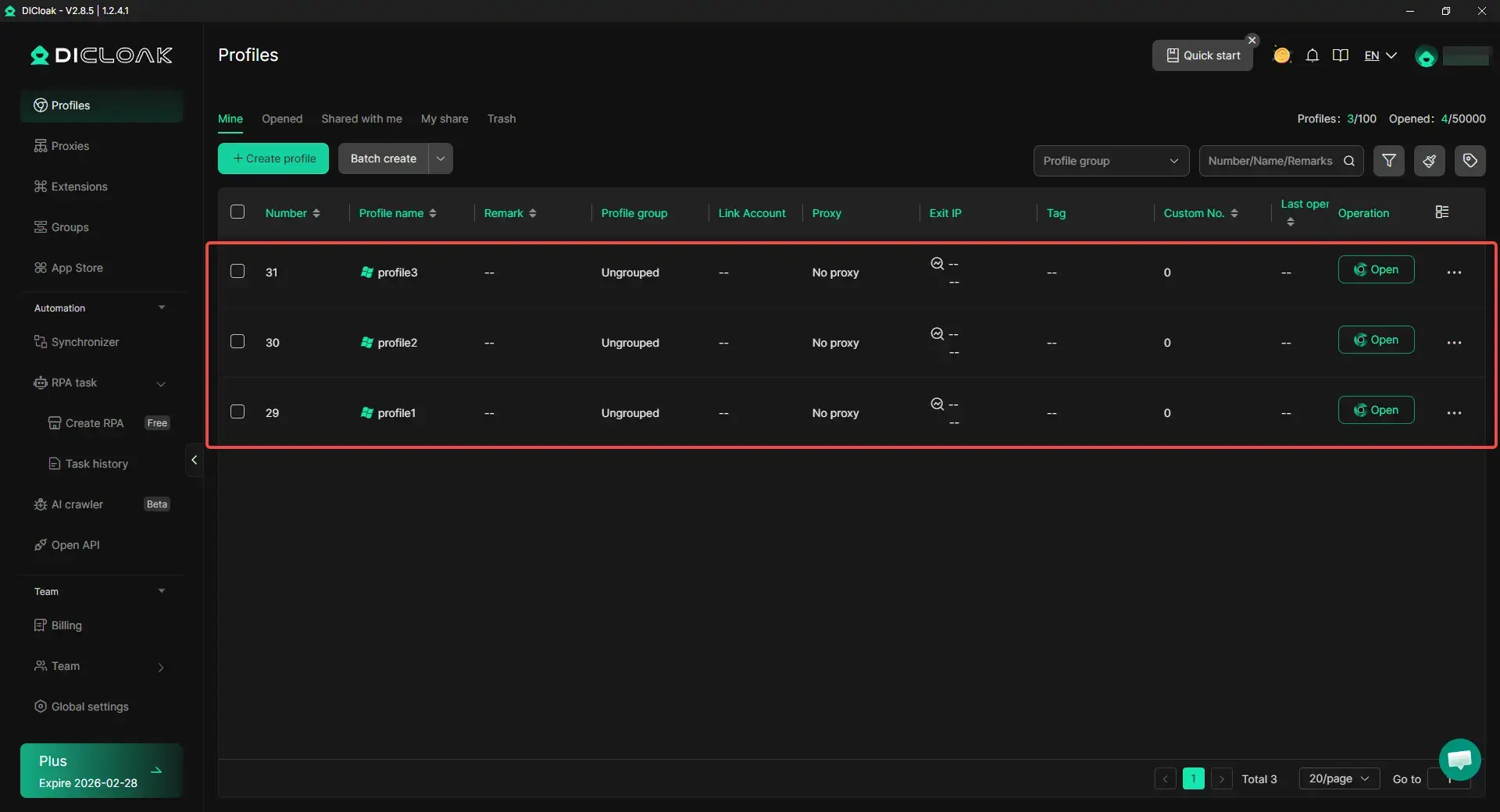
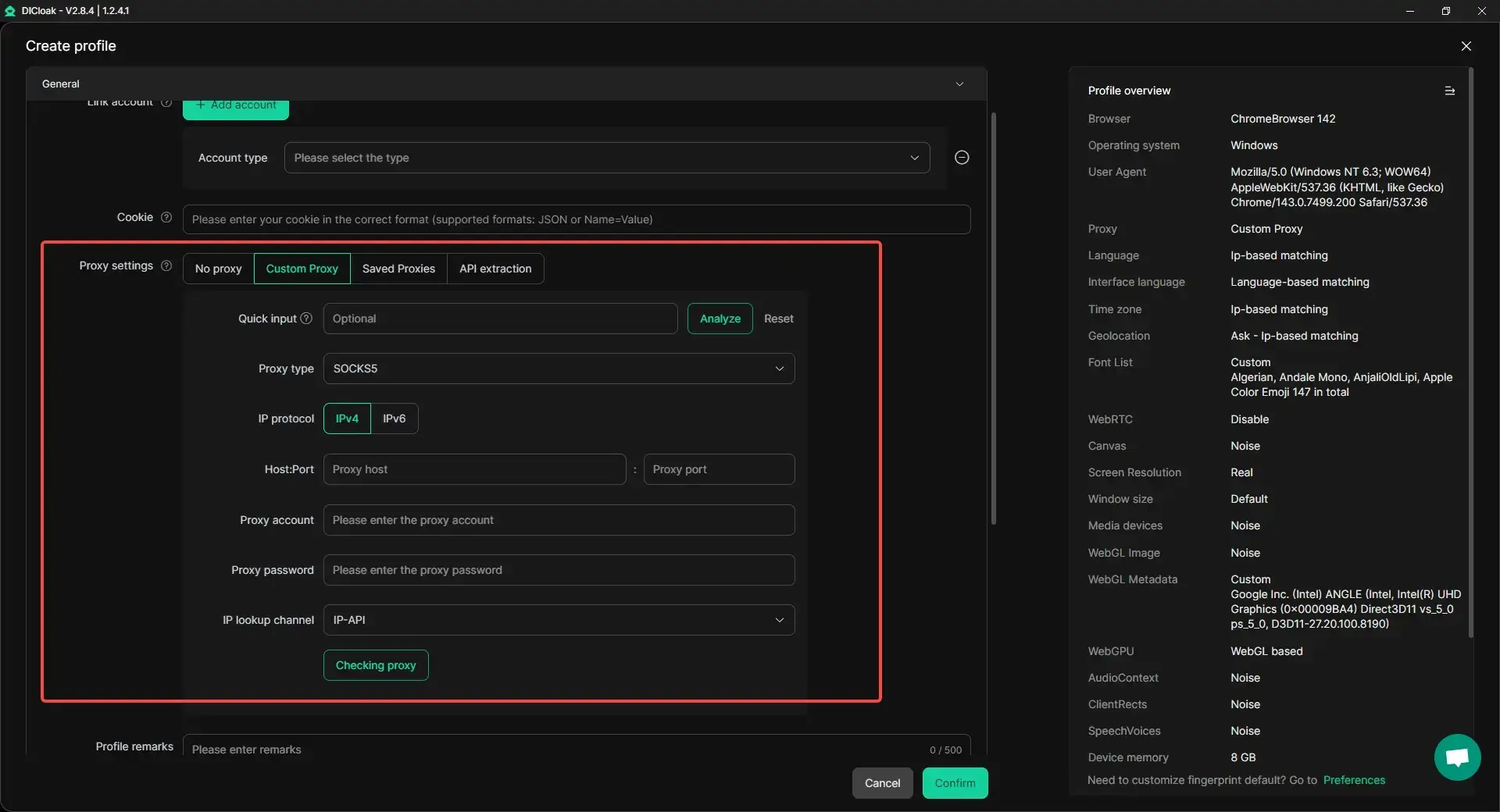
- Use custom proxy configurations per account: Different profiles can connect through different proxies (HTTP, HTTPS, or SOCKS5). This allows creators to match IP adresses to each platform account and avoid repeated IP reuse when working across multiple sites like OnlyFans.
- Keep profiles isolated and consistent: Each browser profile keeps its own login state, cookies, and behavior. This reduces repeated logins and lowers the chance of triggering security checks when switching between platforms.
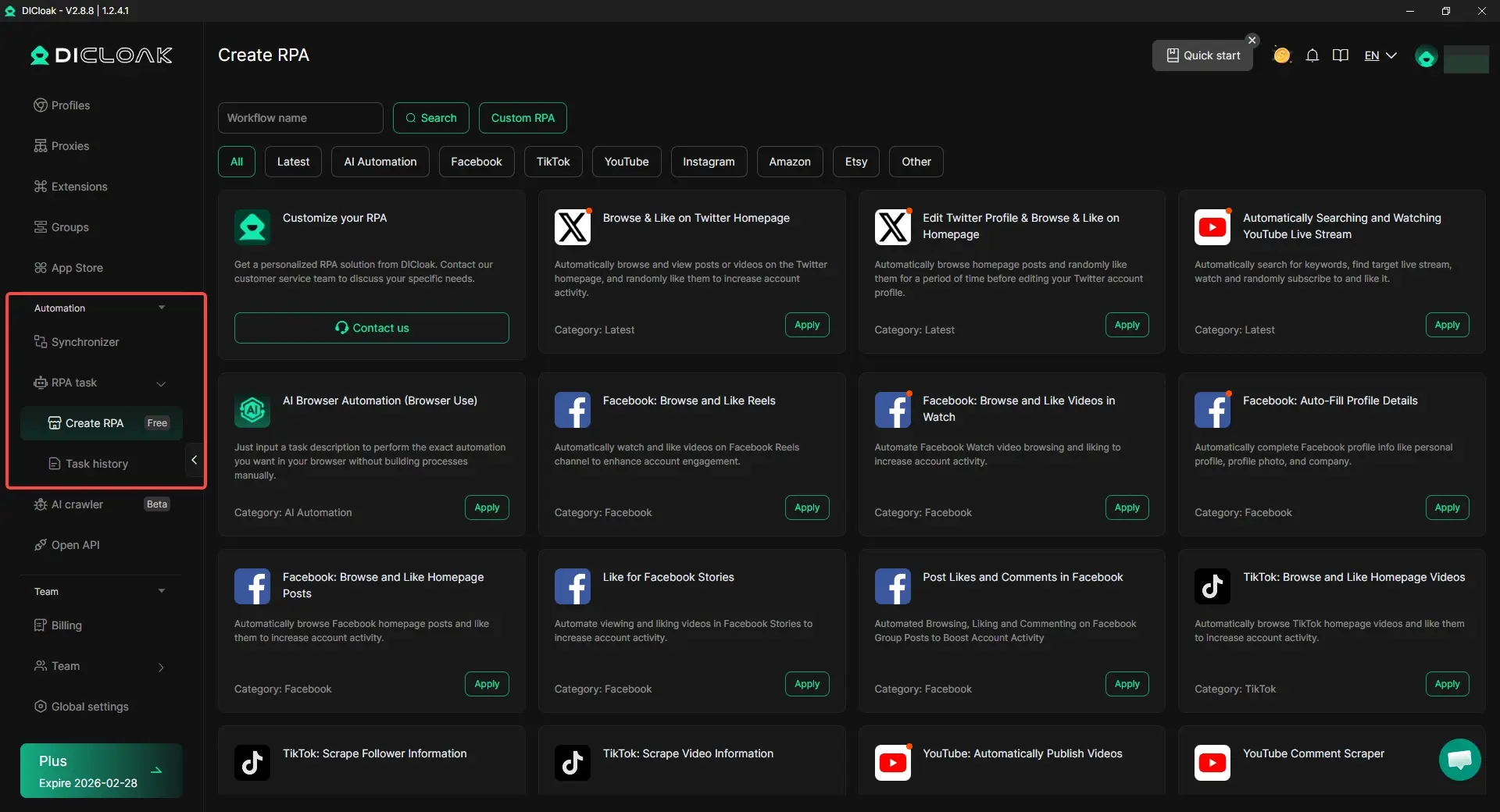
- Scale daily work with bulk and automation tools: When creators post on many platforms at once, bulk profile management, built-in RPA automation and Synchronizer help reduce manual work. Tasks like opening profiles, logging in, or repeating simple actions can be automated to save time.
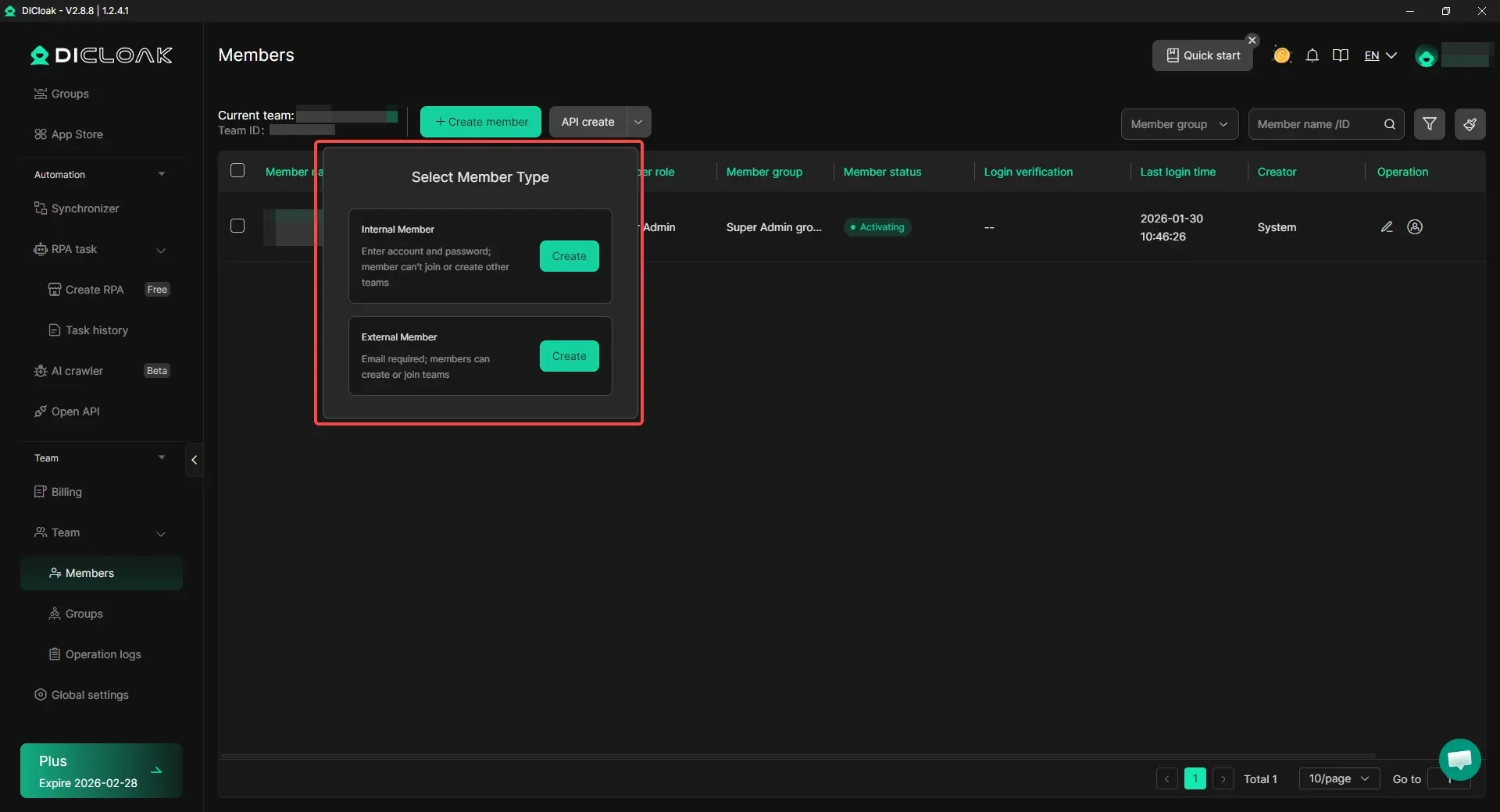
- Work with a team without sharing passwords: For studios or small teams, profile sharing and permission control make collaboration easier. Team members can access specific browser profiles without seeing sensitive account credentials.
For creators who treat content creation as a business, this approach turns multi-platform work into a controlled system instead of a daily risk. When combined with the right OnlyFans alternatives, proper profile isolation and proxy configuration help creators stay organized, reduce account issues, and focus more on content and fan relationships—not technical problems.
Final Thoughts: Choosing the Right OnlyFans Alternative in 2026
In 2026, creators have many OnlyFans alternatives, and the best choice depends on how you earn and how your fans find you. Some sites like OnlyFans work best for steady subscriptions. Others fit creators who rely on tips, paid messages, custom requests, or marketplace sales. That is why there is no single “best” platform for everyone.
A smart approach is not to rely on one platform. Payout delays, policy changes, and limited discovery can happen on any site. Many creators reduce risk by using two platforms and giving fans a clear “backup” option. The creators who transition well usually communicate early, move their best content first, and learn the new platform’s key tools before pushing fans to switch.
As you expand across multiple OnlyFans alternatives, account safety and organization matter more. Keeping accounts separated with isolated browser profiles and custom proxy configurations can help prevent login issues and reduce unwanted account linkage. With a stable setup and a clear plan, OnlyFans alternatives can become more than backups—they can be a safer way to grow long term.
Frequently Asked Questions (FAQs) about OnlyFans Alternatives
What are the best OnlyFans alternatives for content creators in 2026?
The best OnlyFans alternatives in 2026 depend on how you earn money and where your fans come from. Platforms like Fansly and Fanvue work well for subscription-based content. ManyVids is better for creators who sell videos and custom content. Patreon and Fanfix are safer options for non-explicit creators who want long-term memberships. There is no single best choice for everyone, so creators often test more than one platform.
Are OnlyFans alternatives safe to use for long-term income?
Most well-known OnlyFans alternatives are safe when used correctly, but long-term stability depends on the platform and how you manage your accounts. Payout rules, content policies, and payment partners can change over time. That is why many creators avoid relying on just one platform and keep a backup on another site. Using isolated environments and good account management practices can also reduce risks.
Can I use more than one OnlyFans alternative at the same time?
Yes. Many creators actively use two or more OnlyFans alternatives at the same time. For example, one platform may be used for subscriptions, while another is used for custom content or one-time sales. This approach helps reduce income risk and gives fans more ways to support you. The key is keeping accounts organized and avoiding shared logins or mixed environments.
How do I move my subscribers from OnlyFans to other platforms?
You usually cannot move subscribers automatically between platforms, even when switching to sites like OnlyFans. Instead, creators guide fans manually by sharing clear messages, links, and instructions. A common approach is to announce the new platform early, re-upload your best content first, and offer a small bonus or free preview to encourage fans to join the new page.
Why do creators use tools like DICloak when managing OnlyFans alternatives?
When creators manage several OnlyFans alternatives, account safety becomes more important. Logging into multiple platforms from the same browser or IP can cause account linking or security checks. Tools like DICloak help by isolating each account in its own browser profile and allowing custom proxy setups. This makes it easier to manage multiple platforms safely and keep accounts stable over time.
 Web Proxy Tools
 Free Tools
 Cookie Plugin
 UA Generator
 MAC Address Generator
 IP Generator
 IP Address List
 2FA Code Generator
 World Clock
 Anonymous Check
 WebRTC Leak Test
 UUID Generator
 Free Web Proxy Site
 Proxy Checker
 FB Ad Checker
 AI Web Scraping
 Free SMM Tools
 Twitter Shadowban Checker
 Instagram Name Checker
 UTM Generator
 Username Generator
 AI Hashtag Generator
 LinkedIn Headline Generator
 Social Media Image Resizer