In the high-stakes digital marketplace of 2026, managing multiple online profiles for your business is no longer a luxury—it's a necessity. Yet, professionals in e-commerce, advertising, and social media management constantly face the existential threat of account bans and restrictions. A single misstep can link your accounts, jeopardizing valuable assets and grinding your operations to a halt. The solution lies in a specialized class of software: AntiDetect browsers. These tools are the essential defense for any professional looking to scale their digital operations securely. This guide provides a detailed, expert review of the best AntiDetect browsers on the market, helping you choose the right tool to protect your digital footprint and unlock new growth opportunities.
What Are AntiDetect Browsers and Why Do You Need One in 2026?
To effectively prevent account linking and bans, you first need to understand the technology that enables them. Major online platforms don't just track your IP address; they analyze a complex set of data to create a unique "digital fingerprint" for every user. This section demystifies the concepts behind digital fingerprints and explains how AntiDetect browsers provide a sophisticated and robust solution to reclaim your online anonymity.
The Problem: Your Digital Fingerprint Explained
A digital browser fingerprint is a unique identifier created by websites that collect and combine a wide array of data points from your browser and device. This fingerprint is far more specific than an IP address and can uniquely identify you across the web, even if you clear your cookies or use incognito mode. If multiple accounts you manage share the same fingerprint, platforms can easily connect them and issue a ban.
The key parameters that form your digital fingerprint include:
- User-Agent: An identifier for your specific browser and operating system (e.g., Chrome 118 on Windows 11).
- IP Address & WebRTC Leaks: Your public IP address reveals your location, and WebRTC leaks can expose your real IP even when using a VPN.
- Canvas & WebGL Signatures: Unique graphical fingerprints generated by how your browser renders images and 3D graphics.
- Hardware Specifications: Details about your device's CPU, RAM, and GPU, which can be surprisingly unique.
- Regional Settings: Your time zone, language preferences, and location data, which must be consistent to appear authentic.
- Browser Configuration: The specific combination of fonts, plugins, and audio context settings installed on your system.
The bottom line is simple: if your multiple accounts share identical or mismatched fingerprints—for example, an IP address in Germany but a time zone set to New York—platforms will flag them as suspicious, leading to restrictions and bans.

The Solution: How AntiDetect Browsers Create a Digital Disguise
AntiDetect browsers solve the fingerprinting problem by allowing you to create and manage multiple, completely isolated browser profiles from a single computer. Each profile is designed to emulate a different user on a different device by generating a unique and consistent digital fingerprint.
Instead of just changing one parameter, an AntiDetect browser spoofs or modifies hundreds of them—from WebGL and Canvas to hardware details and font lists—to create a digital identity that looks completely authentic and natural to anti-fraud systems.
This comprehensive approach is fundamentally different from simpler tools like proxies. A proxy only changes your IP address, leaving the rest of your detailed browser fingerprint exposed. An AntiDetect browser, in contrast, masks your entire digital identity, providing a complete and secure disguise for each of your online accounts. This technology empowers you to manage and scale your business operations without fear of detection.
Why You Need an AntiDetect Browser: Key Business Use Cases
AntiDetect browsers have evolved from niche privacy tools into critical infrastructure for a wide range of industries. Their strategic importance lies in their ability to enable growth, enhance security, and drive operational efficiency in a digital marketplace where identity is constantly scrutinized. These browsers are indispensable for any business that relies on managing multiple online presences.
- Multi-Account Ad Management: Run numerous ad campaigns on platforms like Facebook, Google, and TikTok from a single dashboard. By isolating each ad account in its own unique browser profile, you can prevent them from being linked and shut down, protecting your ad spend and revenue streams.
- E-commerce Operations: Manage multiple storefronts on platforms like Amazon, Shopify, eBay, and Etsy. This allows you to test different product niches, serve various geographic regions, or simply keep your brands separate without risking a catastrophic ban that affects your entire e-commerce empire.
- Social Media Management (SMM): Securely handle dozens of client or brand accounts on Instagram, TikTok, and other social networks. An AntiDetect browser allows agencies and managers to operate from a single device without triggering security alerts or linking client profiles together.
- Web Scraping: Collect market data, competitor prices, or product information at scale without being blocked. By rotating through different browser fingerprints and IP addresses, you can bypass CAPTCHAs and anti-bot systems that would otherwise halt your data collection efforts.
- Affiliate Marketing & Traffic Arbitrage: Test multiple offers, traffic sources, and ad creatives across different accounts to optimize campaigns and maximize returns. This separation minimizes the risk of one flagged account compromising your entire affiliate marketing setup.
- Secure Access for Crypto & Finance: Manage multiple cryptocurrency portfolios or access financial platforms from geographically restricted regions. AntiDetect browsers provide an essential layer of security and anonymity, preventing platforms from raising security flags or blocking access based on inconsistent login data.
How We Tested the Best AntiDetect Browsers
To provide a credible and objective review, we employed a systematic testing methodology focused on the core functions that matter most for security, performance, and usability. Our goal was to move beyond marketing claims and evaluate each browser under real-world conditions, ensuring our recommendations are based on empirical data.
Our Testing Methodology
We evaluated each AntiDetect browser against a set of key criteria to determine its effectiveness and overall value:
- Anonymity & Fingerprint Quality: The primary test was passing comprehensive checks on industry-standard services like PixelScan.net and Iphey.com. A "passed" result indicates that the browser's fingerprint appears consistent and non-suspicious.
- Performance & Stability: We measured the average time it took to launch a new profile and monitored the CPU and RAM load during mass operations to assess how well the browser performs at scale.
- Proxy Integration: We assessed the ease of adding and managing different proxy types (Residential, Mobile, SOCKS5, etc.) and checked for critical IP leaks, such as those through WebRTC or DNS.
- Feature Set: We evaluated the availability and quality of unique features, including Robotic Process Automation (RPA), team collaboration tools, and mobile device emulation.
- Update Frequency: We checked the development logs to see how often the browser core is updated. Frequent updates are crucial for maintaining modern fingerprints that don't appear outdated or suspicious to websites.
- Pricing & Value: We analyzed the cost of each browser relative to the number of profiles offered, the richness of its feature set, and its overall performance to determine the best value for different use cases.
Meet the Checkers: PixelScan and Iphey
To validate the anonymity claims of each browser, we used specialized online checker tools like PixelScan and Iphey. These services simulate the advanced anti-fraud checks employed by major websites. They analyze hundreds of parameters—from your browser version and OS to your WebGL signature and time zone—to determine if your digital identity looks realistic and consistent. A "green" or "passed" result from these checkers indicates that the browser is successfully masking your true fingerprint and presenting a believable digital disguise.
The Top AntiDetect Browsers of 2026: A Detailed Review
Now that we've established the "why" and "how," it's time to dive into the "what." The following section provides an in-depth analysis of the leading AntiDetect browsers on the market. Each browser has been rigorously evaluated against our testing criteria to help you make an informed decision based on your specific operational needs, technical expertise, and budget.
DICloak: Best All-Around AntiDetect Browser
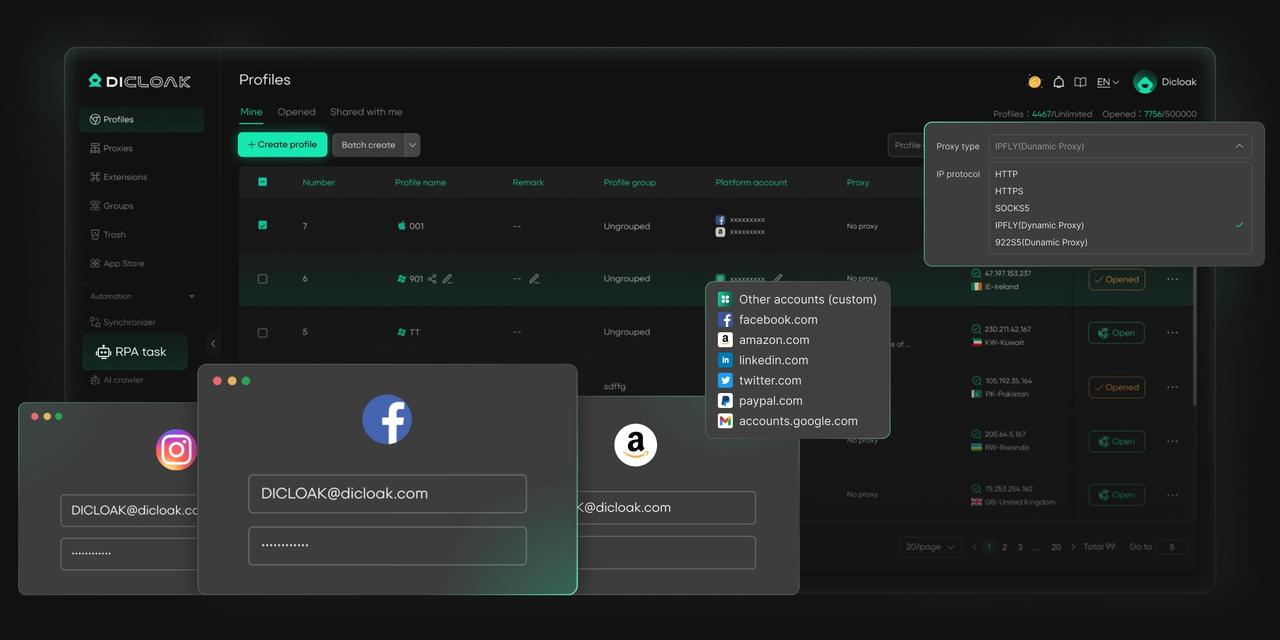
After extensive testing, DICloak emerges as our top recommendation for its exceptional balance of price, performance, and advanced features. It stands out as the ideal solution—a true "golden mean"—for solopreneurs, small teams, and growing agencies who need a reliable, user-friendly, and powerful tool for managing multiple accounts. DICloak delivers enterprise-grade security and functionality without the premium price tag, making it the clear winner for overall value.
Fingerprint Verification & Security
In our tests, DICloak confidently passed all security checks on both PixelScan and IPhey. Its profiles consistently appeared in the "green zone," signifying a clean, realistic, and consistent digital fingerprint that evades detection.
DICloak ensures top-tier security by generating a unique digital identity for every account. It masterfully spoofs critical fingerprint elements like WebGL, Canvas, cookies, and audio context, while its advanced data encryption and cloud synchronization protect your data from unauthorized access and scraping. The development team is highly active, updating the browser core almost every few weeks to ensure its fingerprints remain modern and secure.
Core Features & Performance
DICloak combines a powerful feature set with a smooth, intuitive user experience, making it accessible to beginners while satisfying the needs of power users.
- Excellent Performance: DICloak is built for speed and efficiency. Profiles launch in approximately 3.5 seconds, and the browser remains stable and responsive even when running numerous profiles in parallel.
- Powerful Automation: Its built-in Robotic Process Automation (RPA) tools and innovative "Synchronizer" feature allow you to automate repetitive tasks—like logging in, filling out forms, or posting content—across multiple profiles simultaneously, saving countless hours of manual work.
- Seamless Team Collaboration: DICloak is designed for teamwork. It offers robust features for securely sharing profiles, managing user permissions, and tracking activity logs, ensuring your team can collaborate efficiently without compromising security.
- Compatible with All Major Operating Systems: Based on the Chrome core, DICloak supports simulating Windows, Mac, iOS, Android, and Linux operating systems. No matter what platform you need, DICloak has you covered.
- Built-in Proxy Support: DICloak supports all major proxy protocols (HTTP, SOCKS5) and even offers a selection of free residential and datacenter proxies to help new users get started immediately.
DICloak’s pricing structure is one of its most compelling advantages. It offers a generous free plan with 5 profiles for users to test its core functionality. The paid plans are highly competitive, with the "Base" plan starting at just $4.80 per month (when paid annually). For larger teams and more demanding workflows, the "Plus" and "Share+" plans provide additional profiles, advanced features, and priority support at an excellent value.
Bottom Line: DICloak is the undisputed leader for price-to-quality ratio. It delivers a perfectly balanced and robust solution for secure multi-accounting, offering premium features, reliable performance, and an intuitive interface at a fraction of the cost of its competitors.
Multilogin
Multilogin is widely regarded as the gold standard for large-scale, mission-critical operations. Its proprietary Mimic and Stealthfox engines enable deep fingerprint customization, making it ideal for enterprises that require the highest level of reliability. However, the platform's premium pricing may be a barrier for smaller businesses. Additionally, despite its performance being excellent, the profile launch time is slower compared to some competitors, such as DICloak. Multilogin’s team collaboration features and encrypted cloud storage make it a top choice for organizations, but its price tag of €29/month for just 10 profiles can quickly add up.
AdsPower
AdsPower is specifically designed for users handling hundreds or thousands of accounts, particularly in e-commerce and digital advertising. Its standout feature is its no-code automation tools, which allow users to record and replicate actions across multiple profiles. This tool significantly boosts operational efficiency, particularly for agencies. However, AdsPower's automation capabilities come with a learning curve, and its free plan with only 5 profiles may be limiting for businesses that need to scale quickly. Additionally, while it excels in bulk operations, AdsPower can become overwhelming for those who are not accustomed to managing large-scale account workflows.
Kameleo
Kameleo is the best antidetect browser for mobile emulation, offering advanced fingerprint control and authentic mobile browser profiles. Its ability to fully emulate Android profiles makes it invaluable for businesses targeting mobile-first platforms, such as TikTok and Instagram. However, Kameleo is better suited for technically proficient users due to its manual configuration requirements to pass fingerprint checks on tools like PixelScan and Iphey. Additionally, its pricing and complexity might not appeal to general users, especially those looking for an easy-to-use solution for more typical multi-account management tasks.
Other Notable AntiDetect Browsers of 2026
While the browsers reviewed above represent the top tier for specific needs, several other strong contenders offer unique features or compelling pricing models that are worth considering for different types of users.
Quick Reviews
- GeeLark: This tool is best described as a "mobile farm in the cloud." Instead of emulating a mobile browser, GeeLark provides remote access to real Android devices. This approach offers maximum security and authenticity for tasks on mobile-only apps like TikTok. While its desktop browser failed our tests, its core Android product passed Iphey checks with flying colors.
- Incogniton: Positioned as the "best for technicians and frugal users," Incogniton stands out with its incredibly generous free plan, which includes 10 browser profiles. It requires manual configuration to pass fingerprinting checks, as default settings failed due to hardware parameter mismatches, but it offers unbeatable value for users on a tight budget who are willing to invest time in setup.
- MoreLogin: This is a solid budget option that includes a "Cloud Phone" feature for mobile tasks. However, it failed. The PixelScan check failed due to a suspected mismatch between its time zone and location settings. Its interface also feels somewhat "raw" and is clearly oriented toward the Asian market, which may present a learning curve for some Western users.
- NSTBrowser: Characterized as a powerful tool "for geeks," NSTBrowser comes with a built-in RPA framework designed for developers and large-scale automation experts. It passed PixelScan but failed Iphey on default settings. While its free plan is limited, its paid plans are very expensive, positioning it as an enterprise solution for complex, code-based automation projects.
- 1Browser: As the best free antidetect browser, 1Browser aims to make multi-accounting accessible to everyone. It offers 10 profiles for free, a lightweight interface, and includes free proxy traffic to get started. Its primary drawback is that its fingerprints failed checks on default settings and require high-quality paid proxies to pass. Additionally, profiles on the free plan are deleted after two months of inactivity.
The Expert's Verdict: Quick Recommendations at a Glance
With so many excellent options available, choosing the right AntiDetect browser can be daunting. This section simplifies the decision-making process by summarizing our test results and providing clear, role-based recommendations to help you select the perfect tool for your needs.
Comparison of Top AntiDetect Browsers
This table provides a side-by-side comparison of the key performance and value metrics for the leading contenders.
| Browser |
PixelScan Check |
IPhey Check |
Profile Launch Time |
Built-in Proxies |
Starting Price (per month) |
| DICloak |
✅ Passed |
✅ Passed |
~3.5 sec (Fast) |
✅ Yes |
$28.8 (100 profiles). 5 profiles free |
| Multilogin |
✅ Passed |
✅ Passed |
~5 sec (Fast) |
✅ Yes |
€29 (10 profiles). No free trial |
| AdsPower |
✅ Passed\* |
✅ Passed\* |
~4 sec (Fast) |
❌ No |
$5.40 (10 profiles). 5 profiles free |
| MoreLogin |
❌ Noticed inconsistencies |
✅ Passed |
~4 sec (Fast) |
❌ No |
$9 (10 profiles). 2 profiles free |
| Incogniton |
❌ Didn’t pass (Hardware mismatch) |
❌ Didn’t pass |
~6 sec (Normal) |
❌ No |
$14 (10 profiles). 10 profiles free for 2 months |
| NSTBrowser |
✅ Passed |
❌ Didn’t pass |
~4.5 sec (Fast) |
❌ No |
$299 (100k profiles). Free 10 runs/day |
| Kameleo |
❌ Didn’t pass (Defaults weak) |
❌ Didn’t pass |
~6 sec (Normal) |
❌ No |
€45 (∞ profiles). 7-day trial (time limited) |
| GeeLark |
❌ Didn’t pass (Desktop) |
✅ Passed (Android)\* |
12+ sec (Slow) |
❌ No |
$19 (50 phones, 75 min). 2 phones free |
| 1Browser |
✅ Passed (With paid proxies)\* |
❌ Didn’t pass |
~2 sec (Very Fast) |
✅ Yes |
$0 (10 profiles free). Paid from $9 (50 profiles) |
*Note: Some test results require specific context. GeeLark's primary Android browser passed Iphey, though its desktop version did not. 1Browser and AdsPower passed checks with proper configuration and high-quality proxies, but failed on default settings.
For the Best Overall Value, we recommend DICloak. It offers the optimal balance of price, performance, security, and advanced features, making it the top choice for most users.
The Critical Role of Proxies with AntiDetect Browsers
An AntiDetect browser is a powerful tool, but it's only half of the solution for achieving true online anonymity and security. To complete the disguise, you must pair it with a high-quality proxy service.
Think of it this way: an AntiDetect browser changes how your device looks to a website, while a proxy changes where your device appears to be from by masking your real IP address. Using both together is absolutely critical for staying under the radar of sophisticated anti-fraud systems.
For the best results, always use one of the following proxy types with your AntiDetect browser:
- Residential Proxies: These IPs belong to real home internet users, making your traffic appear completely authentic and trustworthy.
- Mobile Proxies: These IPs are assigned to mobile devices, which are highly trusted by platforms and very difficult to detect or block.
A word of caution: avoid using cheap datacenter proxies for sensitive tasks. Their IPs are easily identifiable as coming from a commercial server, which can defeat the purpose of using an advanced fingerprint-masking browser and raise immediate suspicion.
Frequently Asked Questions (FAQ) about AntiDetect Browsers
Are AntiDetect browsers legal?
Yes, the tools themselves are legal to use in most jurisdictions. However, how you use them must comply with the terms of service of the platforms you access and all applicable local laws. They should be used for legitimate business purposes, not for fraudulent activities.
Is an AntiDetect browser better than a proxy?
Absolutely. A proxy is a limited tool that only hides your IP address. An AntiDetect browser masks your entire digital fingerprint—including hardware, software, and browser-specific characteristics—offering a much more complete and secure digital disguise.
Do I need technical skills to use an AntiDetect browser?
Not necessarily. Most modern AntiDetect browsers, like DICloak, are designed with user-friendly interfaces that are accessible to beginners. While they also offer advanced features for professionals, you can get started with the core functionality without any special technical knowledge.
Which browser is the best for avoiding fingerprinting?
Based on our tests, tools like DICloak provide the most advanced and reliable fingerprint masking. They consistently pass rigorous detection checks on services like PixelScan and IPhey, ensuring your profiles appear authentic and remain secure.
Can AntiDetect browsers be used for automating tasks across multiple accounts?
Yes, many AntiDetect browsers, such as DICloak, offer robust automation features that allow users to manage multiple accounts simultaneously. These features are especially useful for e-commerce sellers, marketers, and social media managers who need to scale operations. Automation tools like RPA (Robotic Process Automation) record and replicate actions across various profiles, saving time and reducing manual effort. However, it's important to configure these tools correctly to avoid detection, as excessive or unnatural behavior might raise red flags with the platform.
Conclusion
In the increasingly complex digital landscape of 2026, an AntiDetect browser is no longer an optional tool but an indispensable asset for any professional serious about managing multiple online accounts. These powerful solutions provide the security, anonymity, and operational flexibility needed to scale your business, protect your digital assets, and stay ahead of the competition. By creating unique and believable digital identities, you can confidently navigate the challenges of multi-accounting without the constant fear of platform bans.
After a thorough evaluation of the market, our expert verdict is clear. For its superior combination of robust security, user-friendly design, powerful features, and unbeatable value, we confidently recommend DICloak as the best all-around AntiDetect browser. We encourage you to try its free plan and experience firsthand how it can transform and secure your online operations.
 Web Proxy Tools
 Free Tools
 Cookie Plugin
 UA Generator
 MAC Address Generator
 IP Generator
 IP Address List
 2FA Code Generator
 World Clock
 Anonymous Check
 WebRTC Leak Test
 UUID Generator
 Free Web Proxy Site
 Proxy Checker
 FB Ad Checker
 AI Web Scraping
 Free SMM Tools
 Twitter Shadowban Checker
 Instagram Name Checker
 UTM Generator
 Username Generator
 AI Hashtag Generator
 LinkedIn Headline Generator
 Social Media Image Resizer