How to make money on YouTube , a question that seems simple until you face real restrictions: there are few views, monetization is not included, and even with the first payments, the amounts barely cover the cost of content. Many start with enthusiasm, but quickly run into the fact that subscribers do not grow, and algorithms do not promote videos just for trying.
People often advise: "Just shoot, and subscribers will come on their own." In practice, without a clear strategy, most videos gather only friends and casual viewers. Even if the channel has gained the first 1000 subscribers, then everything is more difficult, the competition has grown, and the requirements for quality, regularity, and engagement have become higher.
In fact, making money on YouTube is not only about a beautiful picture or a "good topic". Here it is more important to understand which formats really generate income, when it is worth connecting affiliate programs, how to correctly set up advertising and what monetization methods work for beginners and experienced authors. Mistakes at the start often cost time and money, especially if you chase a quick increase in views at any cost, without thinking about the long-term result.
If you want to figure out where to start and how to build income on YouTube without empty promises, let's analyze the working steps, from choosing a topic to the first real payments.
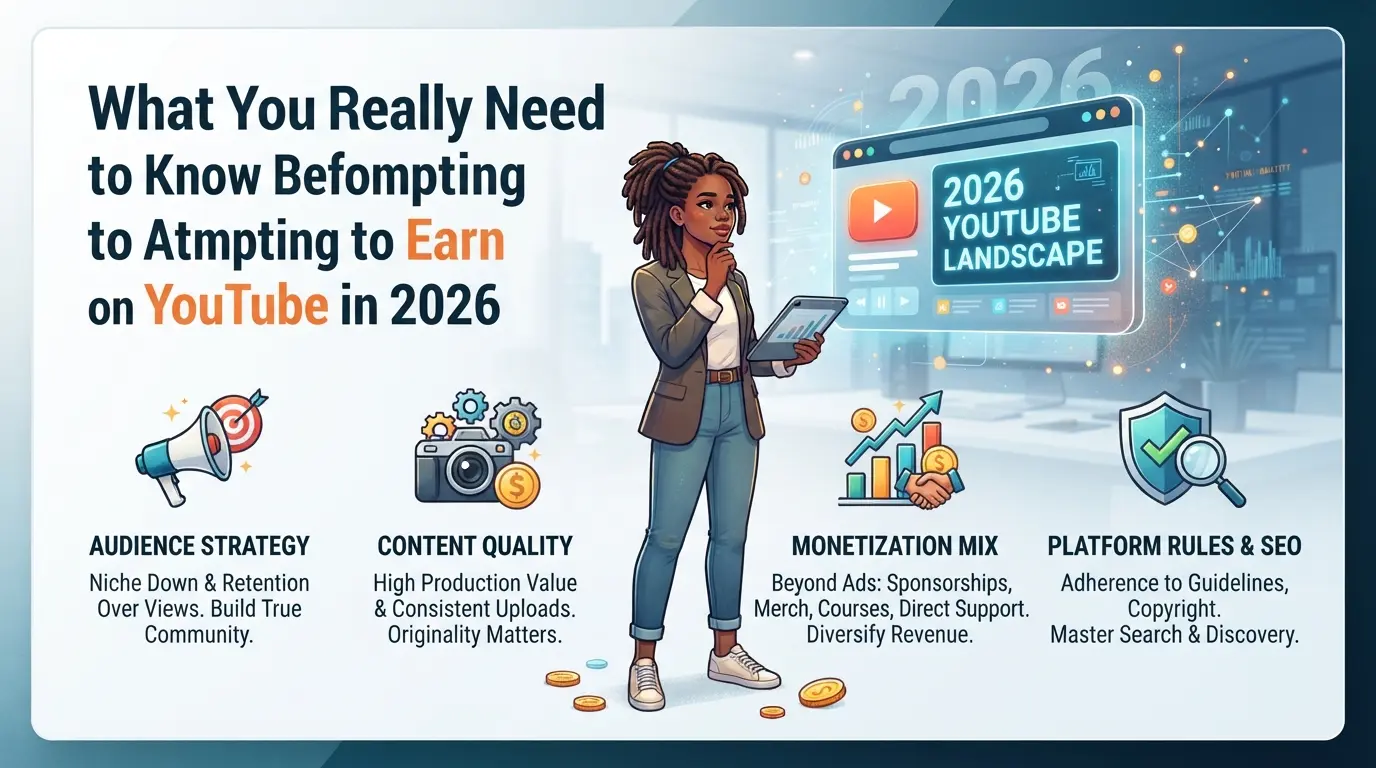
What You Really Need to Know Before Trying to Make Money on YouTube in 2026
Most people who are interested in making money on YouTube are quickly faced with the reality: the platform does not promise quick or easy money. Even experienced creators often underestimate how much effort and time goes into a stable income, especially if you only count on monetization through standard ads.
Why Most Beginners Don't Make Money On YouTube
The expectation that "once you posted, then you earned" does not work. Most of the new channels stop publishing videos after a couple of months: there are few views, subscribers do not grow, and there is no income at all. Everything rests on a lack of time, resources for editing, and unwillingness to invest in development when the return is not visible for a long time.
YouTube Monetization Requirements in 2026
Monetization is no longer just "turn on ads and wait for money". To connect advertising through the YouTube Partner Program, a channel must gain at least 1000 subscribers and 4000 hours of views in the last 12 months. But even if these conditions are met, not everything is so simple: in 2026, checks for the originality of content have been tightened, and any hints of cheating (views, likes, comments) lead to manual moderation or complete blocking of monetization, even if the channel was approved earlier. There are restrictions on the use of music, short videos ("Shorts" are not taken into account in the total watch time for monetization), and advertising revenue is shared with copyright holders if the video contains someone else's content. Many beginners waste time on "gray" schemes, for example, mass purchase of subscribers or automated uploading of other people's videos, but YouTube quickly calculates such channels and most often blocks payments. The main mistake is to ignore these rules in the hope of a quick start: then it is almost impossible to restore the channel, even if it brought a good income.
Main risks: strikes, blocks, demotivation
- Copyright infringement (music, video clips) is the most common cause of strikes and monetization disabling.
- Publication of "gray" or controversial content: too aggressive clickbait, shocking videos, political topics, increases the risk of blocking.
- Weak activity and rare publications quickly kill motivation: without regular content and analysis of statistics, viewers leave, and income does not appear.
The next logical step is to understand what formats and ways to make money on YouTube really work now, so as not to spend months on deliberately unpromising approaches.
What Ways To Make Money On YouTube Really Work In 2026
Now on YouTube, it is not just monetization by views that really brings income, but a combination of several methods: direct advertising, donations, sales, and integrations. The most working schemes depend on the topic, audience engagement, and whether the author is ready to take on the organization of payments and interaction with brands. If you want to understand how to make money on YouTube without empty promises, it is better to immediately assess what is easier to launch and where the failures are most often.
YouTube Partner Program & Ads
Official monetization through YouTube is connected after 1000 subscribers and 4000 hours of viewing per year. Income depends on the topic and geography: in Russia, CPM can be below $1, and in English-speaking niches, above $3-5 per thousand views. Restrictions are strict: some topics (for example, crypto, media, game reviews) often fall under the yellow badge, and income falls.
Donations, sponsorships, and paid subscriptions
The most flexible option is for channels with a loyal audience, donations and support through third-party services or built-in paid YouTube subscriptions. In 2026, the situation is becoming more and more common: the main income comes not from advertising, but from viewers who regularly support the author. Example: on a channel with 7000 subscribers, if at least 50 people sign up for a paid subscription for $2 per month, this is already a stable $100. But if the content is released rarely or the author does not build personal contact with the audience, donations quickly "dry up", viewers go to more active channels. It is important not to promise too much and not to expect that just the "Sponsor" button will bring income by itself.
Selling goods, services, and merchandise on YouTube
Sales work best on channels with a clear topic and a consistent audience. For example, a designer of tutorial videos can sell their courses or templates directly through links in the description. Successful bloggers often raise their main income not from advertising, but from their own products, but if the channel does not give credibility or the audience is not interested, sales do not come.
Affiliate programs and promotion of other people's products
Affiliate programs are suitable for those who know how to make reviews or talk about services. For example, a channel about technology can insert links to stores, if the viewer buys, the author will receive a small percentage. But it is worth considering: if everything turns into "advertising spam", the audience quickly loses interest, and income falls.
Working with brands and integrations
- Check the terms of the contract: payment terms, placement format.
- Clarify who is responsible for creativity and approvals.
- Do not take integrations in dubious niches, the risks of blocking the channel are really higher.
At this stage, you should choose who is easier to start with: with an audience, brands, or through sales. The next step is to specifically set up the first payouts and understand how to build income further.
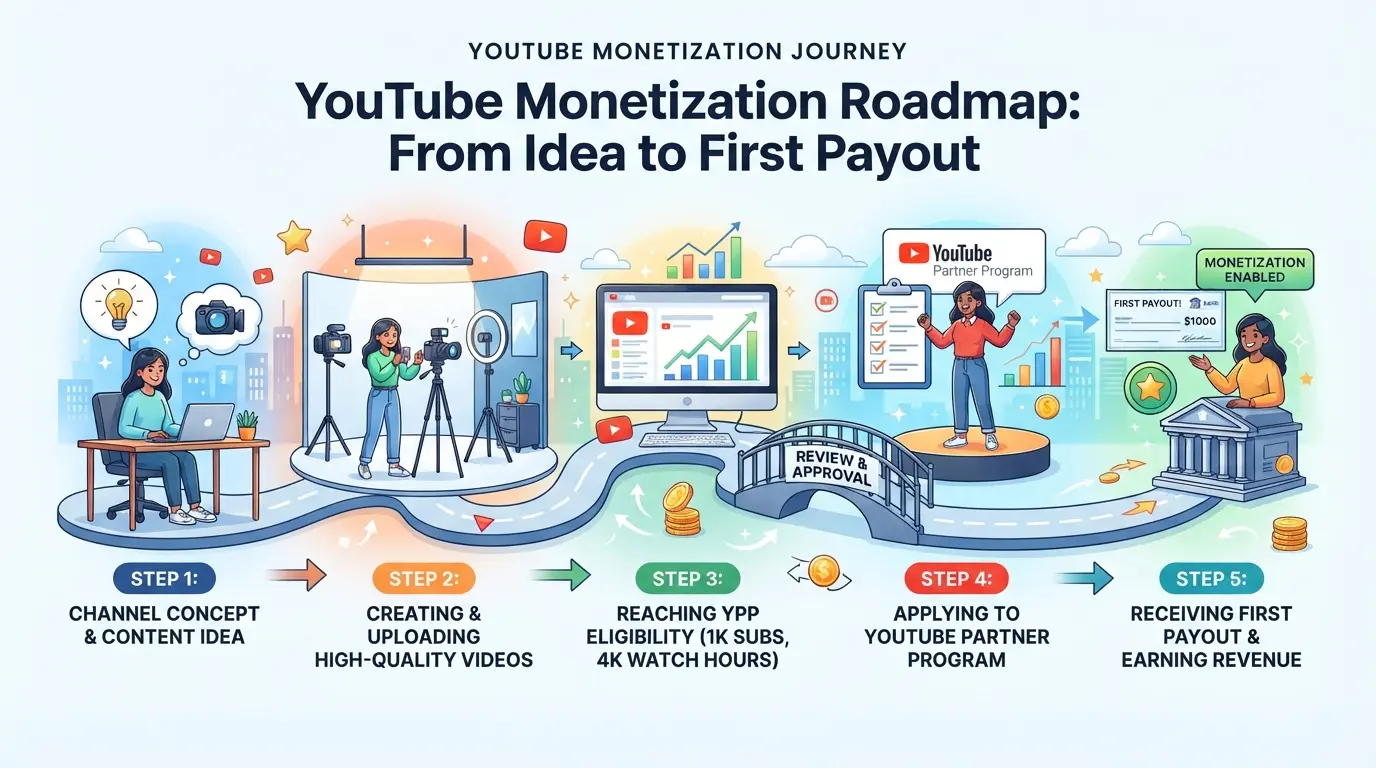
Steps to start making money on YouTube: from idea to first payout
To really start receiving money from YouTube, you do not need to immediately chase complex schemes, it is more important to go through the basic route: choose a niche, design a channel, establish regularity, collect the first viewers and connect monetization. Here is the working procedure.
Choosing a niche and content format
- Check if there is a demand for the topic, look for frequent questions and competitor views.
- Assess the competition: if there are too many large channels in the niche, the risk of "getting stuck" without growth is high.
- Do not take on a topic just because of income, channels where the author does not understand or are not interested in the topic usually quickly lose audience.
Create and design a channel
- Fill in the description, add an avatar and a cover so that the viewer does not think that the channel is abandoned.
- Make a simple starter screensaver: even a minimal design reduces the chance that a person will leave immediately after the first click.
- Make sure that the name is clear and does not copy top players, otherwise the channel will be lost.
Scheduling and Regularity of Posts
- Make a calendar of releases, gaps are noticeable, even if you publish once a week.
- Use the planner or reminders so you don't forget about shooting and editing.
- If you missed the episode, warn the audience, otherwise a drop in engagement is almost guaranteed.
Subscriber Recruitment and First Views
- Launch a channel with two or three videos at once, a single video will receive almost no organic traffic.
- Make short videos to start: long videos without an audience turn out to be "dead".
- If the growth does not come after the first 10 videos, reconsider the topic or presentation, channels with zero growth rarely come to life on their own.
Monetization and withdrawal of funds
- Apply to the affiliate program when you have gained 1000 subscribers and 4000 hours watched.
- Check the payout settings so that there are no errors with taxes or the bank, delays can be due to incorrect data.
- Expect the first payout: It usually arrives a month after approval, but system failures can delay money for another week.
The next important step is to understand what the amount of income depends on and what mistakes most often interfere with stable earnings.
What YouTube revenue depends on: key factors and mistakes
Income on YouTube rarely depends only on the number of subscribers or views. In practice, three things are decisive: the right niche, an active audience and the country of the viewer. If you do not take into account these details, you can work for years in vain, and when you make mistakes, you lose money even with the growth of the channel.
Influence of themes, audience, and geography
Niche and geography determine how much you can really get from advertising. For example, financial and IT channels give CPM 2-3 times higher than children's or entertainment channels. The viewer's country is also critical: views from the USA and Germany pay 5-10 times better than from the CIS or India. A channel with the same topic, but a different audience, will bring significantly different amounts.
| Niche |
CPM (example) |
Country |
CPM (example) |
| Finance |
$4-8 |
USA |
$5-10 |
| Entertainment |
$1-2 |
Russia/Ukraine |
$0.5-1 |
| Education |
$2-4 |
India |
$0.3-0.7 |
Mistakes that cause revenue to drop
The most common mistake is focusing on the "number of videos" instead of engagement. A channel with 100 videos easily loses revenue if people stop watching to the end or do not comment. Example: the author abruptly changes the topic, the audience leaves, CPM drops, and YouTube stops showing ads actively. Even worse if there is a violation of the rules (for example, duplicate content or clickbait): the platform can disable monetization without warning, and it is difficult to restore it.
How to Analyze and Increase Revenue
- Keep an eye on CPM and RPM, not just views, it's these metrics that show how much you're actually getting.
- Check engagement: the average watch time and the percentage of viewers who watch the video to the end affect revenue growth.
- Test topics and formats: regular changes in presentation help you understand what retains the audience and increases payouts.
Only competent analysis gives a chance to grow, otherwise, even with good views, the income may remain at the level of "coffee".
How operators use DICloak to securely manage multiple YouTube accounts and automate routine tasks
For those who really make money on YouTube not on one, but on several channels at once, for example, agencies, marketers, or owners of client projects, it quickly becomes clear that the main threat is not only in competition, but in technical risks. If you work with several accounts from one device without isolation, there is a high probability of mass blocking, and manually repeating the same actions on dozens of profiles is a direct path to errors and burnout. Here you will not be able to rely on either a "regular" browser or simple extensions, you need a separate working environment with the ability to flexibly manage profiles, proxies, and automation. For this scenario, operators use DICloak to separate accounts, automate routines, and control processes in one interface. The product itself does not manage YouTube channels or payouts, but is only responsible for isolation, proxies, and automation of browser sessions.
The most common mistake is launching all accounts in one browser. Operators create a separate profile in DICloak for each YouTube account and configure unique environment parameters: operating system, User Agent, interface language, time zone, screen resolution, and a set of hardware fingerprints (canvas, WebGL, audio). This is not "anonymity for the sake of ticking the box", but a specific way to physically separate work environments so as not to mix data, cache, and fingerprints between client and their accounts. Profile settings do not guarantee the adoption of the platform, but they give maximum control over what signals go from each profile. 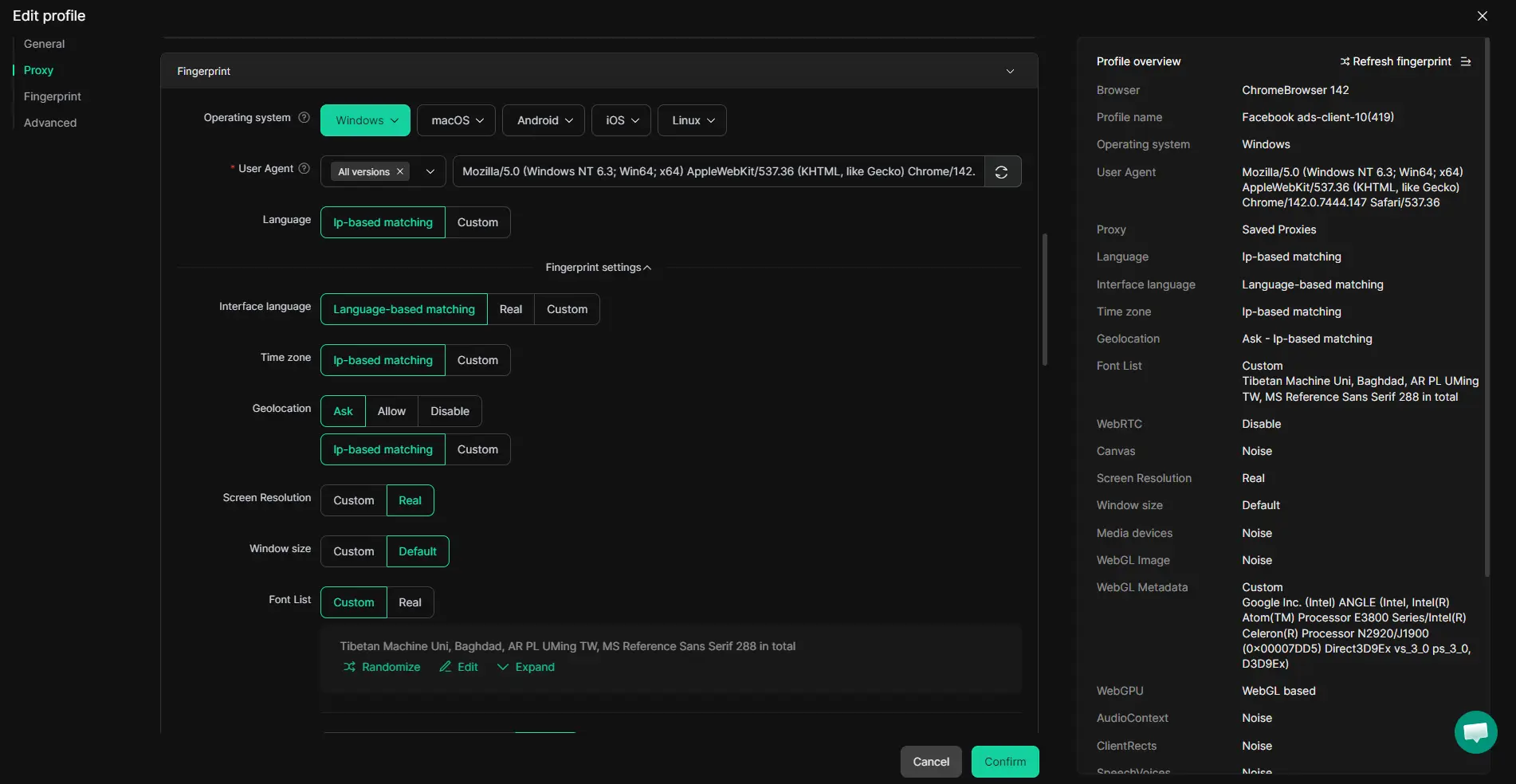
Configuring a proxy for each profile
When you need to minimize risks, operators add their own proxy for each profile through the DICloak settings. HTTP, HTTPS and SOCKS5 are supported, you can manually enter the address, port, login and password, or choose from pre-saved proxies. It is important here: the product itself does not sell proxies and does not impose a unique IP on each account, the choice and testing of proxies is completely on the user's side. All this works only at the level of the browser profile, without affecting the YouTube account itself. 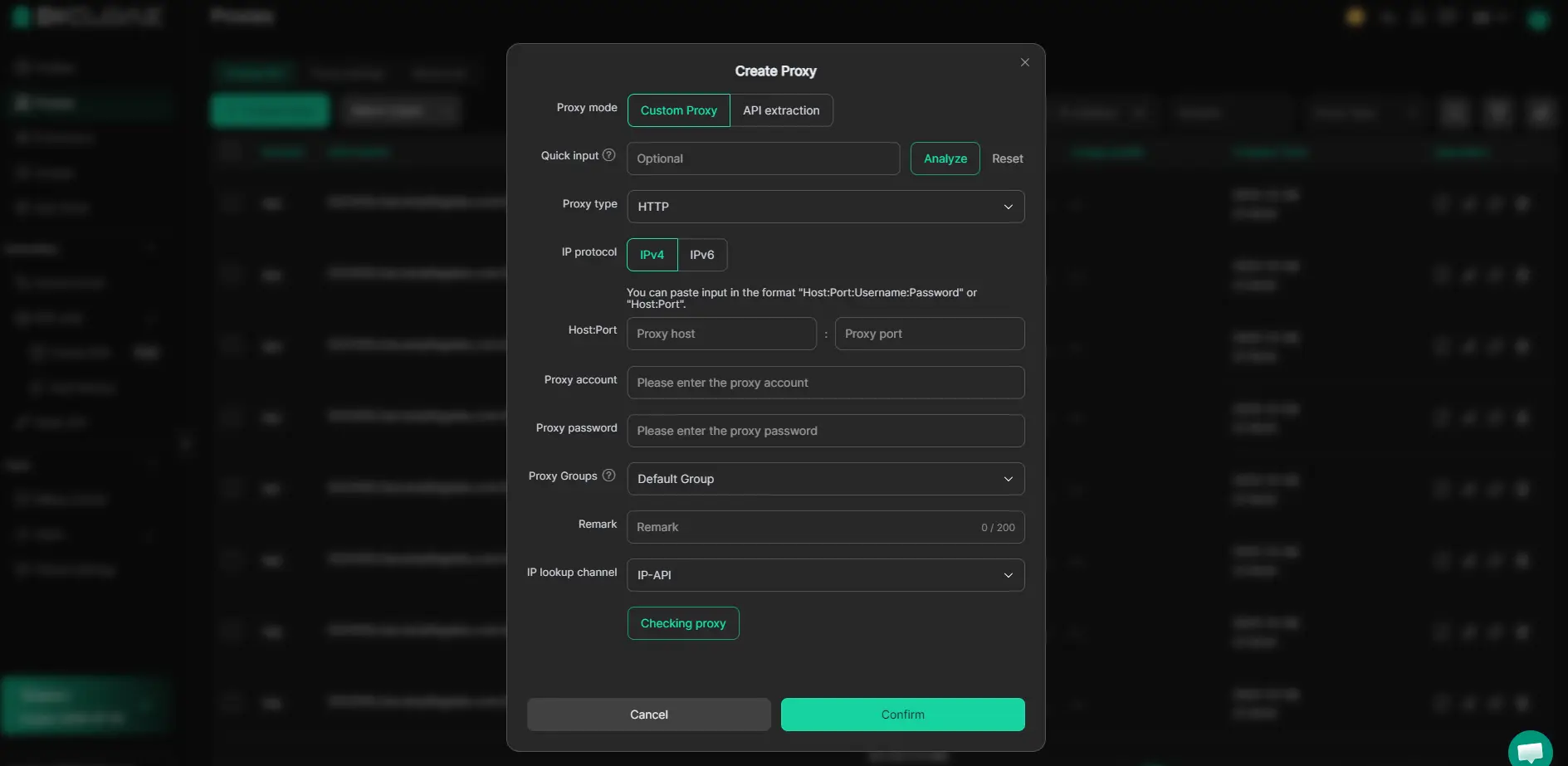
Automate routine activities with RPA
In order not to spend hours on the same operations, posting videos, liking, filling out descriptions, operators set up repetitive scenarios through RPA in DICloak. You can set a schedule, select the necessary profiles and track progress by logs. This is not "automatic earnings on YouTube", but a way to get rid of routine, the operator is left with setting up tasks and monitoring the results, the process itself is transparent and manageable. 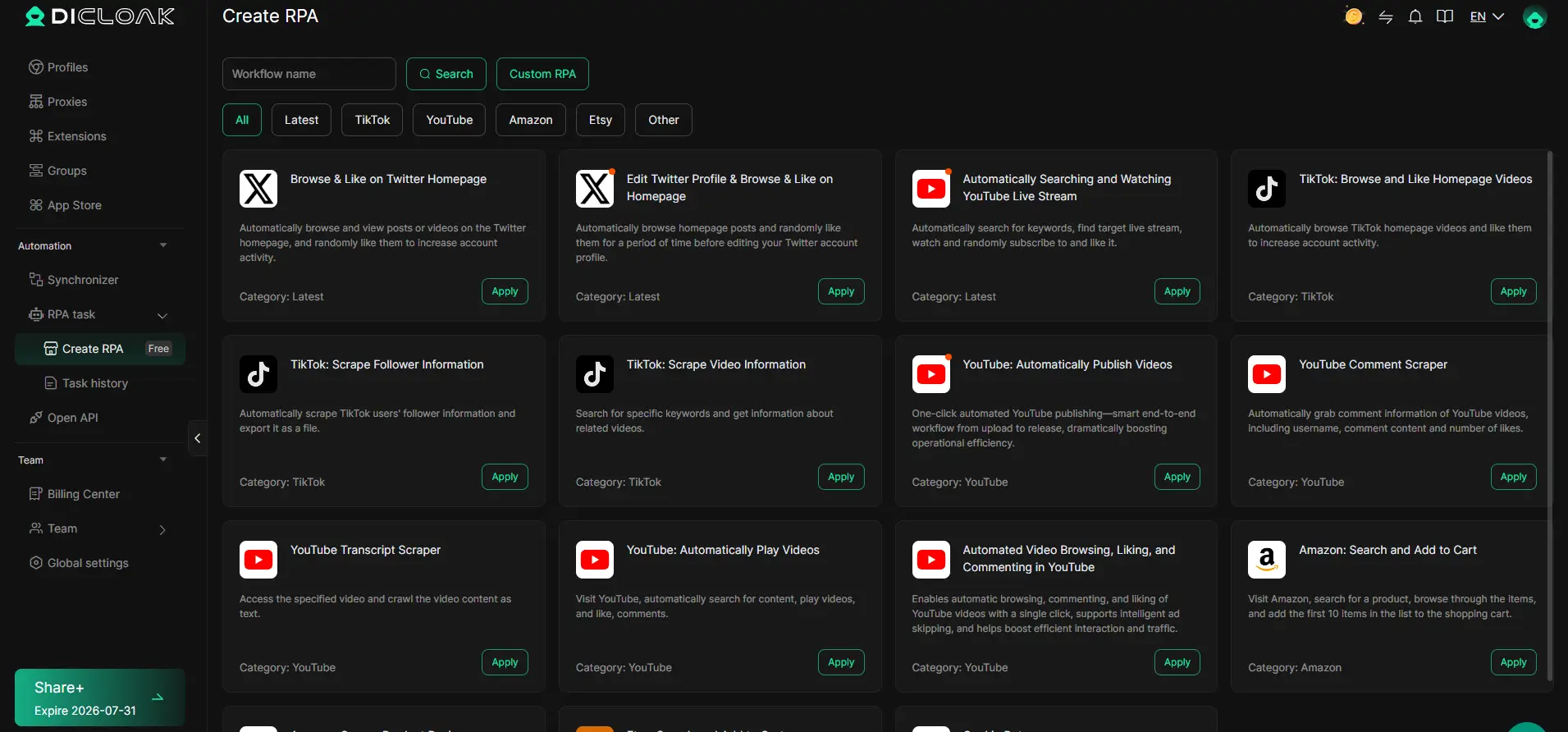
Manage multiple windows at the same time with a synchronizer
When it is necessary to massively perform the same type of actions in several accounts at once (for example, publish a video or leave a comment from several channels), operators use the DICloak window synchronizer. Actions from the master window are mirrored to selected profiles in real time, the operator himself chooses which windows to synchronize and which actions to play. This is not robotization, but live synchronization, the control is always in the hands of the user. 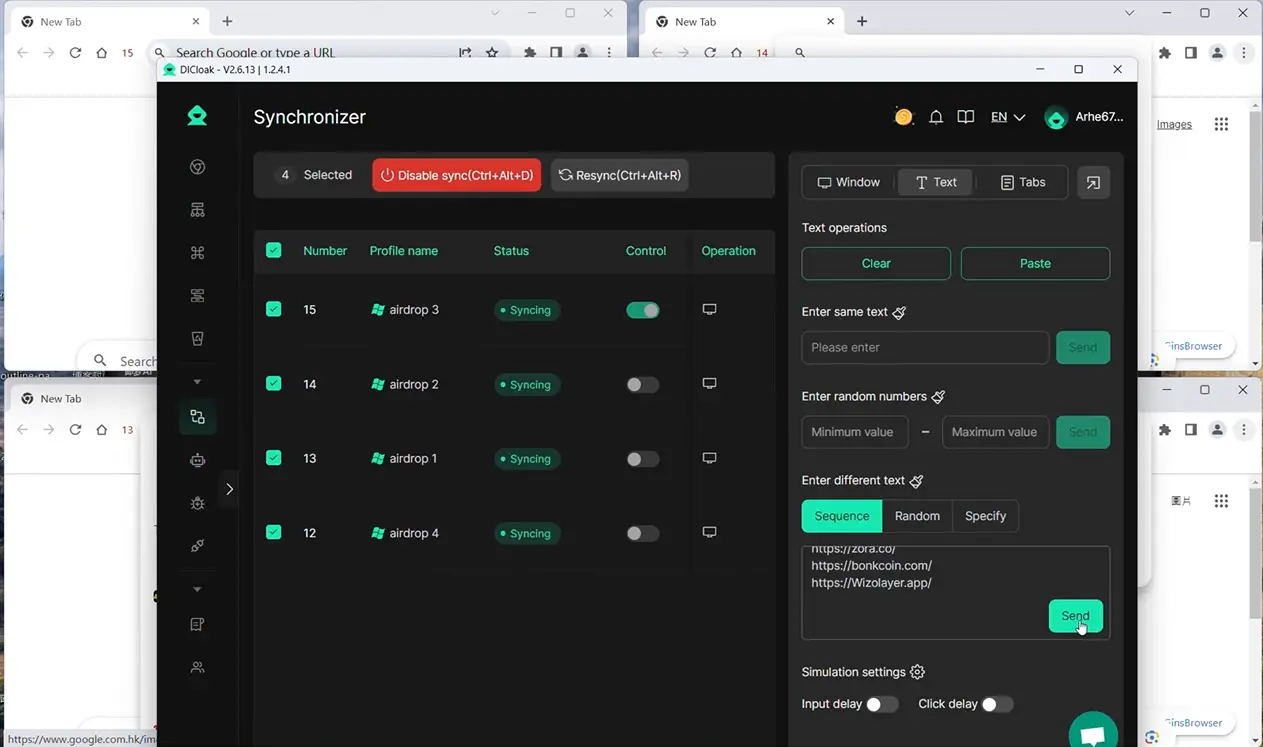
This whole system allows you to keep processes under control, save time on routine and reduce risks at the technical level, but does not remove responsibility for the content and compliance with the rules of the platform itself.
When Making Money on YouTube Isn't Suitable: Alternative Scenarios and Limitations
When YouTube Won't Deliver the Expected Revenue
If your content is about a very narrow or prohibited topic, or is designed only for a local audience, almost no income will come from YouTube. Channels related to children's topics, medicine, gambling, or politics face severe monetization restrictions and blocking. In some countries, YouTube does not pay income to the creator due to local laws, for example, if you are under 18 years old or live outside the area of the official affiliate program, payments will not be received at all.
Alternative ways to make money on the Internet
Betting only on YouTube is risky , if the platform does not miss your format or you do not fit the age, do not waste time.
- Courses and consultations on Skillbox, Udemy or Yandex.Practicum provide an opportunity to earn money without complex monetization, but require real knowledge and constant updating of the program.
- Freelancing on exchanges like Kwork, Freelance.ru, or Upwork allows you to get started quickly, but here the competition is higher, and a stable income appears only after a dozen successful projects.
If YouTube doesn't miss your topic or age, it's faster to get real income through freelancing or online courses, instead of waiting a long time for monetization.
How to Avoid Losing Revenue and Channel: Security and Long-Term Strategy Tips
Even if you are already making money on YouTube, it is easy to lose your channel due to simple mistakes. In order not to be left without income and maintain your reputation, it is really worth checking the most vulnerable points.
How to Protect Your Channel from Hacking and Blocking
The most dangerous thing is to lose access due to a weak password or data leakage. Enable two-factor authentication, store backup codes separately from your computer, and do not share your login with anyone, even acquaintances. If you use shared computers or cloud documents, the risk of hacking increases significantly.
What to do in case of strike or blocking
- Check the reason for the ban on the official support page.
- File an appeal through your personal account, do not wait for a letter.
- Save all supporting materials in advance.
Long-term strategies for development and income diversification
One channel, this is a temporary solution. To avoid depending only on YouTube:
- Create a backup channel with unique content.
- Connect additional platforms (for example, Telegram or Boosty).
- Share the revenue: keep part of the monetization off YouTube.
FAQs about How to Make Money on YouTube
How Much Can You Really Make On YouTube In 2026?
Income varies from a couple of hundred to thousands of dollars per month. It all depends on the topic, the number of views, the country of the audience and monetization methods. For example, English-language financial channels can get $3-8 per 1000 views, and entertainment channels can get $0.5-2. Success is often associated with the consistency of downloads and an active audience.
Is it possible to make money on YouTube without monetizing through ads?
Yes, it is possible to make money on YouTube without AdSense. Popular alternatives: donations via Patreon or Boosty, affiliate programs with brands, selling your own products or digital products, as well as direct integration of ads in videos. Some bloggers completely switch to these methods so as not to depend on YouTube algorithms.
How quickly can you reach your first income from YouTube?
On average, the first payments come 3-12 months after the start of the channel. It all depends on the chosen topic, the regularity of publications, the quality of the video, and the activity of subscribers. The faster the channel gains 1000 subscribers and 4000 hours of views, the sooner access to monetization will open.
Is it safe to use multiple YouTube accounts to make money?
Using multiple accounts is possible if you properly isolate profiles and use separate proxies for each. This reduces the risk of blocking, but does not guarantee complete security. It is recommended not to cross IP addresses and not to repeat content between channels.
What to do if the channel is blocked or a strike comes?
First, you need to carefully study the reason for the ban or strike in the notification from YouTube. Then, follow the official appeal procedure through your Google account. Review your videos for violations and fix possible errors so that you do not violate the platform's rules in the future.
Now that you know the basic ways to monetize, it's worth choosing the right format and starting to create content that will be interesting to your audience. Don't forget to analyze the results and adapt to platform changes to increase your income. Try DICloak for free
 Web Proxy Tools
 Free Tools
 Cookie Plugin
 UA Generator
 MAC Address Generator
 IP Generator
 IP Address List
 2FA Code Generator
 World Clock
 Anonymous Check
 WebRTC Leak Test
 UUID Generator
 Free Web Proxy Site
 Proxy Checker
 FB Ad Checker
 AI Web Scraping
 Free SMM Tools
 Twitter Shadowban Checker
 Instagram Name Checker
 UTM Generator
 Username Generator
 AI Hashtag Generator
 LinkedIn Headline Generator
 Social Media Image Resizer