Why Your TikTok Videos Are Not Going Viral
If you are trying to learn how to go viral on TikTok, it helps to first understand why some videos stop growing after the first wave of views. A large follower count is not the only factor. TikTok says its For You feed is personalized around user interests and engagement. It can consider signals such as videos people watch, like, comment on, or share, as well as factors such as how recent a post is.
This means a video can have good lighting, a trending sound, and clean editing but still perform poorly. The problem may be much simpler: people leave too early, the topic does not match the right audience, or the creator keeps repeating growth tactics that do not improve the actual content. Before looking for new TikTok viral tips, check these three areas first.

Weak Hooks and Low Watch Time
The opening of your video has one main job: give people a reason to keep watching. TikTok is built around fast content discovery, so viewers can move to the next video almost instantly. If your introduction takes too long to reach the point, you may lose the viewer before the useful part begins.
For example, imagine you are making a video about three cheap products that improved your home office. A weak opening might be: “Hi everyone. Today I want to share some products that I recently bought.” The viewer still does not know what they will gain from watching. A stronger version could be: “These three products made my $50 desk setup much easier to use.” The second opening quickly explains the benefit while creating curiosity about the three products.
The same idea applies to tutorials, stories, reviews, and product videos. A tutorial can show the finished result before explaining the steps. A product test can show the problem first. A story can introduce the conflict early instead of spending 20 seconds on background details. The hook gets attention, but the rest of the video still needs to deliver. Remove long pauses, repeated points, and sections that do not move the story forward.
When thinking about how to go viral on TikTok, do not ask only, “Is my first line interesting?” Also ask, “Does every part after that give viewers a reason to stay?” A strong hook followed by a slow video will still struggle.
Poor Audience Targeting
A second problem is often less obvious. The video itself may be good, but TikTok may have trouble understanding which viewers are most likely to enjoy it. TikTok explains that its For You feed becomes more personalized as people interact with videos and creators. TikTok's 2026 trend forecast also puts more focus on discovery, curiosity, and meaningful connections with niche communities.
Imagine a creator who posts a beginner home workout on Monday, a gaming clip on Tuesday, and a restaurant review on Wednesday. Each video could be useful, but there is little connection between them. Someone who followed for workout advice may not care about gaming, while a gaming viewer may skip the next fitness post.
A clearer fitness account could instead cover home workouts, beginner exercises, simple fitness meals, and no-equipment routines. The formats can still change. One post might be a tutorial, another a personal story, and another a before-and-after test. The important part is that they serve a similar audience.
This matters even more when one person runs different brands or content niches. Instead of forcing unrelated topics into one profile, it may make more sense to separate them. If that applies to your workflow, our guide to managing multiple TikTok accounts explains how different TikTok accounts can be organized for separate audiences and purposes.
Before publishing a video, ask one simple question: Who should care about this? If the answer is “everyone,” the idea is probably still too broad.
Common TikTok Growth Mistakes
Many creators make growth harder by reacting too quickly to every result. A video gets fewer views than expected, so they immediately change the niche, copy another trend, add more hashtags, or try a completely different format. After a week, there is so much variation that it becomes difficult to tell what actually worked.
Trend chasing is a good example. Suppose a handmade candle business sees a dance trend getting millions of views. Copying the dance exactly may bring attention, but those viewers may have little interest in candles. A better approach would be to adapt the trend. The creator could use the same sound while showing a candle-making process, a room transformation, or a funny problem candle buyers understand. The trend attracts attention, but the topic still fits the audience.
Another mistake is treating hashtags such as #fyp or #viral as a growth strategy. Hashtags can help describe a topic, but they cannot fix weak content. Clear subject matter, strong viewer interest, and useful or entertaining content matter much more than adding a long list of broad tags. TikTok's own 2026 forecast also stresses that audiences are becoming more active in discovery and expect content to offer real value for their time.
The same caution applies to paid reach. Paying to promote a weak video does not automatically make the content better. If you are considering paid distribution later, you can first review how TikTok promotion through ads works and when it makes sense compared with organic growth.
If you want to understand how to go viral on TikTok, focus first on what viewers actually experience. Give them a clear reason to stop scrolling, keep the video moving, and make sure the topic fits a specific audience. Once those basics are working, trends, hashtags, posting times, and other optimization methods become much more useful.
How to Create Content That Can Go Viral on TikTok
Once you have fixed weak hooks and unclear audience targeting, the next step is improving the content itself. There is no single format that can guarantee a viral video. TikTok's own creative guidance says there is no fixed formula for success. What does matter is giving people a reason to stop, stay, and react. TikTok's 2026 trend forecast also says users are becoming more active in discovery and expect more value from the time they spend on the platform.
So, when learning how to go viral on TikTok, think about the viewer's experience from start to finish. The opening should create interest. The middle should keep that interest alive. The ending should give people a payoff worth remembering or sharing.
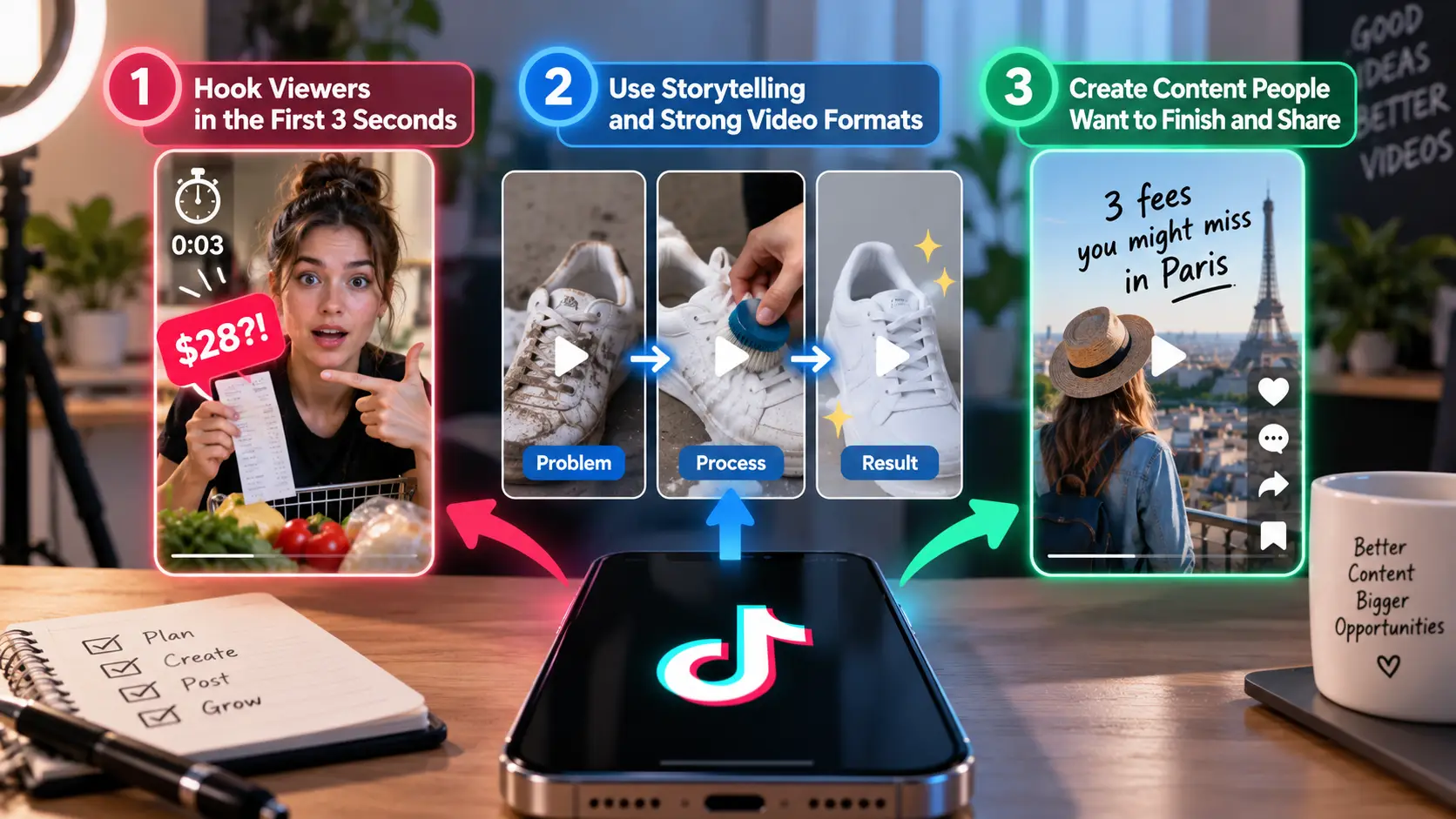
Hook Viewers in the First 3 Seconds
TikTok moves fast. A viewer can leave your video with one swipe, so the opening has very little time to prove that the rest is worth watching. TikTok's creative guidance describes the first few seconds as especially important and recommends using an attention-grabbing hook before moving into the main message. This guidance comes mainly from TikTok's advertising research, so it should not be treated as a guaranteed rule for organic reach. Still, the same idea is useful for creators: get to the interesting part quickly.
A good hook does not have to be loud or dramatic. It simply needs to make the right viewer curious. Imagine a creator making a video about saving money on groceries. Instead of starting with, "Here are some grocery shopping tips," the creator could open with, "These three items added $28 to my grocery bill without me noticing." Now there is a clear problem and a reason to keep watching.
Different topics need different hooks. A tutorial can show the final result first. A review can open with the biggest surprise. A story can begin at the moment something went wrong. A comparison video might start with the difference between two results. The key is making sure the hook matches what the rest of the video actually delivers. A dramatic opening that has little connection to the content may get a few extra seconds of attention, but it can also leave viewers disappointed.
This is one reason understanding the TikTok algorithm in 2026 matters. Strong content is not just about attracting an initial click or view. You also need to hold attention after that first moment.
Use Storytelling and Strong Video Formats
A hook gets someone through the door, but storytelling gives them a reason to stay. TikTok's current creative guide recommends a simple structure: start with a relatable problem, introduce the solution naturally, and finish with a clear benefit or transformation. It also points to formats such as before-and-after videos, quick reactions, and simple demonstrations as useful ways to tell that story.
For example, imagine a skincare creator reviewing a new product. A basic video might show the bottle and list its features. A stronger story could begin with a real problem: "My foundation kept separating around my nose by lunchtime." The creator then shows the product they tested, explains how they used it, and ends with the result after several hours. Even if the video is short, it still has a beginning, middle, and payoff.
The same structure works outside product content. A fitness creator can show a mistake, demonstrate the correction, and compare the results. A food creator can start with an ordinary meal and reveal a faster or cheaper version. A small business can show an order being made from raw materials to final packaging. These formats work because viewers always know there is something coming next.
Strong formats also make content easier to repeat. A creator does not need to invent a completely new idea every day. One useful format can become a series, such as "3 mistakes beginners make," "I tested this for seven days," or "Before you buy this, know these three things." TikTok's own creative resources note that list and series formats can keep viewers engaged because people understand what to expect.
The goal is not to make every video look identical. It is to find a structure that fits your topic and then test different stories inside it. This is a more practical approach to how to go viral on TikTok than copying whatever format happens to be popular that day.
Create Content People Want to Finish and Share
A common mistake is creating only for the first view. Viral content usually needs to give viewers a reason to continue until the payoff and, ideally, a reason to send the video to someone else. TikTok's 2026 trend forecast describes users as increasingly curious and active in discovery rather than simply scrolling without purpose. That makes useful, surprising, relatable, or emotionally rewarding content especially worth testing.
Consider two videos about cleaning a white pair of shoes. The first says, "Here is how to clean white shoes," and immediately shows the steps. The second opens with a badly stained shoe, tests an unusual cleaning method, and saves the final comparison for the end. Both teach the same skill, but the second gives viewers a clear reason to see what happens.
Sharing works a little differently. People often send a TikTok because it reminds them of a friend, solves a problem they both have, expresses something they agree with, or contains information worth saving for later. A creator making travel content, for example, could post "Three fees first-time visitors often miss in Paris." That is more useful to send to a travel partner than a general video saying, "Paris is beautiful."
Before posting, it helps to ask three practical questions: Would the right viewer understand the point within a few seconds? Is there a clear reason to stay until the end? Is there anything useful, funny, surprising, or relatable enough to share? If one answer is no, the video may need another edit.
That is one of the most useful TikTok viral tips to keep in mind. Do not build a video around what you want to say. Build it around what the viewer has a reason to keep watching. Strong hooks can win the first few seconds, but clear storytelling and a satisfying payoff are what turn that attention into a complete viewing experience.
How to Use TikTok Trends, Hashtags, and SEO to Get More Views
Once your content has a strong hook and a clear reason to keep watching, discovery becomes the next challenge. This is where trends, hashtags, and TikTok SEO can help. They will not make a weak video go viral, but they can help TikTok understand what your video is about and who may want to see it.
TikTok says its Search system looks at how well content matches a user's search query. Hashtags, sounds, and user interactions can also affect what appears in search results. TikTok also offers Creator Search Insights, which shows topics people are searching for and can even highlight content gaps.
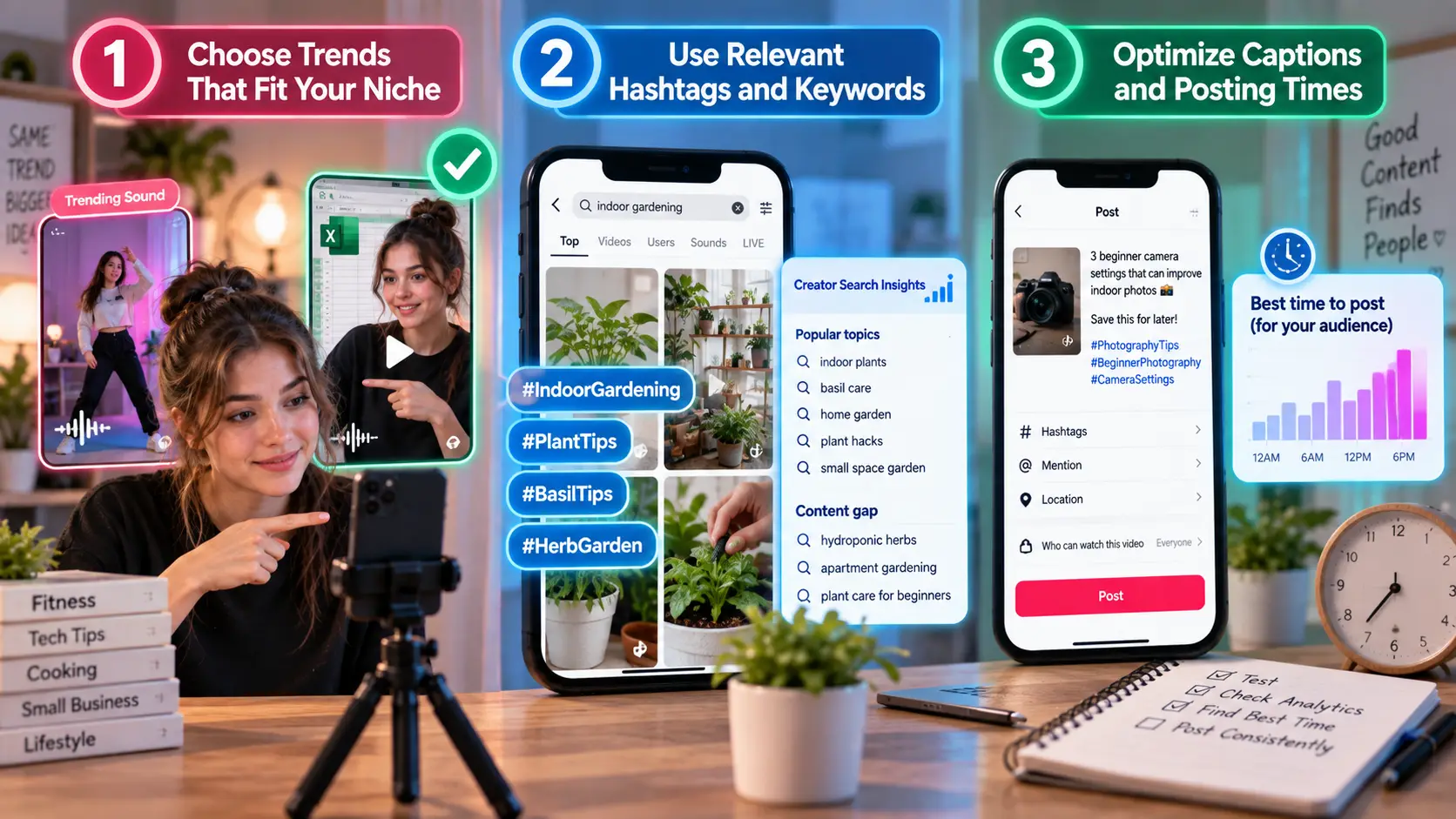
Choose Trends That Fit Your Niche
A trend works best when it already makes sense for your audience. Using every popular sound or format can make an account feel random, especially if the trend has little connection to your normal content.
Imagine a creator who teaches simple Excel tips. A dance trend may be popular, but copying it without any connection to Excel gives viewers little reason to follow the account. A better approach would be to adapt the format. The creator could use the same sound while showing "3 Excel mistakes that waste time at work." The trend still feels familiar, but the content remains useful to the right audience.
This is an important part of learning how to go viral on TikTok. Trends should support your topic, not replace it. Before joining one, ask whether it fits your niche, whether your audience will understand it, and whether you can add something different. If the only reason to use a trend is that it has a lot of views, it may not be the right one.
Use Relevant Hashtags and Keywords
Hashtags still provide TikTok with information about a video's topic, but broad tags like #fyp or #viral should not be your whole strategy. TikTok says search results can be influenced by how closely the content matches the search term, as well as hashtags and sounds.
A better approach is to use words your target viewer might actually search for. For example, a video about growing basil indoors could naturally use a phrase such as how to grow basil indoors in the spoken script, on-screen text, or caption. Relevant hashtags might include #IndoorGardening, #BasilTips, or #HerbGarden instead of filling the caption with unrelated viral tags.
Creator Search Insights can also help with this process. TikTok says creators can use the tool to find popular search topics and "content gap" topics that people search for but that have fewer matching videos. This makes keyword research useful for both TikTok SEO and content planning.
The goal is not to repeat the same keyword five times. Use one clear topic and describe it in natural language. If TikTok can understand the subject and viewers can understand it quickly, the video has a better chance of reaching the right people.
Optimize Captions and Posting Times
A good caption should add context, not repeat every word from the video. For a tutorial, it can clearly state the problem being solved. For a review, it can name the product and the main question. For a story, it can create a little extra curiosity.
For example, instead of writing "Watch this!" under a video about beginner photography, a more useful caption could be: "3 beginner camera settings that can improve indoor photos." It tells both the viewer and the platform what the content is about.
Posting time is different. There is no single hour that works for every TikTok account. Your audience may live in a different time zone or use TikTok at different times of day. Rather than following a generic "best time to post" chart, compare your own results over several weeks. TikTok Analytics can show broader account and content performance, helping you identify patterns instead of guessing.
If posts published around 7 p.m. regularly get stronger early engagement than posts published at noon, that is useful evidence for your account. Test that pattern again before treating it as a rule. This type of small, repeatable test is more useful than changing your posting time every day.
How to Use TikTok Analytics to Improve Your Viral Potential
Trends and keywords can help people discover a video, but your analytics show what happens after they find it. If you want to understand how to go viral on TikTok, this data is one of your best feedback tools. Instead of judging a video only by its total views, look at how viewers actually responded.
TikTok itself recommends looking at the bigger picture rather than focusing on one engagement metric. Its analytics resources include video views, average watch time, traffic information, follower trends, likes, comments, and shares.

Track Watch Time, Retention, Shares, and Comments
Start with watch behavior. If many viewers leave near the start, the hook may be weak or the opening may not match the promise. If people stay through most of the video, the topic and structure may be working better.
For example, suppose two 30-second videos both receive 10,000 views. Video A gets many likes, but viewers leave after eight seconds. Video B gets fewer likes but holds viewers for much longer and earns more shares. Video B may offer a stronger clue about what your audience finds useful enough to finish or send to someone else.
Comments add another layer of information. TikTok now offers Comment Insights in supported regions, which can group frequent topics, questions, and viewer suggestions. A repeated question in the comments is often a ready-made idea for your next video.
Do not treat one metric as the only definition of success. A short comedy clip and a one-minute tutorial may naturally produce different watch patterns. Compare similar videos with each other instead.
Find Your Best-Performing Content
The most useful question in analytics is not "Which video got the most views?" It is "What did my strongest videos have in common?"
Review several high-performing posts and look for patterns in topic, opening style, video length, format, and audience response. You may notice that quick comparisons perform better than long explanations, or that beginner tutorials earn more shares than general advice.
For example, a skincare creator may discover that videos titled around a specific problem, such as "Why your sunscreen pills under makeup," perform better than broad videos like "My skincare routine." That does not mean every future post should be identical. It means viewers have shown a clear interest in problem-solving content.
TikTok advises creators to look for wider trends across their analytics rather than judging performance from one isolated number. This is especially useful when one viral post is an outlier and does not represent what usually works.
Adjust Future Videos Based on Data
Analytics become useful only when they change what you do next. Make one or two changes at a time so you can see what actually affects performance.
If viewers often leave during long introductions, shorten the opening in your next three videos. If search traffic is bringing people to one specific topic, create another useful video around the same question. If one format earns many shares, test a second version with a different example.
A simple testing cycle might look like this: publish five videos around the same niche, compare retention and shares, identify the strongest structure, then use that structure for another set of videos. This turns TikTok viral tips into a real process based on your own audience instead of general advice.
Over time, you are not trying to predict one perfect viral post. You are building a clearer picture of what your viewers choose to watch, finish, and share.
For one TikTok account, content quality and analytics are usually the main focus. The workflow becomes more complex when an agency, creator team, or business manages several TikTok accounts for different brands, clients, or markets. At that point, keeping login sessions, account data, and team access organized matters too.
DICloak is designed for this type of multi-account workflow. It lets users create separate browser profiles, assign proxy settings, and control which team members can work with specific profiles. This does not make a TikTok video go viral by itself. Instead, it gives teams a cleaner system for managing multiple accounts while they test content strategies.
Keep TikTok Accounts in Separate Browser Profiles
In a normal browser, switching between many accounts can become messy. Cookies, saved sessions, bookmarks, and other browser data may all live in the same environment. DICloak creates independent browser Profiles with their own browser configuration, cache, cookies, and fingerprint settings.
For example, an agency could create one Profile for a US fitness client, another for a beauty brand, and another for a local restaurant. Each TikTok account stays in its assigned Profile instead of requiring constant login and logout inside the same browser window.
This also makes performance testing easier to organize. A team member can open the Profile for a specific brand and find the same session and working environment used for that account.
If you want a deeper explanation of this setup, DICloak's guide to managing multiple TikTok accounts covers the workflow in more detail.
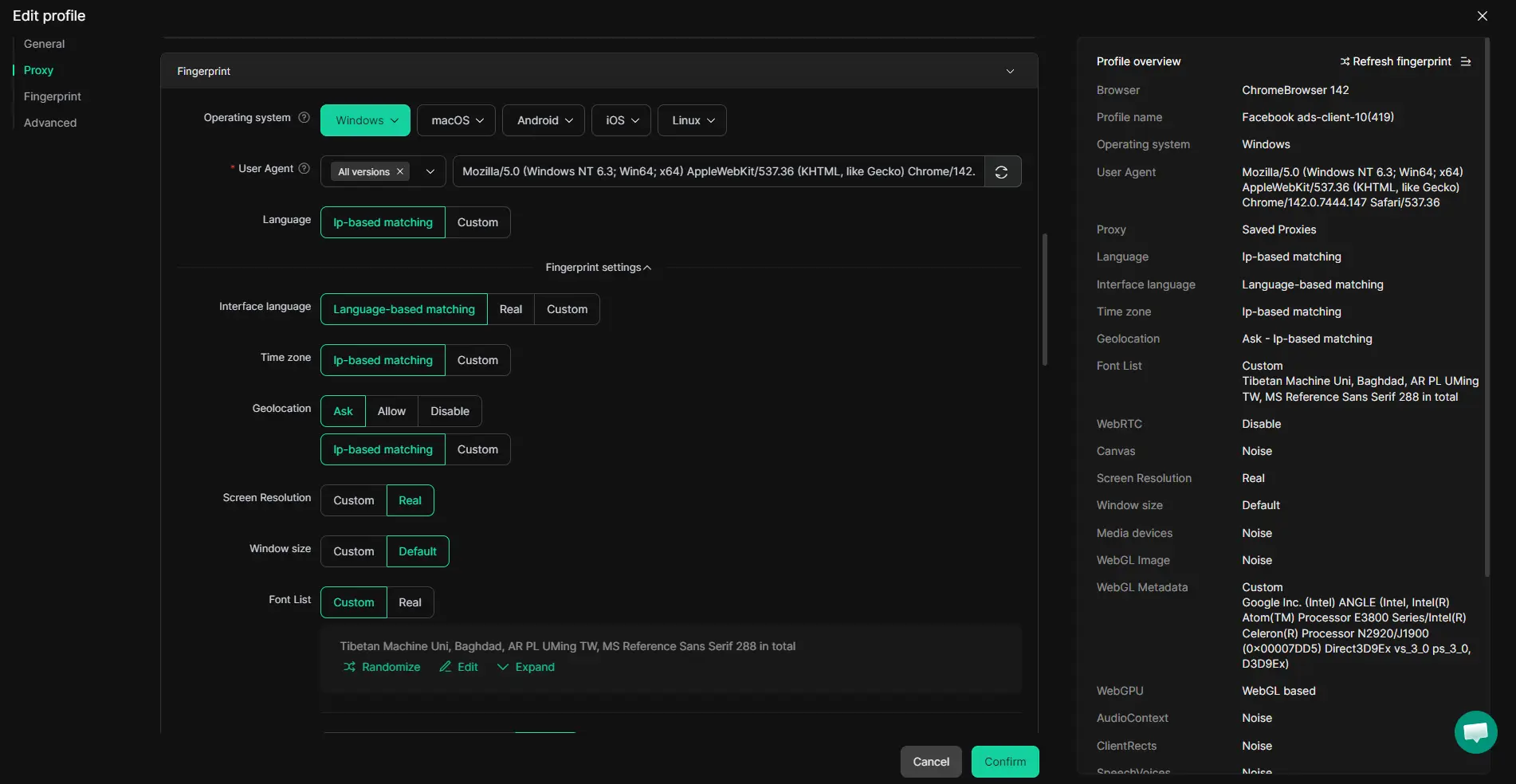
Manage Independent Sessions and Proxies
Each DICloak Profile can also use its own proxy configuration. DICloak supports saved proxies and profile-level proxy assignment, so different Profiles do not need to share the same network setup.
In September 2026, DICloak also added direct access to PuraRoute Proxy inside the Proxies section. Users can access static or dynamic proxy options and connect the selected proxy resource to a browser Profile.
A practical example would be a team managing TikTok accounts for different regional markets. Instead of manually changing network settings each time someone switches accounts, the proxy can stay connected to the relevant Profile. The important point is consistency and organization, not trying to manipulate TikTok's recommendation system.

Simplify Multi-Account and Team Workflows
Multi-account work also creates a people problem. One person may create content, another may review comments, and a third may manage account settings. Passing passwords around in chat or repeatedly setting up the same account on different devices quickly becomes inefficient.
DICloak supports team member accounts, Profile Groups, permission controls, and profile sharing. Admins can assign specific Profiles to specific members, so a teammate can work with the accounts they need without having access to every Profile in the workspace.
For example, a social media agency could place five client TikTok Profiles in one Profile Group and give a content operator access only to that group. Another team member could work with a different set of accounts. This reduces confusion and makes it easier to separate client workflows.
For teams learning how to go viral on TikTok across several accounts, this separation is useful because it keeps the operational side organized while the team focuses on what actually drives growth: better content, clearer audience targeting, consistent testing, and stronger analytics.

FAQs About How to Go Viral on TikTok
Q1: How do you go viral on TikTok in 2026?
To go viral on TikTok, focus on strong hooks, high watch time, clear audience targeting, and content that people want to finish or share. Trends and hashtags can help discovery, but they work best when the video itself keeps viewers interested.
Q2: Can you go viral on TikTok with no followers?
Yes. You can go viral on TikTok with no followers because TikTok can recommend videos to people beyond your existing audience. A new account can still reach many viewers if the content gets strong watch time, engagement, and positive viewer signals.
Q3: How long does it take to go viral on TikTok?
There is no fixed time. Some videos can go viral on TikTok within a few hours, while others may gain more views over several days. It is better to track watch time, shares, comments, and retention than to judge a video only by its first hour.
Q4: What is the best time to post if you want to go viral on TikTok?
There is no single best posting time for every account. If you want to go viral on TikTok, check your TikTok Analytics and post when your own audience is most active. Testing different time slots over several weeks is usually more useful than following a generic schedule.
Q5: Do hashtags help you go viral on TikTok?
Hashtags can help TikTok understand your topic, but hashtags alone will not make a video viral. To go viral on TikTok, use relevant keywords and niche hashtags, then focus more on watch time, strong storytelling, shares, and audience interest.
 Web Proxy Tools
 Free Tools
 Cookie Plugin
 UA Generator
 MAC Address Generator
 IP Generator
 IP Address List
 2FA Code Generator
 World Clock
 Anonymous Check
 WebRTC Leak Test
 UUID Generator
 Free Web Proxy Site
 Proxy Checker
 FB Ad Checker
 AI Web Scraping
 Free SMM Tools
 Twitter Shadowban Checker
 Instagram Name Checker
 UTM Generator
 Username Generator
 AI Hashtag Generator
 LinkedIn Headline Generator
 Social Media Image Resizer











-01-v13.png?x-oss-process=image/interlace,1/format,webp/quality,q_75)