Discovering that your Coinbase Account Restricted status has been applied to your account can be a deeply frustrating and stressful experience, especially when your funds are on the line. This guide provides clear, actionable steps based on firsthand experience and expert analysis to help you understand why your account was flagged, how to resolve the issue, and what you can do to prevent future restrictions. We will walk you through a systematic process designed to restore your access and give you the confidence to manage your crypto assets securely. Understanding the root causes of a Coinbase Account Restricted situation is the first and most critical step toward a swift resolution.
Why Is My Coinbase Account Restricted? The Most Common Triggers
Understanding why your Coinbase Account Restricted status was applied is the key to both fixing the problem and preventing it from happening again. Coinbase places limitations on accounts primarily to enhance security and comply with strict financial regulations. By identifying the specific trigger that caused your Coinbase Account Restricted issue, you can take targeted action and regain control more quickly.
Incomplete or Outdated Identity Verification (KYC)
As a regulated financial institution, Coinbase is required by law to follow Know Your Customer (KYC) and Anti-Money Laundering (AML) protocols. This means they must verify the identity of their users. A Coinbase Account Restricted notice may appear if the documents you submitted are expired, unclear, or if you haven’t completed all required verification steps. For example, if you move to a new home and forget to update your proof-of-address document in your Coinbase profile, your account can be temporarily restricted until the new information is reviewed and approved.
Suspicious or Unusual Account Activity
Coinbase uses automated fraud-detection systems that monitor for activity outside your normal behavior patterns. If the system suspects a potential security risk, it may place your account under restriction to protect your funds, resulting in a Coinbase Account Restricted status. Common triggers include:
- Logins from new or unrecognized devices, or from different geographical locations in a short period.
- Large or frequent transactions that are out of character for your account's history.
- Multiple failed login attempts, which could suggest a brute-force attack.
Violation of Coinbase's Terms of Service
Violations of Coinbase’s Terms of Service can lead to serious consequences, including a Coinbase Account Restricted warning or even permanent account suspension. One of the most common violations is operating more than one personal account, which Coinbase strictly prohibits. Other prohibited activities can also result in immediate and severe accounting action.
Payment Issues and Failed Transactions
Problems related to linked payment methods are another frequent reason a Coinbase Account Restricted notice appears. To reduce fraud risk, Coinbase may limit account functionality if it detects payment irregularities, such as:
- Failed bank transfers, often due to insufficient funds (NSF).
- Rejected credit or debit card payments, or initiating a chargeback with your bank.
- Using a payment method that has been flagged by their system or has not been fully verified.
Inconsistent Digital Footprint
Your digital footprint includes data such as your IP address, device details, and browser configuration. Coinbase evaluates this information to confirm account legitimacy, and sudden or repeated changes can trigger security alerts leading to a Coinbase Account Restricted status.
- IP Addresses & Geolocation: Logging into your account from different countries in a short span of time or frequently switching IP addresses using a proxy can appear suspicious. While traveling or using a proxy is common, erratic location changes can mimic the behavior of a compromised account.
- Browser Fingerprints: A browser fingerprint is a unique digital signature created from your combination of browser settings, cookies, plugins, and device information. Frequently clearing your cookies, using incognito mode, or constantly switching browsers alters this fingerprint. To a security system, this can look like an attempt to evade detection, leading to a restriction.
With a clearer understanding of why your Coinbase Account Restricted issue occurred, you can now move on to the immediate steps needed to resolve it and prevent future restrictions.
How to Fix a Coinbase Account Restriction: Your Immediate Action Plan
If your account shows a Coinbase Account Restricted status, it can feel overwhelming. However, there is a clear and systematic process for resolving a Coinbase Account Restricted issue. The following steps outline the most effective actions you should take immediately to bring your account back into good standing.
Step 1: Check Your Email and Account Notifications
Your first step after seeing a Coinbase Account Restricted notice should be to check the inbox linked to your Coinbase account. Look for messages from [email protected], and don’t forget to check your spam or junk folder. This email usually explains why your Coinbase Account Restricted status was applied and details the actions required to resolve it. You should also log in to your Coinbase dashboard to review any on-screen alerts or notifications.
Step 2: Complete All On-Screen Verification Steps
In many cases, when an account is Coinbase Account Restricted, Coinbase will display an automated on-screen resolution flow after login. These prompts may ask you to confirm recent activity, re-verify your identity, or answer security questions. Carefully completing this process is often enough for the system to automatically lift a Coinbase Account Restricted limitation.
Step 3: Submit or Update Your Verification Documents
If the Coinbase Account Restricted status is tied to identity verification, you will need to submit updated KYC documents. Make sure all files are clear, valid, and up to date. Commonly requested documents include:
- A government-issued ID
- Passport
- Driver’s license
- Proof of address (such as a recent utility bill or bank statement)
Step 4: Contact Coinbase Support (The Right Way)
If the restriction remains after completing the steps above, the next step is to contact Coinbase support. When submitting a support ticket for a Coinbase Account Restricted issue, clearly describe your situation and provide any requested information. Avoid opening multiple tickets for the same problem, as this can delay resolution. If follow-up is needed, always reply within the original email thread or reference the existing ticket number.
Once these immediate actions are completed, the next important question becomes how long it typically takes for a Coinbase Account Restricted issue to be resolved.
How Long Will My Coinbase Account Be Restricted?
The duration of a Coinbase account restriction varies significantly depending on the severity and complexity of the issue. Setting realistic expectations is important, as resolution times can range from a few hours to several months.
- Minor Issues (24-72 hours): Simple problems, such as an incomplete document upload or a pending identity verification, are often resolved within this timeframe once you have provided the required information.
- Security Reviews (A Few Business Days to Weeks): Accounts flagged for suspicious activity may undergo a manual security review. This process is more thorough and can take longer as the security team investigates transaction patterns and login history to ensure your account is safe.
- Serious Violations (Weeks to Permanent): In cases of serious issues, such as suspected fraud, major policy breaches, or complex compliance investigations, the restriction can last for several weeks or even become permanent. Alarmingly, some users report cases dragging on for 2 to 8 months, even after submitting all required documents.
To better understand what you're facing, it helps to know the different levels of restriction Coinbase can apply.
Understanding the Different Levels of Coinbase Account Restriction
Not all restrictions are the same. The specific type of limitation placed on your account determines what you can and cannot do, and it often indicates the seriousness of the underlying issue.
Account Restricted
This is one of the most common limitations. It typically means that certain features—such as trading, depositing new funds, or sending crypto—are temporarily disabled. You can often still log in and view your balances, and sometimes withdrawals are permitted. This is frequently a result of KYC issues or minor security flags.
Account Suspended
A suspension indicates that your account is under a more serious review for a security or compliance concern. While you may still be able to log in, your ability to trade, deposit, and withdraw funds is usually limited or completely frozen until the review is complete.
Account Blocked
This is the most severe level of restriction, where Coinbase has likely disabled your access permanently. A block is often the result of suspected fraud, repeated violations of the Terms of Service, or other serious policy breaches. Recovering a blocked account is very difficult, though not always impossible.
Now that you're equipped with diagnostic and recovery knowledge, let's focus on the most effective strategy: prevention.
Proactive Checklist: How to Avoid a Coinbase Account Restriction
Prevention is always the best strategy when it comes to avoiding a Coinbase Account Restricted situation. By following these best practices—based on expert analysis of common restriction triggers—you can significantly reduce the risk of your account being flagged or limited again in the future.
- Maintain a Consistent Digital Footprint: Use the same trusted device and browser whenever possible. A stable login pattern helps Coinbase’s security systems recognize your activity as legitimate and lowers the chance of a Coinbase Account Restricted notice.
Keep KYC Information Updated: Proactively update your details if you move, change addresses, or if your identification documents expire. Prompt responses to verification requests help prevent unnecessary Coinbase Account Restricted issues.
Use One Personal Account: Never create multiple personal accounts. This is a clear violation of Coinbase’s terms and one of the most common causes of a Coinbase Account Restricted warning or permanent ban.
Secure Your Payment Methods: Link only verified bank accounts or debit cards with a clean transaction history. Payment failures, chargebacks, or suspicious payment behavior can quickly result in a Coinbase Account Restricted status.
Avoid Frequent Location Hopping: Limit the use of proxies that frequently change your apparent country or region. If a proxy is required, maintaining a consistent server location reduces the risk of triggering a Coinbase Account Restricted alert.
Don’t Clear Cookies or Use Incognito Mode: While often seen as privacy-friendly, these actions can change your browser fingerprint. Frequent fingerprint changes may be flagged as abnormal behavior and increase the likelihood of a Coinbase Account Restricted event.
For users who require higher levels of security, privacy, or need to manage multiple accounts for business reasons, a more advanced tool may be necessary.
The Advanced Solution: How an Anti-Detect Browser Prevents a Coinbase Account Restriction
For users who need to manage accounts with maximum security, privacy, or for separate business purposes, understanding browser fingerprinting is key. This technology is at the heart of how platforms identify and track users, and a powerful solution exists to manage it effectively.
What Is a Browser Fingerprint?
A browser fingerprint is a unique digital signature created from your specific combination of browser setup, device type, operating system, IP address, and login behavior. Platforms like Coinbase use this fingerprint to identify and track users. When your fingerprint changes frequently or inconsistently, it can be flagged as suspicious activity, leading to account restrictions.
How Anti-Detect Browsers Provide a Solution
An anti-detect browser is a specialized tool that allows you to create multiple, fully isolated browser profiles from a single computer. Each profile is configured with its own unique and stable browser fingerprint. To any website, each profile appears as a completely separate, legitimate user operating from a different physical device, providing unparalleled security and account separation.
Using DICloak to Securely Manage Your Coinbase Account
DICloak is a leading anti-detect browser that provides a robust solution for preventing account restrictions by managing your digital footprint. It is the practical application of the concepts discussed above, offering a secure and controlled environment for your crypto activities.
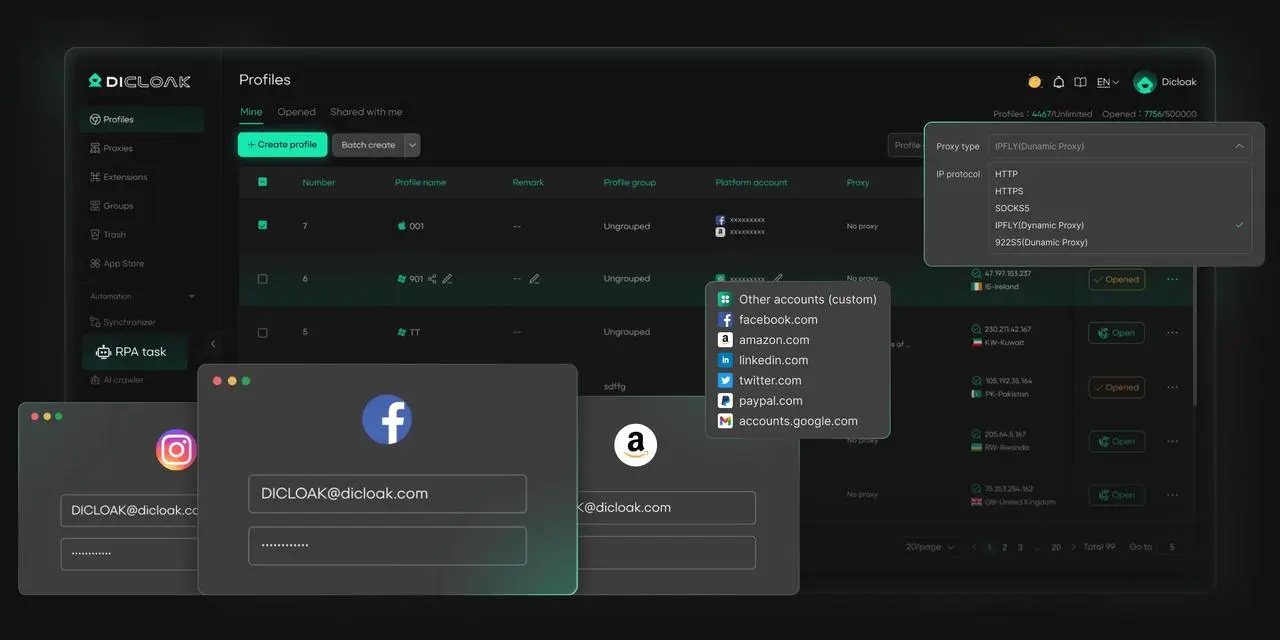
What Makes DICloak Stand Out?
✅ Manage 1,000+ Accounts on One Device:
Stop wasting money on extra hardware! DICloak allows you to manage multiple accounts on a single device, cutting costs and boosting efficiency.
✅ Guaranteed Account Safety, No Ban Risks:
Every account gets its own isolated browser profile with custom fingerprints and IPs, drastically reducing the risk of bans. Your accounts, your control!
✅ Flexible Proxy Configuration for Maximum Performance:
Seamlessly integrate with all major proxy protocols (HTTP/HTTPS, SOCKS5) and manage your proxy pool with bulk operations. No more struggling with IP management—DICloak has you covered.
✅ Streamlined Team Collaboration for Better Results:
Easily manage your team with advanced tools like profile sharing, permission settings, data isolation, and operation logs. Your team works smarter, not harder.
✅ Automate the Grind with RPA:
DICloak's built-in RPA saves you hours of manual work. Automate repetitive tasks, streamline workflows, and focus on what really matters—growing your business.
✅ Powerful Bulk Tools to Scale Your Operations:
Create, import, and launch multiple browser profiles in one click. DICloak makes scaling your business as easy as it gets.
✅ Compatible with All Major Operating Systems:
Based on the Chrome core, DICloak supports simulating Windows, Mac, iOS, Android, and Linux operating systems. No matter what platform you need, DICloak has you covered.
Step-by-Step Guide: Setting Up a Secure Coinbase Profile in DICloak
- Sign Up for DICloak: Visit the DICloak website to sign up and download the application. DICloak provides a free plan for users to get started and experience the core features. If you need more advanced capabilities, you can upgrade to a paid plan at any time to unlock additional functionality.
- Create a New Browser Profile: From the DICloak dashboard, create a new profile. It's good practice to name it something memorable, like "Coinbase Primary," to stay organized.
- Configure a Proxy: When using DICloak, you can customize and configure your own proxy for each browser profile to ensure it has a stable and unique IP address. This setup is essential for keeping each profile in a consistent geographical location and maintaining proper isolation between accounts.
- Launch the Profile and Access Coinbase: Click the "Open" button to launch the profile. This will open a new, completely isolated browser window. You can now navigate to Coinbase and log in, knowing your digital fingerprint is protected and consistent.
Know Your Rights as a Coinbase User
When dealing with an account restriction, it's empowering to know that you have fundamental rights as a user. Understanding these rights adds a layer of confidence and helps you navigate disputes more effectively. These rights are not just theoretical; they form the basis of legal disputes and are frequently cited by cryptocurrency litigation firms when representing users against major exchanges.
- The Right to Access Your Funds: While Coinbase operates under its own terms of service, it cannot unlawfully withhold your cryptocurrency indefinitely without proper justification.
- The Right to Clear Communication: The company should provide clear and transparent reasons for any account restrictions and guide you through the resolution process.
- The Right to Privacy: Coinbase is required to protect your personal data under its privacy policy and applicable data protection laws.
If you have a significant amount of funds locked and have exhausted all other support options without resolution, consulting a cryptocurrency lawyer who specializes in exchange disputes is a potential next step.
Conclusion: Taking Back Control of Your Account
While a Coinbase account restriction is a serious and often alarming issue, it is usually solvable by following a clear process of diagnosis, action, and prevention. By understanding the common triggers, taking the correct steps to resolve the problem, and adopting proactive security habits, you can regain control and protect your account from future issues. For users seeking the highest level of security and operational control, a dedicated tool like DICloak provides a powerful, proactive solution to manage your digital identity and secure your valuable crypto assets.
Frequently Asked Questions (FAQs)
How long does a Coinbase account restriction usually last?
The duration varies. Simple KYC or document issues are often resolved in 24-72 hours. Security reviews for suspicious activity can take a few business days to several weeks. Serious violations may lead to much longer or even permanent restrictions, with some users reporting cases that drag on for 2 to 8 months.
Can I withdraw funds if my Coinbase account is restricted?
It depends on the specific type of restriction. Some accounts are placed on "withdrawals only" status, allowing you to move funds out but not trade or deposit. However, other restrictions may freeze all activity, including withdrawals, until the issue is resolved. You should check your specific account status for details.
Will using a proxy get my Coinbase account restricted?
Using a proxy does not automatically lead to restrictions, but unstable or frequently changing IP addresses may raise security alerts. To reduce risk, it’s important to use high-quality proxies with a consistent IP and location, ensuring your account activity appears normal and predictable.
What should I do if my Coinbase appeal is denied or ignored?
Your options are limited but include submitting a new, more detailed support ticket, contacting Coinbase through their official X account for public visibility, or—for cases involving significant locked funds—consulting a cryptocurrency litigation lawyer.
Can I create a new Coinbase account if I've been permanently banned?
Officially, no. Coinbase's Terms of Service prohibit individuals from owning more than one personal account. The platform tracks users through government IDs, bank accounts, and digital fingerprints. A new account created with the same personal details will likely be detected and terminated instantly.
 Web Proxy Tools
 Free Tools
 Cookie Plugin
 UA Generator
 MAC Address Generator
 IP Generator
 IP Address List
 2FA Code Generator
 World Clock
 Anonymous Check
 WebRTC Leak Test
 UUID Generator
 Free Web Proxy Site
 Proxy Checker
 FB Ad Checker
 AI Web Scraping
 Free SMM Tools
 Twitter Shadowban Checker
 Instagram Name Checker
 UTM Generator
 Username Generator
 AI Hashtag Generator
 LinkedIn Headline Generator
 Social Media Image Resizer