You hit the Cloudflare check, answer the puzzle, and still get blocked. Maybe the challenge reloads, or the page spins until you land on another error. This endless loop isn’t just annoying, it can lock you out of key work tools, registration forms, or dashboards you need for your job. For some, it’s not just “stuck on cloudflare verification”, it’s a hard stop that won’t go away, no matter how many times you refresh.
Clearing cookies or switching browsers rarely solves it for long. If Cloudflare thinks your connection looks risky, you can get caught in a human verification not working cycle, or worse, be stuck in a challenge endless loop that keeps repeating. Changing devices or networks sometimes helps, but not always, especially if your IP or browser setup matches patterns that trigger the firewall.
What most people miss is that Cloudflare’s checks go way beyond a simple captcha. They profile your browser, cookies, IP, and even your JavaScript behavior. If one piece looks off, like a mismatched user agent or a proxy with a flagged IP, you can get stuck, even if you’re a real person. The right fix isn’t just about clicking the right button, but knowing which part of your setup is getting flagged and why the site’s risk engine won’t let you through.
So what’s actually causing the block, and how do you break the cycle? Start with the most common technical reasons.
What Actually Happens When You Can't Pass Cloudflare Verification
Getting stuck on Cloudflare’s verification screens isn’t just annoying, it’s a sign that something in your browser, device, or network setup looks risky to Cloudflare’s automated checks. Instead of letting you through, Cloudflare keeps challenging you because it thinks there’s a high chance you’re a bot or part of suspicious traffic.
How Cloudflare Verification Works in 2026
Cloudflare runs layered checks to decide if you’re safe to let through. Here’s what you’ll see and what triggers each:
- Turnstile: The default low-friction check. Usually shows up if you’re coming from a new device, fresh browser, or a location Cloudflare doesn’t see as high risk.
- Challenge: More aggressive, often a JavaScript or cookie check. Kicks in when your browser fingerprint or IP history matches patterns from known bots or automation tools.
- CAPTCHA: The last line. Triggers for flagged IPs, mismatched browser setups, or repeated failed attempts. If you see CAPTCHA after CAPTCHA, Cloudflare is blocking you based on more than one suspicious signal.
Common Signals That Cause Verification Failure
Most people think failing Cloudflare means you clicked the wrong box, but that’s rarely the real issue. Cloudflare’s engine looks for a mix of technical and behavioral red flags before locking you in a challenge endless loop or blocking access. If your IP shows up on threat lists, or you’re using a proxy that hundreds of others have used for scraping, Cloudflare’s system will almost always escalate to the hardest challenge, sometimes without showing you exactly what went wrong.
A mismatched browser fingerprint is another common tripwire. For example, if your user agent says you’re on Windows but your fonts, screen resolution, or WebGL data match a known Linux setup, Cloudflare sees this as a fake or automated browser. Even small details, like missing cookies or JavaScript errors, can push you into repeated checks. And if your behavior looks automated, like submitting forms too fast, reloading the page in rapid bursts, or sharing session details across multiple tabs, Cloudflare groups these signals and raises the block level. The hardest part isn’t just knowing something failed, but figuring out which of these signals triggered the block, because Cloudflare almost never tells you. If you skip this diagnostic step, you can end up stuck no matter how many times you retry.
This is why most fixes that work for one person don’t always work for the next. If your setup is being flagged for IP reputation, switching browsers does nothing. If it’s fingerprint inconsistencies, even a fresh device won’t help unless every technical detail lines up.
Cloudflare’s system is looking for patterns, not just single mistakes. Next, it’s worth digging into which specific browser, device, or network signals are most likely to get you flagged.
Why Your Browser, Device, or Network Gets Flagged by Cloudflare
Getting blocked by Cloudflare usually isn’t random. Your browser, device, and network leave traces, some small, some obvious, that Cloudflare’s risk system checks. If those signals don’t match what a “normal” user looks like, you can get stuck on cloudflare verification or even land in a challenge endless loop, no matter how many times you try.
Browser Fingerprint and Device Signals
Cloudflare collects your browser fingerprint, a mix of settings, extensions, cookies, and device info. If parts of your fingerprint don’t line up, the system treats you as suspicious. Here’s what triggers trouble most often:
- Different browser versions or user agent strings than expected (like Chrome 120 on Windows 7)
- Missing or blocked cookies, especially when you’re supposed to be logged in
- Extensions that change your JavaScript behavior or block scripts
The mismatch usually happens when switching devices, using privacy tools, or running browsers in unusual ways.
IP Address, Proxy, and Network Reputation
Cloudflare pays close attention to your IP history and how clean your proxy is. If you’re on a network that’s had past abuse, your request starts with a disadvantage. Shared proxies, especially cheap or public ones, are often already flagged. That means even if your browser setup looks fine, the network layer can trigger the block.
Imagine you’re working from a hotel Wi-Fi. The IP might be recycled daily, and dozens of guests could have triggered warnings before you. As soon as you hit a Cloudflare-protected site, your IP reputation gets checked, if it’s marked as risky, you’ll see a verification challenge right away. But the same thing happens with many proxy services: low-cost proxies often share their IPs across hundreds of users. If one user gets flagged for scraping or bot activity, everyone else inherits the penalty. The result is you’re stuck on cloudflare human verification not working, even if your own actions are clean.
The tradeoff is clear: higher-quality proxies cost more but come with less risk of inherited bans. Using your home connection is safest, but even then, browser signals and device history matter. If your IP, browser, and cookies don’t all line up, Cloudflare’s system sees you as a possible bot or attacker.
Sometimes fixing just one piece, like switching from a flagged proxy to a clean one, breaks the cycle. But if your fingerprint and network both look risky, you’ll need to fix both before you can pass. That’s why next steps should focus on cleaning up both browser and network signals together.
Step-by-Step Fixes When You Can't Pass Cloudflare Verification

If you're stuck on Cloudflare verification and nothing moves forward, you need to troubleshoot each layer, browser, device, network, and session, one at a time. The fastest fix often isn’t the obvious one; skipping steps means you’re likely to stay trapped in the challenge endless loop.
Basic Troubleshooting: Browser and Device Settings
- Clear cookies and cache. Old session data can trigger Cloudflare's risk scoring, removing it resets your footprint.
- Disable browser extensions, especially privacy or spoofing tools. Extensions that inject scripts or block trackers often break Cloudflare’s JavaScript checks.
- Restart your browser or switch to a fresh profile. If you’ve repeatedly failed verification, lingering session artifacts sometimes block you even after clearing cookies.
Network and Proxy Checks
- Test your IP address reputation using a service like ipinfo.io. If your IP is flagged as a proxy or has recent abuse reports, Cloudflare may refuse to verify you.
- Switch to a higher-quality proxy or your original network. Low-quality proxies often share IPs with spammers, moving to a clean residential or mobile IP can break the cycle.
- If your IP was flagged, wait at least 30 minutes before retrying. Cloudflare sometimes holds temporary blocks that only expire with a new session and cooldown.
Advanced: Fingerprint Consistency and Session Isolation
- Align browser fingerprint with proxy location. If your browser language, timezone, or user agent don’t match your proxy’s country, Cloudflare's risk engine treats this as a mismatch and may require extra verification.
- Avoid mixing multiple accounts in one session. Running several accounts through the same browser or device leaves cross-session cookies and can trigger blocks.
- Use isolated browser profiles for each account or workflow. If Cloudflare human verification keeps looping, profile contamination is often the culprit, clean separation is your strongest fix.
If you skip fingerprint alignment, you’ll notice Cloudflare challenges repeat even after IP changes. Mixing accounts in one session often leads to persistent blocks that don’t clear until you isolate workflows. The most overlooked fix is matching browser and proxy settings, getting this right nearly always shortens challenge cycles.
The next layer of problems comes from subtle mistakes, missteps in browser setup or workflow that make Cloudflare verification harder, even after you’ve fixed the basics.
Risks and Mistakes That Make Cloudflare Verification Harder

Some habits make Cloudflare blocks worse. If you repeat these, you can get stuck in a verification loop no matter how often you reload or switch browsers. Here’s what trips up most people and how to avoid it.
Mixing Multiple Accounts in One Browser Session
Crossing accounts in the same browser leaves traces, shared cookies, overlapping local storage, and session IDs that signal “unusual” activity to Cloudflare’s bot checks. Even logging out doesn’t clear all traces. The only reliable way to keep accounts apart is to use a new browser profile or a fully isolated container for each one. Quick fixes like incognito windows don’t solve this; detection patterns often go deeper.
Using Low-Quality or Public Proxies
- Only use proxies with low abuse histories.
- Avoid IPs from public proxy lists, these are often flagged.
- Test your proxy’s reputation before logging in.
Inconsistent Browser Fingerprints
Switching user agents, screen sizes, or languages mid-session makes you look fake to Cloudflare, especially if device details or time zones change. It’s not just about matching your last visit, but keeping all signals stable.
- Keep the same user agent string across sessions.
- Don’t flip device type (mobile/desktop) for the same account.
- Match timezone, language, and screen size every time.
Ready for a safer approach? Next up: how advanced browser profiles and proxy setups actually break the endless Cloudflare challenge cycle.
Using DICloak for Safer Browser Profile and Proxy Workflows When Facing Cloudflare Verification Problems
Once you know Cloudflare’s checks can flag you for session overlap, mismatched fingerprints, or bad proxy setups, the next real step, especially for anyone running more than one platform account, is separating your browser profiles and configuring each connection with care. For operators and teams who need to manage multiple browser profiles, DICloak offers practical controls that fit this workflow without overstepping into platform-level actions. The scope stays at browser profile and proxy setup, so it doesn’t change Cloudflare’s actual verification outcome or manage native platform objects.
Profile Isolation and Fingerprint Configuration in DICloak
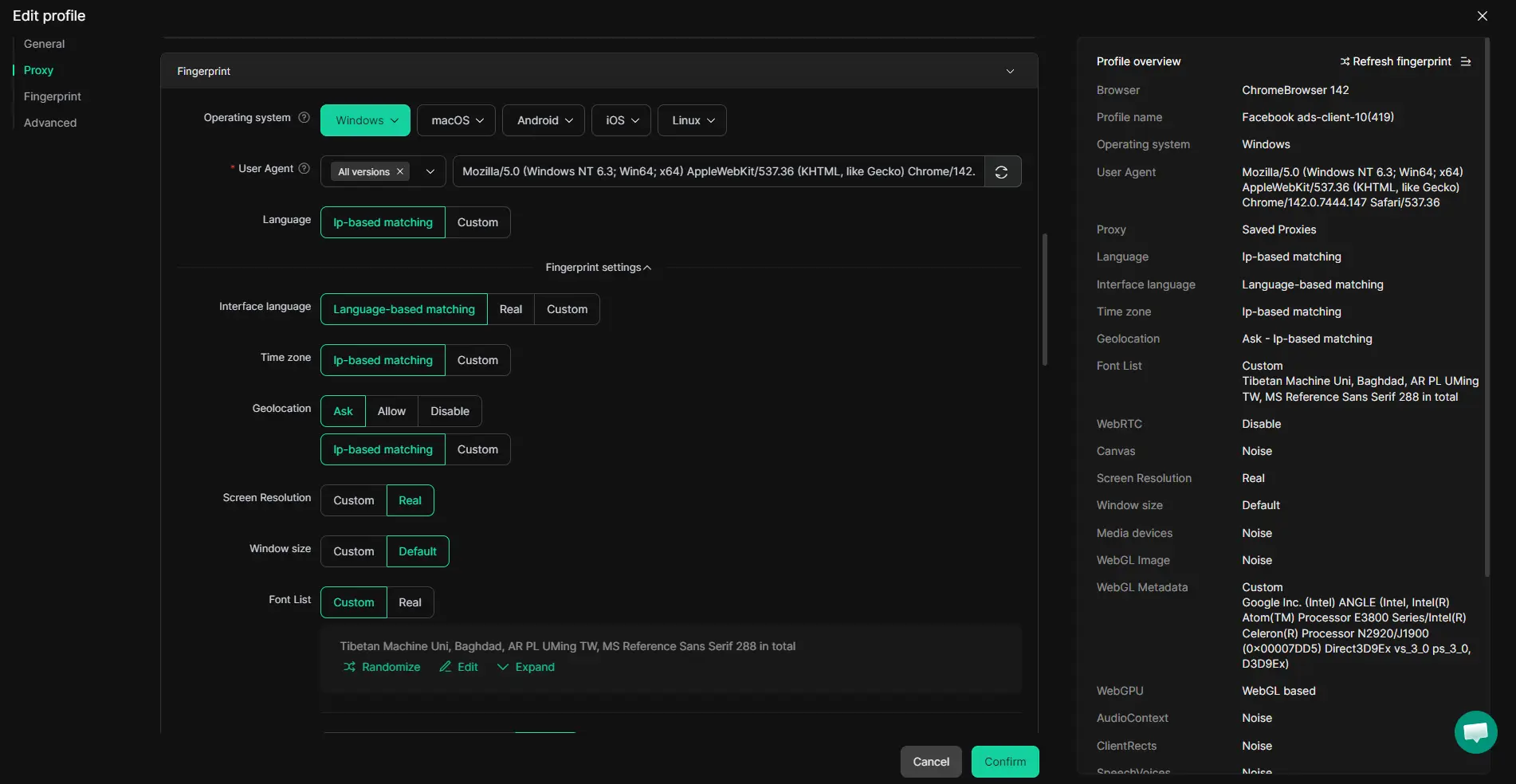
Operators can create a new browser profile in DICloak for each platform account and configure fingerprint signals so every session reports consistent device details. This means you can set the operating system, User Agent, language, time zone, screen resolution, and WebRTC behavior per profile, making each environment look like a separate, real browser. For teams, this setup is how you avoid the easy mistake of running several accounts in the same browser, which often leads to session overlap and fingerprint mismatches. The practical benefit: isolated profiles with matching signals lower the chance Cloudflare sees conflicting data across your accounts. Still, this only controls browser-level signals; it doesn’t guarantee platform acceptance or manage accounts themselves.
Proxy Configuration for Each Profile in DICloak
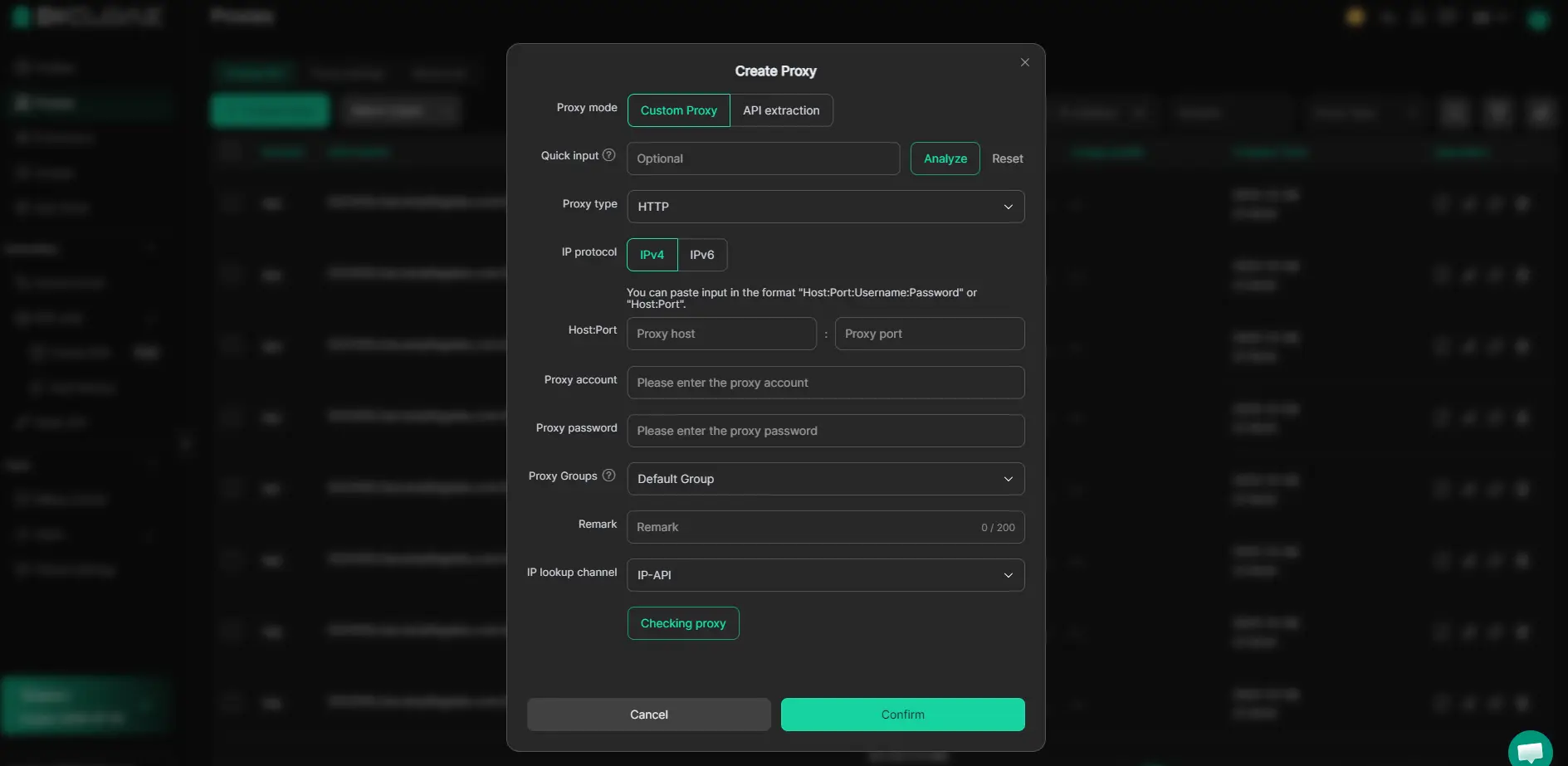
Operators can assign a custom proxy to every DICloak profile, entering details like host, port, username, and password, and then use the built-in proxy check to confirm connectivity and see the exit IP and location. This step matters because Cloudflare often flags inconsistent or reused IPs, especially if you’re switching between accounts or managing a team operation. With DICloak, you decide which proxy to use for each profile, whether that’s custom, saved, API-extracted, or even no proxy at all. Testing the connection before opening a session helps operators avoid the common pitfall of launching multiple accounts through the same IP or a flagged proxy. The platform doesn’t supply proxies, nor does it dictate your proxy choice or guarantee connection safety; it only stores and applies the settings you provide.
For operators who still find themselves stuck on cloudflare verification even after isolating profiles and configuring proxies, the next article section covers advanced troubleshooting steps.
When Cloudflare Verification Fails Despite Best Practices: What to Try Next
Even after using isolated browser profiles and clean proxy setups, you might still get blocked, especially if your device or IP ends up flagged in Cloudflare’s risk database. That’s when fallback steps matter.
Escalation: Contacting Site Support or Cloudflare
- Reach out only after exhausting fixes; most sites won’t help if basic checks fail.
- Include device/browser details, IP history, and any error messages, avoid vague “can’t pass cloudflare verification” complaints.
- Ask if the site maintains a manual whitelist for stuck users; some do, but it’s often hidden.
Workflow Adjustments for Persistent Verification Issues
Switching devices or networks can clear some blocks, but the real fix is rebuilding your browser profile from scratch. Wipe cookies, set a fresh user agent, and avoid recycling any old session data, Cloudflare tracks more than just IP. If you still hit a challenge endless loop, that usually means your fingerprint matches a flagged pattern. At that point, further escalation or workflow change is the only option.
Best Practices for Safer Multi-Account and Team Browsing Under Cloudflare Protection

Teams running multiple accounts often hit Cloudflare’s firewall when browser profiles or proxies overlap. Getting past these checks isn’t about luck, it’s about strict separation and audit discipline.
Isolate Each Account with Its Own Browser Profile
Shared cookies or reused fingerprints make Cloudflare’s risk engine flag your activity fast. The most reliable way to avoid detection is to keep every account in a separate browser profile, each with its own persistent cookie store and browser fingerprint. Use profile management tools or standalone browser instances, never use regular incognito tabs for account rotation.
Assign Unique Proxies and Maintain Consistency
- Assign a dedicated proxy to each profile, never reuse an IP across accounts.
- Stick with one proxy per session; switching mid-session often triggers a challenge endless loop.
- Align browser fingerprint settings with the region and type of your proxy.
Document and Audit Workflow Changes
If you can’t track which proxy or profile was used for which account, you’re set up for recurring Cloudflare human verification issues. A simple log can reveal patterns, like certain IPs getting flagged, or a browser version that’s tripping the check.
- Keep a log for every account: profile ID, proxy, session times.
- Note any verification failures with timestamps.
- Review logs weekly to spot recurring problems or risky overlaps.
Frequently Asked Questions About can't pass cloudflare verification
Why can't I pass Cloudflare verification even after clearing cookies and cache?
Cloudflare looks at more than cookies and cache. If your device fingerprint doesn’t match expected patterns, or your IP address has a bad reputation, you might still fail verification. Using a proxy or proxy can also trigger extra checks. These deep checks help Cloudflare spot bots or suspicious traffic.
Does using a proxy help or hurt my chances of passing Cloudflare verification?
High-quality, private proxies may help you get through Cloudflare, but cheap or public proxies often have bad reputations. Cloudflare tracks IP history and blocks IPs linked to spam or bot traffic. If you use a proxy, choose one that’s not shared or flagged by Cloudflare.
Can browser fingerprinting make Cloudflare block me?
Yes, inconsistent browser fingerprints can trigger Cloudflare’s block. If your browser settings, extensions, or user agent seem unusual, Cloudflare may see your traffic as risky. Using rare browsers or changing settings often makes your device stand out, which can lead to human verification challenges.
What should I do if Cloudflare verification keeps looping on all devices?
If the Cloudflare challenge endlessly loops, restart your router and check your network for malware or strange activity. Try accessing from a different network or device. If the loop happens everywhere, report the problem to the website owner so they can investigate Cloudflare’s settings or your IP reputation.
Is it safe to manage multiple accounts under Cloudflare protection?
Managing many accounts is risky if you don’t isolate them well. Use clean browsers or profiles, quality proxies, and separate email addresses for each account. Avoid logging in to multiple accounts from the same device or IP. This reduces the chance of being flagged by Cloudflare’s security checks.
If standard troubleshooting hasn’t resolved the verification issue, it may be time to consider alternative solutions that simplify access without compromising security. Exploring privacy-focused tools can help you bypass unnecessary hurdles while keeping your data safe. Try DICloak For Free
 Web Proxy Tools
 Free Tools
 Cookie Plugin
 UA Generator
 MAC Address Generator
 IP Generator
 IP Address List
 2FA Code Generator
 World Clock
 Anonymous Check
 WebRTC Leak Test
 UUID Generator
 Free Web Proxy Site
 Proxy Checker
 FB Ad Checker
 AI Web Scraping
 Free SMM Tools
 Twitter Shadowban Checker
 Instagram Name Checker
 UTM Generator
 Username Generator
 AI Hashtag Generator
 LinkedIn Headline Generator
 Social Media Image Resizer