You set up a new Facebook account inside an antidetect browser, tweak the fingerprints, run through your proxy settings, and hit submit, only to see the account disabled before you even log in twice. It’s a common headache for operators trying to manage multiple identities or scale workflows, especially when the ban comes so fast that you can’t even reach the welcome page. For many, the problem isn’t just the account loss, it’s wasted time, wasted setup, and the confusion of not knowing what triggered the lockout.
What throws people off is that even accounts with clean email and phone credentials can get flagged. You follow the usual anti-linking steps, but the platform still blocks you. This isn’t just about Facebook tightening rules, half the trouble comes from browser profile missteps, proxy mismatches, or device fingerprinting that doesn’t match Facebook’s risk models. If you treat every ban as random, you end up repeating the same setup mistakes and burning more accounts.
The real gap isn’t in the signup itself, it’s in how you handle browser profiles, cookies, and device signals between creation and first login. Getting past the “new facebook account disabled antidetect” problem means drilling down on what Facebook’s detection systems actually notice: browser fingerprint mismatches, proxy reuse patterns, and session timing. You need a checklist that covers both technical tweaks and operational routines.
To figure out which part of your workflow is tripping Facebook’s alarms, start by breaking down how account creation interacts with browser and proxy setups.
Why Facebook Accounts Get Disabled Right After Creation in an Antidetect Browser
Most people hit a wall right after signup: the new Facebook account gets disabled before the first real use. This isn’t random, Facebook’s systems flag patterns that don’t line up with normal user behavior. The problem nearly always comes down to signals your browser, device, or connection send during account creation or the first login.
Facebook compares every new signup against a huge database of “normal” patterns. The main signals that trigger review or instant blocks include:
- Browser fingerprint: Facebook checks for hardware, software, and plugin details. Mismatched or exotic fingerprints (like mobile OS on a desktop) get flagged.
- IP and device link: If your IP is from one country but your device fingerprint says another, or the IP is part of a public proxy range, risk goes up.
- Behavior profile: Fast actions, missing “warm-up” activity, or copied navigation flows often match known automation or account farming.
Common Mistakes That Trigger Instant Disabling
The most common reason for a facebook account disabled after creation in an antidetect browser is a mismatch between your browser fingerprint and your network or device signals. For example, if you set up a profile to look like an iPhone but use a data center proxy from another country, Facebook’s system spots that the device and IP don’t match any real-world pattern. That’s a fast track to a ban.
Another big problem is reusing proxies or cookies across accounts. Facebook tracks IP addresses and will flag mass signups coming from the same range, especially if the browser fingerprints look too similar. If you copy cookies, reuse device IDs, or skip profile isolation, you link your new account to a flagged cluster, sometimes before you even finish the signup process.
Fast or “robotic” activity is a dead giveaway too. If you jump straight from account creation to sending friend requests, posting, or joining groups, Facebook’s automation detection will often step in. Even small things like skipping the profile setup steps or using copy-pasted information across multiple accounts can trigger a review.
Here’s a real example: You create five accounts with identical browser settings, cycle through the same proxy for each one, and use the same profile picture. You might get one account live, but the rest are likely to be locked or disabled within minutes. Facebook’s detection system looks for these repeated patterns and blocks accounts in batches.
The single most common tripwire is a sloppy mismatch between device fingerprint and proxy location, Facebook’s automated checks usually catch this before you can even verify your email.
If your accounts keep getting shut down right after creation, stop and review every step, especially how your browser profile and connection stack up against what a real user would do. The next section breaks down exactly what to check before you even start a new Facebook signup.
What to Check Before Creating a Facebook Account in an Antidetect Browser
If you want to avoid a facebook account disabled after creation in an antidetect browser, don’t just focus on the signup page, get your environment right before you even open Facebook. Most instant bans happen because your setup leaks signals that Facebook’s systems catch in seconds. This checklist covers the real-world steps that make the difference between a working account and yet another “reviewed” or blocked profile.
Browser Environment Consistency
The biggest red flag for Facebook’s risk engine is a browser profile that doesn’t look like a real device. Matching your system timezone, language, and geolocation removes the obvious mismatches. Skipping this step means your account might get flagged before you finish signup. If you reuse the same device fingerprint, Facebook can link new accounts to old bans. Always generate a fresh fingerprint, don’t just copy a template. If you forget to sync your system’s timezone with your proxy’s country, account verification SMS often fails or triggers additional review.
Checklist:
- Set timezone, language, and system locale to match your proxy’s location.
- Generate a unique browser fingerprint for each new profile.
- Check for leftover cookies or cached data from old sessions.
Proxy and IP Quality
A stable, clean proxy is non-negotiable. Facebook tracks IP history and can spot recycled or “dirty” proxies that have hosted banned accounts. Even a fresh browser profile is useless if your IP is blacklisted or changes mid-signup.
- Use a residential proxy with no recent Facebook bans.
- Test for IP leaks with a public IP check tool before opening Facebook.
- Stick to one IP per account, never rotate or share proxies across multiple accounts.
| Proxy Type |
Risk of Ban |
Common Pitfalls |
| Residential |
Low |
Expensive; quality varies |
| Datacenter |
High |
Often flagged; reused IP blocks |
| Mobile |
Medium |
Variable reliability; cost |
Table: Proxy types and typical risk factors for Facebook signup bans
Account Creation Steps That Look Natural
Speed and uniformity are the enemy here. Facebook expects variation and human pacing. If you fill out forms too fast or use obvious fake data, you’ll trip their risk systems. Use real-seeming names, plausible birthdates, and avoid copy-pasting blocks of info.
- Enter details at a normal speed, avoid scripts or autofill tools.
- Use realistic user data: names, birthdates, and emails that match the region.
- Pause between steps (e.g., wait 20-40 seconds after email verification before uploading a profile photo).
If you skip these steps, you’ll end up with a facebook account banned in antidetect browser before you send the first friend request. Accounts that get blocked right after creation usually have one thing in common: the operator rushed or reused old setups. Next up, see what recovery options you have if your new account gets disabled straight away.
How to Fix a Facebook Account Disabled After Creation: Recovery Steps and Limits
Getting a facebook account disabled after creation in an antidetect browser is common if device settings or proxies trigger Facebook’s automated checks. If your account was blocked right after signup, you have a narrow window to appeal, waiting rarely helps. Here’s how to approach recovery, what to expect, and where the limits show up.
Submitting an Appeal to Facebook
- Go to the Facebook login page and enter your disabled account’s credentials. Click the “Learn More” or “Appeal” link shown on the lockout page.
- Fill out the appeal form. Upload a clear photo of the identity document Facebook requests, usually a government-issued ID. Make sure the name and date of birth match your account details.
- Submit the form and note any confirmation number or email you get. If you don’t receive a confirmation within an hour, try again from a different device or network.
- Watch your email (and spam folder) for Facebook’s response. If you get a rejection with no option to appeal, further attempts rarely work.
Understanding Facebook's Review Process
- Facebook’s review relies on automated pattern checks and manual review of your submitted documents. Accounts tripped by browser or proxy mismatches often get flagged as “not eligible” even with valid ID.
- If your device setup looks risky (for example, reused fingerprints or proxy IPs flagged by other banned accounts), appeals are usually denied fast, sometimes within minutes.
- If your appeal is “under review” for more than 72 hours without an update, odds of recovery drop. In most cases, you’ll get a standard rejection template by email or inside the account dashboard.
- Appeals can only be filed once per account. Submitting multiple appeals with different info can trigger a permanent block.
When Recovery Is Not Possible: Next Steps
- If your new account remains disabled after appeal, avoid repeating the same setup for another try. Facebook tracks device and proxy fingerprints, reusing them often leads to instant bans.
- Before creating a replacement, start with a fresh antidetect browser profile and a new proxy IP. Clear all cookies and browser data from your previous attempt.
- Consider waiting several days before trying again. Rapid-fire attempts from the same hardware or proxy pool increase the chance of new accounts being blocked.
- If you keep hitting bans, review your browser, proxy, and fingerprint configuration in detail, most failures come from overlooked setup errors, not just “bad luck”.
Next, see how common browser misconfigurations trigger bans even when you follow basic appeal steps.
Common Errors and Misconfigurations in Antidetect Browsers That Lead to Facebook Bans
Most cases of a facebook account disabled after creation in an antidetect browser can be traced to setup mistakes, usually in fingerprint, proxy, or session handling. If the new account is banned right after signup, odds are high that a technical detail tipped Facebook’s risk engine.
Fingerprint Configuration Errors
When device parameters don’t match, such as combining a Windows fingerprint with a mobile user agent, Facebook’s systems flag the profile as suspicious. Using an exact clone of a common fingerprint also raises red flags. Profiles need to look unique and consistent at every login.
Proxy Setup Mistakes
Wrong proxy settings can instantly link accounts or trigger a ban.
- Using a proxy IP from a country that doesn’t match your profile’s fingerprint or language will land the account in review.
- Sticking with unstable or changing proxies mid-session often leads to forced verification or a block.
The safer move is to pair every profile with a stable, country-matching proxy and never switch IPs during the first few logins.
Cookie and Session Handling Issues
Reusing cookies or session data across profiles lets Facebook connect accounts, which often leads to a block. Always start each new profile with a clean session, and never import cookies from another account if you want to avoid instant bans. If you miss this, you’ll see “account disabled” on your very first login attempt.
Many social media teams run into the same trap: one Facebook account gets disabled right after creation in an antidetect browser, and soon others follow. This isn’t just bad luck, sharing browser profiles, mixing up device signals, or letting network setups overlap too much can all leave patterns that Facebook’s detection tools pick up fast. Instead of guessing what went wrong each time, teams can tighten up their workflow by making sure each account uses its own browser profile and connection. DICloak supports this by letting operators set up separate browser profiles and assign proxies for each Facebook account, so account sessions don’t cross paths or leave obvious fingerprints.
Creating Isolated Browser Profiles and Configuring Fingerprints
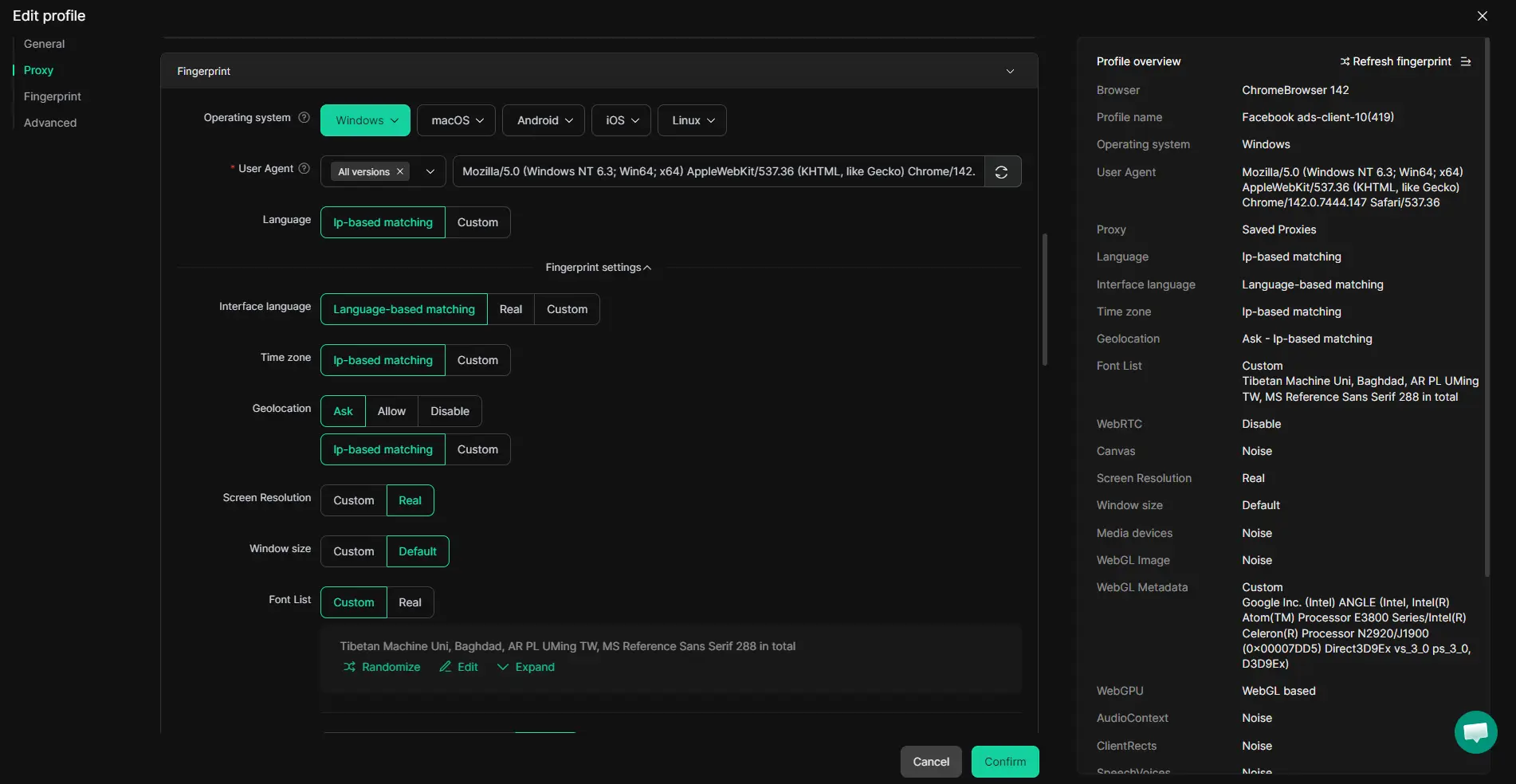
Operators can give each Facebook account its own browser profile in DICloak, keeping browser storage, cookies, and fingerprint signals separate from every other account. This means when a team member creates a new account, they start fresh with profile-specific device settings, language, time zone, and system signals, without any carryover from other sessions. For example, if one operator handles several accounts, each can be set up with different operating system and browser version signals, window sizes, and even geolocation info. It’s this separation that lets teams avoid browser-level overlap or accidental sharing of digital clues, which often trip Facebook’s risk checks. The scope stays at the browser-profile level; this does not affect or manage the connected Facebook account itself.
Assigning User-Owned Proxies to Each Profile
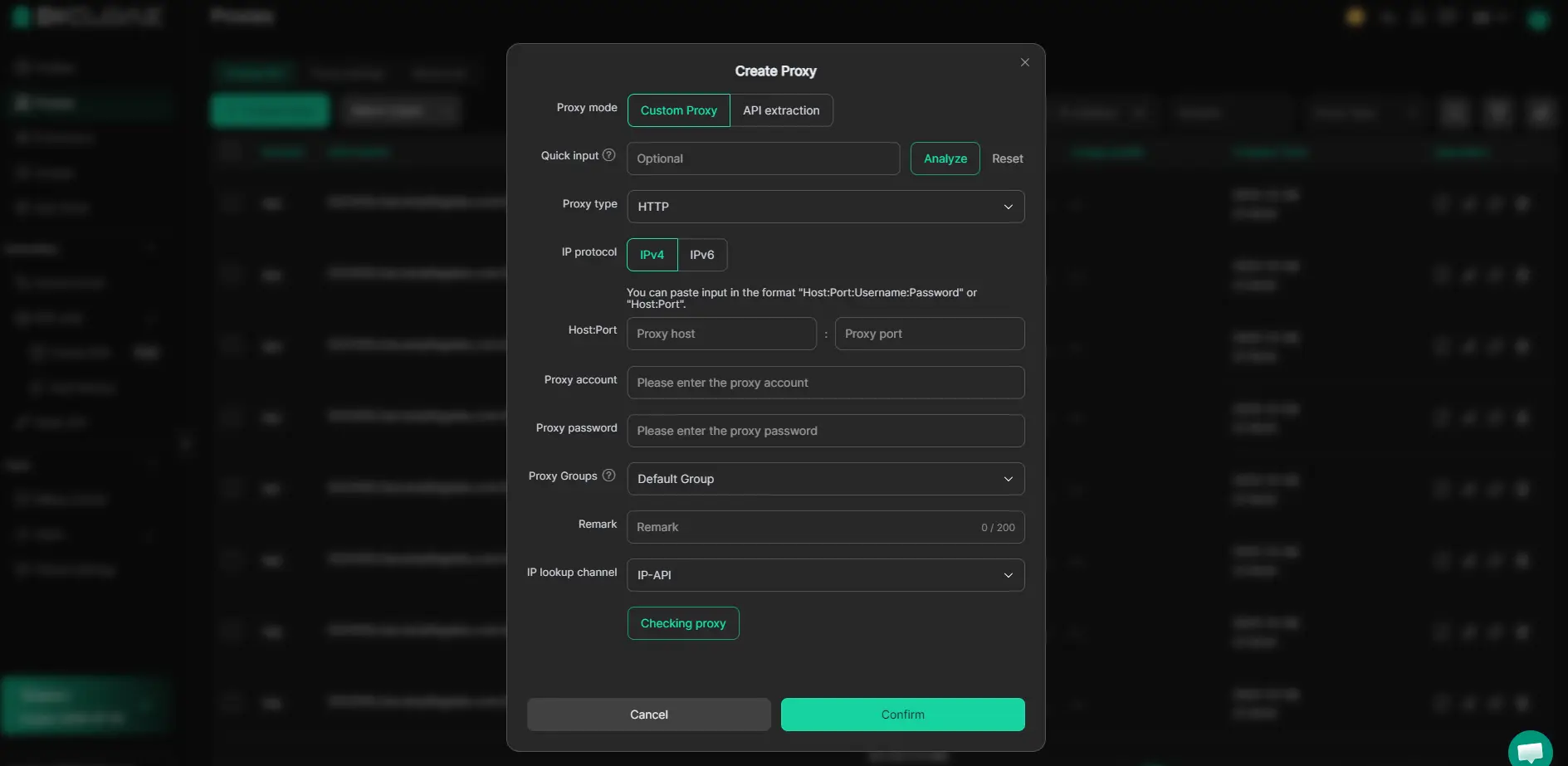
Every profile in DICloak can use its own proxy connection, which means teams can control the network signal for each account session. Operators add proxy details, like host, port, username, and password, directly to the profile settings, then use the built-in proxy test to confirm the exit IP and region before logging in. This extra check matters, since a mismatch between an account’s expected location and the browser’s actual network can trigger a review or even a block. The real benefit: if one proxy source gets flagged, the others stay isolated, reducing the risk that a single incident takes down the whole account pool. Teams are responsible for sourcing their own proxies; DICloak only stores and applies what’s entered, and does not sell or supply proxies. The setup is limited to proxy configuration at the profile layer, it does not determine Facebook’s handling of account sessions or restrictions.
Getting these steps right is what separates accounts that last from those that get blocked early. When session environments and proxies are set up one-to-one, teams can focus on content and campaigns instead of firefighting bans, though some risks, like platform policy or proxy quality, still remain outside any browser tool’s control. The next section looks at what to do when even the best setups aren’t enough, and how to decide when creating more accounts just isn’t worth it.
When Creating Multiple Facebook Accounts Is Too Risky: Safer Alternatives and Workflow Tips
Trying to create batches of new Facebook accounts in an antidetect browser often backfires. If you keep seeing facebook account disabled after creation in an antidetect browser, it usually means Facebook’s risk signals are flagging your setup. The real question isn’t “how many can I make” , it’s “when does the risk outweigh the reward?”
Risks of Mass Account Creation
Facebook tracks IP, device, cookies, and timing. Creating multiple accounts from one device or proxy rarely slips through for long. Here’s what you’re risking:
| Method |
Detection Risk |
Impact |
| Bulk Creation (same device) |
High |
Accounts disabled within hours |
| One-by-one (unique profile) |
Medium |
Some survive, most flagged later |
| Organic Growth (aged, spaced) |
Low |
Higher chance of lasting access |
If you lose control over 10+ accounts at once, you spend more time troubleshooting than getting real work done.
Safer Workflow Strategies
Slow down and let accounts age naturally. Use real device profiles and stagger creation to mimic organic patterns. Rushing mass creation usually guarantees bans, not results.
When to Use Antidetect Browsers Carefully
Multi-account setups make sense only for specialized campaigns or team access needs. If you’re not managing high-value projects, stick with one account per device and avoid risky shortcuts. Most users get better results by focusing on account quality, not quantity.
Frequently Asked Questions About facebook account disabled after creation in an antidetect browser
Can I recover a Facebook account disabled immediately after creation in an antidetect browser?
If your facebook account is disabled after creation in an antidetect browser, you may see an appeal option. Usually, Facebook asks for ID verification or other proof. Most appeals for instant bans are denied, especially if the system flags suspicious device or IP patterns. If Facebook rejects your appeal, recovery is unlikely.
Does using a proxy guarantee my Facebook account won't be disabled?
Using a proxy can help hide your real location and reduce the risk of a ban, but it does not guarantee your account’s safety. Facebook checks for other red flags, like mismatched fingerprints or unnatural behavior. Accounts using shared or low-quality proxies often get flagged and suspended.
What fingerprint settings are safest for new Facebook accounts?
The safest fingerprint settings match your device and network. Use a residential IP from your target country, a browser profile that mimics a real device, and behave like a normal user. Don’t change fingerprints or locations often. Consistency in device, IP, and activity helps avoid a new facebook account disabled antidetect issue.
Is it legal to create multiple Facebook accounts for business purposes?
Facebook’s policies only allow one personal account per person. Business accounts must be managed through Business Manager. Creating fake or multiple personal accounts can violate their rules and may break laws in some countries. Violations can result in permanent bans and legal action.
How many Facebook accounts can I safely manage in an antidetect browser?
Most users manage 2-5 accounts per machine without issues, but risk rises as you add more. Each account should have a unique browser profile, IP, and behavior. Sudden spikes in activity, shared details, or overlapping fingerprints increase the chance of a facebook account banned in antidetect browser event.Carefully reviewing your browser configuration and account creation tactics can help minimize the risk of future issues. If you're looking for a more reliable approach to managing multiple profiles securely, consider solutions designed specifically for privacy and platform compliance. Try DICloak For Free
 Web Proxy Tools
 Free Tools
 Cookie Plugin
 UA Generator
 MAC Address Generator
 IP Generator
 IP Address List
 2FA Code Generator
 World Clock
 Anonymous Check
 WebRTC Leak Test
 UUID Generator
 Free Web Proxy Site
 Proxy Checker
 FB Ad Checker
 AI Web Scraping
 Free SMM Tools
 Twitter Shadowban Checker
 Instagram Name Checker
 UTM Generator
 Username Generator
 AI Hashtag Generator
 LinkedIn Headline Generator
 Social Media Image Resizer