Why Datacenter Proxies Still Dominate High-Volume Automation in 2026
1. Is Speed or Stealth Your Priority When Choosing a Proxy?
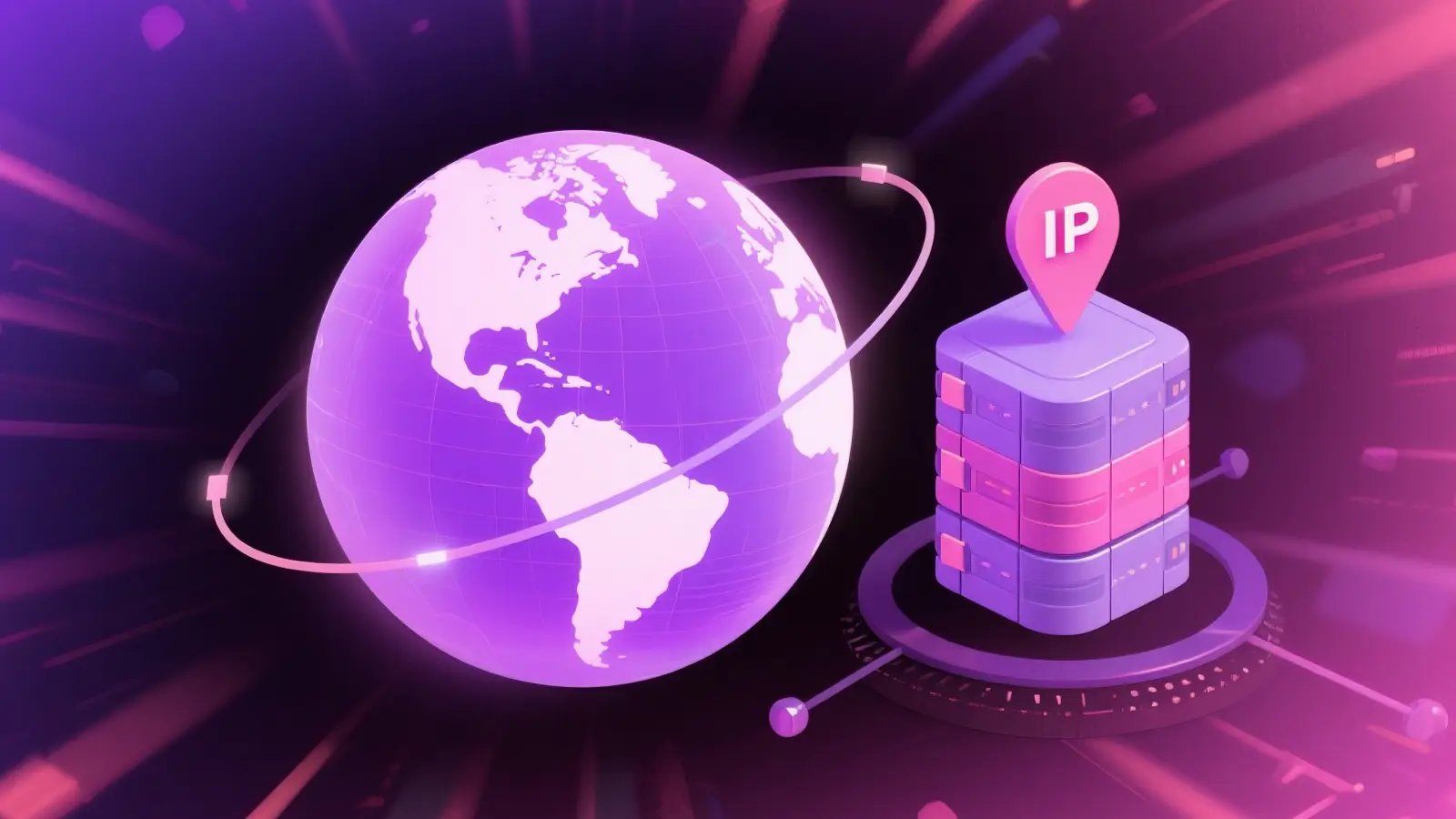
Choosing a proxy infrastructure in 2026 requires a cold assessment of your project's technical requirements. If your objective is massive data throughput at the lowest possible latency, datacenter proxies remain the industry standard. These are intermediaries providing IP addresses originating from secondary corporations—hosting and cloud service providers—rather than residential Internet Service Providers (ISPs).
The trade-off is a matter of architectural efficiency: you gain raw speed and cost-efficiency at the expense of "residential" legitimacy. While residential IPs offer higher stealth by mimicking real-user devices, datacenter proxies provide the high-performance stability required for scaling operations that demand 99.7% uptime. For a practitioner, the choice isn't just about hiding an IP; it’s about managing the throughput-to-cost ratio for operations that would be financially ruinous on residential bandwidth.
2. How Do Datacenter Proxies Actually Handle Your Traffic?
Datacenter proxies function as high-speed gateways between your automation stack and the target server. Their utility is defined by whether they are deployed as forward or reverse proxies.
2.1. What makes a forward proxy the standard for automation?
A forward proxy is the architect’s tool for identity shielding. It sits in front of your client, mediating requests to allow for high-volume traffic while masking your local infrastructure. By utilizing a wide range of subnets, these proxies allow automation frameworks to distribute load across thousands of unique IPs, which is the primary defense against threshold-based rate limits.
2.2. Can a reverse proxy protect your server infrastructure?
While forward proxies shield the client, reverse proxies shield the target. When you hit a major platform, you are likely hitting a reverse proxy (like Cloudflare or Akamai) acting as a shield. These utilize datacenter IPs for load balancing and content caching. Understanding this is critical for automation: your scraper is often fighting against the same datacenter-grade infrastructure you are using to power it.
2.3. Where do these IP addresses physically come from?
These IPs originate from high-performance server clusters in Tier-3 datacenter facilities. They are backed by redundant fiber backbones and 10Gbps+ Tier-1 carrier uplinks. This infrastructure ensures that data packets don't just move; they move with the stability and low-latency peering necessary for 99.7% uptime. Unlike residential nodes, which are subject to a home user’s Wi-Fi stability, these are enterprise-grade assets in climate-controlled server rooms.
3. Datacenter vs. Residential: Which IP Source Should You Buy in 2026?
Selecting an IP source is a strategic decision based on the target’s security stack and your internal budget.
3.1. When does the IP address origin lead to a ban?
Datacenter IPs are cloud-based and easily identifiable via ASN (Autonomous System Number) lookups. If a website’s security profile is tuned to "Residential Only," it will flag any ASN associated with a hosting provider. Residential IPs, issued by ISPs to physical homes, bypass these checks but at a significantly higher cost per GB.
3.2. Why is budget often the deciding factor?
Scaling an operation with 1,000 GB of traffic monthly is cost-prohibitive on residential networks. Datacenter proxies offer access to massive pools—providers like Webshare offer over 30 million IPs—at a fraction of the cost. For high-volume scraping where the target doesn't aggressively block cloud ASNs, the datacenter route is the only viable path for maintaining a healthy ROI.
3.3. Assessing the complexity of your target website
| Metric |
Datacenter Proxy |
Residential Proxy |
| Primary Goal |
Raw Speed & Throughput |
Stealth & Organic Behavior |
| Target Profile |
Public APIs, Low-Security Sites |
High-Security E-comm, Social Media |
| IP Pool Scale |
30M+ (Massive Subnet Diversity) |
High (Peer-to-Peer based) |
| Uptime/Stability |
99.7% (Enterprise Grade) |
Variable (Node Dependent) |
| Budget Strategy |
Cost-Efficient for High Bandwidth |
Premium Price for Low Bandwidth |
4. Are You Choosing the Right Type of Datacenter Proxy for Your Workflow?
The technical configuration of your proxy pool will determine your success rate.
4.1. Should you use static or rotating IP addresses?
Static proxies provide a single, consistent IP, which is mandatory for session persistence where an IP change would trigger a logout. However, rotating proxies are the workhorse of scraping. By cycling the IP on every request, you minimize the "footprint" left on any single IP, effectively making it harder for the target to build a behavioral profile.
4.2. Is a shared IP pool worth the risk of "bad neighbor" effects?
- Dedicated (Private) Proxies: Assigned exclusively to you. You control the reputation and the throughput.
- Shared Proxies: Multiple users on the same IP. While cheaper, you risk the "bad neighbor" effect, where another user’s aggressive scraping gets the IP blacklisted before you even send your first request.
4.3. Does your tool require SOCKS5 or HTTP/HTTPS protocols?
HTTP/HTTPS is standard for web traffic and header manipulation. However, SOCKS5 is the architect’s choice for high-volume data transfers. SOCKS5 is protocol-agnostic and more efficient at handling the raw TCP/UDP traffic required for massive data extraction or complex tool integrations.
5. Which High-Volume Tasks Are Best Suited for Datacenter Speeds?
5.1. Scaling public web scraping without rate limits
Datacenter proxies are the engine behind Scrapy, Puppeteer, and Selenium. They allow for the extraction of terabytes of public data by distributing requests across a massive IP range, ensuring no single IP hits the target’s threshold.
5.2. Monitoring global SEO rankings and search data
Search engines are the front line of bot detection. Datacenter proxies, when combined with proper header management, allow for scraping Search Engine Results Pages (SERPs) at scale for keyword research and competitor tracking without triggering CAPTCHAs.
5.3. Tracking price fluctuations and market trends
In travel and e-commerce, prices change in milliseconds. Datacenter proxies provide the low-latency connection needed to monitor competitor pricing and market trends across 195+ global locations simultaneously.
5.4. Automating the purchase of limited-supply products
When high demand meets limited supply (e.g., sneaker drops or ticket releases), speed is the only metric that matters. Datacenter proxies allow you to bypass store-enforced limitations—like purchase-per-user caps—by sending thousands of concurrent requests in the seconds before a product sells out.
6. How to Safely Manage Multiple Profiles Using an Antidetect Browser?
By 2026, IP rotation is no longer sufficient. Modern targets look at your entire digital footprint, including hardware offsets and browser versions.
6.1. Streamlining your workflow with DICloak
DICloak acts as the orchestration layer for your proxies, ensuring that each digital identity remains isolated. You can leverage the tool to:
* Isolate Footprints: Assign unique datacenter IPs to individual browser profiles, preventing cross-linking through canvas or WebGL fingerprinting.
* Protocol Flexibility: Seamlessly integrate SOCKS5 or HTTP credentials into localized sessions.
* Global Orchestration: Manage proxy assets across a pool of 195+ global locations within a single interface, ensuring the browser profile matches the IP's geo-location perfectly.
7. What Are the Biggest Risks of Using Datacenter Proxies?
7.1. How to avoid being flagged by advanced bot detection
In 2026, the primary threat is no longer simple IP blocking but AI-driven behavioral analysis and TLS fingerprinting. Even if your IP is clean, a mismatched TLS handshake or non-human mouse movements will burn the asset. To mitigate this, you must pair your datacenter IPs with advanced session management to ensure your technical footprint matches a legitimate browser.
7.2. Why IP blacklisting happens and how to rotate out of it
Blacklisting occurs when a subnet is flagged for suspicious activity. If you are using shared pools, the "bad neighbor" effect is a constant threat. The solution is subnet diversity; ensure your provider offers a wide range of C-class networks so you can rotate out of a blocked range immediately.
8. How Do You Correctly Configure Your Proxy for the First Time?
8.1. Validating your IP, port, and authentication credentials
Configuration is standard: input your IP, port, and credentials into your automation tool. However, the expert step is validation. Use an IP-checking service via a curl command to verify that the target sees the proxy IP and not your server’s origin. Confirm the ASN matches your provider's expected range.
8.2. Troubleshooting common connectivity and latency issues
If you encounter timeouts, the issue is often load-balancing or peering. Check your provider’s dashboard for cluster status. If latency is high, switch to a proxy location geographically closer to the target’s host server—reducing the physical distance the packet must travel.
9. Common Questions About Datacenter Proxy Performance
Are datacenter proxies completely anonymous?
Technically, they are "transparent" proxies. While they hide your home IP, they are identifiable by their ASN as datacenter-owned. They provide anonymity from a personal identity perspective, but not from an "I am a proxy" perspective.
Can I use datacenter proxies for social media account management in 2026?
Yes, but with caution. Social platforms are highly sensitive to ASN reputation. You must use dedicated IPs and pair them with an antidetect browser to avoid instant flagging based on browser fingerprint mismatches.
What is the difference between a private and a dedicated proxy?
They are essentially synonyms. Both refer to a proxy IP that is assigned exclusively to you, preventing the "bad neighbor" effect and ensuring you have 100% of the allocated bandwidth.
Why are my datacenter proxies being blocked by Google?
Google maintains an aggressive reputation database for cloud subnets. If your request density is too high or your browser headers don't match the expected TLS fingerprint, Google will serve a CAPTCHA or a 403 block.
How many IPs do I need for a project scraping 10,000 pages daily?
As a rule of thumb, aim for a request density of no more than 100–200 requests per IP per hour for medium-security targets. For 10,000 daily pages, a rotating pool of at least 50–100 IPs is recommended to maintain a low profile and avoid threshold triggers.
10. Final Verdict: When to Commit to a Datacenter Proxy Solution
By 2026, the decision to use datacenter proxies is a strategic one. If your project requires massive scale, 10Gbps+ speeds, and enterprise-grade 99.7% uptime on a limited budget, datacenter infrastructure is the only viable choice. It is the workhorse of high-volume scraping and price monitoring. Commit to this solution for public data extraction, and reserve expensive residential assets for the final 10% of identity-sensitive tasks. Future-proof your operation by pairing these high-speed assets with antidetect browsers like DICloak to neutralize AI-driven behavioral detection.
 Web Proxy Tools
 Free Tools
 Cookie Plugin
 UA Generator
 MAC Address Generator
 IP Generator
 IP Address List
 2FA Code Generator
 World Clock
 Anonymous Check
 WebRTC Leak Test
 UUID Generator
 Free Web Proxy Site
 Proxy Checker
 FB Ad Checker
 AI Web Scraping
 Free SMM Tools
 Twitter Shadowban Checker
 Instagram Name Checker
 UTM Generator
 Username Generator
 AI Hashtag Generator
 LinkedIn Headline Generator
 Social Media Image Resizer