Facebook Stories are easy to view, but not everyone wants their name to appear on the viewer list. That is why many people search for an Anonymous Facebook Story Viewer or an fb story viewer. In this guide, we look at how these tools work, what risks they carry, and how to protect your privacy more carefully on Facebook.
Why Do People Use Anonymous Facebook Story Viewers?
Many people look for an Anonymous Facebook Story Viewer because they want to check a story without leaving their name on the viewer list. On Facebook, story owners can see who viewed a story, and Meta’s help pages explain that viewers can be checked from the story itself. That is the main reason tools like an fb story viewer get attention in the first place.
What privacy concerns drive the need for anonymity?
The biggest concern is social visibility, not just technical privacy. A person may not want an ex-partner, a former coworker, a client, or a competitor to know they looked at a story. For example, a recruiter might want to check a public brand page, or a buyer might want to review a seller’s updates before making contact. In cases like these, people often search for an Anonymous Facebook Story Viewer because they want distance and less social pressure. Facebook also lets users control who can see their stories, which shows that story privacy is already a built-in concern on the platform.
Can anonymous viewers protect your identity on Facebook?
Not always. This is the part many users misunderstand. If a third-party fb story viewer asks you to log in, connect your Facebook account, or enter personal details, that can create new privacy risks instead of solving them. The FTC warns that phishing scams try to steal account and personal information by pretending to be trusted services. Security researchers also reported in 2026 that phishing attacks increasingly imitate well-known login pages, including Facebook-style sign-in windows. So, an Anonymous Facebook Story Viewer does not automatically protect your identity just because it says “anonymous.”
Are there legitimate reasons to view stories anonymously?
Yes. Not every use case is shady. Sometimes people want to avoid awkwardness, protect professional boundaries, or quietly monitor a public page before reaching out. A small business owner may check a competitor’s public story for campaign ideas. A parent may look at a school or community page without wanting extra attention. A journalist or researcher may review public story content as part of background research. These are normal reasons people search for an Anonymous Facebook Story Viewer or an fb story viewer. The key point is intent and safety: wanting privacy can be reasonable, but using risky tools or giving away your login is not.
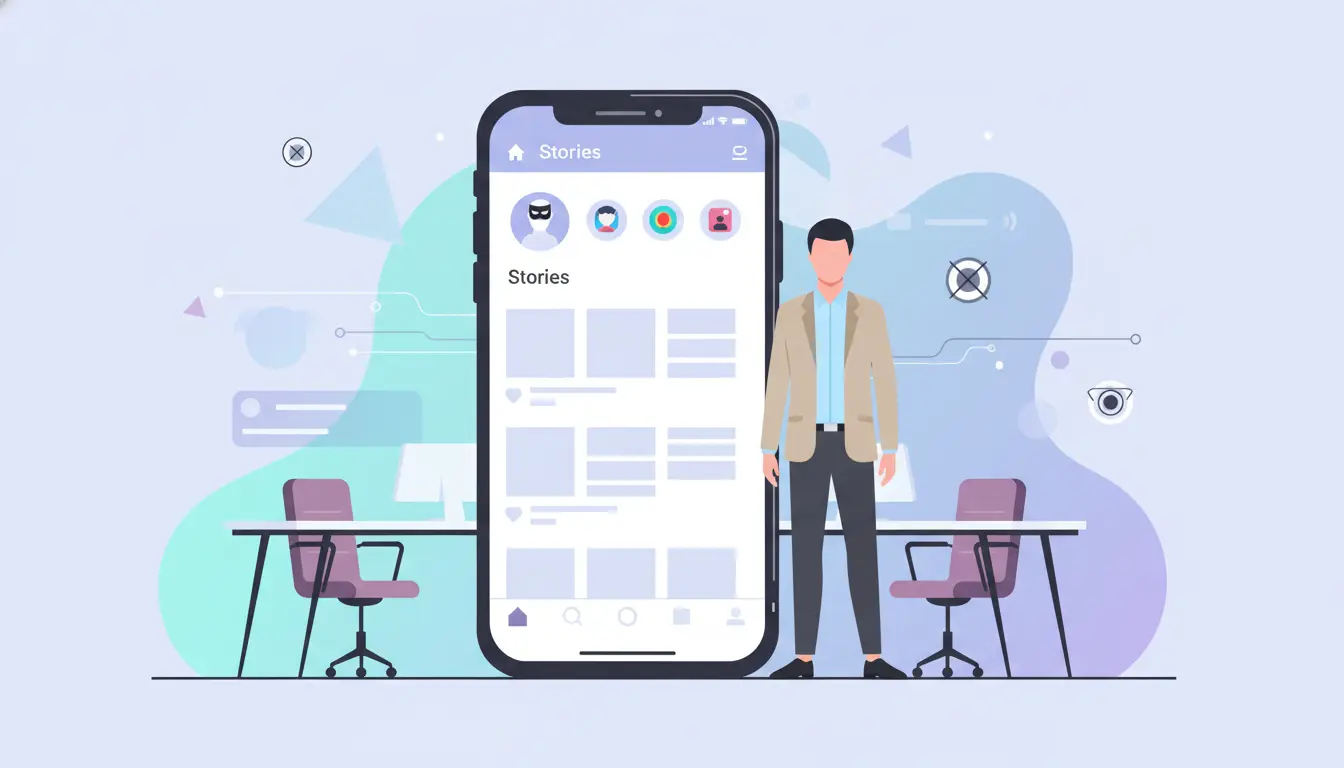
What Are the Risks of Using an Anonymous Facebook Story Viewer?
Many people search for an Anonymous Facebook Story Viewer because they want privacy. That makes sense. But these tools can also create new problems. Some put your account, your data, or even your device at risk. Others may break platform rules or cross legal lines, depending on how they work and what data they access. That is why it is smart to look past the promise of “anonymous” and check the real risk first.
Can these tools compromise your Facebook account?
Yes, they can. The biggest danger is fake login flow. If an fb story viewer asks you to sign in with your Facebook password, that is a serious warning sign. The FTC says phishing scams often pretend to be trusted services and try to steal passwords or other account details. Once a bad actor gets that information, they may access your accounts or sell the data to others. The FTC also recommends strong passwords, software updates, and two-factor authentication because account theft is a real risk, not a rare one.
There is also a platform risk. Meta’s Terms say users may not access or collect data from its products using automated means without prior permission, or try to access data they do not have permission to access. Meta’s account integrity policy also flags some automated account activity as a problem area. So even if a tool looks simple on the surface, the way it works in the background may put your Facebook account at risk of restrictions or review.
Are there legal implications for using anonymous viewers?
Sometimes, yes. The legal risk depends on what the tool actually does. In the United States, the Computer Fraud and Abuse Act deals with unauthorized access to computers, and federal law defines “exceeds authorized access” in specific terms. That does not mean every Anonymous Facebook Story Viewer is illegal. But if a tool bypasses access controls, pulls data you are not allowed to access, or uses stolen credentials, legal problems can come up. Laws can also vary by country, so users should not assume that “anonymous” means lawful. This is general information, not legal advice.
A simple example helps here. Viewing a public page in a normal way is very different from using a tool that secretly logs into accounts, scrapes protected data, or routes access through methods that ignore platform permission rules. Meta publicly states that automated data collection without prior permission is not allowed. That alone should make users pause before trusting any fb story viewer that sounds too easy or too hidden.
How do you identify unsafe or unreliable tools?
Start with the basics. If a tool asks for your Facebook login, promises “100% safe” results, hides who runs the site, has no privacy policy, or pushes you to click pop-ups and downloads, treat it as unsafe. The FTC says phishing attacks often use urgent messages, fake account problems, and links that try to make people act fast without thinking. That same pattern shows up on many shady viewer sites.
You should also watch for technical red flags. If the tool does not clearly explain how it works, if it claims to show data that Facebook normally protects, or if it requires browser extensions or APK files from unknown sources, the risk goes up. A trustworthy service should be clear about limits, data handling, and permissions. If that information is missing, the safer move is to leave. In most cases, when an Anonymous Facebook Story Viewer feels secretive, aggressive, or too good to be true, it probably is.
How to Use an Anonymous Facebook Story Viewer Safely
If you still want to try an Anonymous Facebook Story Viewer, the safest approach is to stay cautious from the start. Many users focus only on whether the tool works. A better question is whether it protects your data, your device, and your Facebook account. A careful setup matters more than the promise on the homepage. Meta says two-factor authentication is available for Facebook accounts, and the FTC recommends using it because phishing and stolen logins are still common online.
What steps ensure your data remains secure?
First, never enter your real Facebook password into an unknown fb story viewer. If a tool asks for your login, browser extension, or app download before showing anything, that is a major warning sign. The FTC warns that phishing scams often try to steal passwords and other account details by pretending to be trusted services. CISA also advises users to keep browsers updated and review browser security settings carefully. In simple terms, safer use starts with small habits: do not log in, do not download random files, do not click urgent pop-ups, and do not trust a tool that hides who runs it.
A real example is easy to imagine. Say you open one Anonymous Facebook Story Viewer and it only asks for a public story link. Another asks you to “verify” your Facebook account first. The second option is far riskier. Even if it looks polished, it may be trying to collect your credentials or track your activity. That is why strong passwords and two-factor authentication still matter, even before you test any third-party tool.
Should you use a separate account for anonymous viewing?
Some people do use a separate account to reduce exposure, but this does not remove all risk. It can lower the damage if a shady tool gets access to that account instead of your main one. Still, Meta’s terms say users may not access or collect data from its products with automated means without prior permission, or try to access data they do not have permission to access. So a second account is not a free pass. It may help with personal security, but it does not make an unsafe or rule-breaking tool safe.
A better way to think about it is this: a separate account can be a buffer, not a shield. For example, a marketer may want to observe public story content without mixing that activity with a personal account. That may feel safer on a basic level. But if the fb story viewer itself is dishonest, both the separate account and your device can still be exposed. So this step only makes sense when combined with the other safety checks above.
How to test a tool before fully relying on it
Start small. Do not treat a new tool as trustworthy just because it appears in search results. First, check whether it explains how it works, who operates it, and what data it collects. Then see whether it can do anything useful without asking for a login or installing extra software. If the tool immediately asks for credentials, that is a strong reason to leave. The FTC specifically warns against clicking suspicious links or downloading attachments from unexpected sources, and CISA advises users to check site security and browser settings before trusting web services.
A simple test process works best. Try one low-risk check first, such as viewing a public page or public story link without signing in. Watch for aggressive ads, redirects, fake scan messages, or repeated requests for permissions. If anything feels unclear, stop there. In practice, the safest rule is very simple: if an Anonymous Facebook Story Viewer needs more access than seems necessary, it is probably not worth relying on.
Top Anonymous Facebook Story Viewer Tools in 2026
If you search for an Anonymous Facebook Story Viewer in 2026, you will mostly find simple web tools, not full apps. Most of them promise the same thing: no login, no download, and support for public stories only. The smart way to compare them is not by hype. It is by how little access they ask from you, how clear the site is, and whether the tool stays inside public content.
Which tools are the most user-friendly?
Based on their public pages, StoryViewer.ai is one of the easiest tools to understand. It says users can paste a public profile link, avoid downloads, and view stories in a browser on any device. It also presents a very simple step flow, which is helpful for first-time users. That makes it one of the more user-friendly options for someone who wants an Anonymous Facebook Story Viewer without extra setup.
BraveDown also looks easy for beginners. Its site says you can paste a story link, watch it in the browser, or download it to your device, with no signup required. FStoryAmerica is also simple on the surface. It says no login is required and supports active public stories through a username or profile URL. For a basic fb story viewer, these three are the clearest examples I found. That said, these are platform claims, not independent proof, so users should still test carefully before trusting any tool.
How do free tools compare to paid options?
In this niche, most Facebook-story-only tools present themselves as free. StoryViewer.ai says its Facebook story viewer is free to use with no hidden charges. FStoryAmerica also describes itself as free on its public pages. BraveDown presents its Facebook story tool as a free web-based service too. So, for this category, free tools are much more common than true paid products.
Paid options are more common in broader social media tool suites, not in a narrow Anonymous Facebook Story Viewer product. For example, Publer offers a free Facebook Story downloader with no ads, no watermarks, and no registration, but its larger platform is built around scheduling and social media workflows rather than anonymous story viewing. In practice, that means free tools usually focus on one task, while paid platforms are more useful for content teams that need planning, publishing, and analysis.
What features should you prioritize when choosing a tool?
First, prioritize no-login access. If an fb story viewer asks for your Facebook password, skip it. Second, look for public-only access. StoryViewer.ai says it only works with public profiles or pages, which is actually a good sign because it shows a limit instead of pretending it can do everything. Third, choose browser-based tools over tools that push app installs or extensions. Less access usually means less risk.
You should also check whether the site explains its limits clearly. FStoryAmerica says it works with active public stories in the normal 24-hour window. BraveDown explains a basic paste-and-view flow without signup. Those are better signs than vague promises like “works on all private accounts” or “guaranteed invisible forever.” In simple terms, the best Anonymous Facebook Story Viewer is usually the one that does less, asks for less, and explains more.
Why Some Anonymous Facebook Story Viewers Fail to Work
Not every Anonymous Facebook Story Viewer works the same way. Some fail because the story is no longer available. Others fail because the account is not public, the link is wrong, or Facebook changes how story content is shown. Many tools also depend on access methods that can break without warning. Meta’s help pages make one thing clear: story visibility depends on privacy settings, and public visibility is not the same as private or friends-only access.
What causes tools to malfunction or stop working?
The most common reason is simple: the story is gone or not public. Facebook Stories are temporary, and many third-party tools only claim to work with active public stories. For example, FStoryAmerica says it supports active public stories, while StoryViewer.ai presents its Facebook story tool around public browsing rather than private-account access. So if a user pastes an old link, a private profile, or a story that already expired, the fb story viewer may show nothing at all.
Another common problem is tool quality. Some sites are slow, overloaded with ads, or poorly maintained. Others may rely on scraping or automated collection methods that are fragile by nature. Meta’s Terms say users may not access or collect data from its products using automated means without prior permission, which helps explain why some third-party tools break often or work only in limited cases.
How do Facebook updates impact these tools?
Facebook updates can break these tools very quickly. If Meta changes story URLs, page structure, content loading, viewer checks, or access rules, a tool that worked last month may stop working today. This is especially true for an Anonymous Facebook Story Viewer that depends on unofficial methods instead of official platform access. When the tool is built around a narrow workaround, even a small product update can make it fail.
There is also a privacy-setting impact. Facebook lets users choose who can see their stories, including public, friends, or custom audiences. That means a tool cannot reliably pull the same result for every profile. If the account owner changes story visibility, blocks access, or removes the story, the viewer may suddenly stop showing content even though the tool itself did not change.
What to do if your chosen tool isn’t functioning properly
Start with the basic checks. Make sure the story is still live, make sure the profile or page is public, and make sure the link or username is correct. Then test whether the site can show any public story at all without asking for your Facebook password. If it asks for login details, extensions, or downloads just to “fix” the error, that is a bad sign. Safer tools usually explain their limits clearly and do not ask for more access than needed.
If it still does not work, the safest move is not to force it. Try another browser session, clear the copied link, or test a different public page. If the same problem keeps happening, assume the tool is unreliable rather than pushing deeper access. In practice, the best rule is simple: when an Anonymous Facebook Story Viewer stops working, do basic checks first, but do not hand over your account just to make a broken tool work again.
Can You View Facebook Stories Anonymously Without a Tool?
Some people try manual tricks instead of using an Anonymous Facebook Story Viewer. The two most common ideas are airplane mode and a second profile or account. These methods sound simple, but they do not offer the same result as true anonymity. Facebook still shows story viewers, and story access still depends on the story’s privacy settings. That means a manual method may reduce exposure in some cases, but it does not guarantee that your view stays hidden.
How to use airplane mode for anonymous viewing
The basic idea is simple. A user opens Facebook, lets stories load, turns on airplane mode, and then taps the story. People try this because some social apps preload content before it is opened. In theory, that can let a story open while the phone is offline. But this is only a workaround, not an official feature, and I could not find any Meta documentation saying that airplane mode will hide your name from the viewer list on Facebook. Since Facebook lets story owners check who viewed a story, this method should be treated as unreliable, not guaranteed.
A real example helps here. If a story fully loads before you go offline, it may still open on your phone. But once the app reconnects, Facebook may still register that view. So airplane mode may help you open content in some cases, but it is not a dependable replacement for an Anonymous Facebook Story Viewer. It is better to think of it as a weak trick, not a safe method.
Does using a secondary account achieve the same result?
Not really. A second profile changes which identity appears, but it does not make the view anonymous. If that profile watches the story, the story owner may still see that profile in the viewer list. Meta’s help pages say Facebook supports additional profiles under one account, although Facebook also says people are no longer able to create new additional profiles at this time. So, if you already have one, it can separate personal and public activity, but it is still not the same as invisible viewing.
This matters in real life. For example, a marketer may use a different profile to follow public pages and keep work activity separate from family activity. That can reduce awkwardness. But it does not remove traceability. The page owner may still see that profile name in the viewers list, because Facebook’s story system is built around visible viewers.
What are the limitations of manual methods?
The biggest limit is that manual methods are inconsistent. Airplane mode may fail if the story was not preloaded. A second profile may separate identity, but it does not create true anonymity. Both methods also depend on story privacy. Facebook says stories can be shared with public, friends, or custom audiences, so many stories simply will not be available unless the owner allows that audience to view them.
There is also a practical limit. Manual methods do not give the control, repeatability, or clear privacy claims that users hope for when they search for an Anonymous Facebook Story Viewer or a simple fb story viewer. In most cases, these methods are partial workarounds at best. They may change how you appear, or delay how a view is logged, but they do not give a solid promise of anonymous viewing.
How to Avoid Common Mistakes When Using Anonymous Viewers
After looking at the limits of manual methods, the next step is avoiding easy mistakes. Many people focus on finding an Anonymous Facebook Story Viewer that works, but the bigger issue is whether the tool is safe to use at all.
Why sharing your credentials is a bad idea
Never give your Facebook password to a third-party viewer tool. This is one of the worst mistakes users make. The FTC says scammers often try to steal passwords, account numbers, and other personal data by pretending to be trusted websites or services. Meta’s Terms also say users must not share their password or give others access to their Facebook account without permission. So even before you think about privacy, handing over your login creates both a security risk and a rule risk.
A simple example makes this clear. Imagine one Anonymous Facebook Story Viewer only asks for a public profile or story link. Another says, “Log in with Facebook to unlock private stories.” The second option is far more dangerous. Once you enter your credentials, you lose control over where that data goes. A fake tool may store your password, reuse your session, or try to break into your account later. Meta’s help pages also say you should not share your password with anyone and should secure your account with strong login habits.
What to check in user reviews before choosing a tool
User reviews can help, but only if you read them carefully. Do not look only at star ratings or short comments like “works great.” Look for details. Good reviews usually mention what the tool can and cannot do, whether it asked for a login, whether it worked only on public stories, and whether the site felt clean or full of pop-ups. Bad signs include many complaints about redirects, forced downloads, fake errors, account login requests, or sudden security warnings. The FTC says scam sites often use urgent messages, fake account problems, and suspicious links to push people into acting fast.
It also helps to check whether the reviews sound real. If every review uses the same style, makes big promises, or says the tool is “100% safe” without details, be careful. Real users usually describe small problems too, not just perfect results. A more trustworthy fb story viewer will usually have feedback that sounds specific and balanced. In practice, the best review check is simple: if the tool’s reviews feel vague, overhyped, or too polished, trust your caution more than the marketing.
How DICloak Enhances Multiple Facebook Accounts Management
Many users look for an anonymous facebook story viewer or an fb story viewer because they want more privacy on Facebook. But if you manage multiple Facebook accounts for work, privacy alone is not enough. You also need a safer and more organized way to handle daily account activity.
Manage Multiple Social Media Accounts Safely
Handling many social media accounts can be challenging, especially for social media marketers or small businesses. DICloak provides the best way to manage multiple social media accounts on a single device. Each account gets a unique fingerprint and isolated browser profile, keeping accounts secure and independent. This reduces the risk of being banned on social media or flagged for suspicious activity while enabling smooth operations across all major social media platforms.
- Secure each account with unique fingerprints
- Run multiple accounts on one device without conflicts
- Maintain natural, consistent activity across accounts
Automate Account Engagement
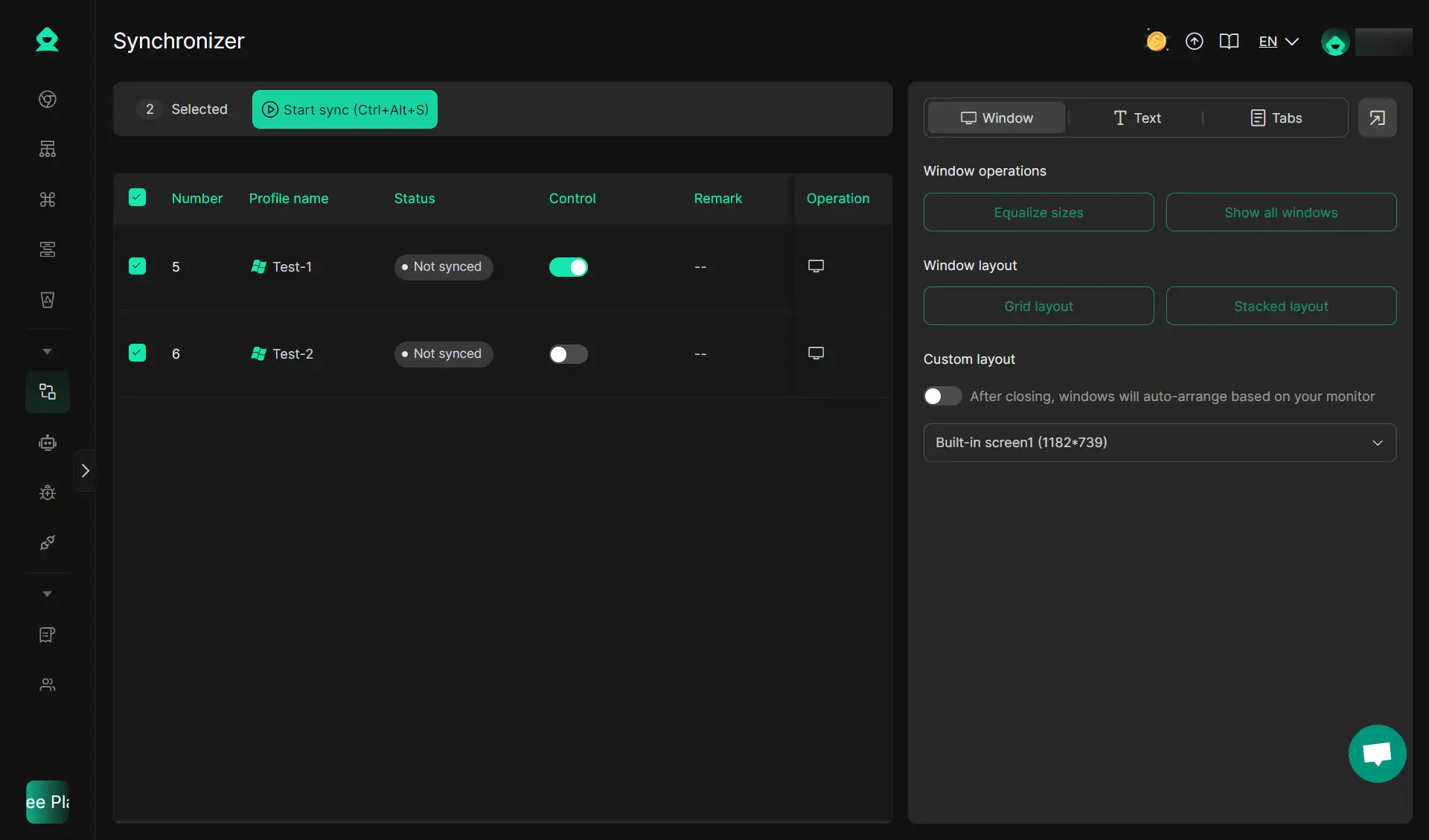
Keep your accounts active and engaging with DICloak’s built-in automation tools. Describe tasks in plain language, and DICloak' RPA handles repetitive actions automatically. The Multi-Window Synchronizer also supports you like, comment, and follow across multiple profiles and platforms simultaneously, mimicking real user behavior for safe social media browsing.
- Act like a real user to avoid detection
- Automatically like, comment, and interact
- Reduce repetitive tasks and save time
Boost Marketing Efficiency
DICloak’s AI Crawlers help simplify social media marketing for small business and agencies. Collect and analyze data, generate content ideas, and create marketing copy effortlessly. You can also gather competitor or product information to optimize campaigns and refine strategies.
- Collect and analyze data efficiently
- Generate content ideas effortlessly
- Refine marketing strategies with AI insights
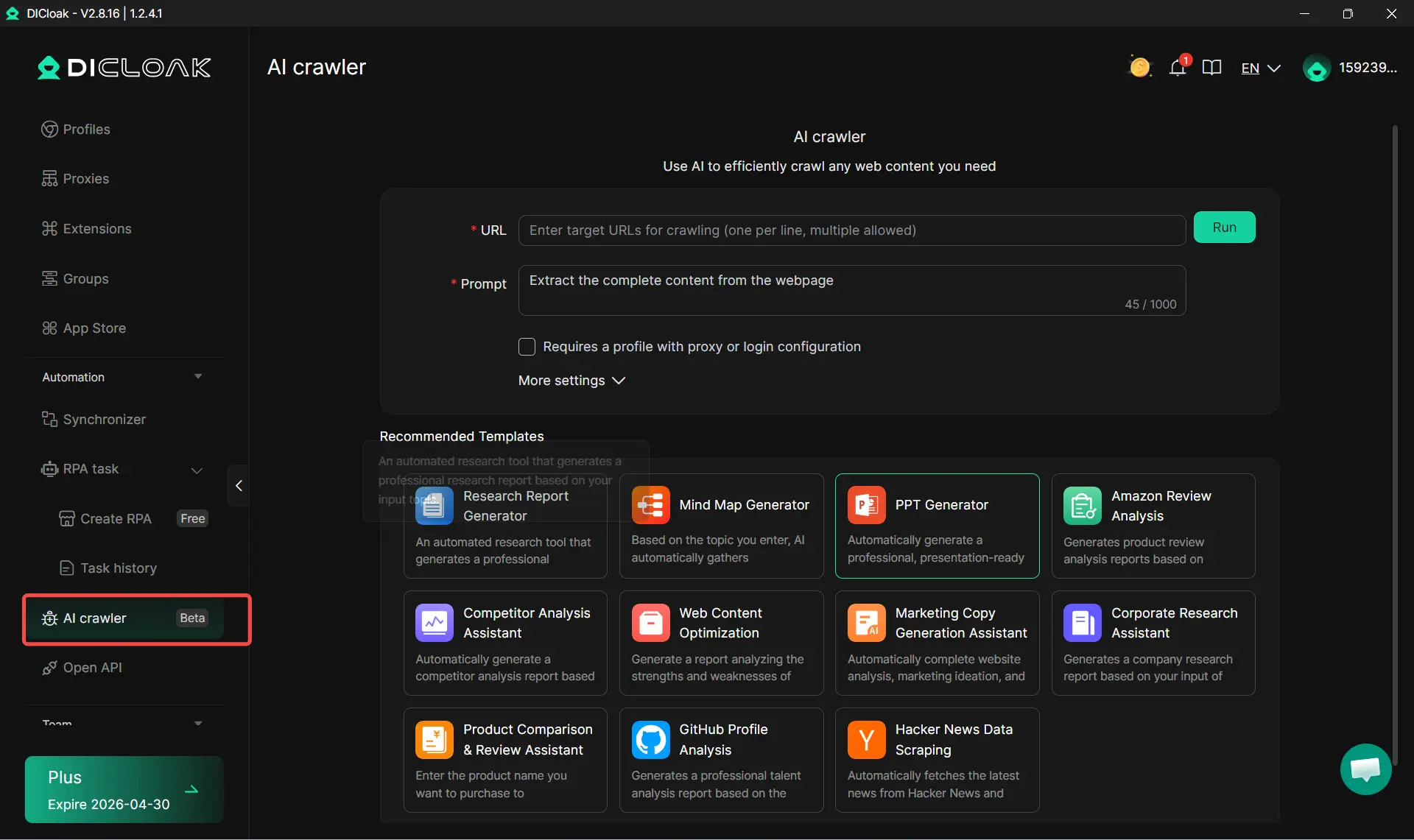
Start using DICloak today and take full control of your social media accounts safely and efficiently!
FAQ About Anonymous Facebook Story Viewer
Can Facebook detect if I use an anonymous story viewer?
Facebook does not publish a feature that says, “this person used an anonymous viewer.” But Meta does make clear that story owners can see who viewed a story, and Meta also restricts unauthorized automated data collection. So if a third-party tool relies on unofficial access methods, scraping, or account-based actions, there is still platform risk even if the tool calls itself anonymous.
Is it possible to view expired stories anonymously?
Usually, no. Facebook Stories are temporary, and once they expire, outside viewers generally cannot access them in the normal public way. Facebook also gives users control over story privacy and story-related settings, which means access is already limited by time and audience. If a tool claims it can always show expired stories, that is a reason to be cautious.
Do anonymous viewers work for private Facebook accounts?
In most cases, no. If a story is shared to friends or a custom audience, a third-party Anonymous Facebook Story Viewer should not be able to access it legitimately. Facebook’s own help pages make clear that story visibility depends on the audience setting chosen by the account owner. That is why many fb story viewer tools only work, if they work at all, on public content.
Are there mobile apps for anonymous Facebook story viewing?
You may find mobile apps or mobile-friendly websites that claim to do this, but that does not make them safe or trustworthy. The bigger question is not whether the app exists. It is whether it asks for too much access, tracks your activity, or tries to collect your login details. The FTC warns that scam tools often try to steal personal information by looking like normal services.
What should I do if a tool asks for my Facebook login?
Do not use it. Close the page and do not enter your password, verification code, or any recovery details. The FTC specifically warns that phishing scams are designed to steal login credentials, and it recommends stronger account protection like multi-factor authentication. If you already entered your login, change your password right away and secure your account.
Conclusion
An Anonymous Facebook Story Viewer may sound simple, but the real issue is safety, not just access. Some tools may help with public content, but many also bring privacy, account, and security risks. The safest approach is to stay careful, avoid sharing your login, and choose methods that protect both your data and your Facebook activity.
 Web Proxy Tools
 Free Tools
 Cookie Plugin
 UA Generator
 MAC Address Generator
 IP Generator
 IP Address List
 2FA Code Generator
 World Clock
 Anonymous Check
 WebRTC Leak Test
 UUID Generator
 Free Web Proxy Site
 Proxy Checker
 FB Ad Checker
 AI Web Scraping
 Free SMM Tools
 Twitter Shadowban Checker
 Instagram Name Checker
 UTM Generator
 Username Generator
 AI Hashtag Generator
 LinkedIn Headline Generator
 Social Media Image Resizer