While Google dominates the search conversation, Bing remains the primary ROI-driver for desktop-heavy corporate niches that Google-only agencies frequently overlook. In 2026, Bing’s strategic position is anchored by its integration into the Windows ecosystem—powering search via Microsoft Edge, Cortana, and AI-enhanced GPT features. While Bing holds a 6–9% global market share, this figure is significantly higher in the United States and within high-value professional sectors.
The primary advantage for SEO practitioners in 2026 is the "low-competition" barrier. While competitors deplete their budgets fighting for scraps on Google, Bing offers a direct path to high-intent users with significantly lower entry costs. However, securing this traffic requires more than just porting over a Google strategy; it demands precise, localized rank tracking that accounts for Bing’s specific technical ecosystem.
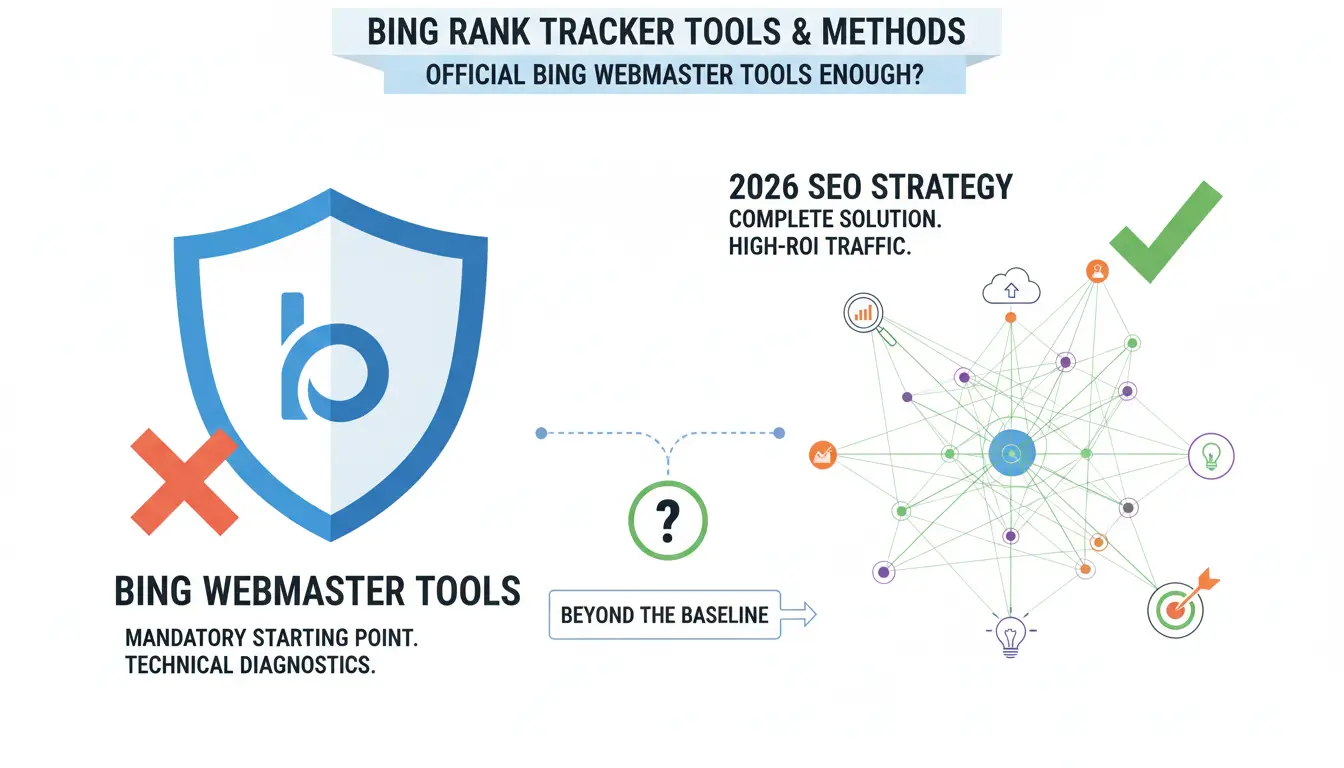
Is the official Bing Webmaster Tools enough for your 2026 SEO strategy?
Microsoft’s official Webmaster Tools is the mandatory starting point for any campaign, but it is a baseline, not a complete solution. Once your site is verified, the platform provides direct access to the metrics that matter most for technical diagnostics.
The benefits of direct-from-source data
For verifying indexation and technical health, Bing Webmaster Tools is irreplaceable. Its URL inspection and index coverage features offer the only definitive look at how Microsoft’s crawler interprets your site. Because this data is pulled directly from the source, it provides the most accurate view of average keyword positions, impressions, and CTR without the "third-party lag" found in external trackers.
The limitations for multi-site and agency workflows
For a senior strategist, the official tool is fundamentally insufficient for scaling. It lacks the competitive intelligence required for side-by-side SERP analysis and offers no real-time ranking alerts. Agencies managing multi-regional campaigns will find the platform’s interface cumbersome for cross-site reporting, making it a poor choice for high-velocity environments where performance shifts require immediate action.
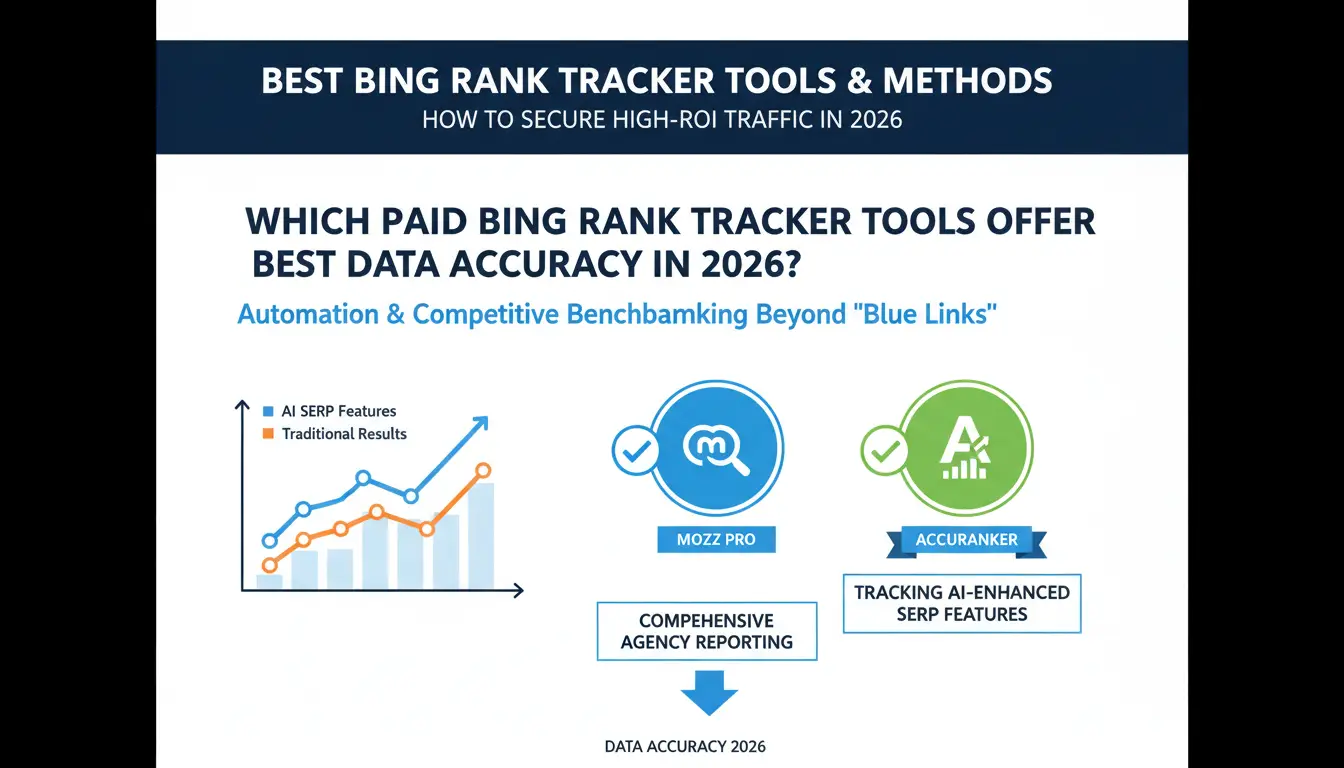
Which paid Bing rank tracker tools offer the best data accuracy in 2026?
Third-party tools are essential for automation and competitive benchmarking. In 2026, tracking must extend beyond "blue links" to account for Bing’s AI-enhanced SERP features.
DICloak, an antidetect browser, is designed to help professionals manage multiple browser profiles with unique digital fingerprints and user-configured proxies. This can be valuable for tasks that require localized browsing environments, such as manually verifying search engine results pages (SERPs) across different geographic regions.
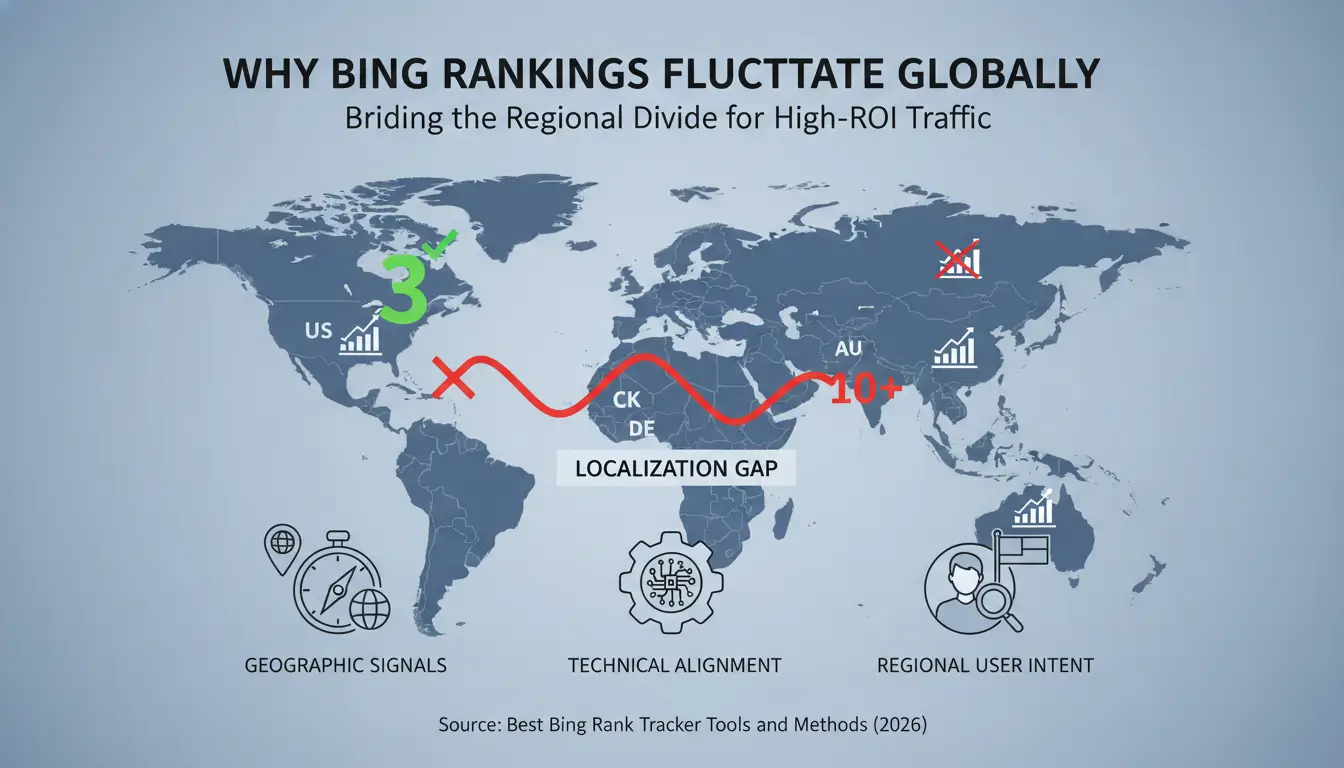
Why are your Bing rankings fluctuating across different geographic regions?
Bing’s algorithm is highly sensitive to localization. It is a common professional headache to see a page rank #3 in the US while being completely absent from the top 10 in the UK. This "localization gap" is often the result of failing to align with regional technical signals.
The role of regional user behavior and language
Bing prioritizes content that resonates with local engagement signals. Factors such as regional click-through rates, local language nuances (e.g., spelling and currency), and the density of local backlinks dictate regional performance. If your content is too "US-centric," Bing’s local algorithms will prioritize regional competitors who better match the intent of that specific geography.
How to identify a "localization gap" in your rankings
A localization gap is identified by comparing your primary market rankings against secondary international targets. If your global authority is high but your regional rankings are stagnant, the issue is likely rooted in IP location or regional server signals. To diagnose this, you must analyze how Bing’s local clusters are serving results in those specific territories.
How to perform a manual Bing rank check without skewed data?
Automated data is helpful, but manual verification is the only way to confirm what a human user actually sees—especially in 2026, where AI-generated snippets can alter the layout of the SERP.
- Eliminate Personalization Bias: Always use a private/incognito window. Bing heavily weights search history and Microsoft account data, which can provide a "halo effect" for your own site that doesn't exist for new users.
- Use Search Operators: Deploy the
site:domain.com [keyword] operator to verify that Bing is serving the correct landing page.
- Check SERP Features: Manually observe if your site is being pulled into "People Also Ask" boxes or AI-summaries, which automated tools occasionally miscategorize.
- Accept the Scalability Trade-off: Manual checks are the ultimate source of truth but are entirely unscalable for anything more than a dozen high-stakes keywords.
How to scale international rank tracking using a professional workflow?
To accurately track rankings in international markets, you must bypass Bing’s regional detection. Using certain network privacy tools is often ineffective as search engines can easily identify and flag data-center IP ranges. For a 2026 workflow, using an antidetect browser like DICloak offers capabilities for simulating local search environments.
- Create Isolated Browser Profiles: Set up independent profiles for each target region. Each profile can keep its own cookies, cache, session data, and browser fingerprint settings. This helps reduce signal overlap between different regional searches.
- Use user-configured residential proxies: Add suitable residential proxies to each profile when local IP consistency is needed. A stable proxy setup can help make the search environment closer to a regular local browsing session, which may improve the reliability of regional SERP checks.
- Compare regional SERPs more efficiently: Open several regional profiles at the same time and use the synchronizer feature to repeat the same keyword search across selected windows. This makes it easier to compare international ranking results side by side without manually repeating every step.
What are the common pitfalls when interpreting Bing keyword data?
The most frequent mistakes in Bing SEO stem from viewing the data through a Google-centric lens.
Over-reliance on global averages
An "average position" of #7 is a useless metric if you are #1 in New York and #40 in London. Relying on global averages masks local failures and prevents you from identifying specific markets where your content is underperforming.
Ignoring Bing-powered partners
Bing’s reach extends far beyond Bing.com. It powers the search results for Yahoo and DuckDuckGo. When you monitor Bing rankings, you are actually tracking your visibility across a massive search ecosystem that caters to older, higher-income, and privacy-conscious demographics.
Should you rely on automated trackers or manual verification in 2026?
A high-level SEO strategy requires a hybrid approach. Automated trackers can be used to provide the "big picture"—tracking thousands of keywords for broad trends and fluctuations.
However, for your high-ROI, "money" keywords in specific international markets, manual verification via DICloak and user-configured residential proxies can be highly beneficial. This helps ensure that the data driving your most critical business decisions is verified against the actual SERP presented to local users, helping to reduce the interference of data-center flags or personalization bias.
FAQ
Does Bing rank tracking differ significantly from Google?
Yes. Bing’s algorithm places a higher weight on desktop-specific signals and regional engagement. Additionally, Bing’s SERP layout in 2026 integrates Microsoft’s AI features differently than Google’s SGE, requiring unique tracking for AI-driven "zero-click" results.
Can I track Bing rankings for free?
You can use Bing Webmaster Tools for official data or perform manual searches in incognito mode. While these are free, they lack the competitive benchmarking and scalability needed for a professional campaign.
How often should I monitor my Bing keyword positions?
For enterprise sites, daily tracking is necessary to catch shifts in AI-generated SERP features. For smaller sites, a weekly cadence is sufficient to monitor general trends and indexation health.
Why do my rankings change when I use generic IP masking tools compared to a proxy?
Bing can identify the data-center IPs used by many network privacy or IP masking tools, often serving a "generic" or "cached" SERP as a result. Residential proxies, when configured, can help match the IP signatures of real home users, which supports improved data accuracy for localized rankings.
Are Bing rankings linked to Yahoo search results?
Yes. Bing provides the core search results for Yahoo. Any optimization or ranking gains you achieve on Bing will directly translate to increased visibility on the Yahoo search platform.
Stop treating Bing as a secondary priority. To help secure high-ROI traffic in 2026, you can move beyond global averages and establish a localized tracking routine. By combining official Microsoft data with the capabilities of antidetect browsing and user-configured residential proxies, you can work to identify and address localization gaps that your competitors may overlook. The conversion potential is there—start tracking it accurately.
 Web Proxy Tools
 Free Tools
 Cookie Plugin
 UA Generator
 MAC Address Generator
 IP Generator
 IP Address List
 2FA Code Generator
 World Clock
 Anonymous Check
 WebRTC Leak Test
 UUID Generator
 Free Web Proxy Site
 Proxy Checker
 FB Ad Checker
 AI Web Scraping
 Free SMM Tools
 Twitter Shadowban Checker
 Instagram Name Checker
 UTM Generator
 Username Generator
 AI Hashtag Generator
 LinkedIn Headline Generator
 Social Media Image Resizer