The debate around ipv4 vs ipv6 is still important in 2026 because both protocols are still in use, but they do not solve the same problems equally well. IPv4 remains common, but its address limits have been a long-term issue. IPv6 was designed to support far more devices, simpler address growth, and a more future-ready network structure. In this guide, you will learn the key differences between IPv4 and IPv6, why IPv6 matters now, and how to think about the transition in practical terms.

What Are the Key Differences Between IPv4 and IPv6?
Now that the basic question is on the table, the next step is to look at the real difference between IPv4 vs IPv6. They both do the same core job: they help devices find and talk to each other on a network. But they do not do that job in the same way. IPv6 was designed as the successor to IPv4, with bigger address space, a simpler base header, and more room for future growth.
How do their address structures compare?
The biggest difference is size. IPv4 uses 32-bit addresses, while IPv6 uses 128-bit addresses. That change is huge. It means IPv6 can support a far larger number of addresses than IPv4. In simple terms, IPv4 is limited, while IPv6 was built to handle much larger and more complex networks. IPv6 was also designed to support simpler address autoconfiguration and more scalable addressing overall.
You can also see the difference in how the addresses look. IPv4 addresses are short and familiar, like 192.168.1.1. IPv6 addresses are longer and use hexadecimal, like 2001:0db8:85a3::8a2e:0370:7334. That longer format may look harder at first, but it gives IPv6 much more room to grow.
What are the differences in packet handling and efficiency?
IPv6 also changes how packets are handled. The IPv6 specification says some IPv4 header fields were dropped or made optional to reduce the common-case processing cost of packet handling and to limit header overhead. It also improved support for extensions and options, which helps with more efficient forwarding and future flexibility.
In practical terms, this means IPv6 was built with cleaner packet structure in mind. That does not always mean “faster” in every real-world network, but it does mean the protocol was designed to reduce some of the extra complexity that built up around IPv4 over time.
How does IPv6 improve scalability and address availability?
This is where IPv6 matters most. IPv4 simply does not have enough address space for the modern internet on its own. IPv6 was created to solve that problem by expanding the address size from 32 bits to 128 bits and supporting a much greater number of addressable nodes. AWS also notes that IPv6 environments can use much larger CIDR ranges, which reflects that bigger address model in real network design.
A simple example helps here. Think about smart homes, cloud platforms, phones, tablets, game consoles, and IoT devices all needing addresses at the same time. IPv4 can still work, but it often needs workarounds. IPv6 was built to scale more naturally as the number of connected devices keeps rising.
Why Is IPv6 Necessary in 2026?
After comparing IPv4 vs IPv6, the next question is why IPv6 still matters so much. The short answer is scale. IPv4 still works, but it was not built for today’s internet. As more phones, cloud services, smart devices, and connected systems come online, IPv4’s limits become harder to ignore. Cloudflare explains that IPv6 was created because IPv4 could not keep up with long-term address demand. (radar.cloudflare.com)
What limitations of IPv4 led to the development of IPv6?
The biggest issue is address space. IPv4 uses 32-bit addresses, which means the number of unique addresses is limited. That was enough for the early internet, but not for a world where one home, school, or business may have many connected devices at the same time.
How does IPv6 address the growing demand for IP addresses?
IPv6 solves this by using 128-bit addresses instead of 32-bit ones. That gives networks far more room to grow. AWS also shows that IPv6 supports much larger CIDR ranges, which makes it more suitable for large and expanding networks.
What are the long-term implications of staying IPv4-heavy?
Staying too dependent on IPv4 can create more complexity over time. IPv4 can still be used, but it often needs more workarounds as networks grow. Google’s IPv6 statistics also show that IPv6 adoption is continuing, which means IPv4-only thinking becomes less future-ready each year.
How Do IPv4 and IPv6 Differ in Security and Network Design?
After looking at why IPv6 is necessary, the next question is security. This part needs a careful answer. IPv6 is often described as “more secure,” but that does not mean it is automatically safe by default. The real difference is in design. IPv6 was built with a cleaner header structure and with support for authentication, integrity, and optional confidentiality extensions at the protocol level.
What built-in design differences affect security?
One key design difference is that IPv6 was built to support a more modern network structure. Its header is simpler than IPv4’s base header, and some IPv4 fields were removed or made optional to reduce processing cost and header overhead. AWS also highlights another practical difference: IPv4 often relies heavily on NAT, while IPv6 supports large address space more directly and can use features like an egress-only internet gateway in IPv6 environments. That changes how networks are designed and managed.
How do IPv4 and IPv6 handle encryption and authentication differently?
IPv6 was designed with built-in support for authentication, data integrity, and optional confidentiality extensions. But it is important not to overstate this. An IETF requirements document explains that IPsec support for IPv6 is a SHOULD, not a universal guarantee that every IPv6 deployment is fully protected. In practice, both IPv4 and IPv6 can use strong security, but actual protection depends on how the network is configured and managed.
What risks remain when networks stay heavily dependent on IPv4?
The biggest long-term risk is not that IPv4 suddenly stops working. It is that IPv4-heavy networks often depend more on workarounds and added complexity as they grow. That can make management, scaling, and troubleshooting harder over time. In other words, IPv4 can still be secure, but staying too dependent on it may leave networks carrying more operational strain as the internet keeps moving toward broader IPv6 support.
Can IPv4 and IPv6 Coexist?
Yes, they can, and in many networks they already do. In fact, this is the normal path in 2026. Most organizations do not switch from IPv4 to IPv6 all at once. Instead, they run both for a period of time while systems, apps, and services catch up. Google’s IPv6 statistics and major cloud documentation both reflect this long overlap in real-world use.
What is dual-stack implementation, and how does it work?
Dual-stack means a network, device, or service supports both IPv4 and IPv6 at the same time. This lets systems use IPv6 where it is available, while still keeping IPv4 for compatibility. A simple example is a website that can answer both IPv4 and IPv6 requests, so users reach it through whichever protocol their network supports. AWS describes this as a common way to operate during transition.
What challenges arise when both protocols run together?
The main challenge is added complexity. When both protocols run together, teams have more to monitor, test, and troubleshoot. A service may work over IPv4 but fail over IPv6, or the other way around. Security rules, routing, logging, and app behavior all need to be checked twice more carefully. That is why dual-stack is practical, but not always simple.
How do organizations manage the transition effectively?
The best approach is usually gradual. Organizations test compatibility first, enable IPv6 in controlled parts of the network, and keep IPv4 available while they fix issues. This reduces downtime and makes it easier to spot what still depends on IPv4. In practice, effective transition is less about one big switch and more about steady rollout, testing, and cleanup over time.
What Are the Benefits of Moving Toward IPv6?
After seeing how IPv4 and IPv6 can coexist, the next question is why organizations keep moving toward IPv6 at all. The main reason is that IPv6 makes growth easier. It gives networks far more address space, supports larger deployments more naturally, and fits better with the way modern devices connect today. AWS and Cloudflare both describe IPv6 as a better long-term fit for expanding networks.
How does IPv6 support modern technologies like IoT?
IoT depends on large numbers of connected devices, and IPv6 helps because it offers a much larger address pool than IPv4. That makes it easier to connect many devices without relying so heavily on older workarounds. A simple example is a smart building with sensors, cameras, meters, and control systems all online at once. IPv6 gives that kind of environment more room to grow.
How can IPv6 simplify large-scale address management?
IPv6 can simplify address management because it reduces pressure around limited address supply. Larger address ranges make planning cleaner for big networks, especially in cloud and enterprise setups. AWS’s documentation shows this clearly by comparing the much larger IPv6 CIDR ranges available in modern network design.
How can IPv6 improve connectivity and network growth over time?
IPv6 improves long-term growth by giving networks more space to expand without the same level of strain seen in IPv4-heavy environments. It also helps organizations build for the future instead of stretching older address limits again and again. In practice, that means smoother scaling as more users, services, and devices come online over time.
What Are the Challenges of Switching to IPv6?
IPv6 solves real problems, but the switch is not always simple. The biggest challenge is not the protocol itself. It is everything around it. Networks, apps, hardware, security rules, and monitoring tools all need to work properly during the change. That is why many organizations move slowly instead of treating IPv6 migration like a one-day upgrade.
What technical hurdles do organizations face during migration?
A common problem is mixed environments. During migration, teams often need to support both IPv4 and IPv6 at the same time. That means more routing checks, more testing, and more chances for one side to work while the other fails. Security rules, DNS records, and app behavior all need close review. In practice, dual-stack is useful, but it also adds work.
Why do older apps, hardware, or services slow IPv6 adoption?
Older systems slow adoption because not everything was built with IPv6 in mind. Some older apps, devices, or network tools may still depend mainly on IPv4 behavior. That can create delays when one part of the environment is ready for IPv6 and another part is not. A company may enable IPv6 in the network but still find that one internal service or old device needs extra fixes before the rollout can continue.
What strategies can reduce downtime during the transition?
The safest strategy is gradual rollout. Many organizations test IPv6 in smaller environments first, keep IPv4 available for compatibility, and fix problems step by step. This lowers the chance of a large outage and makes it easier to see where old dependencies still exist. In most cases, steady testing and staged rollout are much safer than trying to switch everything at once.
Enhancing IPv4 and IPv6 Account Management with DICloak
How DICloak simplifies multi-account handling across protocols
DICloak helps keep multi-account work more organized by giving each account its own isolated browser profile. That makes it easier to manage different account sessions without mixing cookies, browser states, or login activity in one environment. It also supports bulk actions and a synchronizer, which can save time when the same setup needs to be repeated across many profiles.
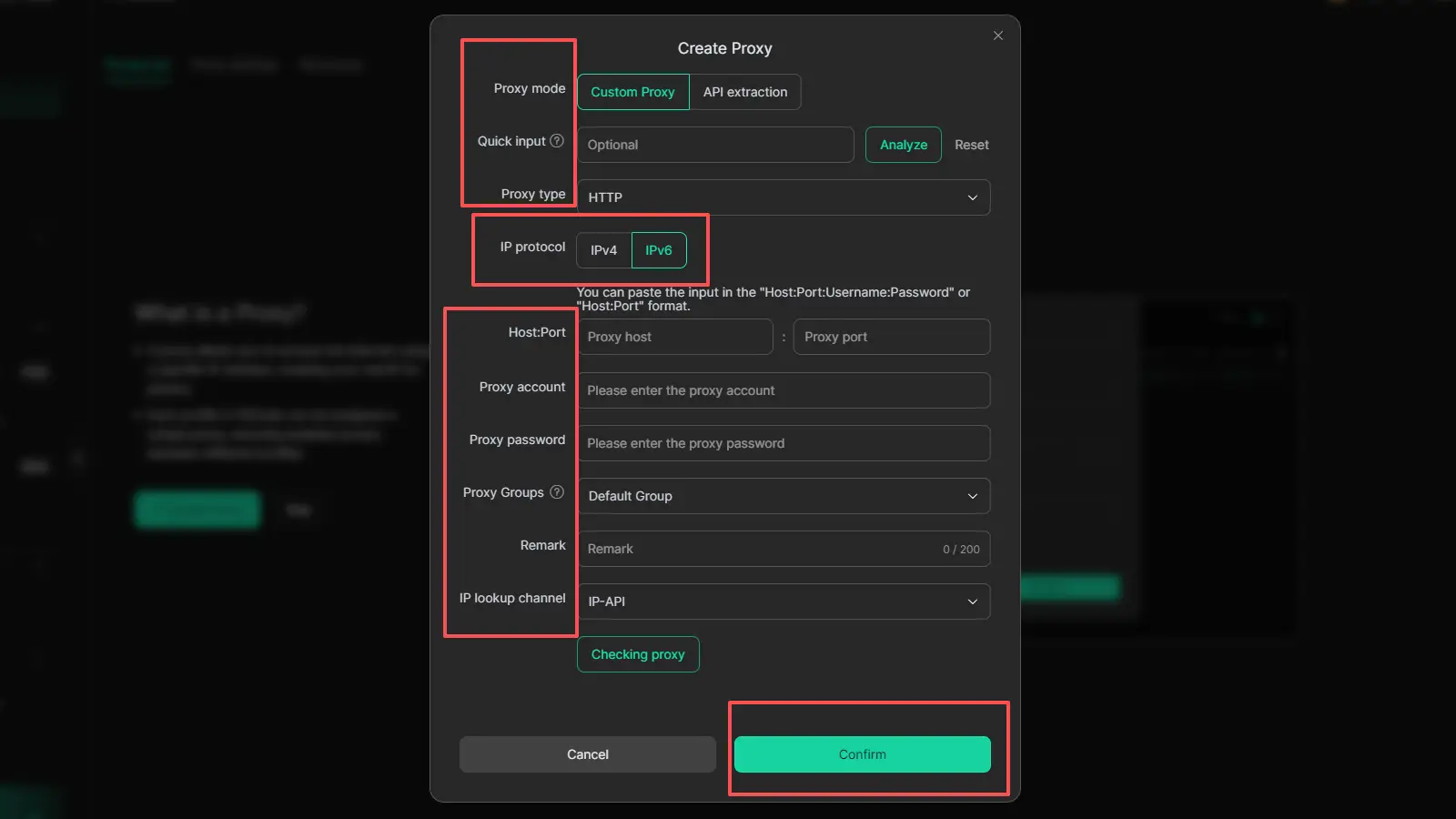
Managing geolocation and proxy settings for IPv6 compatibility
DICloak supports flexible proxy configuration, including major proxy protocols, so users can assign different network settings to different profiles more easily. This is useful when teams need cleaner control over geolocation behavior or want to test how accounts behave across different IPv4 and IPv6 network environments.
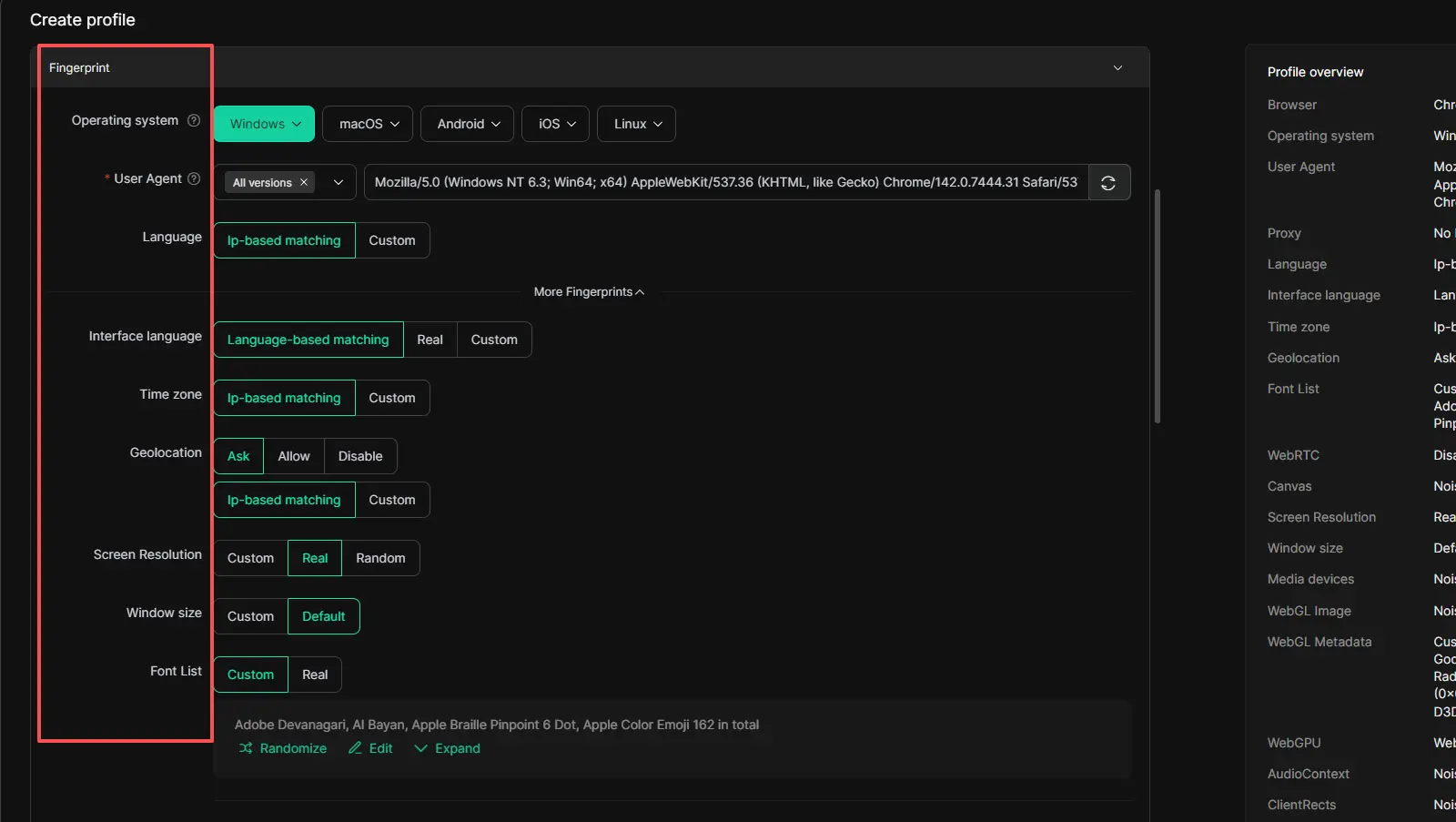
Ensuring secure transitions with unique digital fingerprints
DICloak lets each browser profile use its own fingerprint-related settings, which helps create more independent browsing environments during account operations. For teams or multi-account users, that makes transitions across different network setups easier to manage while keeping workflows more structured and controlled.
FAQs About IPv4 vs IPv6
Q1: Can IPv4 still be used after transitioning to IPv6?
Yes. In most cases, IPv4 can still be used after moving toward IPv6. Many organizations run both at the same time through dual-stack setups, which lets older IPv4 systems keep working while IPv6 support grows. This is a normal transition path, not a rare exception.
Q2: Does IPv6 improve internet speed compared to IPv4?
Sometimes, but not always. IPv6 can improve efficiency in some networks because it was designed with simpler addressing and more direct scaling in mind. But speed depends on the full network path, the provider, the app, and how the service is configured. So IPv6 is not automatically faster in every real-world case.
Q3: Why are some industries slower to adopt IPv6?
Some industries move more slowly because they still depend on older apps, hardware, and internal systems built around IPv4. Migration takes time, testing, and budget, especially in large environments where even one old service can delay the rollout. That is why IPv4 and IPv6 still coexist in many business networks.
Q4: How does IPv6 affect mobile networks?
IPv6 is very important for mobile networks because mobile growth puts heavy pressure on IPv4 address supply. IETF guidance for mobile networks describes IPv6 as critical for continued Internet growth in that space, especially as smartphones and other connected devices keep expanding.
Q5: Is IPv6 mandatory for all devices in 2026?
No, not for all devices everywhere. IPv6 adoption is growing, and some governments and organizations have formal IPv6 policies, but the wider internet still includes many IPv4-only or dual-stack environments. In practice, 2026 is still a coexistence period, not a point where every device must be IPv6-only.
Conclusion
The choice between IPv4 vs IPv6 is not really about picking a winner overnight. It is about understanding where each protocol fits today. IPv4 still supports a large part of the internet, but IPv6 is becoming more important as networks grow, devices multiply, and address space becomes a bigger long-term issue. In practice, most organizations are not replacing IPv4 all at once. They are learning how to run both, reduce migration risk, and build for a more scalable future. Once you understand the real differences, it becomes much easier to decide what matters more for your own network, business, or workflow.
 Web Proxy Tools
 Free Tools
 Cookie Plugin
 UA Generator
 MAC Address Generator
 IP Generator
 IP Address List
 2FA Code Generator
 World Clock
 Anonymous Check
 WebRTC Leak Test
 UUID Generator
 Free Web Proxy Site
 Proxy Checker
 FB Ad Checker
 AI Web Scraping
 Free SMM Tools
 Twitter Shadowban Checker
 Instagram Name Checker
 UTM Generator
 Username Generator
 AI Hashtag Generator
 LinkedIn Headline Generator
 Social Media Image Resizer