Online identity scrutiny tools are vital for anyone looking to grasp their digital footprint and bolster their privacy. Upon linking to the web, your gadget gets allocated an Internet Protocol address. This numerical code discloses specifics like your near whereabouts, your network provider (ISP), and occasionally even the network class you are engaged with.
An IP lookup utility allows for immediate viewing of this data. Crucially, sophisticated applications like whoer.net additionally test if your link is exposing supplementary information that could jeopardize your anonymity.
Should you employ a proxy, executing an IP verification confirms that your genuine address isn't escaping. This is paramount for preserving obscurity and preventing account suspensions.
In Brief
To facilitate a swift comprehension of how prominent IP testing platforms contrast, we have assembled a thorough comparison matrix. It emphasizes the quickness, supplementary functionalities, and general user-friendliness of every single platform.
While this chart provides a market overview, further on, we offer separate appraisals of each provision, enabling you to delve deeper into their merits, drawbacks, and distinctive attributes.
| Service |
Speed |
Advanced Features & Usability |
| WhoerIP.com |
Excellent |
Offers advanced fingerprinting, privacy scoring, a sleek modern design, and is highly user-friendly with informative blog reviews. |
| Pixelscan.net |
Very Good |
Specializes in fingerprint analysis, features a minimalist dark design, and provides an efficient and straightforward user experience. |
| Whoer.to |
Excellent |
Clean and ad-free, with technical details presented in a simple table format for fast, easy access. |
| IPLocation.io |
Good |
Provides multi-provider data, a diverse toolset, and a professional interface suitable for advanced users. |
| WhatIsMyIP.com |
Good |
Offers educational tutorials, a traditional layout, and reliable tools that are accessible to all types of users. |
| IP.me |
Good |
Focuses on privacy with map integration, a clean layout, and smooth mobile optimization for easy browsing. |
| MyIP.com |
Good |
Features internet statistics and charts in a lightweight, easy-to-read format for quick data access. |
| IPLocation.net |
Good |
Supports bulk IP processing and email tracking, with privacy scoring and a set of professional-grade tools. |
| Whoer.com |
Good |
Provides fraud scoring and anonymity tests, with a feature-rich setup, though somewhat cluttered by heavy advertisements. |
| WhatIsMyIPAddress.com |
Poor |
Contains a vast content library and privacy guides, but the large amount of content makes it less convenient for users. |
Based on the comparison chart, it is evident which tools offer strong substitutes for Whoer.net — for instance, WhoerIP.com is a highly suggested option.
How Do IP Verification Services Function?
Fundamentally, all IP verification services operate on the same core concept: when you access their webpage, they capture your external IP address from the connection request and employ scripts to examine your browser and network activity. This yields data regarding your whereabouts, Internet Service Provider (ISP), system configurations, and potential privacy exposures.
However, the quality of these services varies. The distinctions lie in how thoroughly they examine your connection and the databases or methods they utilize. For example, one utility might just display your IP and nation, whereas another can identify DNS breaches, build a profile of your browser, or even ascertain if your IP is flagged on spam blocklists.
This is why individuals frequently seek alternatives to Whoer.net. Certain platforms concentrate on privacy evaluation, others deliver more precise location data, while a select few focus on spotting proxies. Simply put, the “optimal” IP checker depends on the user’s specific requirements:
Helpful Tip: No single IP checking utility is flawless. Employing several services aids in verifying findings and ensuring you don’t overlook subtle leaks.
Gathering IP Address and Location Details
The initial step is routine: when your browser initiates a request to the server, your public IP address automatically appears in the request header.
- Server Records the IP → The site observes your IP just as any other website you engage with would.
- Geographic Databases → The service then queries databases mapping IPs to geography (such as MaxMind GeoIP or IP2Location) to associate your IP with a physical area (country, city, sometimes ISP).
Browser Profiling Using JavaScript
The IP address alone doesn't reveal the full picture. Therefore, services integrate JavaScript code that executes within your browser, gathering supplementary details:
- User-Agent string (browser type and version, operating system)
- Display dimensions and color depth
- Device language and time zone
- Installed fonts and add-ons
- WebGL and Canvas rendering signatures – These generate distinct “fingerprints” for your device.
This procedure is known as browser fingerprinting. It aids in spotting unusual configurations that might make you unique (or whether your proxy setup is inadvertently disclosing information).
What Exactly Do IP Checkers Assess?
| Check Name |
How Websites Perform the Check |
| Public IP Address |
Captured directly from your browser’s connection request (HTTP headers, server logs). |
| Geolocation (Country/City) |
IP is compared against commercial IP-to-Geo databases (e.g., MaxMind, IP2Location). |
| ISP & ASN Lookup |
Uses IP registries (RIPE, ARIN, APNIC) to identify your Internet Service Provider and network (ASN). |
| Proxy/Tor Detection |
Cross-checks IP against lists of proxy/Tor exit nodes; checks if ASN belongs to datacenter hosting. |
| DNS Leak Test |
Loads hidden elements (images/scripts) forcing DNS requests; if requests resolve via ISP DNS instead of proxy DNS, a leak is shown. |
| WebRTC Leak Test |
Executes hidden WebRTC requests in browser; reveals local and public IPs if WebRTC is not blocked. |
| IPv6 vs IPv4 Status |
Tests if your connection exposes both IPv4 and IPv6 (sometimes leaks occur through IPv6). |
| Browser Fingerprinting |
JavaScript collects User-Agent, timezone, fonts, screen resolution, WebGL/Canvas hashes to build a unique fingerprint. |
| System & Browser Settings |
Reads language, timezone, Do Not Track flag, cookies enabled/disabled. |
| Blacklist Check |
Queries public security/spam blacklists (Spamhaus, SORBS, AbuseIPDB) to see if your IP is flagged. |
| Connection Type |
Determines if you’re on mobile data, corporate network, or home ISP by ASN type. |
| Privacy Score |
Combines results (leaks, fingerprints, mismatches) into a single “anonymity score” for easier interpretation. |
Helpful Hint: Some IP verification tools execute live checks (like DNS/WebRTC exposures) immediately, while others rely solely on reference searches (GeoIP, ASN data, blocklists). Utilizing several services concurrently can therefore uncover a broader spectrum of data.
Top 10 Options Besides Whoer.net: Notable Functions
WhoerIP.com – The Contemporary Privacy Guardian
WhoerIP.com is representative of the newest wave of IP verification platforms, architected with current web standards and a privacy-centric philosophy. This service has rapidly positioned itself as a high-quality substitute for older tools saturated with advertisements.
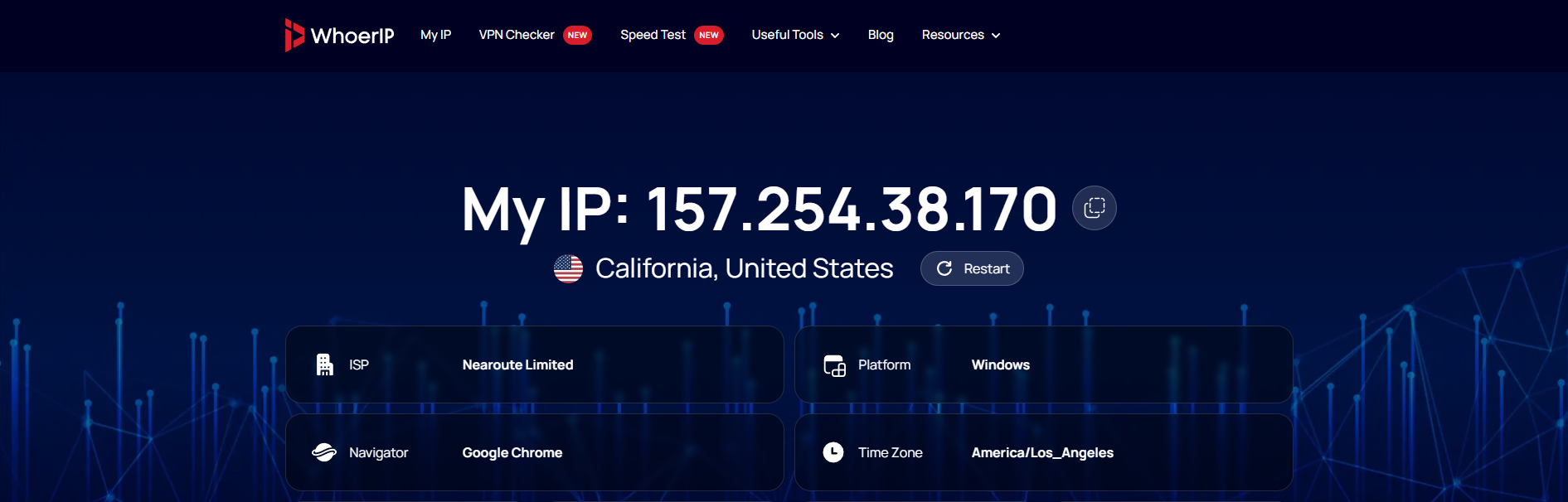
Its Role: A sophisticated IP evaluation system integrating conventional IP checks with sophisticated browser profiling and anonymity evaluation features. The platform prioritizes user experience and precision over ad revenue, allowing you to verify your IP address anytime on the official whoerip.com site.
Intended Users:
- Individuals emphasizing privacy who seek thorough anonymity assessment
- Cybersecurity experts needing dependable detection mechanisms
- Enterprises requiring clean, professional security testing utilities
- Those using proxies aim to confirm their anonymity levels
- Users of anti-detect browsers needing detailed profile analysis
Superb mobile adaptation – its fluid layout functions flawlessly across all gadgets. The layout adjusts perfectly for smartphone viewing while preserving full operation.
Key Advantages: Instant analysis, sophisticated device profiling, anonymity ratings, thorough exposure detection, and a professional layout. For those seeking a modern replacement for prior Whoer offerings, WhoerIP.com is an excellent selection.
Pixelscan.net – The Profiling Specialist
Pixelscan.net is a recent entrant to the IP checking arena, specifically engineered for the contemporary digital environment where browser fingerprinting has emerged as a primary concern. The service concentrates heavily on detection scrutiny and privacy testing procedures.
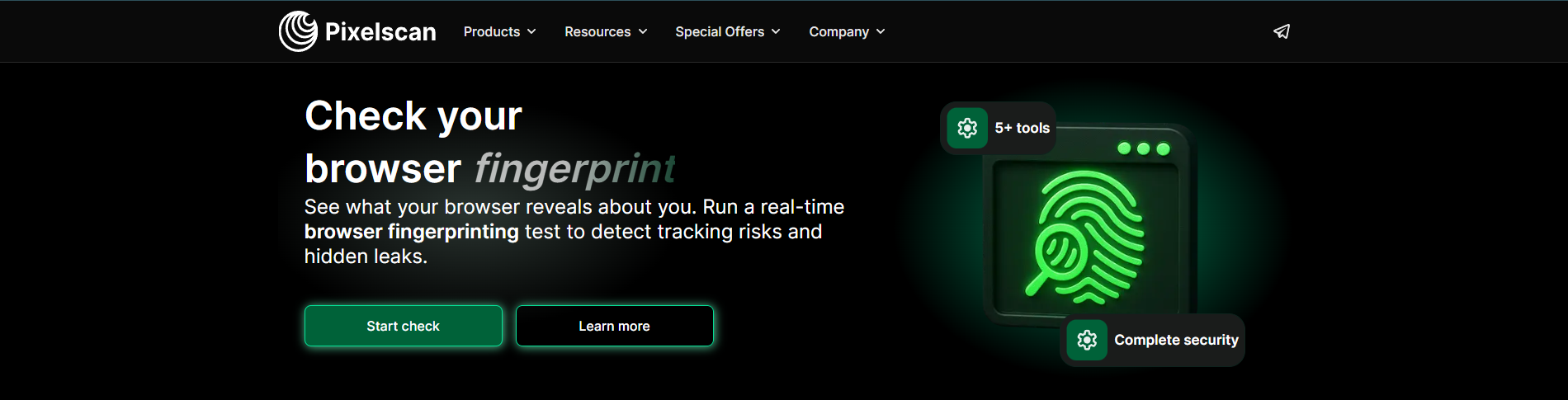
Its Role: A specialized, multi-test utility that moves beyond basic IP verification to deliver extensive browser fingerprint analysis, bot identification, and privacy exposure evaluation. It is built for users familiar with advanced privacy concepts.
Intended Users:
- Experienced privacy advocates and investigators
- Developers and users of anti-detect browsers
- Cybersecurity experts studying fingerprinting methodologies
- Privacy advocates vetting anonymity aids
- Developers creating privacy-oriented applications
Advertisements and Junk: Minimal presence of promotions – the site maintains a sleek, professional appearance with very sparse promotional material. Any marketing is subtle and does not impede primary functions.
Exceptional mobile tuning – Pixelscan.net delivers one of the superior mobile encounters available. Its design is tailored to function smoothly on mobile phones and tablets, featuring touch-friendly controls and a responsive format that maintains full usability across all screen dimensions.
Key Advantage: Advanced profiling analysis, integration of multiple tools, contemporary interface design, and specific privacy testing functions. The service also hosts an informative blog with appraisals of IP checkers and privacy gear (including a deep dive on WhoerIP.com), making it a useful asset for staying informed.
WhatIsMyIP.com – The Web Veteran
Established in 1999, WhatIsMyIP.com ranks among the earliest IP verification platforms, active for over a quarter-century. Evolving from a simple IP lookup utility, it has transformed into a comprehensive portal combining IP sourcing with diagnostics, network utilities, and a significant focus on instructional material.
The platform appeals to a broad demographic — from everyday users and students to small enterprises and network supervisors who value transparent guidance and dependable applications.
Intended Users:
- Standard internet users seeking fundamental IP details
- Students and educators learn network fundamentals
- Smaller organizations need straightforward IP instruments
Key Advantages: Extensive educational resources, long-standing reputation, full suite of utilities, and detailed explanations of networking principles.
MyIP.com – The Data Analyst
Launched in the early 2000s, MyIP.com is a recognized IP service that surpasses simple lookups by offering statistical perspectives on internet consumption, browser trends, and worldwide connectivity. It distinguishes itself as a data-driven resource for those who like pairing IP checks with wider analytical context.
Intended Users:
- Data enthusiasts keen on internet statistics
- Researchers examining network usage patterns
- Technical users who appreciate granular system specifics
Key Advantages: Statistical evaluation, trend reporting, clear data presentation, and insights into international internet usage habits.
WhatIsMyIPAddress.com – The Content-Rich Legacy Site
Launched in 2000, WhatIsMyIPAddress.com began as a basic IP verifier but has since broadened into a substantial information repository covering privacy, security, and internet technologies. While it provides valuable knowledge, its substantial volume of advertising frequently impacts user experience and load times.
Intended Users:
- General consumers looking for basic IP facts
- Those interested in articles on privacy and security
- Casual internet surfers comfortable with ad-supported content
Key Advantages: Vast library of articles, long operational history, and broad coverage of private subjects.
IP.me – The Privacy-Focused Platform
Introduced in the mid-2010s, IP.me represents a newer breed of IP verification tool built around privacy. Unlike conventional tools, it markets itself not merely as an IP locator but as an access point to advanced privacy solutions, notably supported by Proton, a respected entity in the privacy sphere.
This strong association enhances the service’s profile, although it means users are consistently exposed to Proton-related promotions.
A privacy-forward IP verifier that merges a clean, intuitive layout with strong advocacy for online security. It reflects how modern IP platforms are increasingly linked with privacy ecosystems and commercial alliances.

Intended Users:
- Current and prospective privacy-focused users
- Consumers mindful of their privacy
- Users wanting simple, uncluttered IP data
- Individuals researching online security solutions
- Users within the Proton framework
Key Advantages: Clean appearance, strong privacy orientation, seamless connection features, and the assurance of backing from a reputable privacy firm.
IPLocation.io – The Technical Resource Center
Launched in the late 2010s, IPLocation.io has swiftly become a preferred platform for users needing more than a superficial IP search. Distinct from casual checkers, it is structured with experts in mind, providing a full array of IP analysis instruments and the capability to check results against various data sources.
A technically sophisticated platform catering to network supervisors, security investigators, and developers who require in-depth IP intelligence. It merges standard IP verification with professional-grade features for network scrutiny and security investigation.
Intended Users:
- Network administrators and IT personnel
- Cybersecurity investigators and analysts
- Developers creating IP-related applications
- Technical users needing deep dives into data
- Businesses requiring extensive IP insight
Key Advantages: Integration of multiple data sources, comprehensive toolset, technical depth, and professional-grade analytical capability.
Whoer.com – The Feature-Rich Established Site
Having launched in the early 2010s, Whoer.com has matured into a comprehensive privacy and security portal. It combines IP assessment with anonymity testing, fraud scoring, and advanced privacy examinations. However, over time, it has become heavily focused on commercial interests, with a strong push promoting proxy services.
While the platform still offers potent instruments and detailed technical findings, the user experience is often hampered by aggressive advertising and a cluttered visual design, which can detract from its primary role as a privacy resource.
Intended Users:
- Advanced privacy advocates
- Cybersecurity specialists
- Proxy customers
- Users requiring fraud risk evaluation
- Privacy researchers and analysts
Key Advantages: Extensive collection of features, fraud assessment capabilities, advanced privacy analysis, and rich technical data — though somewhat diminished by heavy promotional content.
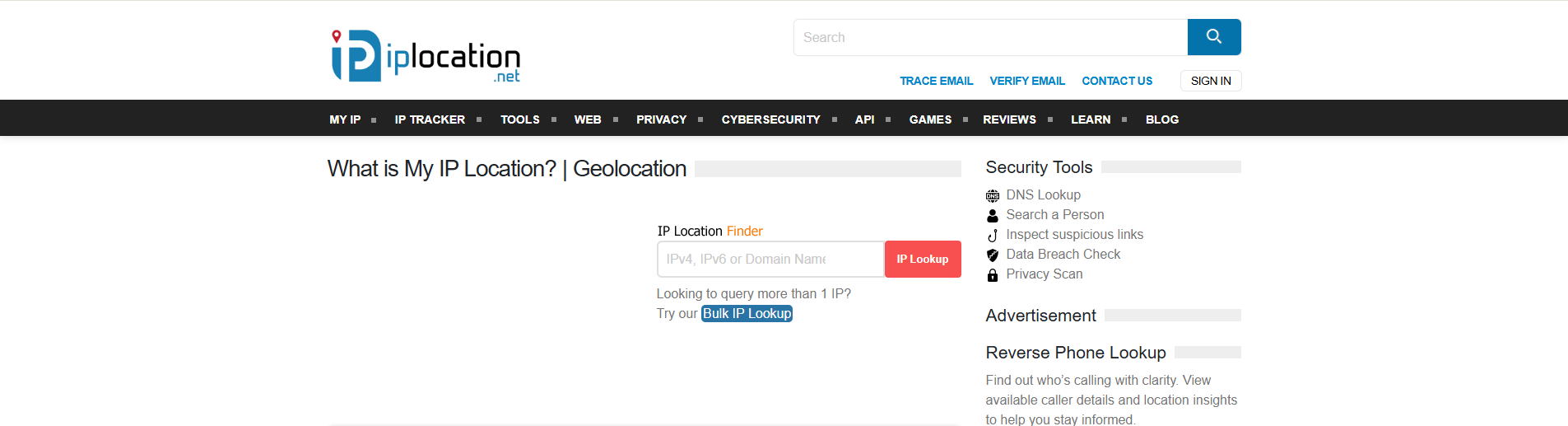
IPLocation.net – The Business-Oriented Service
Debuting in the mid-2010s, IPLocation.net has cemented its status as a professional-grade IP analysis organization. Beyond elementary IP lookups, it offers advanced instruments such as email tracing, privacy scanning, and the ability to check IPs in bulk, making it particularly valuable for commercial and enterprise applications.
The platform emphasizes dependability and functionality, targeting professionals who require more than rudimentary data. Although sidebar ads are present, they do not significantly impede the primary functions, allowing the service to maintain a clean and professional environment.
Intended Users:
- Business users and professionals
- Email managers and security teams
- Users needing to process IPs in quantity
- Privacy assessment specialists
- Corporate security divisions
Key Advantages: Professional orientation, email tracking functions, bulk processing utilities, and advanced privacy evaluation features.
Whoer.to – A Simple Companion Tool
Introduced in the mid-2010s, Whoer.to was developed as a more streamlined and uncluttered option compared to the primary Whoer.com platform. It removes extensive commercial elements and concentrates on essential IP verification capabilities, presenting technical findings in a direct, tabular layout.
This offering is devoid of advertisements, swift, and businesslike, appealing to users who desire Whoer's utility without interruptions. Its basic aesthetic and organized display ensure results are immediately clear and graspable.

Ideal Users:
- Individuals seeking uncomplicated, neat IP details
- Tech-savvy users favoring well-structured data
- Those wanting Whoer's functions free from ads
- People need rapid, efficient lookups
- Professionals who value clear, legible feedback
Key Advantages: Uncluttered interface, thorough technical data, rapid response time, an ad-free experience, and a well-arranged presentation.
No single IP checker is perfect for every scenario. Some tools excel at analyzing privacy and digital fingerprinting, others shine with educational content or enterprise features like bulk address lookups.
Therefore, it's prudent not to rely on just one source. Performing checks across several services gives you a more complete and accurate view of your online presence and helps confirm no data is escaping unnoticed.
Why choose DICloak Antidetect Browsers for your business?
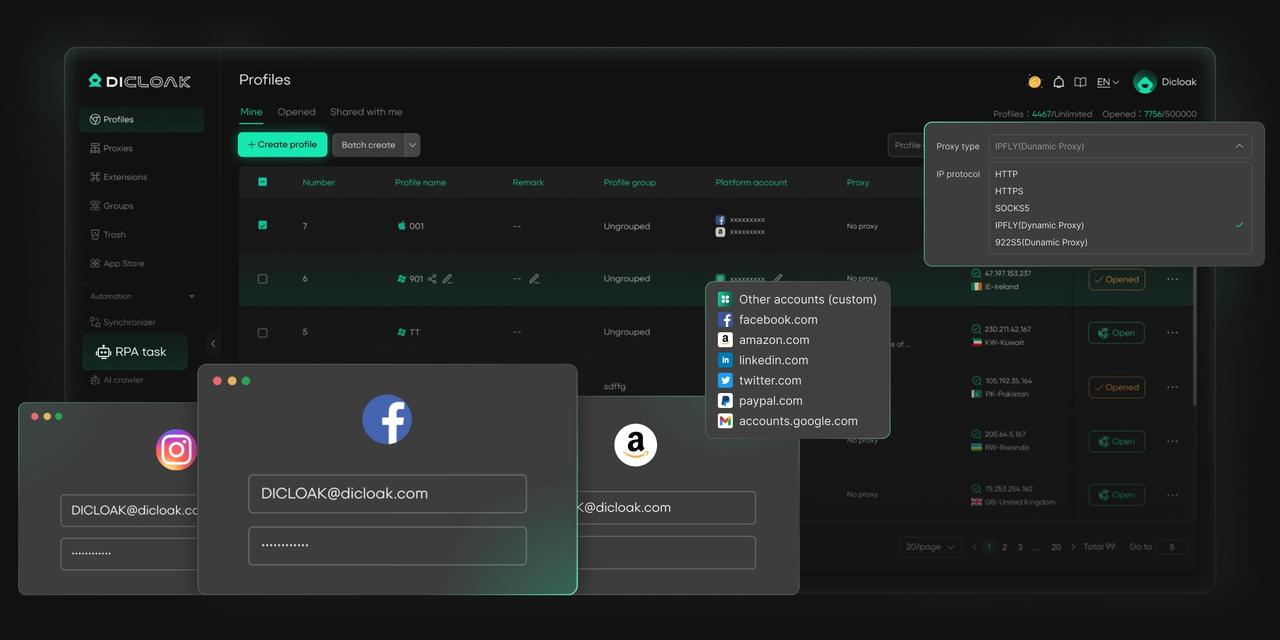
⚡The DICloak Antidetect Browser has become a global favorite for its unparalleled ability to efficiently and securely manage multiple accounts. Designed for professionals in social media management, affiliate marketing, traffic arbitrage, e-commerce, account farming, airdrops, and more, DICloak offers powerful features like RPA automation, bulk operations, and a synchronizer. Additionally, it allows you to customize fingerprints and integrate proxies for each profile, ensuring top-level security and operational efficiency. It’s the ultimate tool for seamless, secure, and scalable operations.
What Makes DICloak Stand Out?
✅ Manage 1,000+ Accounts on One Device:
Stop wasting money on extra hardware! DICloak allows you to manage multiple accounts on a single device, cutting costs and boosting efficiency.
✅ Guaranteed Account Safety, No Ban Risks:
Every account gets its own isolated browser profile with custom fingerprints and IPs, drastically reducing the risk of bans. Your accounts, your control!
✅ Flexible Proxy Configuration for Maximum Performance:
Seamlessly integrate with all major proxy protocols (HTTP/HTTPS, SOCKS5) and manage your proxy pool with bulk operations. No more struggling with IP management—DICloak has you covered.
✅ Streamlined Team Collaboration for Better Results:
Easily manage your team with advanced tools like profile sharing, permission settings, data isolation, and operation logs. Your team works smarter, not harder.
✅ Automate the Grind with RPA:
DICloak's built-in RPA saves you hours of manual work. Automate repetitive tasks, streamline workflows, and focus on what really matters—growing your business.
✅ Powerful Bulk Tools to Scale Your Operations:
Create, import, and launch multiple browser profiles in one click. DICloak makes scaling your business as easy as it gets.
✅ Compatible with All Major Operating Systems:
Based on the Chrome core, DICloak supports simulating Windows, Mac, iOS, Android, and Linux operating systems. No matter what platform you need, DICloak has you covered.
🔗 Ready to Get Started?
Visit the DICloak website to explore more details and choose the plan that’s right for you. Start for free today and experience the power of secure, efficient, and scalable multi-account management!
Closing Thoughts: Why Users Explore Whoer.net Alternatives
Although Whoer.net has long been a favored utility for checking IP addresses and assessing online anonymity, many users are now investigating other options. The reason is straightforward: different platforms emphasize distinct strengths. Some prioritize advanced leak detection, others offer highly precise geographical data, while newer services bring speed and fresh features.
Modern internet users now expect more than just seeing their IP address. They desire deep privacy assessments, quicker checks, and unambiguous results that aid in boosting online anonymity. This is where newer projects such as Whoerip.com emerge. These contemporary tools are built using contemporary technology, optimized for speed, and provide a more holistic look at your digital identity.
👉 The Importance: Selecting the right IP checker isn't just about satisfying curiosity—it’s about safeguarding your identity, preventing leaks, and staying ahead of tracking methods.
As the digital landscape evolves, tools like Whoerip.com are rapidly gaining confidence because they blend precision, ease of use, and novelty. For anyone serious about digital privacy, paying attention to these emerging solutions that are shaping the future of anonymity verification is worthwhile.
Frequently Asked Questions
Can an unknown person track my IP?
They can see a general geographical area, but not your precise home address directly.
Who controls an IP address?
Typically, your Internet Service Provider (ISP) or hosting provider.
Can any website see my IP?
Yes, every site you open can view your public IP address.
How can I instantly change my IP address?
Restart your router, toggle airplane mode, or activate a proxy.
Are IP bans feasible?
Yes, platforms or online games can restrict access based on an IP address.
 Web Proxy Tools
 Free Tools
 Cookie Plugin
 UA Generator
 MAC Address Generator
 IP Generator
 IP Address List
 2FA Code Generator
 World Clock
 Anonymous Check
 WebRTC Leak Test
 UUID Generator
 Free Web Proxy Site
 Proxy Checker
 FB Ad Checker
 AI Web Scraping
 Free SMM Tools
 Twitter Shadowban Checker
 Instagram Name Checker
 UTM Generator
 Username Generator
 AI Hashtag Generator
 LinkedIn Headline Generator
 Social Media Image Resizer